English
 Arabic
 French
 Spanish
 Portuguese
 Deutsch
 Turkish
 Dutch
Dutch
 Italiano
 Russian
 Romaian
 Portuguese (Brazil)
 Greek
Greek
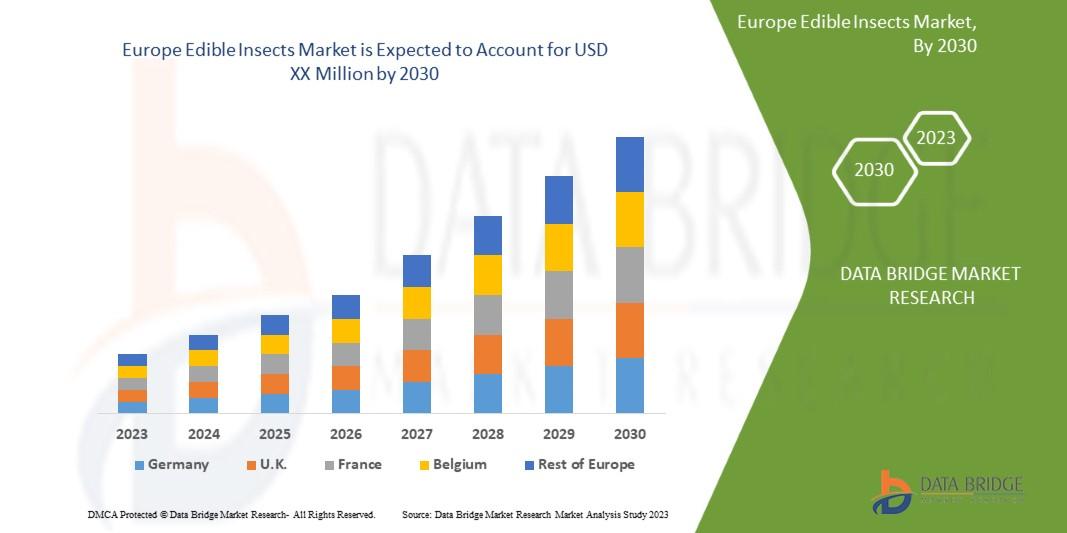
Europe Edible Insects Market Size, Current Status, and Outlook 2030
Other |
2025-12-03 08:14:06
The rapid shift toward automation, real-time data acquisition, and predictive intelligence is reshaping industries around the globe. This transition is clearly reflected in the growth of the Smart Sensors Market Trends, where advanced sensing technologies are enabling a new wave of connected ecosystems, smarter devices, and highly efficient industrial operations.
Smart sensors are becoming indispensable in modern infrastructure as they integrate processing capabilities with accurate detection. From industrial automation to smart homes and environmental tracking, these devices are driving seamless, intelligent decision-making.
Industries are particularly benefitting from innovations in IoT sensor device, intelligent measurement, and automated detection sensor technologies. These systems support real-time analytics, enhance equipment performance, and improve the reliability of mission-critical operations.
Environmental sustainability is emerging as a major priority across global markets, making environmental monitoring and industrial sensing key focus areas for businesses and governments. At the same time, the rising adoption of digital communication and advanced electronic systems parallels developments seen in dynamic industries such as the France Internet Radio Market and the rapidly evolving UK Field Programmable Gate Array Market.
The growing ecosystem of smart homes, wearables, and smart cities continues to drive demand for compact, reliable sensing systems capable of real-time communication.
Manufacturing plants and logistics operations leverage advanced sensing to streamline workflows, improve safety, and enhance productivity.
Smart sensors equipped with AI and machine learning can predict failures before they occur, reducing downtime and operational losses.
Air quality analysis, water management, and structural health monitoring rely heavily on sophisticated sensor networks.
As industries embrace digital transformation, smart sensors will remain at the center of innovation. With rising demand for automation, environmental intelligence, and efficient industrial operations, the Smart Sensors Market Trends are expected to accelerate further in the coming years.
Continuous advances in materials science, miniaturization, and sensor-level computing will empower next-generation devices that are faster, more accurate, and more adaptable—strengthening their role in every connected ecosystem of the future.
Manufacturing, healthcare, consumer electronics, automotive, and environmental monitoring are among the key users of smart sensor technologies.
They collect, process, and transmit data to connected systems, enabling seamless automation and real-time decision-making.
They enhance accuracy, safety, and efficiency while supporting predictive maintenance and reducing operational downtime.