English
 Arabic
 French
 Spanish
 Portuguese
 Deutsch
 Turkish
 Dutch
Dutch
 Italiano
 Russian
 Romaian
 Portuguese (Brazil)
 Greek
Greek
Netflix Secures Warner Bros. Discovery—$82.7B Deal Explained
Games |
2025-12-16 05:21:04
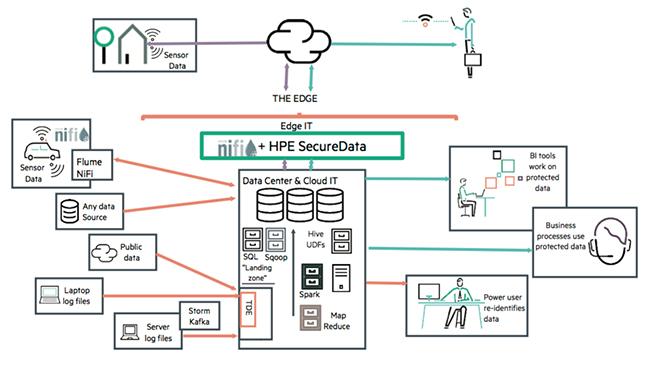
Organizations must balance analytical value extraction with information protection obligations appropriately. The big data security and privacy landscape requires integrated approaches addressing both concerns simultaneously effectively. These complementary objectives share common controls while maintaining distinct requirements and priorities. The Big Data Security Market size is projected to grow USD 53.87 Billion by 2035, exhibiting a CAGR of 14.81% during the forecast period 2025-2035. Privacy regulations increasingly impose specific requirements on big data analytics involving personal information. Organizations must implement technical and organizational measures protecting individual privacy rights comprehensively. Consent management frameworks ensure data subjects authorize analytical uses of their information appropriately. Data minimization principles limit collection and retention to information necessary for specified purposes. The intersection of security and privacy requires coordinated strategies addressing both domains effectively.
Privacy-enhancing technologies enable analytical value while protecting individual privacy rights simultaneously today. Differential privacy adds mathematical noise to datasets preventing individual identification from results. Federated learning enables model training across distributed datasets without centralizing sensitive information. Homomorphic encryption allows computation on encrypted data without exposing plaintext values during processing. Secure multi-party computation enables collaborative analytics without revealing individual party contributions directly. These technologies expand possibilities for privacy-preserving big data analytics implementations across industries.
Data governance frameworks establish policies and processes spanning security and privacy requirements comprehensively. Data inventory and mapping document what information exists and where it resides across systems. Classification policies categorize information based on sensitivity and applicable protection requirements appropriately. Retention policies specify how long data can be kept and when deletion must occur. Access policies define who can use data and for what approved purposes specifically. Governance frameworks ensure consistent application of security and privacy controls across environments.
Organizational alignment ensures security and privacy functions collaborate effectively toward shared goals. Reporting structures may combine security and privacy under unified leadership arrangements organizationally. Joint risk assessment processes evaluate threats from both security and privacy perspectives comprehensively. Shared technology platforms reduce redundancy while ensuring consistent control implementation throughout. Training programs address both security and privacy requirements for employees handling sensitive data. The organizational collaboration proves essential for effective big data security and privacy programs.
Top Trending Reports -
Canada Social Intelligence Market Share