


Exploring Value Pathways in the Automatic Train Operation System Market Revenue
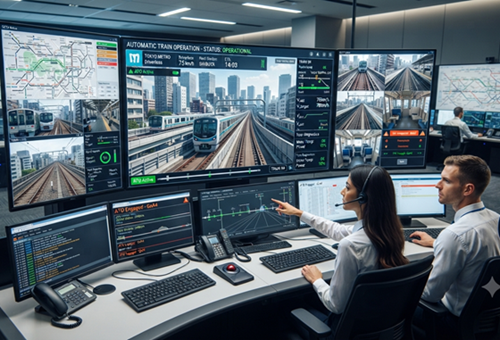
Service Capacity as a Primary Value Source The ability to run a more even and sometimes more frequent service on existing track is the central value railways seek. Additional passenger throughput without proportional civil expansion protects scarce corridor space and station capacity. The Automatic Train Operation System Market Revenue conceptually rests on this capacity and reliability value together with the systems and services required to deliver it. Predictable operation also supports revenue protection because fewer cancelled or severely delayed trips means fewer refunds and less lost ridership. When passengers trust the timetable they are more willing to rely on rail for time-critical journeys.
Reliability and Recovery as Commercial Advantages Consistent automated driving reduces self-inflicted delay and helps the network return to plan after an external disruption. Commercial value appears as higher punctuality stronger connection reliability and better use of crew and fleet diagrams. Operators can sometimes simplify recovery rules because trains will follow revised instructions uniformly. These advantages matter to public authorities that fund services against performance regimes and to passengers who choose rail over other modes. Revenue linked to performance incentives becomes more secure when the railway can demonstrate stable control of routine movements.
Energy and Maintenance Contributions to Operating Margin Repeatable traction and braking profiles lower energy consumption and can moderate wear on brakes wheels and traction components. The financial effect accumulates across a large number of daily trips even when the saving on a single run looks modest. Maintenance planning benefits from more uniform duty cycles and from diagnostic data the automation system already collects. Margin improvement of this kind supports the case for automation on lines where capacity is already adequate but operating cost must fall. Careful measurement is required so that expected savings are not double-counted or lost in other operational changes.
Whole-System Supply and Service Offerings Value is not limited to onboard equipment. It includes integration engineering safety assurance training simulators maintenance support and upgrades over the life of the signaling and fleet. Suppliers that can deliver this whole-system responsibility command durable relationships with railways. Operators in turn reduce interface risk by concentrating accountability. Long support horizons create ongoing activity in spares software updates and performance optimization well after the first trains enter automatic service.
Sustaining Value Through Measured Performance and Extension Initial value erodes if configuration control lapses or if the operating rules drift away from the design assumptions. Railways that monitor headway accuracy stopping performance energy and fault trends protect the benefits they paid for. Demonstrated results on the first corridor make the next extension easier to fund and faster to deliver. In this way value compounds across the network rather than remaining confined to a showcase line.
➤ Latest Market Intelligence from Market Research Future:
Italy Business Process Outsourcing Services Market

 English
 Arabic
 French
 Spanish
 Portuguese
 Deutsch
 Turkish
 Italiano
 Russian
 Romaian
 Portuguese (Brazil)
 Greek