• Everyone’s version of wealth looks different, but setting clear financial goals gives your money a direction. The key is not to just work for money but to reach a point where your investments work for you. These goals are designed to create freedom, security, and options — not just a bigger paycheck.

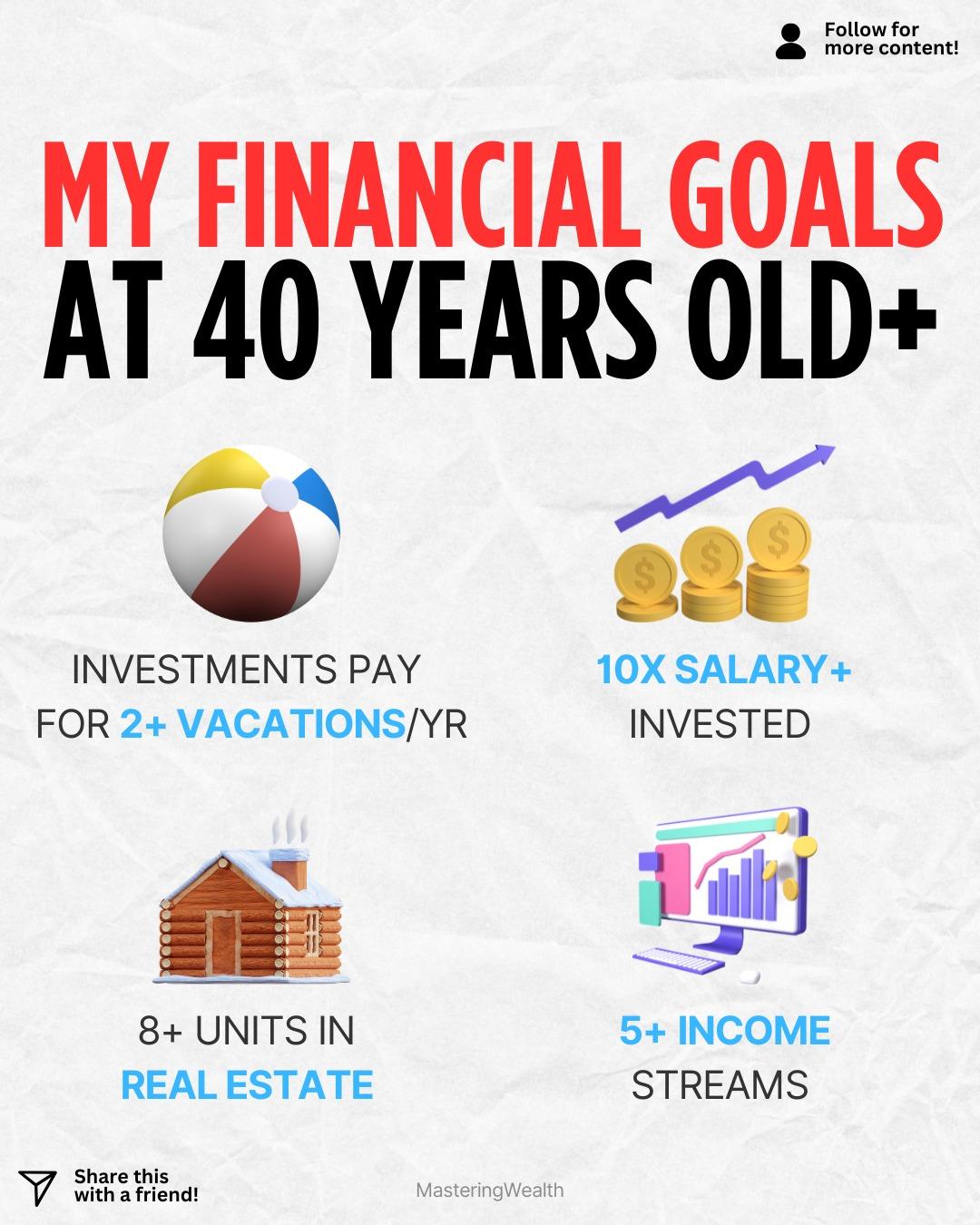
    By 40, one goal is for investments to pay for at least two vacations a year. Imagine building enough passive income through dividends, real estate, or business profits that your lifestyle upgrades itself without extra hours worked. That’s what financial independence really looks like — earning while you rest.

    Another goal is to have 10 times your salary invested. If your annual income is $100,000, that means $1 million invested in assets that grow and compound over time. This level of investing can create a safety net that protects you against job loss, economic downturns, or unexpected expenses.

    Real estate is another pillar of long-term wealth. Owning 8 or more rental units creates consistent cash flow while appreciating in value. Real estate can hedge against inflation and provide leverage for future investments.

    Multiple income streams are the final piece. Having 5 or more income sources — from stocks, business ventures, royalties, or real estate — makes your financial foundation more stable and resilient. The goal is to have money flowing from multiple directions so you’re never dependent on just one paycheck.

    Building toward these goals takes time, consistency, and smart planning. Start by automating your savings, investing regularly, and reinvesting your returns. Wealth grows in silence but rewards those who stay patient and disciplined.

    Comment “Stocks” if you want a link to see my dividend portfolio and learn how I invest for consistent passive income.

    What’s one financial goal you want to achieve by 40 or beyond?

    Disclaimer: This content is for educational purposes only and not financial advice. Always do your own research or speak with a financial professional before making investment decisions.
    💰 Everyone’s version of wealth looks different, but setting clear financial goals gives your money a direction. The key is not to just work for money but to reach a point where your investments work for you. These goals are designed to create freedom, security, and options — not just a bigger paycheck. By 40, one goal is for investments to pay for at least two vacations a year. Imagine building enough passive income through dividends, real estate, or business profits that your lifestyle upgrades itself without extra hours worked. That’s what financial independence really looks like — earning while you rest. Another goal is to have 10 times your salary invested. If your annual income is $100,000, that means $1 million invested in assets that grow and compound over time. This level of investing can create a safety net that protects you against job loss, economic downturns, or unexpected expenses. 🏠 Real estate is another pillar of long-term wealth. Owning 8 or more rental units creates consistent cash flow while appreciating in value. Real estate can hedge against inflation and provide leverage for future investments. Multiple income streams are the final piece. Having 5 or more income sources — from stocks, business ventures, royalties, or real estate — makes your financial foundation more stable and resilient. The goal is to have money flowing from multiple directions so you’re never dependent on just one paycheck. 📊 Building toward these goals takes time, consistency, and smart planning. Start by automating your savings, investing regularly, and reinvesting your returns. Wealth grows in silence but rewards those who stay patient and disciplined. 💬 Comment “Stocks” if you want a link to see my dividend portfolio and learn how I invest for consistent passive income. 🤔 What’s one financial goal you want to achieve by 40 or beyond? ⚠️ Disclaimer: This content is for educational purposes only and not financial advice. Always do your own research or speak with a financial professional before making investment decisions.
    ·126 Views ·0 önizleme
  • The Biggest Gains Come After Year 10

    Everyone wants to double their money now.
    But real wealth in stocks doesn’t work that way.

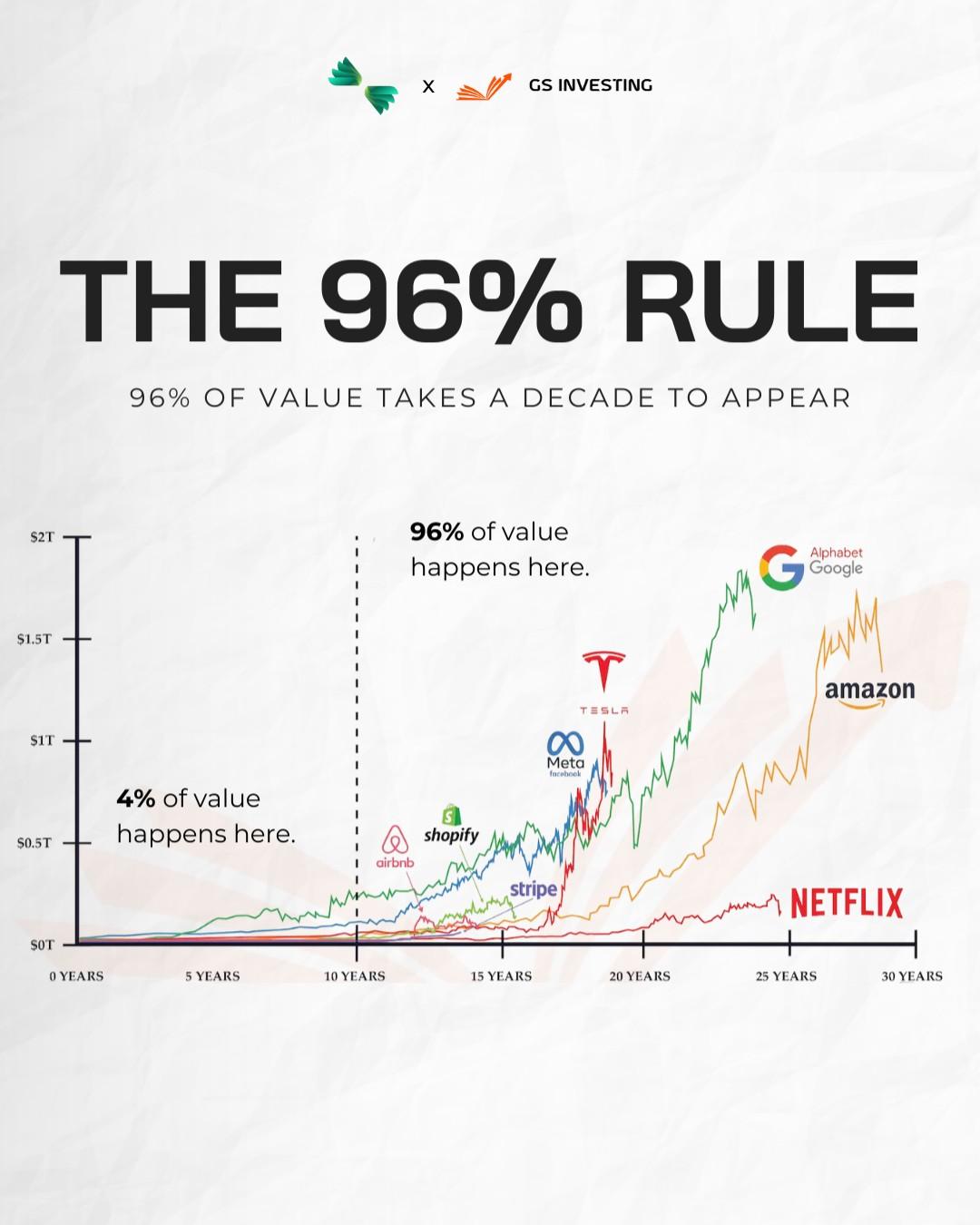
    Amazon, Google, Tesla… all looked like “just okay” companies in their first 10 years.
    The real magic—96% of their total value—came after that.

    Why?
    Because compounding takes time.
    The early years are quiet.
    The late years are explosive.

    But most investors don’t wait long enough.
    They sell after 2 years of “meh” returns…
    Right before the rocket takes off.

    So what’s the lesson?
    If you’ve done the work and picked a great business—give it time.
    Holding through the boring years is what separates average investors from wealthy ones.

    In long-term investing, patience isn’t just a virtue—it’s a weapon.

    Follow @masteringwealth & @goodstudent_investing for the best investing content on Instagram

    Source & credits: NFX, 2022

    Note: Post includes opinions, not investment advice.
    .
    .
    #investing101 #investingstrategy #stockmarkets #msft #aapl #applestock #dividends #tsla #teslastock #dividendgrowthstocks #microsoft #billgates #dividendinvesting #investingeducation #stockstowatch #stockstobuy #stockstohold #stockmarketnews #stockmarket #hustle #nyse #nasdaq #investing101 #stocks #stockstotrade #intelligentinvesting #elonmusk #stevejobs
    The Biggest Gains Come After Year 10 ⏳ Everyone wants to double their money now. But real wealth in stocks doesn’t work that way. Amazon, Google, Tesla… all looked like “just okay” companies in their first 10 years. The real magic—96% of their total value—came after that. Why? Because compounding takes time. The early years are quiet. The late years are explosive. But most investors don’t wait long enough. They sell after 2 years of “meh” returns… Right before the rocket takes off. So what’s the lesson? If you’ve done the work and picked a great business—give it time. Holding through the boring years is what separates average investors from wealthy ones. 📈 In long-term investing, patience isn’t just a virtue—it’s a weapon. 🔥 Follow @masteringwealth & @goodstudent_investing for the best investing content on Instagram 🔥 Source & credits: NFX, 2022 📝Note: Post includes opinions, not investment advice. . . #investing101 #investingstrategy #stockmarkets #msft #aapl #applestock #dividends #tsla #teslastock #dividendgrowthstocks #microsoft #billgates #dividendinvesting #investingeducation #stockstowatch #stockstobuy #stockstohold #stockmarketnews #stockmarket #hustle #nyse #nasdaq #investing101 #stocks #stockstotrade #intelligentinvesting #elonmusk #stevejobs
    ·445 Views ·0 önizleme
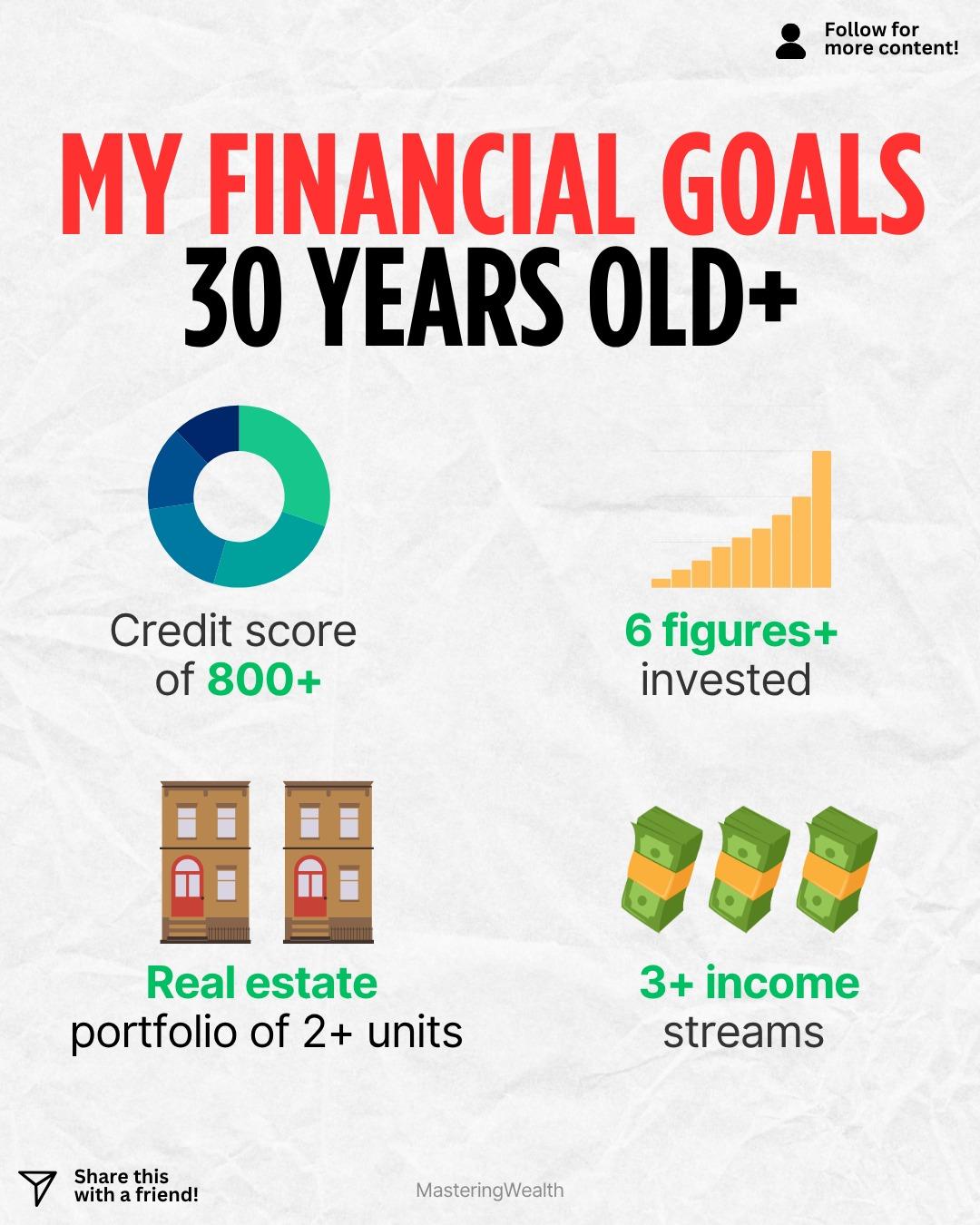
  • By 30, your financial goals start to shift from survival to strategy. You’re no longer just trying to make it through the month; you’re building a foundation that will determine your wealth for the next few decades. Every decision you make now compounds, which is why focusing on smart money habits early can completely change your future.

    A strong credit score is the first step. An 800+ score doesn’t just mean you’re good with payments; it means you have access to better interest rates, higher credit limits, and more financial flexibility. It’s a reflection of consistency, discipline, and responsibility — three traits that build lasting wealth.

    Next is investing. Having six figures invested by 30 isn’t about timing the market or taking huge risks. It’s about consistency. Regular contributions to your 401k, IRA, or brokerage account can quietly grow into life-changing wealth when combined with time and compound interest.

    Real estate is another major milestone. Whether it’s owning your first home or a rental property, real estate gives you leverage, equity, and potential cash flow. A portfolio with even two units can become a stepping stone toward financial independence.

    Lastly, aim for multiple streams of income. Relying on a single paycheck limits your freedom. Side hustles, dividends, rental income, or digital products can help you build stability and open doors to early retirement or business ownership.

    These goals aren’t about comparison — they’re about alignment. Everyone’s journey looks different, but the mission is the same: more control, more options, and more freedom. The earlier you start building, the more powerful your compounding will be.

    Comment “Stocks” if you want a link to see my dividend portfolio and learn how I invest for passive income and long-term wealth.

    Which of these goals are you currently working toward?

    Disclaimer: This content is for educational purposes only and not financial advice. Always research or consult a financial professional before making investment decisions.
    🎯 By 30, your financial goals start to shift from survival to strategy. You’re no longer just trying to make it through the month; you’re building a foundation that will determine your wealth for the next few decades. Every decision you make now compounds, which is why focusing on smart money habits early can completely change your future. 💳 A strong credit score is the first step. An 800+ score doesn’t just mean you’re good with payments; it means you have access to better interest rates, higher credit limits, and more financial flexibility. It’s a reflection of consistency, discipline, and responsibility — three traits that build lasting wealth. 📈 Next is investing. Having six figures invested by 30 isn’t about timing the market or taking huge risks. It’s about consistency. Regular contributions to your 401k, IRA, or brokerage account can quietly grow into life-changing wealth when combined with time and compound interest. 🏠 Real estate is another major milestone. Whether it’s owning your first home or a rental property, real estate gives you leverage, equity, and potential cash flow. A portfolio with even two units can become a stepping stone toward financial independence. 💵 Lastly, aim for multiple streams of income. Relying on a single paycheck limits your freedom. Side hustles, dividends, rental income, or digital products can help you build stability and open doors to early retirement or business ownership. 🌱 These goals aren’t about comparison — they’re about alignment. Everyone’s journey looks different, but the mission is the same: more control, more options, and more freedom. The earlier you start building, the more powerful your compounding will be. 💬 Comment “Stocks” if you want a link to see my dividend portfolio and learn how I invest for passive income and long-term wealth. 🤔 Which of these goals are you currently working toward? ⚠️ Disclaimer: This content is for educational purposes only and not financial advice. Always research or consult a financial professional before making investment decisions.
    ·178 Views ·0 önizleme
  • Spend 20 hours learning about:

    - Compound Interest
    - Dividends
    - Capital Gains
    - Index Funds
    - Roth IRA Accounts
    - Dollar Cost Averaging
    - The Trinity Study
    - Stock Market Long-term Return
    - Budgeting Strategies

    Your future self will thank you.

    I put together a simple 16-step checklist that shows you exactly what to have in place before you put a dollar into the market.

    Comment “CHECKLIST” and I’ll send it your way.
    Spend 20 hours learning about: - Compound Interest - Dividends - Capital Gains - Index Funds - Roth IRA Accounts - Dollar Cost Averaging - The Trinity Study - Stock Market Long-term Return - Budgeting Strategies Your future self will thank you. I put together a simple 16-step checklist that shows you exactly what to have in place before you put a dollar into the market. Comment “CHECKLIST” and I’ll send it your way.
    ·111 Views ·0 önizleme
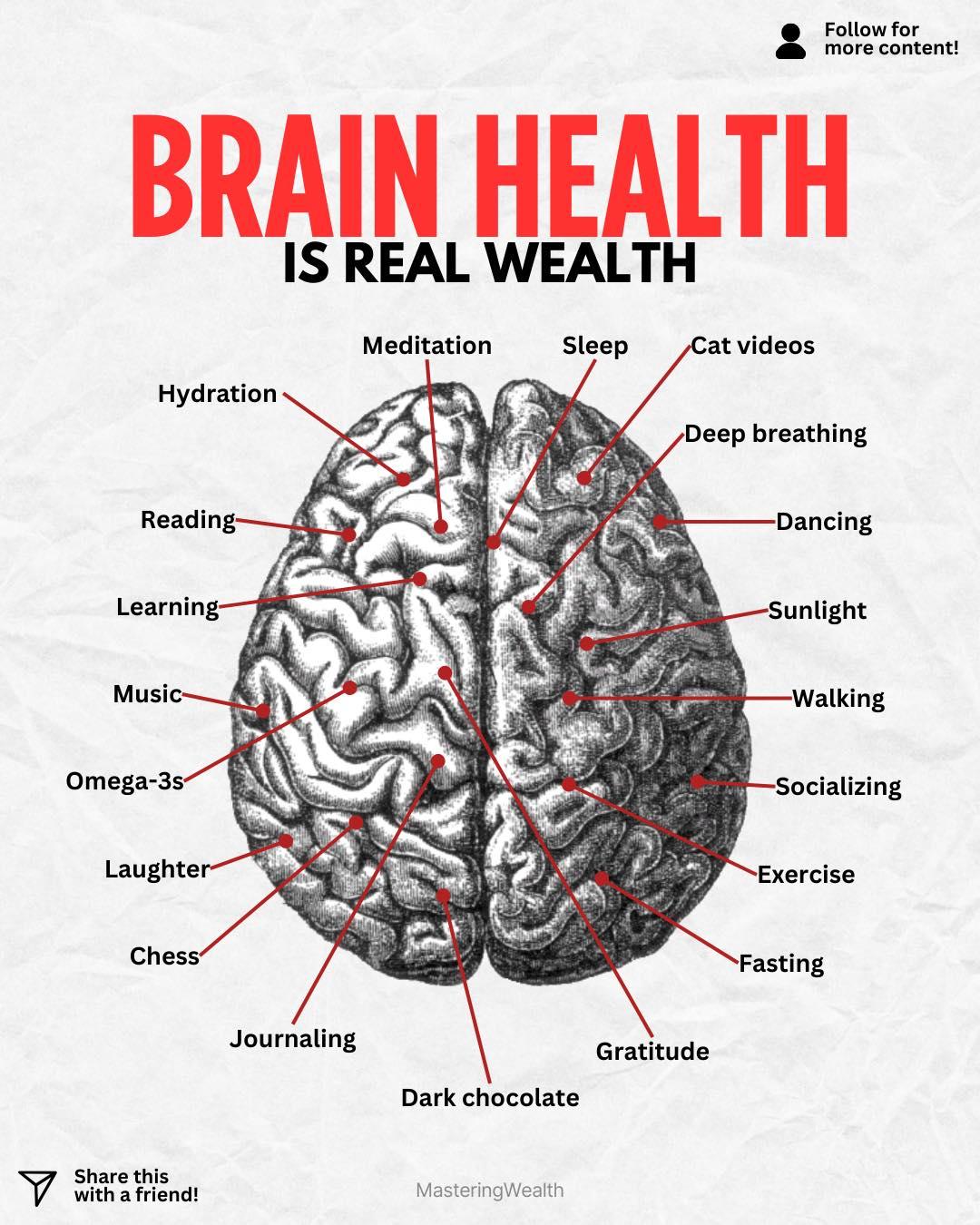
  • When people talk about wealth, the focus usually goes straight to money, investments, or assets. But the truth is that brain health is the foundation of real wealth . Without a sharp and healthy mind, all the financial success in the world loses its meaning. Your brain controls your focus, your decisions, your creativity, and your ability to manage stress. Protecting it means protecting your long term potential to succeed in every area of life. Simple habits like meditation, quality sleep, journaling, and practicing gratitude improve memory and mental clarity. Physical activities like walking, dancing, and regular exercise fuel your brain by increasing blood flow and oxygen. Nutrition also matters. Omega 3s, hydration, dark chocolate in moderation, and even sunlight exposure can boost brain function naturally . And do not forget joy. Laughter, music, socializing, and even watching a funny cat video are proven to lower stress hormones and help your brain recharge.

    So how does this connect to personal finance and building wealth? A healthy brain means better decisions with money. You are less likely to impulse spend, more capable of sticking to an investment strategy, and more resilient when markets get volatile . Discipline and patience are not just financial traits, they are cognitive strengths built from a strong mental foundation. Think of brain health as compounding interest. The small daily practices you put in now pay huge dividends later in energy, focus, and financial success.

    If you want to see how I personally grow wealth through my portfolio, comment “Stocks” and I will send you the link .

    What daily habit helps keep your mind sharp and focused? Do you prefer physical activity, mindfulness practices, or nutrition strategies?

    For more tips on building wealth in every sense of the word, follow me @MasteringWealth and get insights that combine health and money for long term success .

    Disclaimer: This content is for educational purposes only and should not be considered financial advice.
    When people talk about wealth, the focus usually goes straight to money, investments, or assets. But the truth is that brain health is the foundation of real wealth 🧠✨. Without a sharp and healthy mind, all the financial success in the world loses its meaning. Your brain controls your focus, your decisions, your creativity, and your ability to manage stress. Protecting it means protecting your long term potential to succeed in every area of life. Simple habits like meditation, quality sleep, journaling, and practicing gratitude improve memory and mental clarity. Physical activities like walking, dancing, and regular exercise fuel your brain by increasing blood flow and oxygen. Nutrition also matters. Omega 3s, hydration, dark chocolate in moderation, and even sunlight exposure can boost brain function naturally 🌞. And do not forget joy. Laughter, music, socializing, and even watching a funny cat video are proven to lower stress hormones and help your brain recharge. So how does this connect to personal finance and building wealth? A healthy brain means better decisions with money. You are less likely to impulse spend, more capable of sticking to an investment strategy, and more resilient when markets get volatile 📉📈. Discipline and patience are not just financial traits, they are cognitive strengths built from a strong mental foundation. Think of brain health as compounding interest. The small daily practices you put in now pay huge dividends later in energy, focus, and financial success. If you want to see how I personally grow wealth through my portfolio, comment “Stocks” and I will send you the link 📩. What daily habit helps keep your mind sharp and focused? Do you prefer physical activity, mindfulness practices, or nutrition strategies? 🤔 For more tips on building wealth in every sense of the word, follow me @MasteringWealth and get insights that combine health and money for long term success 💡. Disclaimer: This content is for educational purposes only and should not be considered financial advice.
    ·352 Views ·0 önizleme
  • Once you learn how to spend your money in a way that makes you more money…

    Wealth becomes a waiting game.

    For most people, that starts with one simple move:

    - Open a Roth IRA or brokerage account
    - Buy an index fund like “VOO” (tracks the S&P 500 or 500 of the biggest U.S. companies)
    - Set up $100–$500/month to automatically invest
    - Reinvest your dividends
    - Don’t touch it

    That’s then money generating you more money by itself while you go live your life.

    Start with what you can. Then just keep stacking.

    Comment “HUSTLE” and I’ll send you my free 14-page guide that breaks this down the grow force in the stock market.
    Once you learn how to spend your money in a way that makes you more money… Wealth becomes a waiting game. For most people, that starts with one simple move: - Open a Roth IRA or brokerage account - Buy an index fund like “VOO” (tracks the S&P 500 or 500 of the biggest U.S. companies) - Set up $100–$500/month to automatically invest - Reinvest your dividends - Don’t touch it That’s then money generating you more money by itself while you go live your life. Start with what you can. Then just keep stacking. Comment “HUSTLE” and I’ll send you my free 14-page guide that breaks this down the grow force in the stock market.
    ·116 Views ·0 önizleme
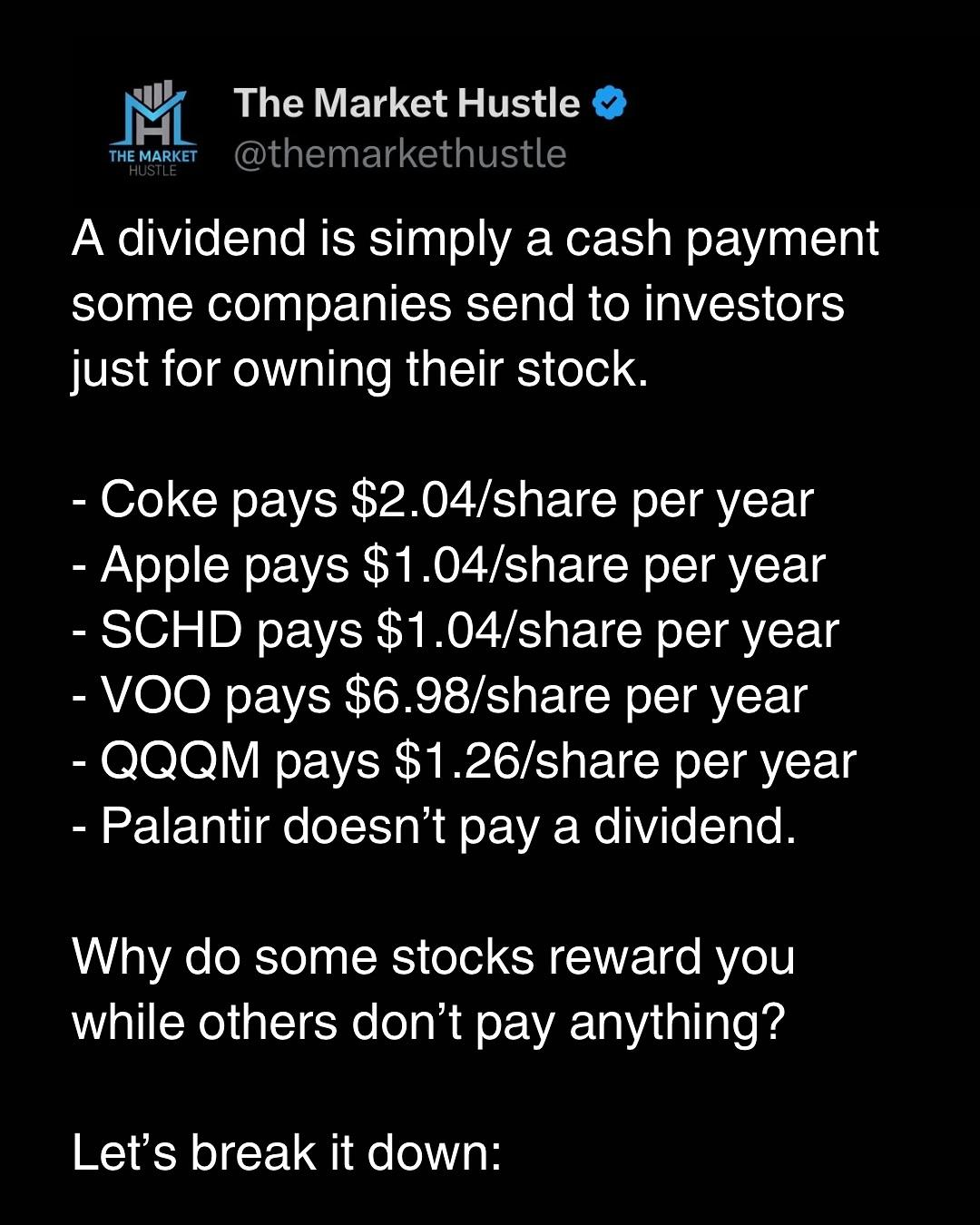
  • Have you ever wondered why some stocks pay you just for owning them and others don’t?

    That’s called a dividend and it’s like a thank-you check from certain companies that share their profits with investors.

    Some companies (like Coca-Cola) are stable and send out regular cash to shareholders.

    Others (like PLTR) are still growing and put all their money back into the business instead.

    Neither is right or wrong, it just depends on your goals.

    If you're younger, the real wealth comes from growth (buying assets that go up in value over time).

    Dividends are a nice bonus, but they’re don't have to be the whole strategy.

    Follow @themarkethustle for more investing and personal finance content!
    Have you ever wondered why some stocks pay you just for owning them and others don’t? That’s called a dividend and it’s like a thank-you check from certain companies that share their profits with investors. Some companies (like Coca-Cola) are stable and send out regular cash to shareholders. Others (like PLTR) are still growing and put all their money back into the business instead. Neither is right or wrong, it just depends on your goals. If you're younger, the real wealth comes from growth (buying assets that go up in value over time). Dividends are a nice bonus, but they’re don't have to be the whole strategy. Follow @themarkethustle for more investing and personal finance content!
    ·128 Views ·0 önizleme
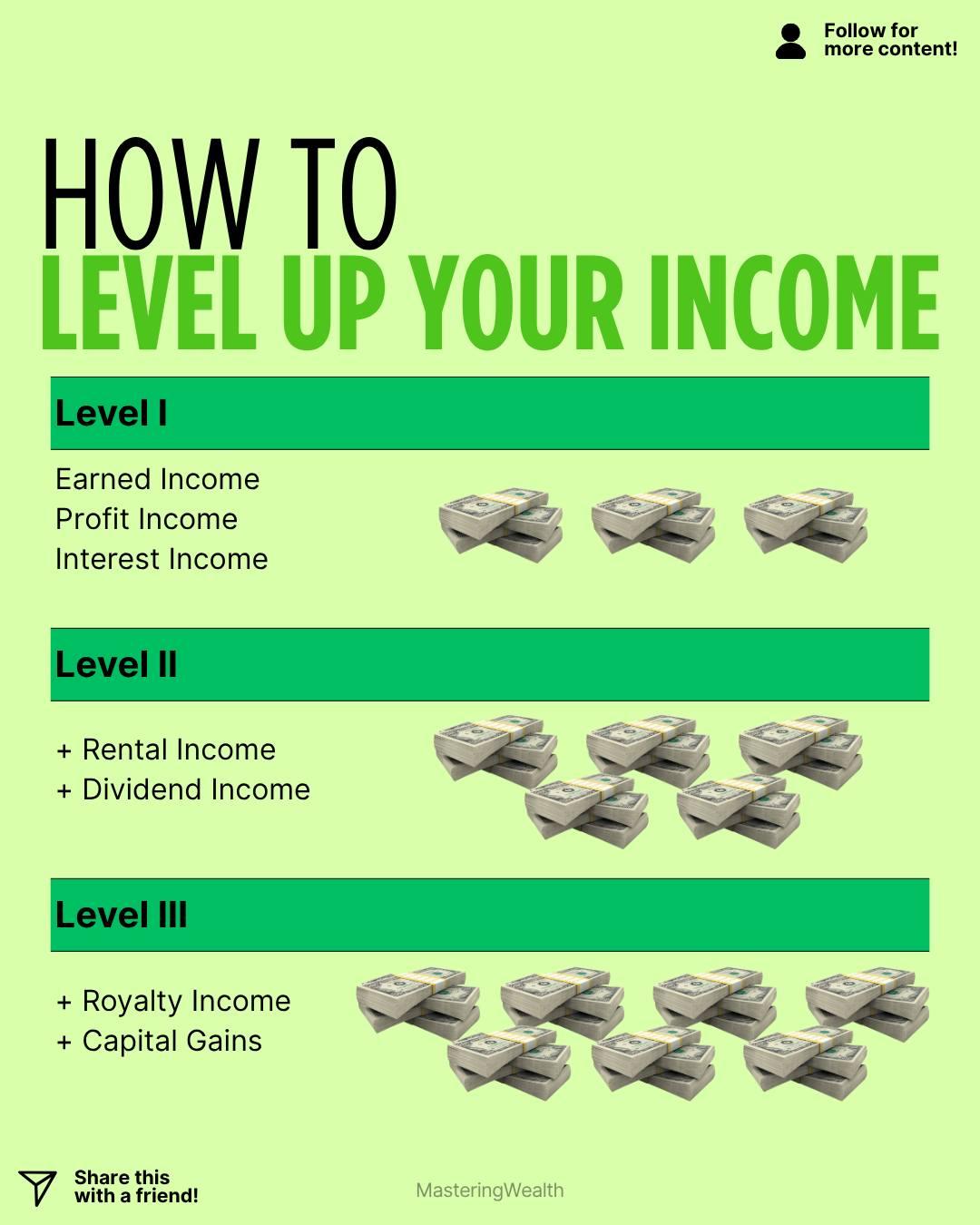
  • Most people only operate on Level I income That is earned income, profit income, and maybe a bit of interest from a savings account. But if you want to build wealth faster and escape the paycheck to paycheck cycle, it is time to level up

    Level I income is where we all start: working for a paycheck, running a small business, or earning interest from a bank. But Level II introduces income that works even when you do not. Rental income and dividend income continue to come in regardless of your 9 to 5. These streams reward long term thinking and smart investing

    The real unlock is Level III. This is where you start making money from things you created or invested in once and now earn passively. Royalty income and capital gains are common among wealthy individuals. They buy assets, build value, and then cash in. These types of income scale much faster than trading time for money. They also come with tax advantages that earned income does not offer

    Your personal finance journey should include a plan to move up the income ladder. Not all income is equal. Some gives you time freedom, others give you tax breaks, and a few can create generational wealth. If you only focus on your paycheck, you are leaving serious money on the table. Wealth building starts when you shift your focus from working harder to earning smarter

    Comment “Stocks” if you want a link to see my portfolio and how I use dividends and capital gains to grow passive income

    Which level of income are you currently focused on the most?

    Follow @MasteringWealth for more insights on income types, investing strategies, and how to take control of your financial future

    This content is for educational purposes only and should not be considered financial advice. Always do your own research or speak with a licensed financial professional before making investment decisions.
    Most people only operate on Level I income 🧠 That is earned income, profit income, and maybe a bit of interest from a savings account. But if you want to build wealth faster and escape the paycheck to paycheck cycle, it is time to level up 💸 Level I income is where we all start: working for a paycheck, running a small business, or earning interest from a bank. But Level II introduces income that works even when you do not. Rental income and dividend income continue to come in regardless of your 9 to 5. These streams reward long term thinking and smart investing 🏠📈 The real unlock is Level III. This is where you start making money from things you created or invested in once and now earn passively. Royalty income and capital gains are common among wealthy individuals. They buy assets, build value, and then cash in. These types of income scale much faster than trading time for money. They also come with tax advantages that earned income does not offer 🧾 Your personal finance journey should include a plan to move up the income ladder. Not all income is equal. Some gives you time freedom, others give you tax breaks, and a few can create generational wealth. If you only focus on your paycheck, you are leaving serious money on the table. Wealth building starts when you shift your focus from working harder to earning smarter 💼 Comment “Stocks” if you want a link to see my portfolio and how I use dividends and capital gains to grow passive income 📊 Which level of income are you currently focused on the most? Follow @MasteringWealth for more insights on income types, investing strategies, and how to take control of your financial future 🚀 This content is for educational purposes only and should not be considered financial advice. Always do your own research or speak with a licensed financial professional before making investment decisions.
    ·106 Views ·0 önizleme
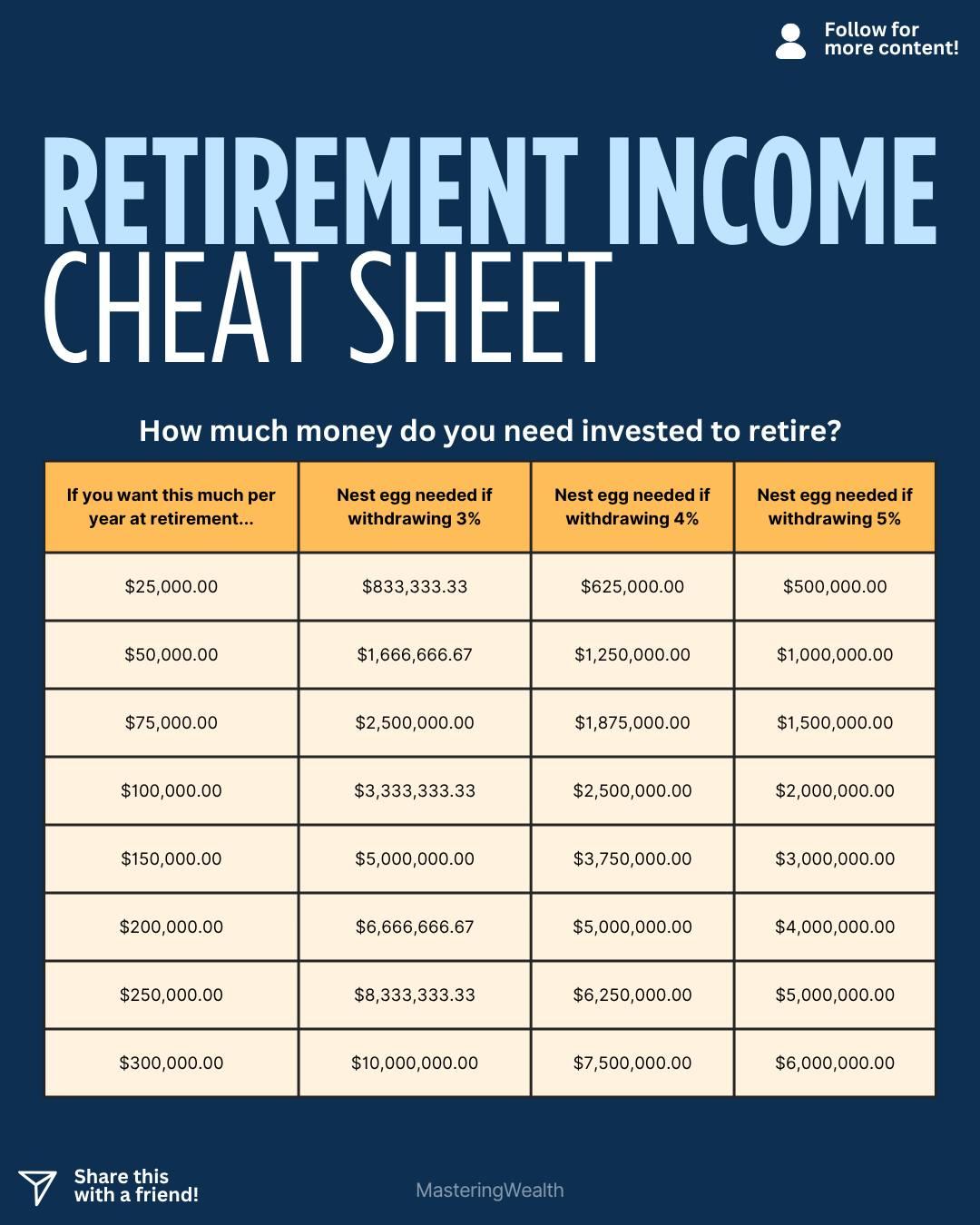
  • How much do you actually need to retire? This cheat sheet helps you figure it out based on how much income you want each year in retirement and your expected withdrawal rate. The withdrawal rate is the percentage of your portfolio you plan to take out annually to cover expenses. It could be 3 percent 4 percent or 5 percent depending on your risk tolerance and how long you expect your nest egg to last

    For example if you want to withdraw $50,000 per year and stick to a 4 percent withdrawal rate you would need a $1.25 million nest egg. Want $100,000 per year? That means you need $2.5 million. These numbers matter because they give you a tangible goal to aim for instead of guessing or just hoping it will all work out. Retirement planning is not about saving blindly. It is about reverse engineering the lifestyle you want

    This is a foundational concept in personal finance. Understanding your retirement number lets you create a realistic investing strategy and timeline. You can adjust how much you save each month or how aggressively you invest to hit your target. It also helps you set expectations about what your current habits will lead to long term. Wealth building is not only about how much you earn but how much you keep and grow consistently

    Comment “Stocks” if you want a link to see my portfolio and how I am building retirement income through dividends and long term investments

    What annual retirement income do you want to aim for and how close do you feel to reaching it?

    Follow @MasteringWealth for simple breakdowns on investing retirement planning and wealth building tools that actually make sense

    This content is for educational purposes only and should not be considered financial advice. Always do your own research or consult with a licensed financial professional before making investment decisions.
    How much do you actually need to retire? 🤔 This cheat sheet helps you figure it out based on how much income you want each year in retirement and your expected withdrawal rate. The withdrawal rate is the percentage of your portfolio you plan to take out annually to cover expenses. It could be 3 percent 4 percent or 5 percent depending on your risk tolerance and how long you expect your nest egg to last 🧮 For example if you want to withdraw $50,000 per year and stick to a 4 percent withdrawal rate you would need a $1.25 million nest egg. Want $100,000 per year? That means you need $2.5 million. These numbers matter because they give you a tangible goal to aim for instead of guessing or just hoping it will all work out. Retirement planning is not about saving blindly. It is about reverse engineering the lifestyle you want 🏖️ This is a foundational concept in personal finance. Understanding your retirement number lets you create a realistic investing strategy and timeline. You can adjust how much you save each month or how aggressively you invest to hit your target. It also helps you set expectations about what your current habits will lead to long term. Wealth building is not only about how much you earn but how much you keep and grow consistently 📈 Comment “Stocks” if you want a link to see my portfolio and how I am building retirement income through dividends and long term investments 💼 What annual retirement income do you want to aim for and how close do you feel to reaching it? Follow @MasteringWealth for simple breakdowns on investing retirement planning and wealth building tools that actually make sense 🔍 This content is for educational purposes only and should not be considered financial advice. Always do your own research or consult with a licensed financial professional before making investment decisions.
    ·101 Views ·0 önizleme
  • Reinvesting your dividends might seem like a small move but over time it can make a massive difference in your investment growth

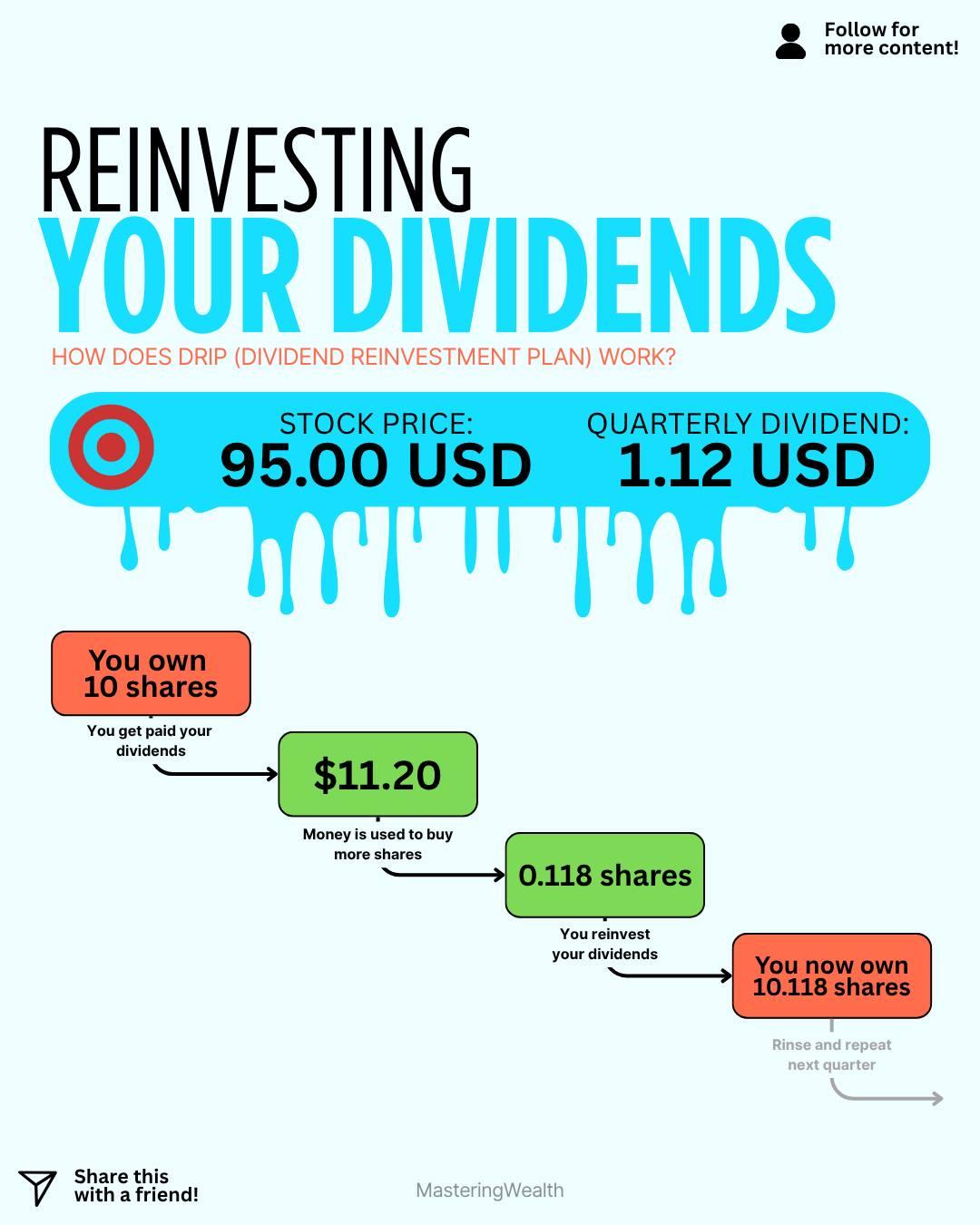
    Let me break it down. When a company pays you a dividend you usually receive cash. But with a Dividend Reinvestment Plan also known as DRIP you take that dividend and use it to buy more shares automatically

    In this example the stock price is $95 and the quarterly dividend is $1.12. If you own 10 shares you get paid $11.20 in dividends. Instead of pocketing that money you use it to buy 0.118 additional shares. So now you own 10.118 shares. Next quarter your dividend payment will be slightly bigger because you now own more stock. This is how compounding begins working in your favor

    Reinvesting dividends is one of the easiest ways to grow your portfolio without adding new money. It is passive it is automatic and it accelerates your wealth over time. Many investors use DRIP as part of their long term strategy because it builds momentum. You are literally putting your money to work for you and then reinvesting the profits so they work even harder

    If your goal is financial independence or early retirement using DRIP can help you get there faster. This strategy is especially powerful for dividend stocks and ETFs that pay consistent dividends. It might not feel like a big deal at first but give it a few years and you will see how much it adds up

    Comment “Stocks” if you want a link to see my portfolio and how I use DRIP to build wealth automatically over time

    Do you currently reinvest your dividends or take the cash instead? I am curious to hear what your approach is and why

    Follow @MasteringWealth for more practical money content that helps you grow your income and invest smarter

    This content is for educational purposes only and is not financial advice. Always do your own research before making investment decisions.
    Reinvesting your dividends might seem like a small move but over time it can make a massive difference in your investment growth 📈 Let me break it down. When a company pays you a dividend you usually receive cash. But with a Dividend Reinvestment Plan also known as DRIP you take that dividend and use it to buy more shares automatically 🔁 In this example the stock price is $95 and the quarterly dividend is $1.12. If you own 10 shares you get paid $11.20 in dividends. Instead of pocketing that money you use it to buy 0.118 additional shares. So now you own 10.118 shares. Next quarter your dividend payment will be slightly bigger because you now own more stock. This is how compounding begins working in your favor 🧠💸 Reinvesting dividends is one of the easiest ways to grow your portfolio without adding new money. It is passive it is automatic and it accelerates your wealth over time. Many investors use DRIP as part of their long term strategy because it builds momentum. You are literally putting your money to work for you and then reinvesting the profits so they work even harder 💪 If your goal is financial independence or early retirement using DRIP can help you get there faster. This strategy is especially powerful for dividend stocks and ETFs that pay consistent dividends. It might not feel like a big deal at first but give it a few years and you will see how much it adds up 🌱 Comment “Stocks” if you want a link to see my portfolio and how I use DRIP to build wealth automatically over time 📥 Do you currently reinvest your dividends or take the cash instead? I am curious to hear what your approach is and why 👇 Follow @MasteringWealth for more practical money content that helps you grow your income and invest smarter 💰 This content is for educational purposes only and is not financial advice. Always do your own research before making investment decisions.
    ·120 Views ·0 önizleme
Arama Sonuçları
Techawks - Powered By Pantrade Blockchain https://techawks.com