


How Fiber-Based Networking Is Driving the Growth of the Passive Optical LAN Market
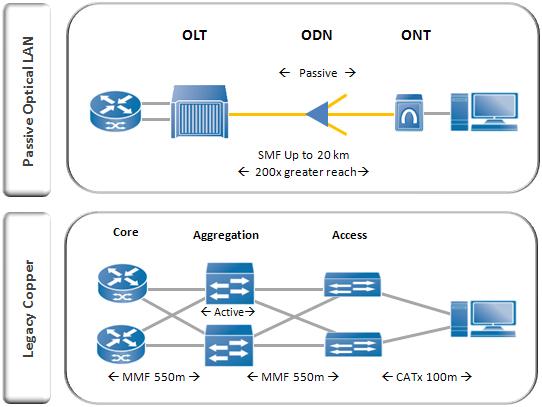
Enterprise networking requirements are evolving at an unprecedented pace, fueled by the rapid integration of artificial intelligence, high-definition video streaming, and IoT sensors. Traditional copper infrastructure frequently experiences signal degradation over long distances, forcing companies to deploy expensive signal repeaters and additional switches. Passive optical LAN solves these physical constraints by deploying single-mode optical fiber capable of transmitting signals across kilometers without loss. Consequently, global organizations are rapidly adopting optical local networks to streamline operational maintenance and secure corporate communications against unauthorized tapping. This architectural transition simplifies cable management, frees up valuable real estate in office buildings, and dramatically improves network reliability by removing active components between central management hubs and user endpoints.
The acceleration of smart city initiatives and modern green building certifications further propels institutional adoption worldwide. Businesses tracking the comprehensive Passive Optical Lan market growth recognize that optical fiber offers an economical pathway toward achieving energy efficiency targets while securing scalable bandwidth. By utilizing optical splitters to connect multiple desktop terminals to a single centralized switch, companies reduce structural cabling bulk by up to ninety percent. This reduction lowers installation labor, simplifies maintenance troubleshooting, and eliminates localized power supply demands across individual floors. As continuous enterprise connectivity becomes paramount, passive optical architectures provide an exceptionally resilient foundation that adapts seamlessly to future communication standards.
Frequently Asked Questions
What primary advantage does optical fiber offer over standard Cat6 copper cabling?
Optical fiber provides far higher bandwidth, lower latency, greater transmission distance without signal degradation, and total immunity to electromagnetic interference.
How does a point-to-multipoint optical network architecture simplify cable management?
It uses single optical splitters to serve multiple endpoints from a single fiber strand, reducing cable bundle volume in ceiling pathways and risers.

 English
 French
 Spanish
 Portuguese
 Deutsch
 Turkish
 Dutch
Dutch
 Italiano
 Russian
 Romaian
 Portuguese (Brazil)
 Greek
Greek