


How Advanced Energy Storage Technologies Are Driving Super Capacitors Market Growth
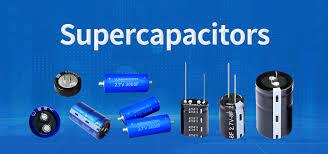
The rapid deployment of autonomous vehicle fleets, electric buses, and automated industrial machinery is driving a fundamental shift toward next-generation energy storage architectures worldwide. Automated platforms depend heavily on rapid pulse power to execute complex operational maneuvers, stabilize internal sensor arrays, and capture kinetic energy during repetitive stop-and-go movements. Traditional lead-acid and standard lithium chemistry batteries frequently experience thermal stress and premature capacity fade when subjected to continuous high-frequency charge pulses. To solve these operational bottlenecks, automotive engineers are increasingly designing hybrid storage architectures that blend high-density electrochemical cells with fast-responding capacitive units. This design architecture not only minimizes cell degradation but also optimizes peak power delivery during acceleration and aggressive braking cycles. Industry analysts monitoring long-term technological trajectories consistently emphasize that evaluating the Super Capacitors Market forecast helps manufacturers align their capital allocation strategies with upcoming regulatory mandates and vehicle electrification goals.
Simultaneously, the integration of distributed solar and wind generation assets into smart utility grids is creating massive commercial potential for large-scale pulse energy systems. Utility operators face constant challenges regarding power quality, voltage sags, and frequency fluctuations caused by intermittent weather patterns. By deploying modular capacitive units at key sub-stations, energy distributors can instantly inject power into the grid to balance supply disruptions without waiting for thermal power generators to ramp up. Furthermore, expanding industrial automation ecosystems rely on these units to protect sensitive manufacturing lines against micro-outages that could otherwise cause costly production downtime. As corporate sustainability initiatives accelerate worldwide, the transition toward non-toxic, highly recyclable power components will further solidify the market position of capacitive storage systems across urban transport networks and remote clean-energy microgrids.
How do supercapacitors contribute to grid frequency regulation? Supercapacitors provide near-instantaneous power injection or absorption, mitigating transient frequency spikes and voltage sags caused by renewable energy intermittency before main generators can react.
Why are hybrid battery-supercapacitor systems becoming popular in vehicles? Hybrid systems leverage the high energy density of batteries for long range alongside the rapid power delivery and kinetic recovery capabilities of supercapacitors, significantly extending overall battery life.
➤➤➤Explore MRFR’s Related Ongoing Coverage In Semiconductor Industry:
Asset Management It Solution Market
Asset Tracking Inventory Management Solution Market
Automatic Tube Cleaning System Market
Automotive Sensor Camera Technologie Market
Autonomous Delivery Robots Market

 English
 Arabic
 French
 Spanish
 Portuguese
 Deutsch
 Turkish
 Italiano
 Russian
 Romaian
 Portuguese (Brazil)
 Greek
Greek