


India Vertical Farming Market Outlook: Emerging Opportunities and Industry Trends
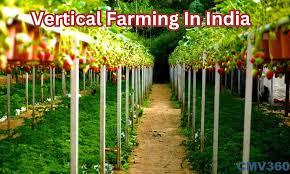
Rapid urbanization, real estate constraints, and declining per capita land availability are driving agricultural stakeholders to explore modern soil-less farming techniques to meet growing food demands. Soil-less systems eliminate soil-borne pathogens and land degradation concerns, allowing crop cultivation anywhere with stable structural support, water access, and electrical connectivity. Controlled environments safeguard crops against unpredictable weather events, hail, seasonal droughts, and unseasonal rains, ensuring consistent yield output and steady wholesale prices. Valuable industry perspectives covering modern adoption patterns and historical metrics are documented within the India Vertical Farming Market growth. Strategic expansion across secondary and tertiary urban centers is further supported by expanding organized retail networks, modern supermarket chains, e-commerce quick-commerce delivery platforms, and direct-to-consumer agricultural apps that connect growers straight to urban households.
Scaling high-density indoor agricultural projects requires overcoming operational challenges related to high capital deployment, specialized equipment costs, and skilled workforce requirements. Developing indigenous technology hardware tailored to local environmental conditions plays a critical role in bringing down manufacturing expenses for custom light setups and automated dosing pumps. Localized equipment production minimizes reliance on costly imported technology, enabling smaller producers and commercial startups to adopt modern vertical setups smoothly. Expanding access to targeted credit, micro-loans, and subsidized agricultural financing encourages emerging entrepreneurs to build indoor facilities safely. As commercial scale increases and technological infrastructure becomes more accessible, indoor farming will transition from a niche supply channel into a main food production strategy, enhancing regional food security and establishing resilient urban agricultural networks.
Why are hydroponic and aeroponic systems preferred over traditional soil beds in vertical structures?
Soil-less media eliminate soil-borne diseases, optimize root oxygen absorption, enable precise nutrient intake, and dramatically reduce system weight within multi-tiered vertical racking systems.
What are the primary operational challenges faced by early-stage indoor farm operators?
Key challenges include high initial capital expenditures, continuous electrical power costs, maintaining optimal thermal humidity balances, and finding specialized labor trained in controlled environment agronomy.
➤➤➤Explore MRFR’s Related Ongoing Coverage In Semiconductor Industry:
Road Assistance Insurance Market

 English
 Arabic
 French
 Portuguese
 Deutsch
 Turkish
 Dutch
Dutch
 Italiano
 Russian
 Romaian
 Portuguese (Brazil)
 Greek
Greek