


Data Processing Unit Market Future Outlook: Accelerated Computing Redefines Digital Infrastructure
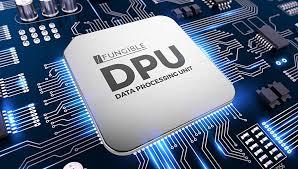
Cloud service providers and enterprise data center operators face unprecedented pressure to deliver real-time responsiveness while managing skyrocketing operational costs and energy consumption. As data volumes explode across edge environments and centralized cloud facilities, conventional server architectures fail to scale efficiently. To maintain competitive service level agreements, organizations are re-architecting their compute nodes by decoupling infrastructure control operations from application execution layers. High-speed network interfaces, real-time telemetry processing, software-defined storage management, and hardware-accelerated encryption require continuous, low-latency execution. By offloading these repetitive yet critical tasks to specialized microprocessors embedded directly within system network interface cards, compute environments achieve higher resource density and greater operational agility. This transformation is pivotal for modern software-defined data centers where flexibility, automated provisioning, and strict tenant isolation are mandatory operational requirements across multi-tenant cloud platforms.
Staying ahead in this rapidly shifting technology landscape requires evaluating the long-term Data Processing Unit Market forecast. Understanding industry projections helps infrastructure planners anticipate hardware adoption cycles, semiconductor supply chain dynamics, and emerging interconnect standards such as PCIe and CXL. As cloud architectures evolve toward fully disaggregated frameworks, hardware acceleration components will dictate how resources are pooled, allocated, and secured in real time. Organizations that leverage structural forecasts can effectively align their hardware procurement strategies with future software ecosystem requirements, ensuring long-term resilience and compatibility across hybrid cloud deployments.
Why are cloud service providers decoupling infrastructure operations from application execution layers? Decoupling infrastructure operations prevents network management, storage virtualization, and security processing from consuming CPU cores, thereby maximizing compute density for tenant applications.
What role do emerging interconnect standards play in future data center acceleration strategies? Interconnect standards facilitate ultra-fast, low-latency communication between processors, memory, and accelerators, enabling fully disaggregated and dynamically reconfigurable resource pools.
➤➤➤Explore MRFR’s Related Ongoing Coverage In Semiconductor Industry:
Variable Reluctance Sensor Market
Video Conferencing Hardware Market
Wearable Robotic Exoskeleton Market
Business Valuation Consulting Services Market

 English
 Arabic
 French
 Portuguese
 Deutsch
 Turkish
 Dutch
Dutch
 Italiano
 Russian
 Romaian
 Portuguese (Brazil)
 Greek
Greek