


Self-Propelled Artillery System Market Trends Emphasize Digital Defense
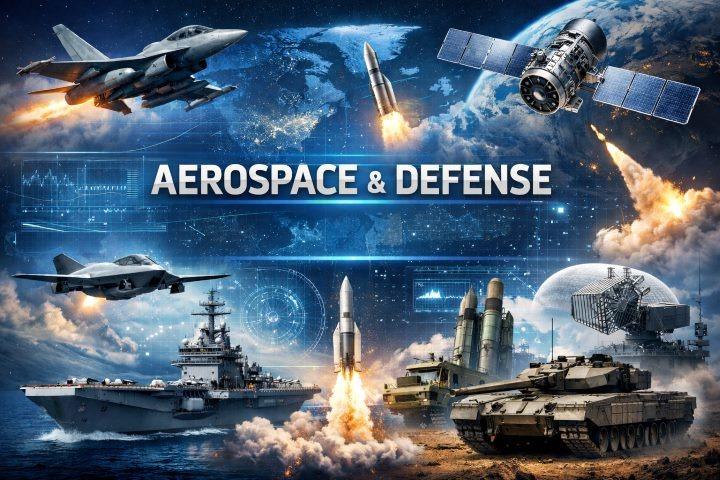
The Self-Propelled Artillery System Market is evolving as defense organizations increasingly incorporate digital technologies into military modernization programs. Automation, advanced targeting technologies, improved communications, mobility enhancements, and data-driven capabilities are transforming the development priorities of manufacturers. Market Research Future projects the market to grow at a CAGR of 4.33% from 2025 to 2035, reaching USD 14.81 billion by 2035.
The expansion of digital artillery technology highlights the broader transition toward connected and technology-intensive defense systems. Manufacturers are increasingly focused on integrating digital capabilities that can improve system coordination, maintenance, information management, and overall operational efficiency.
Artificial intelligence is emerging as an important area of technological development. According to the MRFR report, AI and machine learning can support applications such as predictive maintenance. These technologies can help defense organizations monitor equipment conditions and improve maintenance planning, potentially contributing to higher equipment availability.
Automation is another significant trend. Automated functions can reduce manual workloads and contribute to more efficient system management. As defense organizations modernize their fleets, automation is increasingly being considered alongside digital communication and information systems.
Improved targeting technology is also influencing product development. Manufacturers are investing in advanced fire-control and targeting systems as part of broader modernization initiatives. The market trend toward greater technological sophistication is encouraging companies to differentiate their products through digital capabilities.
Mobility remains a central requirement. Self-propelled platforms provide an integrated mobility advantage compared with traditional towed systems, and manufacturers are continuing to develop platforms that balance mobility, protection, reliability, and technological sophistication.
The market is also experiencing growing interest in multi-role platforms. Defense organizations want greater flexibility from their equipment investments, encouraging manufacturers to develop systems that can support broader mission requirements. This trend can increase the strategic value of platforms while creating additional opportunities for technology providers.
Another important development is the growing role of supply-chain resilience. Defense manufacturers are increasingly considering local production, strategic partnerships, and regional manufacturing capabilities. These strategies can help companies manage supply-chain risks and respond to national defense priorities.
Sustainability is also becoming part of the competitive discussion. The MRFR report identifies digitalization and sustainability among emerging competitive trends. Manufacturers may increasingly focus on more efficient propulsion technologies, improved lifecycle management, and responsible manufacturing processes.
Competition is becoming increasingly technology-oriented. BAE Systems, Rheinmetall, Lockheed Martin, Northrop Grumman, Elbit Systems, Hanwha Defense, General Dynamics, KMW, and Nexter are among the major companies identified in the market.
Regional modernization programs are further supporting technological adoption. North America maintains the largest market position, while Europe continues to invest in defense collaboration and modernization. Asia-Pacific is expanding rapidly as governments in countries including India, South Korea, and Japan increase defense investments.
The future market environment is therefore likely to favor companies capable of combining hardware innovation with digital technologies. AI-supported maintenance, automation, advanced communications, improved mobility, and connected defense architectures are expected to remain important themes.
By 2035, digital transformation could become one of the defining characteristics of the Self-Propelled Artillery System Market. Manufacturers that invest in technology while maintaining reliability, interoperability, and supply-chain resilience can strengthen their competitive position in the global defense industry.
FAQs
1. What technologies are influencing the market?
Automation, AI, machine learning, digital communications, advanced targeting systems, and improved mobility technologies are important trends.
2. Why is AI relevant to the market?
AI and machine learning are being explored for applications such as predictive maintenance and improved system management.
3. What is the expected CAGR through 2035?
The market is projected to grow at a CAGR of 4.33% between 2025 and 2035.

 English
 Arabic
 French
 Spanish
 Portuguese
 Deutsch
 Turkish
 Dutch
Dutch
 Russian
 Romaian
 Portuguese (Brazil)
 Greek
Greek