


U4GM Diablo II Resurrected: What Makes This ARPG a Lasting Classic
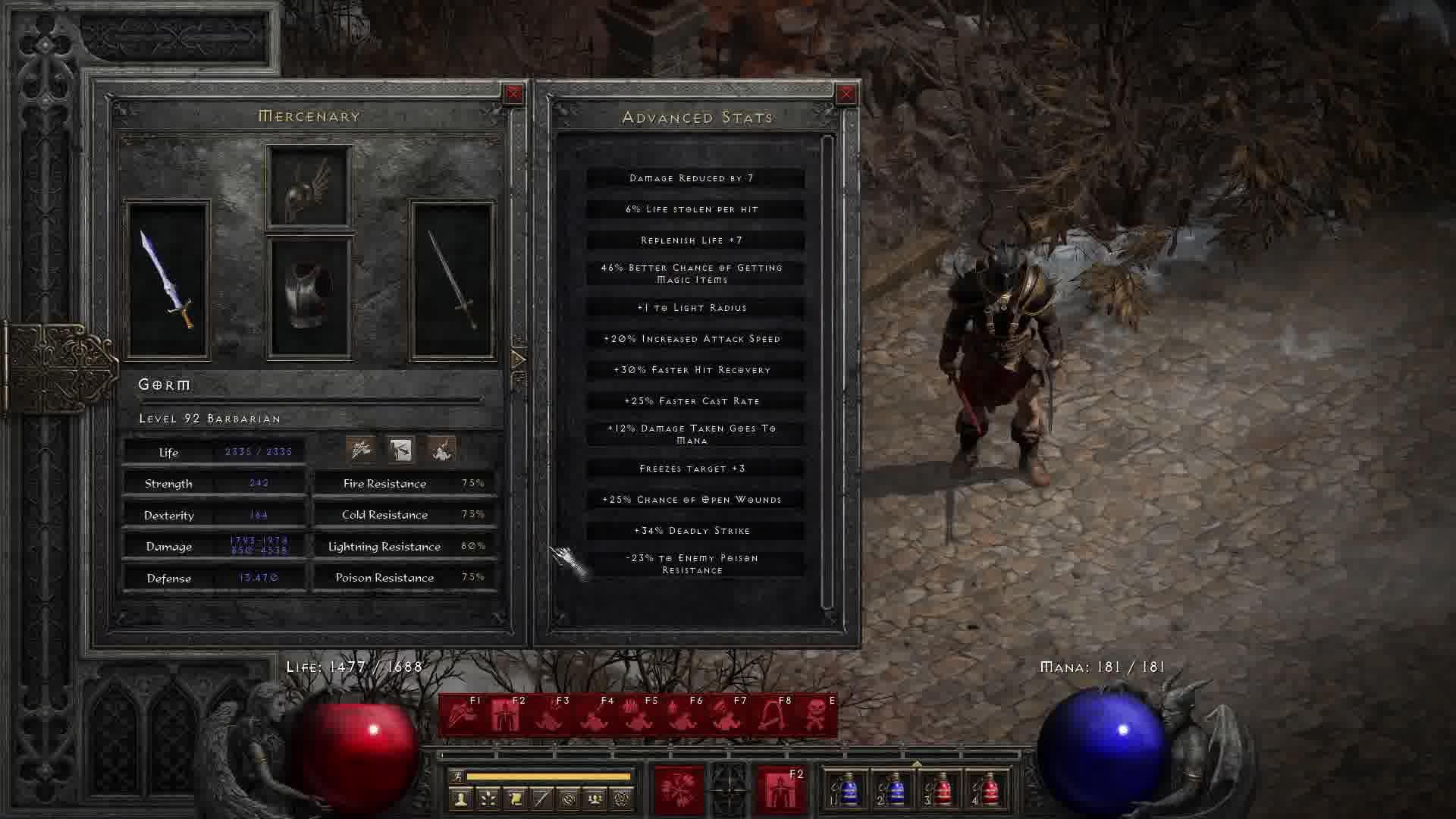
For many D2R Items players, killing demons is only half the experience. The other half is figuring out what to do with the equipment those demons leave behind. The marketplace becomes its own form of gameplay, requiring knowledge, patience, negotiation, and an understanding of what other players value.
At first, trading may appear simple. Find something useful, offer it to another player, and receive something in return. Experienced players quickly discover that the system is far more complicated.
The value of an item can depend on tiny differences in attributes. Two versions of the same unique item may have noticeably different desirability because one has a better roll. Some items are valuable because they are rare. Others are valuable because popular character builds depend on them.
This means players develop an informal expertise.
They learn which items deserve closer inspection and which can be ignored. They learn the difference between something that looks powerful and something that is genuinely desirable. They also learn that market demand can shift as players experiment with new builds and strategies.
This knowledge can be more important than raw farming efficiency. A player who understands the market may turn several modest finds into a valuable upgrade through smart trading.
The high-rune system reinforces this dynamic. Runes such as Ber and Jah function as widely recognized units of value. Their scarcity makes them desirable, while their usefulness in powerful runewords creates consistent demand.
A lucky drop can therefore have consequences beyond one character. It can finance equipment for multiple builds, provide trading capital, or allow a player to pursue a completely new playstyle.
For some players, the prospect of obtaining D2R Items efficiently becomes an important part of their overall strategy. Others deliberately avoid shortcuts because they enjoy the uncertainty of finding everything through gameplay.
Neither approach changes the central fact that Diablo II has an unusually rich relationship between combat and commerce.
The marketplace also produces a distinctive language. Players use abbreviations, item names, rune names, and shorthand descriptions to communicate quickly. A few words can convey a surprisingly large amount of information to someone who understands the terminology.
This language creates a sense of belonging. New players gradually learn it by participating in trades and reading community discussions. Eventually, terminology that once seemed confusing becomes second nature.
There is also an element of negotiation psychology. Players have to decide when to make an offer, when to counter, and when to walk away. They must consider whether they need an item immediately or can wait for a better opportunity.
These decisions are meaningful because resources are limited. A rune spent today cannot be spent tomorrow. An item traded away cannot necessarily be recovered.
Outside marketplaces have added another dimension to this ecosystem, including services associated with cheap D2R Items. These options exist alongside traditional player-driven trading, illustrating how the game's equipment culture has evolved as the community has expanded.
Yet the original marketplace remains special because it creates a feeling of discovery. A player never knows exactly what another person will offer.
One trade can also lead to another. A player receives an item, realizes they do not need it, and trades it again. The object moves through the community, potentially passing between many different players.
In that sense, equipment becomes part of a circulating economy rather than a collection of isolated possessions.
The marketplace can even influence how players build characters. A person might discover that a particular item is affordable and decide to try a build around it. Another might save valuable runes for weeks before finally completing an ambitious equipment goal.
This gives the game a second progression system. The character becomes stronger through experience and equipment, while the player becomes more capable through economic knowledge.
That combination is one of buy D2R Ladder Items most enduring innovations. The battlefields provide the raw materials, but the community determines much of what those materials mean.
The result is an economy that feels less like a feature attached to the game and more like another game existing inside it.

 English
 Arabic
 French
 Spanish
 Portuguese
 Deutsch
 Turkish
 Dutch
Dutch
 Italiano
 Russian
 Romaian
 Portuguese (Brazil)