


Grain Protectants Market: Advancing Agricultural Storage and Grain Safety
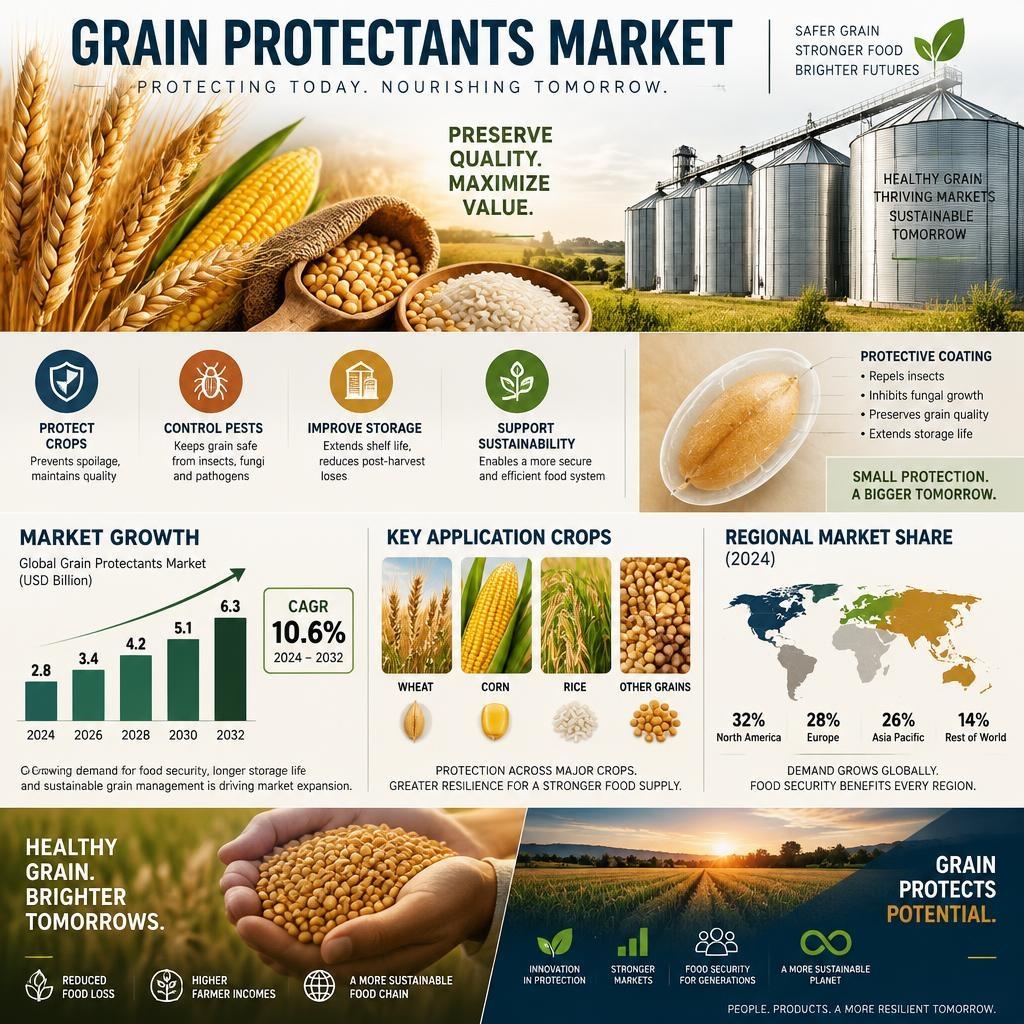
Introduction to the Grain Protectants Market
The Grain Protectants Market plays an important role in maintaining agricultural commodity quality and supporting effective post-harvest management. Grains are essential agricultural products used in food manufacturing, animal nutrition, and industrial processing. After harvesting, these commodities must be stored under suitable conditions to maintain their quality and protect them from insects and other storage-related problems. Grain protection has therefore become an important consideration for farmers, agricultural distributors, warehouse operators, and food processing businesses.
The increasing demand for stored grain insect protection and agricultural grain preservation products highlights the importance of effective pest management throughout the agricultural supply chain. These solutions help address insect-related damage and support the maintenance of stored grain quality. Manufacturers are developing different formulations and protection approaches to meet the requirements of various grain categories and storage environments. Growing awareness of post-harvest management is also encouraging agricultural businesses to adopt more organized grain protection practices.
Importance of Agricultural Storage Management
Agricultural storage management is essential for protecting harvested commodities. Grains may remain in storage before reaching food manufacturers, animal feed producers, or other commercial buyers. During this period, inappropriate storage conditions can increase the possibility of pest infestation and product deterioration.
Stored grain insects can affect grain kernels, contaminate commodities, and create difficulties during processing. These problems can influence the quality and suitability of agricultural products.
Grain protectants are used as part of appropriate pest management programs to help protect stored commodities. Their selection depends on the grain type, intended use, target pests, and applicable regulations.
Storage hygiene and environmental management are equally important. Cleaning storage facilities, removing residual grain, controlling moisture, and conducting regular inspections can support effective protection.
Growing Awareness of Post-Harvest Loss Prevention
Post-harvest losses are an important concern for agricultural businesses. Protecting harvested grains helps maintain the quality of agricultural commodities and supports efficient supply chain management.
Insect infestations can create additional cleaning, handling, and storage requirements. Grain protection strategies can help address these challenges by combining suitable products with preventive storage practices.
Farmers and storage operators are increasingly recognizing that protection should begin before grain enters storage. Proper preparation of storage facilities can reduce the presence of pests and improve overall storage management.
This creates opportunities for manufacturers offering products and solutions designed for different post-harvest protection requirements.
Applications Across Agricultural Commodities
Wheat is an important agricultural commodity that requires suitable storage management. Grain protection practices help maintain quality and manage insect-related concerns.
Rice storage also requires appropriate protection because insect activity can affect stored commodities and create handling challenges.
Maize is another important application area. It is used extensively in food processing, livestock feed, and industrial production.
Other cereal grains and stored agricultural commodities also require suitable protection strategies depending on their characteristics and intended applications.
Manufacturers can develop specialized products to address the different storage requirements associated with these commodities.
Developments in Grain Protection Technology
Technology is influencing the way grain protection products are developed and used. Manufacturers are focusing on formulation consistency, application suitability, product handling, and quality management.
Improved storage monitoring practices can also help operators identify potential problems. Inspection systems and environmental monitoring tools can support better awareness of storage conditions.
Integrated pest management is gaining importance because it combines different protection methods instead of relying entirely on chemical treatments.
These approaches can include storage sanitation, pest monitoring, facility maintenance, and approved pest control products.
Role of Grain Storage Operators
Storage operators play an important role in maintaining commodity quality. Their responsibilities include managing storage facilities, monitoring environmental conditions, maintaining equipment, and following suitable pest management procedures.
Proper documentation and inspection practices can help identify potential problems before they become more difficult to manage.
Operators must also ensure that any grain protection products are approved for the intended commodity and application.
Worker safety and regulatory compliance are essential considerations when handling agricultural pest control products.
Challenges in the Grain Protectants Industry
The industry faces challenges associated with pest resistance, regulatory requirements, product safety, and environmental considerations.
Manufacturers must ensure that their formulations comply with relevant agricultural chemical regulations.
Changing pest behavior can also influence product effectiveness, making integrated pest management an important consideration.
Agricultural businesses must carefully evaluate product instructions and maintain appropriate storage conditions.
Future Outlook
The Grain Protectants Market is expected to remain relevant as agricultural businesses continue to prioritize grain quality and post-harvest protection.
Manufacturers can explore opportunities through improved formulations, specialized products, better application compatibility, and responsible pest management technologies.
The industry's future will depend on its ability to support effective grain protection while addressing food safety, environmental responsibility, and changing agricultural requirements.
Frequently Asked Questions
Q1. Why is grain protection important for agricultural storage?
Grain protection helps manage insect-related damage, maintain stored commodity quality, and support effective post-harvest handling throughout the agricultural supply chain.
Q2. Which agricultural commodities require grain protection?
Wheat, rice, maize, and other stored cereal grains may require appropriate pest management depending on their storage conditions and intended applications.

 English
 Arabic
 French
 Spanish
 Portuguese
 Deutsch
 Turkish
 Italiano
 Russian
 Romaian
 Portuguese (Brazil)
 Greek