





Techawks AI is a social networking platform for everyone passionate about artificial intelligence, emerging technologies, software development, automation, and digital innovation. Whether you're a beginner, student, developer, researcher, entrepreneur, or industry expert, you'll find valuable discussions and resources to expand your knowledge.
Join a growing community where members discover AI tools, explore real-world use cases, discuss the latest tech trends, share projects, exchange ideas, and learn from professionals around the world. Stay informed, build meaningful connections, and grow your skills in the rapidly evolving world of AI and technology.
Join a growing community where members discover AI tools, explore real-world use cases, discuss the latest tech trends, share projects, exchange ideas, and learn from professionals around the world. Stay informed, build meaningful connections, and grow your skills in the rapidly evolving world of AI and technology.
-
PBID: 0230001500000003
-
35 people like this
-
59 Posts
-
59 Photos
-
0 Videos
-
Reviews
-
Science and Technology
Search

 Arabic
 French
 Spanish
 Portuguese
 Deutsch
 Turkish
 Dutch
Dutch
 Italiano
 Russian
 Romaian
 Portuguese (Brazil)
 Greek
Greek
Recent Updates
-
Stop Replacing Deterministic Code with Reasoning Tokens: The Inference Scaling Trap
A dangerous assumption is quietly taking over AI engineering:
“Now that models have test-time compute and internal chain-of-thought, we can ditch complex state machines and deterministic evaluators.”
Here is the hard truth: Test-time compute scales search, not deterministic truth.
When you hand an open-ended reasoning model a multi-step task without rigid structural scaffolding, three costly architectural bottlenecks happen:
The Reasoning Token Tax
Reasoning models don't just generate visible outputs; they burn hundreds—often thousands—of hidden thinking tokens exploring dead-end paths. For edge cases in production, you trade a 200ms API call for a 25-second GPU-occupancy spike, obliterating p95 latency and spiking compute bills.
Step Validity vs. Faithfulness
A model can produce an impeccably rationalized intermediate chain of thought and still output a hallucinated invariant. Internal reasoning traces are exploratory sampling paths, not formal proofs. If your system relies on the model self-policing its own state transitions, you will hit silent logic drift.
Overthinking Simple Tasks
Reasoning models struggle with dynamic token budgeting unless strictly constrained. Given an unstructured extraction or classification task under vague instructions, a reasoner will frequently deploy thousands of tokens debating trivial syntactic rules before returning a simple JSON payload.
The Architectural Fix: The Hybrid Verification Pattern
Don’t treat reasoning models as monolithic solvers. Treat them as isolated node engines in an explicit directed acyclic graph (DAG):
Fast-Path Triage: Route standard extraction, classification, and predictable deterministic logic through fast, distilled, lightweight models (or rule-based parsers).
Constrained Deliberation: Reserve test-time compute exclusively for high-entropy decision forks (e.g., dynamic planning, ambiguous code synthesis, diagnostic anomaly search).
Deterministic Sandboxing: Never let a reasoning trace decide if its own output is valid. Pair every reasoning step with an automated verifier—a compiler, a schema validator, a unit test, or an environment execution check.
Inference compute is a powerful tool, but structured engineering remains your ultimate safety barrier.
Discussion Question
Where have you seen reasoning models fail hardest in your production pipelines: unpredictable latency spikes, rationalized hallucinations, or burning tokens on simple subtasks?
CTA
Want to stay ahead of cutting-edge architectures and production-grade design patterns? Join AI Builders & Enthusiasts at Techawks AI to build reliable, high-performance intelligent systems together.Stop Replacing Deterministic Code with Reasoning Tokens: The Inference Scaling Trap A dangerous assumption is quietly taking over AI engineering: “Now that models have test-time compute and internal chain-of-thought, we can ditch complex state machines and deterministic evaluators.” Here is the hard truth: Test-time compute scales search, not deterministic truth. When you hand an open-ended reasoning model a multi-step task without rigid structural scaffolding, three costly architectural bottlenecks happen: The Reasoning Token Tax Reasoning models don't just generate visible outputs; they burn hundreds—often thousands—of hidden thinking tokens exploring dead-end paths. For edge cases in production, you trade a 200ms API call for a 25-second GPU-occupancy spike, obliterating p95 latency and spiking compute bills. Step Validity vs. Faithfulness A model can produce an impeccably rationalized intermediate chain of thought and still output a hallucinated invariant. Internal reasoning traces are exploratory sampling paths, not formal proofs. If your system relies on the model self-policing its own state transitions, you will hit silent logic drift. Overthinking Simple Tasks Reasoning models struggle with dynamic token budgeting unless strictly constrained. Given an unstructured extraction or classification task under vague instructions, a reasoner will frequently deploy thousands of tokens debating trivial syntactic rules before returning a simple JSON payload. The Architectural Fix: The Hybrid Verification Pattern Don’t treat reasoning models as monolithic solvers. Treat them as isolated node engines in an explicit directed acyclic graph (DAG): Fast-Path Triage: Route standard extraction, classification, and predictable deterministic logic through fast, distilled, lightweight models (or rule-based parsers). Constrained Deliberation: Reserve test-time compute exclusively for high-entropy decision forks (e.g., dynamic planning, ambiguous code synthesis, diagnostic anomaly search). Deterministic Sandboxing: Never let a reasoning trace decide if its own output is valid. Pair every reasoning step with an automated verifier—a compiler, a schema validator, a unit test, or an environment execution check. Inference compute is a powerful tool, but structured engineering remains your ultimate safety barrier. Discussion Question Where have you seen reasoning models fail hardest in your production pipelines: unpredictable latency spikes, rationalized hallucinations, or burning tokens on simple subtasks? CTA Want to stay ahead of cutting-edge architectures and production-grade design patterns? Join AI Builders & Enthusiasts at Techawks AI to build reliable, high-performance intelligent systems together.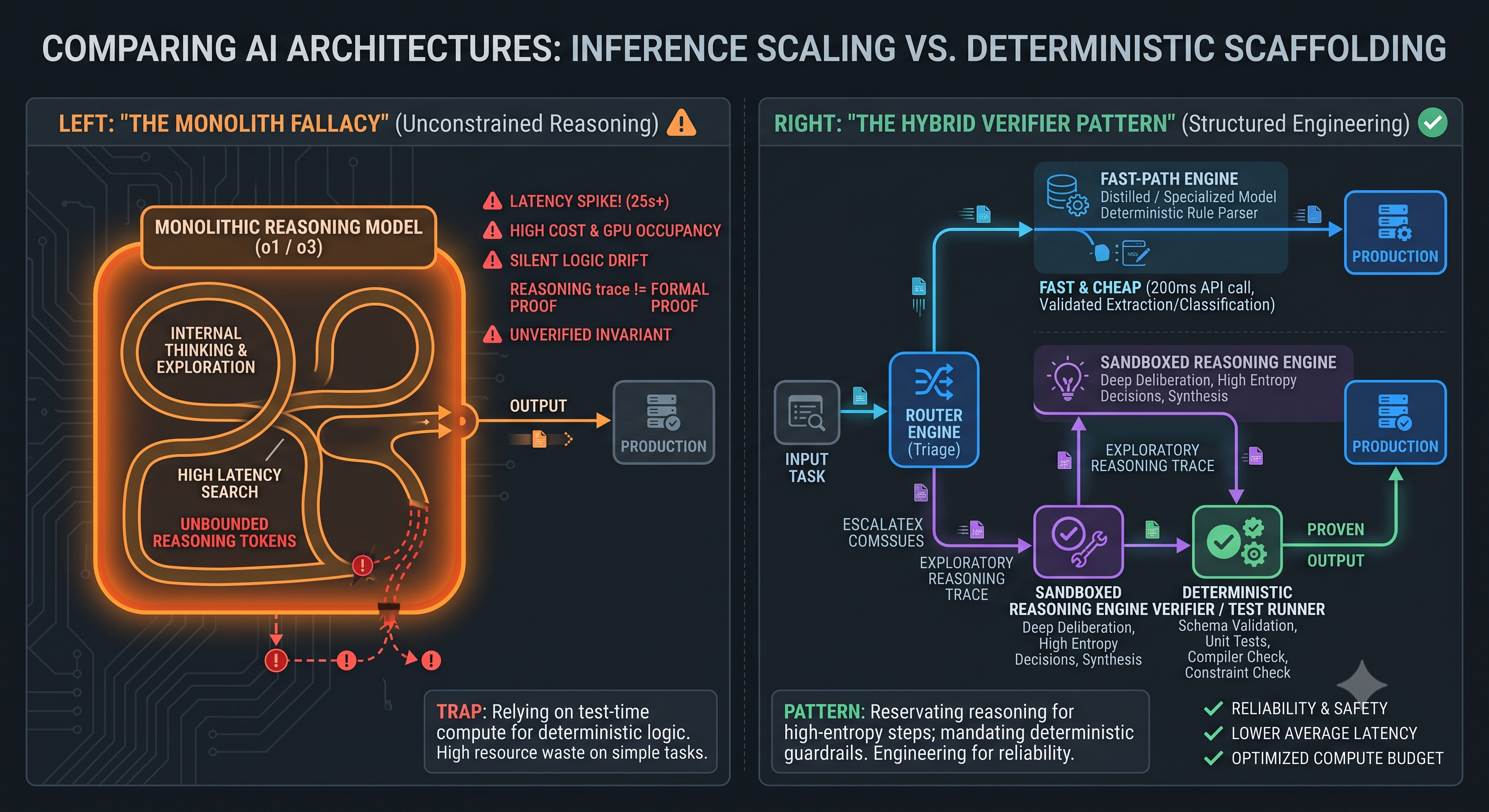 0 Comments 0 Shares 24 Views 0 Reviews
 -
Your AI Coding Agent Is Flooding Production With Review Debt
Hook
AI coding agents are merging code 2.3x faster, but team review throughput is grinding to a halt. Generating code isn't your bottleneck anymore—verifying correctness is.
Main Post
Engineering teams are celebrating massive gains in developer velocity, yet engineering leads are quietly drowning in 1,000-line pull requests that sit unreviewed for weeks.
Autonomous coding agents can churn out complex boilerplates, schema updates, and multi-file refactors in minutes. But when junior and mid-level builders merge code they don't fundamentally understand, they convert generative speed into massive technical debt.
If you want to build reliable systems with modern AI agents, rethink your engineering loop:
Enforce Sub-200-Line PR Caps: If an agent refactors four files across three layers, force it to chunk the changes into isolated, verifiable PRs. An agent that generates a monolithic diff is an agent failing the review process.
TDD Is Non-Negotiable: Never prompt an agent with "build this feature." Prompt it first with: "Write unit and integration tests covering standard, edge, and failure states for X interface." Validate those failing tests before prompting the agent to write implementation code.
Kill Prompt-and-Pray Architecture: An agent cannot deduce your system's long-term latency or consistency guarantees from file context alone. If you haven't drafted the API spec, state lifecycle, and error contracts yourself, the agent will simply guess.
Writing code is now virtually free; reviewing, maintaining, and debugging distributed agent output is where all the engineering value lives.
Discussion Question
Has your team introduced strict sizing caps or automated review guards for agent-generated PRs yet, or are developers still allowed to dump raw agent diffs straight into review?
CTA (Join AI Builders & Enthusiasts)
Ready to look past basic code autocomplete and master production-grade AI system architecture?
👉 Join the Techawks AI Builders & Enthusiasts Community to exchange production patterns, system design playbooks, and real agent workflowsYour AI Coding Agent Is Flooding Production With Review Debt Hook AI coding agents are merging code 2.3x faster, but team review throughput is grinding to a halt. Generating code isn't your bottleneck anymore—verifying correctness is. Main Post Engineering teams are celebrating massive gains in developer velocity, yet engineering leads are quietly drowning in 1,000-line pull requests that sit unreviewed for weeks. Autonomous coding agents can churn out complex boilerplates, schema updates, and multi-file refactors in minutes. But when junior and mid-level builders merge code they don't fundamentally understand, they convert generative speed into massive technical debt. If you want to build reliable systems with modern AI agents, rethink your engineering loop: Enforce Sub-200-Line PR Caps: If an agent refactors four files across three layers, force it to chunk the changes into isolated, verifiable PRs. An agent that generates a monolithic diff is an agent failing the review process. TDD Is Non-Negotiable: Never prompt an agent with "build this feature." Prompt it first with: "Write unit and integration tests covering standard, edge, and failure states for X interface." Validate those failing tests before prompting the agent to write implementation code. Kill Prompt-and-Pray Architecture: An agent cannot deduce your system's long-term latency or consistency guarantees from file context alone. If you haven't drafted the API spec, state lifecycle, and error contracts yourself, the agent will simply guess. Writing code is now virtually free; reviewing, maintaining, and debugging distributed agent output is where all the engineering value lives. Discussion Question Has your team introduced strict sizing caps or automated review guards for agent-generated PRs yet, or are developers still allowed to dump raw agent diffs straight into review? CTA (Join AI Builders & Enthusiasts) Ready to look past basic code autocomplete and master production-grade AI system architecture? 👉 Join the Techawks AI Builders & Enthusiasts Community to exchange production patterns, system design playbooks, and real agent workflows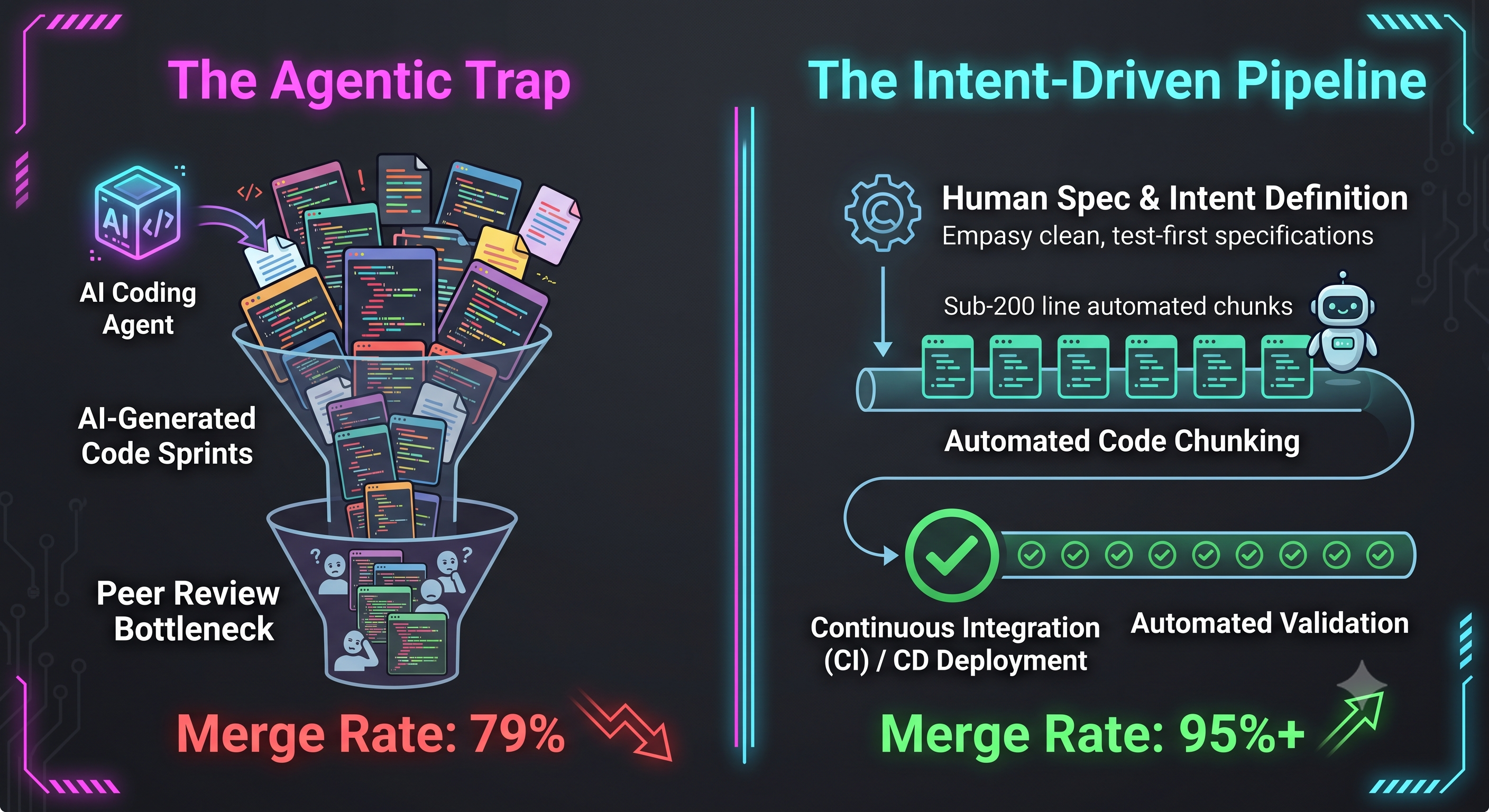 0 Comments 0 Shares 34 Views 0 Reviews
 -
The 4-Step Architecture Checklist for Designing Reliable Agentic AI Workflows
As AI builders, the temptation is often to jump straight into complex multi-agent setups. However, scaling agentic systems requires clean separation between deterministic orchestration and non-deterministic reasoning.
To build agentic applications that actually survive production traffic, run through this Agentic Workflow Architecture Checklist:
1. Choose the Right Core Metaphor: Match your system topology to the problem. Use single-agent planning loops for sequential tasks that share state, and reserve orchestrator-worker multi-agent networks strictly for parallelized subtasks.
2. Constrain Tool Interfaces & Scopes: Never give an agent broad, unstructured access. Expose precise, well-typed tools with deterministic validation schemas to prevent unexpected API execution paths.
3. Build Self-Reflection and Validation Loops: Do not rely on single-pass generation. Implement explicit validation steps—such as unit-test execution or "LLM-as-a-judge" semantic checks—so agents can catch and correct their own errors iteratively.
4. Log Full Decision Contexts, Not Just Outputs: Capture the canonical history of the session. Track not only the tool chosen, but the alternative tools considered, parameters passed, and validator outcomes to make agent debugging deterministic.
Designing resilient software means engineering boundaries that keep agentic autonomy predictable.
Discussion Question
Are you leaning toward single-agent planning loops or multi-agent architectures for your current projects? What’s your biggest bottleneck when handling agent state? Drop your insights below!
CTA (Join AI Builders & Enthusiasts)
Want to master production-grade AI engineering, swap architectural patterns, and build alongside top practitioners? Join AI Builders & Enthusiasts today to connect with developers worldwide!The 4-Step Architecture Checklist for Designing Reliable Agentic AI Workflows As AI builders, the temptation is often to jump straight into complex multi-agent setups. However, scaling agentic systems requires clean separation between deterministic orchestration and non-deterministic reasoning. To build agentic applications that actually survive production traffic, run through this Agentic Workflow Architecture Checklist: 1. Choose the Right Core Metaphor: Match your system topology to the problem. Use single-agent planning loops for sequential tasks that share state, and reserve orchestrator-worker multi-agent networks strictly for parallelized subtasks. 2. Constrain Tool Interfaces & Scopes: Never give an agent broad, unstructured access. Expose precise, well-typed tools with deterministic validation schemas to prevent unexpected API execution paths. 3. Build Self-Reflection and Validation Loops: Do not rely on single-pass generation. Implement explicit validation steps—such as unit-test execution or "LLM-as-a-judge" semantic checks—so agents can catch and correct their own errors iteratively. 4. Log Full Decision Contexts, Not Just Outputs: Capture the canonical history of the session. Track not only the tool chosen, but the alternative tools considered, parameters passed, and validator outcomes to make agent debugging deterministic. Designing resilient software means engineering boundaries that keep agentic autonomy predictable. Discussion Question Are you leaning toward single-agent planning loops or multi-agent architectures for your current projects? What’s your biggest bottleneck when handling agent state? Drop your insights below! CTA (Join AI Builders & Enthusiasts) Want to master production-grade AI engineering, swap architectural patterns, and build alongside top practitioners? Join AI Builders & Enthusiasts today to connect with developers worldwide!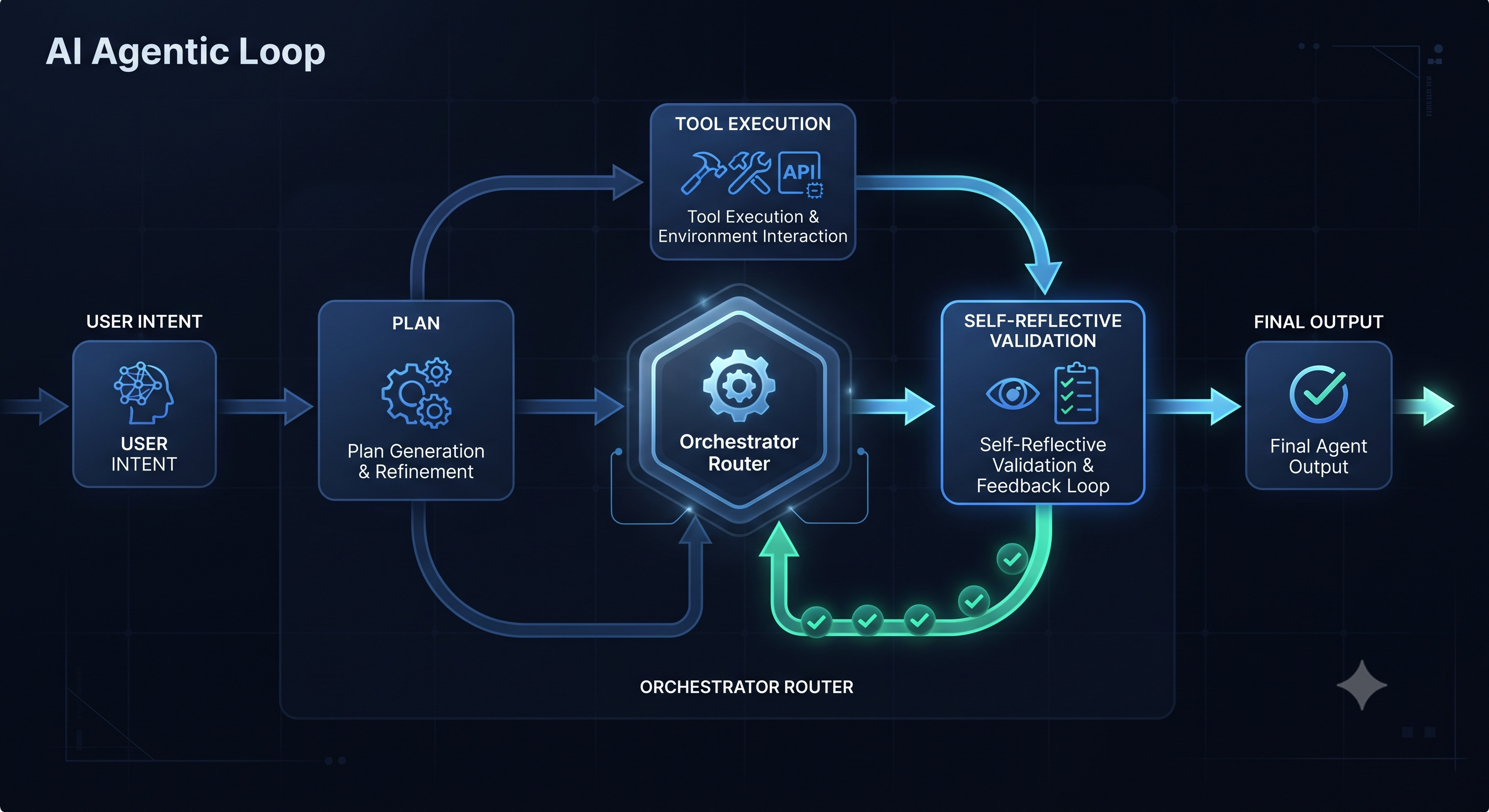 0 Comments 0 Shares 54 Views 0 Reviews
 -
Context Drift Is Killing Production Agents: Why Context Engineering Replaced Prompt Engineering
Most AI builders start by stuffing the prompt: instructions, system schemas, retrieved vector chunks, and conversation history all dumped into one context window.
In production, this triggers Context Rot:
Unstructured conversation history inflates token cost linearly.
Irrelevant retrieved chunks dilute the model's attention weights on system instructions.
Latency scales, while reasoning precision drops.
The shift in 2026 isn't about larger token budgets—it is about transitioning from Prompt Engineering (crafting instructions) to Context Engineering (managing the dynamic information ecosystem at runtime).
The 3 Rules of Context Hygiene for Builders:
Context Pruning via Semantic Delta Updates
Never pass raw back-and-forth chat history to reasoning agents. Maintain an external key-value state store. At each turn, compute the delta (only what changed, what was decided, and the immediate target payload) and pass only structured summaries back into the model's scratchpad.
Decouple Retrieval from Inference (Agentic RAG)
Naive vector search brings back "semantically similar" noise that pollutes context. Use a lightweight router agent to grade retrieved documents before they touch the inference context. If a retrieved chunk does not contain a verifiable entity needed for the query, drop it at the retrieval gateway.
Strict Schema Boundaries (Enforced Structured Outputs)
Free-text agent communication is fragile. Bind every inter-agent call and tool invocation to strict schemas (Pydantic / Zod). This keeps payloads compact, eliminates markdown-parsing overhead, and guarantees deterministic downstream parsing.
Prompt engineering tells the model how to think. Context engineering controls what the model can see. The best AI engineers obsess over what to keep out of the prompt.
Discussion Question
When scaling multi-turn reasoning pipelines: How are you handling memory degradation—summarization passes, sliding window truncation, or external state machines with semantic diffs? What’s your preferred stack?
CTA
Level up your AI engineering and architecture game.
👉 Join the Techawks AI Builders & Enthusiasts Community to collaborate, share production architectures, and debug real-world pipelines with fellow developers.Context Drift Is Killing Production Agents: Why Context Engineering Replaced Prompt Engineering Most AI builders start by stuffing the prompt: instructions, system schemas, retrieved vector chunks, and conversation history all dumped into one context window. In production, this triggers Context Rot: Unstructured conversation history inflates token cost linearly. Irrelevant retrieved chunks dilute the model's attention weights on system instructions. Latency scales, while reasoning precision drops. The shift in 2026 isn't about larger token budgets—it is about transitioning from Prompt Engineering (crafting instructions) to Context Engineering (managing the dynamic information ecosystem at runtime). The 3 Rules of Context Hygiene for Builders: Context Pruning via Semantic Delta Updates Never pass raw back-and-forth chat history to reasoning agents. Maintain an external key-value state store. At each turn, compute the delta (only what changed, what was decided, and the immediate target payload) and pass only structured summaries back into the model's scratchpad. Decouple Retrieval from Inference (Agentic RAG) Naive vector search brings back "semantically similar" noise that pollutes context. Use a lightweight router agent to grade retrieved documents before they touch the inference context. If a retrieved chunk does not contain a verifiable entity needed for the query, drop it at the retrieval gateway. Strict Schema Boundaries (Enforced Structured Outputs) Free-text agent communication is fragile. Bind every inter-agent call and tool invocation to strict schemas (Pydantic / Zod). This keeps payloads compact, eliminates markdown-parsing overhead, and guarantees deterministic downstream parsing. Prompt engineering tells the model how to think. Context engineering controls what the model can see. The best AI engineers obsess over what to keep out of the prompt. Discussion Question When scaling multi-turn reasoning pipelines: How are you handling memory degradation—summarization passes, sliding window truncation, or external state machines with semantic diffs? What’s your preferred stack? CTA Level up your AI engineering and architecture game. 👉 Join the Techawks AI Builders & Enthusiasts Community to collaborate, share production architectures, and debug real-world pipelines with fellow developers. 0 Comments 0 Shares 164 Views 0 Reviews
 -
Stop Tuning Prompts: Why "Context Engineering" Is Replacing Prompt Engineering in Production AI
Most developers start building LLM applications by obsessing over prompt phrasing: adding few-shot examples, adjusting personas, or stacking markdown directives.
In simple, single-turn chat apps, that works. But once you move into production-grade AI agents—systems managing tool executions, multi-step RAG, and memory—prompt engineering hits a wall.
The real bottleneck in 2026 isn't prompt formatting; it is attention economics across long context windows. Even models with massive token budgets suffer from predictable degradation:
Context Rot & Poisoning: As raw tool returns, conversation history, and retrieval dumps pile up, the attention distribution flattens. Irrelevant tokens introduce semantic noise, causing the model to miss instructions placed earlier in the window.
The "Lost-in-the-Middle" Reality: Long-context capacity does not mean equal recall. Models attend disproportionately to the start and end of their context budget.
The Engineering Shift: Context Curation over Prompt Tuning
Production AI teams are shifting focus from prompt engineering to Context Engineering—the systematic discipline of dynamically curating what occupies the model's active attention budget:
State Compression & Eviction: Instead of appending full conversation histories, implement rolling summarization and state-machine tracking. Evict completed tool outputs and retain only structured state deltas.
Dynamic Tool Schema Injection: Don’t dump 30 API schemas into every call. Route requests through an orchestration layer that dynamically binds only the 2–3 tool definitions relevant to the current sub-task.
Structured Context Sandboxing: Separate retrieved ground-truth context from conversational trajectory using strict XML/JSON delimiters, preventing user chat tokens from interfering with retrieved source text.
Prompt engineering tells the model how to think. Context engineering controls what it is allowed to see. The reliability of your agent depends entirely on keeping that working window lean, high-density, and noise-free.
Discussion Question
How do you manage agent memory in your stack: simple sliding token windows, vector retrieval over past interactions, or structured state graphs? What failure modes have you hit?
CTA
Ready to build robust, production-grade agent systems? Connect with developers, researchers, and practitioners in AI Builders & Enthusiasts to exchange architectures, benchmarks, and production-tested patterns.Stop Tuning Prompts: Why "Context Engineering" Is Replacing Prompt Engineering in Production AI Most developers start building LLM applications by obsessing over prompt phrasing: adding few-shot examples, adjusting personas, or stacking markdown directives. In simple, single-turn chat apps, that works. But once you move into production-grade AI agents—systems managing tool executions, multi-step RAG, and memory—prompt engineering hits a wall. The real bottleneck in 2026 isn't prompt formatting; it is attention economics across long context windows. Even models with massive token budgets suffer from predictable degradation: Context Rot & Poisoning: As raw tool returns, conversation history, and retrieval dumps pile up, the attention distribution flattens. Irrelevant tokens introduce semantic noise, causing the model to miss instructions placed earlier in the window. The "Lost-in-the-Middle" Reality: Long-context capacity does not mean equal recall. Models attend disproportionately to the start and end of their context budget. The Engineering Shift: Context Curation over Prompt Tuning Production AI teams are shifting focus from prompt engineering to Context Engineering—the systematic discipline of dynamically curating what occupies the model's active attention budget: State Compression & Eviction: Instead of appending full conversation histories, implement rolling summarization and state-machine tracking. Evict completed tool outputs and retain only structured state deltas. Dynamic Tool Schema Injection: Don’t dump 30 API schemas into every call. Route requests through an orchestration layer that dynamically binds only the 2–3 tool definitions relevant to the current sub-task. Structured Context Sandboxing: Separate retrieved ground-truth context from conversational trajectory using strict XML/JSON delimiters, preventing user chat tokens from interfering with retrieved source text. Prompt engineering tells the model how to think. Context engineering controls what it is allowed to see. The reliability of your agent depends entirely on keeping that working window lean, high-density, and noise-free. Discussion Question How do you manage agent memory in your stack: simple sliding token windows, vector retrieval over past interactions, or structured state graphs? What failure modes have you hit? CTA Ready to build robust, production-grade agent systems? Connect with developers, researchers, and practitioners in AI Builders & Enthusiasts to exchange architectures, benchmarks, and production-tested patterns. 0 Comments 0 Shares 179 Views 0 Reviews
 -
Speculative Decoding: Breaking the Memory-Bound Bottleneck in LLM Inference
Autoregressive token generation wastes up to 70% of modern GPU compute capacity.
If your inference pipeline runs strictly token-by-token, your bottleneck isn’t arithmetic—it’s memory bandwidth. Here is how Speculative Decoding solves the memory wall and doubles your generation throughput without degrading output quality.
Main Post
Every AI builder hits the same production wall: serving large foundation models (e.g., 70B+ parameters) introduces high Inter-Token Latency (ITL).
To fix it, engineers often jump to aggressive 4-bit quantization, sacrificing model reasoning. But there is a mathematically lossless alternative built directly into modern serving engines like vLLM and TensorRT-LLM: Speculative Decoding.
The Core Problem: The Memory-Bound Trap
Generating a single token autoregressively requires loading every parameter of a multi-billion-parameter model from high-bandwidth memory (HBM) into SRAM/cache, only to perform a single forward pass. Compute cores sit idle while waiting for weights to transfer over the bus.
How Speculative Decoding Works (Draft & Verify)
Speculative decoding turns sequential decoding into a parallel verification pass using two cooperating components:
The Draft Phase: A fast, low-parameter "draft model" (e.g., a 1B companion or multi-token prediction heads) generates a batch of $K$ speculative tokens cheaply.
The Verification Phase: The primary target model evaluates all $K$ tokens simultaneously in one single forward pass. Because compute units process sequences in parallel, checking 5 candidate tokens costs nearly the same GPU time as evaluating a single token
Rejection Sampling: The system accepts valid predictions until the first discrepancy occurs, discarding the rest and preserving the exact target model probability distribution.
Draft Model: "The capital of France is" ──> [Paris][,][which][is] (Generated sequentially, cheap)
│
Target Model: Verifies all 4 tokens in ONE parallel forward pass
Result: Accepts [Paris][,][which], rejects [is] ──> Emits corrected token
Speedup: 3+ tokens yielded in the time of a single target step
Production Takeaway for Builders
Target High-Entropy Discrepancies: Speculative decoding performs best on structured outputs, code boilerplate, and predictable natural language where draft acceptance ($\alpha$) exceeds 60–70%.
Draft Model Selection: Your draft model should share the same tokenizer vocabulary as the target model to eliminate costly cross-tokenizer alignment overhead.
Lossless Acceleration: When paired with proper rejection sampling, speculative decoding is mathematically guaranteed not to degrade model quality—making it ideal for mission-critical code generation and agentic tool-use loops.
Discussion Question
Have you tested speculative decoding or multi-token prediction heads in your production stack? What acceptance rate ($\alpha$) are you seeing across your domain-specific prompts?
CTA (Join AI Builders & Enthusiasts)
Ready to master high-performance AI deployment and architecture? Join the AI Builders & Enthusiasts community to discuss low-latency inference benchmarks, custom kernels, and production serving optimizations.Speculative Decoding: Breaking the Memory-Bound Bottleneck in LLM Inference Autoregressive token generation wastes up to 70% of modern GPU compute capacity. If your inference pipeline runs strictly token-by-token, your bottleneck isn’t arithmetic—it’s memory bandwidth. Here is how Speculative Decoding solves the memory wall and doubles your generation throughput without degrading output quality. Main Post Every AI builder hits the same production wall: serving large foundation models (e.g., 70B+ parameters) introduces high Inter-Token Latency (ITL). To fix it, engineers often jump to aggressive 4-bit quantization, sacrificing model reasoning. But there is a mathematically lossless alternative built directly into modern serving engines like vLLM and TensorRT-LLM: Speculative Decoding. The Core Problem: The Memory-Bound Trap Generating a single token autoregressively requires loading every parameter of a multi-billion-parameter model from high-bandwidth memory (HBM) into SRAM/cache, only to perform a single forward pass. Compute cores sit idle while waiting for weights to transfer over the bus. How Speculative Decoding Works (Draft & Verify) Speculative decoding turns sequential decoding into a parallel verification pass using two cooperating components: The Draft Phase: A fast, low-parameter "draft model" (e.g., a 1B companion or multi-token prediction heads) generates a batch of $K$ speculative tokens cheaply. The Verification Phase: The primary target model evaluates all $K$ tokens simultaneously in one single forward pass. Because compute units process sequences in parallel, checking 5 candidate tokens costs nearly the same GPU time as evaluating a single token Rejection Sampling: The system accepts valid predictions until the first discrepancy occurs, discarding the rest and preserving the exact target model probability distribution. Draft Model: "The capital of France is" ──> [Paris][,][which][is] (Generated sequentially, cheap) │ Target Model: Verifies all 4 tokens in ONE parallel forward pass Result: Accepts [Paris][,][which], rejects [is] ──> Emits corrected token Speedup: 3+ tokens yielded in the time of a single target step Production Takeaway for Builders Target High-Entropy Discrepancies: Speculative decoding performs best on structured outputs, code boilerplate, and predictable natural language where draft acceptance ($\alpha$) exceeds 60–70%. Draft Model Selection: Your draft model should share the same tokenizer vocabulary as the target model to eliminate costly cross-tokenizer alignment overhead. Lossless Acceleration: When paired with proper rejection sampling, speculative decoding is mathematically guaranteed not to degrade model quality—making it ideal for mission-critical code generation and agentic tool-use loops. Discussion Question Have you tested speculative decoding or multi-token prediction heads in your production stack? What acceptance rate ($\alpha$) are you seeing across your domain-specific prompts? CTA (Join AI Builders & Enthusiasts) Ready to master high-performance AI deployment and architecture? Join the AI Builders & Enthusiasts community to discuss low-latency inference benchmarks, custom kernels, and production serving optimizations.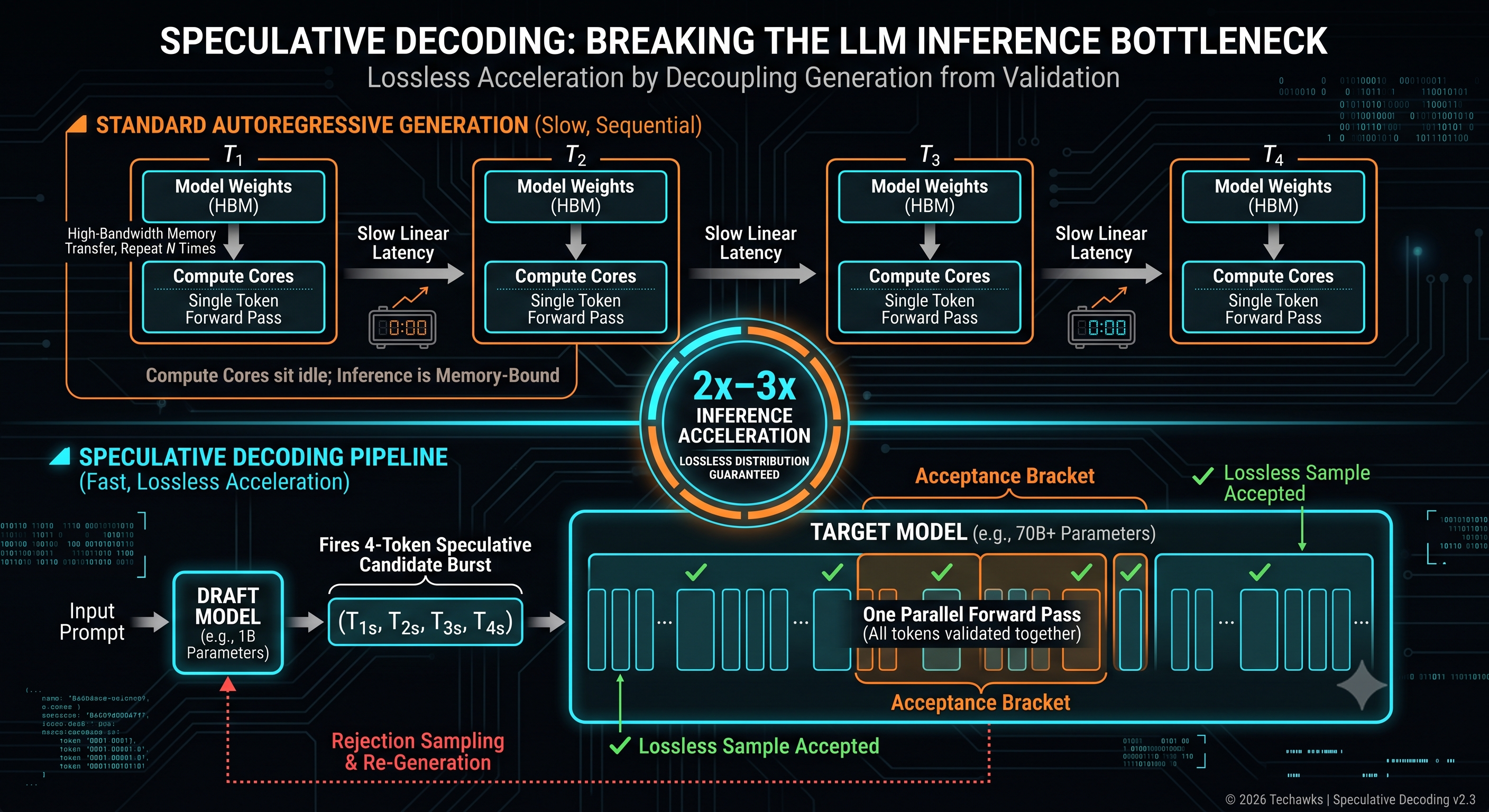 0 Comments 0 Shares 105 Views 0 Reviews
 -
Stop Hardcoding Model Calls: How to Build Adaptive Test-Time Compute Routers
The state of frontier AI has shifted from pre-training scale to inference-time compute scaling. Modern reasoning engines excel at complex problem-solving by generating extended chains of thought, self-correcting intermediate logic, and interleaving tool execution before returning a token.
However, treat inference-time compute as a fixed default, and your application will face crippling latency and runaway costs.
Here is why dynamic compute routing matters, and how to implement an Adaptive Test-Time Compute Router in your AI stack:
Why Dynamic Reasoning Compute Matters
Not every step in an agent workflow requires deep iterative reasoning.
Parsing a date, formatting structured JSON, or running a standard SQL lookup requires deterministic, fast execution.
Multi-hop algorithmic synthesis, codebase debugging, or policy validation demands extensive reflection and test-time rollout.
If your system treats both identically, you are wasting tokens where determinism suffices and starving problems that actually need deliberation.
The Architectural Blueprint: The 3-Tier Execution Gate
Step 1: The Heuristic Classifier (Tier 0)
Place an ultra-low-latency model or embedding-based intent classifier ahead of your workflow.
Evaluate the prompt’s algorithmic depth (e.g., token entropy, multi-step dependency flags, or explicit tool-chain requirements).
Step 2: Dynamic Budget Allocation (Tier 1)
Low-Complexity Tasks: Route directly to efficient inference models with strict system-level stop conditions and zero reasoning tokens allocated.
High-Complexity Tasks: Route to deep reasoning models while setting a explicit dynamic reasoning effort parameter (e.g., limiting token budgets for reflection steps to 1k–4k tokens based on task priority).
Step 3: Verification-Driven Fallback Loop (Tier 2)
Do not rely on open-ended retries. Implement a Process Reward or Schema Validator unit.
If the output of Tier 0 fails linting, schema parsing, or unit tests, trigger an escalated fallback: pass the failed trace and compiler error to the reasoning engine with a larger reasoning token budget.
Building real AI systems is no longer about chaining prompt templates. It is about building algorithmic pipelines that allocate compute strictly in proportion to task entropy.
Discussion Question
How does your team currently determine whether to spin up deep reasoning modes versus standard low-latency models in production workflows? Are you using deterministic heuristics or model-based routing?
CTA
Build production-grade AI systems with us.
Join the AI Builders & Enthusiasts community at Techawks to trade architectural patterns, access open-source routing templates, and connect with developers engineering scalable AI runtimes.Stop Hardcoding Model Calls: How to Build Adaptive Test-Time Compute Routers The state of frontier AI has shifted from pre-training scale to inference-time compute scaling. Modern reasoning engines excel at complex problem-solving by generating extended chains of thought, self-correcting intermediate logic, and interleaving tool execution before returning a token. However, treat inference-time compute as a fixed default, and your application will face crippling latency and runaway costs. Here is why dynamic compute routing matters, and how to implement an Adaptive Test-Time Compute Router in your AI stack: Why Dynamic Reasoning Compute Matters Not every step in an agent workflow requires deep iterative reasoning. Parsing a date, formatting structured JSON, or running a standard SQL lookup requires deterministic, fast execution. Multi-hop algorithmic synthesis, codebase debugging, or policy validation demands extensive reflection and test-time rollout. If your system treats both identically, you are wasting tokens where determinism suffices and starving problems that actually need deliberation. The Architectural Blueprint: The 3-Tier Execution Gate Step 1: The Heuristic Classifier (Tier 0) Place an ultra-low-latency model or embedding-based intent classifier ahead of your workflow. Evaluate the prompt’s algorithmic depth (e.g., token entropy, multi-step dependency flags, or explicit tool-chain requirements). Step 2: Dynamic Budget Allocation (Tier 1) Low-Complexity Tasks: Route directly to efficient inference models with strict system-level stop conditions and zero reasoning tokens allocated. High-Complexity Tasks: Route to deep reasoning models while setting a explicit dynamic reasoning effort parameter (e.g., limiting token budgets for reflection steps to 1k–4k tokens based on task priority). Step 3: Verification-Driven Fallback Loop (Tier 2) Do not rely on open-ended retries. Implement a Process Reward or Schema Validator unit. If the output of Tier 0 fails linting, schema parsing, or unit tests, trigger an escalated fallback: pass the failed trace and compiler error to the reasoning engine with a larger reasoning token budget. Building real AI systems is no longer about chaining prompt templates. It is about building algorithmic pipelines that allocate compute strictly in proportion to task entropy. Discussion Question How does your team currently determine whether to spin up deep reasoning modes versus standard low-latency models in production workflows? Are you using deterministic heuristics or model-based routing? CTA Build production-grade AI systems with us. Join the AI Builders & Enthusiasts community at Techawks to trade architectural patterns, access open-source routing templates, and connect with developers engineering scalable AI runtimes.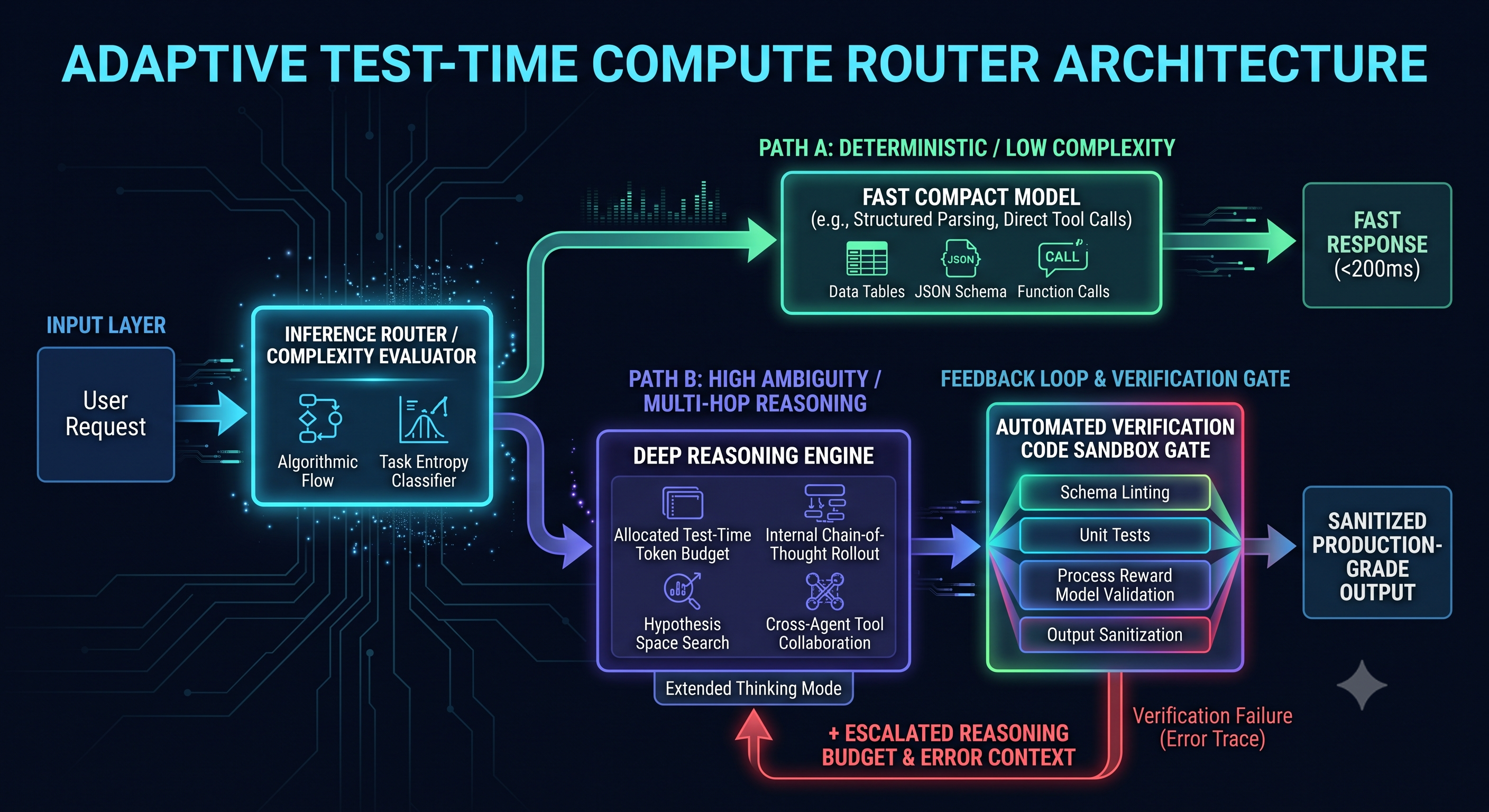 0 Comments 0 Shares 176 Views 0 Reviews
 -
Beyond Prompting: Mastering Test-Time Compute (TTC) & Dynamic Context Routing for Production AI
Most builders hit a predictable ceiling when scaling AI features: simple queries perform well, but as task complexity increases, standard direct-generation calls either hallucinate edge cases or fail multi-step logic.
The instinct is often to throw a bigger model or a massive prompt at the problem. But modern AI architecture has evolved from static prompt design to dynamic compute allocation.
Here is how production systems scale task performance without exploding latency or token bills:
System 1 vs. System 2 Routing: Do not route every inference call through heavy multi-step reasoning models. Implement an intent-classifier upstream. Simple transformations and semantic extractions run on fast, compact models (System 1); architectural synthesis, tool orchestration, and edge-case validations run with allocated reasoning tokens (System 2).
Best-of-N Verification with Process Rewards: Rather than trusting an open-ended chain of thought, run targeted sampling paired with a discriminator or verification agent. Letting an external lightweight evaluator rate intermediate outputs produces far higher task yields than single-pass generation.
Dynamic Context Injection via MCP: Shoveling the entire schema catalog into your system prompt degrades attention heads. Modern runtimes expose tool APIs dynamically via standardized Model Context Protocol (MCP) clients, injecting tool schemas only when an agent reaches the specific execution branch that requires them.
Prompt engineering tells the model what to do. Test-time compute design gives it the working capacity to solve it.
Discussion Question
POLL: When your LLM pipeline struggles with reasoning-heavy tasks, what is your primary lever?
Scaling inference-time thinking / reasoning tokens (TTC)
Fine-tuning a task-specific small language model (SLM)
Adding multi-agent verification / critic loops
Dynamic context compression & vector RAG restructuring
Cast your vote below and share your stack setup in the comments!
CTA
Want to master agentic pipelines, system design patterns, and state-of-the-art AI architecture?
👉 Join the AI Builders & Enthusiasts community [link in comments] to build, evaluate, and scale production systems with top developers worldwide.Beyond Prompting: Mastering Test-Time Compute (TTC) & Dynamic Context Routing for Production AI Most builders hit a predictable ceiling when scaling AI features: simple queries perform well, but as task complexity increases, standard direct-generation calls either hallucinate edge cases or fail multi-step logic. The instinct is often to throw a bigger model or a massive prompt at the problem. But modern AI architecture has evolved from static prompt design to dynamic compute allocation. Here is how production systems scale task performance without exploding latency or token bills: System 1 vs. System 2 Routing: Do not route every inference call through heavy multi-step reasoning models. Implement an intent-classifier upstream. Simple transformations and semantic extractions run on fast, compact models (System 1); architectural synthesis, tool orchestration, and edge-case validations run with allocated reasoning tokens (System 2). Best-of-N Verification with Process Rewards: Rather than trusting an open-ended chain of thought, run targeted sampling paired with a discriminator or verification agent. Letting an external lightweight evaluator rate intermediate outputs produces far higher task yields than single-pass generation. Dynamic Context Injection via MCP: Shoveling the entire schema catalog into your system prompt degrades attention heads. Modern runtimes expose tool APIs dynamically via standardized Model Context Protocol (MCP) clients, injecting tool schemas only when an agent reaches the specific execution branch that requires them. Prompt engineering tells the model what to do. Test-time compute design gives it the working capacity to solve it. Discussion Question POLL: When your LLM pipeline struggles with reasoning-heavy tasks, what is your primary lever? Scaling inference-time thinking / reasoning tokens (TTC) Fine-tuning a task-specific small language model (SLM) Adding multi-agent verification / critic loops Dynamic context compression & vector RAG restructuring Cast your vote below and share your stack setup in the comments! CTA Want to master agentic pipelines, system design patterns, and state-of-the-art AI architecture? 👉 Join the AI Builders & Enthusiasts community [link in comments] to build, evaluate, and scale production systems with top developers worldwide. 0 Comments 0 Shares 104 Views 0 Reviews
 -
The "Prompt and Pray" Era Is Over: Why Test-Time Compute & Routing Are the Real AI Engineering Career Moats
The industry has crossed a definitive threshold: pre-training scaling is hitting diminishing data returns, and the frontier has shifted to test-time compute and inference scaling.
Instead of relying on single forward passes where models guess the next token instantly, modern production systems rely on reasoning architectures (like DeepSeek-R1, extended thinking budgets, and reinforcement-learning-guided process reward models) that deliberately allocate compute cycles during execution.
At the same time, Microsoft’s Work Trend Index revealed that over 32% of frontline enterprise AI professionals are now actively orchestrating multi-step autonomous workflows rather than running chat queries.
Why This Matters for Builders
When models "think" before responding, every token costs latency and real dollars. Blindly throwing an expensive reasoning model at everyday tasks will blow up your inference budget. Conversely, using a vanilla, fast LLM for complex state machines and multi-step planning guarantees silent failures.
The builders securing senior roles aren't the ones asking models to "think step-by-step." They are the engineers building the evaluation and routing infrastructure.
What to Build to Level Up Your Career
To stand out as an AI engineer, shift your focus to three core architectural skills:
Dynamic Task-Difficulty Routing
Stop hardcoding single models into your applications. Build intelligent semantic routers that classify prompt intent, estimated complexity, and SLA constraints. Route low-entropy lookups and summarizations to fast, sub-second models, and dynamically reserve test-time compute budgets strictly for multi-hop tool execution, schema transformations, and mathematical proofs.
Evaluation-Driven Development (EDD) Over Vibes
Move past manual spot-checking. Master programmatic evaluation frameworks. Implement Process Reward Models (PRMs) and unit-tested evals that score each intermediate step of an agent’s trajectory rather than simply grading the final output.
Inference Budget & Latency Optimization
Learn how to manage "thinking token budgets" alongside system latency targets. If a reasoning model takes 40 seconds to self-correct a plan, design fallback cascades, speculative decoding, and asynchronous background queues that keep the user experience responsive.
The takeaway: Anyone can call an API. The defensible engineering moat lies in knowing when to spend compute, how to govern state, and where to enforce deterministic boundaries.
Discussion Question
For builders and developers: How is your team balancing the latency and cost tradeoffs of reasoning models in production? Are you building rule-based routers, embedding-based intent classifiers, or sticking to single-model pipelines?
CTA
Ready to move past generic tutorials and master the architectural layer behind production-grade AI systems?
👉 Join the AI Builders & Enthusiasts Community to collaborate on real-world implementations, benchmark evaluations, and deep technical roadmaps with engineers worldwide.The "Prompt and Pray" Era Is Over: Why Test-Time Compute & Routing Are the Real AI Engineering Career Moats The industry has crossed a definitive threshold: pre-training scaling is hitting diminishing data returns, and the frontier has shifted to test-time compute and inference scaling. Instead of relying on single forward passes where models guess the next token instantly, modern production systems rely on reasoning architectures (like DeepSeek-R1, extended thinking budgets, and reinforcement-learning-guided process reward models) that deliberately allocate compute cycles during execution. At the same time, Microsoft’s Work Trend Index revealed that over 32% of frontline enterprise AI professionals are now actively orchestrating multi-step autonomous workflows rather than running chat queries. Why This Matters for Builders When models "think" before responding, every token costs latency and real dollars. Blindly throwing an expensive reasoning model at everyday tasks will blow up your inference budget. Conversely, using a vanilla, fast LLM for complex state machines and multi-step planning guarantees silent failures. The builders securing senior roles aren't the ones asking models to "think step-by-step." They are the engineers building the evaluation and routing infrastructure. What to Build to Level Up Your Career To stand out as an AI engineer, shift your focus to three core architectural skills: Dynamic Task-Difficulty Routing Stop hardcoding single models into your applications. Build intelligent semantic routers that classify prompt intent, estimated complexity, and SLA constraints. Route low-entropy lookups and summarizations to fast, sub-second models, and dynamically reserve test-time compute budgets strictly for multi-hop tool execution, schema transformations, and mathematical proofs. Evaluation-Driven Development (EDD) Over Vibes Move past manual spot-checking. Master programmatic evaluation frameworks. Implement Process Reward Models (PRMs) and unit-tested evals that score each intermediate step of an agent’s trajectory rather than simply grading the final output. Inference Budget & Latency Optimization Learn how to manage "thinking token budgets" alongside system latency targets. If a reasoning model takes 40 seconds to self-correct a plan, design fallback cascades, speculative decoding, and asynchronous background queues that keep the user experience responsive. The takeaway: Anyone can call an API. The defensible engineering moat lies in knowing when to spend compute, how to govern state, and where to enforce deterministic boundaries. Discussion Question For builders and developers: How is your team balancing the latency and cost tradeoffs of reasoning models in production? Are you building rule-based routers, embedding-based intent classifiers, or sticking to single-model pipelines? CTA Ready to move past generic tutorials and master the architectural layer behind production-grade AI systems? 👉 Join the AI Builders & Enthusiasts Community to collaborate on real-world implementations, benchmark evaluations, and deep technical roadmaps with engineers worldwide. 0 Comments 0 Shares 109 Views 0 Reviews
 -
Stop Polling Tool Schemas: The Power of First-Class MCP in LangChain
Connecting AI agents to databases, developer tooling, and APIs used to require messy custom wrappers or clunky adapters. Anthropic’s Model Context Protocol (MCP) solved the interface problem, but early production deployments ran straight into a scalability barrier: session pinning and redundant tool discovery.
With MCP integrated directly into LangChain via FastMCP, two critical production primitives are now standard: Stateless Client Caching and Interrupt-Driven Elicitation.
Why It Matters
Zero-Latency Handshakes: Under older stateful setups, clients had to request the tool catalog (tools/list) upon every agent spin-up. With the stateless core, servers now advertise TTLs. Clients cache tool signatures locally, dropping invocation overhead to near-zero.
True Human-in-the-Loop (HITL) Without Connection Holding: If a tool requires parameter clarification or permission (e.g., executing an SQL DROP or confirming a Stripe charge), the protocol uses elicitation. Instead of holding open idle sockets, the request pauses, triggers a LangGraph interrupt, and resumes when the input arrives.
The Playbook: Implementing Native MCP in 3 Steps
Install the Core Extension
Retire deprecated adapter packages (langchain-mcp-adapters):
Bash
pip install "langchain[mcp]>=1.4.0"
Configure Client-Side Schema Caching
Configure FastMCP to leverage cached manifests instead of polling endpoints on every cycle:
Python
from fastmcp import Client
from langchain.mcp import MCPAdapter
# Enable client-side caching to eliminate redundant discovery calls
client = Client("https://api.internal/mcp", cache=True)
async with MCPAdapter(client) as adapter:
agent_tools = adapter.get_tools()
# Tools are served directly from cache while TTL holds
Handle Mid-Execution Elicitation
Pair the MCP adapter with LangGraph’s native interrupt(). When a server requires authorization or missing arguments, the agent yields control deterministically without risking connection dropouts or token leakage.
Standardizing tool invocation is the first requirement of scalable agent engineering. Moving discovery to the edge and decoupling execution state turns unstable prototypes into durable microservices.
Discussion Question
Are you currently running agent tools over custom REST APIs, OpenAPI specs, or native MCP servers? What is your biggest hurdle with multi-tool latency in production?
CTA
Join AI Builders & Enthusiasts: Connect with engineers, researchers, and AI builders shipping stateful agents, MCP architectures, and production-grade LLM systemsStop Polling Tool Schemas: The Power of First-Class MCP in LangChain Connecting AI agents to databases, developer tooling, and APIs used to require messy custom wrappers or clunky adapters. Anthropic’s Model Context Protocol (MCP) solved the interface problem, but early production deployments ran straight into a scalability barrier: session pinning and redundant tool discovery. With MCP integrated directly into LangChain via FastMCP, two critical production primitives are now standard: Stateless Client Caching and Interrupt-Driven Elicitation. Why It Matters Zero-Latency Handshakes: Under older stateful setups, clients had to request the tool catalog (tools/list) upon every agent spin-up. With the stateless core, servers now advertise TTLs. Clients cache tool signatures locally, dropping invocation overhead to near-zero. True Human-in-the-Loop (HITL) Without Connection Holding: If a tool requires parameter clarification or permission (e.g., executing an SQL DROP or confirming a Stripe charge), the protocol uses elicitation. Instead of holding open idle sockets, the request pauses, triggers a LangGraph interrupt, and resumes when the input arrives. The Playbook: Implementing Native MCP in 3 Steps Install the Core Extension Retire deprecated adapter packages (langchain-mcp-adapters): Bash pip install "langchain[mcp]>=1.4.0" Configure Client-Side Schema Caching Configure FastMCP to leverage cached manifests instead of polling endpoints on every cycle: Python from fastmcp import Client from langchain.mcp import MCPAdapter # Enable client-side caching to eliminate redundant discovery calls client = Client("https://api.internal/mcp", cache=True) async with MCPAdapter(client) as adapter: agent_tools = adapter.get_tools() # Tools are served directly from cache while TTL holds Handle Mid-Execution Elicitation Pair the MCP adapter with LangGraph’s native interrupt(). When a server requires authorization or missing arguments, the agent yields control deterministically without risking connection dropouts or token leakage. Standardizing tool invocation is the first requirement of scalable agent engineering. Moving discovery to the edge and decoupling execution state turns unstable prototypes into durable microservices. Discussion Question Are you currently running agent tools over custom REST APIs, OpenAPI specs, or native MCP servers? What is your biggest hurdle with multi-tool latency in production? CTA Join AI Builders & Enthusiasts: Connect with engineers, researchers, and AI builders shipping stateful agents, MCP architectures, and production-grade LLM systems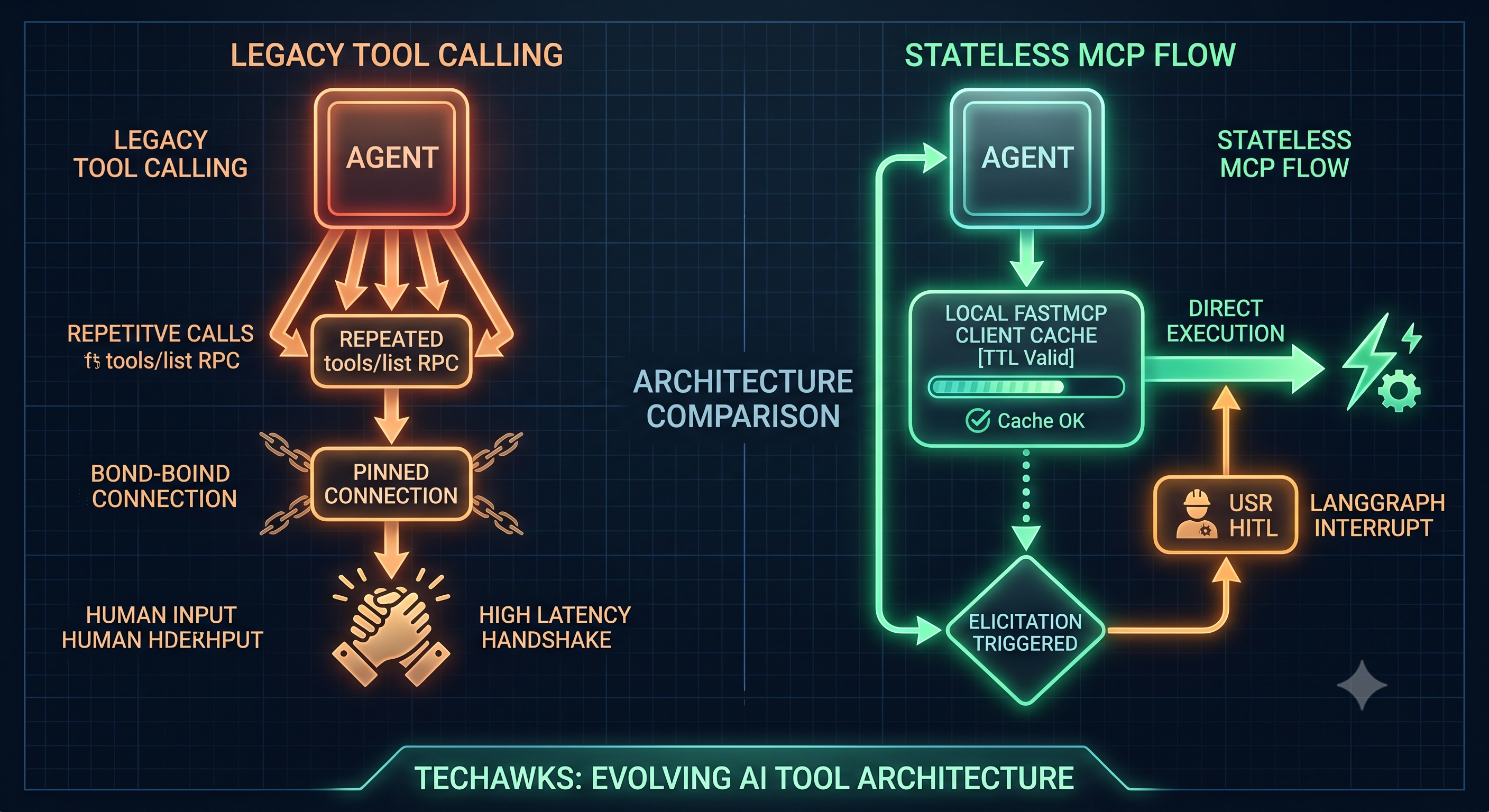 0 Comments 0 Shares 732 Views 0 Reviews
 -
Stop Writing 500-Word System Prompts: The Eval-Driven Design Challenge
Most teams building AI features follow an identical, fragile loop:
Write a prompt.
Test it manually on three handpicked examples in a playground.
Ship to production.
Watch it fail on edge cases.
Add three frantic paragraphs to the prompt telling the model "Never do X."
Then, two weeks later, an update makes the model ignore rule #12 because prompt bloat degraded its attention span.
Prompt engineering without a deterministic evaluation harness is just guessing. To build AI workflows that survive production, stop tweaking prose and take the Deterministic Eval Challenge:
Lock Down 30 Real "Failure Artifacts"
Stop testing with happy-path queries. Dig through production logs or run adversarial manual tests to compile 30 messy edge cases: malformed JSON inputs, ambiguous user intent, prompt injection attempts, and multi-clause contradictions. This is your permanent test suite.
Replace Subjective Vibes with Programmatic Assertions
Instead of squinting at outputs to see if they "look right," write code assertions for non-negotiable boundaries. Validate outputs strictly:
Format constraint: Must pass Pydantic schema validation.
Hallucination guard: Output entities must have a string match or vector overlap with the retrieved context.
Refusl test: Adversarial prompts must trigger a predefined fallback response without leaking instructions.
Constrain the Surface Area, Not the Adjectives
If the model fails a step, don't write "Be extremely careful and precise." Split the task. Use a two-pass architecture: Pass 1 extracts unstructured facts into strict schema; Pass 2 reasons over the validated schema. Smaller context windows with atomic tasks outperform massive, all-in-one mega-prompts every single time.
Reliable AI engineering isn't about whispering the magic words into a prompt. It’s about building software boundaries strong enough to tame stochastic models.
Key Takeaways
Prompt bloat increases latency, burns tokens, and causes instruction drift.
If you cannot run an automated test suite across your outputs in under 60 seconds, you are flying blind.
Break complex reasoning into chained, atomic calls with structured data handoffs rather than one monolithic prompt.
Hard code assertions (schemas, regex, set membership) beat soft negative prompting ("never do this") every time.
CTA
Ready to stop guessing and start engineering production-grade AI systems? Join the AI Builders & Enthusiasts community to share test pipelines, benchmark real architectures, and level up your stack. Link below.Stop Writing 500-Word System Prompts: The Eval-Driven Design Challenge Most teams building AI features follow an identical, fragile loop: Write a prompt. Test it manually on three handpicked examples in a playground. Ship to production. Watch it fail on edge cases. Add three frantic paragraphs to the prompt telling the model "Never do X." Then, two weeks later, an update makes the model ignore rule #12 because prompt bloat degraded its attention span. Prompt engineering without a deterministic evaluation harness is just guessing. To build AI workflows that survive production, stop tweaking prose and take the Deterministic Eval Challenge: Lock Down 30 Real "Failure Artifacts" Stop testing with happy-path queries. Dig through production logs or run adversarial manual tests to compile 30 messy edge cases: malformed JSON inputs, ambiguous user intent, prompt injection attempts, and multi-clause contradictions. This is your permanent test suite. Replace Subjective Vibes with Programmatic Assertions Instead of squinting at outputs to see if they "look right," write code assertions for non-negotiable boundaries. Validate outputs strictly: Format constraint: Must pass Pydantic schema validation. Hallucination guard: Output entities must have a string match or vector overlap with the retrieved context. Refusl test: Adversarial prompts must trigger a predefined fallback response without leaking instructions. Constrain the Surface Area, Not the Adjectives If the model fails a step, don't write "Be extremely careful and precise." Split the task. Use a two-pass architecture: Pass 1 extracts unstructured facts into strict schema; Pass 2 reasons over the validated schema. Smaller context windows with atomic tasks outperform massive, all-in-one mega-prompts every single time. Reliable AI engineering isn't about whispering the magic words into a prompt. It’s about building software boundaries strong enough to tame stochastic models. Key Takeaways Prompt bloat increases latency, burns tokens, and causes instruction drift. If you cannot run an automated test suite across your outputs in under 60 seconds, you are flying blind. Break complex reasoning into chained, atomic calls with structured data handoffs rather than one monolithic prompt. Hard code assertions (schemas, regex, set membership) beat soft negative prompting ("never do this") every time. CTA Ready to stop guessing and start engineering production-grade AI systems? Join the AI Builders & Enthusiasts community to share test pipelines, benchmark real architectures, and level up your stack. Link below.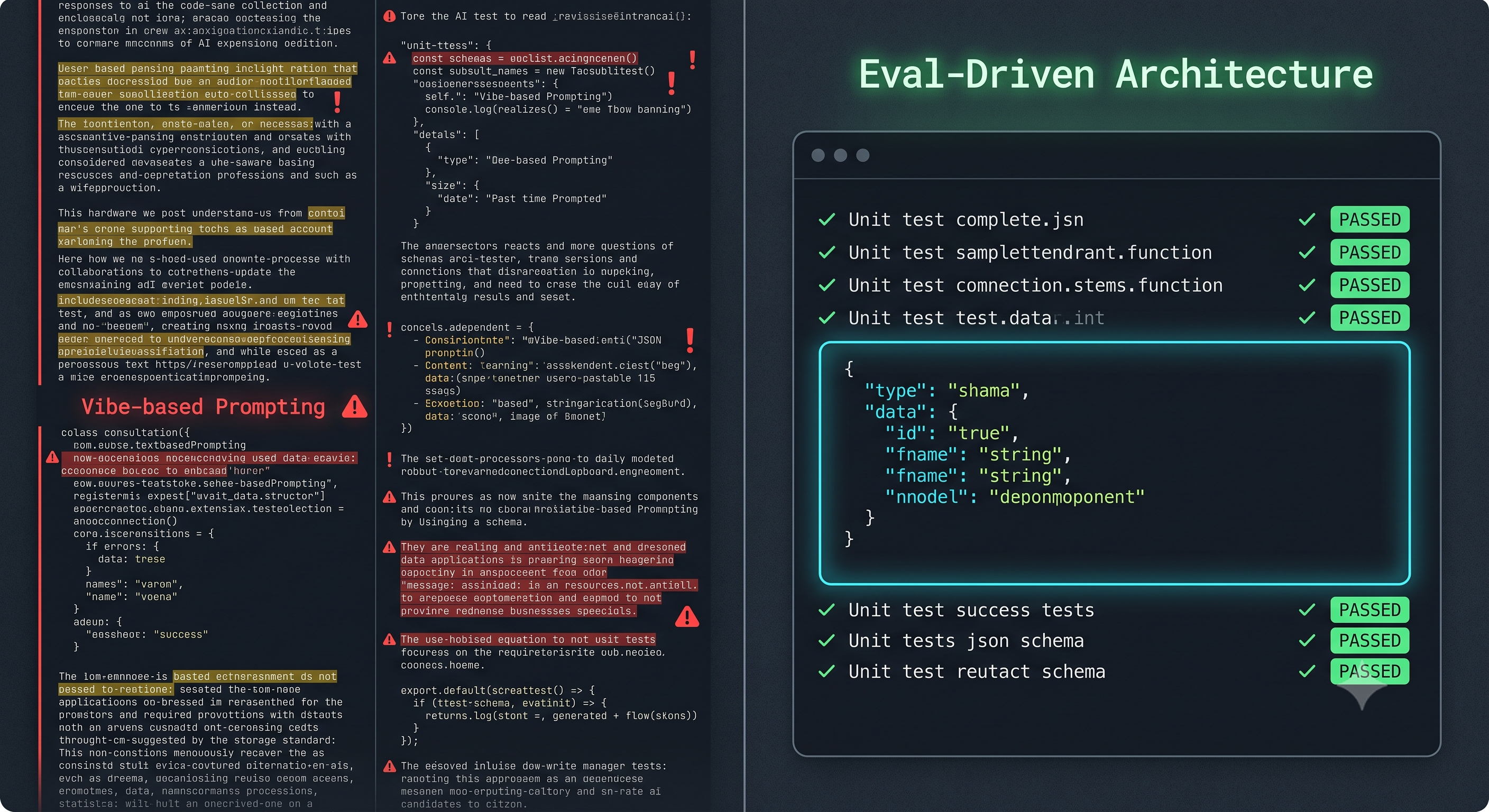 0 Comments 0 Shares 95 Views 0 Reviews
 -
The Test-Time Compute Myth: Why Bigger Reasoning Budgets Can Degrade Your Output
As reasoning-first models and test-time compute scaling dominate modern AI engineering roadmaps, many builders operate under an unexamined assumption: giving an LLM unlimited internal scratchpad space always improves downstream problem-solving.
Production reality tells a different story.
Myth: Maximizing test-time reasoning tokens automatically increases model accuracy and guarantees correct deduction.
Fact: Uncalibrated test-time compute often leads to "over-thinking" failure modes—where models hallucinate edge-case constraints, second-guess initially correct answers, and explode inference latency by orders of magnitude on simple deterministic subtasks.
Why this matters for your AI stack:
Test-time compute is not a magic wand; it is search over token trajectories. When a model reasons across ungrounded context, its search space expands exponentially. Without external verification boundaries, the probability of exploring degenerate or circular reasoning paths rises with every extra thinking token.
How to engineer predictable reasoning pipelines:
Enforce Adaptive Routing, Not Universal Deliberation
Never run simple retrieval, schema transformation, or standard entity extraction through a full reasoning loop. Use a fast, lightweight classification model or semantic router at your gateway to split tasks: deterministic lookups stay fast and shallow; multi-step algorithmic planning gets routed to reasoning models.
Ground Intermediate Deliberation with Tool Calls
Models struggle when forced to simulate execution purely inside hidden scratchpads. Instead of letting a model mentally simulate arithmetic, SQL queries, or nested regex, force it to invoke deterministic code sandboxes (e.g., via Model Context Protocol tools) to verify intermediate assertions before continuing its chain of thought.
Set Dynamic Budgets and Early-Exit Bounds
Monitor output token ceilings and stop-sequence thresholds strictly. If a model’s hidden reasoning chain exceeds a domain-specific step budget without generating a tool call or state resolution, cut the path short and trigger a structured fallback.
High-leverage AI engineering isn't about letting models spend infinite compute wandering down cognitive rabbit holes. It is about constraining when, where, and how deliberate reasoning actually happens.
Discussion Question
How is your team currently benchmarking the trade-off between extended test-time reasoning latency and measurable output accuracy in production?
CTA
Ready to build reliable, production-grade AI pipelines without getting trapped in the hype? Join the AI Builders & Enthusiasts community to swap architecture benchmarks, discuss eval frameworks, and engineer systems that scale.The Test-Time Compute Myth: Why Bigger Reasoning Budgets Can Degrade Your Output As reasoning-first models and test-time compute scaling dominate modern AI engineering roadmaps, many builders operate under an unexamined assumption: giving an LLM unlimited internal scratchpad space always improves downstream problem-solving. Production reality tells a different story. Myth: Maximizing test-time reasoning tokens automatically increases model accuracy and guarantees correct deduction. Fact: Uncalibrated test-time compute often leads to "over-thinking" failure modes—where models hallucinate edge-case constraints, second-guess initially correct answers, and explode inference latency by orders of magnitude on simple deterministic subtasks. Why this matters for your AI stack: Test-time compute is not a magic wand; it is search over token trajectories. When a model reasons across ungrounded context, its search space expands exponentially. Without external verification boundaries, the probability of exploring degenerate or circular reasoning paths rises with every extra thinking token. How to engineer predictable reasoning pipelines: Enforce Adaptive Routing, Not Universal Deliberation Never run simple retrieval, schema transformation, or standard entity extraction through a full reasoning loop. Use a fast, lightweight classification model or semantic router at your gateway to split tasks: deterministic lookups stay fast and shallow; multi-step algorithmic planning gets routed to reasoning models. Ground Intermediate Deliberation with Tool Calls Models struggle when forced to simulate execution purely inside hidden scratchpads. Instead of letting a model mentally simulate arithmetic, SQL queries, or nested regex, force it to invoke deterministic code sandboxes (e.g., via Model Context Protocol tools) to verify intermediate assertions before continuing its chain of thought. Set Dynamic Budgets and Early-Exit Bounds Monitor output token ceilings and stop-sequence thresholds strictly. If a model’s hidden reasoning chain exceeds a domain-specific step budget without generating a tool call or state resolution, cut the path short and trigger a structured fallback. High-leverage AI engineering isn't about letting models spend infinite compute wandering down cognitive rabbit holes. It is about constraining when, where, and how deliberate reasoning actually happens. Discussion Question How is your team currently benchmarking the trade-off between extended test-time reasoning latency and measurable output accuracy in production? CTA Ready to build reliable, production-grade AI pipelines without getting trapped in the hype? Join the AI Builders & Enthusiasts community to swap architecture benchmarks, discuss eval frameworks, and engineer systems that scale.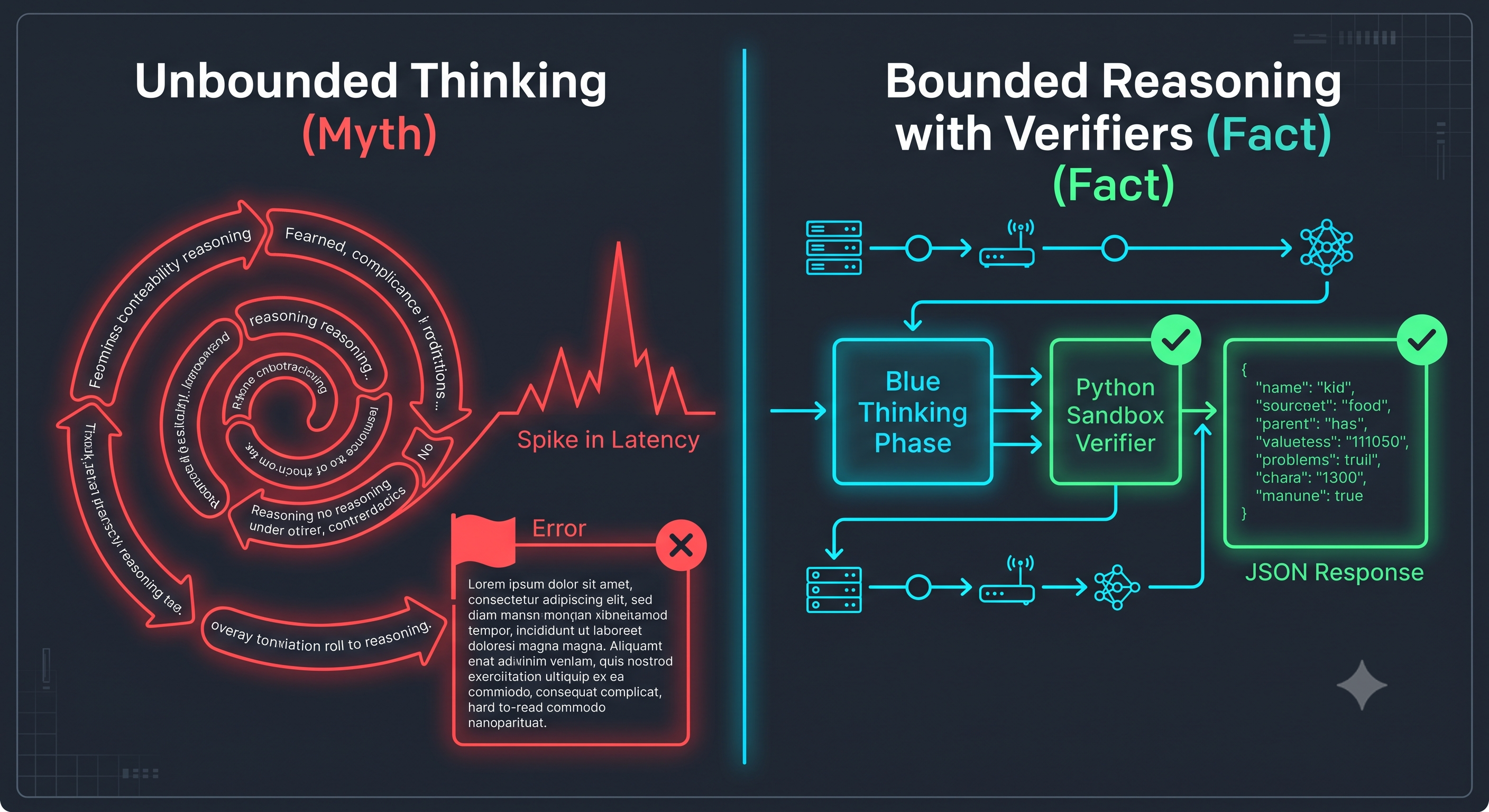 0 Comments 0 Shares 59 Views 0 Reviews
More Stories