


Techawks Students is the student-focused community of Techawks, created for school students, college students, fresh graduates, and aspiring tech professionals who want to explore technology and artificial intelligence while building practical skills.
Learn programming, AI, cybersecurity, cloud computing, data science, web development, and emerging technologies through discussions, projects, study resources, hackathons, career guidance, internships, certifications, and mentorship. Connect with like-minded learners, collaborate on innovative ideas, and prepare for the future of technology.
Learn programming, AI, cybersecurity, cloud computing, data science, web development, and emerging technologies through discussions, projects, study resources, hackathons, career guidance, internships, certifications, and mentorship. Connect with like-minded learners, collaborate on innovative ideas, and prepare for the future of technology.
-
PBID: 0230001500000007
-
1 pessoas curtiram isso
-
58 Publicações
-
58 fotos
-
0 Vídeos
-
Anterior
-
Science and Technology
Pesquisar

 English
 Arabic
 French
 Spanish
 Portuguese
 Deutsch
 Turkish
 Dutch
Dutch
 Italiano
 Russian
 Romaian
 Greek
Greek
Atualizações recentes
-
The "Autocomplete Trap": Why Passing Your Programming Lab Isn't the Same as Learning to Code
Computer science students and self-taught learners are falling into a deceptive educational trap:
❌ The Myth: "Using an AI assistant to write functions and fix runtime bugs helps me learn faster because I see working code immediately."
✅ The Reality: Completing an assignment quickly is not evidence of learning. Empirical research reveals that heavy AI code generation leads to cognitive offloading—students complete tasks with higher initial scores, but perform up to nearly two letter grades lower on independent conceptual and debugging tests.
Why Copy-Pasting AI Code Blocks Deep Learning
The Short-Circuit of the "Generation Effect": Long-term retention requires your brain to actively retrieve principles from memory. When an AI provides the solution, your brain switches to passive recognition, mistaking ease of reading for genuine comprehension.
Atrophied Debugging Intuition: Research shows the steepest drop in unaided student performance happens in debugging. Stepping through a stack trace, forming hypotheses, and isolating a broken pointer are where core systems knowledge is forged. Offloading debugging to a chatbot eliminates the very feedback loop that makes you an engineer.
The Blind Spot for Architecture: AI defaults to isolated, localized fixes. Relying on it prevents students from grasping how modules interact, how memory is allocated, and how algorithmic complexity scales.
How High-Performing Students Use AI as a Socratic Tutor
Stop treating AI like an oracle that produces the final answer. Turn it into a personal professor:
The "Don't Give Me the Code" Prompt: Before asking a question, explicitly instruct the model: "Explain the concept or bug conceptually using pseudocode and analogies, but do not write any executable code for me."
The Rubber-Duck Inversion: Write the code yourself, then paste it into the AI and prompt: "Critique my time/space complexity and point out potential edge-case failures without fixing them."
The Pen-and-Paper Check: Before typing a single line into your IDE, trace your logic on paper with sample inputs. If you cannot trace your algorithm manually, you are relying on autocomplete rather than understanding.
The takeaway: Anyone can prompt a model to write a binary search. The industry pays engineers who understand memory layouts, race conditions, and edge cases when the AI gets it wrong.
Discussion Question
When you run into a compiler error or logic bug, what is your immediate instinct—step through the debugger manually, or paste the error directly into an AI chat?
CTA (Join Students in Tech)
Join the Students in Tech community to exchange study roadmaps, collaborate on genuine open-source projects, and build rock-solid computer science fundamentals.The "Autocomplete Trap": Why Passing Your Programming Lab Isn't the Same as Learning to Code Computer science students and self-taught learners are falling into a deceptive educational trap: ❌ The Myth: "Using an AI assistant to write functions and fix runtime bugs helps me learn faster because I see working code immediately." ✅ The Reality: Completing an assignment quickly is not evidence of learning. Empirical research reveals that heavy AI code generation leads to cognitive offloading—students complete tasks with higher initial scores, but perform up to nearly two letter grades lower on independent conceptual and debugging tests. Why Copy-Pasting AI Code Blocks Deep Learning The Short-Circuit of the "Generation Effect": Long-term retention requires your brain to actively retrieve principles from memory. When an AI provides the solution, your brain switches to passive recognition, mistaking ease of reading for genuine comprehension. Atrophied Debugging Intuition: Research shows the steepest drop in unaided student performance happens in debugging. Stepping through a stack trace, forming hypotheses, and isolating a broken pointer are where core systems knowledge is forged. Offloading debugging to a chatbot eliminates the very feedback loop that makes you an engineer. The Blind Spot for Architecture: AI defaults to isolated, localized fixes. Relying on it prevents students from grasping how modules interact, how memory is allocated, and how algorithmic complexity scales. How High-Performing Students Use AI as a Socratic Tutor Stop treating AI like an oracle that produces the final answer. Turn it into a personal professor: The "Don't Give Me the Code" Prompt: Before asking a question, explicitly instruct the model: "Explain the concept or bug conceptually using pseudocode and analogies, but do not write any executable code for me." The Rubber-Duck Inversion: Write the code yourself, then paste it into the AI and prompt: "Critique my time/space complexity and point out potential edge-case failures without fixing them." The Pen-and-Paper Check: Before typing a single line into your IDE, trace your logic on paper with sample inputs. If you cannot trace your algorithm manually, you are relying on autocomplete rather than understanding. The takeaway: Anyone can prompt a model to write a binary search. The industry pays engineers who understand memory layouts, race conditions, and edge cases when the AI gets it wrong. Discussion Question When you run into a compiler error or logic bug, what is your immediate instinct—step through the debugger manually, or paste the error directly into an AI chat? CTA (Join Students in Tech) Join the Students in Tech community to exchange study roadmaps, collaborate on genuine open-source projects, and build rock-solid computer science fundamentals.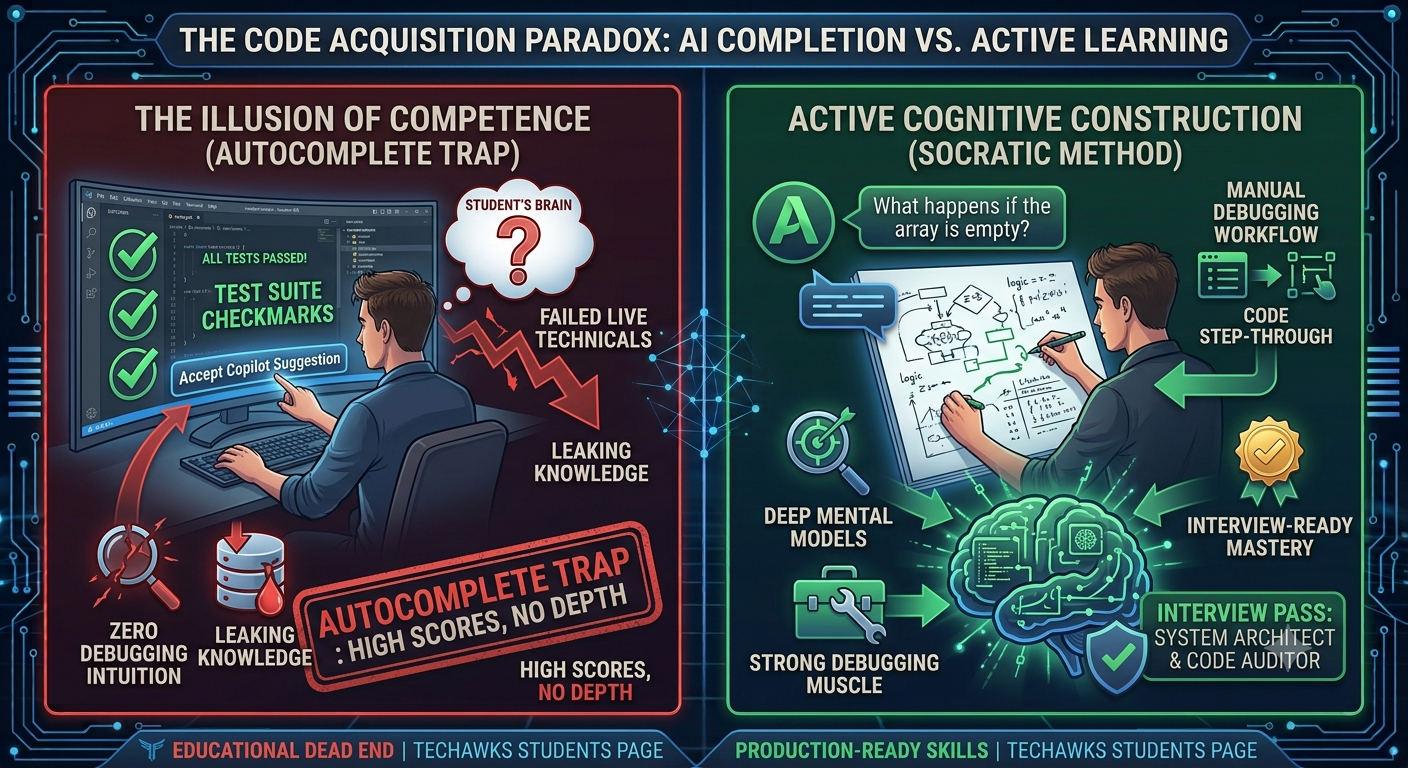 0 Comentários 0 Compartilhamentos 111 Visualizações 0 Anterior
 -
The Cognitive Offloading Trap: Why Paste-to-Fix Is Killing Your Mental Model
A dangerous habit has quietly infected computer science education: treating AI as an auto-debugger before forming an independent hypothesis.
Recent studies on cognitive offloading show that students who outsource error diagnosis see short-term assignment completion spike, but their closed-environment problem-solving ability drops significantly within months. The reason isn't that tools are bad; it's that you bypass the single most important cognitive exercise in computer science: mental execution.
When an exception triggers (a NullPointerException, a memory segmentation fault, or an off-by-one array overflow), your brain is forced to walk the call stack backwards. That friction is where intuition is forged:
You map variable states across execution boundaries.
You learn how your runtime allocates memory and handles frames.
You discover the difference between what you intended the machine to do and what you instructed it to do.
When you paste an error directly into an assistant to get an instant patch, you skip that diagnostic loop. You get a green test suite, but your mental model of the system stays completely blank.
The Fix: The 10-Minute "Manual Trace" Rule
Before you touch an automated assistant when code breaks, enforce this diagnostic routine:
Read the Raw Stack Trace: Identify the exact file, method, and line number where the boundary failed. Do not look away until you can explain what exception type was thrown and why.
Form an Explicit Hypothesis: Write down one physical sentence explaining what state you believe was violated: “Line 42 expects an initialized object, but the upstream loop terminated early on an empty list.”
Verify with an Active Probe: Step through the line using an actual interactive debugger (breakpoints, watch expressions) or targeted print assertions to check if runtime reality matches your guess.
Only after you have isolated the root cause should you use automated tools to explore alternative implementations or refactoring patterns.
The machine executes your code deterministically. If you cannot trace its path yourself, you don't control the system—you are just guessing in the dark.
Discussion Question
When was the last time you used a native interactive debugger (breakpoints and call stack stepping) instead of pasting a stack trace into an AI?
CTA
Tackle tough engineering challenges, master computer science fundamentals, and build true technical resilience. Join Students in Tech at Techawks Students.The Cognitive Offloading Trap: Why Paste-to-Fix Is Killing Your Mental Model A dangerous habit has quietly infected computer science education: treating AI as an auto-debugger before forming an independent hypothesis. Recent studies on cognitive offloading show that students who outsource error diagnosis see short-term assignment completion spike, but their closed-environment problem-solving ability drops significantly within months. The reason isn't that tools are bad; it's that you bypass the single most important cognitive exercise in computer science: mental execution. When an exception triggers (a NullPointerException, a memory segmentation fault, or an off-by-one array overflow), your brain is forced to walk the call stack backwards. That friction is where intuition is forged: You map variable states across execution boundaries. You learn how your runtime allocates memory and handles frames. You discover the difference between what you intended the machine to do and what you instructed it to do. When you paste an error directly into an assistant to get an instant patch, you skip that diagnostic loop. You get a green test suite, but your mental model of the system stays completely blank. The Fix: The 10-Minute "Manual Trace" Rule Before you touch an automated assistant when code breaks, enforce this diagnostic routine: Read the Raw Stack Trace: Identify the exact file, method, and line number where the boundary failed. Do not look away until you can explain what exception type was thrown and why. Form an Explicit Hypothesis: Write down one physical sentence explaining what state you believe was violated: “Line 42 expects an initialized object, but the upstream loop terminated early on an empty list.” Verify with an Active Probe: Step through the line using an actual interactive debugger (breakpoints, watch expressions) or targeted print assertions to check if runtime reality matches your guess. Only after you have isolated the root cause should you use automated tools to explore alternative implementations or refactoring patterns. The machine executes your code deterministically. If you cannot trace its path yourself, you don't control the system—you are just guessing in the dark. Discussion Question When was the last time you used a native interactive debugger (breakpoints and call stack stepping) instead of pasting a stack trace into an AI? CTA Tackle tough engineering challenges, master computer science fundamentals, and build true technical resilience. Join Students in Tech at Techawks Students.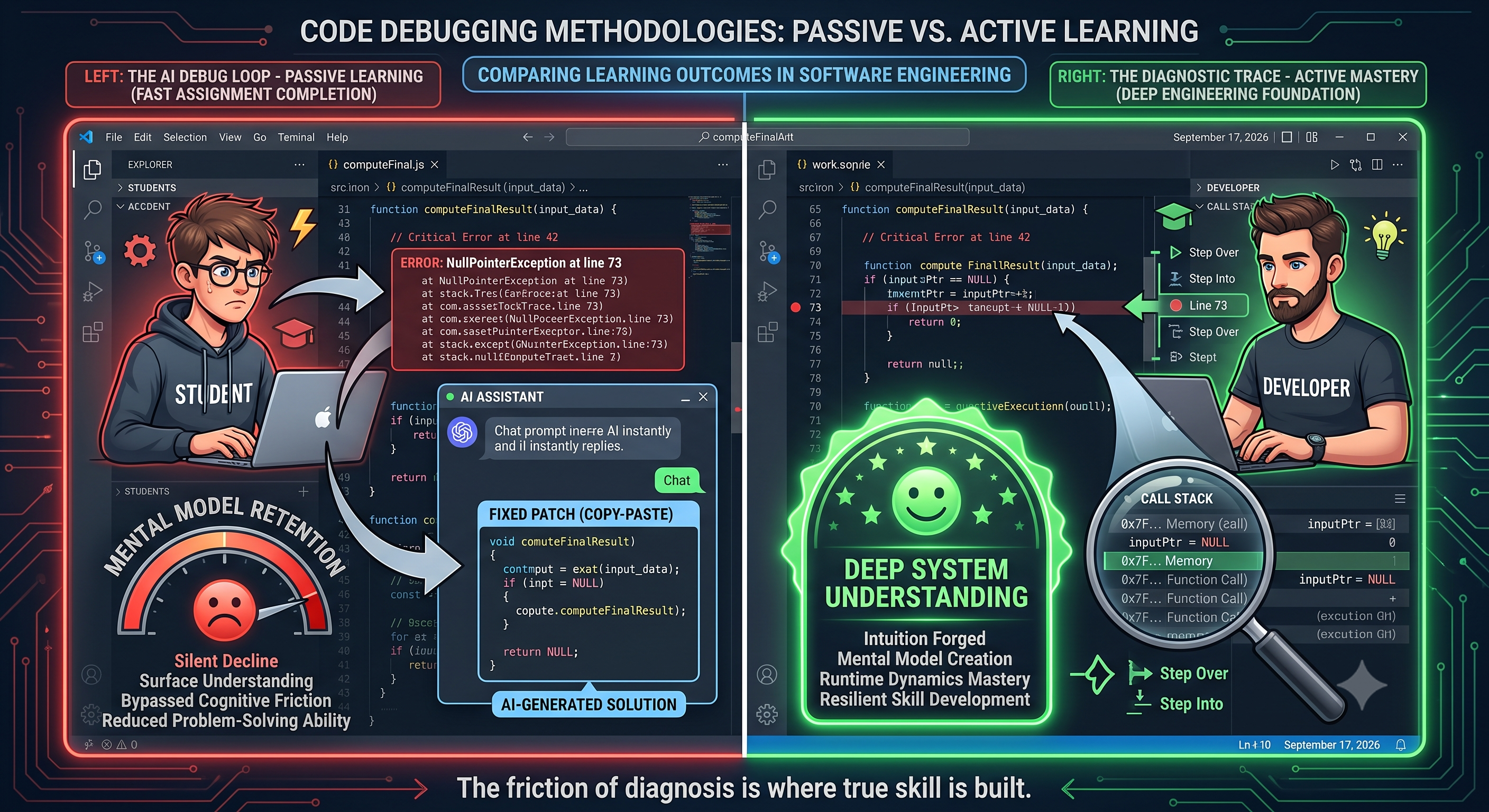 0 Comentários 0 Compartilhamentos 111 Visualizações 0 Anterior
 -
The Illusion of Competence: Why Passing Tests with AI Is Making You a Weaker Engineer
Over 90% of computer science students use generative AI tools to complete programming assignments and lab coursework. Assignments that used to take an entire weekend of grueling debugging now compile in thirty seconds.
Getting a green checkmark on a homework portal feels like mastery. It isn’t.
Cognitive science calls this the fluency heuristic: because the AI generates syntactically clean code instantly, your brain tricks itself into believing you understand the underlying concepts. But the moment you face an offline technical whiteboard, an unpredictable edge case, or an architectural bug in an internship, that illusion collapses.
Real engineering intuition isn't formed when code works; it is formed during the painful two hours you spend tracing a memory leak, resolving an off-by-one index error, or figuring out why a recursive call blew up the stack.
When you outsource the struggle, you outsource the learning.
To build durable engineering leverage in school, switch from passive completion to deliberate interrogation:
Use the "Rubber Duck Inversion": Don't ask AI to write the solution. Write your own naive implementation first. If you get stuck, paste your code and prompt: "Ask me three guiding diagnostic questions to help me spot my logic bug without giving me the code."
Conduct Line-by-Line Code Interrogations: If an assistant generates an implementation for you, you must be able to trace state mutations manually. Pick three random variables and write down their exact values across iterations 1, 2, and n
Audit for Failure, Not Success: Prompt the model to generate three adversarial unit tests designed specifically to break the code it just gave you. Learning how systems fail is what transforms a student into an engineer.
Anyone can prompt an answer. The industry only pays top dollar to people who know when the answer is quietly wrong.
Discussion Question
When tackling difficult lab work or project bugs, do you use AI as a collaborator that quizzes your logic, or as a fast-forward button to get to the submission screen?
CTA (Join Students in Tech)
Want to build deep technical fundamentals and stand out beyond basic homework solutions?
👉 Join the Techawks Students in Tech Community to collaborate on challenging side projects, master core CS fundamentals, and prepare for high-impact engineering careers:.The Illusion of Competence: Why Passing Tests with AI Is Making You a Weaker Engineer Over 90% of computer science students use generative AI tools to complete programming assignments and lab coursework. Assignments that used to take an entire weekend of grueling debugging now compile in thirty seconds. Getting a green checkmark on a homework portal feels like mastery. It isn’t. Cognitive science calls this the fluency heuristic: because the AI generates syntactically clean code instantly, your brain tricks itself into believing you understand the underlying concepts. But the moment you face an offline technical whiteboard, an unpredictable edge case, or an architectural bug in an internship, that illusion collapses. Real engineering intuition isn't formed when code works; it is formed during the painful two hours you spend tracing a memory leak, resolving an off-by-one index error, or figuring out why a recursive call blew up the stack. When you outsource the struggle, you outsource the learning. To build durable engineering leverage in school, switch from passive completion to deliberate interrogation: Use the "Rubber Duck Inversion": Don't ask AI to write the solution. Write your own naive implementation first. If you get stuck, paste your code and prompt: "Ask me three guiding diagnostic questions to help me spot my logic bug without giving me the code." Conduct Line-by-Line Code Interrogations: If an assistant generates an implementation for you, you must be able to trace state mutations manually. Pick three random variables and write down their exact values across iterations 1, 2, and n Audit for Failure, Not Success: Prompt the model to generate three adversarial unit tests designed specifically to break the code it just gave you. Learning how systems fail is what transforms a student into an engineer. Anyone can prompt an answer. The industry only pays top dollar to people who know when the answer is quietly wrong. Discussion Question When tackling difficult lab work or project bugs, do you use AI as a collaborator that quizzes your logic, or as a fast-forward button to get to the submission screen? CTA (Join Students in Tech) Want to build deep technical fundamentals and stand out beyond basic homework solutions? 👉 Join the Techawks Students in Tech Community to collaborate on challenging side projects, master core CS fundamentals, and prepare for high-impact engineering careers:.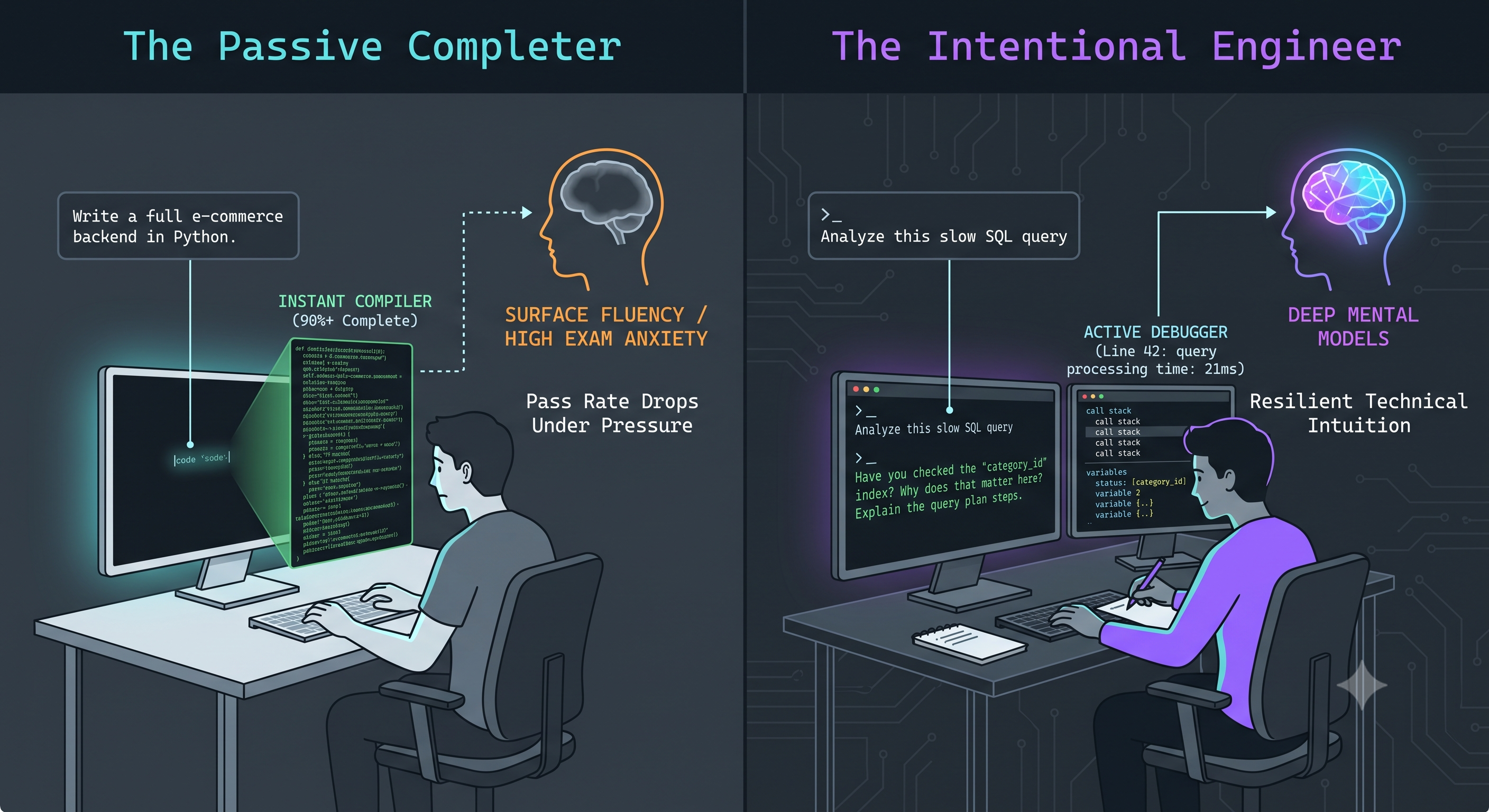 0 Comentários 0 Compartilhamentos 111 Visualizações 0 Anterior
 -
Headline: Beyond LeetCode: The 4-Step Technical Portfolio Checklist for Students Landing Tech Internships
The traditional path of relying purely on a college GPA and a list of textbook projects is losing its edge. Modern hiring managers look for evidence of execution—how well you handle APIs, integrate cloud tools, manage data, and solve unstructured engineering problems.
To bridge the gap between classroom theory and industry expectations, use this actionable checklist to upgrade your student portfolio before applications open:
Build End-to-End Applications, Not Just Scripts: Move past isolated algorithm solutions. Build full-stack or data-driven applications that solve a tangible problem, featuring a clean frontend, a functional backend, and an active database.
Integrate Modern APIs & AI Tooling: Show recruiters you aren't living in the past. Leverage third-party APIs (like OpenAI, payment gateways, or cloud services) to give your student projects real-world utility.
Master Version Control & Clean Documentation: Your GitHub repository is your real resume. Keep your code well-documented with clear README files, proper commit histories, and setup instructions so anyone can run your project instantly.
Deploy and Host Publicly: Code that only lives on your local machine doesn't count. Use free tier platforms (like Vercel, Render, or AWS) to deploy your projects live so interviewers can interact with your work in one click.
Discussion Question: What has been your biggest obstacle when building student projects—coming up with a unique project idea, figuring out deployment, or balancing it with coursework? Let us know below!
CTA (Join Students in Tech): Want to land your dream tech internship? Join Students in Tech to access peer mentorship, resume teardowns, and exclusive student-friendly job openings.Headline: Beyond LeetCode: The 4-Step Technical Portfolio Checklist for Students Landing Tech Internships The traditional path of relying purely on a college GPA and a list of textbook projects is losing its edge. Modern hiring managers look for evidence of execution—how well you handle APIs, integrate cloud tools, manage data, and solve unstructured engineering problems. To bridge the gap between classroom theory and industry expectations, use this actionable checklist to upgrade your student portfolio before applications open: Build End-to-End Applications, Not Just Scripts: Move past isolated algorithm solutions. Build full-stack or data-driven applications that solve a tangible problem, featuring a clean frontend, a functional backend, and an active database. Integrate Modern APIs & AI Tooling: Show recruiters you aren't living in the past. Leverage third-party APIs (like OpenAI, payment gateways, or cloud services) to give your student projects real-world utility. Master Version Control & Clean Documentation: Your GitHub repository is your real resume. Keep your code well-documented with clear README files, proper commit histories, and setup instructions so anyone can run your project instantly. Deploy and Host Publicly: Code that only lives on your local machine doesn't count. Use free tier platforms (like Vercel, Render, or AWS) to deploy your projects live so interviewers can interact with your work in one click. Discussion Question: What has been your biggest obstacle when building student projects—coming up with a unique project idea, figuring out deployment, or balancing it with coursework? Let us know below! CTA (Join Students in Tech): Want to land your dream tech internship? Join Students in Tech to access peer mentorship, resume teardowns, and exclusive student-friendly job openings.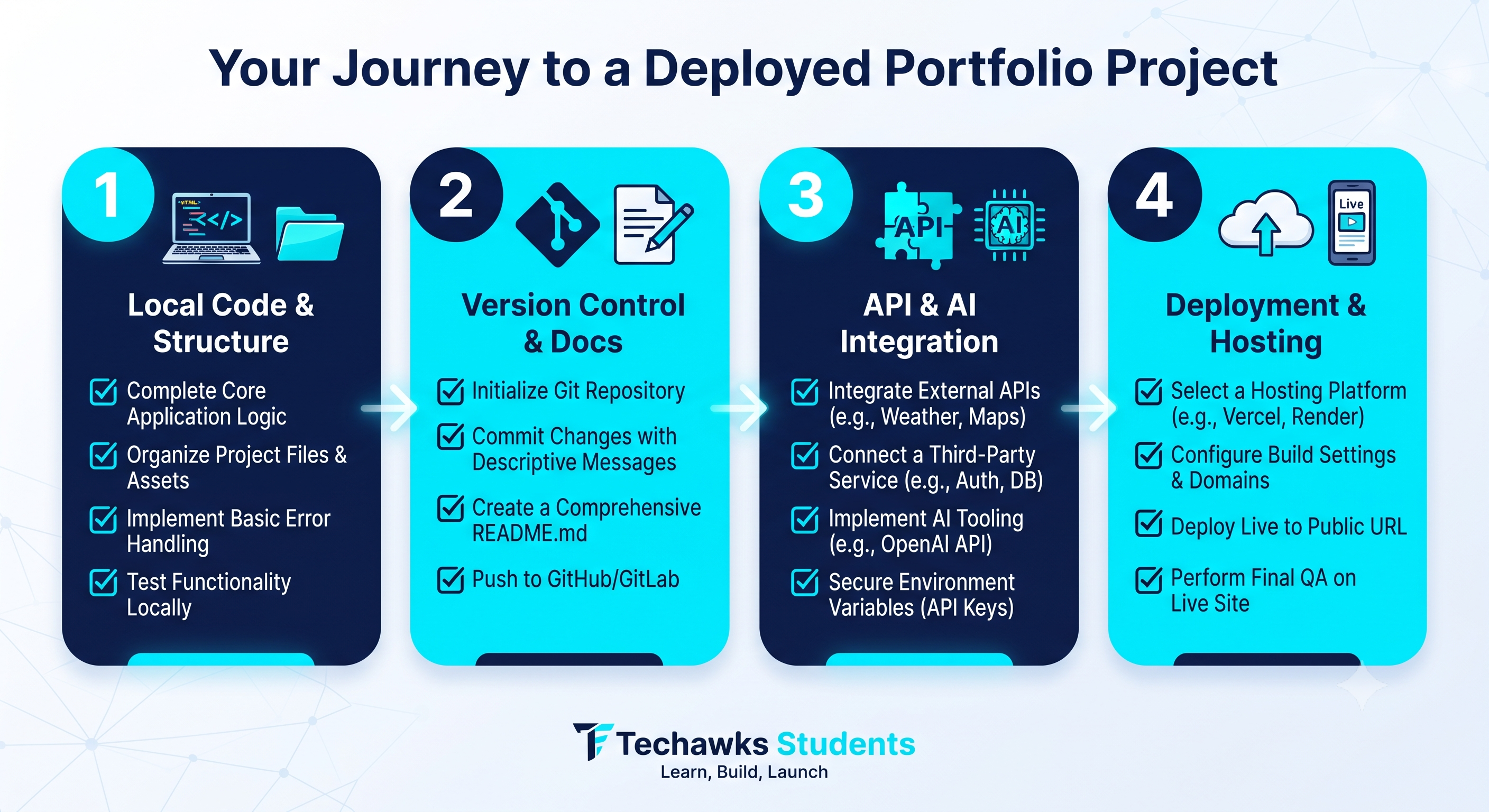 0 Comentários 0 Compartilhamentos 122 Visualizações 0 Anterior
 -
The "Tutorial Hell" Trap: Why Building Systems Beats Collecting Certificates
Many students believe landing their first software role requires knowing five different programming languages and stacking online course certificates.
With modern code generation and assisted tooling readily available, knowing raw syntax is no longer a differentiator. What hiring teams and senior engineers evaluate is first-principles mental models: understanding what happens underneath the abstraction layer.
If you want your projects to stand out and build real technical confidence, shift your study habits from Surface-Level Frameworks to Core Systems Fundamentals:
1. Stop Building Clones—Build Instrumentation
Instead of: Another clone of a social media feed or todo app.
Build: An HTTP rate-limiter middleware from scratch using a token-bucket algorithm, or a small key-value store that persists records to disk using append-only logs.
Why it matters: Building low-level utilities forces you to confront concurrency, disk I/O, serialization, and memory management—the exact challenges production software handles daily.
2. Trace the Complete Request Lifecycle
Pick one stack you already know (e.g., Python, Node.js, or Go) and write down the journey of a single byte:
What happens at the DNS resolution level?
How does TLS handshaking establish encryption?
How does the OS kernel allocate a socket buffer?
How does your database engine use a B-Tree index to avoid scanning millions of rows?
When you can explain the mechanics behind an API call, technical interviews stop feeling like trivia games and start feeling like architecture discussions.
3. Break Things on Purpose (Chaos Debugging)
Don't stop once your project passes the "happy path." Intentionally introduce failure modes:
Drop your database connection mid-transaction: Does your code corrupt data or roll back gracefully?
Flood your backend with 500 concurrent requests: Does memory spike or crash the process?
Simulate high network latency: Does your frontend hang forever or time out cleanly?
Syntax changes every two years; systems fundamentals haven't changed in four decades. Master how computers move, store, and process data, and you will never fear a new framework again.
Discussion Question
For students and early career devs: What core concept felt most like a "black box" until you built it yourself—database indexes, networking protocols, async event loops, or memory pointers? Share what finally made it click for you.
CTA
Ready to move past tutorial hell and master real-world engineering fundamentals?
👉 Join the Techawks Students in Tech Community to collaborate on projects, review code with mentors, and level up your software craft.The "Tutorial Hell" Trap: Why Building Systems Beats Collecting Certificates Many students believe landing their first software role requires knowing five different programming languages and stacking online course certificates. With modern code generation and assisted tooling readily available, knowing raw syntax is no longer a differentiator. What hiring teams and senior engineers evaluate is first-principles mental models: understanding what happens underneath the abstraction layer. If you want your projects to stand out and build real technical confidence, shift your study habits from Surface-Level Frameworks to Core Systems Fundamentals: 1. Stop Building Clones—Build Instrumentation Instead of: Another clone of a social media feed or todo app. Build: An HTTP rate-limiter middleware from scratch using a token-bucket algorithm, or a small key-value store that persists records to disk using append-only logs. Why it matters: Building low-level utilities forces you to confront concurrency, disk I/O, serialization, and memory management—the exact challenges production software handles daily. 2. Trace the Complete Request Lifecycle Pick one stack you already know (e.g., Python, Node.js, or Go) and write down the journey of a single byte: What happens at the DNS resolution level? How does TLS handshaking establish encryption? How does the OS kernel allocate a socket buffer? How does your database engine use a B-Tree index to avoid scanning millions of rows? When you can explain the mechanics behind an API call, technical interviews stop feeling like trivia games and start feeling like architecture discussions. 3. Break Things on Purpose (Chaos Debugging) Don't stop once your project passes the "happy path." Intentionally introduce failure modes: Drop your database connection mid-transaction: Does your code corrupt data or roll back gracefully? Flood your backend with 500 concurrent requests: Does memory spike or crash the process? Simulate high network latency: Does your frontend hang forever or time out cleanly? Syntax changes every two years; systems fundamentals haven't changed in four decades. Master how computers move, store, and process data, and you will never fear a new framework again. Discussion Question For students and early career devs: What core concept felt most like a "black box" until you built it yourself—database indexes, networking protocols, async event loops, or memory pointers? Share what finally made it click for you. CTA Ready to move past tutorial hell and master real-world engineering fundamentals? 👉 Join the Techawks Students in Tech Community to collaborate on projects, review code with mentors, and level up your software craft. 0 Comentários 0 Compartilhamentos 1KB Visualizações 0 Anterior
 -
The "Vibe-Coding" Illusion: Why Relying on AI Without CS Fundamentals Will Stall Your Tech Career
There is a dangerous trap catching university computer science students and self-taught learners right now: mistaking syntax generation for problem-solving.
Modern AI tools make prototyping trivial. You type a prompt, and out comes a functioning React frontend and an Express backend. It feels like 10x developer productivity.
However, when software breaks in production, AI models will not save you unless you possess the core computer science primitives to diagnose the failure:
The Hallucination Trap: Models often invent plausible-looking API parameters or non-existent library methods. If you do not understand the underlying library contracts, you waste hours debugging ghost code.
The "Black Box" Vulnerability: Stitching generated components together without understanding memory allocation, TCP handshakes, or database query execution plans makes you vulnerable to cascading security vulnerabilities and resource leaks.
How to Use AI as an Accelerated Tutor Instead of a Crutch:
Invert the Workflow: Never prompt an agent to write the code first. Write the pseudocode, define your data structures, and outline the boundary constraints yourself. Use the AI solely to audit your edge cases.
Demand "First-Principles" Explanations: When an AI suggests a solution, ask: "Why is this approach preferred over an in-memory hash map? What are the space and time trade-offs?"
Practice Manual Root-Cause Analysis: When code crashes, resist the urge to paste the terminal error trace into the chat box immediately. Read the stack trace, set a breakpoint in your debugger, inspect variable states, and form your own hypothesis first.
The industry will always have a surplus of prompt operators. What teams actively fight to hire are engineers who understand how systems work from the silicon up.
Discussion Question
When you run into a tough compiler or runtime error while studying, do you reach for an AI assistant immediately, or do you debug via logs and breakpoints first? Where do you draw the line?
CTA
Bridge the gap between textbook theory and production-grade engineering. Join curious peers, campus ambassadors, and tech mentors inside Students in Tech to build real projects, crack data structures, and level up your software craft.The "Vibe-Coding" Illusion: Why Relying on AI Without CS Fundamentals Will Stall Your Tech Career There is a dangerous trap catching university computer science students and self-taught learners right now: mistaking syntax generation for problem-solving. Modern AI tools make prototyping trivial. You type a prompt, and out comes a functioning React frontend and an Express backend. It feels like 10x developer productivity. However, when software breaks in production, AI models will not save you unless you possess the core computer science primitives to diagnose the failure: The Hallucination Trap: Models often invent plausible-looking API parameters or non-existent library methods. If you do not understand the underlying library contracts, you waste hours debugging ghost code. The "Black Box" Vulnerability: Stitching generated components together without understanding memory allocation, TCP handshakes, or database query execution plans makes you vulnerable to cascading security vulnerabilities and resource leaks. How to Use AI as an Accelerated Tutor Instead of a Crutch: Invert the Workflow: Never prompt an agent to write the code first. Write the pseudocode, define your data structures, and outline the boundary constraints yourself. Use the AI solely to audit your edge cases. Demand "First-Principles" Explanations: When an AI suggests a solution, ask: "Why is this approach preferred over an in-memory hash map? What are the space and time trade-offs?" Practice Manual Root-Cause Analysis: When code crashes, resist the urge to paste the terminal error trace into the chat box immediately. Read the stack trace, set a breakpoint in your debugger, inspect variable states, and form your own hypothesis first. The industry will always have a surplus of prompt operators. What teams actively fight to hire are engineers who understand how systems work from the silicon up. Discussion Question When you run into a tough compiler or runtime error while studying, do you reach for an AI assistant immediately, or do you debug via logs and breakpoints first? Where do you draw the line? CTA Bridge the gap between textbook theory and production-grade engineering. Join curious peers, campus ambassadors, and tech mentors inside Students in Tech to build real projects, crack data structures, and level up your software craft. 0 Comentários 0 Compartilhamentos 172 Visualizações 0 Anterior
 -
Stop Treating the OS Like a Black Box: Why System Calls Matter More Than Frameworks
Every programming language you learn—whether Python, Java, JavaScript, or Go—is fundamentally an abstraction engine.
When you write fs.readFile() in Node.js or open() in Python, your code cannot touch the solid-state drive or network card directly. User-space programs do not have hardware execution privileges. Instead, they must ask the operating system kernel for permission via a System Call (syscall).
Understanding this boundary is what separates developers who assemble snippets from engineers who can debug distributed scale.
The Three Core Syscalls Every Student Must Understand:
read / write (I/O Operations):
Whenever data moves across a disk or a TCP socket, your runtime requests kernel buffers.
The bottleneck: If your app makes hundreds of synchronous, unbuffered I/O calls, CPU cycles burn just switching between User Mode and Kernel Mode (context switching overhead).
fork / clone (Process & Thread Management):
How do web servers handle thousands of concurrent users?
By understanding how the OS duplicates process tables (fork) or shares virtual memory across threads (clone), you understand why thread pools, asynchronous event loops (like Node's epoll), and green threads behave differently under load.
mmap (Memory Allocation & Virtual Memory):
High-performance databases, AI inference runtimes, and file engines don't read multi-gigabyte files entirely into RAM.
They use mmap to map files directly into the process’s virtual address space, letting the kernel's page cache handle lazy loading on demand.
Practical Project to Cement This Concept:
Open a terminal on Linux or macOS.
Write a simple 10-line file-reading script in Python or C.
Run it through an execution tracer:
Bash
# Linux: trace system calls
strace -c python3 script.py
# macOS: trace file operations
sudo dtruss python3 script.py
Look at the output. You will see every openat, mmap, read, and close your high-level language silently executed.
Frameworks and libraries get replaced every three to four years. The Linux kernel, file descriptors, virtual memory, and system calls remain the foundation of modern infrastructure.
Discussion Question
Have you ever traced an application with tools like strace or inspected file descriptors in the /proc directory? What surprised you most about the hidden activity happening under your code?
CTA (Join Students in Tech)
Looking to move past beginner tutorials and build a deep, foundational mastery of software engineering, systems, and algorithms? Join the Students in Tech community to exchange technical projects, study roadmaps, and code teardowns.Stop Treating the OS Like a Black Box: Why System Calls Matter More Than Frameworks Every programming language you learn—whether Python, Java, JavaScript, or Go—is fundamentally an abstraction engine. When you write fs.readFile() in Node.js or open() in Python, your code cannot touch the solid-state drive or network card directly. User-space programs do not have hardware execution privileges. Instead, they must ask the operating system kernel for permission via a System Call (syscall). Understanding this boundary is what separates developers who assemble snippets from engineers who can debug distributed scale. The Three Core Syscalls Every Student Must Understand: read / write (I/O Operations): Whenever data moves across a disk or a TCP socket, your runtime requests kernel buffers. The bottleneck: If your app makes hundreds of synchronous, unbuffered I/O calls, CPU cycles burn just switching between User Mode and Kernel Mode (context switching overhead). fork / clone (Process & Thread Management): How do web servers handle thousands of concurrent users? By understanding how the OS duplicates process tables (fork) or shares virtual memory across threads (clone), you understand why thread pools, asynchronous event loops (like Node's epoll), and green threads behave differently under load. mmap (Memory Allocation & Virtual Memory): High-performance databases, AI inference runtimes, and file engines don't read multi-gigabyte files entirely into RAM. They use mmap to map files directly into the process’s virtual address space, letting the kernel's page cache handle lazy loading on demand. Practical Project to Cement This Concept: Open a terminal on Linux or macOS. Write a simple 10-line file-reading script in Python or C. Run it through an execution tracer: Bash # Linux: trace system calls strace -c python3 script.py # macOS: trace file operations sudo dtruss python3 script.py Look at the output. You will see every openat, mmap, read, and close your high-level language silently executed. Frameworks and libraries get replaced every three to four years. The Linux kernel, file descriptors, virtual memory, and system calls remain the foundation of modern infrastructure. Discussion Question Have you ever traced an application with tools like strace or inspected file descriptors in the /proc directory? What surprised you most about the hidden activity happening under your code? CTA (Join Students in Tech) Looking to move past beginner tutorials and build a deep, foundational mastery of software engineering, systems, and algorithms? Join the Students in Tech community to exchange technical projects, study roadmaps, and code teardowns. 0 Comentários 0 Compartilhamentos 154 Visualizações 0 Anterior
 -
AI Coding Isn't Autocomplete Anymore: The "Context-First" Mindset Shift Every CS Student Needs
Software development has crossed a distinct threshold. With the rollout of full repository agent environments—from Claude Code CLI to Kiro and specialized IDE agents—coding tools have evolved from predictive autocomplete engines into autonomous execution agents.
Major platforms and cloud ecosystems are now giving students direct access to high-tier AI agent environments. But here is the paradox: having an agent that can scaffold an entire full-stack application from a prompt does not make you a great engineer. In fact, junior developers who treat agents like magic oracles fall into the "Silent Bug" trap—generating syntactically valid code that fails silently at scale, breaks security boundaries, or imports vulnerable dependencies.
To stand out in technical interviews and real-world internships, your primary technical skill must shift from syntax typing to architectural steering and context management.
The 3 Rules for Learning Computer Science in an Agent-First World
1. Master "Context Window Hygiene"
Agents are only as competent as the repository context they ingest.
The Rookie Habit: Dumping an entire error log into chat and asking "Why isn't this working?"
The Modern Dev Habit: Providing the agent with scoped architectural constraints, interface signatures, and environment variables. Before writing a feature, draft a lightweight SPEC.md and typed interfaces. Feeding clear schema definitions drastically reduces hallucinated function calls.
2. Never Accept Code You Cannot Trace with a Debugger
Treat AI output the same way senior engineers treat untrusted third-party pull requests.
Run through the execution flow step-by-step using your language’s debugger (e.g., breakpoints in VS Code or pdb/gdb).
Verify time and space complexity (O(n \log n)vsO(n^2). Agents frequently introduce hidden quadratic loops by chaining naive array transformations.
3. Shift from Writing Code to Writing Tests (TDD 2.0)
The fastest way to test an agent's work isn't reading 200 lines of generated code—it is writing deterministic unit and integration tests first.
Define your test cases (expected inputs, edge cases, edge failure limits).
Direct the agent to write the implementation until all test suites pass green. This forces you to master domain logic and verification rather than mechanical implementation.
The Bottom Line: AI will write the boilerplate, but the job of deciding what to build, evaluating security, and verifying distributed systems still belongs to the engineer. Learn how to orchestrate, not just generate.
Discussion Question
When you're building personal projects or assignments, how do you verify the code that AI tools generate—do you step through it with a debugger, write unit tests, or review it by eye?
CTA
Join Students in Tech
Level up your engineering skills, learn real-world architecture beyond standard coursework, and build with a global community of future tech leaders. Join Techawks Students today:AI Coding Isn't Autocomplete Anymore: The "Context-First" Mindset Shift Every CS Student Needs Software development has crossed a distinct threshold. With the rollout of full repository agent environments—from Claude Code CLI to Kiro and specialized IDE agents—coding tools have evolved from predictive autocomplete engines into autonomous execution agents. Major platforms and cloud ecosystems are now giving students direct access to high-tier AI agent environments. But here is the paradox: having an agent that can scaffold an entire full-stack application from a prompt does not make you a great engineer. In fact, junior developers who treat agents like magic oracles fall into the "Silent Bug" trap—generating syntactically valid code that fails silently at scale, breaks security boundaries, or imports vulnerable dependencies. To stand out in technical interviews and real-world internships, your primary technical skill must shift from syntax typing to architectural steering and context management. The 3 Rules for Learning Computer Science in an Agent-First World 1. Master "Context Window Hygiene" Agents are only as competent as the repository context they ingest. The Rookie Habit: Dumping an entire error log into chat and asking "Why isn't this working?" The Modern Dev Habit: Providing the agent with scoped architectural constraints, interface signatures, and environment variables. Before writing a feature, draft a lightweight SPEC.md and typed interfaces. Feeding clear schema definitions drastically reduces hallucinated function calls. 2. Never Accept Code You Cannot Trace with a Debugger Treat AI output the same way senior engineers treat untrusted third-party pull requests. Run through the execution flow step-by-step using your language’s debugger (e.g., breakpoints in VS Code or pdb/gdb). Verify time and space complexity (O(n \log n)vsO(n^2). Agents frequently introduce hidden quadratic loops by chaining naive array transformations. 3. Shift from Writing Code to Writing Tests (TDD 2.0) The fastest way to test an agent's work isn't reading 200 lines of generated code—it is writing deterministic unit and integration tests first. Define your test cases (expected inputs, edge cases, edge failure limits). Direct the agent to write the implementation until all test suites pass green. This forces you to master domain logic and verification rather than mechanical implementation. The Bottom Line: AI will write the boilerplate, but the job of deciding what to build, evaluating security, and verifying distributed systems still belongs to the engineer. Learn how to orchestrate, not just generate. Discussion Question When you're building personal projects or assignments, how do you verify the code that AI tools generate—do you step through it with a debugger, write unit tests, or review it by eye? CTA Join Students in Tech Level up your engineering skills, learn real-world architecture beyond standard coursework, and build with a global community of future tech leaders. Join Techawks Students today: 0 Comentários 0 Compartilhamentos 152 Visualizações 0 Anterior
 -
The AI-Assisted Learning Trap: Why Solving Syntax Won't Make You a Software Engineer
Nearly 95% of STEM and computer science students now rely on AI coding assistants for coursework and lab assignments. Copilots and LLMs can instantly format a binary search tree, write boilerplate React hooks, or explain compiler errors in plain English.
The problem? Software engineering is not the mechanical act of typing syntax. It is the ability to construct a mental model of how state, memory, and data flow through an interconnected system.
When an LLM writes the entire function for you, it removes the exact friction point where cognitive retention happens. You skip the mental trace, the edge-case debugging, and the memory profiling. In technical interviews and production environments, the prompt interface disappears, leaving behind a blank terminal and an ambiguous systems problem.
Here is the three-step framework to turn AI into a personalized tutor instead of an intellectual crutch:
The 15-Minute Blank Slate Rule: When starting an assignment or feature, write the pseudocode and core algorithmic logic manually first. Only open an AI assistant after you have sketched your state machine or data structures on paper.
Prompt for Explanations, Not Code: Instead of prompting "Write a Python script to balance a red-black tree," ask "Why does my current deletion step violate property 4 of a red-black tree? Walk me through the pointer rotations conceptually without giving me the code."
Run "Adversarial Code Reviews": Whenever an AI tool generates a helper script, write three automated unit tests designed specifically to break its edge cases (null inputs, concurrency limits, overflow states). If you can't break and debug the AI's code, you don't actually understand it.
AI makes fast coders. Understanding foundational systems makes irreplaceable engineers.
Discussion Question
POLL: How do you primarily use AI assistants when working on your coding coursework or projects?
Generating boilerplate and repetitive scaffolding
Debugging complex runtime errors & reading stack traces
Concept explanation & conceptual walkthroughs (tutor mode)
Generating entire functions / assignments directly
Cast your vote below and share your personal rule for staying sharp!
CTA
Ready to build deep engineering foundations, prepare for technical interviews, and learn alongside ambitious peers?
👉 Join Students in Tech [link in bio/comments] to access peer code reviews, collaborative hackathons, and curated CS learning roadmaps.The AI-Assisted Learning Trap: Why Solving Syntax Won't Make You a Software Engineer Nearly 95% of STEM and computer science students now rely on AI coding assistants for coursework and lab assignments. Copilots and LLMs can instantly format a binary search tree, write boilerplate React hooks, or explain compiler errors in plain English. The problem? Software engineering is not the mechanical act of typing syntax. It is the ability to construct a mental model of how state, memory, and data flow through an interconnected system. When an LLM writes the entire function for you, it removes the exact friction point where cognitive retention happens. You skip the mental trace, the edge-case debugging, and the memory profiling. In technical interviews and production environments, the prompt interface disappears, leaving behind a blank terminal and an ambiguous systems problem. Here is the three-step framework to turn AI into a personalized tutor instead of an intellectual crutch: The 15-Minute Blank Slate Rule: When starting an assignment or feature, write the pseudocode and core algorithmic logic manually first. Only open an AI assistant after you have sketched your state machine or data structures on paper. Prompt for Explanations, Not Code: Instead of prompting "Write a Python script to balance a red-black tree," ask "Why does my current deletion step violate property 4 of a red-black tree? Walk me through the pointer rotations conceptually without giving me the code." Run "Adversarial Code Reviews": Whenever an AI tool generates a helper script, write three automated unit tests designed specifically to break its edge cases (null inputs, concurrency limits, overflow states). If you can't break and debug the AI's code, you don't actually understand it. AI makes fast coders. Understanding foundational systems makes irreplaceable engineers. Discussion Question POLL: How do you primarily use AI assistants when working on your coding coursework or projects? Generating boilerplate and repetitive scaffolding Debugging complex runtime errors & reading stack traces Concept explanation & conceptual walkthroughs (tutor mode) Generating entire functions / assignments directly Cast your vote below and share your personal rule for staying sharp! CTA Ready to build deep engineering foundations, prepare for technical interviews, and learn alongside ambitious peers? 👉 Join Students in Tech [link in bio/comments] to access peer code reviews, collaborative hackathons, and curated CS learning roadmaps.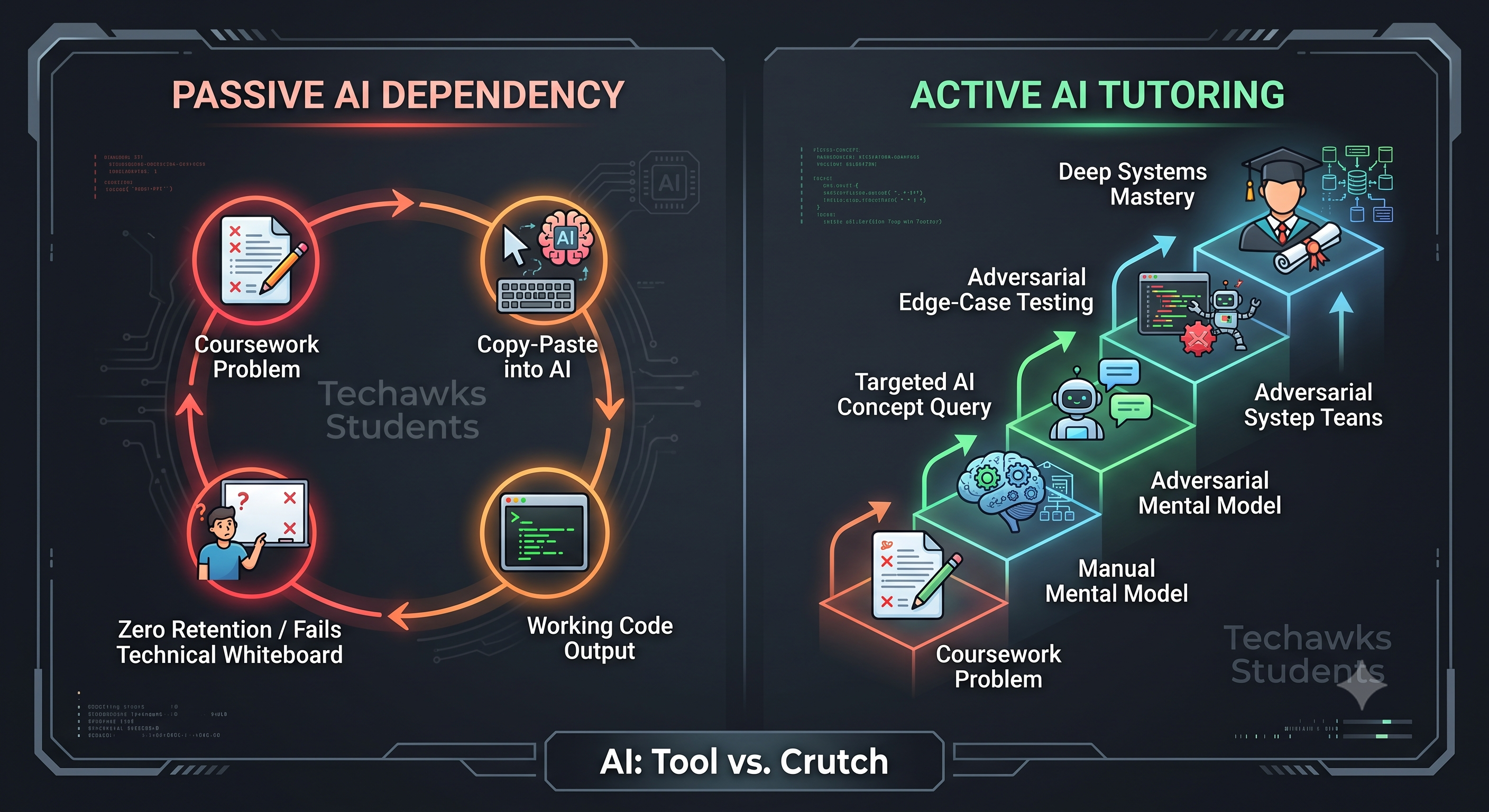 0 Comentários 0 Compartilhamentos 203 Visualizações 0 Anterior
 -
The End of "Prompt Jockeying": Why Context Engineering Is the #1 Skill Junior Devs Must Learn Now
Over the past few days, industry data across major platforms and enterprise surveys confirmed a massive turning point: the industry is transitioning from isolated code generation to multi-step autonomous AI workflows. In fact, recent research reveals that teams with mature Context Engineering practices are four times more likely to successfully operationalize AI than those relying on raw prompt tricks.
For students and early-career developers, this shifts the definition of technical competence.
Writing a clever 50-word prompt is no longer an edge. AI models already autocomplete syntax and write boilerplate functions effortlessly. The actual bottleneck engineering teams face today is grounding: How do you feed an autonomous system the exact schema, metadata, retrieval bounds, and API boundaries it needs to resolve an end-to-end task without hallucinating or breaking production?
Here is what Context Engineering actually looks like, and how you should build your side projects to reflect it:
Deterministic Retrieval over Open Prompts: Don't just paste code into a prompt window. Build apps that utilize structured Retrieval-Augmented Generation (RAG) and semantic layers. Learn how vector embeddings, indexing strategies, and relational metadata dictate the precision of model responses.
Schema & API Tool Calling: Modern workflows rely on protocols (like the Model Context Protocol / MCP) and strict JSON schema boundaries. Practice configuring agents that execute typed functions against live endpoints rather than generating static markdown.
Rigorous Output Verification: Treat AI outputs as untrusted inputs. The most valued junior engineers aren't the ones generating 1,000 lines of unreviewed code a minute; they are the ones writing automated unit tests, validation hooks, and linting harnesses that enforce quality control.
When hiring managers look at your GitHub profile today, they aren't looking to see if you can use an LLM. They are looking to see if you can architect the system around it.
Discussion Question
When you build software with AI assistance today, what mechanism do you use to verify that the generated architecture actually holds up before pushing to main?
CTA
Want to level up your engineering architecture and stay ahead of production standards? Join Students in Tech to connect with peers, review code architectures, and prepare for modern engineering careers.The End of "Prompt Jockeying": Why Context Engineering Is the #1 Skill Junior Devs Must Learn Now Over the past few days, industry data across major platforms and enterprise surveys confirmed a massive turning point: the industry is transitioning from isolated code generation to multi-step autonomous AI workflows. In fact, recent research reveals that teams with mature Context Engineering practices are four times more likely to successfully operationalize AI than those relying on raw prompt tricks. For students and early-career developers, this shifts the definition of technical competence. Writing a clever 50-word prompt is no longer an edge. AI models already autocomplete syntax and write boilerplate functions effortlessly. The actual bottleneck engineering teams face today is grounding: How do you feed an autonomous system the exact schema, metadata, retrieval bounds, and API boundaries it needs to resolve an end-to-end task without hallucinating or breaking production? Here is what Context Engineering actually looks like, and how you should build your side projects to reflect it: Deterministic Retrieval over Open Prompts: Don't just paste code into a prompt window. Build apps that utilize structured Retrieval-Augmented Generation (RAG) and semantic layers. Learn how vector embeddings, indexing strategies, and relational metadata dictate the precision of model responses. Schema & API Tool Calling: Modern workflows rely on protocols (like the Model Context Protocol / MCP) and strict JSON schema boundaries. Practice configuring agents that execute typed functions against live endpoints rather than generating static markdown. Rigorous Output Verification: Treat AI outputs as untrusted inputs. The most valued junior engineers aren't the ones generating 1,000 lines of unreviewed code a minute; they are the ones writing automated unit tests, validation hooks, and linting harnesses that enforce quality control. When hiring managers look at your GitHub profile today, they aren't looking to see if you can use an LLM. They are looking to see if you can architect the system around it. Discussion Question When you build software with AI assistance today, what mechanism do you use to verify that the generated architecture actually holds up before pushing to main? CTA Want to level up your engineering architecture and stay ahead of production standards? Join Students in Tech to connect with peers, review code architectures, and prepare for modern engineering careers. 0 Comentários 0 Compartilhamentos 167 Visualizações 0 Anterior
 -
The "No Framework" Weekend: How Building from Scratch Unlocks True Engineering Intuition
Modern developer tooling makes starting a project deceptively fast. With one terminal command, a beginner can scaffold a full-stack application loaded with state management libraries, ORMs, and pre-packaged authentication.
The problem? You learn how to consume APIs without ever understanding the computer science primitives underneath them.
When an interviewer asks how a relational join executes under the hood, how state changes trigger a Virtual DOM re-render, or why a cache eviction causes memory fragmentation, reciting library documentation won't save you.
If you want to build engineering intuition that actually lasts, step away from npm install and take the 48-Hour Zero-Framework Challenge:
Rebuild One Primitive by Hand
Pick a foundational tool you take for granted and implement a minimal, working version from scratch:
Option A: Build a toy HTTP router using raw TCP sockets that parses HTTP request headers and routes paths manually.
Option B: Implement a custom state container (like a miniature Redux/Zustand) using pure JavaScript closures and pub/sub observables.
Option C: Write an in-memory key-value database in Python or C++ featuring an LRU (Least Recently Used) cache backed by a hash map and a doubly linked list.
Ban External Dependencies
Set your dependency count to zero. Standard library only. No React, no Express, no ORMs. When you have to manually parse query strings or handle concurrent read/write locks, the design trade-offs behind modern frameworks suddenly become obvious.
Bench-Test and Break It
Write 20 automated integration tests designed to break your implementation. Feed it malformed headers, simulate simultaneous requests, or flood the cache. Diagnosing why your own raw code crashes teaches you more about distributed systems and systems performance in a single weekend than three months of tutorial videos.
Senior engineers aren't valued for their speed in configuring someone else's boilerplate. They are valued because they understand how the machine works when the abstractions leak.
Key Takeaways
High-level frameworks conceal core computer science trade-offs behind magical abstractions.
Implementing toy versions of everyday tools (routers, caches, event emitters) cements deep systems intuition.
Relying exclusively on standard libraries forces you to confront memory, state, and concurrency boundaries directly.
True technical seniority is built on understanding the fundamentals that frameworks are engineered to solve.
CTA
Ready to move past tutorial hell and master computer science fundamentals that actually scale your career? Join the Students in Tech community to dissect open-source internals, review build-from-scratch projects, and level up with peers worldwide.The "No Framework" Weekend: How Building from Scratch Unlocks True Engineering Intuition Modern developer tooling makes starting a project deceptively fast. With one terminal command, a beginner can scaffold a full-stack application loaded with state management libraries, ORMs, and pre-packaged authentication. The problem? You learn how to consume APIs without ever understanding the computer science primitives underneath them. When an interviewer asks how a relational join executes under the hood, how state changes trigger a Virtual DOM re-render, or why a cache eviction causes memory fragmentation, reciting library documentation won't save you. If you want to build engineering intuition that actually lasts, step away from npm install and take the 48-Hour Zero-Framework Challenge: Rebuild One Primitive by Hand Pick a foundational tool you take for granted and implement a minimal, working version from scratch: Option A: Build a toy HTTP router using raw TCP sockets that parses HTTP request headers and routes paths manually. Option B: Implement a custom state container (like a miniature Redux/Zustand) using pure JavaScript closures and pub/sub observables. Option C: Write an in-memory key-value database in Python or C++ featuring an LRU (Least Recently Used) cache backed by a hash map and a doubly linked list. Ban External Dependencies Set your dependency count to zero. Standard library only. No React, no Express, no ORMs. When you have to manually parse query strings or handle concurrent read/write locks, the design trade-offs behind modern frameworks suddenly become obvious. Bench-Test and Break It Write 20 automated integration tests designed to break your implementation. Feed it malformed headers, simulate simultaneous requests, or flood the cache. Diagnosing why your own raw code crashes teaches you more about distributed systems and systems performance in a single weekend than three months of tutorial videos. Senior engineers aren't valued for their speed in configuring someone else's boilerplate. They are valued because they understand how the machine works when the abstractions leak. Key Takeaways High-level frameworks conceal core computer science trade-offs behind magical abstractions. Implementing toy versions of everyday tools (routers, caches, event emitters) cements deep systems intuition. Relying exclusively on standard libraries forces you to confront memory, state, and concurrency boundaries directly. True technical seniority is built on understanding the fundamentals that frameworks are engineered to solve. CTA Ready to move past tutorial hell and master computer science fundamentals that actually scale your career? Join the Students in Tech community to dissect open-source internals, review build-from-scratch projects, and level up with peers worldwide.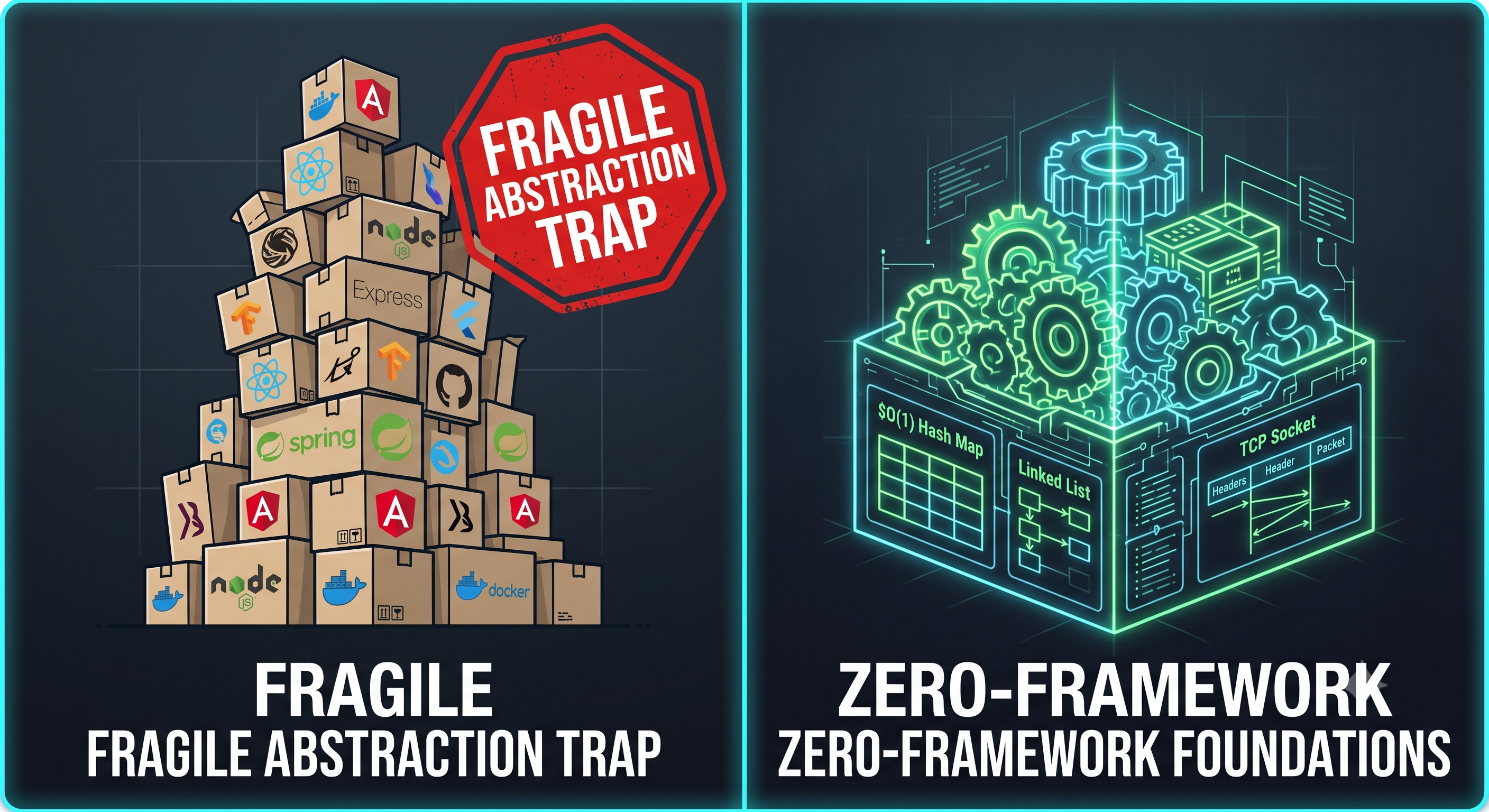 0 Comentários 0 Compartilhamentos 136 Visualizações 0 Anterior
 -
The AI Coding Assistant Trap: Why Autocomplete Is Not Making You a Better Software Engineer
Engineering students today have access to the most powerful code-generation tools in history. With autocomplete filling in entire functions in seconds, many learners assume that memorizing syntax, tracing memory layouts, and dissecting algorithms by hand are relics of the past.
The industry reality paints a very different picture.
Myth: Using AI to write your college assignments accelerates your learning and prepares you for modern industry engineering roles.
Fact: AI code generation gives a deceptive illusion of competence. Generating syntax without understanding internal execution leaves you incapable of diagnosing runtime exceptions, memory leaks, concurrency locks, and architectural antipatterns when systems inevitably break.
Why this matters for your engineering career:
In professional environments, writing raw boilerplate is only a tiny fraction of the job. Senior engineers spend most of their time reading unfamiliar legacy systems, debugging erratic edge cases, reasoning about distributed state, and reviewing PRs for subtle security vulnerabilities.
If you use AI as a shortcut instead of a study partner, you miss the mental friction where actual algorithmic intuition forms. When an interviewer asks you to step through a pointer traversal or explain a cache eviction trade-off on a whiteboard, autocomplete won't be there to bail you out.
How to use AI tools like an elite engineering student:
Enforce the "Blank Editor" First Draft Rule
Never start an assignment by prompting an LLM. Design your data structures, draft pseudocode, and implement the initial baseline solution yourself. Once your implementation works (or fails deterministically), then consult AI tools to compare approaches.
Shift Prompts from Generation to Socratic Teardowns
Stop asking: "Write a binary search tree in C++."
Start asking: "Explain the cache locality trade-offs between an array-based binary heap and a pointer-based node tree," or "What are three edge cases where this specific sorting implementation will cause a stack overflow?"
Audit Generated Code Line-by-LineIf you use AI to explain or scaffold a routine, challenge yourself to explain every single variable, branch condition, and time/space complexity bound (O(n)) without looking back at the prompt. If you can't justify why a line is there, delete it.
AI doesn't replace the need to understand computer science fundamentals; it raises the bar on how deeply you must understand them to stay relevant.
Discussion Question
Do AI coding tools help you understand core computer science concepts faster, or do you find yourself relying on them to bypass difficult debugging sessions?
CTA
Ready to build deep technical foundations and bridge the gap from classroom theory to production systems? Join the Students in Tech community to break down engineering roadmaps, review open-source projects, and level up alongside peers worldwideThe AI Coding Assistant Trap: Why Autocomplete Is Not Making You a Better Software Engineer Engineering students today have access to the most powerful code-generation tools in history. With autocomplete filling in entire functions in seconds, many learners assume that memorizing syntax, tracing memory layouts, and dissecting algorithms by hand are relics of the past. The industry reality paints a very different picture. Myth: Using AI to write your college assignments accelerates your learning and prepares you for modern industry engineering roles. Fact: AI code generation gives a deceptive illusion of competence. Generating syntax without understanding internal execution leaves you incapable of diagnosing runtime exceptions, memory leaks, concurrency locks, and architectural antipatterns when systems inevitably break. Why this matters for your engineering career: In professional environments, writing raw boilerplate is only a tiny fraction of the job. Senior engineers spend most of their time reading unfamiliar legacy systems, debugging erratic edge cases, reasoning about distributed state, and reviewing PRs for subtle security vulnerabilities. If you use AI as a shortcut instead of a study partner, you miss the mental friction where actual algorithmic intuition forms. When an interviewer asks you to step through a pointer traversal or explain a cache eviction trade-off on a whiteboard, autocomplete won't be there to bail you out. How to use AI tools like an elite engineering student: Enforce the "Blank Editor" First Draft Rule Never start an assignment by prompting an LLM. Design your data structures, draft pseudocode, and implement the initial baseline solution yourself. Once your implementation works (or fails deterministically), then consult AI tools to compare approaches. Shift Prompts from Generation to Socratic Teardowns Stop asking: "Write a binary search tree in C++." Start asking: "Explain the cache locality trade-offs between an array-based binary heap and a pointer-based node tree," or "What are three edge cases where this specific sorting implementation will cause a stack overflow?" Audit Generated Code Line-by-LineIf you use AI to explain or scaffold a routine, challenge yourself to explain every single variable, branch condition, and time/space complexity bound (O(n)) without looking back at the prompt. If you can't justify why a line is there, delete it. AI doesn't replace the need to understand computer science fundamentals; it raises the bar on how deeply you must understand them to stay relevant. Discussion Question Do AI coding tools help you understand core computer science concepts faster, or do you find yourself relying on them to bypass difficult debugging sessions? CTA Ready to build deep technical foundations and bridge the gap from classroom theory to production systems? Join the Students in Tech community to break down engineering roadmaps, review open-source projects, and level up alongside peers worldwide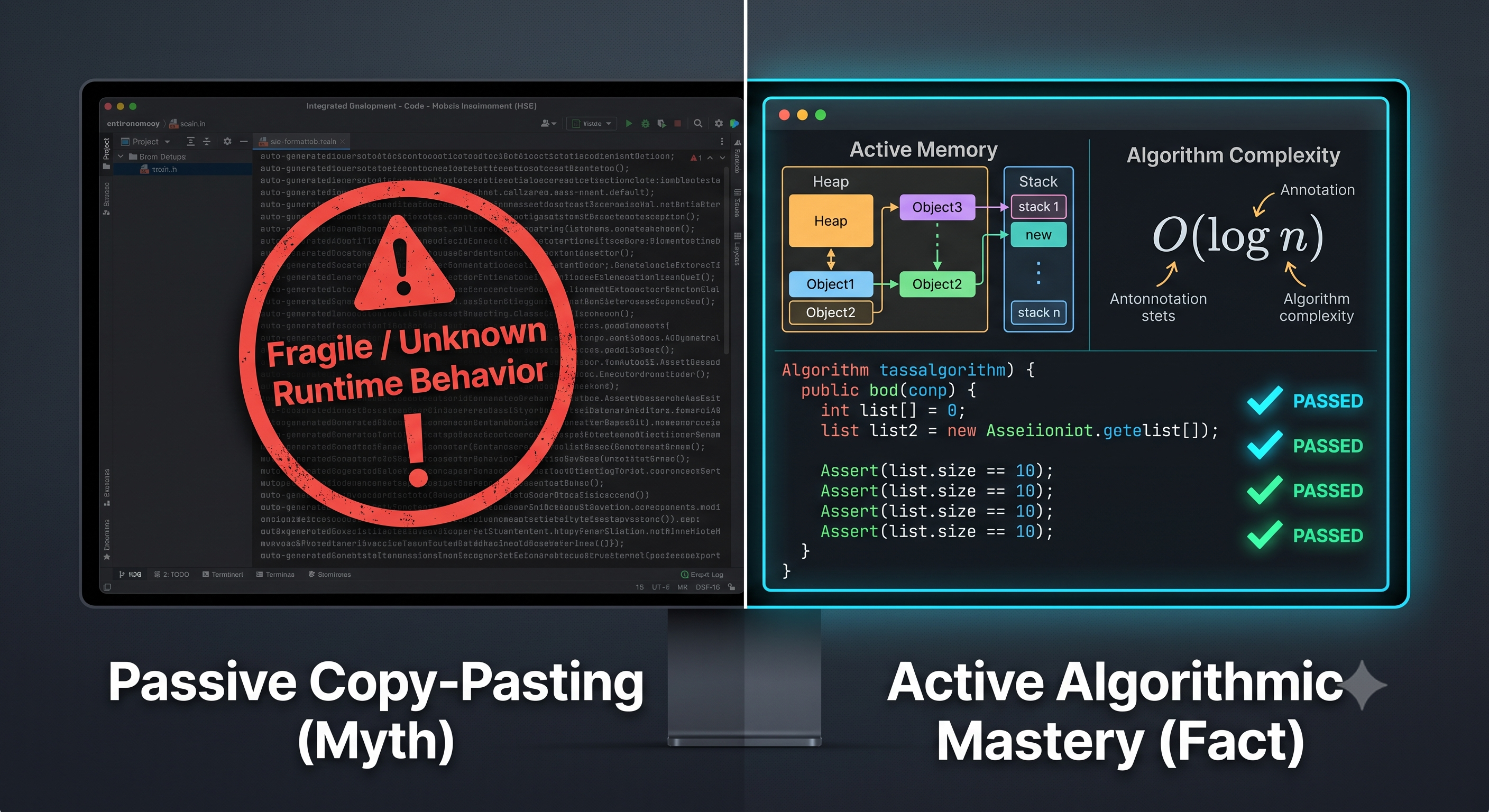 0 Comentários 0 Compartilhamentos 127 Visualizações 0 Anterior
Mais stories