




Techawks UK is a dedicated technology and artificial intelligence community connecting developers, entrepreneurs, startups, researchers, IT professionals, students, and tech enthusiasts across the United Kingdom. Our mission is to help members learn, collaborate, network, and stay ahead in the rapidly evolving digital world.
Discover the latest AI innovations, cybersecurity trends, cloud computing, software development, startups, robotics, fintech, and emerging technologies. Join discussions, share knowledge, showcase projects, explore career opportunities, and connect with like-minded innovators building the future of technology in the UK.
Discover the latest AI innovations, cybersecurity trends, cloud computing, software development, startups, robotics, fintech, and emerging technologies. Join discussions, share knowledge, showcase projects, explore career opportunities, and connect with like-minded innovators building the future of technology in the UK.
-
PBID: 0230001500000014
-
2 people like this
-
52 Posts
-
52 Photos
-
0 Videos
-
Reviews
-
Science and Technology
Search

 Arabic
 French
 Spanish
 Portuguese
 Deutsch
 Turkish
 Dutch
Dutch
 Italiano
 Russian
 Romaian
 Portuguese (Brazil)
 Greek
Greek
Recent Updates
-
The Death of "Shared Responsibility": How the UK Cyber Security & Resilience Bill Changes Cloud Architecture
For years, UK engineering teams leaned heavily on a convenient abstraction: "We own the app logic; AWS, Azure, and our MSPs own the infrastructure resilience."
The UK's Cyber Security and Resilience Bill (CSRB)—now progressing through Parliament alongside strict 24-hour mandatory reporting windows and penalties reaching 4% of global turnover—demolishes this passive reliance. Crucially, the bill directly expands the scope of the 2018 NIS Regulations to pull Managed Service Providers (MSPs), data centres, and digital supply chains into legal liability.
If your critical systems depend on downstream third parties, you cannot treat vendor dependencies as black-box SLA agreements anymore.
Here is how systems design must adapt for UK-facing platforms:
From Black-Box SaaS to Dynamic SBOM & SLSA Level 3: Static spreadsheets tracking third-party libraries won’t pass regulatory audits. You need real-time, machine-readable Software Bills of Materials (SBOMs) generated in CI/CD pipelines, tied to cryptographic provenance (attestations using Sigstore/Cosign).
Designing for Blast-Radius Isolation (Cell-Based Architecture): Monolithic architectures dependent on external API endpoints create systemic single points of failure. Partition workloads into independent "cells" with deterministic circuit breakers and local fallback caches. If a downstream cloud identity or billing vendor fails, the cell degrades gracefully rather than triggering a cascading failure.
Continuous In-Memory Telemetry for "Near-Miss" Auditing: The new regime introduces reporting mandates not just for catastrophic breaches, but for critical incidents and near-misses within 24 hours. Traditional log shipping via batch pipelines is too slow. Teams must instrument eBPF-driven kernel observability to detect credential stuffing, anomalous lateral RPC hops, and supply-chain tampering in sub-second streams.
Discussion Question
If your primary cloud region or critical SaaS vendor goes dark right now, does your application cleanly degrade into an offline fallback cell, or does your entire platform fail hard?
CTA
Build resilient, fault-tolerant infrastructure built for the next decade of cloud engineering. Join Techawks UK to connect with senior systems architects, SREs, and DevOps leads.The Death of "Shared Responsibility": How the UK Cyber Security & Resilience Bill Changes Cloud Architecture For years, UK engineering teams leaned heavily on a convenient abstraction: "We own the app logic; AWS, Azure, and our MSPs own the infrastructure resilience." The UK's Cyber Security and Resilience Bill (CSRB)—now progressing through Parliament alongside strict 24-hour mandatory reporting windows and penalties reaching 4% of global turnover—demolishes this passive reliance. Crucially, the bill directly expands the scope of the 2018 NIS Regulations to pull Managed Service Providers (MSPs), data centres, and digital supply chains into legal liability. If your critical systems depend on downstream third parties, you cannot treat vendor dependencies as black-box SLA agreements anymore. Here is how systems design must adapt for UK-facing platforms: From Black-Box SaaS to Dynamic SBOM & SLSA Level 3: Static spreadsheets tracking third-party libraries won’t pass regulatory audits. You need real-time, machine-readable Software Bills of Materials (SBOMs) generated in CI/CD pipelines, tied to cryptographic provenance (attestations using Sigstore/Cosign). Designing for Blast-Radius Isolation (Cell-Based Architecture): Monolithic architectures dependent on external API endpoints create systemic single points of failure. Partition workloads into independent "cells" with deterministic circuit breakers and local fallback caches. If a downstream cloud identity or billing vendor fails, the cell degrades gracefully rather than triggering a cascading failure. Continuous In-Memory Telemetry for "Near-Miss" Auditing: The new regime introduces reporting mandates not just for catastrophic breaches, but for critical incidents and near-misses within 24 hours. Traditional log shipping via batch pipelines is too slow. Teams must instrument eBPF-driven kernel observability to detect credential stuffing, anomalous lateral RPC hops, and supply-chain tampering in sub-second streams. Discussion Question If your primary cloud region or critical SaaS vendor goes dark right now, does your application cleanly degrade into an offline fallback cell, or does your entire platform fail hard? CTA Build resilient, fault-tolerant infrastructure built for the next decade of cloud engineering. Join Techawks UK to connect with senior systems architects, SREs, and DevOps leads.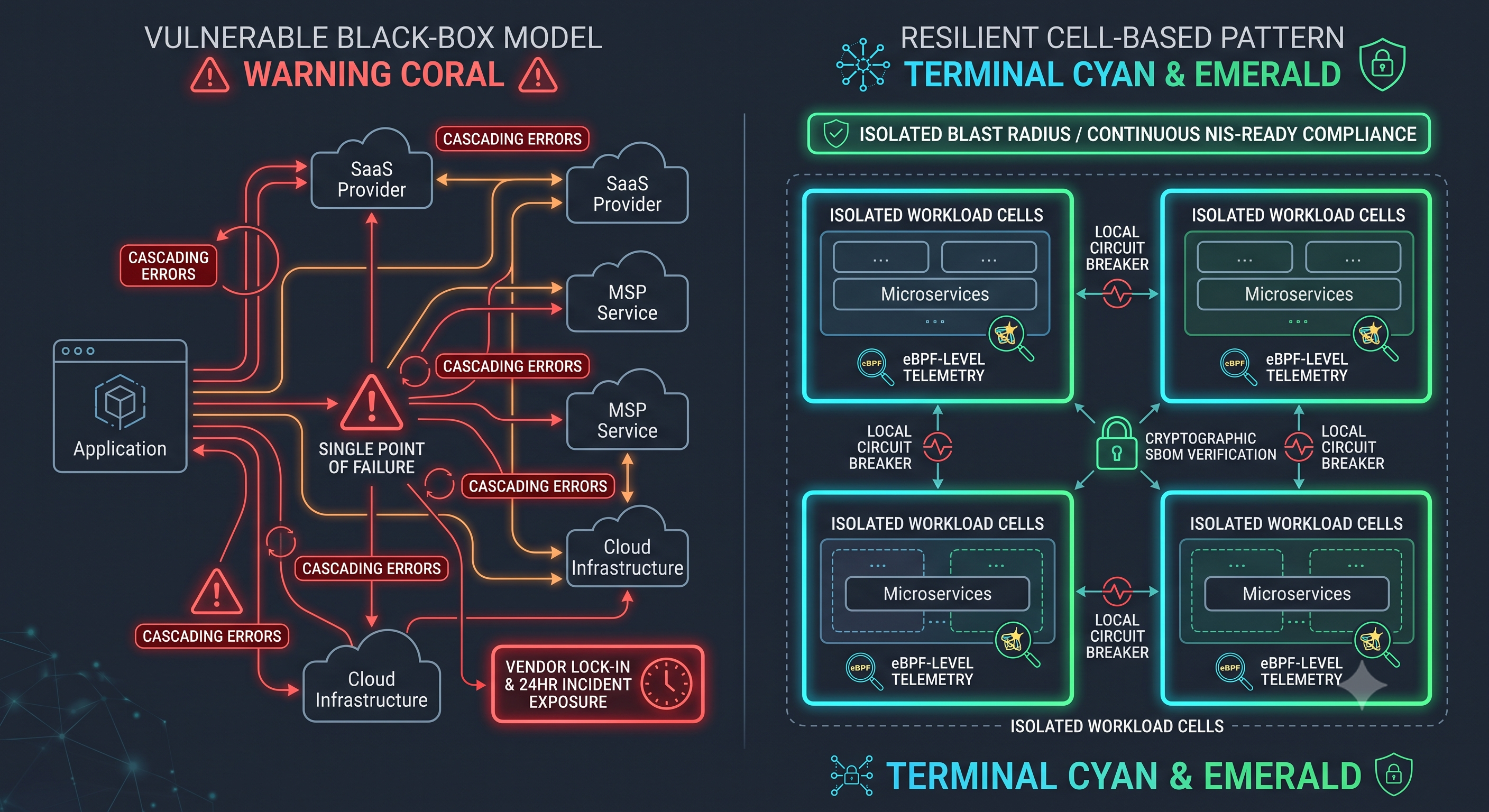 0 Comments 0 Shares 71 Views 0 Reviews
 -
The Cyber Security & Resilience Bill: Is Your UK Tech Stack Actually Audit-Ready?
UK digital leadership is undergoing an aggressive regulatory pivot. With the Cyber Security and Resilience Bill expanding the scope of the Network and Information Systems (NIS) framework across supply chains and critical digital infrastructure, British tech firms can no longer treat cybersecurity as a back-office IT ticket.
The shift is clear: Regulators, enterprise procurement boards, and the NCSC no longer ask if you have security policies written down. They ask if you can prove your systems will survive a catastrophic supply-chain outage or ransomware attempt without downing customer operations.
Before enterprise auditors and procurement vetting freeze your deployment pipeline, test your architecture against this UK Engineering Cyber Resilience Checklist:
[ ] NCSC Cyber Assessment Framework (CAF) Mapping: Have you benchmarked your core services, IAM tiers, and access boundaries directly against the CAF indicators rather than generic self-assessment questionnaires?
[ ] Continuous Supply-Chain Blast Radius Limiting: Are third-party vendor dependencies, CI/CD runners, and external SaaS connectors strictly isolated with zero-standing-privilege (ZSP) rules?
[ ] Documented RTO & RPO Proof: Can your team execute an immutable, out-of-band disaster recovery restore with verified RPO (Recovery Point Objective) and RTO (Recovery Time Objective) targets tested within the last six months?
[ ] NCSC Early Warning Integration: Is your infrastructure enrolled in the NCSC Early Warning service to catch indicators of compromise (IoCs) and compromised network assets automatically?
[ ] Board-Level Accountability Artifacts: Does your team maintain an auditable, continuously refreshed cyber risk register with a designated board or executive sponsor as outlined in the Cyber Governance Code of Practice?
[ ] Sub-Tier Supplier Verification: Do all tier-1 and tier-2 service providers handling sensitive operations hold valid Cyber Essentials Plus certification with contractual incident notification triggers within 24 hours?
Building high-availability tech in the UK is no longer just about 99.99% system uptime. It is about proving system survivability and governance under statutory scrutiny.
Discussion Question
With supply chain liability tightening under UK law, what is your engineering team’s biggest hurdle: vendor dependency isolation, out-of-band recovery testing, or audit-grade telemetry?
CTA
Join Techawks UK to connect with British engineering leaders, cloud architects, and security officers modernising resilient enterprise infrastructure.The Cyber Security & Resilience Bill: Is Your UK Tech Stack Actually Audit-Ready? UK digital leadership is undergoing an aggressive regulatory pivot. With the Cyber Security and Resilience Bill expanding the scope of the Network and Information Systems (NIS) framework across supply chains and critical digital infrastructure, British tech firms can no longer treat cybersecurity as a back-office IT ticket. The shift is clear: Regulators, enterprise procurement boards, and the NCSC no longer ask if you have security policies written down. They ask if you can prove your systems will survive a catastrophic supply-chain outage or ransomware attempt without downing customer operations. Before enterprise auditors and procurement vetting freeze your deployment pipeline, test your architecture against this UK Engineering Cyber Resilience Checklist: [ ] NCSC Cyber Assessment Framework (CAF) Mapping: Have you benchmarked your core services, IAM tiers, and access boundaries directly against the CAF indicators rather than generic self-assessment questionnaires? [ ] Continuous Supply-Chain Blast Radius Limiting: Are third-party vendor dependencies, CI/CD runners, and external SaaS connectors strictly isolated with zero-standing-privilege (ZSP) rules? [ ] Documented RTO & RPO Proof: Can your team execute an immutable, out-of-band disaster recovery restore with verified RPO (Recovery Point Objective) and RTO (Recovery Time Objective) targets tested within the last six months? [ ] NCSC Early Warning Integration: Is your infrastructure enrolled in the NCSC Early Warning service to catch indicators of compromise (IoCs) and compromised network assets automatically? [ ] Board-Level Accountability Artifacts: Does your team maintain an auditable, continuously refreshed cyber risk register with a designated board or executive sponsor as outlined in the Cyber Governance Code of Practice? [ ] Sub-Tier Supplier Verification: Do all tier-1 and tier-2 service providers handling sensitive operations hold valid Cyber Essentials Plus certification with contractual incident notification triggers within 24 hours? Building high-availability tech in the UK is no longer just about 99.99% system uptime. It is about proving system survivability and governance under statutory scrutiny. Discussion Question With supply chain liability tightening under UK law, what is your engineering team’s biggest hurdle: vendor dependency isolation, out-of-band recovery testing, or audit-grade telemetry? CTA Join Techawks UK to connect with British engineering leaders, cloud architects, and security officers modernising resilient enterprise infrastructure.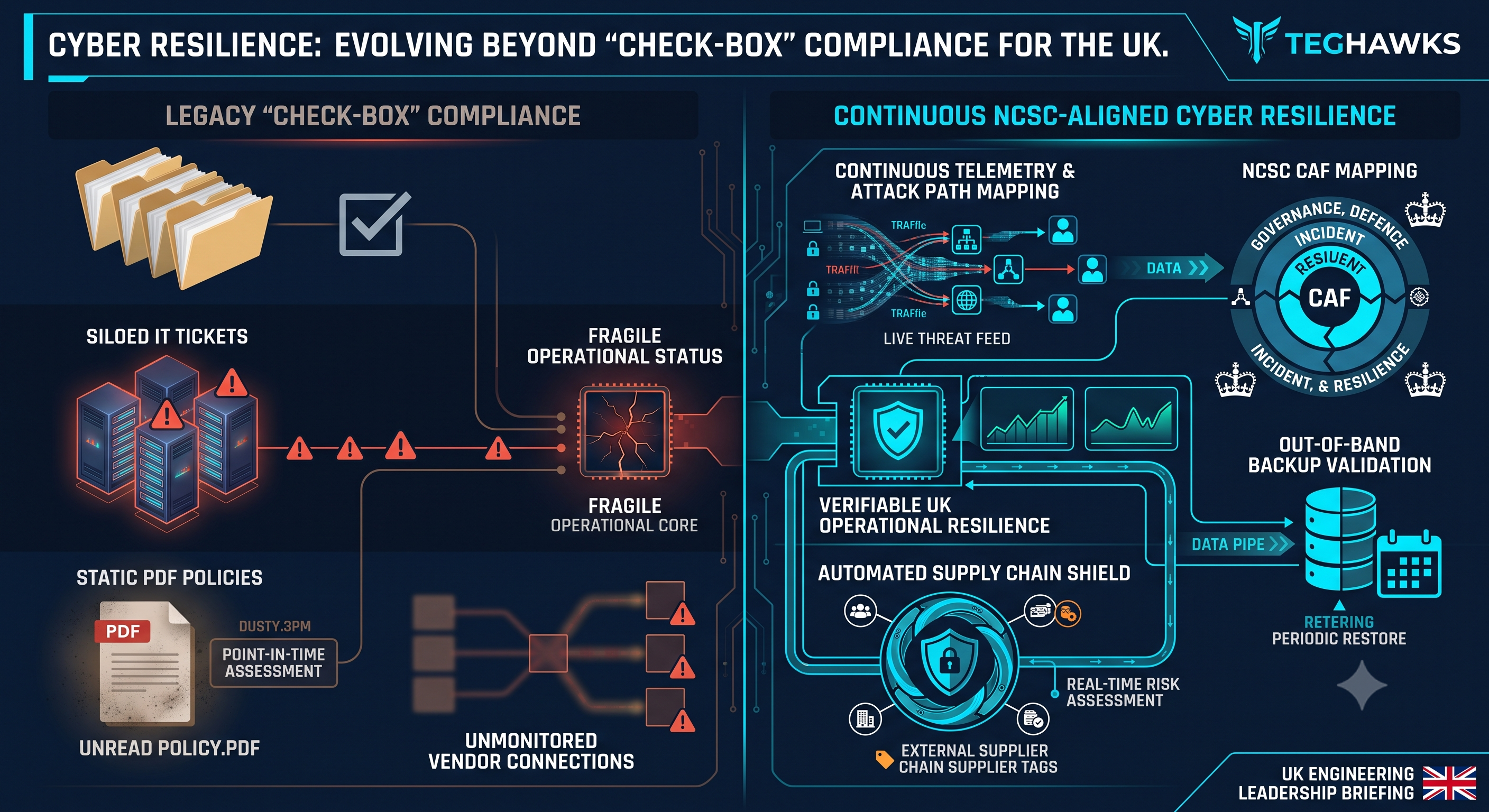 0 Comments 0 Shares 330 Views 0 Reviews
 -
The Regulatory Air-Gap: Why UK Engineering Teams Must Decouple Data Residency from Sovereign Execution
UK tech leaders are navigating a dual operational reality: accelerating agentic AI adoption while aligning with the strict regulatory expectations of the Cyber Security and Resilience Bill, sector-specific FCA/PRA operational resilience mandates, and the ICO's statutory guidance on automated decision-making.
The classic enterprise response has been Passive Data Residency: store the database inside UK borders, but pipe sensitive customer telemetry, prompt contexts, and operational metadata out to non-sovereign multi-tenant model APIs across external regions.
Under modern scrutiny, that boundary is untenable. Real resilience requires moving from simple storage residency to Sovereign Execution & Enclave Determinism.
How to Architect for Sovereign Runtime Compliance:
Deploy Confidential Computing Enclaves (Hardware Attestation)
Encrypting data at rest and in transit is baseline hygiene. To protect sensitive customer contexts during inference, isolate model runtimes inside hardware-attested Trusted Execution Environments (TEEs) on UK-domiciled bare metal. This guarantees that host infrastructure administrators and third-party hypervisors cannot inspect memory state during runtime execution.
Implement Localized Model Distillation & SLM Gateways
Never send high-compliance transactions (e.g., patient records, credit decisions, identifiable telemetry) to opaque public endpoints. Route in-scope requests to local, quantized Small Language Models (SLMs) running inside air-gapped VPCs. Use deterministic rule-based classifiers to scrub and verify data contracts before any anonymized residual workloads trigger external fallbacks.
Enforce Immutable Audit Ledgers for Automated Decisions
The ICO and FCA hold Senior Managers directly accountable for automated decision chains. Replace opaque, non-deterministic agent loops with cryptographically signed execution traces. Record the input context hash, model weight version, state transition, and output payload in an append-only log to ensure forensic auditability on demand.
Sovereignty isn't a checkmark on a cloud billing dashboard—it is an architectural pattern that guarantees total jurisdictional control over code, context, and compute.
Discussion Question
For UK tech leaders, CTOs, and platform architects: How is your team reconciling high-speed agent deployment with strict UK compliance—are you adopting local sovereign SLMs, investing in confidential computing enclaves, or relying on contractual provider assurances? Let's discuss where the practical trade-offs lie.
CTA
Ready to build resilient, sovereign, and audit-proof technical systems?
👉 Join Techawks UK to collaborate with senior engineers, discuss sovereign cloud architecture, and benchmark production frameworks alongside the British tech community.The Regulatory Air-Gap: Why UK Engineering Teams Must Decouple Data Residency from Sovereign Execution UK tech leaders are navigating a dual operational reality: accelerating agentic AI adoption while aligning with the strict regulatory expectations of the Cyber Security and Resilience Bill, sector-specific FCA/PRA operational resilience mandates, and the ICO's statutory guidance on automated decision-making. The classic enterprise response has been Passive Data Residency: store the database inside UK borders, but pipe sensitive customer telemetry, prompt contexts, and operational metadata out to non-sovereign multi-tenant model APIs across external regions. Under modern scrutiny, that boundary is untenable. Real resilience requires moving from simple storage residency to Sovereign Execution & Enclave Determinism. How to Architect for Sovereign Runtime Compliance: Deploy Confidential Computing Enclaves (Hardware Attestation) Encrypting data at rest and in transit is baseline hygiene. To protect sensitive customer contexts during inference, isolate model runtimes inside hardware-attested Trusted Execution Environments (TEEs) on UK-domiciled bare metal. This guarantees that host infrastructure administrators and third-party hypervisors cannot inspect memory state during runtime execution. Implement Localized Model Distillation & SLM Gateways Never send high-compliance transactions (e.g., patient records, credit decisions, identifiable telemetry) to opaque public endpoints. Route in-scope requests to local, quantized Small Language Models (SLMs) running inside air-gapped VPCs. Use deterministic rule-based classifiers to scrub and verify data contracts before any anonymized residual workloads trigger external fallbacks. Enforce Immutable Audit Ledgers for Automated Decisions The ICO and FCA hold Senior Managers directly accountable for automated decision chains. Replace opaque, non-deterministic agent loops with cryptographically signed execution traces. Record the input context hash, model weight version, state transition, and output payload in an append-only log to ensure forensic auditability on demand. Sovereignty isn't a checkmark on a cloud billing dashboard—it is an architectural pattern that guarantees total jurisdictional control over code, context, and compute. Discussion Question For UK tech leaders, CTOs, and platform architects: How is your team reconciling high-speed agent deployment with strict UK compliance—are you adopting local sovereign SLMs, investing in confidential computing enclaves, or relying on contractual provider assurances? Let's discuss where the practical trade-offs lie. CTA Ready to build resilient, sovereign, and audit-proof technical systems? 👉 Join Techawks UK to collaborate with senior engineers, discuss sovereign cloud architecture, and benchmark production frameworks alongside the British tech community.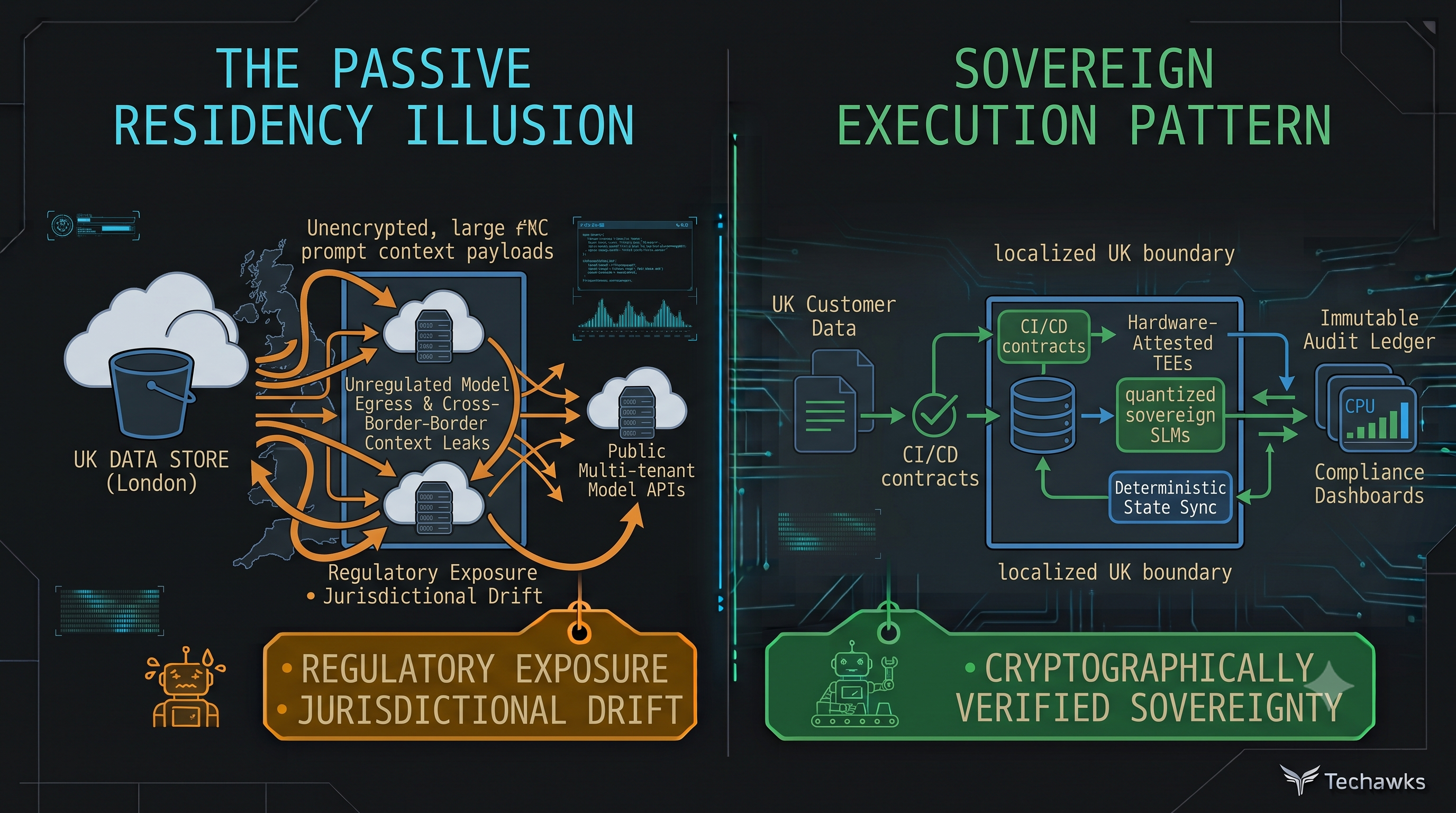 0 Comments 0 Shares 1K Views 0 Reviews
 -
Beyond the GPU Shortage: Why the UK’s AI Ambitions Now Live or Die on the National Grid
For the past two years, the common tech narrative was that compute shortages were the only ceiling on AI deployment. In the UK, that bottleneck has officially migrated from silicon to substations.
While the UK government’s designation of data centres as Critical National Infrastructure (CNI) unlocked priority regulatory backing and closer integration with the National Cyber Security Centre (NCSC), new industry data shows that grid queue delays and power allocation—not capital or demand—are now the gating factor for UK infrastructure expansion. With the UK targeting at least 6GW of AI-capable capacity by 2030, securing high-voltage grid connections in primary corridors like Slough and West London can take years.
What This Teaches Us (Architectural Takeaway):
Engineering teams building across the UK need to design for power-constrained multi-region realities:
Decouple Training from Inference Geographies: Massive model training clusters do not need sub-10ms latency to London financial exchanges. We are seeing a decentralisation pivot toward hubs with stranded renewable capacity (e.g., Scotland, Greater Manchester, and the North East).
Design for Workload Elasticity (Grid-Aware Compute): Batch processing, vector indexing, and non-critical fine-tuning should be architected to throttle up during off-peak grid periods, taking advantage of dynamic carbon and wholesale pricing tariffs.
Audit Your CNI Supply Chain Exposure: As hosting providers come under CNI scrutiny, downstream tech companies will face tighter third-party resilience audits, especially around failover power redundancy and incident reporting mandates.
The winners of the UK’s AI economy won’t just be the teams with the sharpest models—they will be the architectures engineered around energy reality.
Discussion Question
To UK CTOs and Infrastructure Leads: Are grid capacity timelines and rising regional hosting costs altering where you deploy your compute clusters, or are you primarily relying on hyperscaler abstractions to absorb the pain?
CTA
Join Techawks UK — Connect with British tech leaders, systems engineers, and founders shaping the nation's digital backbone. Hit Follow and join the conversation in our member network.Beyond the GPU Shortage: Why the UK’s AI Ambitions Now Live or Die on the National Grid For the past two years, the common tech narrative was that compute shortages were the only ceiling on AI deployment. In the UK, that bottleneck has officially migrated from silicon to substations. While the UK government’s designation of data centres as Critical National Infrastructure (CNI) unlocked priority regulatory backing and closer integration with the National Cyber Security Centre (NCSC), new industry data shows that grid queue delays and power allocation—not capital or demand—are now the gating factor for UK infrastructure expansion. With the UK targeting at least 6GW of AI-capable capacity by 2030, securing high-voltage grid connections in primary corridors like Slough and West London can take years. What This Teaches Us (Architectural Takeaway): Engineering teams building across the UK need to design for power-constrained multi-region realities: Decouple Training from Inference Geographies: Massive model training clusters do not need sub-10ms latency to London financial exchanges. We are seeing a decentralisation pivot toward hubs with stranded renewable capacity (e.g., Scotland, Greater Manchester, and the North East). Design for Workload Elasticity (Grid-Aware Compute): Batch processing, vector indexing, and non-critical fine-tuning should be architected to throttle up during off-peak grid periods, taking advantage of dynamic carbon and wholesale pricing tariffs. Audit Your CNI Supply Chain Exposure: As hosting providers come under CNI scrutiny, downstream tech companies will face tighter third-party resilience audits, especially around failover power redundancy and incident reporting mandates. The winners of the UK’s AI economy won’t just be the teams with the sharpest models—they will be the architectures engineered around energy reality. Discussion Question To UK CTOs and Infrastructure Leads: Are grid capacity timelines and rising regional hosting costs altering where you deploy your compute clusters, or are you primarily relying on hyperscaler abstractions to absorb the pain? CTA Join Techawks UK — Connect with British tech leaders, systems engineers, and founders shaping the nation's digital backbone. Hit Follow and join the conversation in our member network. 0 Comments 0 Shares 426 Views 0 Reviews
 -
Beyond "Kill Switches": Why the UK’s Cyber Security and Resilience Bill Demands Deterministic Isolation in Production
As the Cyber Security & Resilience Bill progresses through Westminster alongside fresh debates over centralized AI intervention powers, the conversation across UK tech has reached an inflection point: how do we enforce fail-safes on autonomous, agentic systems without catastrophic service disruption?
Treating safety as an all-or-nothing "master disconnect" is an operational anti-pattern. When autonomous workflows interact with critical databases, external APIs, and cloud infrastructure, engineering leaders must shift from reactive shutdowns to Deterministic Isolation Frameworks:
Sub-Network Air-Gapping over Infrastructure Blackouts:
Rather than severing entire clusters or data center uplinks, implement out-of-band network control. Hardware-assisted micro-segmentation allows teams to isolate compromised agent pods or subnets in milliseconds without dropping core customer-facing services.
Deterministic Guardrail Boundaries:
LLM-based policy evaluators can be jailbroken or bypassed by hallucinated logic loops. Non-negotiable operations (such as drops, balance transfers, data export jobs, or schema migrations) must pass through hard-coded, zero-trust cryptographic validation layers that agents cannot mutate.
Continuous Auditable State Snapshots:
Under tightening UK compliance guidelines (including the ICO's statutory AI codes and DSIT recommendations), post-incident reviews require verifiable forensics. Ensure your agentic orchestrators log deterministic decision traces alongside system resource deltas to an immutable append-only ledger.
Resilience isn't built by planning how to switch off your servers—it’s built by engineering systems that contain failure before pulling the plug is ever on the table.
Discussion Question
Is your organization running autonomous AI workflows with hard deterministic boundaries, or are you still relying on model-level software guardrails to keep systems contained?
CTA
Join Techawks UK — Connect with British software architects, cloud engineers, and technical founders navigating the frontier of resilient system design and modern compliance.Beyond "Kill Switches": Why the UK’s Cyber Security and Resilience Bill Demands Deterministic Isolation in Production As the Cyber Security & Resilience Bill progresses through Westminster alongside fresh debates over centralized AI intervention powers, the conversation across UK tech has reached an inflection point: how do we enforce fail-safes on autonomous, agentic systems without catastrophic service disruption? Treating safety as an all-or-nothing "master disconnect" is an operational anti-pattern. When autonomous workflows interact with critical databases, external APIs, and cloud infrastructure, engineering leaders must shift from reactive shutdowns to Deterministic Isolation Frameworks: Sub-Network Air-Gapping over Infrastructure Blackouts: Rather than severing entire clusters or data center uplinks, implement out-of-band network control. Hardware-assisted micro-segmentation allows teams to isolate compromised agent pods or subnets in milliseconds without dropping core customer-facing services. Deterministic Guardrail Boundaries: LLM-based policy evaluators can be jailbroken or bypassed by hallucinated logic loops. Non-negotiable operations (such as drops, balance transfers, data export jobs, or schema migrations) must pass through hard-coded, zero-trust cryptographic validation layers that agents cannot mutate. Continuous Auditable State Snapshots: Under tightening UK compliance guidelines (including the ICO's statutory AI codes and DSIT recommendations), post-incident reviews require verifiable forensics. Ensure your agentic orchestrators log deterministic decision traces alongside system resource deltas to an immutable append-only ledger. Resilience isn't built by planning how to switch off your servers—it’s built by engineering systems that contain failure before pulling the plug is ever on the table. Discussion Question Is your organization running autonomous AI workflows with hard deterministic boundaries, or are you still relying on model-level software guardrails to keep systems contained? CTA Join Techawks UK — Connect with British software architects, cloud engineers, and technical founders navigating the frontier of resilient system design and modern compliance. 0 Comments 0 Shares 130 Views 0 Reviews
 -
The UK’s "Invisible" AI Law: Why the Data (Use and Access) Framework Overhauls Product Pipelines
Unlike the EU’s omnibus AI Act or the US's state-level patchwork, the UK chose a distinct path: a principles-based, regulator-led model backed by statutory automated decision-making reforms.
Under reformed rules for automated decision-making (replacing legacy Article 22 of the UK GDPR), deploying algorithms and AI agents that make consequential calls about individuals—from credit scoring and loan screening to hiring triage and platform access—is now governed by strict statutory safeguards.
At the same time, the ICO's statutory AI Code of Practice and the FCA’s scrutiny under the Senior Managers & Certification Regime (SM&CR) make one thing clear: accountability cannot be delegated to an API or third-party foundation model.
If your algorithm rejects a customer, revokes access, or adjusts pricing, "the AI model decided" is a direct regulatory liability.
3 Engineering & Governance Shifts for UK Builders
1. "Meaningful Human Review" Must Replace Rubber-Stamping
The ICO has drawn a hard line between automated triage and genuine human involvement.
Having an operator click "Approve" on an automated queue without seeing the model's underlying rationale, confidence intervals, and feature weighting counts as solely automated decision-making in the eyes of UK regulators.
Build your internal admin consoles to display interpretable local feature importances (SHAP/LIME metrics), giving human operators the actual context required to contest or uphold automated recommendations.
2. The Right to Contest as an In-App Native Pattern
Under updated UK statutory safeguards, any individual subject to a material automated decision retains the explicit right to contest the outcome and request human intervention.
Do not hide this in an obscure support email inbox.
Treat the "Contest this decision" workflow as a first-class product state in your frontend—routing rejected applicants or flagged accounts directly to a secondary manual review queue with strict SLA tracking.
3. Architect for Dual-Market Boundary Scoping (UK + EU)
If you sell software or process user data across both the UK and the European Union, you sit in dual jurisdiction:
Inside the UK: Sector-specific, principles-led compliance (ICO, FCA, CMA) focused on explainability and outcome contestability.
Across the Channel: The EU AI Act’s extraterritorial reach imposes mandatory technical documentation, risk-tier logging, and transparency rules on high-risk AI pipelines.
Decouple your system telemetry so you can log and serve EU-compliant audit trails without slowing down your domestic UK agile loops.
The UK Tech Takeaway: Silicon Fen and London’s Silicon Roundabout don’t need more hype. To build defensible, venture-backed B2B tech in Britain, engineering teams must master how to ship fast while designing for statutory interpretability and zero-liability governance.
Discussion Question
How is your engineering team currently tackling automated decisions—are you building native human-in-the-loop review interfaces directly into your product, or relying on manual offline triage?
CTA
Join Techawks UK
Connect with founders, senior software architects, data privacy leads, and engineering leaders across the UK tech ecosystem. Access compliance architectures, deep-dive playbooks, and local technical meetups. Join Techawks UK today:The UK’s "Invisible" AI Law: Why the Data (Use and Access) Framework Overhauls Product Pipelines Unlike the EU’s omnibus AI Act or the US's state-level patchwork, the UK chose a distinct path: a principles-based, regulator-led model backed by statutory automated decision-making reforms. Under reformed rules for automated decision-making (replacing legacy Article 22 of the UK GDPR), deploying algorithms and AI agents that make consequential calls about individuals—from credit scoring and loan screening to hiring triage and platform access—is now governed by strict statutory safeguards. At the same time, the ICO's statutory AI Code of Practice and the FCA’s scrutiny under the Senior Managers & Certification Regime (SM&CR) make one thing clear: accountability cannot be delegated to an API or third-party foundation model. If your algorithm rejects a customer, revokes access, or adjusts pricing, "the AI model decided" is a direct regulatory liability. 3 Engineering & Governance Shifts for UK Builders 1. "Meaningful Human Review" Must Replace Rubber-Stamping The ICO has drawn a hard line between automated triage and genuine human involvement. Having an operator click "Approve" on an automated queue without seeing the model's underlying rationale, confidence intervals, and feature weighting counts as solely automated decision-making in the eyes of UK regulators. Build your internal admin consoles to display interpretable local feature importances (SHAP/LIME metrics), giving human operators the actual context required to contest or uphold automated recommendations. 2. The Right to Contest as an In-App Native Pattern Under updated UK statutory safeguards, any individual subject to a material automated decision retains the explicit right to contest the outcome and request human intervention. Do not hide this in an obscure support email inbox. Treat the "Contest this decision" workflow as a first-class product state in your frontend—routing rejected applicants or flagged accounts directly to a secondary manual review queue with strict SLA tracking. 3. Architect for Dual-Market Boundary Scoping (UK + EU) If you sell software or process user data across both the UK and the European Union, you sit in dual jurisdiction: Inside the UK: Sector-specific, principles-led compliance (ICO, FCA, CMA) focused on explainability and outcome contestability. Across the Channel: The EU AI Act’s extraterritorial reach imposes mandatory technical documentation, risk-tier logging, and transparency rules on high-risk AI pipelines. Decouple your system telemetry so you can log and serve EU-compliant audit trails without slowing down your domestic UK agile loops. The UK Tech Takeaway: Silicon Fen and London’s Silicon Roundabout don’t need more hype. To build defensible, venture-backed B2B tech in Britain, engineering teams must master how to ship fast while designing for statutory interpretability and zero-liability governance. Discussion Question How is your engineering team currently tackling automated decisions—are you building native human-in-the-loop review interfaces directly into your product, or relying on manual offline triage? CTA Join Techawks UK Connect with founders, senior software architects, data privacy leads, and engineering leaders across the UK tech ecosystem. Access compliance architectures, deep-dive playbooks, and local technical meetups. Join Techawks UK today: 0 Comments 0 Shares 162 Views 0 Reviews
 -
The End of Cloud Lock-in: Why the CMA’s Push Against Egress Fees Changes UK Software Architecture
The UK Competition and Markets Authority (CMA) and Digital Markets Unit (DMU) have zeroed in on the structural barriers dominating the UK’s £7.5B+ public cloud sector: data egress fees, aggressive committed-spend discounts, and software licensing markups on rival infrastructure.
While executive suites view this as commercial leverage, for UK systems architects and platform engineers, it marks a pivotal architectural turning point. When artificial network egress tolls and proprietary licensing surcharges disappear, the engineering calculus shifts from vendor lock-in mitigation to Dynamic Multi-Cloud Interoperability.
Here is how modern UK platform teams are re-architecting their stacks:
1. S3-Compatible Storage Mesh Over Vendor-Native Blobs
Relying on proprietary cloud blob storage created massive data gravity that made migrating analytics pipelines prohibitive.
Engineering pattern: Teams are decoupling data lakes from native cloud storage APIs by standardizing on open object-storage layers (such as MinIO, Apache Iceberg, and Ceph-backed fabrics). By keeping metadata and storage formats vendor-neutral, data ingestion and compute engines (e.g., Trino, Spark) can query datasets running across sovereign UK data centers and global hyperscalers interchangeably.
2. Decoupling Identity and Secrets Management
The stickiest cloud component has never been the compute node; it is the Identity and Access Management (IAM) role graph.
Engineering pattern: Instead of writing deep cloud-provider IAM policies that bind microservices directly to AWS IAM or Azure Managed Identities, UK teams are migrating to SPIFFE/SPIRE for workload attestation and Open Policy Agent (OPA/Gatekeeper) for cloud-agnostic role enforcement. Cryptographic identity travels with the container, not the cloud provider.
3. Intent-Based WAN and Cross-Cloud Service Meshes
Without prohibitive egress tolls between availability zones and external clouds, running hybrid topologies is no longer a financial penalty.
Engineering pattern: Platform architects are replacing static cloud-interconnect tunnels with software-defined overlay networks (e.g., Cilium Cluster Mesh with WireGuard or eBPF-driven service routing). Traffic routes across the most cost-effective or lowest-latency compute cluster in real time without hardcoded transit gateways.
Regulation won't write your migration scripts. But eliminating anti-competitive cloud friction means architectural resilience and workload portability are no longer theoretical luxuries—they are baseline technical requirements.
Discussion Question (Poll)
With UK regulators dismantling hyperscaler egress and portability barriers, what is your team's biggest challenge in implementing a truly portable infrastructure?
A) Data gravity & distributed storage synchronization
B) Unifying IAM, secrets, and Zero-Trust policies across clouds
C) Observability & cross-cluster network latency (eBPF/Mesh)
D) Internal skillsets and multi-cloud Terraform/OpenTofu overhead
(Cast your vote above and drop your infrastructure stack approach in the comments.)
CTA
Join Techawks UK — the premier community for UK software engineers, solutions architects, and technical leaders breaking down modern platform engineering, regulatory shifts, and distributed cloud systems. Follow us for authoritative, engineering-first technical analysis.The End of Cloud Lock-in: Why the CMA’s Push Against Egress Fees Changes UK Software Architecture The UK Competition and Markets Authority (CMA) and Digital Markets Unit (DMU) have zeroed in on the structural barriers dominating the UK’s £7.5B+ public cloud sector: data egress fees, aggressive committed-spend discounts, and software licensing markups on rival infrastructure. While executive suites view this as commercial leverage, for UK systems architects and platform engineers, it marks a pivotal architectural turning point. When artificial network egress tolls and proprietary licensing surcharges disappear, the engineering calculus shifts from vendor lock-in mitigation to Dynamic Multi-Cloud Interoperability. Here is how modern UK platform teams are re-architecting their stacks: 1. S3-Compatible Storage Mesh Over Vendor-Native Blobs Relying on proprietary cloud blob storage created massive data gravity that made migrating analytics pipelines prohibitive. Engineering pattern: Teams are decoupling data lakes from native cloud storage APIs by standardizing on open object-storage layers (such as MinIO, Apache Iceberg, and Ceph-backed fabrics). By keeping metadata and storage formats vendor-neutral, data ingestion and compute engines (e.g., Trino, Spark) can query datasets running across sovereign UK data centers and global hyperscalers interchangeably. 2. Decoupling Identity and Secrets Management The stickiest cloud component has never been the compute node; it is the Identity and Access Management (IAM) role graph. Engineering pattern: Instead of writing deep cloud-provider IAM policies that bind microservices directly to AWS IAM or Azure Managed Identities, UK teams are migrating to SPIFFE/SPIRE for workload attestation and Open Policy Agent (OPA/Gatekeeper) for cloud-agnostic role enforcement. Cryptographic identity travels with the container, not the cloud provider. 3. Intent-Based WAN and Cross-Cloud Service Meshes Without prohibitive egress tolls between availability zones and external clouds, running hybrid topologies is no longer a financial penalty. Engineering pattern: Platform architects are replacing static cloud-interconnect tunnels with software-defined overlay networks (e.g., Cilium Cluster Mesh with WireGuard or eBPF-driven service routing). Traffic routes across the most cost-effective or lowest-latency compute cluster in real time without hardcoded transit gateways. Regulation won't write your migration scripts. But eliminating anti-competitive cloud friction means architectural resilience and workload portability are no longer theoretical luxuries—they are baseline technical requirements. Discussion Question (Poll) With UK regulators dismantling hyperscaler egress and portability barriers, what is your team's biggest challenge in implementing a truly portable infrastructure? A) Data gravity & distributed storage synchronization B) Unifying IAM, secrets, and Zero-Trust policies across clouds C) Observability & cross-cluster network latency (eBPF/Mesh) D) Internal skillsets and multi-cloud Terraform/OpenTofu overhead (Cast your vote above and drop your infrastructure stack approach in the comments.) CTA Join Techawks UK — the premier community for UK software engineers, solutions architects, and technical leaders breaking down modern platform engineering, regulatory shifts, and distributed cloud systems. Follow us for authoritative, engineering-first technical analysis.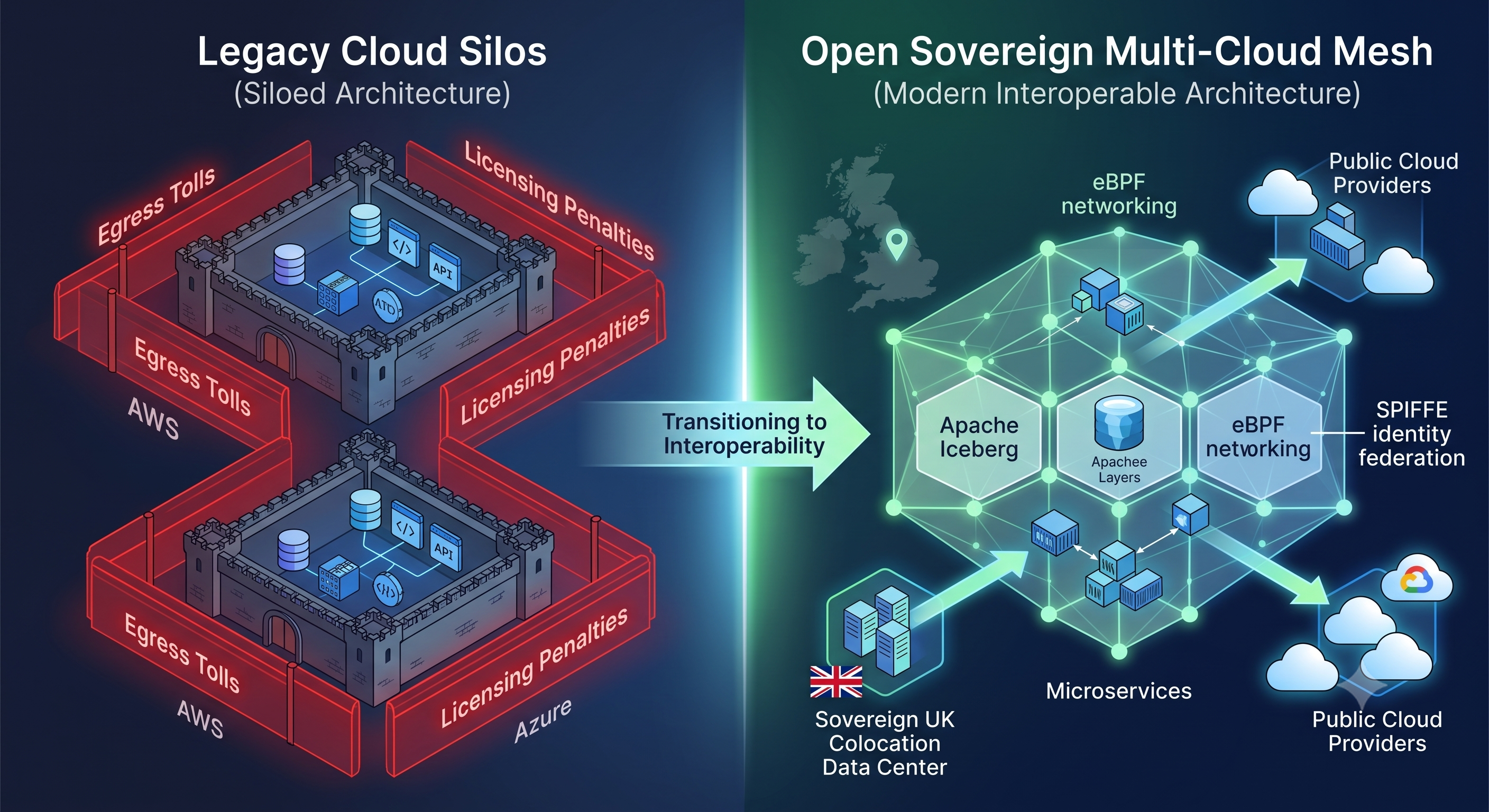 0 Comments 0 Shares 394 Views 0 Reviews
 -
The 24-Hour Mandate: Why UK Engineers Must Master "Compliance-as-Architecture"
As the Cyber Security and Resilience (CSR) Bill advances toward enactment, the UK tech ecosystem is experiencing its biggest regulatory overhaul since GDPR.
The mandate is straightforward and uncompromising:
Expanded scope covering data centers, managed service providers (MSPs), cloud platforms, and critical supply chain dependencies.
Mandatory initial incident reporting within 24 hours (and full forensic breakdowns within 72 hours).
Fines scaling up to £17 million or 4% of global turnover.
This changes software engineering in London, Manchester, Cambridge, and Edinburgh overnight.
Historically, UK engineering teams treated compliance as an audit task handled at the end of the quarter by security consultants. But when a production incident carries statutory 24-hour reporting obligations and multi-million-pound liabilities across your digital supply chain, compliance is no longer an audit checklist—it is runtime system architecture.
The engineers capturing outsized compensation and senior staff titles across the UK are those who understand how to design for forensic provenance and automated resilience:
1. Architect for 24-Hour Forensic Observability
If a breach or critical anomaly occurs at 3 AM on Saturday, can your team trace the root vulnerability, blast radius, and impacted customer records before the 24-hour statutory clock expires?
Moving beyond basic APM metrics (CPU/memory) into immutable audit telemetry.
Implementing structured provenance logs and cryptographically verifiable event trails that can be exported for regulators without requiring days of manual log digging.
2. Codify Software Supply Chain Security (SSDF & SBOM)
Because the CSR Bill specifically brings critical software vendors and digital supply chains into legal scope, blind npm install or unpinned container dependencies are now corporate liabilities.
Enforce automated Software Bill of Materials (SBOM) generation at CI/CD runtime.
Implement provenance attestation (e.g., Sigstore/Cosign) so upstream open-source compromises are caught and quarantined before reaching UK deployment clusters.
3. Shift from "Feature Speed" to "Defensible Systems Engineering"
In the UK venture and scale-up market, tech diligence has fundamentally changed. Private equity and enterprise buyers are applying a "compliance premium"—prioritizing startups and scale-ups with verifiable governance over fragile code shipped quickly.
The most defensible UK engineers aren't just shipping PRs faster; they are designing fault-isolated micro-architectures that prove third-party failures can't take down the entire core platform.
Career Takeaway: In the UK tech ecosystem, regulatory compliance and technical architecture have officially merged. The engineers who treat resilience, supply chain transparency, and automated reporting as first-class architectural constraints will hold the steering wheel in enterprise UK tech.
Discussion Question
Under a strict 24-hour incident notification window, what is currently the biggest gap in your infrastructure: supply-chain dependency mapping, real-time audit logging, or cross-functional triage workflows?
CTA
Looking to master systems-level resilience and advance your engineering career across the UK tech landscape?
👉 Join Techawks UK for deep-dive architecture breakdowns, regulatory engineering frameworks, and insights from leading British tech leaders.The 24-Hour Mandate: Why UK Engineers Must Master "Compliance-as-Architecture" As the Cyber Security and Resilience (CSR) Bill advances toward enactment, the UK tech ecosystem is experiencing its biggest regulatory overhaul since GDPR. The mandate is straightforward and uncompromising: Expanded scope covering data centers, managed service providers (MSPs), cloud platforms, and critical supply chain dependencies. Mandatory initial incident reporting within 24 hours (and full forensic breakdowns within 72 hours). Fines scaling up to £17 million or 4% of global turnover. This changes software engineering in London, Manchester, Cambridge, and Edinburgh overnight. Historically, UK engineering teams treated compliance as an audit task handled at the end of the quarter by security consultants. But when a production incident carries statutory 24-hour reporting obligations and multi-million-pound liabilities across your digital supply chain, compliance is no longer an audit checklist—it is runtime system architecture. The engineers capturing outsized compensation and senior staff titles across the UK are those who understand how to design for forensic provenance and automated resilience: 1. Architect for 24-Hour Forensic Observability If a breach or critical anomaly occurs at 3 AM on Saturday, can your team trace the root vulnerability, blast radius, and impacted customer records before the 24-hour statutory clock expires? Moving beyond basic APM metrics (CPU/memory) into immutable audit telemetry. Implementing structured provenance logs and cryptographically verifiable event trails that can be exported for regulators without requiring days of manual log digging. 2. Codify Software Supply Chain Security (SSDF & SBOM) Because the CSR Bill specifically brings critical software vendors and digital supply chains into legal scope, blind npm install or unpinned container dependencies are now corporate liabilities. Enforce automated Software Bill of Materials (SBOM) generation at CI/CD runtime. Implement provenance attestation (e.g., Sigstore/Cosign) so upstream open-source compromises are caught and quarantined before reaching UK deployment clusters. 3. Shift from "Feature Speed" to "Defensible Systems Engineering" In the UK venture and scale-up market, tech diligence has fundamentally changed. Private equity and enterprise buyers are applying a "compliance premium"—prioritizing startups and scale-ups with verifiable governance over fragile code shipped quickly. The most defensible UK engineers aren't just shipping PRs faster; they are designing fault-isolated micro-architectures that prove third-party failures can't take down the entire core platform. Career Takeaway: In the UK tech ecosystem, regulatory compliance and technical architecture have officially merged. The engineers who treat resilience, supply chain transparency, and automated reporting as first-class architectural constraints will hold the steering wheel in enterprise UK tech. Discussion Question Under a strict 24-hour incident notification window, what is currently the biggest gap in your infrastructure: supply-chain dependency mapping, real-time audit logging, or cross-functional triage workflows? CTA Looking to master systems-level resilience and advance your engineering career across the UK tech landscape? 👉 Join Techawks UK for deep-dive architecture breakdowns, regulatory engineering frameworks, and insights from leading British tech leaders.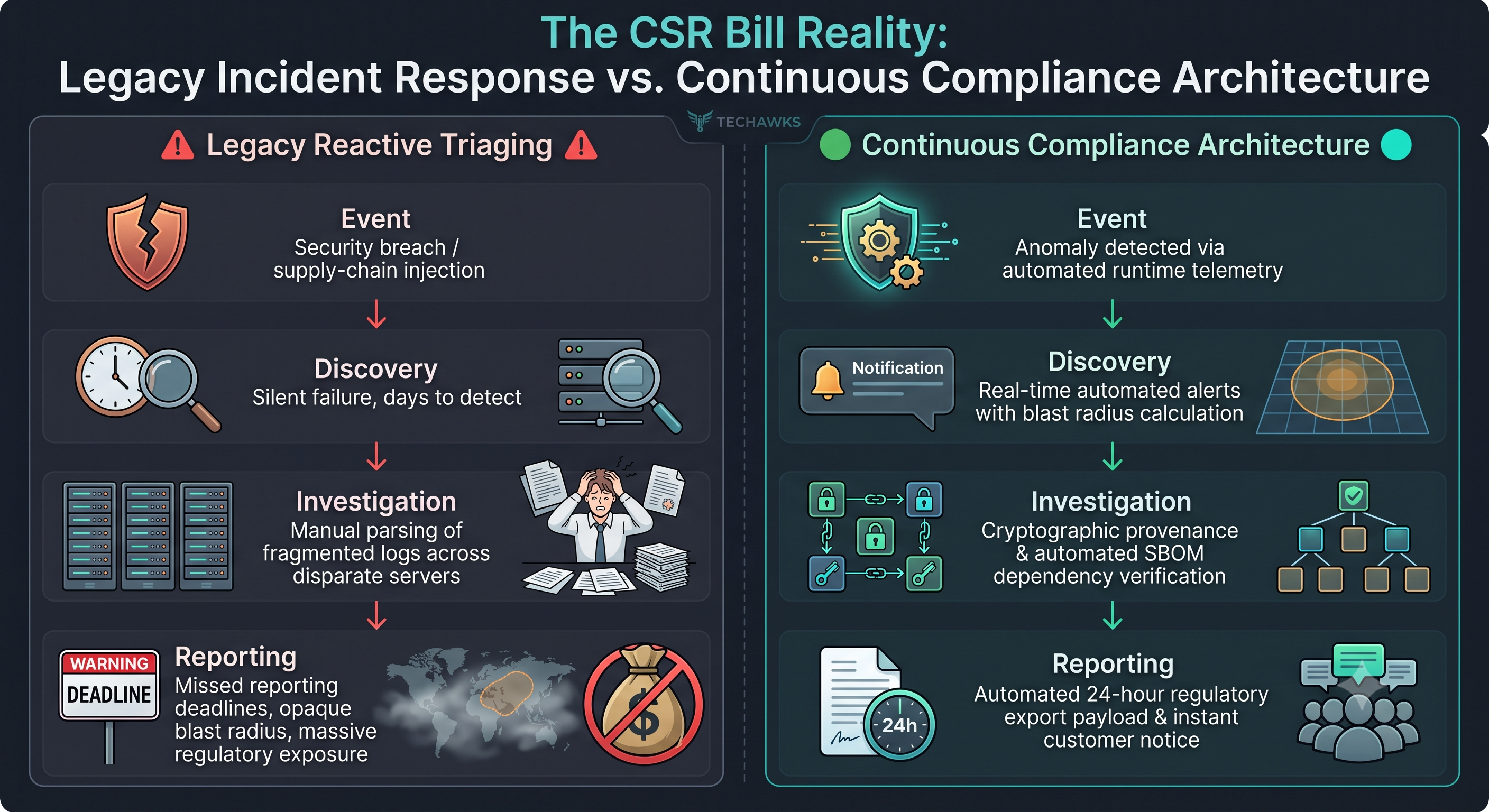 0 Comments 0 Shares 414 Views 0 Reviews
 -
Supply Chain Security Under the CSRB: Why a Static SBOM Won't Protect Your Architecture
As the UK tightens cybersecurity mandates across digital infrastructure, Managed Service Providers (MSPs), and critical SaaS suppliers through the Cyber Security and Resilience framework, software supply chain scrutiny has shifted from an annual audit box into an operational engineering requirement.
Yet many teams treat supply chain hygiene as an artifact-generation problem rather than a continuous runtime discipline.
Myth: "We generate an automated SBOM with our CI build, so our software supply chain is verified and compliant."
Fact: A static SBOM is merely an inventory list; it does not evaluate cryptographic package provenance, detect compromised build dependencies, or monitor dynamic runtime behavioral drift.
Why relying solely on build-time manifest files fails modern UK platform teams:
The Ephemeral Dependency Blind Spot: Modern microservices pull transitive dependencies dynamically during container compilation. If an attacker injects malicious logic into an upstream sub-dependency between build steps, an inventory list of package names won't flag the compromise.
Build Server Poisoning: Threat actors frequently target the CI/CD pipeline itself (e.g., untrusted GitHub actions, unpinned container base images). A poisoned runner can compile compromised binaries while generating an otherwise clean manifest.
The Incident Disclosure Bottleneck: Impending resilience rules mandate rapid incident reporting (24-hour initial notifications for severe disruptions). Static spreadsheets or un-indexed JSON manifests make tracing which microservices run a newly disclosed zero-day package painfully slow.
How UK Engineering Teams Must Modernize Their Delivery Pipelines:
Enforce Cryptographic Attestation (SLSA Framework): Sign every build artifact and container using tools like Cosign/Sigstore. Verify provenance at cluster ingress, ensuring Kubernetes nodes reject any image whose build trail cannot be cryptographically proven.
Pin Dependencies by Cryptographic Hash: Move away from semantic versioning tags in production configuration files (package@^2.4.0 or image:latest). Pin dependencies to exact immutable SHA-256 hashes to prevent upstream maintainer hijacking.
Automate Dynamic Dependency Graphing: Deploy continuous Vulnerability Exploitability eXchange (VEX) pipelines and live container admission controllers that correlate newly disclosed CVEs against active running workloads in real time.
Discussion Question
How is your team handling third-party dependency attestation—are you signing and verifying build artifacts across CI/CD, or still relying on point-in-time scanning?
CTA
Ready to build resilient, tamper-proof cloud systems aligned with modern UK cyber resilience frameworks? Join Techawks UK to discuss platform engineering best practices, zero-trust architectures, and secure delivery pipelines.Supply Chain Security Under the CSRB: Why a Static SBOM Won't Protect Your Architecture As the UK tightens cybersecurity mandates across digital infrastructure, Managed Service Providers (MSPs), and critical SaaS suppliers through the Cyber Security and Resilience framework, software supply chain scrutiny has shifted from an annual audit box into an operational engineering requirement. Yet many teams treat supply chain hygiene as an artifact-generation problem rather than a continuous runtime discipline. Myth: "We generate an automated SBOM with our CI build, so our software supply chain is verified and compliant." Fact: A static SBOM is merely an inventory list; it does not evaluate cryptographic package provenance, detect compromised build dependencies, or monitor dynamic runtime behavioral drift. Why relying solely on build-time manifest files fails modern UK platform teams: The Ephemeral Dependency Blind Spot: Modern microservices pull transitive dependencies dynamically during container compilation. If an attacker injects malicious logic into an upstream sub-dependency between build steps, an inventory list of package names won't flag the compromise. Build Server Poisoning: Threat actors frequently target the CI/CD pipeline itself (e.g., untrusted GitHub actions, unpinned container base images). A poisoned runner can compile compromised binaries while generating an otherwise clean manifest. The Incident Disclosure Bottleneck: Impending resilience rules mandate rapid incident reporting (24-hour initial notifications for severe disruptions). Static spreadsheets or un-indexed JSON manifests make tracing which microservices run a newly disclosed zero-day package painfully slow. How UK Engineering Teams Must Modernize Their Delivery Pipelines: Enforce Cryptographic Attestation (SLSA Framework): Sign every build artifact and container using tools like Cosign/Sigstore. Verify provenance at cluster ingress, ensuring Kubernetes nodes reject any image whose build trail cannot be cryptographically proven. Pin Dependencies by Cryptographic Hash: Move away from semantic versioning tags in production configuration files (package@^2.4.0 or image:latest). Pin dependencies to exact immutable SHA-256 hashes to prevent upstream maintainer hijacking. Automate Dynamic Dependency Graphing: Deploy continuous Vulnerability Exploitability eXchange (VEX) pipelines and live container admission controllers that correlate newly disclosed CVEs against active running workloads in real time. Discussion Question How is your team handling third-party dependency attestation—are you signing and verifying build artifacts across CI/CD, or still relying on point-in-time scanning? CTA Ready to build resilient, tamper-proof cloud systems aligned with modern UK cyber resilience frameworks? Join Techawks UK to discuss platform engineering best practices, zero-trust architectures, and secure delivery pipelines. 0 Comments 0 Shares 352 Views 0 Reviews
 -
Ofcom’s Online Safety Act Enforcement Wave: The UK Platform Architect’s Production Readiness Checklist
Ofcom’s regulatory supervision and enforcement roadmap is actively transitioning from consultation to direct technical accountability. For engineering teams building user-to-user (U2U) services, search functionality, or recommendation-driven platforms accessible in the UK, safety-by-design is now an infrastructure mandate rather than a policy guideline.
Why It Matters to UK Tech Teams
Ofcom has made it clear: platform moderation cannot remain a passive reporting workflow. Systems must demonstrate proactive risk mitigation, automated hash-matching against illegal harms, verifiable age-assurance gates, and auditable feed recommendation algorithms.
Non-compliance carries statutory penalties up to £18 million or 10% of qualifying worldwide revenue—along with potential personal liability for designated senior managers in severe obstruction cases.
The UK Platform Engineering Readiness Checklist
[ ] 1. Decouple Age Assurance from Permissive Client-Side Flags
└─ Replace self-declaration dropdowns with privacy-preserving age assurance (e.g., zero-knowledge attribute verification or tokenized estimation).
└─ Isolate adult-targeted schema pathways at the API gateway layer to prevent child profile exposure.
[ ] 2. Pipeline-Level Hash Matching for Priority Illegal Harms
└─ Integrate real-time media ingestion filters using cryptographic perceptual hashing (e.g., PDQ, PhotoDNA, StopNCII endpoints).
└─ Automate immediate quarantine queues prior to rendering payloads on public CDNs.
[ ] 3. Audit Recommender Systems for Amplification Vectors
└─ Instrument real-time circuit breakers that down-rank or unindex anomalous engagement spikes flagged for harmful or coordinated abuse.
└─ Expose user-facing feed customisation levers allowing adults to opt out of predictive algorithmic profiling.
[ ] 4. Build Automated Regulatory Escalation & Reporting Endpoints
└─ Establish direct NCA (National Crime Agency) webhook integration pipelines for validated priority illegal payloads.
└─ Ensure payload capture preserves non-tamperable cryptographic audit logs for Ofcom supervision requests.
[ ] 5. Mandate Third-Party SDK & User-Generated Data Audits
└─ Restrict unvetted third-party telemetry libraries tracking minors or indexing unmoderated comment components.
└─ Enforce end-to-end data minimisation across chat, messaging, and forum microservices.
Compliance under the OSA cannot be achieved with retroactive moderation—it requires building preventative boundaries into the ingestion and recommendation pipeline before bytes hit client devices.
Discussion Question
How is your infrastructure team balancing privacy-preserving zero-knowledge proofs with Ofcom's mandated age-assurance requirements across UK user sessions?
CTA (Join Techawks UK)
Follow Techawks UK for practical engineering architectures, regulatory compliance teardowns, and system design strategies built for the UK and European tech ecosystem.Ofcom’s Online Safety Act Enforcement Wave: The UK Platform Architect’s Production Readiness Checklist Ofcom’s regulatory supervision and enforcement roadmap is actively transitioning from consultation to direct technical accountability. For engineering teams building user-to-user (U2U) services, search functionality, or recommendation-driven platforms accessible in the UK, safety-by-design is now an infrastructure mandate rather than a policy guideline. Why It Matters to UK Tech Teams Ofcom has made it clear: platform moderation cannot remain a passive reporting workflow. Systems must demonstrate proactive risk mitigation, automated hash-matching against illegal harms, verifiable age-assurance gates, and auditable feed recommendation algorithms. Non-compliance carries statutory penalties up to £18 million or 10% of qualifying worldwide revenue—along with potential personal liability for designated senior managers in severe obstruction cases. The UK Platform Engineering Readiness Checklist [ ] 1. Decouple Age Assurance from Permissive Client-Side Flags └─ Replace self-declaration dropdowns with privacy-preserving age assurance (e.g., zero-knowledge attribute verification or tokenized estimation). └─ Isolate adult-targeted schema pathways at the API gateway layer to prevent child profile exposure. [ ] 2. Pipeline-Level Hash Matching for Priority Illegal Harms └─ Integrate real-time media ingestion filters using cryptographic perceptual hashing (e.g., PDQ, PhotoDNA, StopNCII endpoints). └─ Automate immediate quarantine queues prior to rendering payloads on public CDNs. [ ] 3. Audit Recommender Systems for Amplification Vectors └─ Instrument real-time circuit breakers that down-rank or unindex anomalous engagement spikes flagged for harmful or coordinated abuse. └─ Expose user-facing feed customisation levers allowing adults to opt out of predictive algorithmic profiling. [ ] 4. Build Automated Regulatory Escalation & Reporting Endpoints └─ Establish direct NCA (National Crime Agency) webhook integration pipelines for validated priority illegal payloads. └─ Ensure payload capture preserves non-tamperable cryptographic audit logs for Ofcom supervision requests. [ ] 5. Mandate Third-Party SDK & User-Generated Data Audits └─ Restrict unvetted third-party telemetry libraries tracking minors or indexing unmoderated comment components. └─ Enforce end-to-end data minimisation across chat, messaging, and forum microservices. Compliance under the OSA cannot be achieved with retroactive moderation—it requires building preventative boundaries into the ingestion and recommendation pipeline before bytes hit client devices. Discussion Question How is your infrastructure team balancing privacy-preserving zero-knowledge proofs with Ofcom's mandated age-assurance requirements across UK user sessions? CTA (Join Techawks UK) Follow Techawks UK for practical engineering architectures, regulatory compliance teardowns, and system design strategies built for the UK and European tech ecosystem.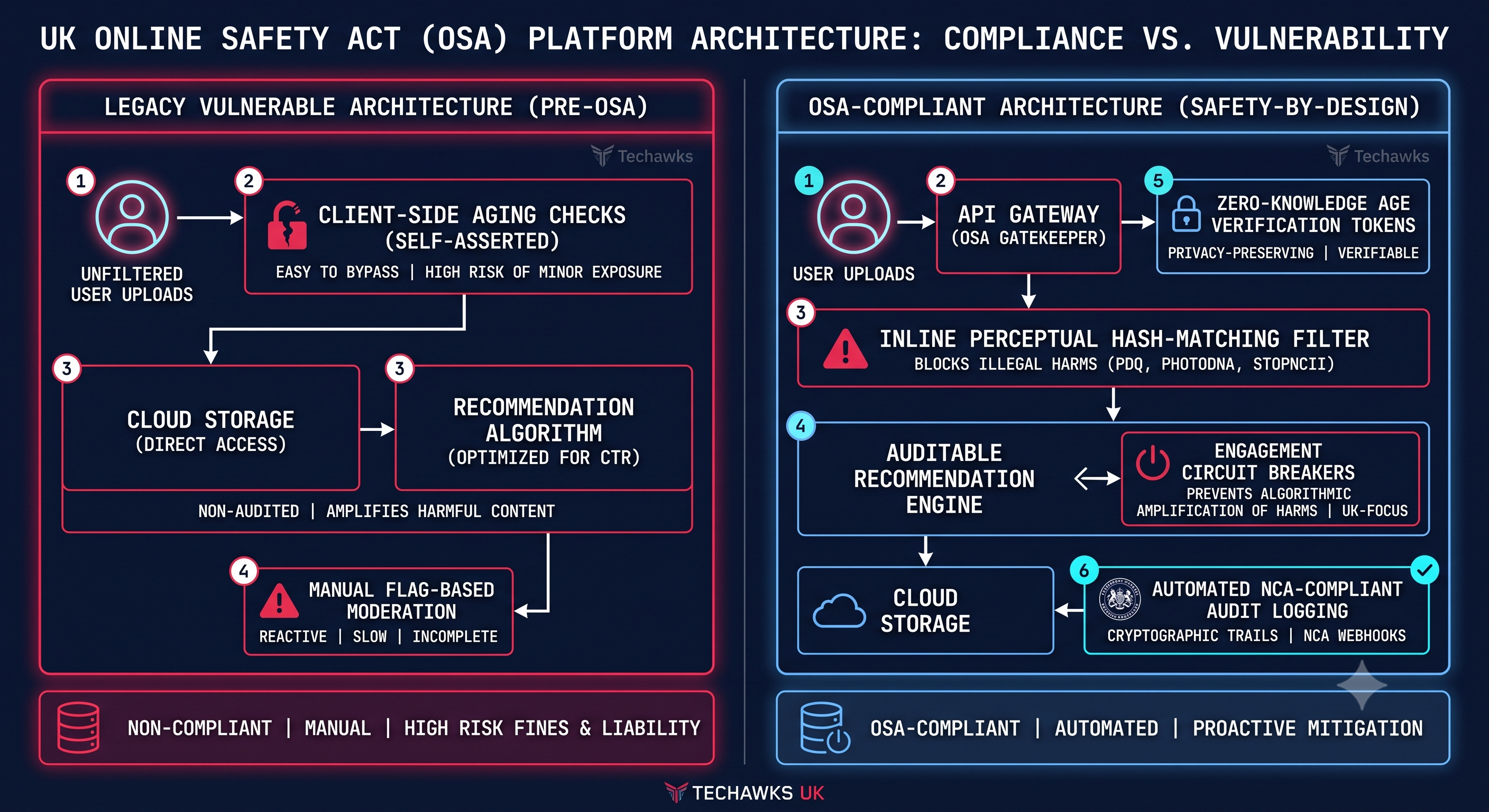 0 Comments 0 Shares 386 Views 0 Reviews
 -
Upgrading Edge Ingress to Hybrid Post-Quantum Key Exchange (ML-KEM-768)
"Harvest Now, Decrypt Later" (HNDL) is not a future vulnerability—adversaries are actively intercepting and storing encrypted traffic passing through UK internet exchanges. For UK engineering teams handling sensitive customer data, IP, or financial payloads with a 5+ year shelf-life, securing transit channels requires moving to hybrid key encapsulation right now.
The UK National Cyber Security Centre (NCSC) guidance prioritises hybrid implementations as the bridge to complete quantum resistance: pairing classical curves with lattice-based algorithms so that legacy compliance and performance remain intact while establishing post-quantum security.
Here is a practical tutorial to audit and test hybrid PQC on your ingress layer:
1. Understand the Hybrid Mechanism
Instead of negotiating a single secret over classical Elliptic Curve Diffie-Hellman (ECDH), hybrid key exchange (such as X25519Kyber768Draft00 / X25519MLKEM768) performs two handshakes simultaneously inside TLS 1.3:
Classical component: Standard X25519 ensures backward compatibility and baseline cryptographic guarantees.
Lattice component: ML-KEM-768 (standardised from Kyber) provides quantum-resistant encapsulation.
The resulting shared secret is derived through HKDF (HMAC-based Extract-and-Expand Key Derivation Function) from both public keys, meaning an adversary must break both schemes to decrypt the payload.
2. Audit Client Hello Sizes and MTU Fragmentation
ML-KEM-768 public keys and ciphertexts are significantly larger than classical 32-byte X25519 keys (~1,184 bytes).
Verify whether your edge proxies, WAFs, or upstream cloud load balancers drop Client Hello packets exceeding typical MTU thresholds (1,500 bytes).
Ensure your ingress gateway supports TCP segmentation and TLS fragmentation properly without dropping truncated handshakes.
3. Configure Ingress Testing (Envoy / OpenSSL 3.x / BoringSSL)
In your edge proxy configuration (e.g., Envoy or modern NGINX built against an ML-KEM-capable OpenSSL/BoringSSL branch):
Verify supported TLS 1.3 cipher suites and key exchange groups:
YAML
tls_certificates:
- certificate_chain: { filename: "/etc/ssl/certs/ingress.crt" }
private_key: { filename: "/etc/ssl/private/ingress.key" }
tls_params:
tls_minimum_protocol_version: TLSv1_3
ecdh_curves:
- X25519MLKEM768
- X25519
Deploy the configuration to a canary staging cluster.
4. Validate via CLI
Test your endpoint using a PQC-enabled build of curl or openssl:
Bash
openssl s_client -connect api.staging.internal:443 -tls1_3 -curves X25519MLKEM768
Inspect the output to confirm Temp Key: ML-KEM-768 + X25519 was successfully agreed upon during the TLS 1.3 handshake.
Discussion Question
Has your team audited packet fragmentation risks for larger PQC key exchanges on existing reverse proxies, or are you waiting for cloud ingress providers to toggle it by default?
CTA (Join Techawks UK)
Join the Techawks UK community to connect with local systems engineers, platform leads, and cloud architects deploying resilient, quantum-ready infrastructure.Upgrading Edge Ingress to Hybrid Post-Quantum Key Exchange (ML-KEM-768) "Harvest Now, Decrypt Later" (HNDL) is not a future vulnerability—adversaries are actively intercepting and storing encrypted traffic passing through UK internet exchanges. For UK engineering teams handling sensitive customer data, IP, or financial payloads with a 5+ year shelf-life, securing transit channels requires moving to hybrid key encapsulation right now. The UK National Cyber Security Centre (NCSC) guidance prioritises hybrid implementations as the bridge to complete quantum resistance: pairing classical curves with lattice-based algorithms so that legacy compliance and performance remain intact while establishing post-quantum security. Here is a practical tutorial to audit and test hybrid PQC on your ingress layer: 1. Understand the Hybrid Mechanism Instead of negotiating a single secret over classical Elliptic Curve Diffie-Hellman (ECDH), hybrid key exchange (such as X25519Kyber768Draft00 / X25519MLKEM768) performs two handshakes simultaneously inside TLS 1.3: Classical component: Standard X25519 ensures backward compatibility and baseline cryptographic guarantees. Lattice component: ML-KEM-768 (standardised from Kyber) provides quantum-resistant encapsulation. The resulting shared secret is derived through HKDF (HMAC-based Extract-and-Expand Key Derivation Function) from both public keys, meaning an adversary must break both schemes to decrypt the payload. 2. Audit Client Hello Sizes and MTU Fragmentation ML-KEM-768 public keys and ciphertexts are significantly larger than classical 32-byte X25519 keys (~1,184 bytes). Verify whether your edge proxies, WAFs, or upstream cloud load balancers drop Client Hello packets exceeding typical MTU thresholds (1,500 bytes). Ensure your ingress gateway supports TCP segmentation and TLS fragmentation properly without dropping truncated handshakes. 3. Configure Ingress Testing (Envoy / OpenSSL 3.x / BoringSSL) In your edge proxy configuration (e.g., Envoy or modern NGINX built against an ML-KEM-capable OpenSSL/BoringSSL branch): Verify supported TLS 1.3 cipher suites and key exchange groups: YAML tls_certificates: - certificate_chain: { filename: "/etc/ssl/certs/ingress.crt" } private_key: { filename: "/etc/ssl/private/ingress.key" } tls_params: tls_minimum_protocol_version: TLSv1_3 ecdh_curves: - X25519MLKEM768 - X25519 Deploy the configuration to a canary staging cluster. 4. Validate via CLI Test your endpoint using a PQC-enabled build of curl or openssl: Bash openssl s_client -connect api.staging.internal:443 -tls1_3 -curves X25519MLKEM768 Inspect the output to confirm Temp Key: ML-KEM-768 + X25519 was successfully agreed upon during the TLS 1.3 handshake. Discussion Question Has your team audited packet fragmentation risks for larger PQC key exchanges on existing reverse proxies, or are you waiting for cloud ingress providers to toggle it by default? CTA (Join Techawks UK) Join the Techawks UK community to connect with local systems engineers, platform leads, and cloud architects deploying resilient, quantum-ready infrastructure.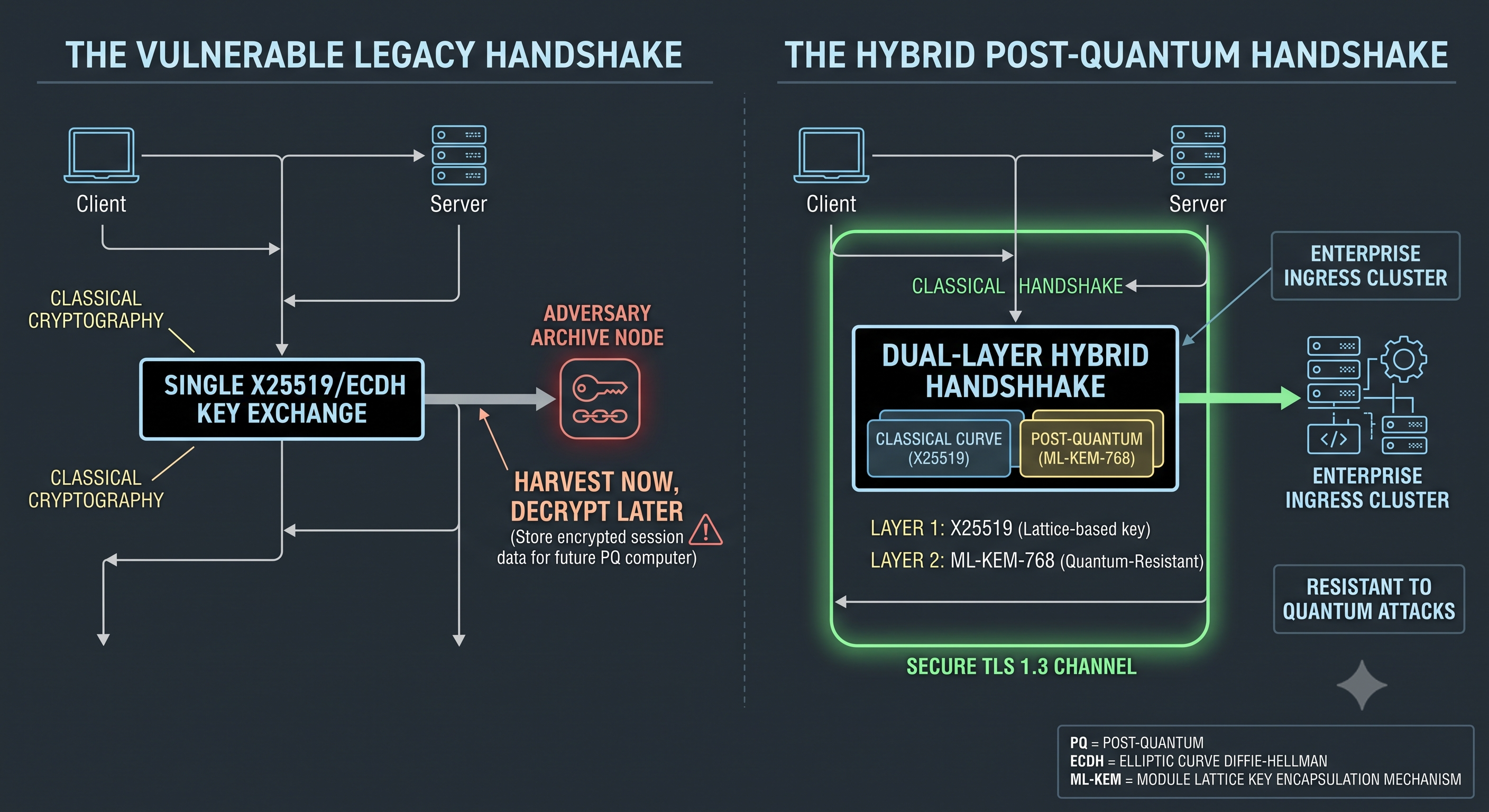 0 Comments 0 Shares 405 Views 0 Reviews
 -
The Data Sovereignty Dilemma: How UK Engineering Teams Can Comply Without Crippling Performance
Engineering within the UK ecosystem requires balancing rapid product iteration with strict data privacy and residency mandates. Under UK GDPR and the Data Protection Act 2018, user personal identifiable information (PII) cannot simply drift across unrestricted third-party analytics vendors or unvetted foreign storage regions.
Too often, teams either ignore geographic boundaries until legal raises a red flag, or they lock down their stack so aggressively that query latency spikes and developer velocity tanks.
To balance regulatory rigor with engineering performance, follow the Sovereignty-by-Design Blueprint:
Tag and Isolate PII at Ingestion: Never let unmasked user identifiers flow directly into general analytical data lakes. Tokenize or hash identifiers at the API boundary, store the lookup table in a tightly restricted UK data region (e.g., eu-west-2 London), and pass only pseudonymized records to downstream global processing tiers.
Audit Third-Party Telemetry and SDKs: Your backend code might be compliant, but front-end tracking scripts and error-reporting libraries often stream IP addresses, device identifiers, and query parameters to overseas endpoints by default. Strip user context from client-side trackers and proxy telemetry through your own edge layer.
Automate Data Lifecycle and Erasure Pipelines: Complying with the "Right to Erasure" shouldn't require running manual SQL delete queries across production tables. Design event-driven deletion queues that automatically cascade removal across primary databases, cold storage backups, and cache layers whenever an account removal is triggered.
Let’s talk compliance engineering: How does your team manage data locality when building on multi-region cloud services or using global SaaS tooling?
What has been your biggest headache when implementing UK GDPR requirements into your technical architecture? Join the conversation below.
Key Takeaways
Tokenize early: Isolate sensitive PII in local regions while allowing pseudonymized data to move efficiently.
Inspect edge telemetry: Vet third-party trackers and client libraries to prevent accidental overseas data leakage.
Automate erasure workflows: Build scalable deletion queues into your schema architecture from day one rather than executing manual fixes.
CTA
Navigating system architecture, cloud governance, and technical challenges across the UK tech ecosystem? Join Techawks UK to connect with local software architects, discuss compliance playbooks, and build resilient products together. Link in the bio/comments!The Data Sovereignty Dilemma: How UK Engineering Teams Can Comply Without Crippling Performance Engineering within the UK ecosystem requires balancing rapid product iteration with strict data privacy and residency mandates. Under UK GDPR and the Data Protection Act 2018, user personal identifiable information (PII) cannot simply drift across unrestricted third-party analytics vendors or unvetted foreign storage regions. Too often, teams either ignore geographic boundaries until legal raises a red flag, or they lock down their stack so aggressively that query latency spikes and developer velocity tanks. To balance regulatory rigor with engineering performance, follow the Sovereignty-by-Design Blueprint: Tag and Isolate PII at Ingestion: Never let unmasked user identifiers flow directly into general analytical data lakes. Tokenize or hash identifiers at the API boundary, store the lookup table in a tightly restricted UK data region (e.g., eu-west-2 London), and pass only pseudonymized records to downstream global processing tiers. Audit Third-Party Telemetry and SDKs: Your backend code might be compliant, but front-end tracking scripts and error-reporting libraries often stream IP addresses, device identifiers, and query parameters to overseas endpoints by default. Strip user context from client-side trackers and proxy telemetry through your own edge layer. Automate Data Lifecycle and Erasure Pipelines: Complying with the "Right to Erasure" shouldn't require running manual SQL delete queries across production tables. Design event-driven deletion queues that automatically cascade removal across primary databases, cold storage backups, and cache layers whenever an account removal is triggered. Let’s talk compliance engineering: How does your team manage data locality when building on multi-region cloud services or using global SaaS tooling? What has been your biggest headache when implementing UK GDPR requirements into your technical architecture? Join the conversation below. Key Takeaways Tokenize early: Isolate sensitive PII in local regions while allowing pseudonymized data to move efficiently. Inspect edge telemetry: Vet third-party trackers and client libraries to prevent accidental overseas data leakage. Automate erasure workflows: Build scalable deletion queues into your schema architecture from day one rather than executing manual fixes. CTA Navigating system architecture, cloud governance, and technical challenges across the UK tech ecosystem? Join Techawks UK to connect with local software architects, discuss compliance playbooks, and build resilient products together. Link in the bio/comments!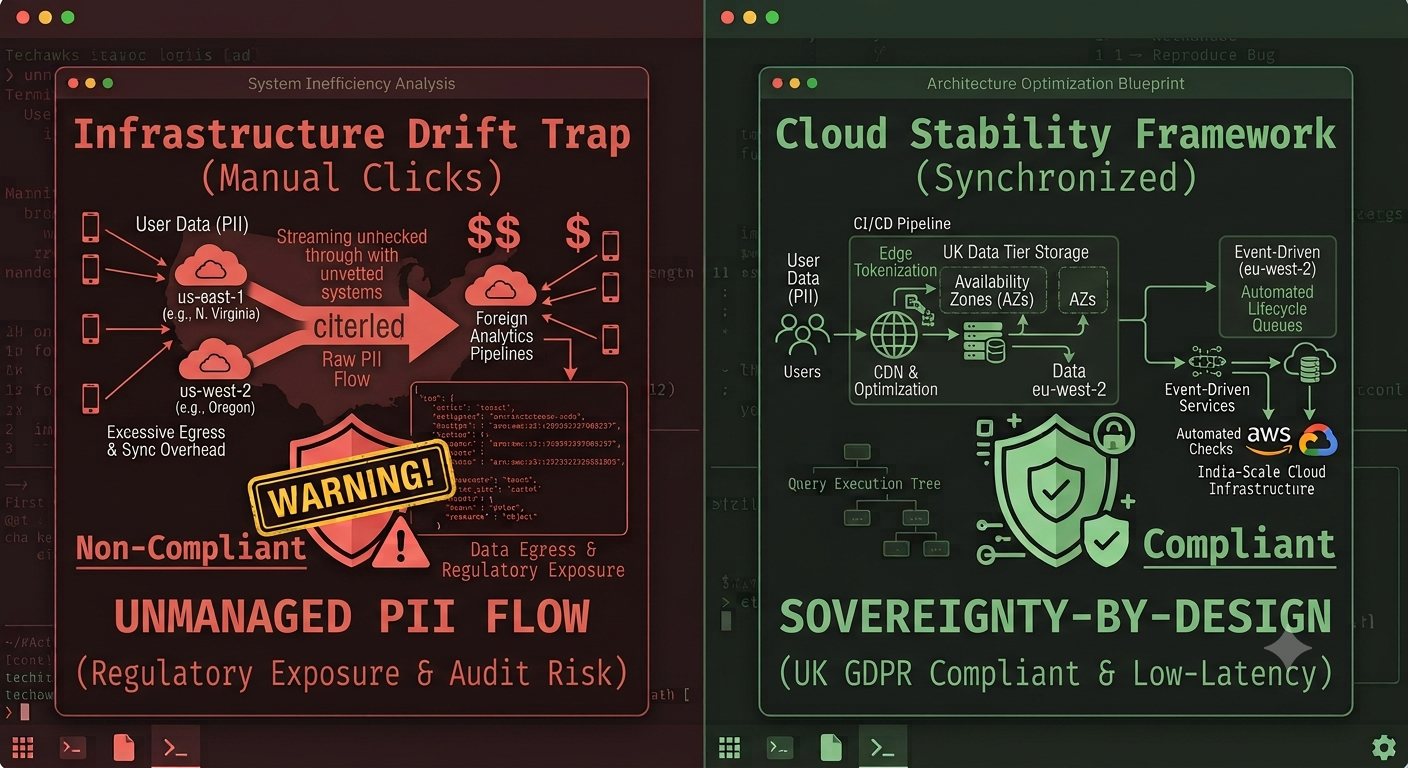 0 Comments 0 Shares 135 Views 0 Reviews
More Stories