 English
 Arabic
 French
 Spanish
 Portuguese
 Deutsch
 Turkish
 Dutch
Dutch
 Italiano
 Russian
 Romaian
 Portuguese (Brazil)
 Greek
Greek
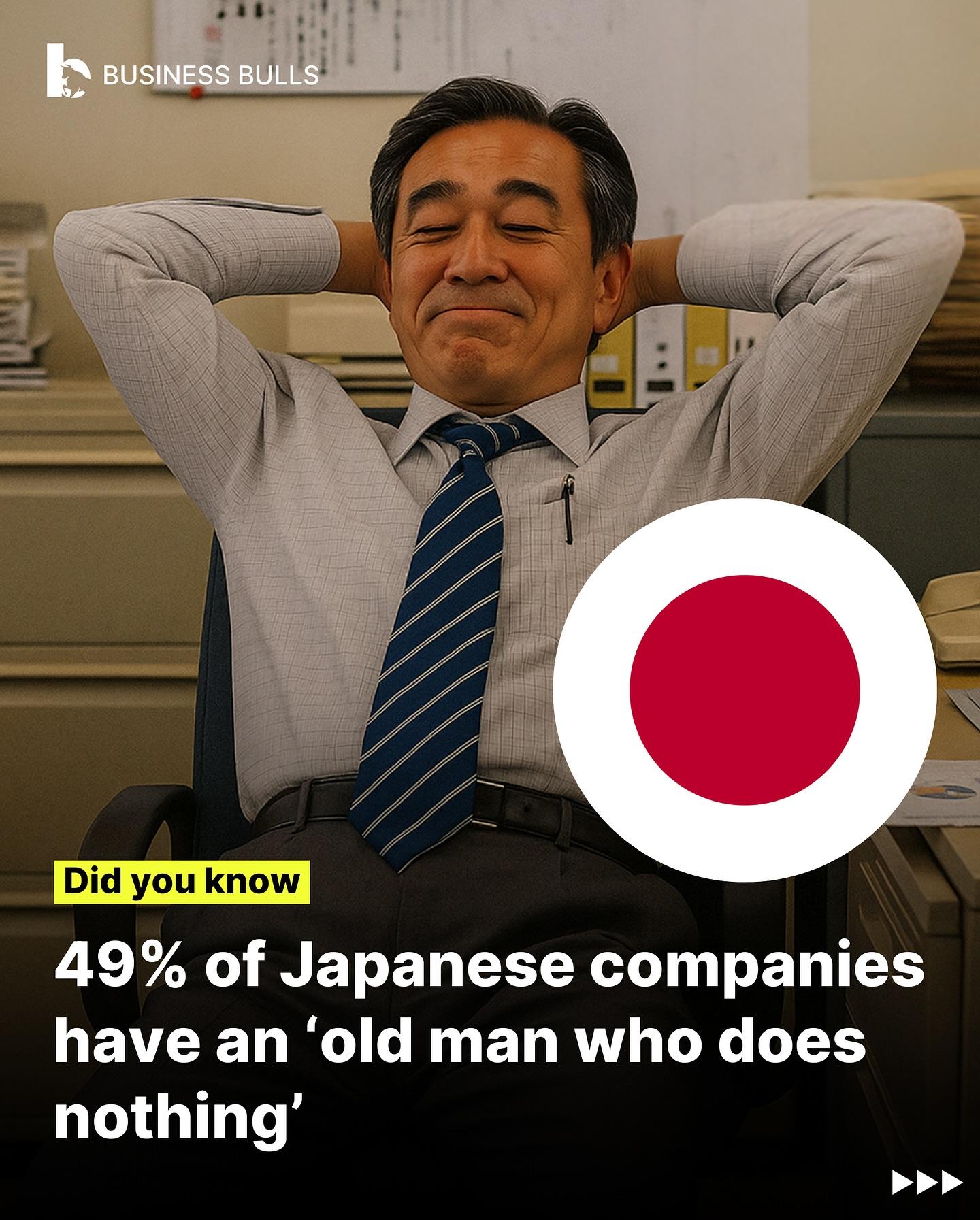
In Japan, there’s a unique workplace practice known as madogiwa-zoku, referring to older employees who remain on the payroll but have few or no actual responsibilities. This approach is often used to honor seniority or avoid pushing staff into early retirement.
A recent survey revealed that close to half of Japanese companies maintain such positions, usually assigned to employees in their late 50s or 60s. These roles enable staff to stay employed until retirement, even if their involvement in everyday tasks is minimal.
Although sometimes seen as inefficient, this tradition reflects deeper cultural values—particularly respect, loyalty, and the desire to maintain harmony within long-standing corporate systems.
#BusinessBulls #Japan
A recent survey revealed that close to half of Japanese companies maintain such positions, usually assigned to employees in their late 50s or 60s. These roles enable staff to stay employed until retirement, even if their involvement in everyday tasks is minimal.
Although sometimes seen as inefficient, this tradition reflects deeper cultural values—particularly respect, loyalty, and the desire to maintain harmony within long-standing corporate systems.
#BusinessBulls #Japan
In Japan, there’s a unique workplace practice known as madogiwa-zoku, referring to older employees who remain on the payroll but have few or no actual responsibilities. This approach is often used to honor seniority or avoid pushing staff into early retirement. 🇯🇵
A recent survey revealed that close to half of Japanese companies maintain such positions, usually assigned to employees in their late 50s or 60s. These roles enable staff to stay employed until retirement, even if their involvement in everyday tasks is minimal.
Although sometimes seen as inefficient, this tradition reflects deeper cultural values—particularly respect, loyalty, and the desire to maintain harmony within long-standing corporate systems.
#BusinessBulls #Japan
·500 Views
·0 Reviews
