 English
 Arabic
 French
 Spanish
 Portuguese
 Deutsch
 Turkish
 Dutch
Dutch
 Italiano
 Russian
 Romaian
 Portuguese (Brazil)
 Greek
Greek
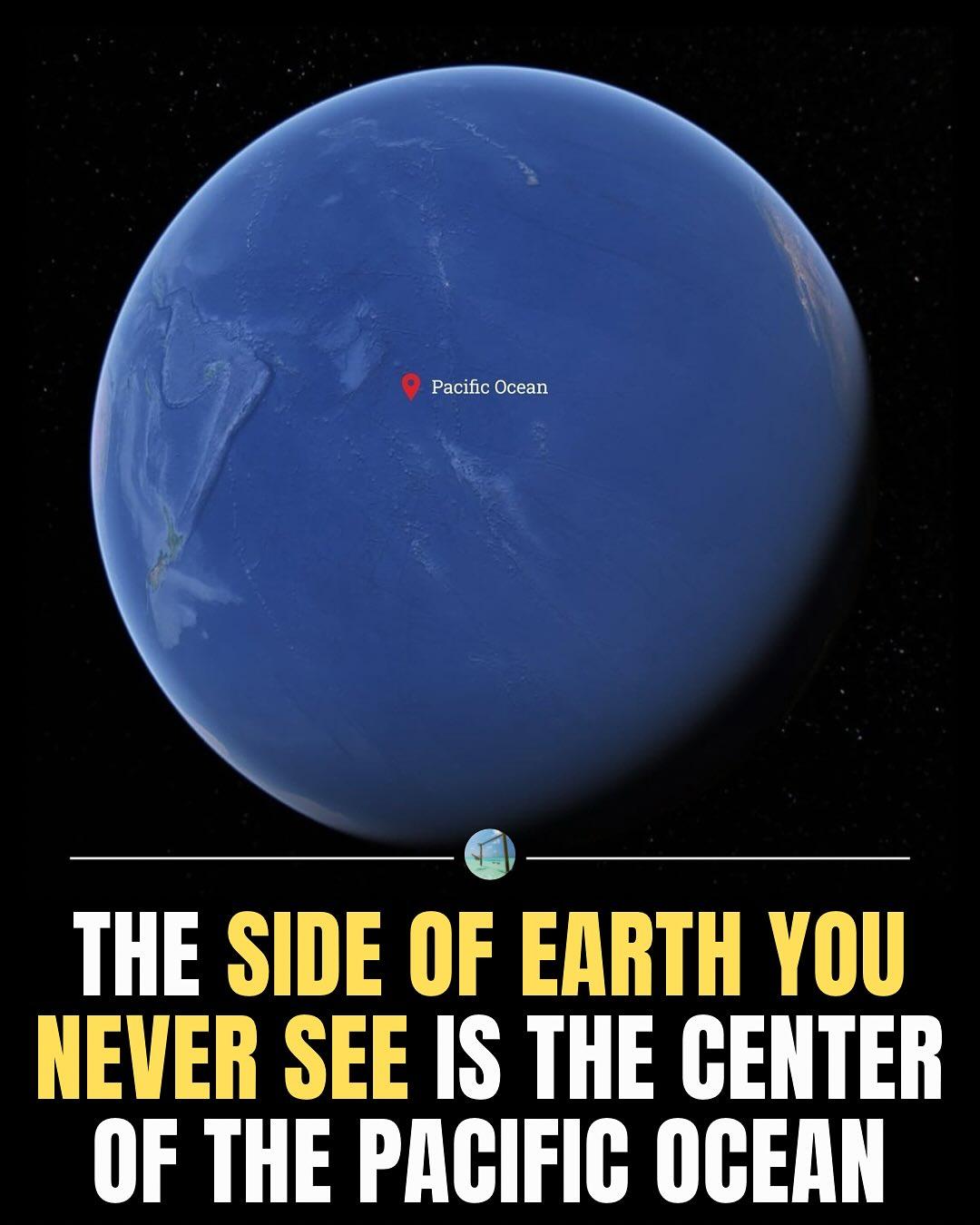
Covering more than 63 million square miles—about one-third of Earth’s surface—the Pacific Ocean is the largest and deepest ocean on the planet.
But here’s the twist: despite its sheer size, the Pacific is rarely the “face” of Earth we see from space. Most iconic photos highlight the Atlantic side, where continents and population centers cluster together.
That means the true scale of the Pacific—the endless blue that dominates our planet—often goes unseen and underappreciated.
(: @nasa)
—
#Space #Ocean #PacificOcean #Sky #Nasa #DidYouKnow #PlanetEarth #BluePlanet #Vacations
But here’s the twist: despite its sheer size, the Pacific is rarely the “face” of Earth we see from space. Most iconic photos highlight the Atlantic side, where continents and population centers cluster together.
That means the true scale of the Pacific—the endless blue that dominates our planet—often goes unseen and underappreciated.
(: @nasa)
—
#Space #Ocean #PacificOcean #Sky #Nasa #DidYouKnow #PlanetEarth #BluePlanet #Vacations
Covering more than 63 million square miles—about one-third of Earth’s surface—the Pacific Ocean is the largest and deepest ocean on the planet. 🌊🌍
But here’s the twist: despite its sheer size, the Pacific is rarely the “face” of Earth we see from space. Most iconic photos highlight the Atlantic side, where continents and population centers cluster together.
That means the true scale of the Pacific—the endless blue that dominates our planet—often goes unseen and underappreciated. 💙✨
(📸: @nasa)
—
#Space #Ocean #PacificOcean #Sky #Nasa #DidYouKnow #PlanetEarth #BluePlanet #Vacations
·2K Views
·0 Reviews
