 English
 Arabic
 French
 Spanish
 Portuguese
 Deutsch
 Turkish
 Dutch
Dutch
 Italiano
 Russian
 Romaian
 Portuguese (Brazil)
 Greek
Greek
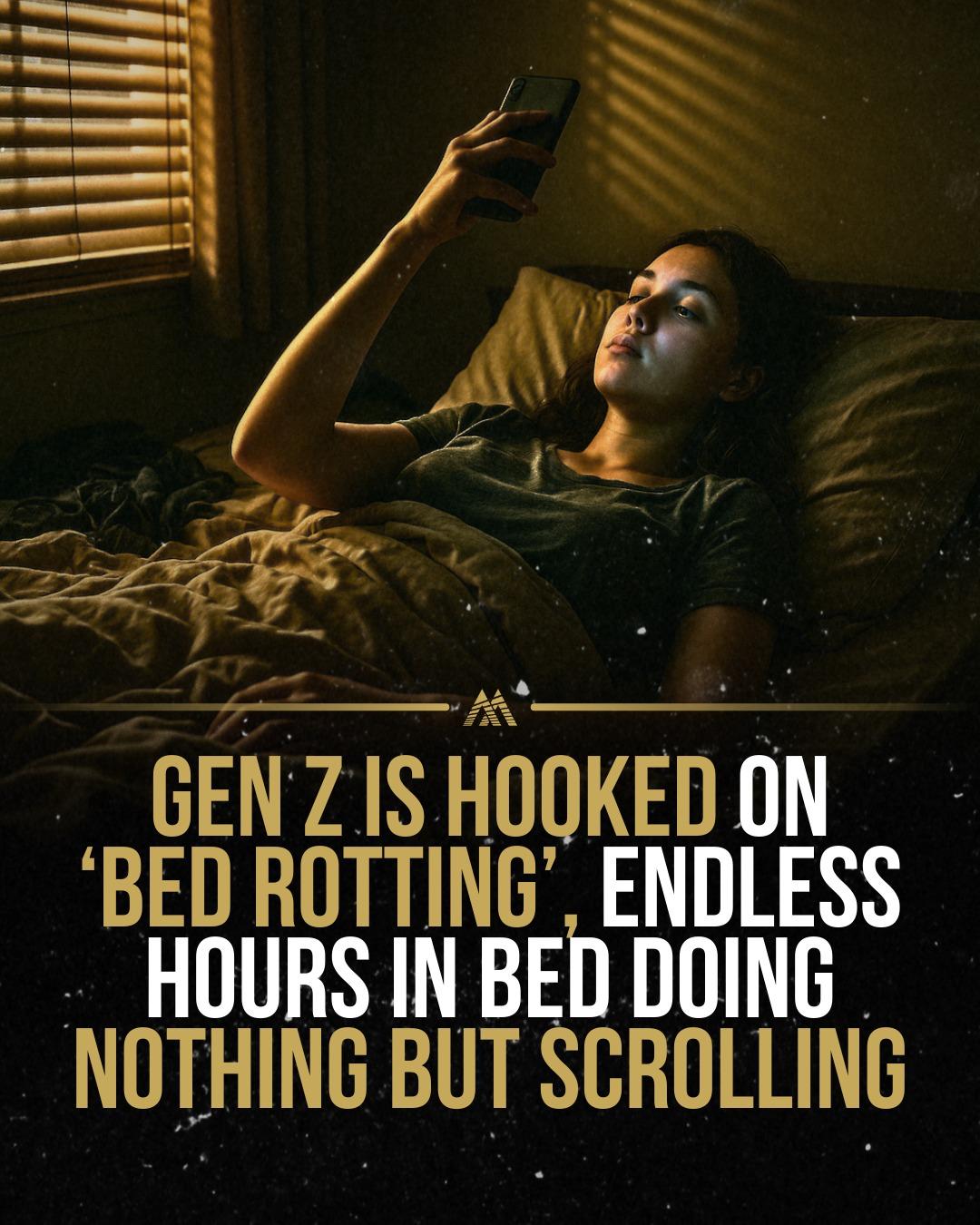
“Bed rotting” is a rising Gen Z trend where people spend hours in bed not to sleep, but to scroll, stream, or zone out. Popular on TikTok, it’s often described as a coping strategy for stress, burnout, and the constant demands of daily life.
Taking occasional breaks like this can feel soothing, giving the mind and body a pause from external pressures. But when lying in bed becomes an everyday escape, it can fuel low energy, poor mood, and deeper disconnection.
Researchers note that excessive bed rotting may signal underlying mental health challenges. True rest isn’t just stillness — it’s also finding balance through movement, social connection, and activities that restore well-being.
Follow for more @mindset.therapy
Taking occasional breaks like this can feel soothing, giving the mind and body a pause from external pressures. But when lying in bed becomes an everyday escape, it can fuel low energy, poor mood, and deeper disconnection.
Researchers note that excessive bed rotting may signal underlying mental health challenges. True rest isn’t just stillness — it’s also finding balance through movement, social connection, and activities that restore well-being.
Follow for more @mindset.therapy
“Bed rotting” is a rising Gen Z trend where people spend hours in bed not to sleep, but to scroll, stream, or zone out. Popular on TikTok, it’s often described as a coping strategy for stress, burnout, and the constant demands of daily life.
Taking occasional breaks like this can feel soothing, giving the mind and body a pause from external pressures. But when lying in bed becomes an everyday escape, it can fuel low energy, poor mood, and deeper disconnection.
Researchers note that excessive bed rotting may signal underlying mental health challenges. True rest isn’t just stillness — it’s also finding balance through movement, social connection, and activities that restore well-being.
Follow for more 👉 @mindset.therapy
·113 مشاهدة
·0 معاينة
