


Passwordless Authentication vs. Multi-Factor Authentication: Is the Master Password Era Finally Ending?
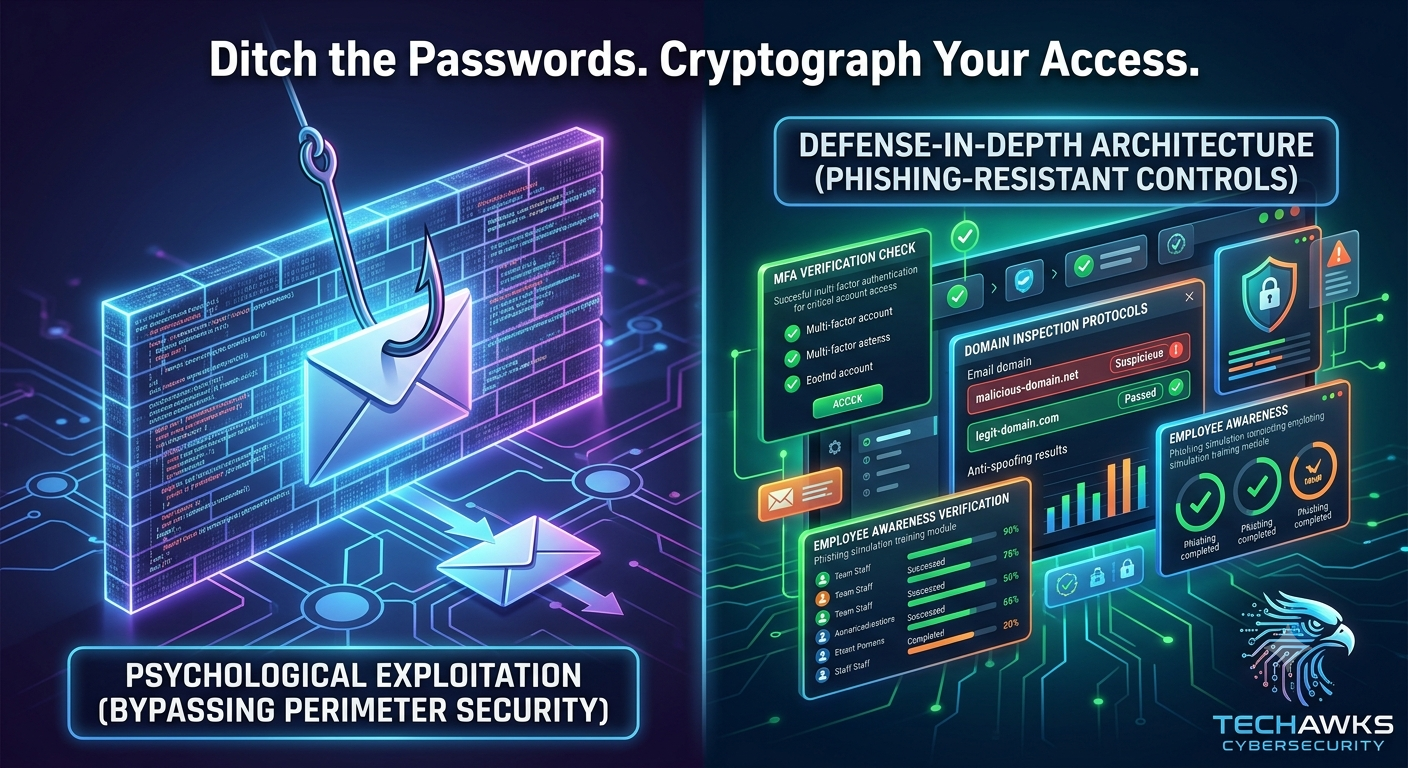
Authentication is undergoing its biggest structural shift in decades. While Multi-Factor Authentication (MFA) added a crucial layer of security on top of passwords, traditional MFA methods—like SMS codes or push notifications—are increasingly vulnerable to SIM swapping, adversary-in-the-middle (AitM) phishing kits, and MFA fatigue attacks.
To understand where identity management is heading, let's examine how traditional MFA compares to modern Passwordless standards in production environments:
1. Traditional MFA (Passwords + Secondary Factors)
The Mechanism: Users enter a static knowledge-based factor (password) paired with something they have (authenticator app OTP, SMS code, or push prompt).
Where It Succeeds: Widespread compatibility across legacy applications, easy user onboarding, and low implementation overhead for older software architectures.
The Vulnerability: Passwords can still be keylogged or reused. Secondary factors like SMS or time-based one-time passwords (TOTP) can be intercepted or phished via reverse-proxy toolkits that capture session cookies in real time.
2. Passwordless Authentication (FIDO2 / WebAuthn Passkeys)
The Mechanism: Replaces passwords with asymmetric cryptography. A private key is stored securely inside the hardware (Secure Enclave, TPM, or YubiKey), unlocked locally via biometrics or a PIN, while the public key rests on the server.
Where It Succeeds: Phishing Resistance. Because the cryptographic key pair is strictly bound to the specific domain name in the browser, users cannot accidentally send credentials to a spoofed phishing site.
The Trade-Off: Device loss recovery protocols are complex, cross-platform synchronization requires careful management, and enterprise migration from legacy database schemas takes significant effort.
Actionable Advice for Security Teams & Analysts
Transitioning to stronger identity systems isn't an all-or-nothing switch overnight:
Upgrade MFA Methods Immediately: Phase out SMS and email-based OTPs in favor of app-based TOTP or hardware security keys wherever possible.
Implement Number Matching: If using push notifications, enable number matching to mitigate MFA fatigue (prompt spam) attacks.
Audit for WebAuthn Support: Map your critical internal systems and cloud services to identify platforms ready for FIDO2/WebAuthn integration.
Key Takeaways
Passwords Remain a Weak Link: Even strong passwords fall victim to credential reuse and modern phishing proxies.
FIDO2 Is Domain-Bound: Passkeys eliminate phishing vulnerabilities by validating domain origin cryptographically before authenticating.
Layer Security During Transition: As systems evolve toward passwordless standards, enforce phish-resistant MFA as the baseline for all critical accounts.
CTA
Where does your security stack stand in the shift toward passwordless authentication? Join Cybersecurity & Ethical Hacking to test WebAuthn implementations in hands-on labs, discuss identity migration strategies, and connect with fellow security researchers.
Authentication is undergoing its biggest structural shift in decades. While Multi-Factor Authentication (MFA) added a crucial layer of security on top of passwords, traditional MFA methods—like SMS codes or push notifications—are increasingly vulnerable to SIM swapping, adversary-in-the-middle (AitM) phishing kits, and MFA fatigue attacks.
To understand where identity management is heading, let's examine how traditional MFA compares to modern Passwordless standards in production environments:
1. Traditional MFA (Passwords + Secondary Factors)
The Mechanism: Users enter a static knowledge-based factor (password) paired with something they have (authenticator app OTP, SMS code, or push prompt).
Where It Succeeds: Widespread compatibility across legacy applications, easy user onboarding, and low implementation overhead for older software architectures.
The Vulnerability: Passwords can still be keylogged or reused. Secondary factors like SMS or time-based one-time passwords (TOTP) can be intercepted or phished via reverse-proxy toolkits that capture session cookies in real time.
2. Passwordless Authentication (FIDO2 / WebAuthn Passkeys)
The Mechanism: Replaces passwords with asymmetric cryptography. A private key is stored securely inside the hardware (Secure Enclave, TPM, or YubiKey), unlocked locally via biometrics or a PIN, while the public key rests on the server.
Where It Succeeds: Phishing Resistance. Because the cryptographic key pair is strictly bound to the specific domain name in the browser, users cannot accidentally send credentials to a spoofed phishing site.
The Trade-Off: Device loss recovery protocols are complex, cross-platform synchronization requires careful management, and enterprise migration from legacy database schemas takes significant effort.
Actionable Advice for Security Teams & Analysts
Transitioning to stronger identity systems isn't an all-or-nothing switch overnight:
Upgrade MFA Methods Immediately: Phase out SMS and email-based OTPs in favor of app-based TOTP or hardware security keys wherever possible.
Implement Number Matching: If using push notifications, enable number matching to mitigate MFA fatigue (prompt spam) attacks.
Audit for WebAuthn Support: Map your critical internal systems and cloud services to identify platforms ready for FIDO2/WebAuthn integration.
Key Takeaways
Passwords Remain a Weak Link: Even strong passwords fall victim to credential reuse and modern phishing proxies.
FIDO2 Is Domain-Bound: Passkeys eliminate phishing vulnerabilities by validating domain origin cryptographically before authenticating.
Layer Security During Transition: As systems evolve toward passwordless standards, enforce phish-resistant MFA as the baseline for all critical accounts.
CTA
Where does your security stack stand in the shift toward passwordless authentication? Join Cybersecurity & Ethical Hacking to test WebAuthn implementations in hands-on labs, discuss identity migration strategies, and connect with fellow security researchers.
Passwordless Authentication vs. Multi-Factor Authentication: Is the Master Password Era Finally Ending?
Authentication is undergoing its biggest structural shift in decades. While Multi-Factor Authentication (MFA) added a crucial layer of security on top of passwords, traditional MFA methods—like SMS codes or push notifications—are increasingly vulnerable to SIM swapping, adversary-in-the-middle (AitM) phishing kits, and MFA fatigue attacks.
To understand where identity management is heading, let's examine how traditional MFA compares to modern Passwordless standards in production environments:
1. Traditional MFA (Passwords + Secondary Factors)
The Mechanism: Users enter a static knowledge-based factor (password) paired with something they have (authenticator app OTP, SMS code, or push prompt).
Where It Succeeds: Widespread compatibility across legacy applications, easy user onboarding, and low implementation overhead for older software architectures.
The Vulnerability: Passwords can still be keylogged or reused. Secondary factors like SMS or time-based one-time passwords (TOTP) can be intercepted or phished via reverse-proxy toolkits that capture session cookies in real time.
2. Passwordless Authentication (FIDO2 / WebAuthn Passkeys)
The Mechanism: Replaces passwords with asymmetric cryptography. A private key is stored securely inside the hardware (Secure Enclave, TPM, or YubiKey), unlocked locally via biometrics or a PIN, while the public key rests on the server.
Where It Succeeds: Phishing Resistance. Because the cryptographic key pair is strictly bound to the specific domain name in the browser, users cannot accidentally send credentials to a spoofed phishing site.
The Trade-Off: Device loss recovery protocols are complex, cross-platform synchronization requires careful management, and enterprise migration from legacy database schemas takes significant effort.
Actionable Advice for Security Teams & Analysts
Transitioning to stronger identity systems isn't an all-or-nothing switch overnight:
Upgrade MFA Methods Immediately: Phase out SMS and email-based OTPs in favor of app-based TOTP or hardware security keys wherever possible.
Implement Number Matching: If using push notifications, enable number matching to mitigate MFA fatigue (prompt spam) attacks.
Audit for WebAuthn Support: Map your critical internal systems and cloud services to identify platforms ready for FIDO2/WebAuthn integration.
Key Takeaways
Passwords Remain a Weak Link: Even strong passwords fall victim to credential reuse and modern phishing proxies.
FIDO2 Is Domain-Bound: Passkeys eliminate phishing vulnerabilities by validating domain origin cryptographically before authenticating.
Layer Security During Transition: As systems evolve toward passwordless standards, enforce phish-resistant MFA as the baseline for all critical accounts.
CTA
Where does your security stack stand in the shift toward passwordless authentication? Join Cybersecurity & Ethical Hacking to test WebAuthn implementations in hands-on labs, discuss identity migration strategies, and connect with fellow security researchers.

 English
 Arabic
 French
 Spanish
 Portuguese
 Deutsch
 Turkish
 Dutch
Dutch
 Italiano
 Russian
 Romaian
 Portuguese (Brazil)