 English
 Arabic
 French
 Spanish
 Portuguese
 Deutsch
 Turkish
 Dutch
Dutch
 Italiano
 Russian
 Romaian
 Portuguese (Brazil)
 Greek
Greek
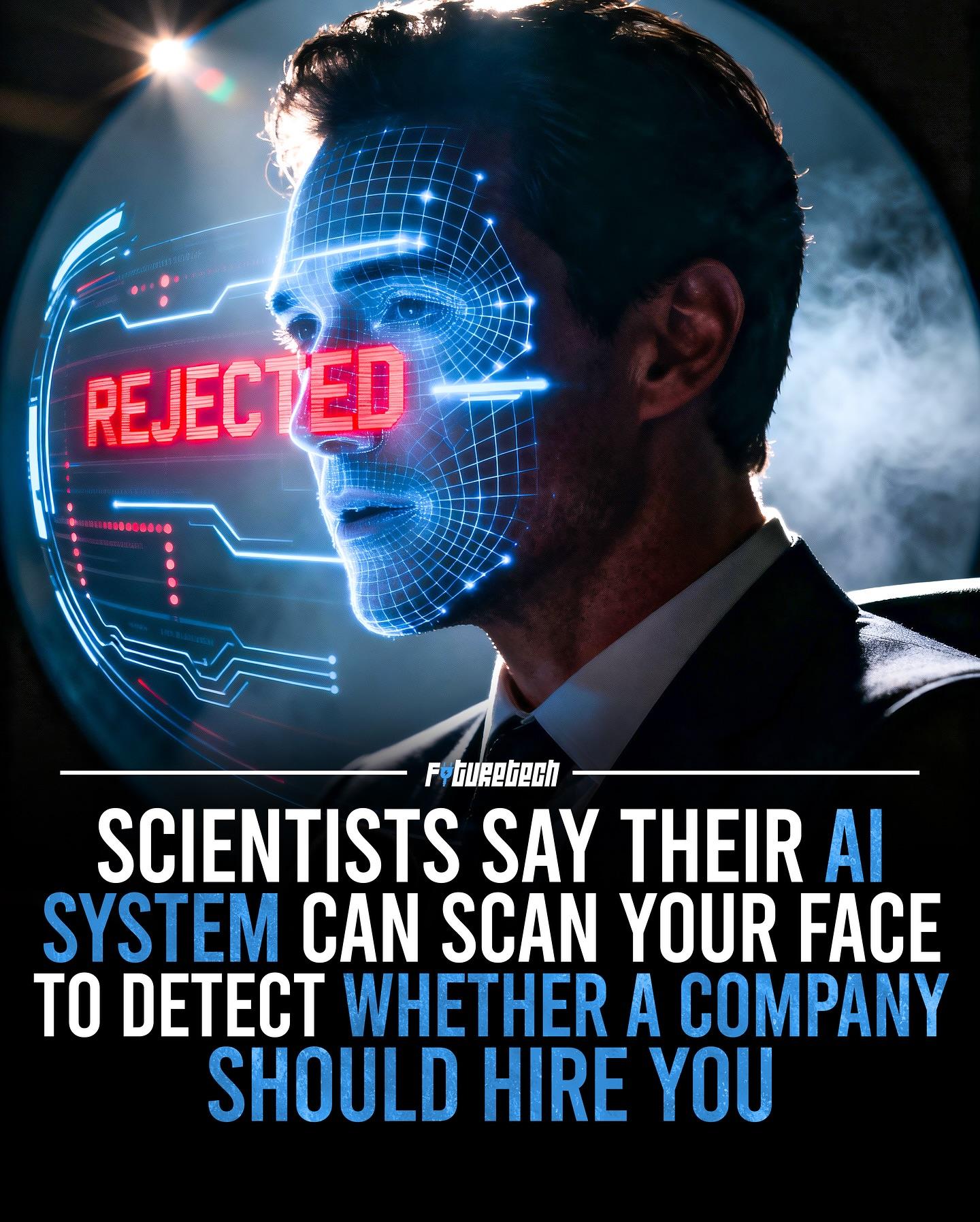
Researchers at the University of Pennsylvania have sparked controversy after revealing an AI system capable of predicting personality traits, and even potential financial success, simply by analyzing people’s faces.
Flagged by The Economist, the study used headshots of 96,000 MBA graduates from LinkedIn to train an algorithm that extracted five key personality traits: openness, conscientiousness, extraversion, agreeableness, and neuroticism. The team claimed the AI could link these traits to career outcomes, with extraversion emerging as the strongest predictor of higher pay.
Critics say the findings raise serious ethical and privacy concerns, warning that such technology could lead to discrimination if used in hiring, finance, or law enforcement. Yet similar systems are already in use – AI now verifies driver’s licenses in some U.S. states and assists U.K. police in facial recognition efforts, despite notable error rates.
The researchers themselves caution that widespread adoption might push individuals to alter their appearance or digital images. Whether corporations will weaponize this data-driven judgment remains uncertain, but in a world obsessed with metrics, many fear it’s only a matter of time.
Follow us @FutureTech for more!
Flagged by The Economist, the study used headshots of 96,000 MBA graduates from LinkedIn to train an algorithm that extracted five key personality traits: openness, conscientiousness, extraversion, agreeableness, and neuroticism. The team claimed the AI could link these traits to career outcomes, with extraversion emerging as the strongest predictor of higher pay.
Critics say the findings raise serious ethical and privacy concerns, warning that such technology could lead to discrimination if used in hiring, finance, or law enforcement. Yet similar systems are already in use – AI now verifies driver’s licenses in some U.S. states and assists U.K. police in facial recognition efforts, despite notable error rates.
The researchers themselves caution that widespread adoption might push individuals to alter their appearance or digital images. Whether corporations will weaponize this data-driven judgment remains uncertain, but in a world obsessed with metrics, many fear it’s only a matter of time.
Follow us @FutureTech for more!
Researchers at the University of Pennsylvania have sparked controversy after revealing an AI system capable of predicting personality traits, and even potential financial success, simply by analyzing people’s faces.
Flagged by The Economist, the study used headshots of 96,000 MBA graduates from LinkedIn to train an algorithm that extracted five key personality traits: openness, conscientiousness, extraversion, agreeableness, and neuroticism. The team claimed the AI could link these traits to career outcomes, with extraversion emerging as the strongest predictor of higher pay.
Critics say the findings raise serious ethical and privacy concerns, warning that such technology could lead to discrimination if used in hiring, finance, or law enforcement. Yet similar systems are already in use – AI now verifies driver’s licenses in some U.S. states and assists U.K. police in facial recognition efforts, despite notable error rates.
The researchers themselves caution that widespread adoption might push individuals to alter their appearance or digital images. Whether corporations will weaponize this data-driven judgment remains uncertain, but in a world obsessed with metrics, many fear it’s only a matter of time.
Follow us 👉 @FutureTech for more! 🔌
·138 Views
·0 Reviews
