 English
 Arabic
 French
 Spanish
 Portuguese
 Deutsch
 Turkish
 Dutch
Dutch
 Italiano
 Russian
 Romaian
 Portuguese (Brazil)
 Greek
Greek
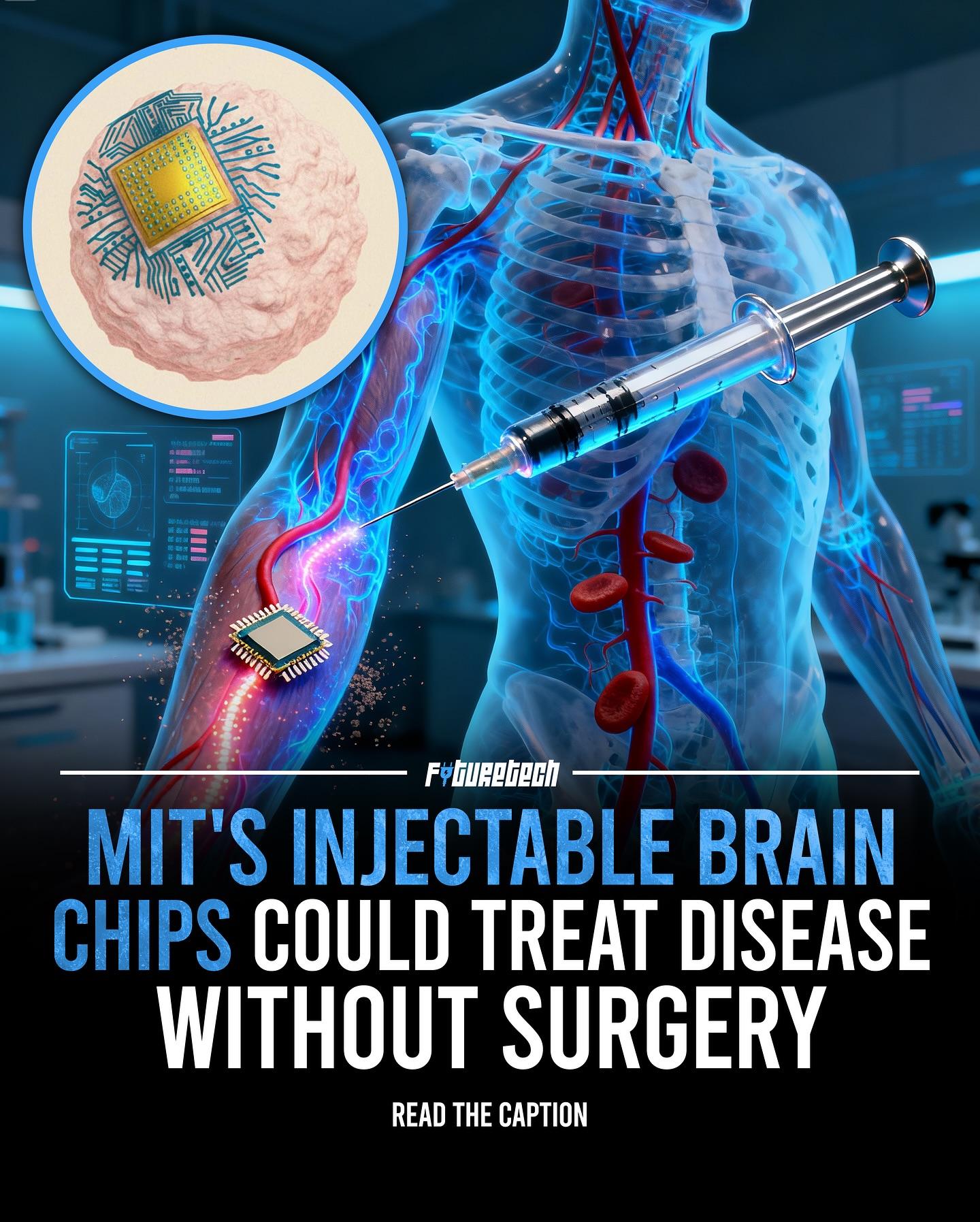
MIT researchers have unveiled a groundbreaking technology called Circulatronics, a platform that could treat neurological diseases and mental illnesses without the need for brain surgery.
The innovation, published in Nature Biotechnology, uses tiny wireless chips called SWEDs that can be injected through a simple jab in the arm, travel through the bloodstream, and self-implant inside the brain.
The chips, each roughly one-billionth the length of a grain of rice, attach to immune cells that naturally cross the blood–brain barrier and move toward inflamed brain regions. Once in position, they can be activated wirelessly with near-infrared light, delivering precise electrical stimulation to treat conditions like depression, Alzheimer’s, multiple sclerosis, and even brain tumors.
In mouse tests, the injected hybrids successfully navigated to targeted diseased areas and activated nearby neurons when stimulated from outside the body. The approach could offer a safer, cheaper alternative to invasive electrode-based brain surgeries, which carry risks and remain inaccessible to billions worldwide.
Led by MIT’s Deblina Sarkar in collaboration with Wellesley College and Harvard University, the team is already exploring next-generation upgrades, such as adding sensing abilities and synthetic electronic neurons. The tech could also be adapted for other organs, potentially enabling wireless pacemakers or injectable implants for chronic pain.
Through a new MIT spinoff, Cahira Technologies, Circulatronics is aiming for clinical trials within three years, marking a major step toward a future where advanced neurological treatments might be delivered through a simple injection, no surgery required.
Follow us @FutureTech for more!
The innovation, published in Nature Biotechnology, uses tiny wireless chips called SWEDs that can be injected through a simple jab in the arm, travel through the bloodstream, and self-implant inside the brain.
The chips, each roughly one-billionth the length of a grain of rice, attach to immune cells that naturally cross the blood–brain barrier and move toward inflamed brain regions. Once in position, they can be activated wirelessly with near-infrared light, delivering precise electrical stimulation to treat conditions like depression, Alzheimer’s, multiple sclerosis, and even brain tumors.
In mouse tests, the injected hybrids successfully navigated to targeted diseased areas and activated nearby neurons when stimulated from outside the body. The approach could offer a safer, cheaper alternative to invasive electrode-based brain surgeries, which carry risks and remain inaccessible to billions worldwide.
Led by MIT’s Deblina Sarkar in collaboration with Wellesley College and Harvard University, the team is already exploring next-generation upgrades, such as adding sensing abilities and synthetic electronic neurons. The tech could also be adapted for other organs, potentially enabling wireless pacemakers or injectable implants for chronic pain.
Through a new MIT spinoff, Cahira Technologies, Circulatronics is aiming for clinical trials within three years, marking a major step toward a future where advanced neurological treatments might be delivered through a simple injection, no surgery required.
Follow us @FutureTech for more!
MIT researchers have unveiled a groundbreaking technology called Circulatronics, a platform that could treat neurological diseases and mental illnesses without the need for brain surgery.
The innovation, published in Nature Biotechnology, uses tiny wireless chips called SWEDs that can be injected through a simple jab in the arm, travel through the bloodstream, and self-implant inside the brain.
The chips, each roughly one-billionth the length of a grain of rice, attach to immune cells that naturally cross the blood–brain barrier and move toward inflamed brain regions. Once in position, they can be activated wirelessly with near-infrared light, delivering precise electrical stimulation to treat conditions like depression, Alzheimer’s, multiple sclerosis, and even brain tumors.
In mouse tests, the injected hybrids successfully navigated to targeted diseased areas and activated nearby neurons when stimulated from outside the body. The approach could offer a safer, cheaper alternative to invasive electrode-based brain surgeries, which carry risks and remain inaccessible to billions worldwide.
Led by MIT’s Deblina Sarkar in collaboration with Wellesley College and Harvard University, the team is already exploring next-generation upgrades, such as adding sensing abilities and synthetic electronic neurons. The tech could also be adapted for other organs, potentially enabling wireless pacemakers or injectable implants for chronic pain.
Through a new MIT spinoff, Cahira Technologies, Circulatronics is aiming for clinical trials within three years, marking a major step toward a future where advanced neurological treatments might be delivered through a simple injection, no surgery required.
👉 Follow us @FutureTech for more! 🔌
·53 Views
·0 Reviews
