


Beyond the Perimeter: The 4-Step Zero-Trust Identity Hardening Checklist for Modern Security Teams
As cyber threats evolve into multi-extortion ecosystems and identity-based attacks dominate initial access vectors, traditional perimeter defense is no longer sufficient. Organizations must shift from "trust but verify" to continuous, identity-first verification across every layer of their architecture.
To secure your environment against credential stuffing, session hijacking, and unauthorized machine access, use this actionable zero-trust hardening checklist:
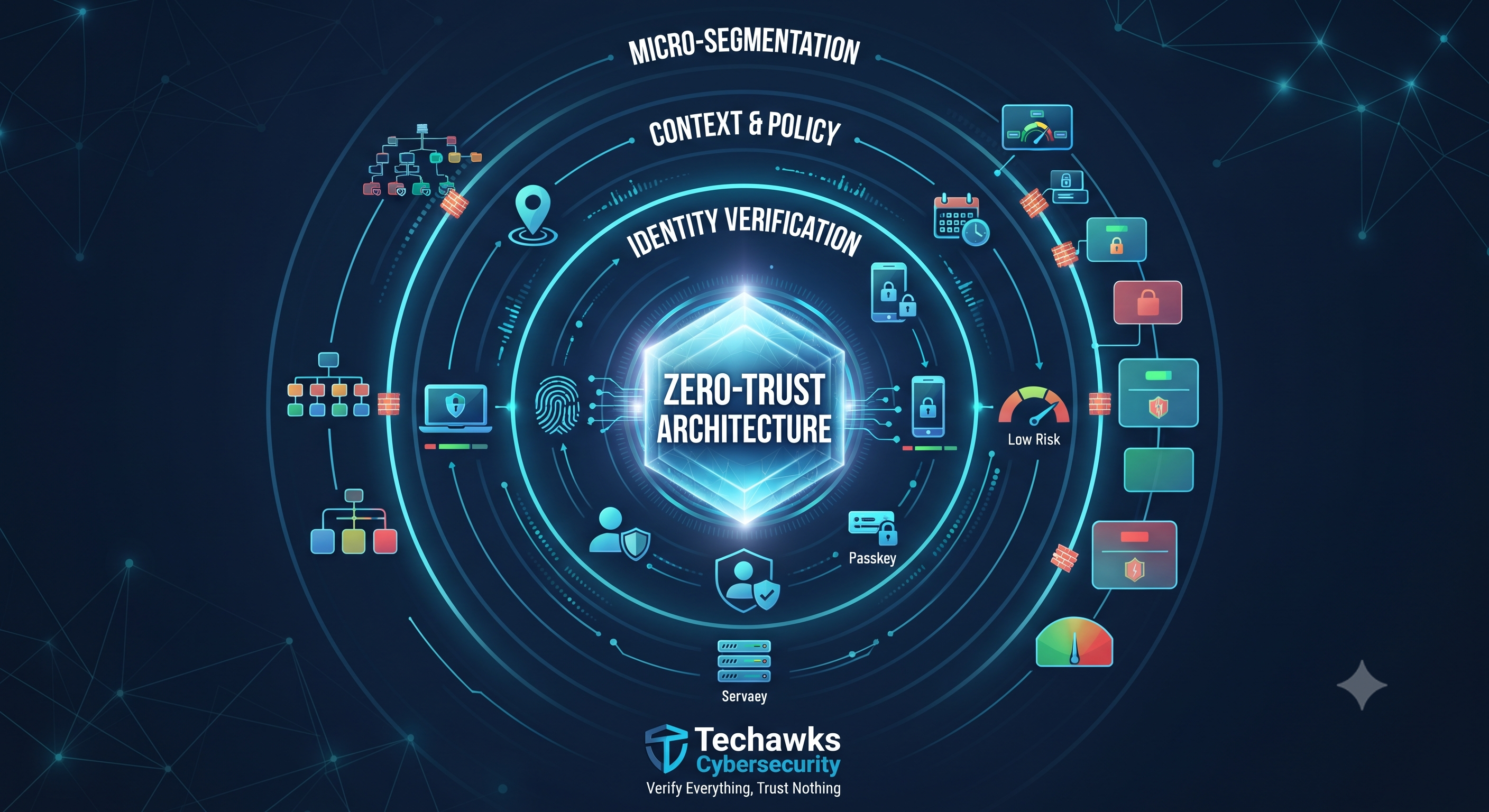
Enforce Adaptive Multi-Factor Authentication (MFA): Move beyond basic text-message codes. Implement context-aware, risk-based adaptive MFA and phishing-resistant passkeys that evaluate device posture and location before granting access.
Audit and Scope Non-Human Identities: AI agents, service accounts, and API tokens now outnumber human users in many enterprises. Enforce strict least-privilege access and continuous monitoring for all machine identities.
Implement Continuous Risk Scoring & Session Verification: Do not trust a session just because authentication succeeded once. Continuously monitor user behavior anomalies and trigger step-up verification if risk parameters shift mid-session.
Isolate with Micro-Segmentation: Limit lateral movement by breaking flat corporate networks down into micro-segments, ensuring that a single compromised credential cannot grant an attacker free reign across your entire infrastructure.
Discussion Question: What is your biggest challenge when implementing Zero-Trust architecture—managing legacy applications that don't support modern identity protocols, or controlling the explosion of non-human and AI agent identities? Drop your thoughts below!
CTA (Join Cybersecurity & Ethical Hacking): Ready to master modern defense and ethical hacking strategies? Join Cybersecurity & Ethical Hacking to access real-world lab walkthroughs, threat intelligence breakdowns, and specialized security career resources.
As cyber threats evolve into multi-extortion ecosystems and identity-based attacks dominate initial access vectors, traditional perimeter defense is no longer sufficient. Organizations must shift from "trust but verify" to continuous, identity-first verification across every layer of their architecture.
To secure your environment against credential stuffing, session hijacking, and unauthorized machine access, use this actionable zero-trust hardening checklist:
Enforce Adaptive Multi-Factor Authentication (MFA): Move beyond basic text-message codes. Implement context-aware, risk-based adaptive MFA and phishing-resistant passkeys that evaluate device posture and location before granting access.
Audit and Scope Non-Human Identities: AI agents, service accounts, and API tokens now outnumber human users in many enterprises. Enforce strict least-privilege access and continuous monitoring for all machine identities.
Implement Continuous Risk Scoring & Session Verification: Do not trust a session just because authentication succeeded once. Continuously monitor user behavior anomalies and trigger step-up verification if risk parameters shift mid-session.
Isolate with Micro-Segmentation: Limit lateral movement by breaking flat corporate networks down into micro-segments, ensuring that a single compromised credential cannot grant an attacker free reign across your entire infrastructure.
Discussion Question: What is your biggest challenge when implementing Zero-Trust architecture—managing legacy applications that don't support modern identity protocols, or controlling the explosion of non-human and AI agent identities? Drop your thoughts below!
CTA (Join Cybersecurity & Ethical Hacking): Ready to master modern defense and ethical hacking strategies? Join Cybersecurity & Ethical Hacking to access real-world lab walkthroughs, threat intelligence breakdowns, and specialized security career resources.
Beyond the Perimeter: The 4-Step Zero-Trust Identity Hardening Checklist for Modern Security Teams
As cyber threats evolve into multi-extortion ecosystems and identity-based attacks dominate initial access vectors, traditional perimeter defense is no longer sufficient. Organizations must shift from "trust but verify" to continuous, identity-first verification across every layer of their architecture.
To secure your environment against credential stuffing, session hijacking, and unauthorized machine access, use this actionable zero-trust hardening checklist:
Enforce Adaptive Multi-Factor Authentication (MFA): Move beyond basic text-message codes. Implement context-aware, risk-based adaptive MFA and phishing-resistant passkeys that evaluate device posture and location before granting access.
Audit and Scope Non-Human Identities: AI agents, service accounts, and API tokens now outnumber human users in many enterprises. Enforce strict least-privilege access and continuous monitoring for all machine identities.
Implement Continuous Risk Scoring & Session Verification: Do not trust a session just because authentication succeeded once. Continuously monitor user behavior anomalies and trigger step-up verification if risk parameters shift mid-session.
Isolate with Micro-Segmentation: Limit lateral movement by breaking flat corporate networks down into micro-segments, ensuring that a single compromised credential cannot grant an attacker free reign across your entire infrastructure.
Discussion Question: What is your biggest challenge when implementing Zero-Trust architecture—managing legacy applications that don't support modern identity protocols, or controlling the explosion of non-human and AI agent identities? Drop your thoughts below!
CTA (Join Cybersecurity & Ethical Hacking): Ready to master modern defense and ethical hacking strategies? Join Cybersecurity & Ethical Hacking to access real-world lab walkthroughs, threat intelligence breakdowns, and specialized security career resources.

 English
 Arabic
 French
 Spanish
 Portuguese
 Deutsch
 Turkish
 Dutch
Dutch
 Italiano
 Russian
 Portuguese (Brazil)
 Greek
Greek