


Stop Treating Kubernetes Like Traditional VMs: The 4-Step Platform Engineering Checklist for Modern Cloud Architectures
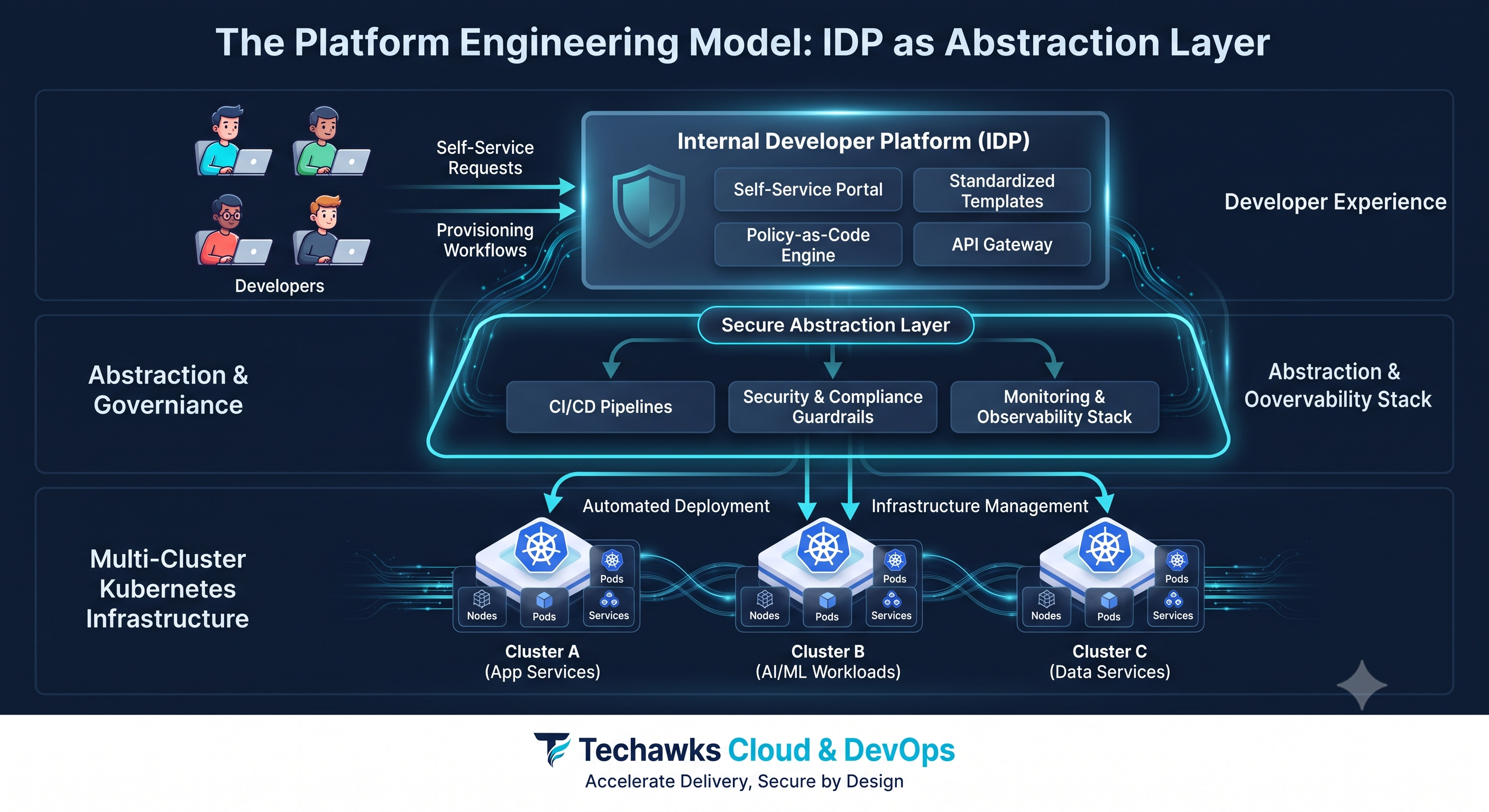
The cloud-native landscape has matured past manual cluster management and ad-hoc infrastructure scripts. Organizations are shifting away from throwing raw YAML files at developers, moving instead toward Platform Engineering and Internal Developer Platforms (IDPs) that abstract complexity while preserving enterprise guardrails.
To reduce cognitive friction, secure your clusters by default, and scale operations efficiently, use this actionable platform engineering checklist:
Build Self-Service Golden Paths: Replace manual ticketing systems with Internal Developer Platforms (IDPs) that let developers spin up compliant environments, services, and pipelines in minutes using standardized templates.
Embed Policy-as-Code Guards Early: Shift security left by enforcing admission controllers, artifact signing, and compliance rules directly inside your deployment pipeline before clusters ever touch runtime.
Optimize for Multi-Workload Efficiency: Architect your nodes to handle heterogeneous demands—bin-packing resource-intensive AI/ML jobs and GPU-centric workloads right alongside traditional stateless and stateful services.
Automate Day-Two Observability & FinOps: Implement continuous telemetry (via tools like OpenTelemetry) and real-time cost allocation tracking so performance bottlenecks and cloud waste are caught before hitting production.
Discussion Question: What is your biggest hurdle when scaling cloud-native environments—managing developer cognitive load, or balancing GPU/compute costs with strict security compliance? Share your thoughts below!
CTA (Join Cloud, DevOps & Open Source): Ready to master modern cloud-native systems and platform engineering? Join Cloud, DevOps & Open Source to access advanced architecture breakdowns, hands-on tutorials, and elite career networks.
The cloud-native landscape has matured past manual cluster management and ad-hoc infrastructure scripts. Organizations are shifting away from throwing raw YAML files at developers, moving instead toward Platform Engineering and Internal Developer Platforms (IDPs) that abstract complexity while preserving enterprise guardrails.
To reduce cognitive friction, secure your clusters by default, and scale operations efficiently, use this actionable platform engineering checklist:
Build Self-Service Golden Paths: Replace manual ticketing systems with Internal Developer Platforms (IDPs) that let developers spin up compliant environments, services, and pipelines in minutes using standardized templates.
Embed Policy-as-Code Guards Early: Shift security left by enforcing admission controllers, artifact signing, and compliance rules directly inside your deployment pipeline before clusters ever touch runtime.
Optimize for Multi-Workload Efficiency: Architect your nodes to handle heterogeneous demands—bin-packing resource-intensive AI/ML jobs and GPU-centric workloads right alongside traditional stateless and stateful services.
Automate Day-Two Observability & FinOps: Implement continuous telemetry (via tools like OpenTelemetry) and real-time cost allocation tracking so performance bottlenecks and cloud waste are caught before hitting production.
Discussion Question: What is your biggest hurdle when scaling cloud-native environments—managing developer cognitive load, or balancing GPU/compute costs with strict security compliance? Share your thoughts below!
CTA (Join Cloud, DevOps & Open Source): Ready to master modern cloud-native systems and platform engineering? Join Cloud, DevOps & Open Source to access advanced architecture breakdowns, hands-on tutorials, and elite career networks.
Stop Treating Kubernetes Like Traditional VMs: The 4-Step Platform Engineering Checklist for Modern Cloud Architectures
The cloud-native landscape has matured past manual cluster management and ad-hoc infrastructure scripts. Organizations are shifting away from throwing raw YAML files at developers, moving instead toward Platform Engineering and Internal Developer Platforms (IDPs) that abstract complexity while preserving enterprise guardrails.
To reduce cognitive friction, secure your clusters by default, and scale operations efficiently, use this actionable platform engineering checklist:
Build Self-Service Golden Paths: Replace manual ticketing systems with Internal Developer Platforms (IDPs) that let developers spin up compliant environments, services, and pipelines in minutes using standardized templates.
Embed Policy-as-Code Guards Early: Shift security left by enforcing admission controllers, artifact signing, and compliance rules directly inside your deployment pipeline before clusters ever touch runtime.
Optimize for Multi-Workload Efficiency: Architect your nodes to handle heterogeneous demands—bin-packing resource-intensive AI/ML jobs and GPU-centric workloads right alongside traditional stateless and stateful services.
Automate Day-Two Observability & FinOps: Implement continuous telemetry (via tools like OpenTelemetry) and real-time cost allocation tracking so performance bottlenecks and cloud waste are caught before hitting production.
Discussion Question: What is your biggest hurdle when scaling cloud-native environments—managing developer cognitive load, or balancing GPU/compute costs with strict security compliance? Share your thoughts below!
CTA (Join Cloud, DevOps & Open Source): Ready to master modern cloud-native systems and platform engineering? Join Cloud, DevOps & Open Source to access advanced architecture breakdowns, hands-on tutorials, and elite career networks.

 Arabic
 French
 Spanish
 Portuguese
 Deutsch
 Turkish
 Dutch
Dutch
 Italiano
 Russian
 Romaian
 Portuguese (Brazil)
 Greek
Greek