


Shift-Left Defense: Why Automated Secret Scanning is Every Security Analyst's First Line of Defense
Modern cybersecurity demands shifting security controls as far left into the software lifecycle as possible. Relying on post-deployment audits or scheduled scans leaves a dangerous window of exposure where threat actors can exploit leaked credentials.
Why it matters:
Once a cryptographic key or cloud credential hits Git history, it must be considered instantly compromised—even if you delete the commit five minutes later. Adversaries run continuous scraper agents targeting commit streams. Automated secrets detection tools (like TruffleHog and Gitleaks) intercept leaks at the source by analyzing entropy, regex signatures, and live verification before code ever touches remote branches.
What you can learn (The Defensive Playbook):
To secure modern source code repositories against credential exposure, implement this layered scanning architecture:
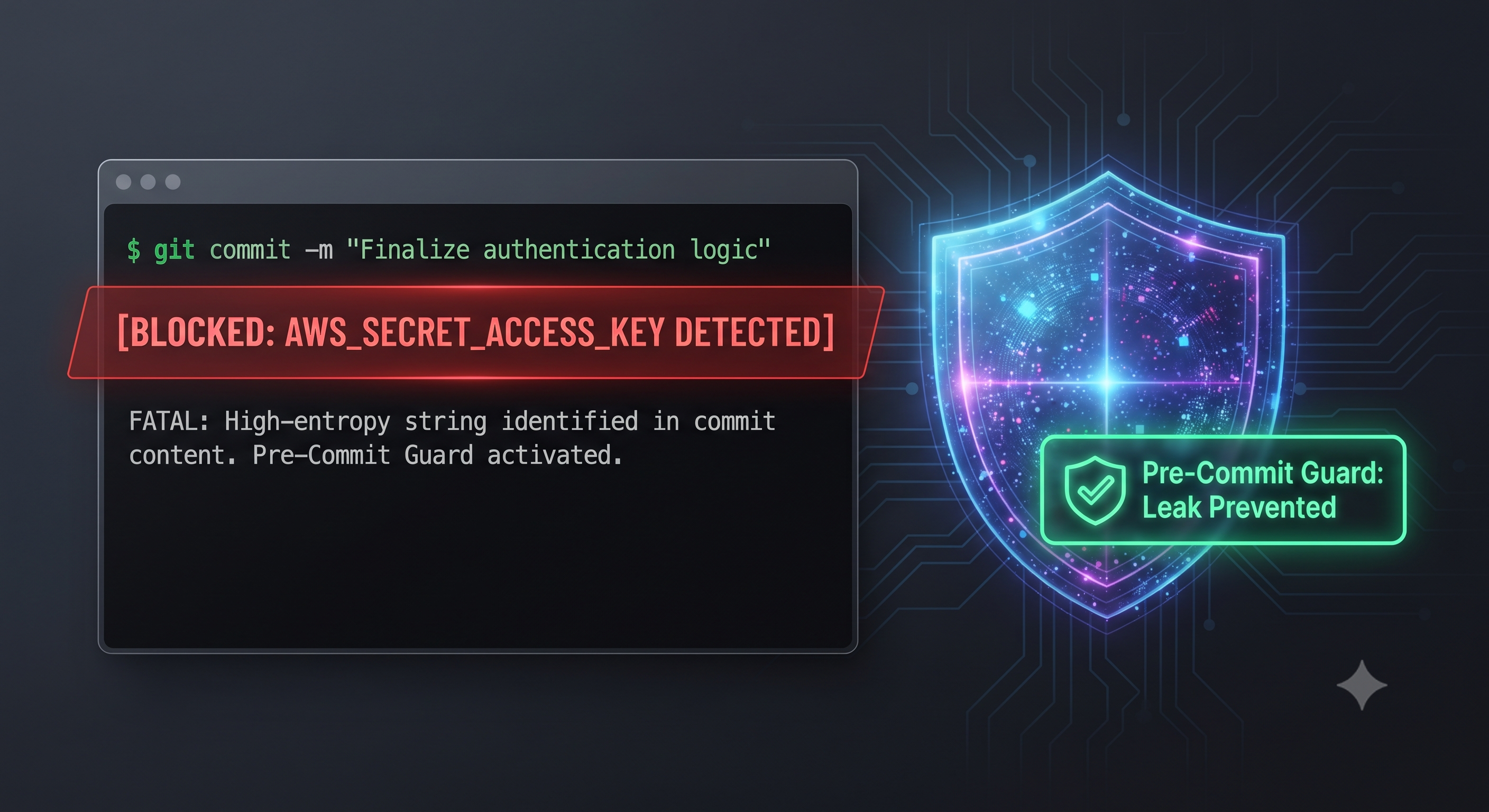
Pre-Commit Hooks (Client-Side Gate): Configure local pre-commit hooks to run lightweight scans automatically when a developer types git commit, blocking commits containing high-entropy strings or known token patterns.
CI/CD Pipeline Verification: Add automated secrets detection jobs into pull request pipelines to catch bypasses and alert SOC teams before changes merge into production branches.
Live Token Invalidation: Use tools that not only detect tokens but also perform non-destructive API verification to validate whether an exposed credential is active, allowing automated revocation workflows to trigger instantly.
Discussion Question
Does your organization enforce pre-commit secret scanning locally, or are you catching leaked credentials at the CI/CD pipeline level? What has been your biggest hurdle in preventing secret leaks?
CTA (Join Cybersecurity & Ethical Hacking)
Ready to sharpen your defensive skills, master DevSecOps practices, and defend modern systems against real-world threats? Join the Techawks Cybersecurity & Ethical Hacking community today and connect with security practitioners worldwide
Modern cybersecurity demands shifting security controls as far left into the software lifecycle as possible. Relying on post-deployment audits or scheduled scans leaves a dangerous window of exposure where threat actors can exploit leaked credentials.
Why it matters:
Once a cryptographic key or cloud credential hits Git history, it must be considered instantly compromised—even if you delete the commit five minutes later. Adversaries run continuous scraper agents targeting commit streams. Automated secrets detection tools (like TruffleHog and Gitleaks) intercept leaks at the source by analyzing entropy, regex signatures, and live verification before code ever touches remote branches.
What you can learn (The Defensive Playbook):
To secure modern source code repositories against credential exposure, implement this layered scanning architecture:
Pre-Commit Hooks (Client-Side Gate): Configure local pre-commit hooks to run lightweight scans automatically when a developer types git commit, blocking commits containing high-entropy strings or known token patterns.
CI/CD Pipeline Verification: Add automated secrets detection jobs into pull request pipelines to catch bypasses and alert SOC teams before changes merge into production branches.
Live Token Invalidation: Use tools that not only detect tokens but also perform non-destructive API verification to validate whether an exposed credential is active, allowing automated revocation workflows to trigger instantly.
Discussion Question
Does your organization enforce pre-commit secret scanning locally, or are you catching leaked credentials at the CI/CD pipeline level? What has been your biggest hurdle in preventing secret leaks?
CTA (Join Cybersecurity & Ethical Hacking)
Ready to sharpen your defensive skills, master DevSecOps practices, and defend modern systems against real-world threats? Join the Techawks Cybersecurity & Ethical Hacking community today and connect with security practitioners worldwide
Shift-Left Defense: Why Automated Secret Scanning is Every Security Analyst's First Line of Defense
Modern cybersecurity demands shifting security controls as far left into the software lifecycle as possible. Relying on post-deployment audits or scheduled scans leaves a dangerous window of exposure where threat actors can exploit leaked credentials.
Why it matters:
Once a cryptographic key or cloud credential hits Git history, it must be considered instantly compromised—even if you delete the commit five minutes later. Adversaries run continuous scraper agents targeting commit streams. Automated secrets detection tools (like TruffleHog and Gitleaks) intercept leaks at the source by analyzing entropy, regex signatures, and live verification before code ever touches remote branches.
What you can learn (The Defensive Playbook):
To secure modern source code repositories against credential exposure, implement this layered scanning architecture:
Pre-Commit Hooks (Client-Side Gate): Configure local pre-commit hooks to run lightweight scans automatically when a developer types git commit, blocking commits containing high-entropy strings or known token patterns.
CI/CD Pipeline Verification: Add automated secrets detection jobs into pull request pipelines to catch bypasses and alert SOC teams before changes merge into production branches.
Live Token Invalidation: Use tools that not only detect tokens but also perform non-destructive API verification to validate whether an exposed credential is active, allowing automated revocation workflows to trigger instantly.
Discussion Question
Does your organization enforce pre-commit secret scanning locally, or are you catching leaked credentials at the CI/CD pipeline level? What has been your biggest hurdle in preventing secret leaks?
CTA (Join Cybersecurity & Ethical Hacking)
Ready to sharpen your defensive skills, master DevSecOps practices, and defend modern systems against real-world threats? Join the Techawks Cybersecurity & Ethical Hacking community today and connect with security practitioners worldwide

 English
 Arabic
 Spanish
 Portuguese
 Deutsch
 Turkish
 Dutch
Dutch
 Italiano
 Russian
 Romaian
 Portuguese (Brazil)
 Greek
Greek