


The First-10-Hires Framework: Transitioning from Solo Founder to Systems Builder
Many technical and product founders fall into a common trap when expanding their team: hiring for general bandwidth instead of specific leverage. They bring on talented generalists, delegate execution verbally, and then find themselves constantly intervening to fix alignment or execution errors.
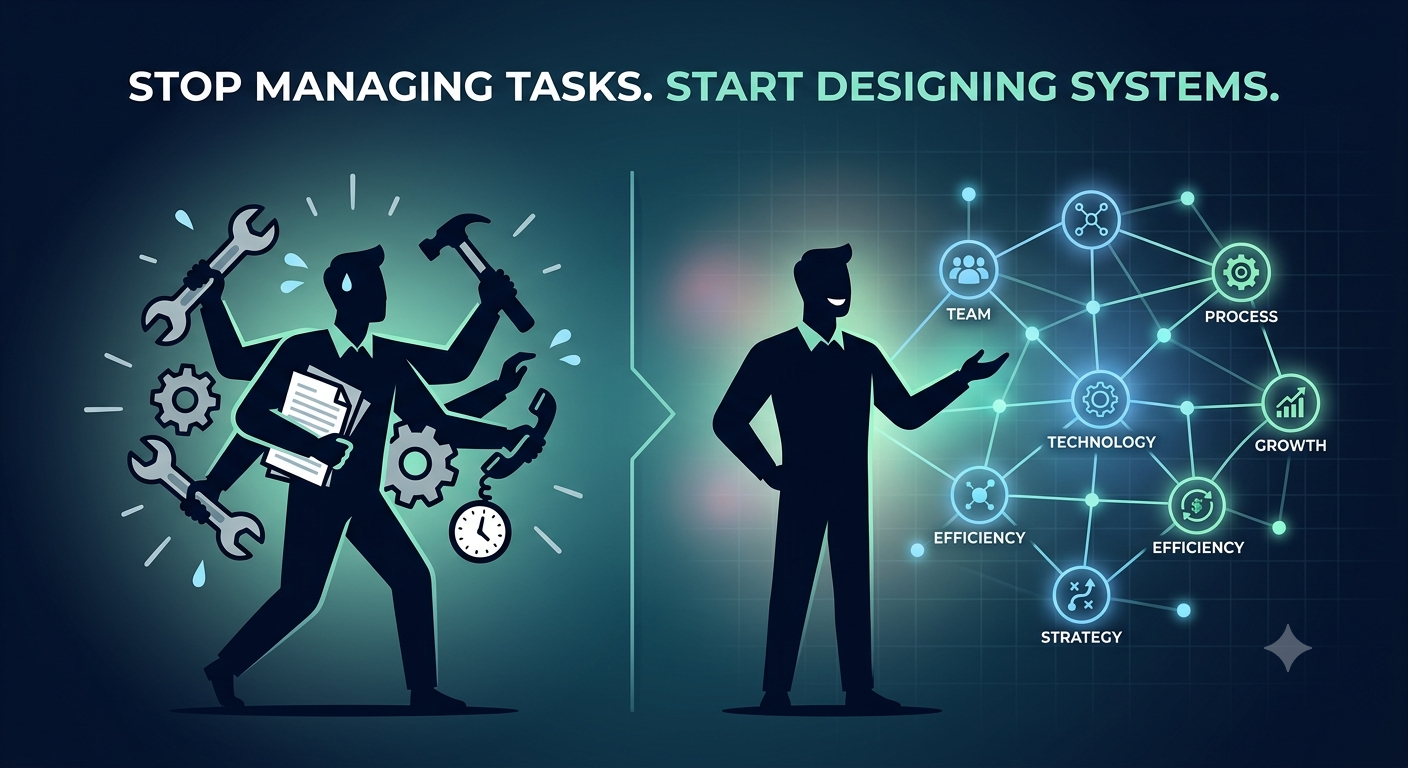
To build an organization that scales reliably beyond your direct capacity, shift your founder mindset from execution operator to systems architect using this 3-step hiring framework:
1. Document the Workflow Before Hiring
Never recruit for a core operational role until you have manually executed the workflow yourself and documented a baseline protocol.
Define the input and output: What specific data, asset, or context initiates the task, and what exact result defines "done"?
Outline standard operating principles: Give your early hires clear boundary conditions and guidelines, not micro-managed task lists.
Set success metrics: Establish 1–2 quantifiable key performance indicators (KPIs) for the role from day one.
2. Hire for "Problem-Ownership," Not Just Skill Sets
In early-stage startups, scope is fluid. Hiring someone who only executes defined tickets requires you to remain the perpetual problem solver.
Look for ownership history: During interviews, evaluate candidates on how they handled ambiguity in past roles.
Test for initiative: Ask: "When presented with a broken process without an obvious manager, how did you identify and resolve the root cause?"
Delegate outcomes, not activities: Assign responsibility for a metric (e.g., "Reduce onboarding drop-off by 15%") rather than an isolated task list.
3. Build Asynchronous Decision Records
As teams grow past 5 to 10 people, context fragmentation slows down velocity. Avoid spending hours in status meetings by establishing lightweight decision systems early:
Maintain a central Architecture & Business Decision Record (ADR/BDR) log.
Require team leads to document the context, options considered, and chosen direction for major product or strategic choices.
This builds an institutional memory that allows new hires to self-onboard and make decisions aligned with your core strategy.
Key Takeaways
Systematize before delegating: Build and document a repeatable baseline process before handing off critical operational functions.
Hire owners, not task executors: Focus on recruiting individuals who take full accountability for outcomes rather than just managing checklist items.
Document decisions asynchronously: Reduce meeting fatigue and context loss by keeping a running, accessible record of strategic choices.
CTA
Scaling an early-stage startup and navigating team design or hiring challenges? Join Startup Founders & Entrepreneurs on Techawks today to share growth strategies, access proven frameworks, and connect with fellow founders.
Many technical and product founders fall into a common trap when expanding their team: hiring for general bandwidth instead of specific leverage. They bring on talented generalists, delegate execution verbally, and then find themselves constantly intervening to fix alignment or execution errors.
To build an organization that scales reliably beyond your direct capacity, shift your founder mindset from execution operator to systems architect using this 3-step hiring framework:
1. Document the Workflow Before Hiring
Never recruit for a core operational role until you have manually executed the workflow yourself and documented a baseline protocol.
Define the input and output: What specific data, asset, or context initiates the task, and what exact result defines "done"?
Outline standard operating principles: Give your early hires clear boundary conditions and guidelines, not micro-managed task lists.
Set success metrics: Establish 1–2 quantifiable key performance indicators (KPIs) for the role from day one.
2. Hire for "Problem-Ownership," Not Just Skill Sets
In early-stage startups, scope is fluid. Hiring someone who only executes defined tickets requires you to remain the perpetual problem solver.
Look for ownership history: During interviews, evaluate candidates on how they handled ambiguity in past roles.
Test for initiative: Ask: "When presented with a broken process without an obvious manager, how did you identify and resolve the root cause?"
Delegate outcomes, not activities: Assign responsibility for a metric (e.g., "Reduce onboarding drop-off by 15%") rather than an isolated task list.
3. Build Asynchronous Decision Records
As teams grow past 5 to 10 people, context fragmentation slows down velocity. Avoid spending hours in status meetings by establishing lightweight decision systems early:
Maintain a central Architecture & Business Decision Record (ADR/BDR) log.
Require team leads to document the context, options considered, and chosen direction for major product or strategic choices.
This builds an institutional memory that allows new hires to self-onboard and make decisions aligned with your core strategy.
Key Takeaways
Systematize before delegating: Build and document a repeatable baseline process before handing off critical operational functions.
Hire owners, not task executors: Focus on recruiting individuals who take full accountability for outcomes rather than just managing checklist items.
Document decisions asynchronously: Reduce meeting fatigue and context loss by keeping a running, accessible record of strategic choices.
CTA
Scaling an early-stage startup and navigating team design or hiring challenges? Join Startup Founders & Entrepreneurs on Techawks today to share growth strategies, access proven frameworks, and connect with fellow founders.
The First-10-Hires Framework: Transitioning from Solo Founder to Systems Builder
Many technical and product founders fall into a common trap when expanding their team: hiring for general bandwidth instead of specific leverage. They bring on talented generalists, delegate execution verbally, and then find themselves constantly intervening to fix alignment or execution errors.
To build an organization that scales reliably beyond your direct capacity, shift your founder mindset from execution operator to systems architect using this 3-step hiring framework:
1. Document the Workflow Before Hiring
Never recruit for a core operational role until you have manually executed the workflow yourself and documented a baseline protocol.
Define the input and output: What specific data, asset, or context initiates the task, and what exact result defines "done"?
Outline standard operating principles: Give your early hires clear boundary conditions and guidelines, not micro-managed task lists.
Set success metrics: Establish 1–2 quantifiable key performance indicators (KPIs) for the role from day one.
2. Hire for "Problem-Ownership," Not Just Skill Sets
In early-stage startups, scope is fluid. Hiring someone who only executes defined tickets requires you to remain the perpetual problem solver.
Look for ownership history: During interviews, evaluate candidates on how they handled ambiguity in past roles.
Test for initiative: Ask: "When presented with a broken process without an obvious manager, how did you identify and resolve the root cause?"
Delegate outcomes, not activities: Assign responsibility for a metric (e.g., "Reduce onboarding drop-off by 15%") rather than an isolated task list.
3. Build Asynchronous Decision Records
As teams grow past 5 to 10 people, context fragmentation slows down velocity. Avoid spending hours in status meetings by establishing lightweight decision systems early:
Maintain a central Architecture & Business Decision Record (ADR/BDR) log.
Require team leads to document the context, options considered, and chosen direction for major product or strategic choices.
This builds an institutional memory that allows new hires to self-onboard and make decisions aligned with your core strategy.
Key Takeaways
Systematize before delegating: Build and document a repeatable baseline process before handing off critical operational functions.
Hire owners, not task executors: Focus on recruiting individuals who take full accountability for outcomes rather than just managing checklist items.
Document decisions asynchronously: Reduce meeting fatigue and context loss by keeping a running, accessible record of strategic choices.
CTA
Scaling an early-stage startup and navigating team design or hiring challenges? Join Startup Founders & Entrepreneurs on Techawks today to share growth strategies, access proven frameworks, and connect with fellow founders.

 English
 Arabic
 French
 Spanish
 Portuguese
 Deutsch
 Turkish
 Dutch
Dutch
 Italiano
 Russian
 Romaian
 Portuguese (Brazil)