


dbt (Data Build Tool) Reviewed: Transform Your Raw Data inside the Warehouse Like a Software Engineer
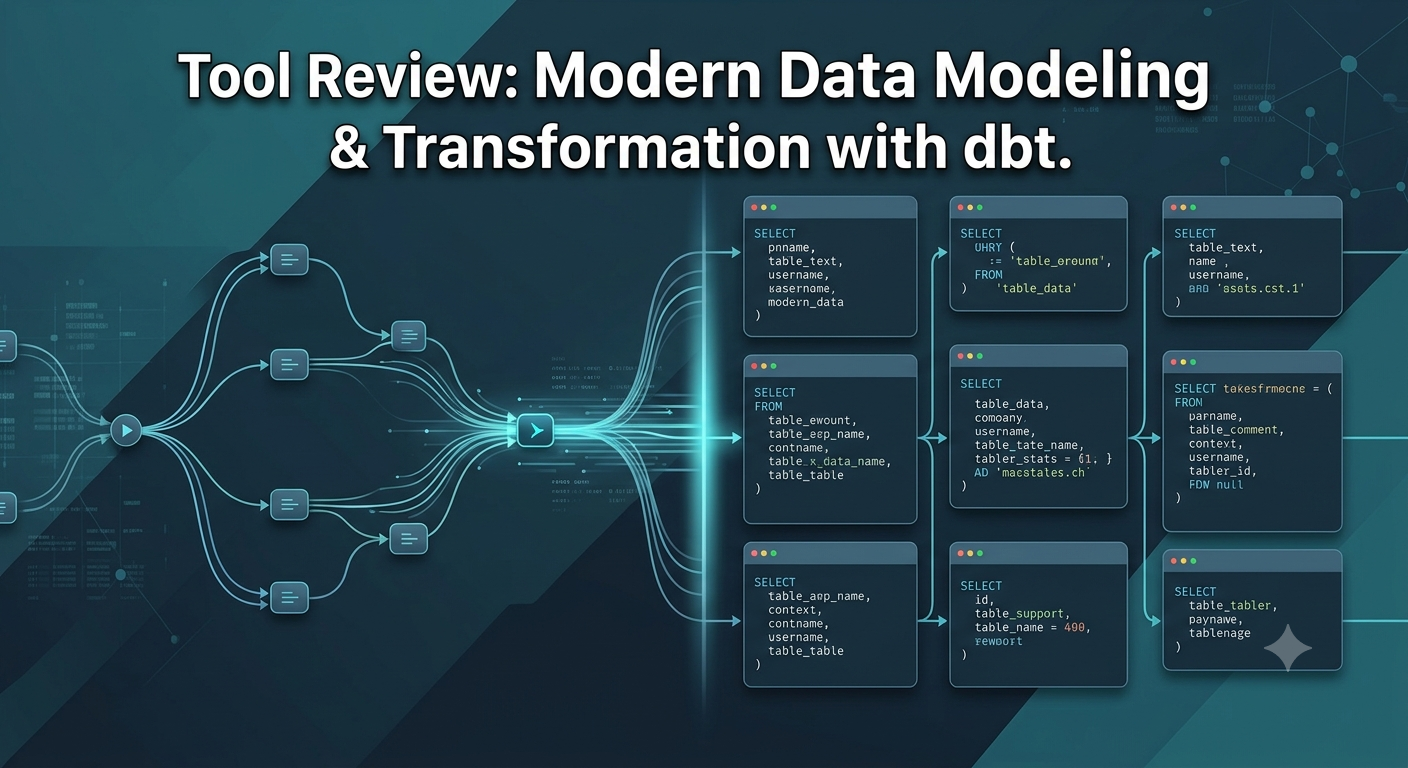
In the modern data stack, raw data is loaded directly into modern cloud platforms (like Snowflake, BigQuery, or Databricks) before transformation. This shift created the need for a dedicated tool to model, test, and document data efficiently. dbt sits on top of your warehouse, allowing analysts and engineers to write modular SQL SELECT statements while dbt handles the execution, dependency management, and boilerplate code.
Here is how dbt elevates your analytics pipeline:
1. Modular Data Modeling (ref function)
Instead of writing massive, monolithic SQL scripts, dbt lets you break transformations into modular, reusable models.
How it works: You reference upstream tables using the {{ ref('model_name') }} function.
Why it matters: dbt automatically infers your DAG (Directed Acyclic Graph) and builds dependencies in the correct execution order.
2. Built-in Testing and Quality Control
Data quality issues are caught before dashboards break for stakeholders.
How it works: Define data tests directly in YAML files (e.g., unique, not_null, accepted_values, and foreign key constraints).
Why it matters: Running dbt test validates your models instantly, catching duplicate records or unexpected missing values before deployment.
3. Automated Documentation & Lineage
Forget manually updating data dictionaries that become outdated in a week.
How it works: dbt generates a self-hosted documentation site complete with visual lineage graphs straight from your codebase using dbt docs generate.
Why it matters: Engineers and business analysts can visually trace how raw source data transforms into final reporting tables.
4. Git-Based Version Control
Treat your SQL as code. Track changes, conduct code reviews, and roll back breaking changes effortlessly using Git workflows.
Key Takeaways
T in ELT: dbt focuses exclusively on the Transformation layer inside your warehouse, using native compute power.
Software practices for data: Version control, modular code, automated testing, and CI/CD come built-in.
Instant documentation: Keeps data dictionaries synchronized with your live data models effortlessly.
SQL-first workflow: Anyone who knows standard SQL can learn dbt and build production-ready data pipelines.
CTA
Want to level up your data pipelines and master analytics engineering?
👉 Join our Data Science & Analytics community today to get practical tutorials, template projects, and peer guidance!
In the modern data stack, raw data is loaded directly into modern cloud platforms (like Snowflake, BigQuery, or Databricks) before transformation. This shift created the need for a dedicated tool to model, test, and document data efficiently. dbt sits on top of your warehouse, allowing analysts and engineers to write modular SQL SELECT statements while dbt handles the execution, dependency management, and boilerplate code.
Here is how dbt elevates your analytics pipeline:
1. Modular Data Modeling (ref function)
Instead of writing massive, monolithic SQL scripts, dbt lets you break transformations into modular, reusable models.
How it works: You reference upstream tables using the {{ ref('model_name') }} function.
Why it matters: dbt automatically infers your DAG (Directed Acyclic Graph) and builds dependencies in the correct execution order.
2. Built-in Testing and Quality Control
Data quality issues are caught before dashboards break for stakeholders.
How it works: Define data tests directly in YAML files (e.g., unique, not_null, accepted_values, and foreign key constraints).
Why it matters: Running dbt test validates your models instantly, catching duplicate records or unexpected missing values before deployment.
3. Automated Documentation & Lineage
Forget manually updating data dictionaries that become outdated in a week.
How it works: dbt generates a self-hosted documentation site complete with visual lineage graphs straight from your codebase using dbt docs generate.
Why it matters: Engineers and business analysts can visually trace how raw source data transforms into final reporting tables.
4. Git-Based Version Control
Treat your SQL as code. Track changes, conduct code reviews, and roll back breaking changes effortlessly using Git workflows.
Key Takeaways
T in ELT: dbt focuses exclusively on the Transformation layer inside your warehouse, using native compute power.
Software practices for data: Version control, modular code, automated testing, and CI/CD come built-in.
Instant documentation: Keeps data dictionaries synchronized with your live data models effortlessly.
SQL-first workflow: Anyone who knows standard SQL can learn dbt and build production-ready data pipelines.
CTA
Want to level up your data pipelines and master analytics engineering?
👉 Join our Data Science & Analytics community today to get practical tutorials, template projects, and peer guidance!
dbt (Data Build Tool) Reviewed: Transform Your Raw Data inside the Warehouse Like a Software Engineer
In the modern data stack, raw data is loaded directly into modern cloud platforms (like Snowflake, BigQuery, or Databricks) before transformation. This shift created the need for a dedicated tool to model, test, and document data efficiently. dbt sits on top of your warehouse, allowing analysts and engineers to write modular SQL SELECT statements while dbt handles the execution, dependency management, and boilerplate code.
Here is how dbt elevates your analytics pipeline:
1. Modular Data Modeling (ref function)
Instead of writing massive, monolithic SQL scripts, dbt lets you break transformations into modular, reusable models.
How it works: You reference upstream tables using the {{ ref('model_name') }} function.
Why it matters: dbt automatically infers your DAG (Directed Acyclic Graph) and builds dependencies in the correct execution order.
2. Built-in Testing and Quality Control
Data quality issues are caught before dashboards break for stakeholders.
How it works: Define data tests directly in YAML files (e.g., unique, not_null, accepted_values, and foreign key constraints).
Why it matters: Running dbt test validates your models instantly, catching duplicate records or unexpected missing values before deployment.
3. Automated Documentation & Lineage
Forget manually updating data dictionaries that become outdated in a week.
How it works: dbt generates a self-hosted documentation site complete with visual lineage graphs straight from your codebase using dbt docs generate.
Why it matters: Engineers and business analysts can visually trace how raw source data transforms into final reporting tables.
4. Git-Based Version Control
Treat your SQL as code. Track changes, conduct code reviews, and roll back breaking changes effortlessly using Git workflows.
Key Takeaways
T in ELT: dbt focuses exclusively on the Transformation layer inside your warehouse, using native compute power.
Software practices for data: Version control, modular code, automated testing, and CI/CD come built-in.
Instant documentation: Keeps data dictionaries synchronized with your live data models effortlessly.
SQL-first workflow: Anyone who knows standard SQL can learn dbt and build production-ready data pipelines.
CTA
Want to level up your data pipelines and master analytics engineering?
👉 Join our Data Science & Analytics community today to get practical tutorials, template projects, and peer guidance!

 English
 Arabic
 French
 Spanish
 Deutsch
 Turkish
 Dutch
Dutch
 Italiano
 Russian
 Romaian
 Portuguese (Brazil)
 Greek
Greek