


From Data Analyst to Senior Analytics Engineer: 4 Critical Mindset Shifts
Many data professionals plateau early because they focus exclusively on technical syntax—learning yet another BI tool or mastering obscure Python libraries. While technical proficiency is necessary, career progression hinges on how you apply those tools to create sustainable value.
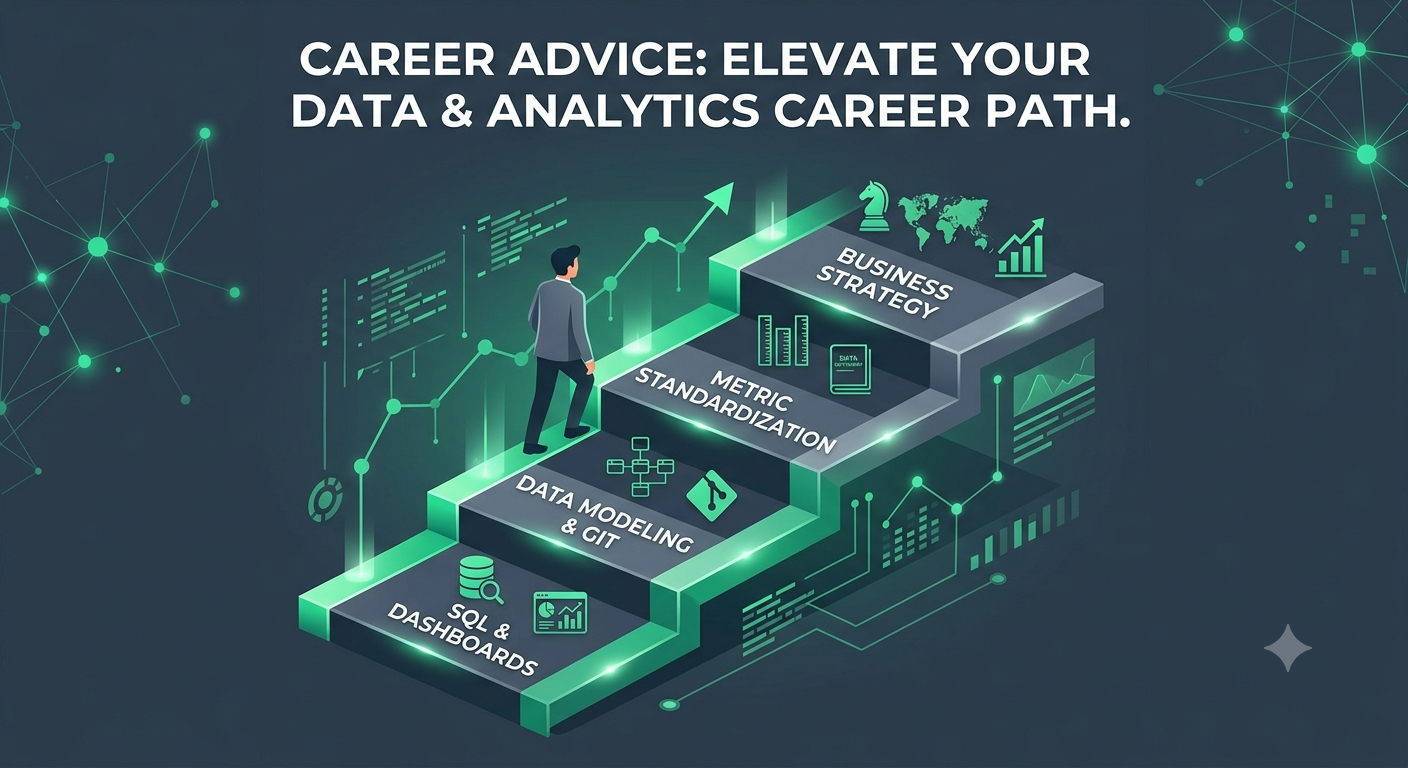
Here are 4 practical shifts to transition from an entry-level analyst to a high-impact data leader:
1. Shift from "Answering Questions" to "Defining Metrics"
Junior Mindset: Executing SQL queries strictly based on tickets assigned to you by stakeholders.
Senior Mindset: Interrogating the request. Ask why the metric matters, how it drives revenue or efficiency, and build standardized metric definitions across the entire organization so everyone speaks the same language.
2. Treat Data Models as Software Products
Junior Mindset: Writing one-off, 500-line SQL scripts with nested subqueries to solve an immediate question.
Senior Mindset: Building modular, reusable, and documented data models (using tools like dbt). Implement version control via Git, write data quality tests, and design schema that scale gracefully as company data grows.
3. Master the Art of Data Storytelling
Junior Mindset: Sending stakeholders a dense dashboard full of 15 charts and leaving them to draw their own conclusions.
Senior Mindset: Curating a clear narrative. Focus on 2–3 key performance indicators (KPIs), highlight actionable anomalies, and explicitly answer: "So what? What action should we take based on this data?"
4. Build Business Domain Knowledge
Junior Mindset: Treating all datasets the same regardless of industry.
Senior Mindset: Immersing yourself in the core business model. Understand unit economics, customer acquisition costs (CAC), lifetime value (LTV), or operational bottlenecks. The best data professionals understand the business just as well as the executives they advise.
Key Takeaways
Value over volume: Producing fewer, higher-quality, standardized data models creates more impact than delivering dozens of ad-hoc dashboards.
Adopt software engineering practices: Version control, automated testing, and modular architecture turn fragile scripts into robust data products.
Focus on business context: Technical skills are only as valuable as the business decisions they inform.
CTA
Ready to elevate your analytics career and master modern data stack architecture?
👉 Join our Data Science & Analytics community today to connect with industry peers, access hands-on learning paths, and accelerate your career!
Many data professionals plateau early because they focus exclusively on technical syntax—learning yet another BI tool or mastering obscure Python libraries. While technical proficiency is necessary, career progression hinges on how you apply those tools to create sustainable value.
Here are 4 practical shifts to transition from an entry-level analyst to a high-impact data leader:
1. Shift from "Answering Questions" to "Defining Metrics"
Junior Mindset: Executing SQL queries strictly based on tickets assigned to you by stakeholders.
Senior Mindset: Interrogating the request. Ask why the metric matters, how it drives revenue or efficiency, and build standardized metric definitions across the entire organization so everyone speaks the same language.
2. Treat Data Models as Software Products
Junior Mindset: Writing one-off, 500-line SQL scripts with nested subqueries to solve an immediate question.
Senior Mindset: Building modular, reusable, and documented data models (using tools like dbt). Implement version control via Git, write data quality tests, and design schema that scale gracefully as company data grows.
3. Master the Art of Data Storytelling
Junior Mindset: Sending stakeholders a dense dashboard full of 15 charts and leaving them to draw their own conclusions.
Senior Mindset: Curating a clear narrative. Focus on 2–3 key performance indicators (KPIs), highlight actionable anomalies, and explicitly answer: "So what? What action should we take based on this data?"
4. Build Business Domain Knowledge
Junior Mindset: Treating all datasets the same regardless of industry.
Senior Mindset: Immersing yourself in the core business model. Understand unit economics, customer acquisition costs (CAC), lifetime value (LTV), or operational bottlenecks. The best data professionals understand the business just as well as the executives they advise.
Key Takeaways
Value over volume: Producing fewer, higher-quality, standardized data models creates more impact than delivering dozens of ad-hoc dashboards.
Adopt software engineering practices: Version control, automated testing, and modular architecture turn fragile scripts into robust data products.
Focus on business context: Technical skills are only as valuable as the business decisions they inform.
CTA
Ready to elevate your analytics career and master modern data stack architecture?
👉 Join our Data Science & Analytics community today to connect with industry peers, access hands-on learning paths, and accelerate your career!
From Data Analyst to Senior Analytics Engineer: 4 Critical Mindset Shifts
Many data professionals plateau early because they focus exclusively on technical syntax—learning yet another BI tool or mastering obscure Python libraries. While technical proficiency is necessary, career progression hinges on how you apply those tools to create sustainable value.
Here are 4 practical shifts to transition from an entry-level analyst to a high-impact data leader:
1. Shift from "Answering Questions" to "Defining Metrics"
Junior Mindset: Executing SQL queries strictly based on tickets assigned to you by stakeholders.
Senior Mindset: Interrogating the request. Ask why the metric matters, how it drives revenue or efficiency, and build standardized metric definitions across the entire organization so everyone speaks the same language.
2. Treat Data Models as Software Products
Junior Mindset: Writing one-off, 500-line SQL scripts with nested subqueries to solve an immediate question.
Senior Mindset: Building modular, reusable, and documented data models (using tools like dbt). Implement version control via Git, write data quality tests, and design schema that scale gracefully as company data grows.
3. Master the Art of Data Storytelling
Junior Mindset: Sending stakeholders a dense dashboard full of 15 charts and leaving them to draw their own conclusions.
Senior Mindset: Curating a clear narrative. Focus on 2–3 key performance indicators (KPIs), highlight actionable anomalies, and explicitly answer: "So what? What action should we take based on this data?"
4. Build Business Domain Knowledge
Junior Mindset: Treating all datasets the same regardless of industry.
Senior Mindset: Immersing yourself in the core business model. Understand unit economics, customer acquisition costs (CAC), lifetime value (LTV), or operational bottlenecks. The best data professionals understand the business just as well as the executives they advise.
Key Takeaways
Value over volume: Producing fewer, higher-quality, standardized data models creates more impact than delivering dozens of ad-hoc dashboards.
Adopt software engineering practices: Version control, automated testing, and modular architecture turn fragile scripts into robust data products.
Focus on business context: Technical skills are only as valuable as the business decisions they inform.
CTA
Ready to elevate your analytics career and master modern data stack architecture?
👉 Join our Data Science & Analytics community today to connect with industry peers, access hands-on learning paths, and accelerate your career!

 Arabic
 French
 Spanish
 Portuguese
 Deutsch
 Turkish
 Dutch
Dutch
 Italiano
 Russian
 Romaian
 Portuguese (Brazil)
 Greek
Greek