


Securing the Modern Attack Surface: Why Identity is the New Perimeter
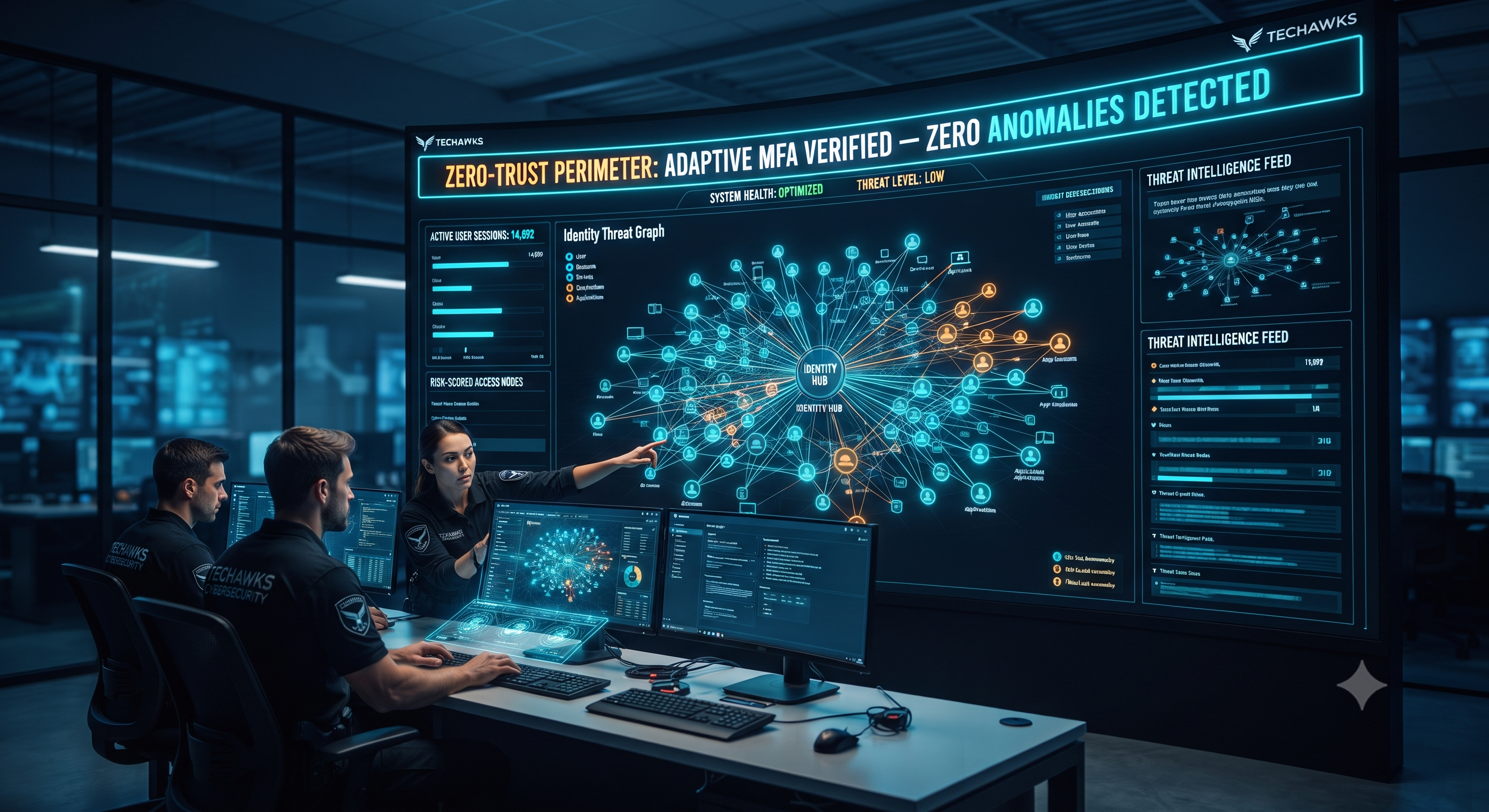
Cybersecurity has undergone a foundational paradigm shift. In modern enterprise environments, perimeter-based defenses are no longer sufficient because the perimeter has expanded wherever your users, devices, and APIs reside. Threat intelligence data consistently shows that stolen or misused credentials remain one of the most prominent initial access vectors for sophisticated network intrusions.
Why It Matters
When attackers bypass network security by hijacking valid user accounts or service identities, they can move laterally across internal systems undetected. Traditional security alerts often drown teams in noise, making it difficult to spot unauthorized access until data exfiltration or ransomware deployment has already begun. Transitioning to an identity-centric security posture is no longer optional—it is the baseline of modern defense.
What You Need to Know (The Security Playbook)
To fortify your systems and master modern access governance, implement these three core engineering controls:
Enforce Adaptive Multi-Factor Authentication (MFA): Move beyond static passwords by requiring contextual signals (such as device health, anomalous location patterns, and behavioral risk scoring) before granting access.
Implement the Principle of Least Privilege (PoLP): Restrict user and service accounts to only the specific resources required for their immediate function. Eliminate standing administrator rights and utilize just-in-time (JIT) access elevation.
Treat Identity as Your Primary Control Plane: Monitor and log identity behavior alongside endpoint and cloud telemetry to catch suspicious lateral movement early in the kill chain.
Discussion Question
How is your team handling identity sprawl and credential security in your cloud environments? Are you implementing continuous monitoring or zero-trust controls to catch lateral movement? Let's discuss below! 👇
CTA (Join Cybersecurity & Ethical Hacking)
Want to master threat hunting, zero-trust architecture, and modern defensive strategies? Join Cybersecurity & Ethical Hacking today to connect with security professionals and elevate your technical defense skills!
Cybersecurity has undergone a foundational paradigm shift. In modern enterprise environments, perimeter-based defenses are no longer sufficient because the perimeter has expanded wherever your users, devices, and APIs reside. Threat intelligence data consistently shows that stolen or misused credentials remain one of the most prominent initial access vectors for sophisticated network intrusions.
Why It Matters
When attackers bypass network security by hijacking valid user accounts or service identities, they can move laterally across internal systems undetected. Traditional security alerts often drown teams in noise, making it difficult to spot unauthorized access until data exfiltration or ransomware deployment has already begun. Transitioning to an identity-centric security posture is no longer optional—it is the baseline of modern defense.
What You Need to Know (The Security Playbook)
To fortify your systems and master modern access governance, implement these three core engineering controls:
Enforce Adaptive Multi-Factor Authentication (MFA): Move beyond static passwords by requiring contextual signals (such as device health, anomalous location patterns, and behavioral risk scoring) before granting access.
Implement the Principle of Least Privilege (PoLP): Restrict user and service accounts to only the specific resources required for their immediate function. Eliminate standing administrator rights and utilize just-in-time (JIT) access elevation.
Treat Identity as Your Primary Control Plane: Monitor and log identity behavior alongside endpoint and cloud telemetry to catch suspicious lateral movement early in the kill chain.
Discussion Question
How is your team handling identity sprawl and credential security in your cloud environments? Are you implementing continuous monitoring or zero-trust controls to catch lateral movement? Let's discuss below! 👇
CTA (Join Cybersecurity & Ethical Hacking)
Want to master threat hunting, zero-trust architecture, and modern defensive strategies? Join Cybersecurity & Ethical Hacking today to connect with security professionals and elevate your technical defense skills!
Securing the Modern Attack Surface: Why Identity is the New Perimeter
Cybersecurity has undergone a foundational paradigm shift. In modern enterprise environments, perimeter-based defenses are no longer sufficient because the perimeter has expanded wherever your users, devices, and APIs reside. Threat intelligence data consistently shows that stolen or misused credentials remain one of the most prominent initial access vectors for sophisticated network intrusions.
Why It Matters
When attackers bypass network security by hijacking valid user accounts or service identities, they can move laterally across internal systems undetected. Traditional security alerts often drown teams in noise, making it difficult to spot unauthorized access until data exfiltration or ransomware deployment has already begun. Transitioning to an identity-centric security posture is no longer optional—it is the baseline of modern defense.
What You Need to Know (The Security Playbook)
To fortify your systems and master modern access governance, implement these three core engineering controls:
Enforce Adaptive Multi-Factor Authentication (MFA): Move beyond static passwords by requiring contextual signals (such as device health, anomalous location patterns, and behavioral risk scoring) before granting access.
Implement the Principle of Least Privilege (PoLP): Restrict user and service accounts to only the specific resources required for their immediate function. Eliminate standing administrator rights and utilize just-in-time (JIT) access elevation.
Treat Identity as Your Primary Control Plane: Monitor and log identity behavior alongside endpoint and cloud telemetry to catch suspicious lateral movement early in the kill chain.
Discussion Question
How is your team handling identity sprawl and credential security in your cloud environments? Are you implementing continuous monitoring or zero-trust controls to catch lateral movement? Let's discuss below! 👇
CTA (Join Cybersecurity & Ethical Hacking)
Want to master threat hunting, zero-trust architecture, and modern defensive strategies? Join Cybersecurity & Ethical Hacking today to connect with security professionals and elevate your technical defense skills!

 English
 Arabic
 French
 Portuguese
 Deutsch
 Turkish
 Dutch
Dutch
 Italiano
 Russian
 Romaian
 Portuguese (Brazil)
 Greek
Greek