


Terraform Reviewed: Master Infrastructure as Code for Multi-Cloud Reliability
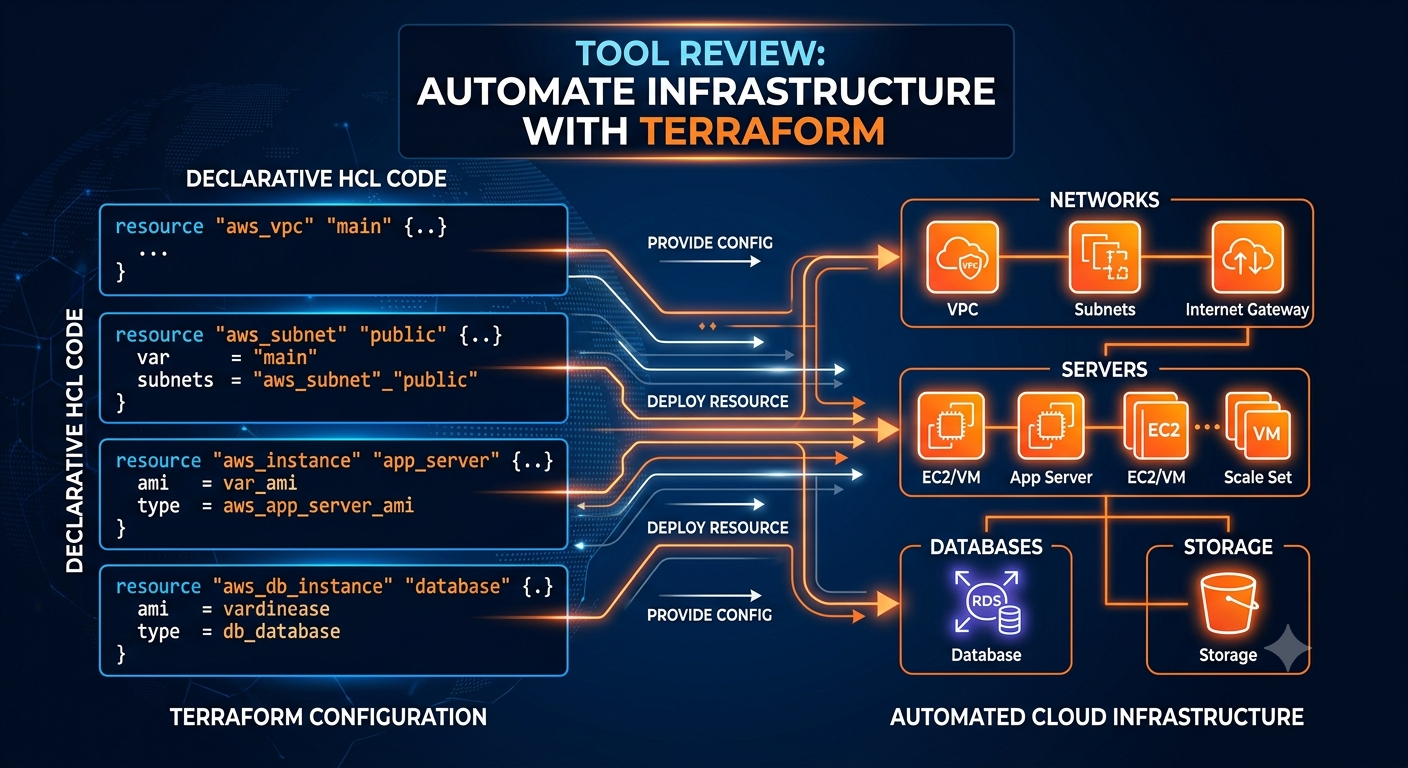
As cloud environments grow, maintaining consistency across development, staging, and production becomes a massive challenge. Terraform addresses this by allowing engineers to define, provision, and manage cloud infrastructure using declarative configuration files (HashiCorp Configuration Language / HCL).
Here is a practical breakdown of how Terraform empowers modern DevOps workflows:
1. Declarative Infrastructure Definition
Instead of writing step-by-step scripts detailing how to build a server, you define the desired end state.
How it works: You describe the required resources (e.g., VPCs, EC2 instances, S3 buckets) in .tf files.
Why it matters: Terraform automatically calculates dependencies, creates resource graphs, and figures out the optimal execution plan.
2. Predictable Execution with terraform plan
Never deploy changes blindly into production again.
How it works: Running terraform plan compares your local HCL code against the real-world deployed resources stored in the Terraform State file.
Why it matters: It displays an exact dry-run output of what will be added, modified, or destroyed before any actual infrastructure change occurs.
3. Reusable Architecture with Modules
Avoid repeating code across multiple environments.
How it works: Package frequently used infrastructure configurations (like a hardened Kubernetes cluster setup) into self-contained modules.
Why it matters: Promotes code reuse, enforces organizational security standards, and reduces configuration drift across dev/prod environments.
4. Vendor-Agnostic Multi-Cloud Support
Terraform uses modular plugins called Providers to interact with hundreds of cloud services, SaaS platforms, and Kubernetes APIs.
Pro Tip: Keep your state file (terraform.tfstate) in a secure, remote backend (like AWS S3 with DynamoDB locking) to enable safe team collaboration and prevent concurrent runs.
Key Takeaways
Declarative power: Focus on defining the desired end state rather than writing fragile imperative automation scripts.
Always run plan first: Dry runs prevent accidental deletions and help catch configuration drift early.
Modularize early: Structure infrastructure as reusable modules to enforce consistency across environments.
Secure state files: Treat state files as sensitive assets—always store them remotely with encryption and lock management enabled.
CTA
Ready to automate your infrastructure and build production-grade cloud environments?
👉 Join our Cloud, DevOps & Open Source community today to access hands-on IaC labs, architecture guides, and peer support!
As cloud environments grow, maintaining consistency across development, staging, and production becomes a massive challenge. Terraform addresses this by allowing engineers to define, provision, and manage cloud infrastructure using declarative configuration files (HashiCorp Configuration Language / HCL).
Here is a practical breakdown of how Terraform empowers modern DevOps workflows:
1. Declarative Infrastructure Definition
Instead of writing step-by-step scripts detailing how to build a server, you define the desired end state.
How it works: You describe the required resources (e.g., VPCs, EC2 instances, S3 buckets) in .tf files.
Why it matters: Terraform automatically calculates dependencies, creates resource graphs, and figures out the optimal execution plan.
2. Predictable Execution with terraform plan
Never deploy changes blindly into production again.
How it works: Running terraform plan compares your local HCL code against the real-world deployed resources stored in the Terraform State file.
Why it matters: It displays an exact dry-run output of what will be added, modified, or destroyed before any actual infrastructure change occurs.
3. Reusable Architecture with Modules
Avoid repeating code across multiple environments.
How it works: Package frequently used infrastructure configurations (like a hardened Kubernetes cluster setup) into self-contained modules.
Why it matters: Promotes code reuse, enforces organizational security standards, and reduces configuration drift across dev/prod environments.
4. Vendor-Agnostic Multi-Cloud Support
Terraform uses modular plugins called Providers to interact with hundreds of cloud services, SaaS platforms, and Kubernetes APIs.
Pro Tip: Keep your state file (terraform.tfstate) in a secure, remote backend (like AWS S3 with DynamoDB locking) to enable safe team collaboration and prevent concurrent runs.
Key Takeaways
Declarative power: Focus on defining the desired end state rather than writing fragile imperative automation scripts.
Always run plan first: Dry runs prevent accidental deletions and help catch configuration drift early.
Modularize early: Structure infrastructure as reusable modules to enforce consistency across environments.
Secure state files: Treat state files as sensitive assets—always store them remotely with encryption and lock management enabled.
CTA
Ready to automate your infrastructure and build production-grade cloud environments?
👉 Join our Cloud, DevOps & Open Source community today to access hands-on IaC labs, architecture guides, and peer support!
Terraform Reviewed: Master Infrastructure as Code for Multi-Cloud Reliability
As cloud environments grow, maintaining consistency across development, staging, and production becomes a massive challenge. Terraform addresses this by allowing engineers to define, provision, and manage cloud infrastructure using declarative configuration files (HashiCorp Configuration Language / HCL).
Here is a practical breakdown of how Terraform empowers modern DevOps workflows:
1. Declarative Infrastructure Definition
Instead of writing step-by-step scripts detailing how to build a server, you define the desired end state.
How it works: You describe the required resources (e.g., VPCs, EC2 instances, S3 buckets) in .tf files.
Why it matters: Terraform automatically calculates dependencies, creates resource graphs, and figures out the optimal execution plan.
2. Predictable Execution with terraform plan
Never deploy changes blindly into production again.
How it works: Running terraform plan compares your local HCL code against the real-world deployed resources stored in the Terraform State file.
Why it matters: It displays an exact dry-run output of what will be added, modified, or destroyed before any actual infrastructure change occurs.
3. Reusable Architecture with Modules
Avoid repeating code across multiple environments.
How it works: Package frequently used infrastructure configurations (like a hardened Kubernetes cluster setup) into self-contained modules.
Why it matters: Promotes code reuse, enforces organizational security standards, and reduces configuration drift across dev/prod environments.
4. Vendor-Agnostic Multi-Cloud Support
Terraform uses modular plugins called Providers to interact with hundreds of cloud services, SaaS platforms, and Kubernetes APIs.
Pro Tip: Keep your state file (terraform.tfstate) in a secure, remote backend (like AWS S3 with DynamoDB locking) to enable safe team collaboration and prevent concurrent runs.
Key Takeaways
Declarative power: Focus on defining the desired end state rather than writing fragile imperative automation scripts.
Always run plan first: Dry runs prevent accidental deletions and help catch configuration drift early.
Modularize early: Structure infrastructure as reusable modules to enforce consistency across environments.
Secure state files: Treat state files as sensitive assets—always store them remotely with encryption and lock management enabled.
CTA
Ready to automate your infrastructure and build production-grade cloud environments?
👉 Join our Cloud, DevOps & Open Source community today to access hands-on IaC labs, architecture guides, and peer support!

 English
 Arabic
 French
 Spanish
 Portuguese
 Deutsch
 Turkish
 Dutch
Dutch
 Italiano
 Russian
 Portuguese (Brazil)
 Greek
Greek