


5 High-Impact Habits That Will Fast-Track Your Cloud & DevOps Career
Navigating a career in Cloud & DevOps can feel overwhelming with the constant influx of new tools and framework updates. However, the foundational strategies that distinguish high-performing senior engineers from junior practitioners remain surprisingly consistent.
Here are five practical habits to adopt if you want to accelerate your growth:
1. Shift from "Tool Collector" to "Problem Solver"
It’s easy to get caught up learning every hot new tool on the market. Instead, master the core underlying concepts: networking fundamentals, Linux administration, storage models, and system architecture. Tools like Terraform, Kubernetes, and Ansible are just implementations of these principles. When you understand why an architecture pattern exists, picking up a new tool takes days instead of months.
2. Treat Everything as Code
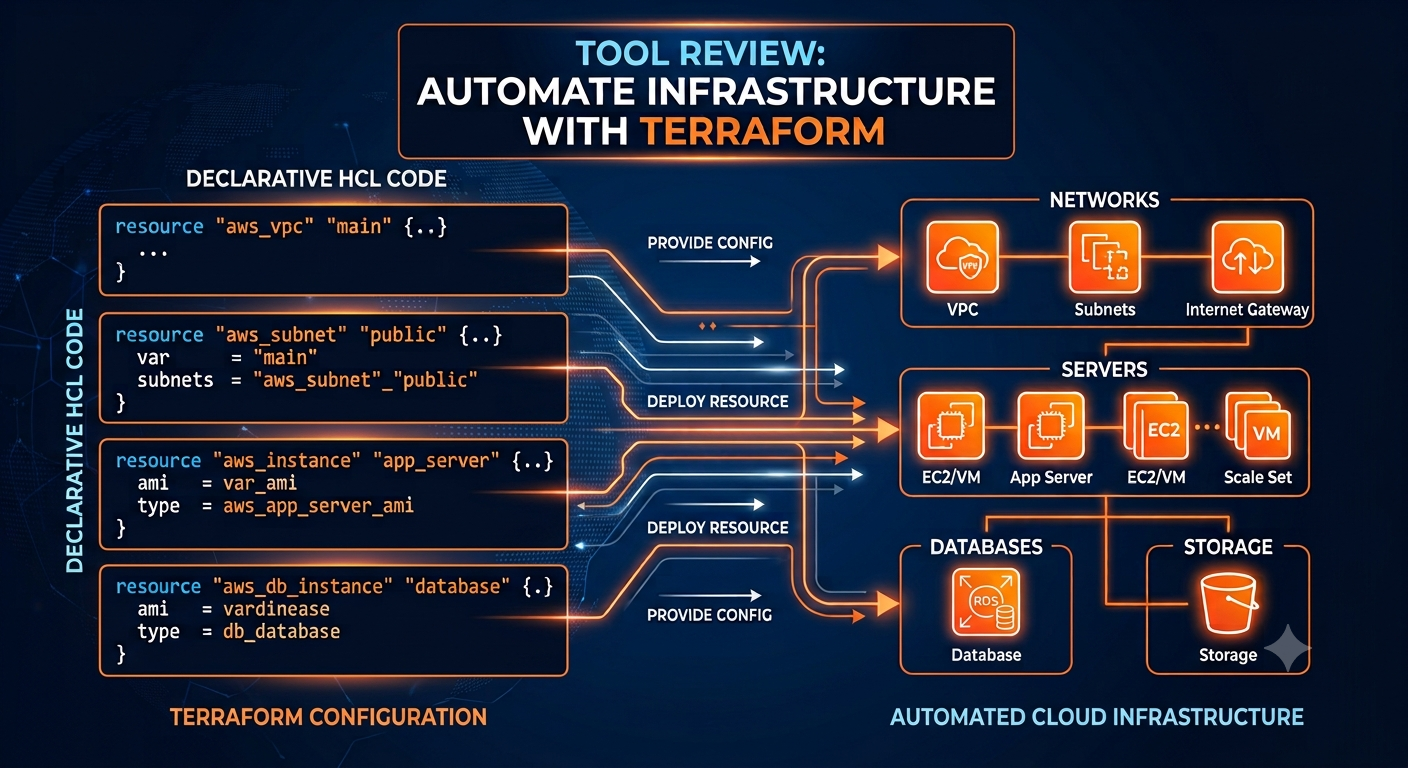
If you find yourself executing a manual configuration in a web console more than twice, stop and write a script or infrastructure-as-code (IaC) declaration. Adopting an Infrastructure as Code (IaC) and Configuration as Code mindset not only prevents human error and configuration drift, but it also creates a visible portfolio of your work in version control.
3. Learn to Read Code, Not Just Write YAML
While YAML and HCL form the backbone of modern DevOps tooling, true senior-level impact happens when you can debug application code. Familiarize yourself with at least one major application language (such as Go, Python, or Java). Understanding how developers write, compile, and execute their software allows you to build better CI/CD pipelines, troubleshoot deployment failures faster, and earn the respect of development teams.
4. Build with "Day 2 Operations" in Mind
Anyone can deploy a basic container cluster; top-tier engineers design systems that survive real-world production. Always ask yourself:
How will we monitor and log this service?
What happens when a node fails?
How do we handle disaster recovery, backups, and security patching?
Designing for observability, resilience, and security from day one sets you apart from engineers who only focus on getting initial deployments live.
5. Document Your Architecture and Impact
Your technical achievements lose value if no one else can understand or build upon them. Get comfortable writing clear architectural design docs, post-mortems, and runbooks. More importantly, measure the impact of your work in business terms—such as reducing deployment times by 40%, cutting cloud costs, or eliminating downtime.
Key Takeaways
Focus on Fundamentals: Prioritize networking, OS internals, and architecture over chasing every new tool syntax.
Automate Aggressively: If it’s repeatable, convert it into version-controlled code.
Bridge the Dev/Ops Gap: Learn application debugging to build smoother pipelines and collaborate better with developers.
Design for Resilience: Always account for monitoring, security, and failure modes before going live.
Quantify Your Value: Document your solutions and measure their business impact to showcase senior leadership potential.
CTA
Looking to level up your cloud journey with hands-on guides, real-world architecture breakdowns, and a supportive engineering community?
👉 [Join Cloud, DevOps & Open Source with Techawks] to connect with fellow engineers and accelerate your career!
Navigating a career in Cloud & DevOps can feel overwhelming with the constant influx of new tools and framework updates. However, the foundational strategies that distinguish high-performing senior engineers from junior practitioners remain surprisingly consistent.
Here are five practical habits to adopt if you want to accelerate your growth:
1. Shift from "Tool Collector" to "Problem Solver"
It’s easy to get caught up learning every hot new tool on the market. Instead, master the core underlying concepts: networking fundamentals, Linux administration, storage models, and system architecture. Tools like Terraform, Kubernetes, and Ansible are just implementations of these principles. When you understand why an architecture pattern exists, picking up a new tool takes days instead of months.
2. Treat Everything as Code
If you find yourself executing a manual configuration in a web console more than twice, stop and write a script or infrastructure-as-code (IaC) declaration. Adopting an Infrastructure as Code (IaC) and Configuration as Code mindset not only prevents human error and configuration drift, but it also creates a visible portfolio of your work in version control.
3. Learn to Read Code, Not Just Write YAML
While YAML and HCL form the backbone of modern DevOps tooling, true senior-level impact happens when you can debug application code. Familiarize yourself with at least one major application language (such as Go, Python, or Java). Understanding how developers write, compile, and execute their software allows you to build better CI/CD pipelines, troubleshoot deployment failures faster, and earn the respect of development teams.
4. Build with "Day 2 Operations" in Mind
Anyone can deploy a basic container cluster; top-tier engineers design systems that survive real-world production. Always ask yourself:
How will we monitor and log this service?
What happens when a node fails?
How do we handle disaster recovery, backups, and security patching?
Designing for observability, resilience, and security from day one sets you apart from engineers who only focus on getting initial deployments live.
5. Document Your Architecture and Impact
Your technical achievements lose value if no one else can understand or build upon them. Get comfortable writing clear architectural design docs, post-mortems, and runbooks. More importantly, measure the impact of your work in business terms—such as reducing deployment times by 40%, cutting cloud costs, or eliminating downtime.
Key Takeaways
Focus on Fundamentals: Prioritize networking, OS internals, and architecture over chasing every new tool syntax.
Automate Aggressively: If it’s repeatable, convert it into version-controlled code.
Bridge the Dev/Ops Gap: Learn application debugging to build smoother pipelines and collaborate better with developers.
Design for Resilience: Always account for monitoring, security, and failure modes before going live.
Quantify Your Value: Document your solutions and measure their business impact to showcase senior leadership potential.
CTA
Looking to level up your cloud journey with hands-on guides, real-world architecture breakdowns, and a supportive engineering community?
👉 [Join Cloud, DevOps & Open Source with Techawks] to connect with fellow engineers and accelerate your career!
5 High-Impact Habits That Will Fast-Track Your Cloud & DevOps Career
Navigating a career in Cloud & DevOps can feel overwhelming with the constant influx of new tools and framework updates. However, the foundational strategies that distinguish high-performing senior engineers from junior practitioners remain surprisingly consistent.
Here are five practical habits to adopt if you want to accelerate your growth:
1. Shift from "Tool Collector" to "Problem Solver"
It’s easy to get caught up learning every hot new tool on the market. Instead, master the core underlying concepts: networking fundamentals, Linux administration, storage models, and system architecture. Tools like Terraform, Kubernetes, and Ansible are just implementations of these principles. When you understand why an architecture pattern exists, picking up a new tool takes days instead of months.
2. Treat Everything as Code
If you find yourself executing a manual configuration in a web console more than twice, stop and write a script or infrastructure-as-code (IaC) declaration. Adopting an Infrastructure as Code (IaC) and Configuration as Code mindset not only prevents human error and configuration drift, but it also creates a visible portfolio of your work in version control.
3. Learn to Read Code, Not Just Write YAML
While YAML and HCL form the backbone of modern DevOps tooling, true senior-level impact happens when you can debug application code. Familiarize yourself with at least one major application language (such as Go, Python, or Java). Understanding how developers write, compile, and execute their software allows you to build better CI/CD pipelines, troubleshoot deployment failures faster, and earn the respect of development teams.
4. Build with "Day 2 Operations" in Mind
Anyone can deploy a basic container cluster; top-tier engineers design systems that survive real-world production. Always ask yourself:
How will we monitor and log this service?
What happens when a node fails?
How do we handle disaster recovery, backups, and security patching?
Designing for observability, resilience, and security from day one sets you apart from engineers who only focus on getting initial deployments live.
5. Document Your Architecture and Impact
Your technical achievements lose value if no one else can understand or build upon them. Get comfortable writing clear architectural design docs, post-mortems, and runbooks. More importantly, measure the impact of your work in business terms—such as reducing deployment times by 40%, cutting cloud costs, or eliminating downtime.
Key Takeaways
Focus on Fundamentals: Prioritize networking, OS internals, and architecture over chasing every new tool syntax.
Automate Aggressively: If it’s repeatable, convert it into version-controlled code.
Bridge the Dev/Ops Gap: Learn application debugging to build smoother pipelines and collaborate better with developers.
Design for Resilience: Always account for monitoring, security, and failure modes before going live.
Quantify Your Value: Document your solutions and measure their business impact to showcase senior leadership potential.
CTA
Looking to level up your cloud journey with hands-on guides, real-world architecture breakdowns, and a supportive engineering community?
👉 [Join Cloud, DevOps & Open Source with Techawks] to connect with fellow engineers and accelerate your career!

 English
 Arabic
 French
 Portuguese
 Deutsch
 Turkish
 Dutch
Dutch
 Italiano
 Russian
 Romaian
 Portuguese (Brazil)
 Greek
Greek