


The OAuth Backdoor: How Third-Party Integrations Are Bypassing Your Perimeter
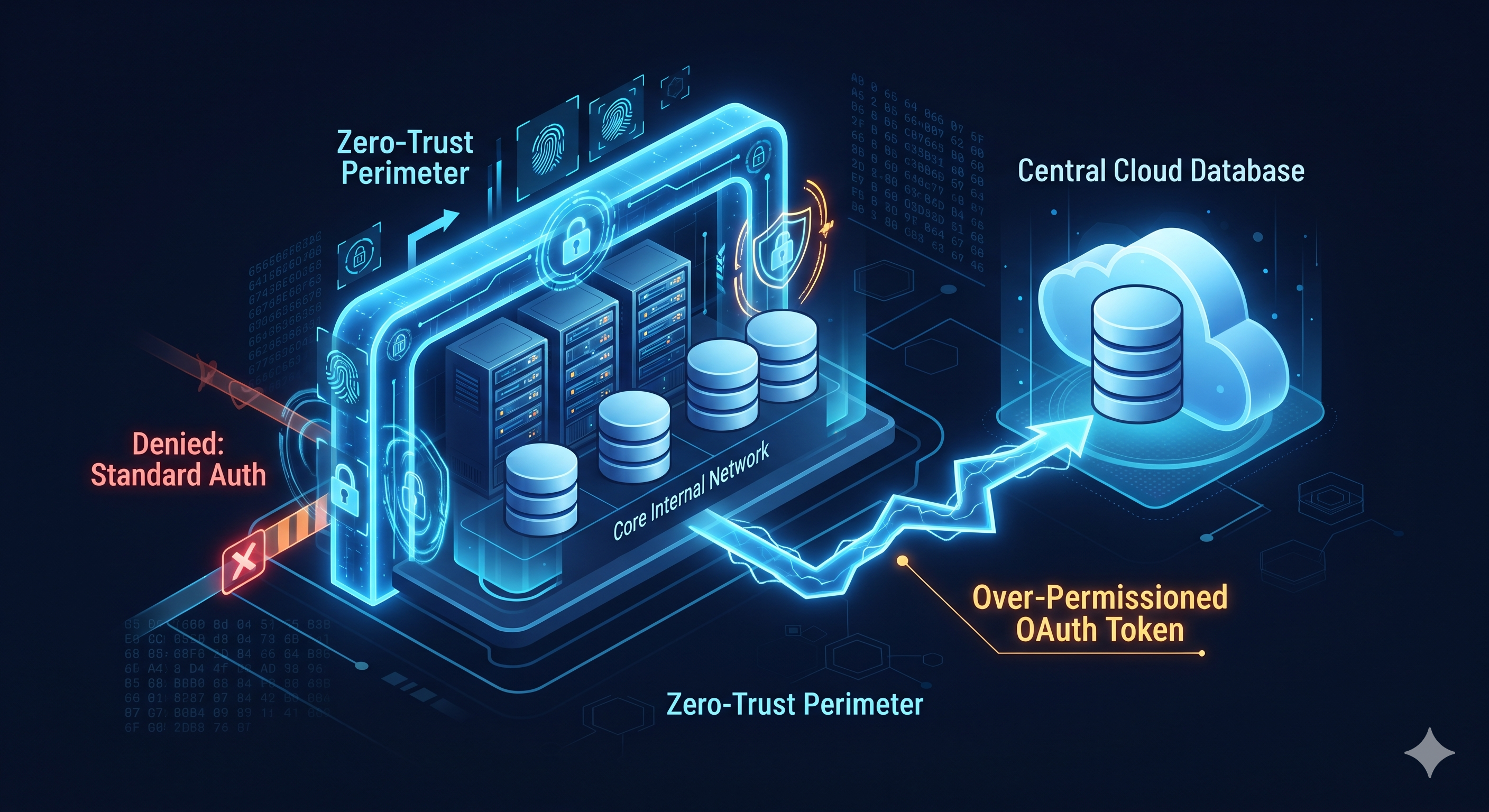
With software ecosystems depending heavily on interconnected APIs, SaaS platforms, and third-party vendor tokens, the attack surface has fundamentally shifted. Threat intelligence data highlights a massive surge in supply chain and integration-based compromises. Attackers no longer need to brute-force a heavily guarded front door when they can walk straight through an over-permissioned third-party integration's back door using valid, legitimate credentials.
Why It Matters
When you grant an external application or plugin OAuth access to your environment, you are often handing over broad scopes—such as reading user data, modifying configurations, or querying internal APIs. If that vendor suffers a breach, or if their OAuth tokens are intercepted via session hijacking, attackers inherit those broad permissions instantly. A security posture is only as strong as its least secure integrated dependency.
What You Need to Know: Hardening Your API and OAuth Attack Surface
To protect your organization from third-party token abuse and integration blind spots, security teams must enforce rigorous access governance:
Enforce Principle of Least Privilege for Scopes: Never grant blanket or wildcard permissions (admin, full_access) to third-party integrations. Audit OAuth scopes stringently and restrict tokens strictly to the absolute minimum resources required.
Continuous Token Auditing & Lifecycle Management: Implement automated inventory tracking for all active third-party API keys, webhooks, and OAuth tokens. Revoke stale integrations immediately if they haven't been actively utilized within 30 days.
Behavioral Anomaly Monitoring: Monitor API calls and token usage patterns for abnormal activity—such as an external service querying internal endpoints at odd hours, downloading bulk data volumes, or shifting geolocation profiles.
Discussion Question
When was the last time your security team audited all active third-party OAuth integrations and API tokens connected to your core environment? How do you track hidden shadow integrations?
CTA (Join Cybersecurity & Ethical Hacking)
Want to master advanced threat hunting, penetration testing, and modern cloud defense strategies? Join Cybersecurity & Ethical Hacking to connect with global security professionals protecting the digital frontier.
With software ecosystems depending heavily on interconnected APIs, SaaS platforms, and third-party vendor tokens, the attack surface has fundamentally shifted. Threat intelligence data highlights a massive surge in supply chain and integration-based compromises. Attackers no longer need to brute-force a heavily guarded front door when they can walk straight through an over-permissioned third-party integration's back door using valid, legitimate credentials.
Why It Matters
When you grant an external application or plugin OAuth access to your environment, you are often handing over broad scopes—such as reading user data, modifying configurations, or querying internal APIs. If that vendor suffers a breach, or if their OAuth tokens are intercepted via session hijacking, attackers inherit those broad permissions instantly. A security posture is only as strong as its least secure integrated dependency.
What You Need to Know: Hardening Your API and OAuth Attack Surface
To protect your organization from third-party token abuse and integration blind spots, security teams must enforce rigorous access governance:
Enforce Principle of Least Privilege for Scopes: Never grant blanket or wildcard permissions (admin, full_access) to third-party integrations. Audit OAuth scopes stringently and restrict tokens strictly to the absolute minimum resources required.
Continuous Token Auditing & Lifecycle Management: Implement automated inventory tracking for all active third-party API keys, webhooks, and OAuth tokens. Revoke stale integrations immediately if they haven't been actively utilized within 30 days.
Behavioral Anomaly Monitoring: Monitor API calls and token usage patterns for abnormal activity—such as an external service querying internal endpoints at odd hours, downloading bulk data volumes, or shifting geolocation profiles.
Discussion Question
When was the last time your security team audited all active third-party OAuth integrations and API tokens connected to your core environment? How do you track hidden shadow integrations?
CTA (Join Cybersecurity & Ethical Hacking)
Want to master advanced threat hunting, penetration testing, and modern cloud defense strategies? Join Cybersecurity & Ethical Hacking to connect with global security professionals protecting the digital frontier.
The OAuth Backdoor: How Third-Party Integrations Are Bypassing Your Perimeter
With software ecosystems depending heavily on interconnected APIs, SaaS platforms, and third-party vendor tokens, the attack surface has fundamentally shifted. Threat intelligence data highlights a massive surge in supply chain and integration-based compromises. Attackers no longer need to brute-force a heavily guarded front door when they can walk straight through an over-permissioned third-party integration's back door using valid, legitimate credentials.
Why It Matters
When you grant an external application or plugin OAuth access to your environment, you are often handing over broad scopes—such as reading user data, modifying configurations, or querying internal APIs. If that vendor suffers a breach, or if their OAuth tokens are intercepted via session hijacking, attackers inherit those broad permissions instantly. A security posture is only as strong as its least secure integrated dependency.
What You Need to Know: Hardening Your API and OAuth Attack Surface
To protect your organization from third-party token abuse and integration blind spots, security teams must enforce rigorous access governance:
Enforce Principle of Least Privilege for Scopes: Never grant blanket or wildcard permissions (admin, full_access) to third-party integrations. Audit OAuth scopes stringently and restrict tokens strictly to the absolute minimum resources required.
Continuous Token Auditing & Lifecycle Management: Implement automated inventory tracking for all active third-party API keys, webhooks, and OAuth tokens. Revoke stale integrations immediately if they haven't been actively utilized within 30 days.
Behavioral Anomaly Monitoring: Monitor API calls and token usage patterns for abnormal activity—such as an external service querying internal endpoints at odd hours, downloading bulk data volumes, or shifting geolocation profiles.
Discussion Question
When was the last time your security team audited all active third-party OAuth integrations and API tokens connected to your core environment? How do you track hidden shadow integrations?
CTA (Join Cybersecurity & Ethical Hacking)
Want to master advanced threat hunting, penetration testing, and modern cloud defense strategies? Join Cybersecurity & Ethical Hacking to connect with global security professionals protecting the digital frontier.

 English
 Arabic
 French
 Spanish
 Portuguese
 Deutsch
 Turkish
 Dutch
Dutch
 Italiano
 Russian
 Romaian
 Portuguese (Brazil)