


Postman vs. Bruno: Why Offline-First API Clients Are Winning Senior Engineers
For years, Postman was the undisputed default tool for testing and documenting REST and GraphQL APIs. However, recent architectural shifts—specifically mandating cloud accounts, removing local collection storage, and introducing complex workspace syncs—have introduced security friction for teams handling sensitive endpoints.
Enter Bruno: an open-source, offline-first API client designed to store collections directly in your codebase.
Here is a practical comparison to help you choose the right tool for your engineering workflow:
1. Data Storage & Privacy
Postman: Syncs collections, environments, and tokens to cloud servers by default. Storing sensitive staging keys or JWTs requires careful configuration to avoid accidental cloud exposure.
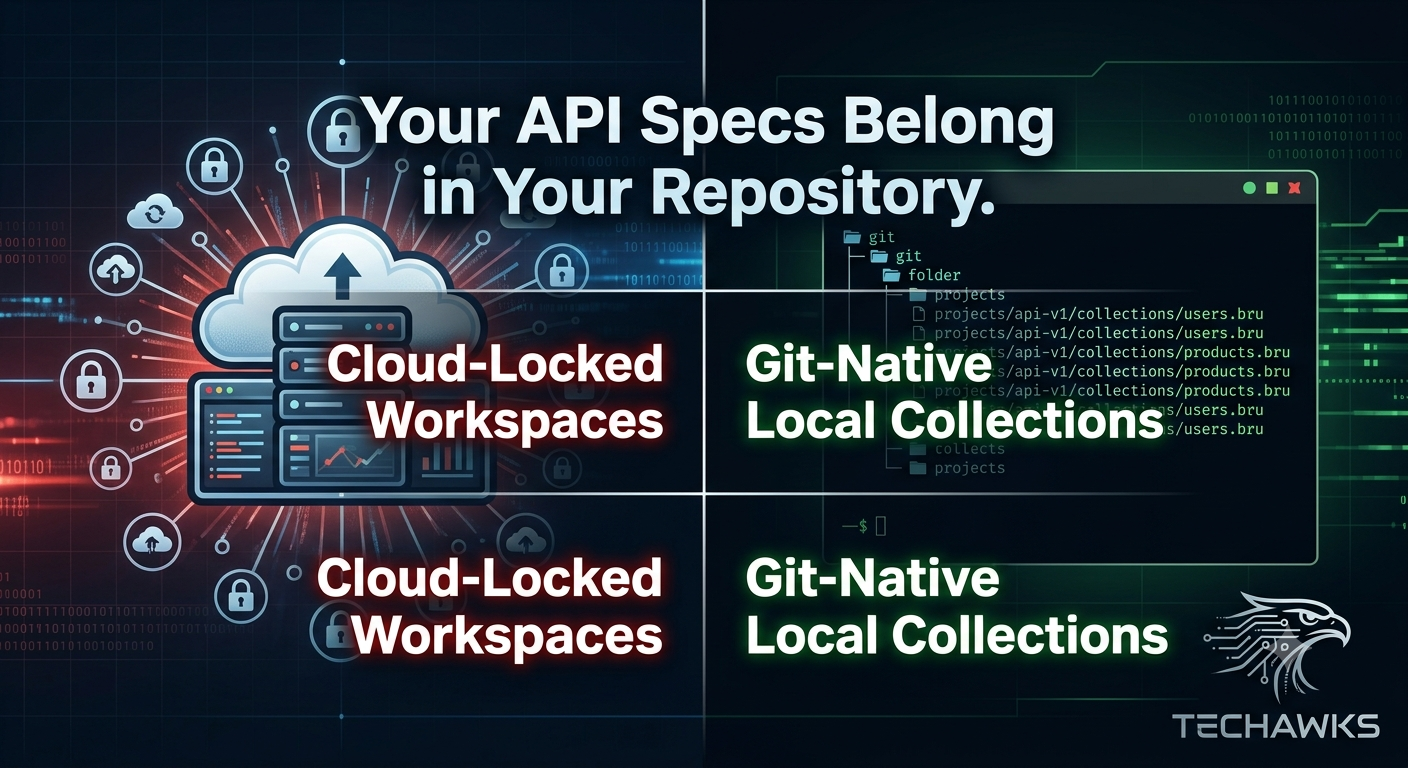
Bruno: Stores collections directly as plain text files (.bru format) inside your git repository. Your API specs never leave your local environment or version control system.
2. Version Control & Collaboration
Postman: Uses built-in cloud workspace permissions, requiring team invites and paid enterprise seats for large teams.
Bruno: Leverages standard Git workflows (git commit, git pull, PR reviews). Merging changes or resolving conflicts across API requests works identically to standard source code changes.
3. CI/CD & Test Automation
Postman: Relies on Newman CLI or Postman Cloud APIs, often requiring API keys and external network access during build pipelines.
Bruno: Offers @usebruno/cli out of the box, allowing you to run API test suites directly inside isolated, offline CI/CD runners without external network calls.
When to use which:
Use Postman if your team heavily relies on non-technical stakeholders (e.g., product managers testing APIs via web UI) and public API network discovery.
Switch to Bruno if security compliance, local-first development, git versioning, and zero cloud lock-in are top priorities for your dev team.
Key Takeaways
Git-Native Storage: Storing API collections directly in source code keeps documentation in sync with codebase releases.
Zero Cloud Lock-in: Offline-first tools eliminate vendor dependency and prevent credential leaks on third-party servers.
Lightweight Performance: Local text-based tools consume significantly fewer system resources during local development.
CTA
What API client does your team use in production daily? Join the Techawks General Community to share your developer setup, evaluate emerging dev tools, and connect with engineers around the world.
For years, Postman was the undisputed default tool for testing and documenting REST and GraphQL APIs. However, recent architectural shifts—specifically mandating cloud accounts, removing local collection storage, and introducing complex workspace syncs—have introduced security friction for teams handling sensitive endpoints.
Enter Bruno: an open-source, offline-first API client designed to store collections directly in your codebase.
Here is a practical comparison to help you choose the right tool for your engineering workflow:
1. Data Storage & Privacy
Postman: Syncs collections, environments, and tokens to cloud servers by default. Storing sensitive staging keys or JWTs requires careful configuration to avoid accidental cloud exposure.
Bruno: Stores collections directly as plain text files (.bru format) inside your git repository. Your API specs never leave your local environment or version control system.
2. Version Control & Collaboration
Postman: Uses built-in cloud workspace permissions, requiring team invites and paid enterprise seats for large teams.
Bruno: Leverages standard Git workflows (git commit, git pull, PR reviews). Merging changes or resolving conflicts across API requests works identically to standard source code changes.
3. CI/CD & Test Automation
Postman: Relies on Newman CLI or Postman Cloud APIs, often requiring API keys and external network access during build pipelines.
Bruno: Offers @usebruno/cli out of the box, allowing you to run API test suites directly inside isolated, offline CI/CD runners without external network calls.
When to use which:
Use Postman if your team heavily relies on non-technical stakeholders (e.g., product managers testing APIs via web UI) and public API network discovery.
Switch to Bruno if security compliance, local-first development, git versioning, and zero cloud lock-in are top priorities for your dev team.
Key Takeaways
Git-Native Storage: Storing API collections directly in source code keeps documentation in sync with codebase releases.
Zero Cloud Lock-in: Offline-first tools eliminate vendor dependency and prevent credential leaks on third-party servers.
Lightweight Performance: Local text-based tools consume significantly fewer system resources during local development.
CTA
What API client does your team use in production daily? Join the Techawks General Community to share your developer setup, evaluate emerging dev tools, and connect with engineers around the world.
Postman vs. Bruno: Why Offline-First API Clients Are Winning Senior Engineers
For years, Postman was the undisputed default tool for testing and documenting REST and GraphQL APIs. However, recent architectural shifts—specifically mandating cloud accounts, removing local collection storage, and introducing complex workspace syncs—have introduced security friction for teams handling sensitive endpoints.
Enter Bruno: an open-source, offline-first API client designed to store collections directly in your codebase.
Here is a practical comparison to help you choose the right tool for your engineering workflow:
1. Data Storage & Privacy
Postman: Syncs collections, environments, and tokens to cloud servers by default. Storing sensitive staging keys or JWTs requires careful configuration to avoid accidental cloud exposure.
Bruno: Stores collections directly as plain text files (.bru format) inside your git repository. Your API specs never leave your local environment or version control system.
2. Version Control & Collaboration
Postman: Uses built-in cloud workspace permissions, requiring team invites and paid enterprise seats for large teams.
Bruno: Leverages standard Git workflows (git commit, git pull, PR reviews). Merging changes or resolving conflicts across API requests works identically to standard source code changes.
3. CI/CD & Test Automation
Postman: Relies on Newman CLI or Postman Cloud APIs, often requiring API keys and external network access during build pipelines.
Bruno: Offers @usebruno/cli out of the box, allowing you to run API test suites directly inside isolated, offline CI/CD runners without external network calls.
When to use which:
Use Postman if your team heavily relies on non-technical stakeholders (e.g., product managers testing APIs via web UI) and public API network discovery.
Switch to Bruno if security compliance, local-first development, git versioning, and zero cloud lock-in are top priorities for your dev team.
Key Takeaways
Git-Native Storage: Storing API collections directly in source code keeps documentation in sync with codebase releases.
Zero Cloud Lock-in: Offline-first tools eliminate vendor dependency and prevent credential leaks on third-party servers.
Lightweight Performance: Local text-based tools consume significantly fewer system resources during local development.
CTA
What API client does your team use in production daily? Join the Techawks General Community to share your developer setup, evaluate emerging dev tools, and connect with engineers around the world.

 English
 Arabic
 French
 Spanish
 Deutsch
 Turkish
 Dutch
Dutch
 Italiano
 Russian
 Romaian
 Portuguese (Brazil)
 Greek
Greek