


How to Quantify Technical Debt Before It Cripples Your Architecture
Engineering teams often talk about "technical debt" as a vague, abstract concept—something everyone feels, but few can accurately quantify. When you pitch refactoring to stakeholders without hard metrics, it sounds like perfectionism rather than a strategic business decision.
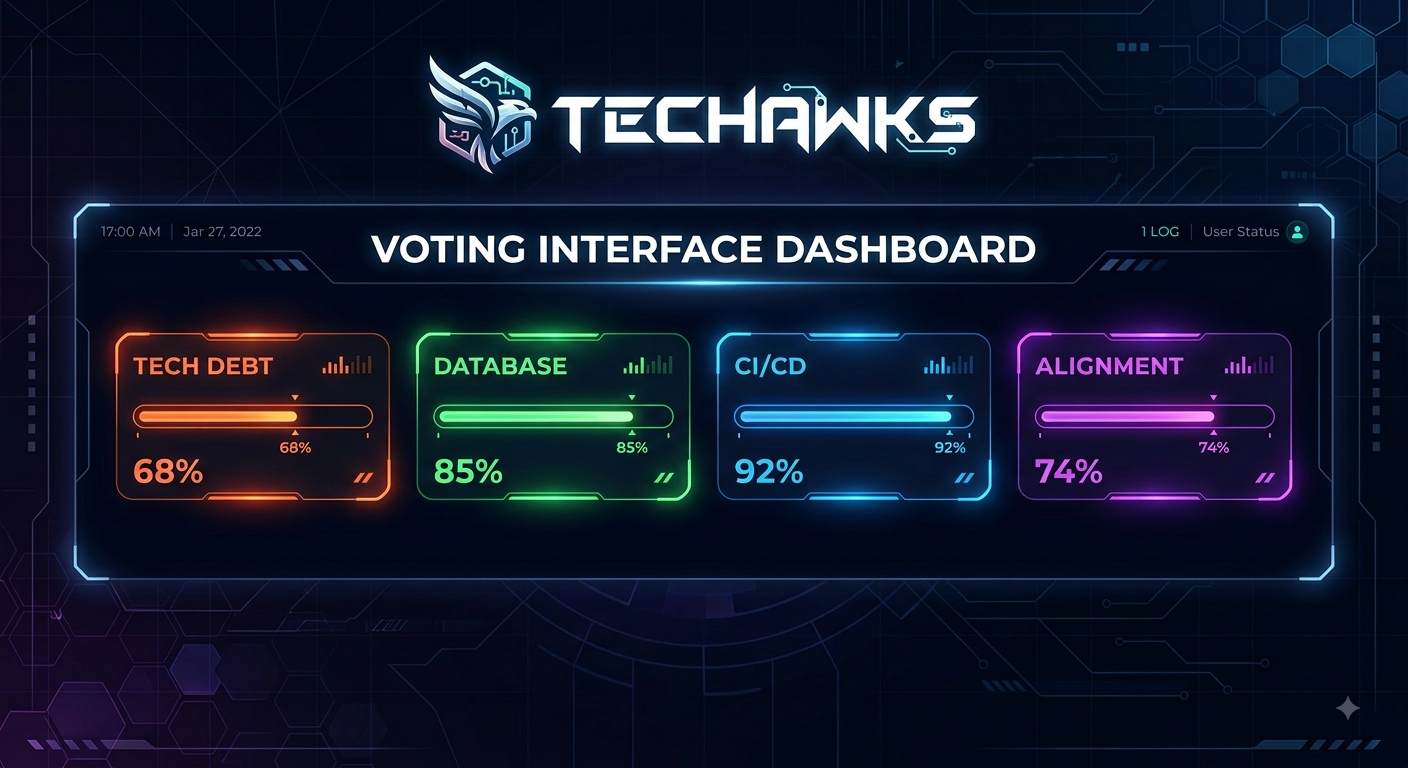
To turn technical debt into an actionable metric, track your ecosystem across four core pillars using a normalized scoring model:
Tech Debt (Codebase Health): Measure code complexity, test coverage drop-offs, and outdated dependencies. High debt directly correlates with lower developer velocity.
Database Performance: Track slow-query frequency, index fragmentation, and connection pool utilization. A lagging database quietly degrades user experience long before downtime occurs.
CI/CD Reliability: Monitor build duration, deployment failure rates, and rollback frequencies. A brittle pipeline slows down the delivery of every new feature.
Architecture Alignment: Evaluate how well your implementation matches your target system design. Unaligned systems lead to security vulnerabilities and complex integrations.
By consolidating these pillars into a single visual dashboard, engineering leads can present clear, data-driven trade-offs to non-technical partners—making debt reduction a planned investment rather than a reactive fire drill.
Key Takeaways
Make the Invisible Visible: Standardize metrics across code, database, CI/CD, and alignment to create a unified health score.
Bridge the Business Gap: Translate engineering friction into clear percentage-based metrics that product and business teams can understand.
Prevent Firefighting: Regularly monitoring architecture health allows you to address bottlenecks proactively before they cause system failures.
CTA
Looking to connect with forward-thinking engineers, architects, and tech leaders? Join the Techawks General Community today to share frameworks, discuss architectural strategies, and elevate your technical craft.
Engineering teams often talk about "technical debt" as a vague, abstract concept—something everyone feels, but few can accurately quantify. When you pitch refactoring to stakeholders without hard metrics, it sounds like perfectionism rather than a strategic business decision.
To turn technical debt into an actionable metric, track your ecosystem across four core pillars using a normalized scoring model:
Tech Debt (Codebase Health): Measure code complexity, test coverage drop-offs, and outdated dependencies. High debt directly correlates with lower developer velocity.
Database Performance: Track slow-query frequency, index fragmentation, and connection pool utilization. A lagging database quietly degrades user experience long before downtime occurs.
CI/CD Reliability: Monitor build duration, deployment failure rates, and rollback frequencies. A brittle pipeline slows down the delivery of every new feature.
Architecture Alignment: Evaluate how well your implementation matches your target system design. Unaligned systems lead to security vulnerabilities and complex integrations.
By consolidating these pillars into a single visual dashboard, engineering leads can present clear, data-driven trade-offs to non-technical partners—making debt reduction a planned investment rather than a reactive fire drill.
Key Takeaways
Make the Invisible Visible: Standardize metrics across code, database, CI/CD, and alignment to create a unified health score.
Bridge the Business Gap: Translate engineering friction into clear percentage-based metrics that product and business teams can understand.
Prevent Firefighting: Regularly monitoring architecture health allows you to address bottlenecks proactively before they cause system failures.
CTA
Looking to connect with forward-thinking engineers, architects, and tech leaders? Join the Techawks General Community today to share frameworks, discuss architectural strategies, and elevate your technical craft.
How to Quantify Technical Debt Before It Cripples Your Architecture
Engineering teams often talk about "technical debt" as a vague, abstract concept—something everyone feels, but few can accurately quantify. When you pitch refactoring to stakeholders without hard metrics, it sounds like perfectionism rather than a strategic business decision.
To turn technical debt into an actionable metric, track your ecosystem across four core pillars using a normalized scoring model:
Tech Debt (Codebase Health): Measure code complexity, test coverage drop-offs, and outdated dependencies. High debt directly correlates with lower developer velocity.
Database Performance: Track slow-query frequency, index fragmentation, and connection pool utilization. A lagging database quietly degrades user experience long before downtime occurs.
CI/CD Reliability: Monitor build duration, deployment failure rates, and rollback frequencies. A brittle pipeline slows down the delivery of every new feature.
Architecture Alignment: Evaluate how well your implementation matches your target system design. Unaligned systems lead to security vulnerabilities and complex integrations.
By consolidating these pillars into a single visual dashboard, engineering leads can present clear, data-driven trade-offs to non-technical partners—making debt reduction a planned investment rather than a reactive fire drill.
Key Takeaways
Make the Invisible Visible: Standardize metrics across code, database, CI/CD, and alignment to create a unified health score.
Bridge the Business Gap: Translate engineering friction into clear percentage-based metrics that product and business teams can understand.
Prevent Firefighting: Regularly monitoring architecture health allows you to address bottlenecks proactively before they cause system failures.
CTA
Looking to connect with forward-thinking engineers, architects, and tech leaders? Join the Techawks General Community today to share frameworks, discuss architectural strategies, and elevate your technical craft.

 English
 Arabic
 French
 Portuguese
 Deutsch
 Turkish
 Dutch
Dutch
 Italiano
 Russian
 Romaian
 Portuguese (Brazil)
 Greek
Greek