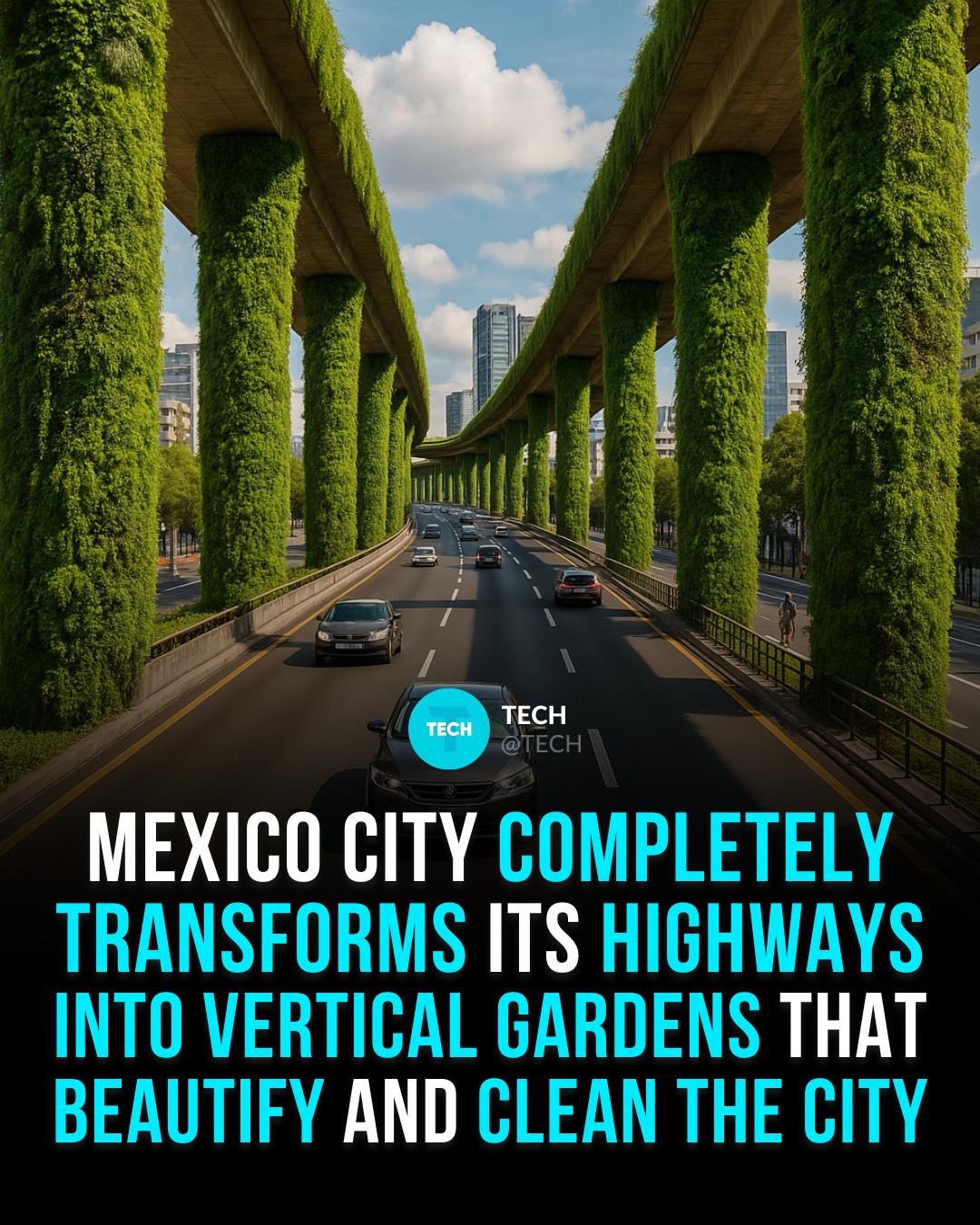
When Fernando Ortiz Monasterio first gazed at the gray forest of highway pillars choking Mexico City’s Periférico, he saw potential. Not concrete. Not gridlock. But a vertical garden—one that would breathe life into one of the world’s most polluted capitals.
What followed was a transformation both literal and symbolic. Today, more than 1,000 columns of the Anillo Periférico are wrapped in dense, vibrant greenery. Dubbed Vía Verde, the project spans over 60,000 square meters of vertical gardens, irrigated by reclaimed water and sustained by recycled materials. No soil required—just innovation, textile, and hydroponics.
The system is intelligent. Each pillar contains sensors that monitor light, temperature, and moisture. They communicate in real time, triggering precision irrigation to conserve resources while maximizing plant health. These aren’t just decorative installations—they’re engineered ecosystems.
Ambitious by design, Vía Verde claims to filter 27,000 tons of air pollutants a year, trap heavy metals, and generate clean oxygen for tens of thousands. But the benefits go beyond air quality. The gardens reduce urban heat, dampen traffic noise, and even provide jobs—many filled by community workers and rehabilitating inmates.
Still, not everyone is convinced. Critics argue the project is more about aesthetics than impact. Replacing smog with succulents, they say, doesn’t address the core issue: car dependency. For the cost of one vertical column, the city could plant 300 trees.
Even Ortiz admits this is just a beginning. His firm is pushing to expand Vía Verde across rooftops, bridges, and tunnels—10 million square meters by 2030. But that would still fall short of WHO’s recommended green space per resident.
The vision is bold. The execution, ongoing. But even in a city of concrete and chaos, it’s possible to grow something green.
When Fernando Ortiz Monasterio first gazed at the gray forest of highway pillars choking Mexico City’s Periférico, he saw potential. Not concrete. Not gridlock. But a vertical garden—one that would breathe life into one of the world’s most polluted capitals.
What followed was a transformation both literal and symbolic. Today, more than 1,000 columns of the Anillo Periférico are wrapped in dense, vibrant greenery. Dubbed Vía Verde, the project spans over 60,000 square meters of vertical gardens, irrigated by reclaimed water and sustained by recycled materials. No soil required—just innovation, textile, and hydroponics.
The system is intelligent. Each pillar contains sensors that monitor light, temperature, and moisture. They communicate in real time, triggering precision irrigation to conserve resources while maximizing plant health. These aren’t just decorative installations—they’re engineered ecosystems.
Ambitious by design, Vía Verde claims to filter 27,000 tons of air pollutants a year, trap heavy metals, and generate clean oxygen for tens of thousands. But the benefits go beyond air quality. The gardens reduce urban heat, dampen traffic noise, and even provide jobs—many filled by community workers and rehabilitating inmates.
Still, not everyone is convinced. Critics argue the project is more about aesthetics than impact. Replacing smog with succulents, they say, doesn’t address the core issue: car dependency. For the cost of one vertical column, the city could plant 300 trees.
Even Ortiz admits this is just a beginning. His firm is pushing to expand Vía Verde across rooftops, bridges, and tunnels—10 million square meters by 2030. But that would still fall short of WHO’s recommended green space per resident.
The vision is bold. The execution, ongoing. But even in a city of concrete and chaos, it’s possible to grow something green.
 English
 Arabic
 French
 Spanish
 Portuguese
 Deutsch
 Turkish
 Dutch
Dutch
 Italiano
 Russian
 Romaian
 Portuguese (Brazil)
 Greek
Greek