• Researchers at the University of Wisconsin–Madison have discovered that shark DNA contains unique single-chain antibodies that may hold the key to curing cancer.

    In a hidden laboratory, cancer expert Aaron LeBeau studies nurse sharks swimming inside a massive 7,000-gallon tank. His method: inject sharks with cancer-related proteins, wait for their powerful immune systems to react, then collect blood samples to isolate the cells that produce these rare antibodies.

    Sharks were among the first creatures on Earth to evolve immune systems, and their tiny, flexible single-chain antibodies act like “molecular contortionists,” gripping tightly onto foreign proteins.

    LeBeau’s team attached radioactive markers to these shark antibodies and injected them into mice with breast and prostate tumors. PET scans revealed that the antibodies traveled directly to the tumors—destroying them with remarkable precision.

    If progress continues, human trials using pharmaceutical-grade shark antibodies could begin within the next two years.

    Source: University of Wisconsin–Madison

    Follow us @FutureTech for more!
    Researchers at the University of Wisconsin–Madison have discovered that shark DNA contains unique single-chain antibodies that may hold the key to curing cancer. In a hidden laboratory, cancer expert Aaron LeBeau studies nurse sharks swimming inside a massive 7,000-gallon tank. His method: inject sharks with cancer-related proteins, wait for their powerful immune systems to react, then collect blood samples to isolate the cells that produce these rare antibodies. Sharks were among the first creatures on Earth to evolve immune systems, and their tiny, flexible single-chain antibodies act like “molecular contortionists,” gripping tightly onto foreign proteins. LeBeau’s team attached radioactive markers to these shark antibodies and injected them into mice with breast and prostate tumors. PET scans revealed that the antibodies traveled directly to the tumors—destroying them with remarkable precision. If progress continues, human trials using pharmaceutical-grade shark antibodies could begin within the next two years. Source: University of Wisconsin–Madison 👉 Follow us @FutureTech for more! 🔌

    ·33 Views ·0 Reviews

  • Elon Musk claims that within about five years, robots will surpass even the world’s best human surgeons. He cited Neuralink’s surgical robot, which handles brain-computer electrode implantation at speeds and precision no human can match, and highlighted Medtronic’s Hugo system, already used in more than 130 surgeries.

    His prediction has stirred mixed reactions in the medical field. While some experts see robotics as a powerful tool, many insist that fully autonomous machines capable of replacing human judgment, adaptability, and patient care are still a long way off.

    Follow us @FutureTech for more!
    Elon Musk claims that within about five years, robots will surpass even the world’s best human surgeons. He cited Neuralink’s surgical robot, which handles brain-computer electrode implantation at speeds and precision no human can match, and highlighted Medtronic’s Hugo system, already used in more than 130 surgeries. His prediction has stirred mixed reactions in the medical field. While some experts see robotics as a powerful tool, many insist that fully autonomous machines capable of replacing human judgment, adaptability, and patient care are still a long way off. 👉 Follow us @FutureTech for more! 🔌
    ·49 Views ·0 Reviews
  • Chinese scientists are working on a promising anti-aging drug derived from a grapeseed compound known as PCC1, a breakthrough they believe could one day extend the human lifespan to as long as 150 years.

    The findings, published in Nature Metabolism, show that PCC1 successfully eliminated aged cells in mice and increased their lifespan by roughly 9%. The compound targets and clears senescent cells, which contribute to tissue aging. A Shenzhen-based biotech company, Lonvi Biosciences, is now preparing this technology for human trials, describing it as a major step toward practical life-extension science.

    Although the early data is exciting, experts emphasize that human aging is far more complex. PCC1’s safety, ideal dosage, and long-term effects will require extensive clinical research before any true breakthrough becomes possible. Still, the idea of routinely living beyond 100 is slowly shifting from science fiction to scientific possibility.

    Source: Nature Metabolism, University of Chinese Academy of Sciences

    Follow us @FutureTech for more!
    Chinese scientists are working on a promising anti-aging drug derived from a grapeseed compound known as PCC1, a breakthrough they believe could one day extend the human lifespan to as long as 150 years. 🧬 The findings, published in Nature Metabolism, show that PCC1 successfully eliminated aged cells in mice and increased their lifespan by roughly 9%. The compound targets and clears senescent cells, which contribute to tissue aging. A Shenzhen-based biotech company, Lonvi Biosciences, is now preparing this technology for human trials, describing it as a major step toward practical life-extension science. Although the early data is exciting, experts emphasize that human aging is far more complex. PCC1’s safety, ideal dosage, and long-term effects will require extensive clinical research before any true breakthrough becomes possible. Still, the idea of routinely living beyond 100 is slowly shifting from science fiction to scientific possibility. Source: Nature Metabolism, University of Chinese Academy of Sciences 👉 Follow us @FutureTech for more! 🔌
    ·48 Views ·0 Reviews
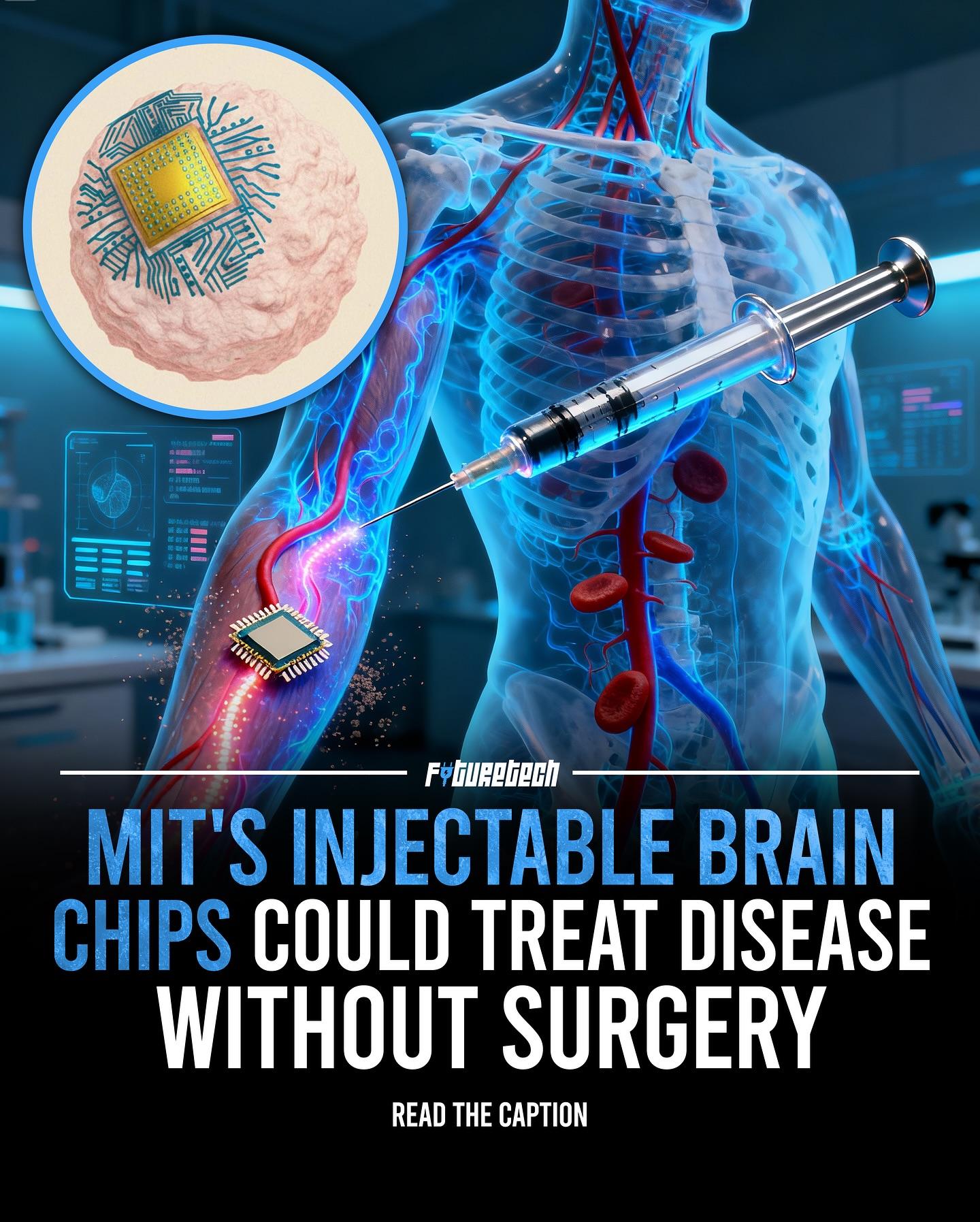
  • MIT researchers have unveiled a groundbreaking technology called Circulatronics, a platform that could treat neurological diseases and mental illnesses without the need for brain surgery.

    The innovation, published in Nature Biotechnology, uses tiny wireless chips called SWEDs that can be injected through a simple jab in the arm, travel through the bloodstream, and self-implant inside the brain.

    The chips, each roughly one-billionth the length of a grain of rice, attach to immune cells that naturally cross the blood–brain barrier and move toward inflamed brain regions. Once in position, they can be activated wirelessly with near-infrared light, delivering precise electrical stimulation to treat conditions like depression, Alzheimer’s, multiple sclerosis, and even brain tumors.

    In mouse tests, the injected hybrids successfully navigated to targeted diseased areas and activated nearby neurons when stimulated from outside the body. The approach could offer a safer, cheaper alternative to invasive electrode-based brain surgeries, which carry risks and remain inaccessible to billions worldwide.

    Led by MIT’s Deblina Sarkar in collaboration with Wellesley College and Harvard University, the team is already exploring next-generation upgrades, such as adding sensing abilities and synthetic electronic neurons. The tech could also be adapted for other organs, potentially enabling wireless pacemakers or injectable implants for chronic pain.

    Through a new MIT spinoff, Cahira Technologies, Circulatronics is aiming for clinical trials within three years, marking a major step toward a future where advanced neurological treatments might be delivered through a simple injection, no surgery required.

    Follow us @FutureTech for more!
    MIT researchers have unveiled a groundbreaking technology called Circulatronics, a platform that could treat neurological diseases and mental illnesses without the need for brain surgery. The innovation, published in Nature Biotechnology, uses tiny wireless chips called SWEDs that can be injected through a simple jab in the arm, travel through the bloodstream, and self-implant inside the brain. The chips, each roughly one-billionth the length of a grain of rice, attach to immune cells that naturally cross the blood–brain barrier and move toward inflamed brain regions. Once in position, they can be activated wirelessly with near-infrared light, delivering precise electrical stimulation to treat conditions like depression, Alzheimer’s, multiple sclerosis, and even brain tumors. In mouse tests, the injected hybrids successfully navigated to targeted diseased areas and activated nearby neurons when stimulated from outside the body. The approach could offer a safer, cheaper alternative to invasive electrode-based brain surgeries, which carry risks and remain inaccessible to billions worldwide. Led by MIT’s Deblina Sarkar in collaboration with Wellesley College and Harvard University, the team is already exploring next-generation upgrades, such as adding sensing abilities and synthetic electronic neurons. The tech could also be adapted for other organs, potentially enabling wireless pacemakers or injectable implants for chronic pain. Through a new MIT spinoff, Cahira Technologies, Circulatronics is aiming for clinical trials within three years, marking a major step toward a future where advanced neurological treatments might be delivered through a simple injection, no surgery required. 👉 Follow us @FutureTech for more! 🔌
    ·64 Views ·0 Reviews
  • Scientists at Stockholm University have successfully isolated and sequenced RNA from Yuka, a 40,000-year-old woolly mammoth from the Ice Age, marking the first time RNA this ancient has ever been recovered.

    Yuka was found in Siberia’s Arctic by tusk hunters, her body exceptionally preserved in permafrost, including her tissues, fur, and even brain.

    The extracted RNA is the oldest ever identified and reveals which genes were active in the mammoth’s cells shortly before she died. Researchers also detected ancient microRNAs and distinctive mutations confirming the material truly belonged to a mammoth.

    According to a study published in Cell, the discovery shows that RNA can remain intact for tens of thousands of years in frozen environments, opening new possibilities for studying the biology, traits, and health of long-extinct species.

    Follow us @FutureTech for more!
    Scientists at Stockholm University have successfully isolated and sequenced RNA from Yuka, a 40,000-year-old woolly mammoth from the Ice Age, marking the first time RNA this ancient has ever been recovered. Yuka was found in Siberia’s Arctic by tusk hunters, her body exceptionally preserved in permafrost, including her tissues, fur, and even brain. The extracted RNA is the oldest ever identified and reveals which genes were active in the mammoth’s cells shortly before she died. Researchers also detected ancient microRNAs and distinctive mutations confirming the material truly belonged to a mammoth. According to a study published in Cell, the discovery shows that RNA can remain intact for tens of thousands of years in frozen environments, opening new possibilities for studying the biology, traits, and health of long-extinct species. 👉 Follow us @FutureTech for more! 🔌
    ·56 Views ·0 Reviews
  • As part of his massive new compensation package, Musk could earn up to $1 trillion in stock options if he reaches several major milestones, and one of the biggest is deploying 1 million Optimus humanoid robots.

    First revealed in 2021, Optimus is built to take over dull, repetitive, or dangerous tasks – everything from factory labor to serving drinks, or even assisting in public safety. Musk says these robots could make “working optional” and eventually support Mars colonization.

    However, critics argue the vision is still far off. Tesla’s earliest “prototype” was just a person in a costume, and the current units still require human assistance for simple actions.

    Even so, with automakers like Hyundai, Rivian, and Xpeng entering the robotics race, experts say the boundary between electric vehicles and robots is quickly fading, and whoever perfects humanoid automation first could dominate a multi-trillion-dollar industry.

    Follow us @FutureTech for more!
    As part of his massive new compensation package, Musk could earn up to $1 trillion in stock options if he reaches several major milestones, and one of the biggest is deploying 1 million Optimus humanoid robots. First revealed in 2021, Optimus is built to take over dull, repetitive, or dangerous tasks – everything from factory labor to serving drinks, or even assisting in public safety. Musk says these robots could make “working optional” and eventually support Mars colonization. However, critics argue the vision is still far off. Tesla’s earliest “prototype” was just a person in a costume, and the current units still require human assistance for simple actions. Even so, with automakers like Hyundai, Rivian, and Xpeng entering the robotics race, experts say the boundary between electric vehicles and robots is quickly fading, and whoever perfects humanoid automation first could dominate a multi-trillion-dollar industry. 👉 Follow us @FutureTech for more! 🔌
    ·88 Views ·0 Reviews
  • A major global internet outage temporarily brought the digital world to a halt after a critical Cloudflare failure disrupted major platforms, including X and OpenAI

    The issue began around 11:00 AM UTC when Cloudflare started returning widespread 500 internal server errors, cutting access to millions of websites. Early reports suggest an abnormal surge in traffic triggered a cascading network breakdown that impacted everything from work tools to entertainment services.

    Engineers have since pinpointed the problem, and systems are gradually coming back online as traffic is rerouted. Some users may still notice slowdowns until the fix is fully stabilized worldwide.

    Did you experience any connection issues during the outage today?

    Follow us @FutureTech for more!
    A major global internet outage temporarily brought the digital world to a halt after a critical Cloudflare failure disrupted major platforms, including X and OpenAI ⚠️ The issue began around 11:00 AM UTC when Cloudflare started returning widespread 500 internal server errors, cutting access to millions of websites. Early reports suggest an abnormal surge in traffic triggered a cascading network breakdown that impacted everything from work tools to entertainment services. Engineers have since pinpointed the problem, and systems are gradually coming back online as traffic is rerouted. Some users may still notice slowdowns until the fix is fully stabilized worldwide. Did you experience any connection issues during the outage today? 👉 Follow us @FutureTech for more! 🔌
    ·84 Views ·0 Reviews
  • Grand Theft Auto 6 has faced another delay, with Rockstar now targeting a November 19, 2026 launch. The shift is expected to tack on roughly $60 million in additional development expenses. According to insiders, the game is already “content complete,” but the studio is taking the extra six months to eliminate bugs and refine every aspect. While the added cost is significant, it’s minimal compared to the game’s enormous $2 billion budget.

    Follow us @FutureTech for more!
    Grand Theft Auto 6 has faced another delay, with Rockstar now targeting a November 19, 2026 launch. The shift is expected to tack on roughly $60 million in additional development expenses. According to insiders, the game is already “content complete,” but the studio is taking the extra six months to eliminate bugs and refine every aspect. While the added cost is significant, it’s minimal compared to the game’s enormous $2 billion budget. 👉 Follow us @FutureTech for more! 🔌
    ·63 Views ·0 Reviews
  • Once-common skills are fading as digital tools dominate everyday life.

    From cursive writing and analogue clocks to map reading and manual driving, many abilities that defined past generations are slowly disappearing from classrooms and daily routines. Together, they show how rapidly technology is changing what we learn and how we move through the world.

    Follow us @FutureTech for more!
    Once-common skills are fading as digital tools dominate everyday life. From cursive writing and analogue clocks to map reading and manual driving, many abilities that defined past generations are slowly disappearing from classrooms and daily routines. Together, they show how rapidly technology is changing what we learn and how we move through the world. 👉 Follow us @FutureTech for more! 🔌
    ·73 Views ·0 Reviews
  • The U.S. House of Representatives has overwhelmingly approved the Epstein Files Transparency Act in a 427–1 vote. The bill directs the Justice Department to release all unclassified documents connected to Jeffrey Epstein and Ghislaine Maxwell within 30 days. Redactions would be permitted only to protect victims or ongoing investigations, not to shield anyone from embarrassment or political consequences.

    The legislation now moves to the Senate, where it will require 60 votes to advance. Senate leaders face bipartisan pressure as well as demands from survivors who rallied at the Capitol, though some lawmakers are seeking revisions, particularly regarding how victims’ identities will be protected. If the Senate passes the measure, it will head to President Trump, who has stated he intends to sign it.

    Follow us @FutureTech for more!
    The U.S. House of Representatives has overwhelmingly approved the Epstein Files Transparency Act in a 427–1 vote. The bill directs the Justice Department to release all unclassified documents connected to Jeffrey Epstein and Ghislaine Maxwell within 30 days. Redactions would be permitted only to protect victims or ongoing investigations, not to shield anyone from embarrassment or political consequences. The legislation now moves to the Senate, where it will require 60 votes to advance. Senate leaders face bipartisan pressure as well as demands from survivors who rallied at the Capitol, though some lawmakers are seeking revisions, particularly regarding how victims’ identities will be protected. If the Senate passes the measure, it will head to President Trump, who has stated he intends to sign it. 👉 Follow us @FutureTech for more! 🔌
    ·82 Views ·0 Reviews
More Results
Techawks - Powered By Pantrade Blockchain https://techawks.com