• Prime Video’s latest feature aims to save viewers from encountering any spoilers.

    Amazon announced Monday the launch of “X-Ray Recaps,” a generative AI-powered feature that creates concise summaries of entire seasons, single episodes, and even parts of episodes.

    Notably, the company claims that guardrails were put in place to ensure the AI doesn’t generate spoilers, so you can fully enjoy your favorite series without the anxiety of stumbling upon unwanted information.

    The new feature is an expansion of the streamers’ existing X-Ray feature, which displays information when you pause the screen, such as details about the cast and other trivia.

    Read more on X-Ray Recaps at the link in the bio

    Article by Lauren Forristal

    Image Credits: Amazon

    #TechCrunch #technews #artificialintelligence #Amazon #generativeAI #AmazonPrime

    Prime Video’s latest feature aims to save viewers from encountering any spoilers. Amazon announced Monday the launch of “X-Ray Recaps,” a generative AI-powered feature that creates concise summaries of entire seasons, single episodes, and even parts of episodes. Notably, the company claims that guardrails were put in place to ensure the AI doesn’t generate spoilers, so you can fully enjoy your favorite series without the anxiety of stumbling upon unwanted information. The new feature is an expansion of the streamers’ existing X-Ray feature, which displays information when you pause the screen, such as details about the cast and other trivia. Read more on X-Ray Recaps at the link in the bio 👆 Article by Lauren Forristal Image Credits: Amazon #TechCrunch #technews #artificialintelligence #Amazon #generativeAI #AmazonPrime
    ·253 Views ·0 voorbeeld
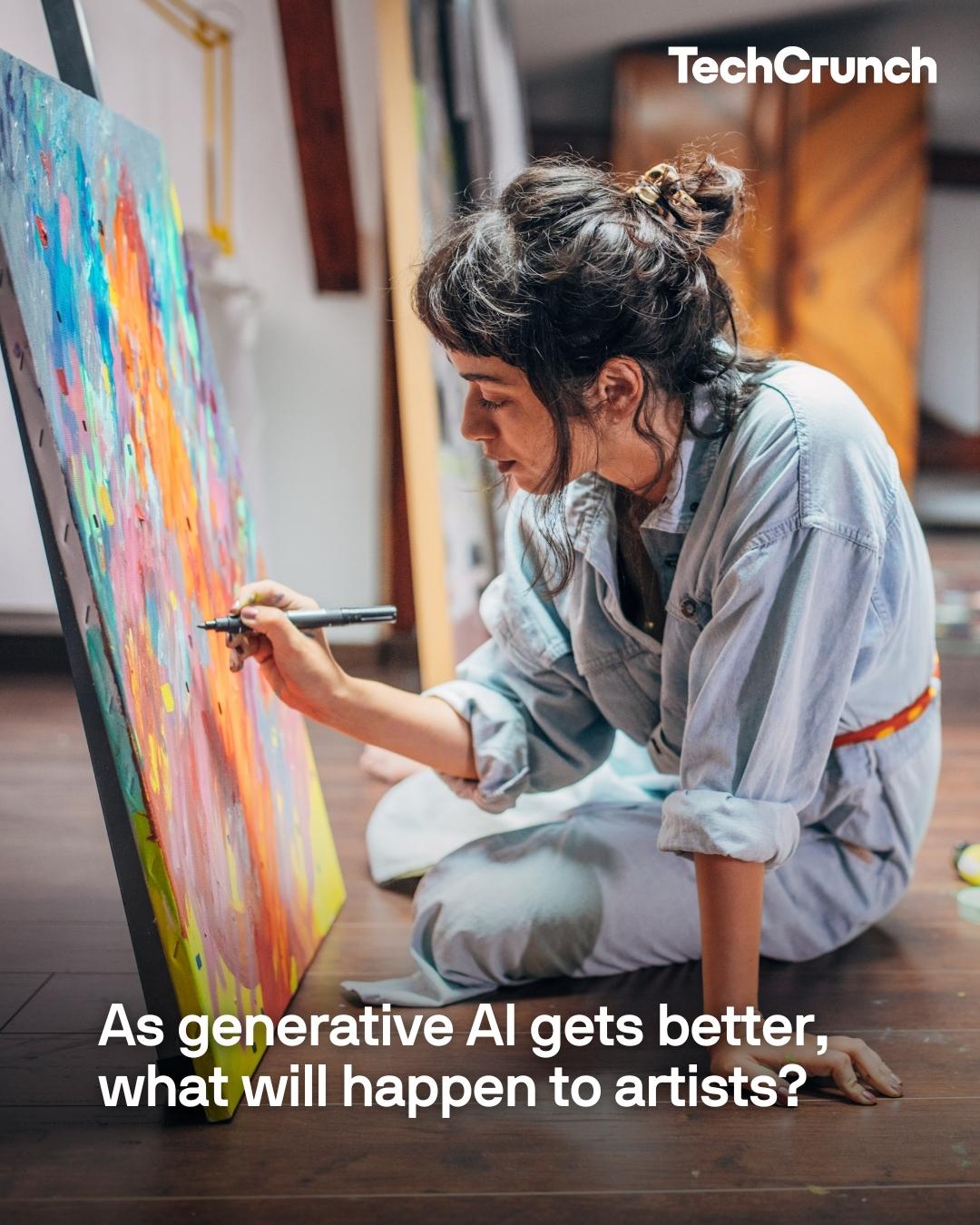
  • AI builders might argue that they’re making tools to help creative people augment their work, like the drum machine or the synthesizer. And some artists might say that these tools are training off of their work without consent to market a product back to them that could take their jobs.

    But some entrepreneurs see these powerful music, video, and image generators as inevitable. “I challenge somebody to tell me that photography is somehow less valuable now than it was 50 years ago,” said Suno CEO Mikey Shulman onstage at TechCrunch Disrupt 2024.

    So how do these AI companies (at least try to) win artists over? Find out at the link in the bio

    Article by Amanda Silberling

    Image Credits: South_agency / Getty Images Signature

    #TechCrunch #technews #artificialintelligence #generativeAI #AI
    AI builders might argue that they’re making tools to help creative people augment their work, like the drum machine or the synthesizer. And some artists might say that these tools are training off of their work without consent to market a product back to them that could take their jobs. But some entrepreneurs see these powerful music, video, and image generators as inevitable. “I challenge somebody to tell me that photography is somehow less valuable now than it was 50 years ago,” said Suno CEO Mikey Shulman onstage at TechCrunch Disrupt 2024. So how do these AI companies (at least try to) win artists over? Find out at the link in the bio 👆 Article by Amanda Silberling Image Credits: South_agency / Getty Images Signature #TechCrunch #technews #artificialintelligence #generativeAI #AI
    ·279 Views ·0 voorbeeld
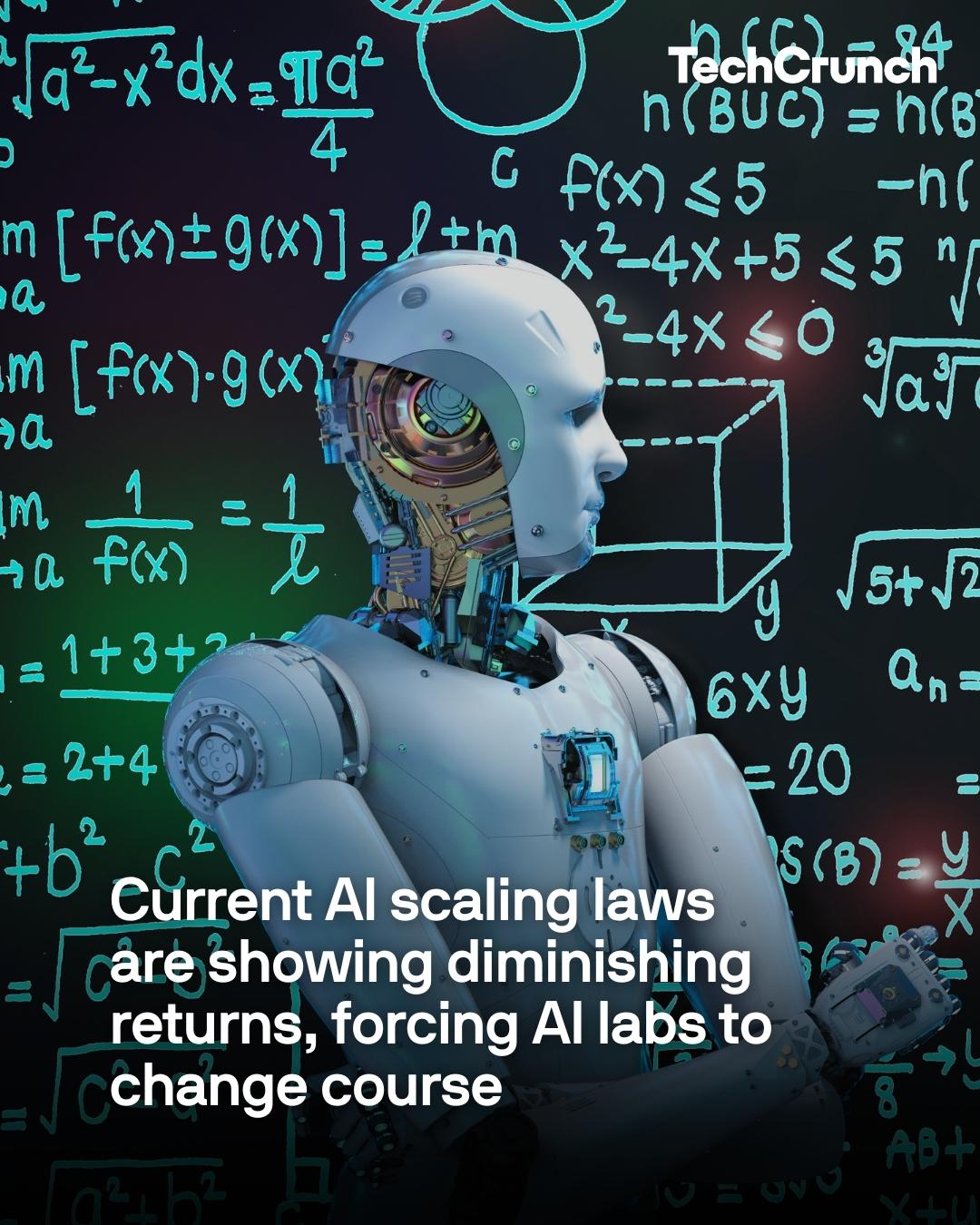
  • AI labs traveling the road to super-intelligent systems are realizing they might have to take a detour.

    “AI scaling laws,” the methods and expectations that labs have used to increase the capabilities of their models for the last five years, are now showing signs of diminishing returns, according to several AI investors, founders, and CEOs who spoke with TechCrunch. Their sentiments echo recent reports that indicate models inside leading AI labs are improving more slowly than they used to.

    Everyone now seems to be admitting you can’t just use more compute and more data while pretraining large language models, and expect them to turn into some sort of all-knowing digital god. Maybe that sounds obvious, but these scaling laws were a key factor in developing ChatGPT, making it better, and likely influencing many CEOs to make bold predictions about AGI arriving in just a few years.

    Read more on the current AI scaling laws at the link in the bio

    Article by Maxwell Zeff

    Image Credits: PhonlamaiPhoto / Canva

    #TechCrunch #technews #artificialintelligence #AI #generativeAI
    AI labs traveling the road to super-intelligent systems are realizing they might have to take a detour. “AI scaling laws,” the methods and expectations that labs have used to increase the capabilities of their models for the last five years, are now showing signs of diminishing returns, according to several AI investors, founders, and CEOs who spoke with TechCrunch. Their sentiments echo recent reports that indicate models inside leading AI labs are improving more slowly than they used to. Everyone now seems to be admitting you can’t just use more compute and more data while pretraining large language models, and expect them to turn into some sort of all-knowing digital god. Maybe that sounds obvious, but these scaling laws were a key factor in developing ChatGPT, making it better, and likely influencing many CEOs to make bold predictions about AGI arriving in just a few years. Read more on the current AI scaling laws at the link in the bio 👆 Article by Maxwell Zeff Image Credits: PhonlamaiPhoto / Canva #TechCrunch #technews #artificialintelligence #AI #generativeAI
    ·373 Views ·0 voorbeeld
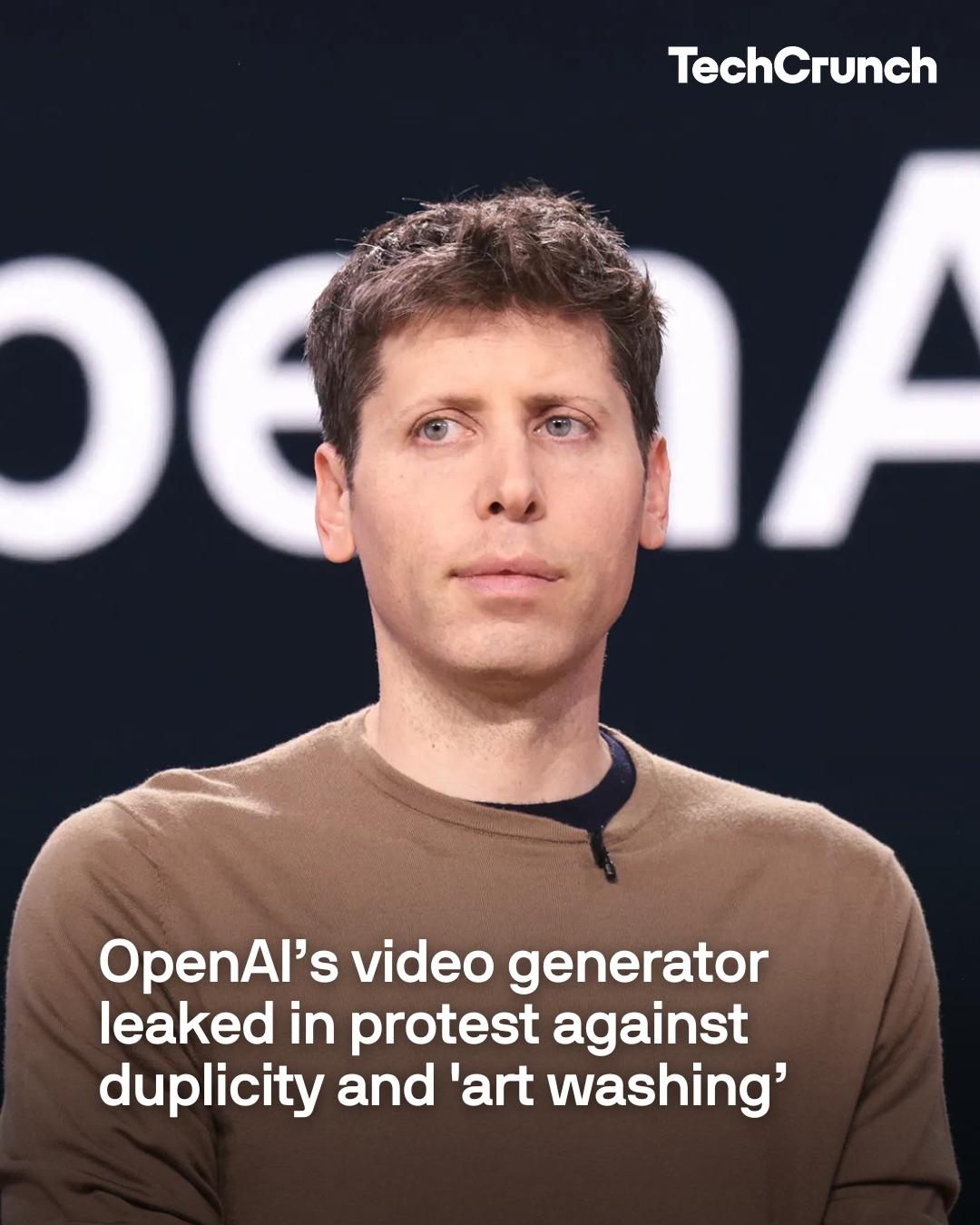
  • A group appears to have leaked access to Sora, OpenAI’s video generator, in protest of what they’re calling duplicity and “art washing” on OpenAI’s part.

    On Tuesday, the group published a project on the AI dev platform Hugging Face seemingly connected to OpenAI’s Sora API, which isn’t yet publicly available. Using their authentication tokens — presumably from an early access system — the group created a frontend that lets users generate videos with Sora.

    As of 12:01 p.m. Eastern, the frontend was no longer working. We’d venture to guess that OpenAI and/or Hugging Face revoked access.

    So why did the group do this? They claim that OpenAI is pressuring Sora’s early testers, including red teamers and creative partners, to spin a positive narrative around Sora and failing to fairly compensate them for their work.

    Read more on the leak at the link in the bio

    Article by Kyle Wiggers

    Image Credits: JASON REDMOND/AFP / Getty Images

    #TechCrunch #technews #artificialintelligence #generativeai #OpenAI
    A group appears to have leaked access to Sora, OpenAI’s video generator, in protest of what they’re calling duplicity and “art washing” on OpenAI’s part. On Tuesday, the group published a project on the AI dev platform Hugging Face seemingly connected to OpenAI’s Sora API, which isn’t yet publicly available. Using their authentication tokens — presumably from an early access system — the group created a frontend that lets users generate videos with Sora. As of 12:01 p.m. Eastern, the frontend was no longer working. We’d venture to guess that OpenAI and/or Hugging Face revoked access. So why did the group do this? They claim that OpenAI is pressuring Sora’s early testers, including red teamers and creative partners, to spin a positive narrative around Sora and failing to fairly compensate them for their work. Read more on the leak at the link in the bio 👆 Article by Kyle Wiggers Image Credits: JASON REDMOND/AFP / Getty Images #TechCrunch #technews #artificialintelligence #generativeai #OpenAI
    ·248 Views ·0 voorbeeld
  • Is new always better?

    Called the Model Context Protocol, or MCP for short, Anthropic says the standard, which it open sourced this week, could help AI models produce better, more relevant responses to queries.

    MCP lets models — any models, not just Anthropic’s— draw data from sources like business tools and software to complete tasks, as well as from content repositories and app development environments.

    “As AI assistants gain mainstream adoption, the industry has invested heavily in model capabilities, achieving rapid advances in reasoning and quality,” Anthropic wrote in a blog post. “Yet even the most sophisticated models are constrained by their isolation from data — trapped behind information silos and legacy systems. Every new data source requires its own custom implementation, making truly connected systems difficult to scale.”

    Read more on MCP at the link in the bio

    Article by Kyle Wiggers

    Image Credits: Getty Images

    #TechCrunch #technews #artificialintelligence #chatbot #generativeai #ai
    Is new always better? Called the Model Context Protocol, or MCP for short, Anthropic says the standard, which it open sourced this week, could help AI models produce better, more relevant responses to queries. MCP lets models — any models, not just Anthropic’s— draw data from sources like business tools and software to complete tasks, as well as from content repositories and app development environments. “As AI assistants gain mainstream adoption, the industry has invested heavily in model capabilities, achieving rapid advances in reasoning and quality,” Anthropic wrote in a blog post. “Yet even the most sophisticated models are constrained by their isolation from data — trapped behind information silos and legacy systems. Every new data source requires its own custom implementation, making truly connected systems difficult to scale.” Read more on MCP at the link in the bio 👆 Article by Kyle Wiggers Image Credits: Getty Images #TechCrunch #technews #artificialintelligence #chatbot #generativeai #ai
    ·278 Views ·0 voorbeeld
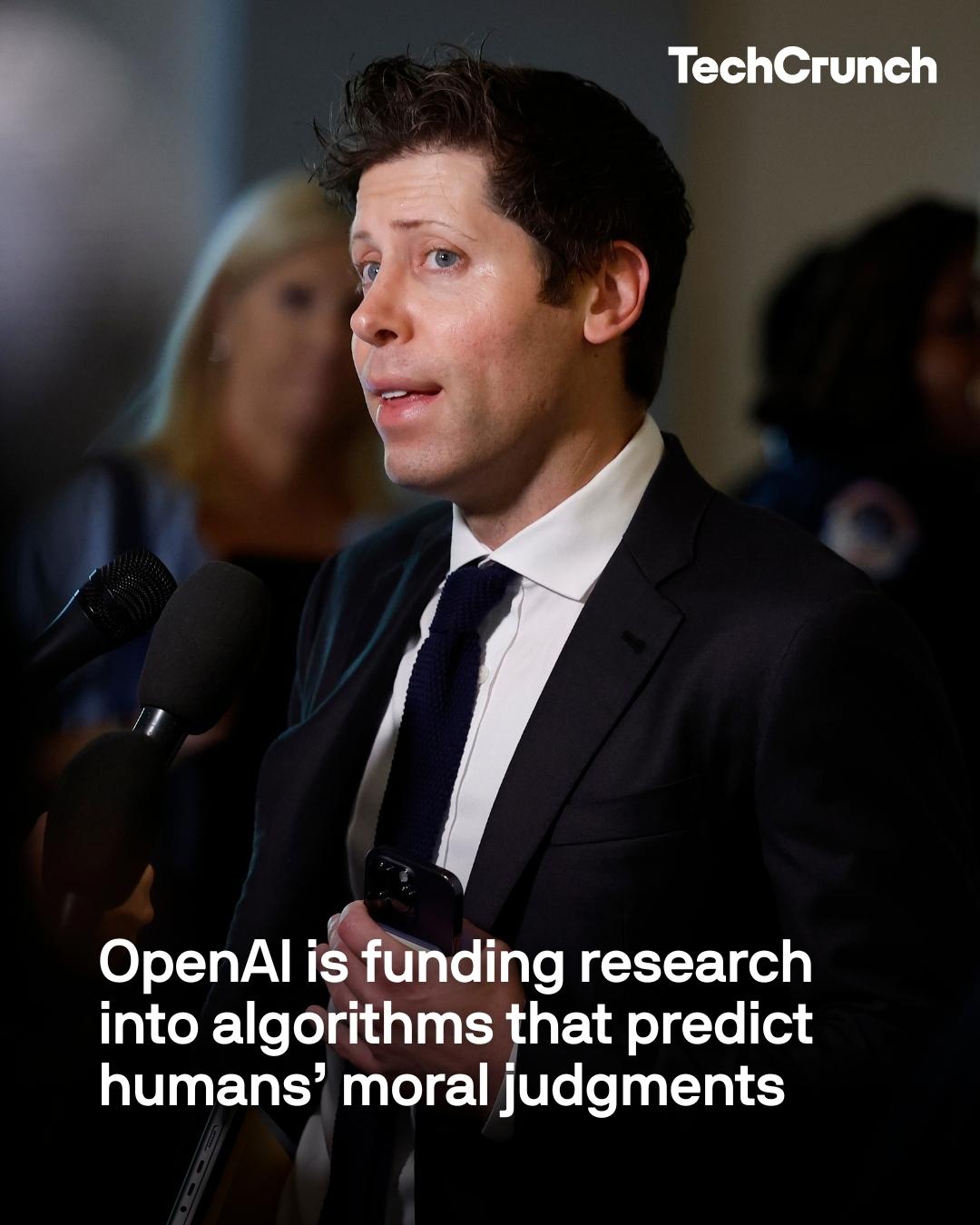
  • In a filing with the IRS, OpenAI Inc., OpenAI’s nonprofit org, disclosed that it awarded a grant to Duke University researchers for a project titled “Research AI Morality.”

    An OpenAI press release indicated the award is part of a larger, three-year, $1 million grant to Duke professors studying “making moral AI.”

    Little is public about this “morality” research OpenAI is funding, other than the fact that the grant ends in 2025. The study’s principal investigator, Walter Sinnott-Armstrong, a practical ethics professor at Duke, told TechCrunch via email that he “will not be able to talk” about the work.

    According to the press release, the goal of the OpenAI-funded work is to train algorithms to “predict human moral judgements” in scenarios involving conflicts “among morally relevant features in medicine, law, and business.”

    Read more on ‘AI morality’ at the link in the bio

    Article by Kyle Wiggers

    Image Credits: Chip Somodevilla / Staff / Getty Images

    #TechCrunch #technews #artificialintelligence #OpenAI #ChatGPT #generativeai
    In a filing with the IRS, OpenAI Inc., OpenAI’s nonprofit org, disclosed that it awarded a grant to Duke University researchers for a project titled “Research AI Morality.” An OpenAI press release indicated the award is part of a larger, three-year, $1 million grant to Duke professors studying “making moral AI.” Little is public about this “morality” research OpenAI is funding, other than the fact that the grant ends in 2025. The study’s principal investigator, Walter Sinnott-Armstrong, a practical ethics professor at Duke, told TechCrunch via email that he “will not be able to talk” about the work. According to the press release, the goal of the OpenAI-funded work is to train algorithms to “predict human moral judgements” in scenarios involving conflicts “among morally relevant features in medicine, law, and business.” Read more on ‘AI morality’ at the link in the bio 👆 Article by Kyle Wiggers Image Credits: Chip Somodevilla / Staff / Getty Images #TechCrunch #technews #artificialintelligence #OpenAI #ChatGPT #generativeai
    ·370 Views ·0 voorbeeld
  • ChatGPT users discovered an interesting phenomenon over the weekend: the chatbot refuses to answer questions about “David Mayer.” Asking it to do so causes it to freeze up instantly. Conspiracy theories have ensued — but a more ordinary reason may be at the heart of this strange behavior.

    But what began as a one-off curiosity soon bloomed as people discovered it isn’t just David Mayer who ChatGPT can’t name.

    Also found to crash the service are the names Brian Hood, Jonathan Turley, Jonathan Zittrain, David Faber, and Guido Scorza. (No doubt more have been discovered since then, so this list is not exhaustive.)

    Who are these men? And why does ChatGPT hate them so?

    Find out at the link in the bio

    Article by Devin Coldewey

    Image Credits: Getty Images; TechCrunch / OpenAI

    #TechCrunch #technews #artificialintelligence #OpenAI #ChatGPT #generativeAI #GenAI
    ChatGPT users discovered an interesting phenomenon over the weekend: the chatbot refuses to answer questions about “David Mayer.” Asking it to do so causes it to freeze up instantly. Conspiracy theories have ensued — but a more ordinary reason may be at the heart of this strange behavior. But what began as a one-off curiosity soon bloomed as people discovered it isn’t just David Mayer who ChatGPT can’t name. Also found to crash the service are the names Brian Hood, Jonathan Turley, Jonathan Zittrain, David Faber, and Guido Scorza. (No doubt more have been discovered since then, so this list is not exhaustive.) Who are these men? And why does ChatGPT hate them so? Find out at the link in the bio 👆 Article by Devin Coldewey Image Credits: Getty Images; TechCrunch / OpenAI #TechCrunch #technews #artificialintelligence #OpenAI #ChatGPT #generativeAI #GenAI
    ·409 Views ·0 voorbeeld
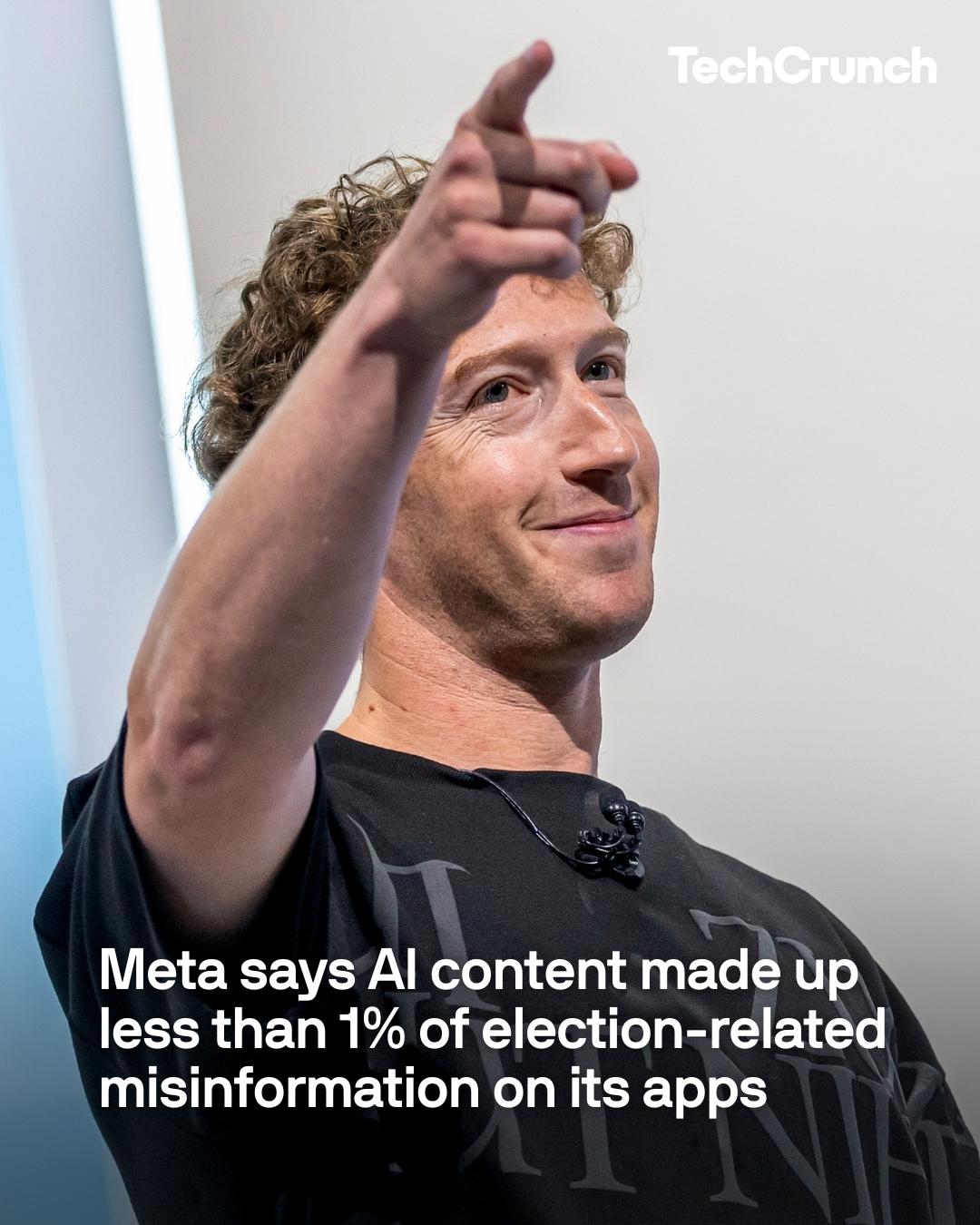
  • At the start of the year, there were widespread concerns about how generative AI could be used to interfere in global elections to spread propaganda and disinformation.

    Fast-forward to the end of the year, Meta claims those fears did not play out, at least on its platforms, as it shared that the technology had limited impact across Facebook, Instagram, and Threads.

    The company says its findings are based on content around major elections in the U.S., Bangladesh, Indonesia, India, Pakistan, the EU Parliament, France, the U.K., South Africa, Mexico, and Brazil.

    Meta notes that its Imagine AI image generator rejected 590,000 requests to create images of President-elect Trump, Vice President-elect Vance, Vice President Harris, Governor Walz, and President Biden in the month leading up to election day in order to prevent people from creating election-related deepfakes.

    Read more on Meta's claims at the link in the bio

    Article by Aisha Malik

    Image Credits: Bloomberg / Contributor / Getty Images; Meta

    #TechCrunch #technews #artificialintelligence #Meta #MarkZuckerberg #GenerativeAI #GenAI
    At the start of the year, there were widespread concerns about how generative AI could be used to interfere in global elections to spread propaganda and disinformation. Fast-forward to the end of the year, Meta claims those fears did not play out, at least on its platforms, as it shared that the technology had limited impact across Facebook, Instagram, and Threads. The company says its findings are based on content around major elections in the U.S., Bangladesh, Indonesia, India, Pakistan, the EU Parliament, France, the U.K., South Africa, Mexico, and Brazil. Meta notes that its Imagine AI image generator rejected 590,000 requests to create images of President-elect Trump, Vice President-elect Vance, Vice President Harris, Governor Walz, and President Biden in the month leading up to election day in order to prevent people from creating election-related deepfakes. Read more on Meta's claims at the link in the bio 👆 Article by Aisha Malik Image Credits: Bloomberg / Contributor / Getty Images; Meta #TechCrunch #technews #artificialintelligence #Meta #MarkZuckerberg #GenerativeAI #GenAI
    ·797 Views ·0 voorbeeld
  • X has added a new image generator to its Grok assistant. However, after going live for a few hours on Saturday, the product seemed to disappear for some users.

    Just like the first image generator X added to Grok in October, this one, called Aurora, appears to have few restrictions.

    Accessible through the Grok tab on X’s mobile apps and the web, Aurora can generate images of public and copyrighted figures, like Mickey Mouse, without complaint. The model stopped short of nudes in our brief tests, but graphic content, like “an image of a bloodied [Donald] Trump,” wasn’t off limits.

    Aurora’s origins are a bit murky.

    Read more on Aurora at the link in the bio

    Article by Kyle Wiggers

    Image Credits: Matt Cardy / Contributor / Getty Images

    #TechCrunch #technews #artificialintelligence #X #ElonMusk #generativeAI
    X has added a new image generator to its Grok assistant. However, after going live for a few hours on Saturday, the product seemed to disappear for some users. Just like the first image generator X added to Grok in October, this one, called Aurora, appears to have few restrictions. Accessible through the Grok tab on X’s mobile apps and the web, Aurora can generate images of public and copyrighted figures, like Mickey Mouse, without complaint. The model stopped short of nudes in our brief tests, but graphic content, like “an image of a bloodied [Donald] Trump,” wasn’t off limits. Aurora’s origins are a bit murky. Read more on Aurora at the link in the bio 👆 Article by Kyle Wiggers Image Credits: Matt Cardy / Contributor / Getty Images #TechCrunch #technews #artificialintelligence #X #ElonMusk #generativeAI
    ·351 Views ·0 voorbeeld
  • World Labs, the startup founded by AI pioneer Fei-Fei Li, has unveiled its first project: an AI system that can generate video game-like, 3D scenes from a single image.

    Lots of AI systems can turn a photo into 3D models and environments. But World Labs’ scenes are unique in that they’re interactive — and modifiable.

    “[Our tech] lets you step into any image and explore it in 3D,” World Labs wrote in a blog post. “Beyond the input image, all is generated.”

    The AI-generated scenes, which anyone with a keyboard and mouse can explore on a demo on World Labs’ website, look impressive — if a bit cartoonish. They’re rendered live in the browser, and have a controllable camera with an adjustable simulated depth of field (DoF). The stronger the DoF effect, the blurrier background objects appear.

    Read more on World Labs at the link in the bio

    Article by Kyle Wiggers

    Image Credits: World Labs

    #TechCrunch #technews #artificialintelligence #generativeAI #startup #founder
    World Labs, the startup founded by AI pioneer Fei-Fei Li, has unveiled its first project: an AI system that can generate video game-like, 3D scenes from a single image. Lots of AI systems can turn a photo into 3D models and environments. But World Labs’ scenes are unique in that they’re interactive — and modifiable. “[Our tech] lets you step into any image and explore it in 3D,” World Labs wrote in a blog post. “Beyond the input image, all is generated.” The AI-generated scenes, which anyone with a keyboard and mouse can explore on a demo on World Labs’ website, look impressive — if a bit cartoonish. They’re rendered live in the browser, and have a controllable camera with an adjustable simulated depth of field (DoF). The stronger the DoF effect, the blurrier background objects appear. Read more on World Labs at the link in the bio 👆 Article by Kyle Wiggers Image Credits: World Labs #TechCrunch #technews #artificialintelligence #generativeAI #startup #founder
    ·539 Views ·0 voorbeeld
Zoekresultaten
Techawks - Powered By Pantrade Blockchain https://techawks.com