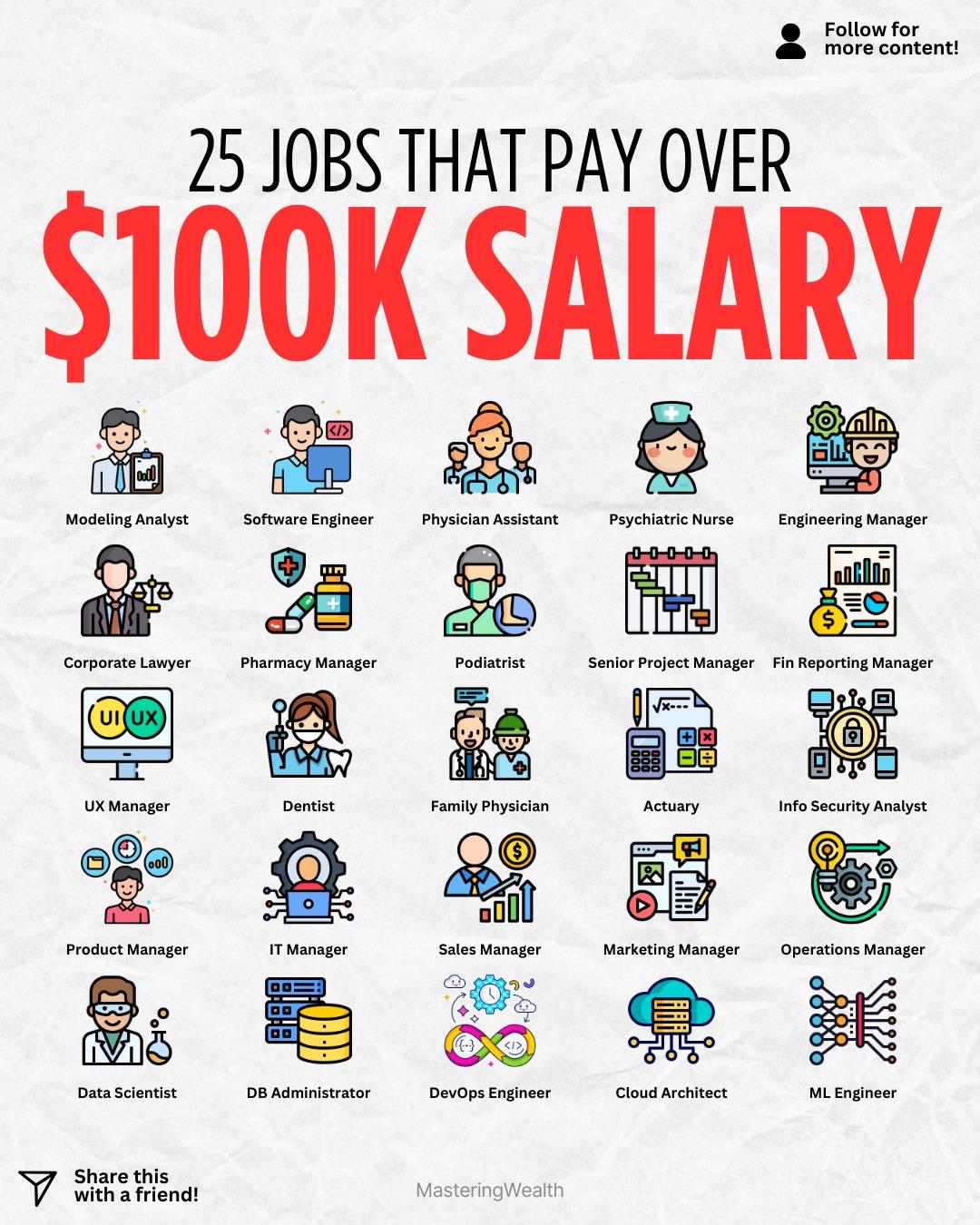
• Many people assume that earning a six figure salary is out of reach, but the truth is that there are many high income careers across tech, healthcare, engineering and business that regularly pay above one hundred thousand dollars a year . Jobs like software engineer, physician assistant, data scientist, product manager, cloud architect and corporate lawyer continue to be in demand and offer strong income growth over time . The list in this post highlights twenty five careers that consistently offer six figure earning potential for people who pursue the right skills and experience.

    High income jobs like modeling analyst, IT manager, UX manager, engineering manager and DevOps engineer continue to grow in popularity because companies need specialized talent to solve complex problems. Healthcare roles such as dentist, podiatrist, family physician and psychiatric nurse also provide strong earning power due to long term demand for medical professionals . Tech roles including machine learning engineer, information security analyst and cloud architect are some of the fastest growing career paths because businesses rely on digital systems more than ever.

    If you are exploring different career options, it helps to understand why these roles pay so well. Many of these careers require advanced knowledge or technical expertise, while others require leadership experience or responsibility for managing large teams. The reward for developing rare skills is often a higher salary and long term job stability .

    If you want to see the dividend portfolio that helps me build wealth outside of my career, comment the word Stocks and I will send you the link .

    Which high income career on this list do you find the most interesting and why

    If you enjoy learning about money, career growth and financial education, follow me at MasteringWealth for more daily content that helps you build a stronger financial future .

    This content is for education only and is not financial advice.
    Many people assume that earning a six figure salary is out of reach, but the truth is that there are many high income careers across tech, healthcare, engineering and business that regularly pay above one hundred thousand dollars a year 💼💰. Jobs like software engineer, physician assistant, data scientist, product manager, cloud architect and corporate lawyer continue to be in demand and offer strong income growth over time 📈. The list in this post highlights twenty five careers that consistently offer six figure earning potential for people who pursue the right skills and experience. High income jobs like modeling analyst, IT manager, UX manager, engineering manager and DevOps engineer continue to grow in popularity because companies need specialized talent to solve complex problems. Healthcare roles such as dentist, podiatrist, family physician and psychiatric nurse also provide strong earning power due to long term demand for medical professionals 👨‍⚕️👩‍⚕️. Tech roles including machine learning engineer, information security analyst and cloud architect are some of the fastest growing career paths because businesses rely on digital systems more than ever. If you are exploring different career options, it helps to understand why these roles pay so well. Many of these careers require advanced knowledge or technical expertise, while others require leadership experience or responsibility for managing large teams. The reward for developing rare skills is often a higher salary and long term job stability 🔑. If you want to see the dividend portfolio that helps me build wealth outside of my career, comment the word Stocks and I will send you the link 📬. Which high income career on this list do you find the most interesting and why 🤔 If you enjoy learning about money, career growth and financial education, follow me at MasteringWealth for more daily content that helps you build a stronger financial future 🌟. This content is for education only and is not financial advice.
    ·328 مشاهدة ·0 معاينة

  • Saving money becomes much easier when you plan for expenses before they happen. The graphic in this post explains sinking funds which are one of the most effective budgeting tools for long term financial stability. Instead of being surprised by large costs, you prepare for them little by little throughout the year.

    A sinking fund is money you set aside each month for a specific future expense. It is different from your emergency fund because it is designed for expenses you already know are coming. Holidays, vacations, car repairs, and medical costs are all perfect examples.

    The chart shows how simple it can be. Instead of spending one thousand two hundred dollars in December for gifts, you put aside one hundred dollars every month. By the end of the year you have the full amount ready without stressing your budget.

    This method works because it spreads out the financial pressure. You avoid going into debt or dipping into savings for predictable expenses. Your budget becomes smoother and your money becomes easier to control.

    Common sinking fund categories include holiday spending, home improvement, large purchases, pet check ups, school activities, vacations, and car maintenance. You can have as many or as few categories as you want. The goal is to give every dollar a purpose and reduce last minute financial surprises.

    Using sinking funds consistently helps you stay ahead of your expenses. It also helps you create better saving habits because you learn to plan instead of react. This is one of the simplest steps toward financial stability and long term peace of mind.

    Comment “Stocks” if you want a link to see my dividend portfolio and learn how investing fits into a balanced financial plan.

    Which sinking fund category do you think would help you the most if you added it to your budget right now?

    For more visuals and tips on budgeting, saving, investing, and building wealth step by step, follow @MasteringWealth for daily financial education.

    This content is for educational purposes only and is not financial advice. Always research carefully or consult a licensed professional before making financial decisions.
    Saving money becomes much easier when you plan for expenses before they happen. The graphic in this post explains sinking funds which are one of the most effective budgeting tools for long term financial stability. Instead of being surprised by large costs, you prepare for them little by little throughout the year. A sinking fund is money you set aside each month for a specific future expense. It is different from your emergency fund because it is designed for expenses you already know are coming. Holidays, vacations, car repairs, and medical costs are all perfect examples. The chart shows how simple it can be. Instead of spending one thousand two hundred dollars in December for gifts, you put aside one hundred dollars every month. By the end of the year you have the full amount ready without stressing your budget. This method works because it spreads out the financial pressure. You avoid going into debt or dipping into savings for predictable expenses. Your budget becomes smoother and your money becomes easier to control. Common sinking fund categories include holiday spending, home improvement, large purchases, pet check ups, school activities, vacations, and car maintenance. You can have as many or as few categories as you want. The goal is to give every dollar a purpose and reduce last minute financial surprises. Using sinking funds consistently helps you stay ahead of your expenses. It also helps you create better saving habits because you learn to plan instead of react. This is one of the simplest steps toward financial stability and long term peace of mind. 💬 Comment “Stocks” if you want a link to see my dividend portfolio and learn how investing fits into a balanced financial plan. Which sinking fund category do you think would help you the most if you added it to your budget right now? For more visuals and tips on budgeting, saving, investing, and building wealth step by step, follow @MasteringWealth for daily financial education. ⚠️ This content is for educational purposes only and is not financial advice. Always research carefully or consult a licensed professional before making financial decisions.
    ·221 مشاهدة ·0 معاينة
  • Elon Musk said that advanced AI and humanoid robots could eventually eliminate poverty and create a world where every person lives far wealthier than today’s richest individuals.

    He explained that this future relies on universal access to superhuman medical care, fully automated labor, and digital experiences far beyond the limits of modern technology.

    Musk warned that this vision only works if AI is built with strong alignment toward truth, beauty, and human benefit, since powerful systems without these values could create serious risks.

    He shared these points during the Saudi Investment Forum 2025 and expanded on them in his tweet, stressing that global cooperation and careful development are essential for this optimistic future.

    Follow us (@artificialintelligenceee) for everything latest from the AI world.

    Credits: U.S. - SAUDI INVESTMENT FORUM 2025
    Elon Musk said that advanced AI and humanoid robots could eventually eliminate poverty and create a world where every person lives far wealthier than today’s richest individuals. He explained that this future relies on universal access to superhuman medical care, fully automated labor, and digital experiences far beyond the limits of modern technology. Musk warned that this vision only works if AI is built with strong alignment toward truth, beauty, and human benefit, since powerful systems without these values could create serious risks. He shared these points during the Saudi Investment Forum 2025 and expanded on them in his tweet, stressing that global cooperation and careful development are essential for this optimistic future. Follow us (👉@artificialintelligenceee) for everything latest from the AI world. Credits: U.S. - SAUDI INVESTMENT FORUM 2025
    ·123 مشاهدة ·0 معاينة
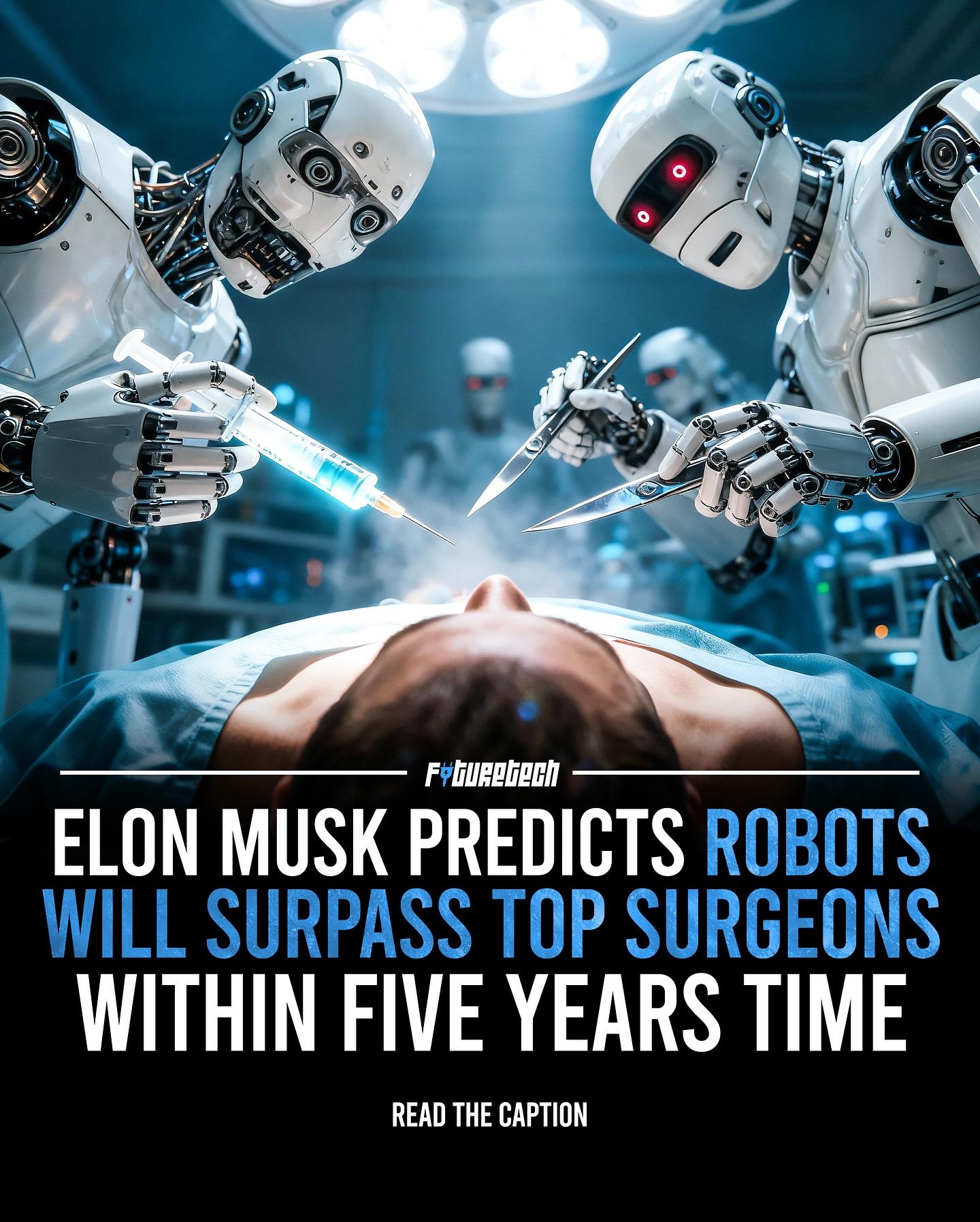
  • Elon Musk claims that within about five years, robots will surpass even the world’s best human surgeons. He cited Neuralink’s surgical robot, which handles brain-computer electrode implantation at speeds and precision no human can match, and highlighted Medtronic’s Hugo system, already used in more than 130 surgeries.

    His prediction has stirred mixed reactions in the medical field. While some experts see robotics as a powerful tool, many insist that fully autonomous machines capable of replacing human judgment, adaptability, and patient care are still a long way off.

    Follow us @FutureTech for more!
    Elon Musk claims that within about five years, robots will surpass even the world’s best human surgeons. He cited Neuralink’s surgical robot, which handles brain-computer electrode implantation at speeds and precision no human can match, and highlighted Medtronic’s Hugo system, already used in more than 130 surgeries. His prediction has stirred mixed reactions in the medical field. While some experts see robotics as a powerful tool, many insist that fully autonomous machines capable of replacing human judgment, adaptability, and patient care are still a long way off. 👉 Follow us @FutureTech for more! 🔌
    ·45 مشاهدة ·0 معاينة
  • After her husband David Gottesman passed away in 2022 at age 96, Dr. Ruth L. Gottesman discovered he had left her roughly $1 billion in Berkshire Hathaway stock — along with a simple message: “Do whatever you think is right with it.”

    She chose to transform lives. Ruth donated the entire sum to the Albert Einstein College of Medicine in the Bronx, the poorest borough in New York, ensuring its students can attend tuition-free.

    It became the largest gift ever given to a U.S. medical school, proving that the most powerful legacies are the ones that open doors for others.

    Follow for more @mindset.therapy
    After her husband David Gottesman passed away in 2022 at age 96, Dr. Ruth L. Gottesman discovered he had left her roughly $1 billion in Berkshire Hathaway stock — along with a simple message: “Do whatever you think is right with it.” She chose to transform lives. Ruth donated the entire sum to the Albert Einstein College of Medicine in the Bronx, the poorest borough in New York, ensuring its students can attend tuition-free. It became the largest gift ever given to a U.S. medical school, proving that the most powerful legacies are the ones that open doors for others. Follow for more 👉 @mindset.therapy
    ·81 مشاهدة ·0 معاينة
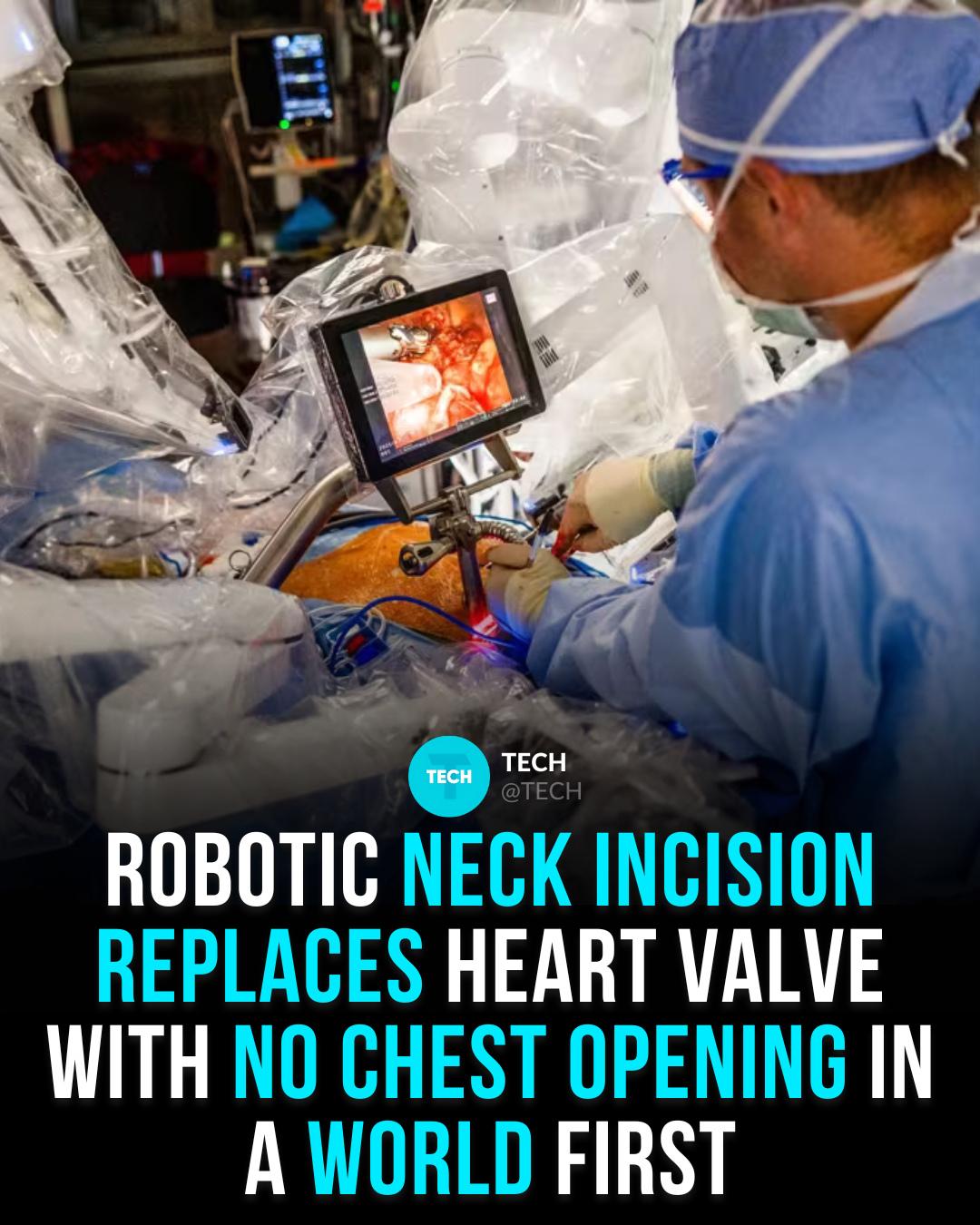
  • Cleveland Clinic surgeons just completed the world's first robotic aortic valve replacement through a tiny neck incision, eliminating the need to crack open the chest entirely. Dr. Marijan Koprivanac led the pioneering transcervical approach that replaces failing heart valves through four small incisions, with the main entry point hidden in a natural neck crease similar to thyroid surgery.⁠

    The results from the first four patients aged 60 to 74 years have stunned the medical community, with one patient returning to gym workouts just seven days after surgery and another back to farm work within three weeks. Traditional aortic valve replacement requires breaking the sternum and spreading the ribs apart, leading to months of painful recovery and strict lifting restrictions that this revolutionary technique completely avoids.⁠

    Dr. Koprivanac spent years perfecting the approach after learning transcervical thymectomies during surgical training, recognizing that the neck provides excellent access to view the aorta and aortic valve from above. He practiced the technique on 20 cadavers at Cleveland Clinic's anatomy lab before treating actual patients, using specialized retractors and robotic arms for millimeter-precise valve removal and replacement through the narrow cervical corridor.⁠

    The average surgical time was 140 minutes with hospital stays ranging from just 3 to 6 days, compared to traditional open-heart surgery that often requires weeks of recovery. Pain management consisted entirely of over-the-counter acetaminophen and ibuprofen, with patients reporting minimal discomfort throughout their recovery process.
    Cleveland Clinic surgeons just completed the world's first robotic aortic valve replacement through a tiny neck incision, eliminating the need to crack open the chest entirely. Dr. Marijan Koprivanac led the pioneering transcervical approach that replaces failing heart valves through four small incisions, with the main entry point hidden in a natural neck crease similar to thyroid surgery.⁠ ⁠ The results from the first four patients aged 60 to 74 years have stunned the medical community, with one patient returning to gym workouts just seven days after surgery and another back to farm work within three weeks. Traditional aortic valve replacement requires breaking the sternum and spreading the ribs apart, leading to months of painful recovery and strict lifting restrictions that this revolutionary technique completely avoids.⁠ ⁠ Dr. Koprivanac spent years perfecting the approach after learning transcervical thymectomies during surgical training, recognizing that the neck provides excellent access to view the aorta and aortic valve from above. He practiced the technique on 20 cadavers at Cleveland Clinic's anatomy lab before treating actual patients, using specialized retractors and robotic arms for millimeter-precise valve removal and replacement through the narrow cervical corridor.⁠ ⁠ The average surgical time was 140 minutes with hospital stays ranging from just 3 to 6 days, compared to traditional open-heart surgery that often requires weeks of recovery. Pain management consisted entirely of over-the-counter acetaminophen and ibuprofen, with patients reporting minimal discomfort throughout their recovery process.
    ·58 مشاهدة ·0 معاينة
  • AI creates wonders, but it also drains power. Every image or answer comes at the cost of processors running nonstop, pumping out heat and burning energy. Now scientists have found a striking alternative: letting light, not silicon, do the heavy lifting.⁠

    At UCLA, researchers designed an “optical generative model” described in Nature. Instead of grinding through thousands of digital steps, their system uses laser beams and liquid crystal screens, called spatial light modulators, to imprint static into light and decode it instantly into images. This snapshot method removes the need for repetitive computation, generating results in a single flash.⁠

    The efficiency gap is enormous. Standard diffusion models burn hundreds or thousands of joules per image, while the optical system consumes only a few millijoules, millions of times less. In tests, it recreated digits, faces, and Van Gogh-style art with quality nearly equal to digital models. Because each image is tied to a unique light pattern, the method also offers built-in security, allowing only the correct decoder to reconstruct the picture.⁠

    Though still in early stages, the technology could shrink into photonic chips, opening the door to ultra-efficient AI glasses, medical imaging tools, or portable creative devices. As AI continues to scale worldwide, this work suggests a different path forward—one where photons replace processors, and energy costs fade into the background.
    AI creates wonders, but it also drains power. Every image or answer comes at the cost of processors running nonstop, pumping out heat and burning energy. Now scientists have found a striking alternative: letting light, not silicon, do the heavy lifting.⁠ ⁠ At UCLA, researchers designed an “optical generative model” described in Nature. Instead of grinding through thousands of digital steps, their system uses laser beams and liquid crystal screens, called spatial light modulators, to imprint static into light and decode it instantly into images. This snapshot method removes the need for repetitive computation, generating results in a single flash.⁠ ⁠ The efficiency gap is enormous. Standard diffusion models burn hundreds or thousands of joules per image, while the optical system consumes only a few millijoules, millions of times less. In tests, it recreated digits, faces, and Van Gogh-style art with quality nearly equal to digital models. Because each image is tied to a unique light pattern, the method also offers built-in security, allowing only the correct decoder to reconstruct the picture.⁠ ⁠ Though still in early stages, the technology could shrink into photonic chips, opening the door to ultra-efficient AI glasses, medical imaging tools, or portable creative devices. As AI continues to scale worldwide, this work suggests a different path forward—one where photons replace processors, and energy costs fade into the background.
    ·123 مشاهدة ·0 معاينة
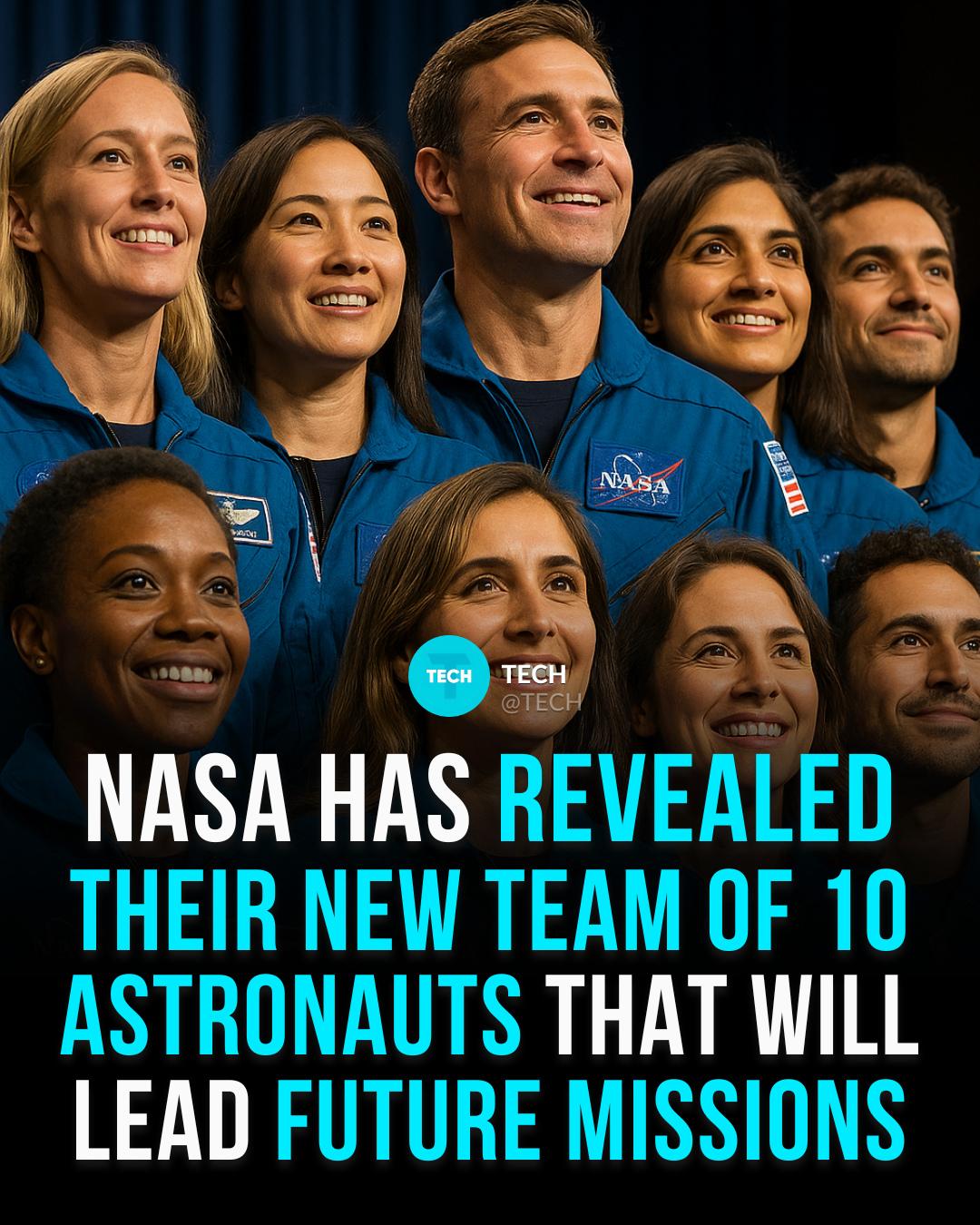
  • NASA has unveiled its newest class of astronaut candidates, chosen from a staggering pool of more than 8,000 applicants. The group of ten includes six women and four men, marking the first time in the agency’s history that women outnumber men in a selection. This milestone comes as NASA prepares for missions that could return humans to the Moon and set the stage for the first crewed journeys to Mars.⁠

    The candidates, known as ASCANs, will undergo two years of intensive training at Johnson Space Center. Their curriculum spans robotics, geology, survival training on land and water, foreign languages, space medicine, and high-performance jet flight. They will also conduct simulated spacewalks, preparing them for the extreme demands of missions beyond Earth. For many, this marks the culmination of years of dedication across fields as varied as engineering, military aviation, and advanced science, now converging in pursuit of exploration.⁠

    Among the recruits is Anna Menon, the first astronaut candidate to already have flown in space. In 2024, she joined SpaceX’s Polaris Dawn mission, which set a new altitude record for female astronauts and included the first private spacewalk. Her selection underscores NASA’s growing integration of commercial spaceflight experience into its astronaut corps, blending government and private expertise into a stronger team for the challenges ahead.⁠

    The class brings together a remarkable mix of expertise: military test pilots with thousands of flight hours, geologists who defined lunar science goals for Artemis, engineers who directed SpaceX launches, and medical specialists with backgrounds in anesthesia and undersea medicine. Together, they represent a breadth of skills essential for building a sustained human presence on the Moon, learning how to use its resources, and pushing onward to Mars.⁠

    Acting NASA Administrator Sean Duffy called the ten “America’s best and brightest,” emphasizing that their selection embodies the nation’s commitment to remain at the forefront of space exploration. When their training is complete, they will join 41 active astronauts, stepping into what NASA calls a “Golden Age of exploration.”
    NASA has unveiled its newest class of astronaut candidates, chosen from a staggering pool of more than 8,000 applicants. The group of ten includes six women and four men, marking the first time in the agency’s history that women outnumber men in a selection. This milestone comes as NASA prepares for missions that could return humans to the Moon and set the stage for the first crewed journeys to Mars.⁠ ⁠ The candidates, known as ASCANs, will undergo two years of intensive training at Johnson Space Center. Their curriculum spans robotics, geology, survival training on land and water, foreign languages, space medicine, and high-performance jet flight. They will also conduct simulated spacewalks, preparing them for the extreme demands of missions beyond Earth. For many, this marks the culmination of years of dedication across fields as varied as engineering, military aviation, and advanced science, now converging in pursuit of exploration.⁠ ⁠ Among the recruits is Anna Menon, the first astronaut candidate to already have flown in space. In 2024, she joined SpaceX’s Polaris Dawn mission, which set a new altitude record for female astronauts and included the first private spacewalk. Her selection underscores NASA’s growing integration of commercial spaceflight experience into its astronaut corps, blending government and private expertise into a stronger team for the challenges ahead.⁠ ⁠ The class brings together a remarkable mix of expertise: military test pilots with thousands of flight hours, geologists who defined lunar science goals for Artemis, engineers who directed SpaceX launches, and medical specialists with backgrounds in anesthesia and undersea medicine. Together, they represent a breadth of skills essential for building a sustained human presence on the Moon, learning how to use its resources, and pushing onward to Mars.⁠ ⁠ Acting NASA Administrator Sean Duffy called the ten “America’s best and brightest,” emphasizing that their selection embodies the nation’s commitment to remain at the forefront of space exploration. When their training is complete, they will join 41 active astronauts, stepping into what NASA calls a “Golden Age of exploration.”
    ·198 مشاهدة ·0 معاينة
  • Two Palestinian children were shot dead by the Israeli Occupation Forces (IOF) near the town of Beit Ummar, in the southern governorate of Hebron in the occupied West Bank on Thursday, November 13.

    According to the Palestinian General Authority of Civil Affairs (GACA), the IOF withheld the bodies of the murdered 15-year-old boys, Bilal Baaran and Mohammad Abu Ayyash, and prevented medical crews from reaching them.

    The homicides took place one week after the IOF had killed Mohammad Qasim and Mohammad Etayem, both 16 years old, in the West Bank town of al-Judeira, northwest of Jerusalem.

    On Tuesday, November 11, Ayssam Ma’ala, 13, also succumbed to his injuries one month after inhaling tear gas bombs fired at him by the IOF, while he was picking olives near the West Bank village of Beita, south of Nablus.

    Read the full article on our website.
    Two Palestinian children were shot dead by the Israeli Occupation Forces (IOF) near the town of Beit Ummar, in the southern governorate of Hebron in the occupied West Bank on Thursday, November 13. According to the Palestinian General Authority of Civil Affairs (GACA), the IOF withheld the bodies of the murdered 15-year-old boys, Bilal Baaran and Mohammad Abu Ayyash, and prevented medical crews from reaching them. The homicides took place one week after the IOF had killed Mohammad Qasim and Mohammad Etayem, both 16 years old, in the West Bank town of al-Judeira, northwest of Jerusalem. On Tuesday, November 11, Ayssam Ma’ala, 13, also succumbed to his injuries one month after inhaling tear gas bombs fired at him by the IOF, while he was picking olives near the West Bank village of Beita, south of Nablus. 📲 Read the full article on our website.
    ·165 مشاهدة ·0 معاينة
  • Most people don’t survive plane crashes, particle beams, atomic bombs, or lightning strikes.

    But these seven did — and their stories changed what we thought the human body could endure.

    A man whose head was pierced by a proton beam.
    A woman who fell 33,000 feet from the sky.
    A railroad worker shot through the skull by an iron rod.
    A survivor of both atomic bombs.
    The only person ever hit by a meteorite.
    A girl alone at sea after her family was murdered.
    And a ranger struck by lightning seven different times.

    They lived through disasters no one should walk away from — yet they did.

    SOURCES

    • Soviet Particle Institute Archives – Bugorski Case
    • Guinness World Records – Vesna Vulović
    • Harvard Medical Museum – Phineas Gage
    • Japanese National Archives – Tsutomu Yamaguchi
    • Smithsonian Museum – Ann Hodges Meteorite
    • LIFE Magazine – Terry Jo Rescue Photos
    • Guinness Records – Roy Sullivan Lightning Strikes
    Most people don’t survive plane crashes, particle beams, atomic bombs, or lightning strikes. But these seven did — and their stories changed what we thought the human body could endure. A man whose head was pierced by a proton beam. A woman who fell 33,000 feet from the sky. A railroad worker shot through the skull by an iron rod. A survivor of both atomic bombs. The only person ever hit by a meteorite. A girl alone at sea after her family was murdered. And a ranger struck by lightning seven different times. They lived through disasters no one should walk away from — yet they did. 📚 SOURCES • Soviet Particle Institute Archives – Bugorski Case • Guinness World Records – Vesna Vulović • Harvard Medical Museum – Phineas Gage • Japanese National Archives – Tsutomu Yamaguchi • Smithsonian Museum – Ann Hodges Meteorite • LIFE Magazine – Terry Jo Rescue Photos • Guinness Records – Roy Sullivan Lightning Strikes
    ·198 مشاهدة ·0 معاينة
الصفحات المعززة
Techawks - Powered By Pantrade Blockchain https://techawks.com