• #PeoplesHistory | Today we remember Nela Martínez Espinosa, a revolutionary, writer, and the first woman legislator of Ecuador.

    From a very young age, Nela Martínez stood up against oppression. When she was 10 or 11, she joined a protest of Indigenous farmworkers against her own father. From there, her life was an exceptional demonstration of left-wing militancy and support for the oppressed peoples of the world. She was a communist leader and militant and one of the most important figures in the Solidarity movement with Cuba.

    On her birthday, we remember her defiance against machismo and oppression in Ecuador, her vision to liberate women, and her fire in the fight.
    #PeoplesHistory | Today we remember Nela Martínez Espinosa, a revolutionary, writer, and the first woman legislator of Ecuador. From a very young age, Nela Martínez stood up against oppression. When she was 10 or 11, she joined a protest of Indigenous farmworkers against her own father. From there, her life was an exceptional demonstration of left-wing militancy and support for the oppressed peoples of the world. She was a communist leader and militant and one of the most important figures in the Solidarity movement with Cuba. On her birthday, we remember her defiance against machismo and oppression in Ecuador, her vision to liberate women, and her fire in the fight.
    ·22 Просмотры ·0 предпросмотр
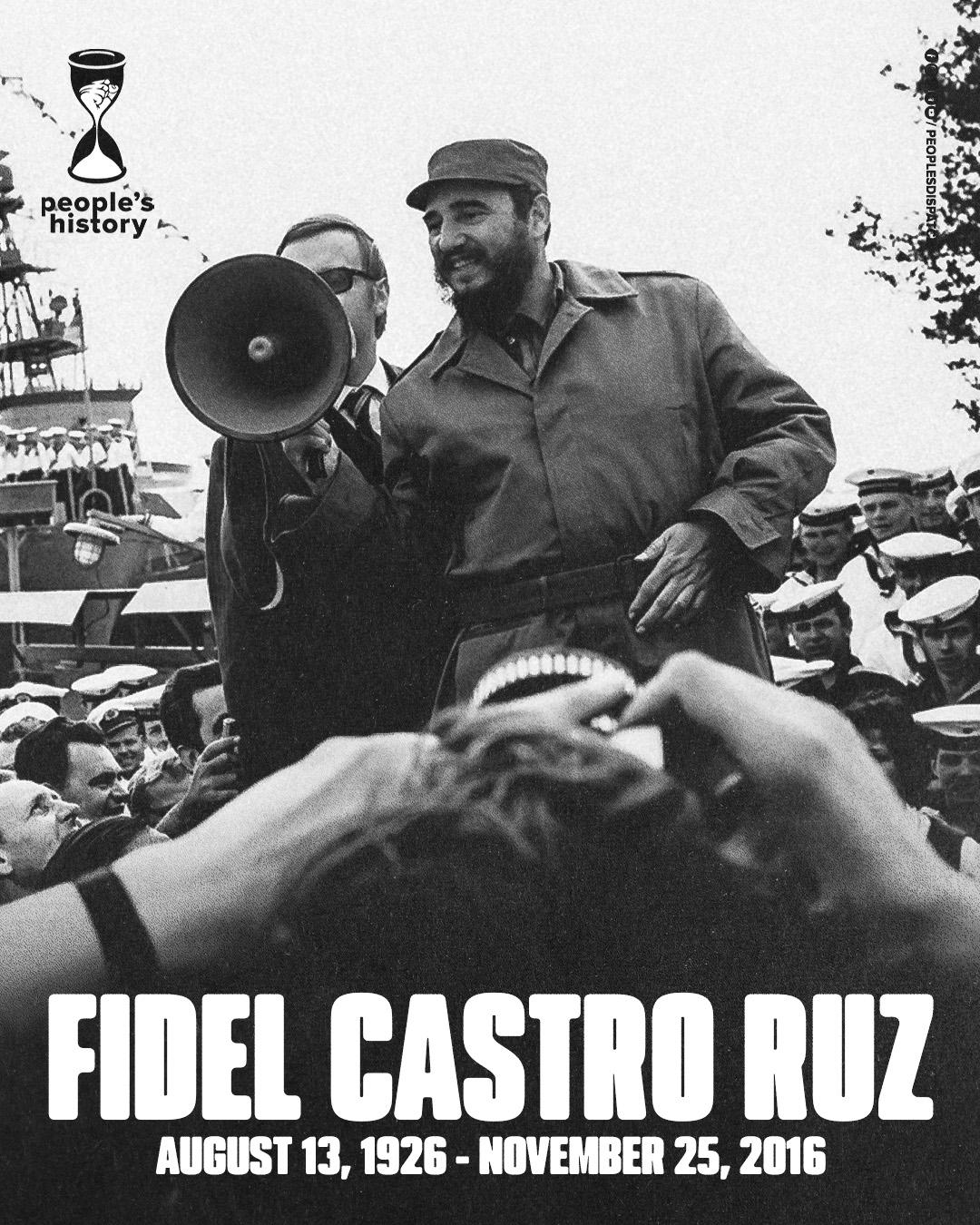
  • #PeoplesHistory | Today we mark the death anniversary of Fidel Castro Ruz, the leader of the Cuban Revolution and one of the most influential thinkers and political leaders in the history of the Americas.

    From building the July 26 Movement, which overthrew the Batista dictatorship, to leading the Cuban revolutionary process through impressive triumphs and seemingly insurmountable challenges, Fidel, through his actions and his thoughts, has inspired millions of people in Latin America and the Caribbean and across the world.
    #PeoplesHistory | Today we mark the death anniversary of Fidel Castro Ruz, the leader of the Cuban Revolution and one of the most influential thinkers and political leaders in the history of the Americas. From building the July 26 Movement, which overthrew the Batista dictatorship, to leading the Cuban revolutionary process through impressive triumphs and seemingly insurmountable challenges, Fidel, through his actions and his thoughts, has inspired millions of people in Latin America and the Caribbean and across the world.
    ·24 Просмотры ·0 предпросмотр
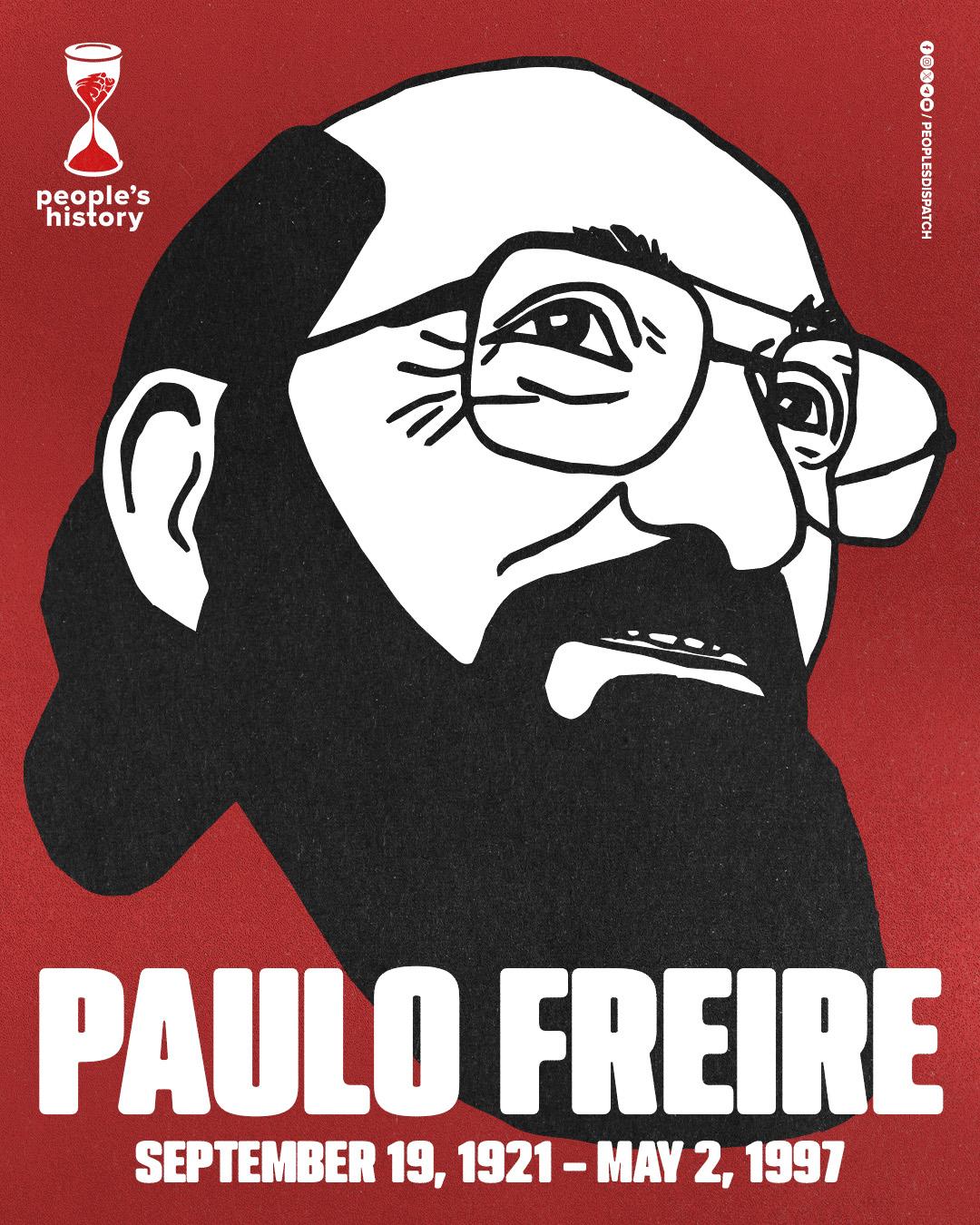
  • #PeoplesHistory | Today, we remember Paulo Freire, legendary Brazilian educator, revolutionary, and author of the renowned text ‘Pedagogy of the Oppressed.'

    Born in Recife, Freire completed his studies in Philosophy and started developing an educational praxis while working with the literacy missions for peasants and workers.

    Following the 1964 Brazilian coup d'état sponsored by the US, Paulo Freire was forced into exile.

    During his exile in Chile, where he worked closely with agrarian reform movements, he wrote his magnum opus, 'Pedagogy of the Oppressed,' a foundational text of critical pedagogy.

    Freire was greatly inspired by the writings of Frantz Fanon and Amilcar Cabral and was associated with many independence struggles in Africa. He maintained close relations with The Peoples’ Movement for the Liberation of Angola (MPLA), the Mozambique Liberation Front (Frelimo), and the African Party for the Independence of Guinea and Cape Verde (PAIGC). He also helped create adult literacy programmes for the people of Guinea-Bissau, Tanzania, and Angola.
    After 16 years of exile, in 1980, Freire returned to Brazil and joined the Workers’ Party (PT).
    #PeoplesHistory | Today, we remember Paulo Freire, legendary Brazilian educator, revolutionary, and author of the renowned text ‘Pedagogy of the Oppressed.' Born in Recife, Freire completed his studies in Philosophy and started developing an educational praxis while working with the literacy missions for peasants and workers. Following the 1964 Brazilian coup d'état sponsored by the US, Paulo Freire was forced into exile. During his exile in Chile, where he worked closely with agrarian reform movements, he wrote his magnum opus, 'Pedagogy of the Oppressed,' a foundational text of critical pedagogy. Freire was greatly inspired by the writings of Frantz Fanon and Amilcar Cabral and was associated with many independence struggles in Africa. He maintained close relations with The Peoples’ Movement for the Liberation of Angola (MPLA), the Mozambique Liberation Front (Frelimo), and the African Party for the Independence of Guinea and Cape Verde (PAIGC). He also helped create adult literacy programmes for the people of Guinea-Bissau, Tanzania, and Angola. After 16 years of exile, in 1980, Freire returned to Brazil and joined the Workers’ Party (PT).
    ·148 Просмотры ·0 предпросмотр
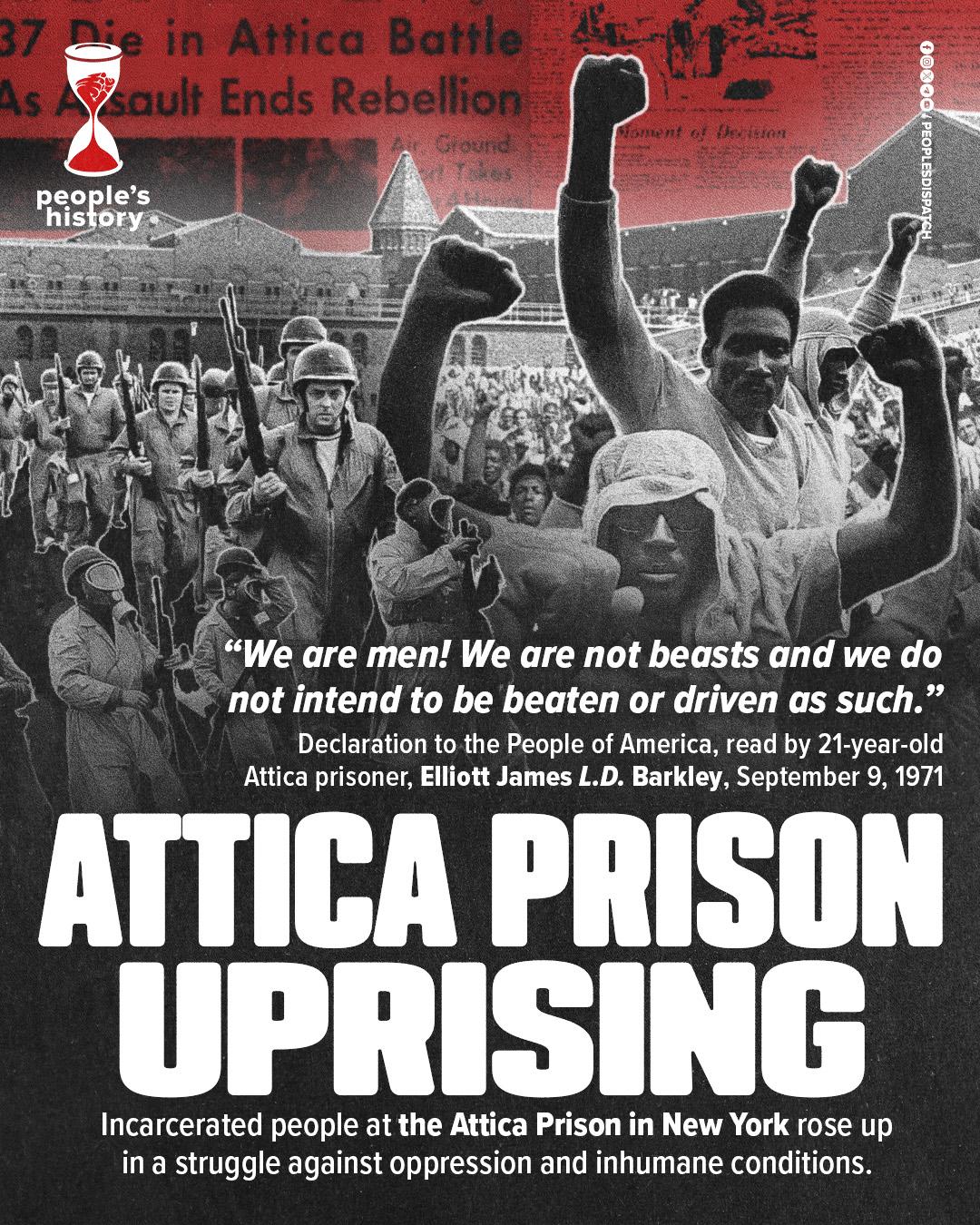
  • #PeoplesHistory | Today, we remember the Attica prisoner uprising, a revolt that took place in 1971 against oppression and inhumanity.

    Between September 9 and 13, 1971, out of roughly 2,200 men imprisoned at Attica, 1,281 seized control of the facility. Prisoners held control of part of the prison for four days, during which officials conceded to 28 of the prisoners’ demands.

    On September 13, 1971, Governor Nelson A. Rockefeller sent state troopers armed with rifles and pistols to retake Attica from the prisoners. The four-day uprising ended in a hail of blood and gunfire that left 39 dead, among them 10 prison staff. Four more had already died earlier during the uprising. With 43 men dead, the vast majority from the violence of state repression, the Attica prison uprising is still the deadliest prison uprising in US history.
    #PeoplesHistory | Today, we remember the Attica prisoner uprising, a revolt that took place in 1971 against oppression and inhumanity. Between September 9 and 13, 1971, out of roughly 2,200 men imprisoned at Attica, 1,281 seized control of the facility. Prisoners held control of part of the prison for four days, during which officials conceded to 28 of the prisoners’ demands. On September 13, 1971, Governor Nelson A. Rockefeller sent state troopers armed with rifles and pistols to retake Attica from the prisoners. The four-day uprising ended in a hail of blood and gunfire that left 39 dead, among them 10 prison staff. Four more had already died earlier during the uprising. With 43 men dead, the vast majority from the violence of state repression, the Attica prison uprising is still the deadliest prison uprising in US history.
    ·1Кб Просмотры ·0 предпросмотр
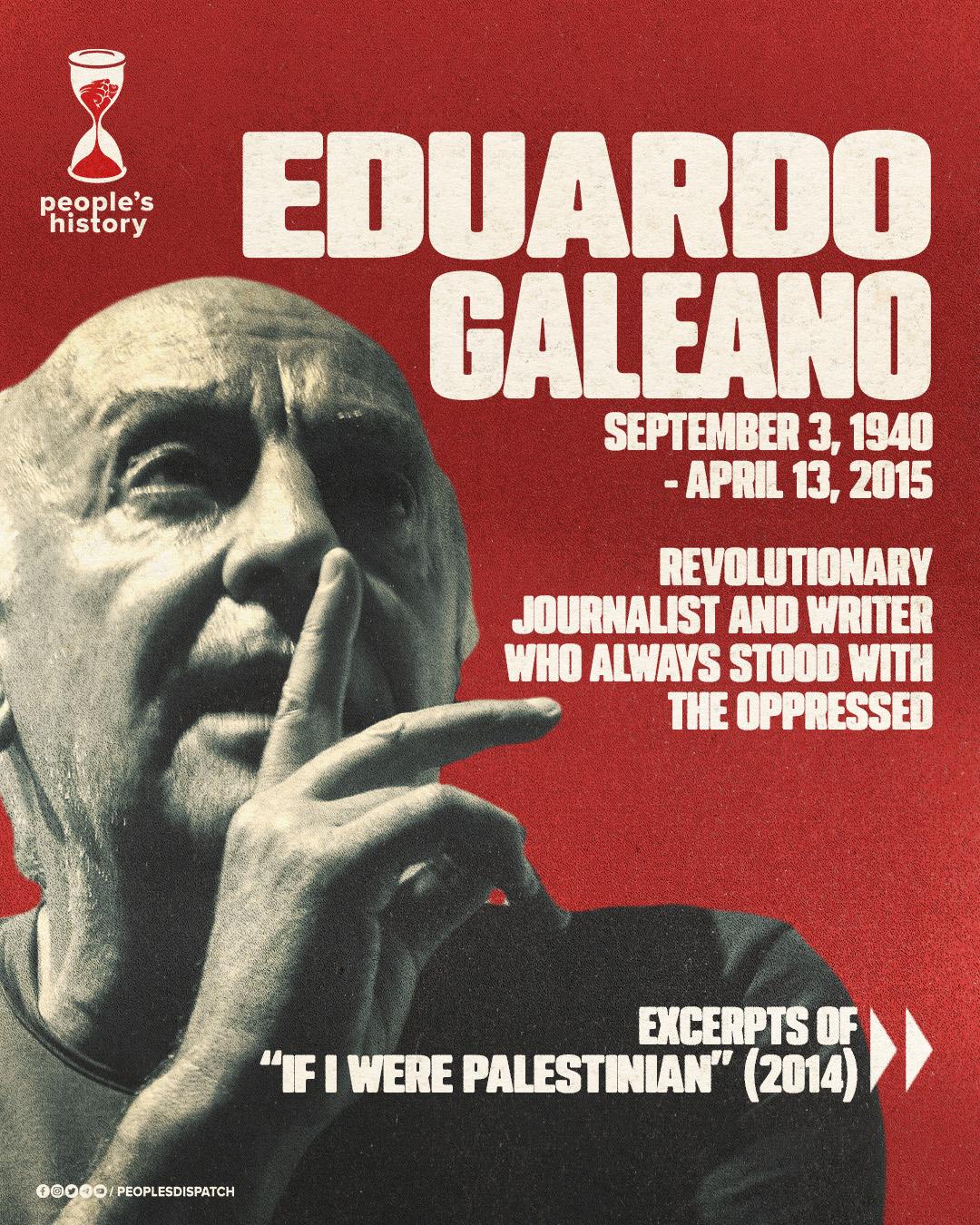
  • #PeoplesHistory | Happy birthday to leftist Uruguayan historian, journalist, and writer Eduardo Galeano, who spent his life trying to shine light on the History of the world’s oppressed people, especially those from Latin America.
    #PeoplesHistory | Happy birthday to leftist Uruguayan historian, journalist, and writer Eduardo Galeano, who spent his life trying to shine light on the History of the world’s oppressed people, especially those from Latin America.
    ·477 Просмотры ·0 предпросмотр
  • #PeoplesHistory | Today is the birthday of Salvador Allende, the first socialist president of Chile. Though his presidency was brief, Allende left an indelible mark on history by nationalizing key industries, most notably copper, and advancing sweeping social reforms aimed at redistributing wealth and expanding access to housing, education, and healthcare.

    His democratic socialist project was violently interrupted on September 11, 1973, when a US-backed coup led by General Augusto Pinochet overthrew his government. The coup not only ended Allende’s life but also dismantled Chile’s democratic institutions and installed a brutal dictatorship.

    Allende died defending his vision of socialism, staying true to his principles until the very end — choosing death over surrender as he defended the presidential palace with a rifle in his hands.
    #PeoplesHistory | Today is the birthday of Salvador Allende, the first socialist president of Chile. Though his presidency was brief, Allende left an indelible mark on history by nationalizing key industries, most notably copper, and advancing sweeping social reforms aimed at redistributing wealth and expanding access to housing, education, and healthcare. His democratic socialist project was violently interrupted on September 11, 1973, when a US-backed coup led by General Augusto Pinochet overthrew his government. The coup not only ended Allende’s life but also dismantled Chile’s democratic institutions and installed a brutal dictatorship. Allende died defending his vision of socialism, staying true to his principles until the very end — choosing death over surrender as he defended the presidential palace with a rifle in his hands.
    ·117 Просмотры ·0 предпросмотр
  • #PeoplesHistory | Today we remember Maximiliano Kosteki and Darío Santillán — two piqueteros and working-class activists in Argentina’s mass social movements of the early 2000s. They were part of a wave of protests led by the poor and unemployed against neoliberalism, IMF-imposed austerity, and government submission to financial capital.

    They were murdered by the police, and authorities — alongside much of the corporate media — attempted to cover up the crime. However, the work of independent journalists, human rights organizations, and photojournalists helped expose the truth and keep their legacy alive.
    #PeoplesHistory | 🇦🇷Today we remember Maximiliano Kosteki and Darío Santillán — two piqueteros and working-class activists in Argentina’s mass social movements of the early 2000s. They were part of a wave of protests led by the poor and unemployed against neoliberalism, IMF-imposed austerity, and government submission to financial capital. They were murdered by the police, and authorities — alongside much of the corporate media — attempted to cover up the crime. However, the work of independent journalists, human rights organizations, and photojournalists helped expose the truth and keep their legacy alive.
    ·195 Просмотры ·0 предпросмотр
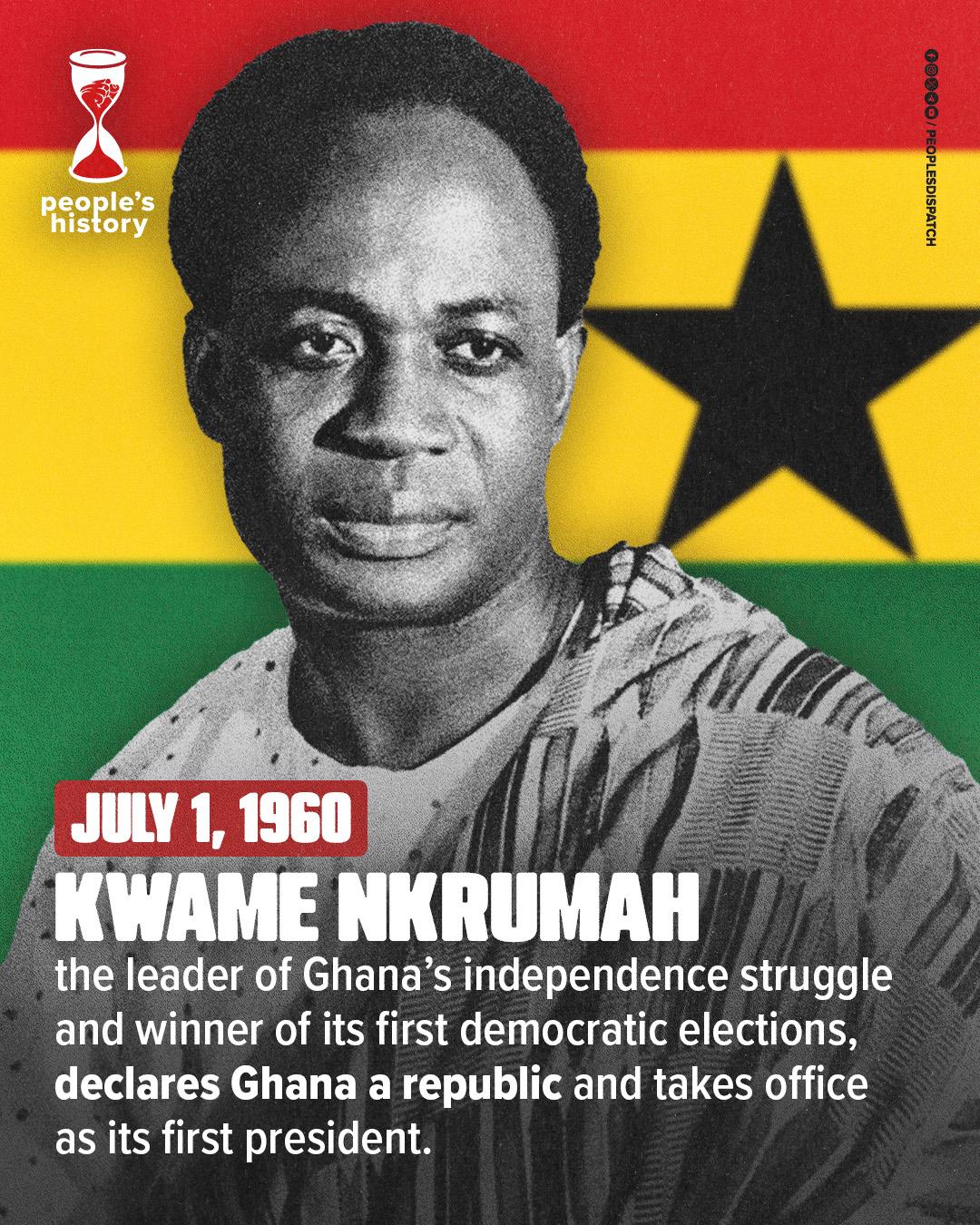
  • #PeoplesHistory | On July 1, 1960, Ghana formally became a republic, deepening its break from British colonial rule and advancing its vision of self-determination. This milestone in Ghana’s liberation struggle came under the leadership of Kwame Nkrumah, the country’s first prime minister and president — a revolutionary thinker and pan-Africanist who championed independence not only for Ghana, but for the entire African continent.
    #PeoplesHistory | On July 1, 1960, Ghana formally became a republic, deepening its break from British colonial rule and advancing its vision of self-determination. This milestone in Ghana’s liberation struggle came under the leadership of Kwame Nkrumah, the country’s first prime minister and president — a revolutionary thinker and pan-Africanist who championed independence not only for Ghana, but for the entire African continent.
    ·244 Просмотры ·0 предпросмотр
Techawks - Powered By Pantrade Blockchain https://techawks.com