• From being removed as Twitter’s CEO…
    to building a ₹6,600 crore AI startup —
    Parag Agrawal’s journey is the comeback story the world needed.

    He turned a setback that shook his career
    into a breakthrough that’s now shaping the future of AI.

    Parallel, his new company, is helping AIs search the live internet, process real-time data, and power the next generation of intelligent systems.

    A reminder to every founder and dreamer:
    Setbacks don’t define you. Comebacks do.

    Share this with someone who needs inspiration today.
    Follow @marketing.growmatics for more real startup stories.

    Content shared for educational, storytelling & commentary purposes under Fair Use (Section 107).
    No ownership of third-party assets.
    DM for credit or takedown.

    #paragagrawal #twitter #startupstory #comebackstory #aistartup #businessmotivation #indiansintech #founderstory #successmindset #trendingreels #explorepage #businessreels #marketinggrowmatics #startupindia #entrepreneurlife #technews #aifuture
    From being removed as Twitter’s CEO… to building a ₹6,600 crore AI startup — Parag Agrawal’s journey is the comeback story the world needed. He turned a setback that shook his career into a breakthrough that’s now shaping the future of AI. Parallel, his new company, is helping AIs search the live internet, process real-time data, and power the next generation of intelligent systems. A reminder to every founder and dreamer: Setbacks don’t define you. Comebacks do. ➡️ Share this with someone who needs inspiration today. ➡️ Follow @marketing.growmatics for more real startup stories. Content shared for educational, storytelling & commentary purposes under Fair Use (Section 107). No ownership of third-party assets. DM for credit or takedown. #paragagrawal #twitter #startupstory #comebackstory #aistartup #businessmotivation #indiansintech #founderstory #successmindset #trendingreels #explorepage #businessreels #marketinggrowmatics #startupindia #entrepreneurlife #technews #aifuture
    ·125 Views ·0 Plays ·0 Reviews

  • NCP MP Supriya Sule has introduced a Private Member’s Bill in the Lok Sabha — the Right to Disconnect Bill, 2025 — aiming to give employees the legal right to ignore work calls, texts, and emails after office hours.

    According to PTI, the bill proposes creating an Employees’ Welfare Authority, which would ensure that workers are not forced to respond to official communication beyond work hours or on holidays.

    The idea is simple:
    Protect work–life balance
    Reduce burnout
    Give employees the legal freedom to “switch off”

    But there’s one catch:
    Private Member’s Bills rarely become law.
    They mostly serve to spark discussion — and this one has definitely reignited India’s workplace boundaries debate.

    Should India legally enforce the right to disconnect?

    Tell us your view.

    Follow @marketing.growmatics for more updates

    #loksabha #righttodisconnect #worklifebalance #burnout #employees #workculture #india #indianstartupnews #newsupdate #marketinggrowmatics
    NCP MP Supriya Sule has introduced a Private Member’s Bill in the Lok Sabha — the Right to Disconnect Bill, 2025 — aiming to give employees the legal right to ignore work calls, texts, and emails after office hours. According to PTI, the bill proposes creating an Employees’ Welfare Authority, which would ensure that workers are not forced to respond to official communication beyond work hours or on holidays. The idea is simple: 📵 Protect work–life balance 🛑 Reduce burnout ⚖️ Give employees the legal freedom to “switch off” But there’s one catch: Private Member’s Bills rarely become law. They mostly serve to spark discussion — and this one has definitely reignited India’s workplace boundaries debate. Should India legally enforce the right to disconnect? Tell us your view. Follow @marketing.growmatics for more updates #loksabha #righttodisconnect #worklifebalance #burnout #employees #workculture #india #indianstartupnews #newsupdate #marketinggrowmatics
    ·89 Views ·0 Reviews
  • A Bihari boy came to Mumbai with nothing more than a bedding, a tiffin box, and a dream.

    No English.
    No formal degree.
    No connections.
    Just courage… and a fire that refused to die.

    That boy was Anil Agarwal.

    He started by picking up scrap metal.
    He worked at a small cable trading shop.
    He saved every rupee, learned every skill, and knocked on every door that others were too scared to try.

    Slowly, the world started to notice.

    Today, he owns Vedanta Resources, a global metal & mining giant worth ₹16,000+ crore.
    From scrap yards to skyscrapers — he built it all, piece by piece.

    This isn’t a “rags to riches” cliché.
    This is India’s real Metal King — a man who proved that your background cannot predict your destiny.

    Success doesn’t come from degrees.
    It comes from hunger.

    Share this with someone who needs the reminder.

    Credit @thelallantop

    Follow @marketing.growmatics for more real founder journeys & business inspiration

    Content used for educational & commentary purposes (Fair Use, Section 107)
    DM for credit or removal

    #AnilAgarwal #Vedanta #SuccessStory #StartupInspiration #FromScrapToSuccess #BusinessMindset #EntrepreneurLife #Motivation #ExplorePage #MarketingGrowmatics #viral #vedantagroup #success #billionaire #hustle #trending
    A Bihari boy came to Mumbai with nothing more than a bedding, a tiffin box, and a dream. No English. No formal degree. No connections. Just courage… and a fire that refused to die. That boy was Anil Agarwal. He started by picking up scrap metal. He worked at a small cable trading shop. He saved every rupee, learned every skill, and knocked on every door that others were too scared to try. Slowly, the world started to notice. Today, he owns Vedanta Resources, a global metal & mining giant worth ₹16,000+ crore. From scrap yards to skyscrapers — he built it all, piece by piece. This isn’t a “rags to riches” cliché. This is India’s real Metal King — a man who proved that your background cannot predict your destiny. Success doesn’t come from degrees. It comes from hunger. Share this with someone who needs the reminder. Credit @thelallantop ➡️ Follow @marketing.growmatics for more real founder journeys & business inspiration Content used for educational & commentary purposes (Fair Use, Section 107) DM for credit or removal #AnilAgarwal #Vedanta #SuccessStory #StartupInspiration #FromScrapToSuccess #BusinessMindset #EntrepreneurLife #Motivation #ExplorePage #MarketingGrowmatics #viral #vedantagroup #success #billionaire #hustle #trending
    ·219 Views ·1 Plays ·0 Reviews
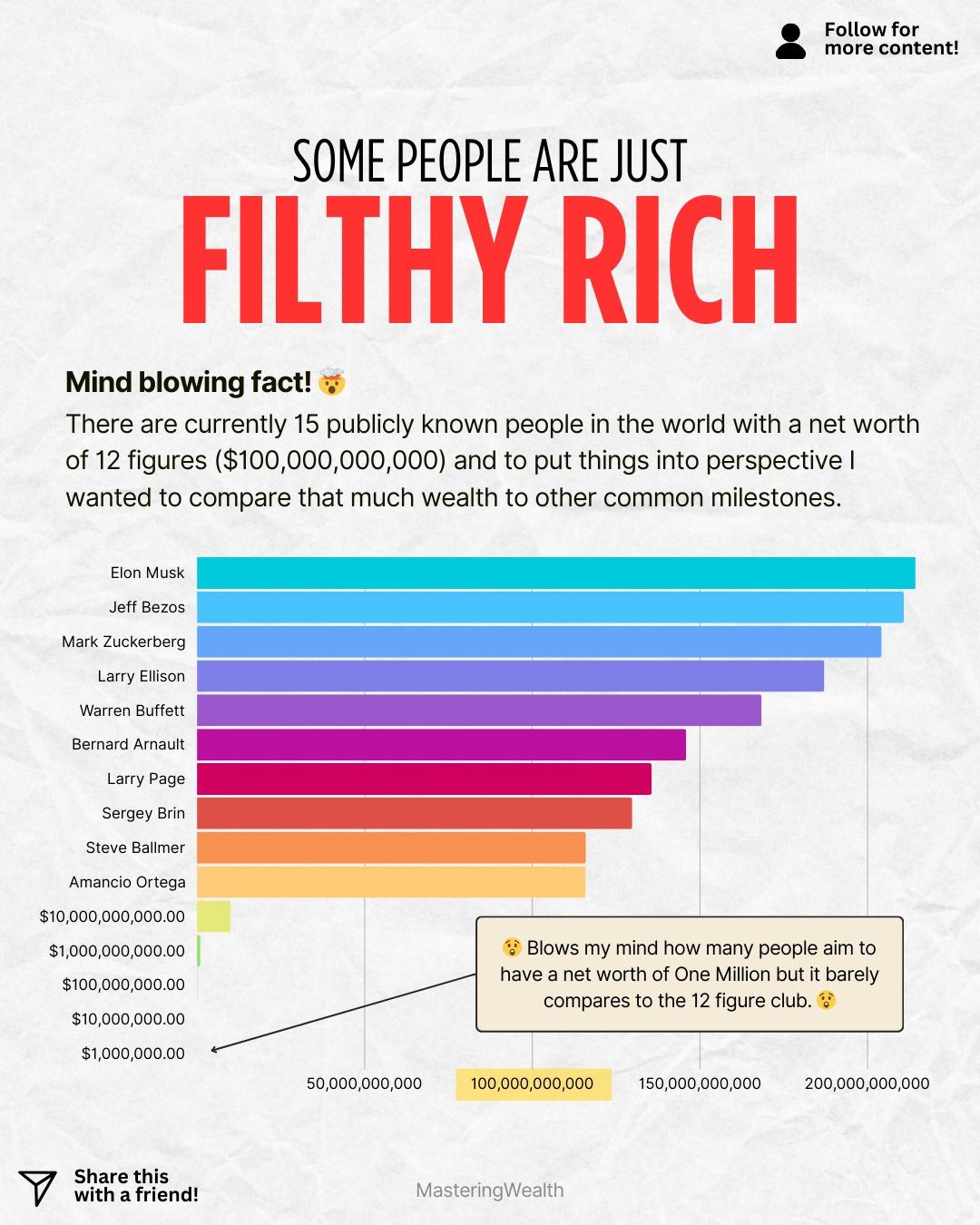
  • The level of wealth shown in this chart is almost impossible to wrap your mind around. The people highlighted here are part of the extremely rare twelve figure club which means their net worth reaches one hundred billion dollars or more. Seeing these numbers next to common financial milestones like one million makes you realize how massive the gap is between everyday wealth and ultra wealth.

    Right now there are about fifteen publicly known individuals who have reached this level. Names like Elon Musk, Jeff Bezos, Mark Zuckerberg, Warren Buffett, Larry Page, Sergey Brin and Bernard Arnault dominate the list because they built companies that changed entire industries. Their wealth is tied to innovation, ownership, and long term growth rather than salary.

    The graphic helps show the scale visually. One million dollars looks tiny when placed next to one hundred billion dollars and that is the entire point. Many people chase their first million while these individuals have created wealth that is one hundred thousand times greater.

    The world of extreme wealth teaches us something important. Wealth grows exponentially when you own assets that scale and reach global markets. Technology, platforms, and long term business ownership continue to be the vehicles that create new billionaires.

    If you want to see the dividend portfolio I use to build steady long term wealth, comment “Stocks” and I will send you the link.

    Which person on this list inspires you the most and why do you think they were able to reach this level of financial success?

    For more content that breaks down wealth building, investing, net worth growth, and financial education in a simple visual way, follow @MasteringWealth and level up your money knowledge daily.

    This content is for educational purposes only and is not financial advice. Always make informed decisions and consult with a licensed professional where needed.
    The level of wealth shown in this chart is almost impossible to wrap your mind around. The people highlighted here are part of the extremely rare twelve figure club which means their net worth reaches one hundred billion dollars or more. Seeing these numbers next to common financial milestones like one million makes you realize how massive the gap is between everyday wealth and ultra wealth. Right now there are about fifteen publicly known individuals who have reached this level. Names like Elon Musk, Jeff Bezos, Mark Zuckerberg, Warren Buffett, Larry Page, Sergey Brin and Bernard Arnault dominate the list because they built companies that changed entire industries. Their wealth is tied to innovation, ownership, and long term growth rather than salary. The graphic helps show the scale visually. One million dollars looks tiny when placed next to one hundred billion dollars and that is the entire point. Many people chase their first million while these individuals have created wealth that is one hundred thousand times greater. The world of extreme wealth teaches us something important. Wealth grows exponentially when you own assets that scale and reach global markets. Technology, platforms, and long term business ownership continue to be the vehicles that create new billionaires. If you want to see the dividend portfolio I use to build steady long term wealth, comment “Stocks” and I will send you the link. Which person on this list inspires you the most and why do you think they were able to reach this level of financial success? For more content that breaks down wealth building, investing, net worth growth, and financial education in a simple visual way, follow @MasteringWealth and level up your money knowledge daily. ⚠️ This content is for educational purposes only and is not financial advice. Always make informed decisions and consult with a licensed professional where needed.
    ·39 Views ·0 Reviews
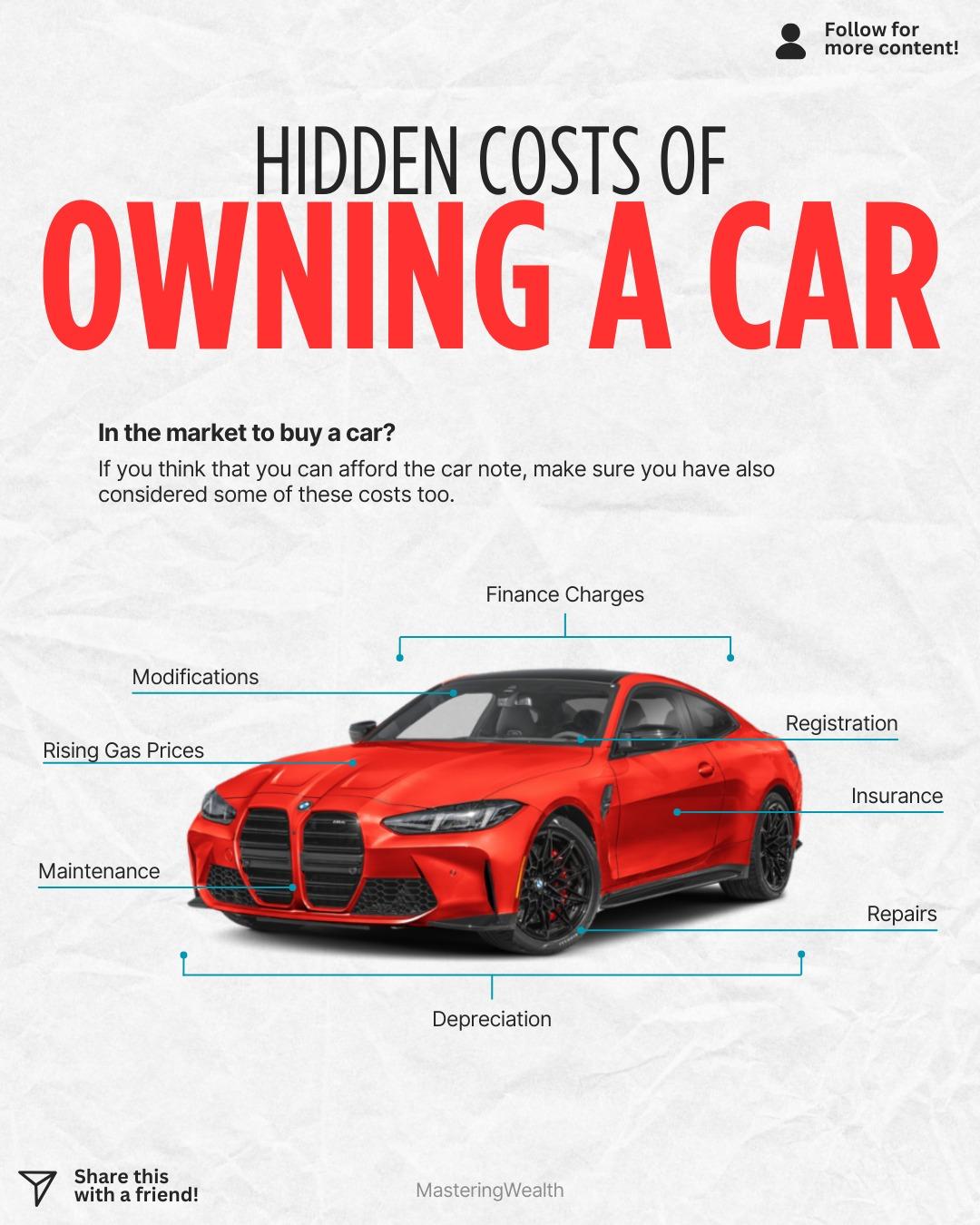
  • Many people think the only thing they need to afford when buying a car is the monthly payment, but the graphic shows that owning a car comes with many hidden expenses that can surprise you. These costs can add up quickly and take a bigger chunk of your budget than expected. Understanding the true cost of car ownership can help you make smarter financial decisions before signing that contract.

    The most overlooked expense is depreciation which starts the moment you drive the car off the lot and continues every year. Even cars that hold value well still lose thousands of dollars over time. This loss is a silent cost because you do not feel it until the moment you try to sell or trade in the car.

    Owning a car also comes with ongoing maintenance. Oil changes, tire replacements, brake pads, and fluids are normal parts of car ownership and these expenses can vary depending on the model you drive. Luxury cars or performance cars usually cost more to maintain because parts and service are more expensive.

    Insurance is another major cost that depends on age, location, driving record, and the value of your vehicle. Many buyers underestimate how much insurance increases when they switch from an older car to a newer one. Registration fees, inspections, and taxes also add yearly expenses that people forget to plan for.

    Gas prices can also shift your entire budget. When prices rise it affects daily driving, commuting, and family trips which can quickly add up depending on how much you drive. And if you enjoy modifications such as wheels, wrap, exhaust systems, or tuning, that becomes an extra financial layer that goes far beyond the original sticker price.

    If you want to see the dividend portfolio I use to offset lifestyle costs and build long term wealth, comment “Stocks” and I will send you the link.

    What hidden car expense surprised you the most when you bought your current vehicle?

    This content is for educational purposes only and is not financial advice. Always do your own research or consult with a licensed professional before making financial decisions.
    Many people think the only thing they need to afford when buying a car is the monthly payment, but the graphic shows that owning a car comes with many hidden expenses that can surprise you. These costs can add up quickly and take a bigger chunk of your budget than expected. Understanding the true cost of car ownership can help you make smarter financial decisions before signing that contract. The most overlooked expense is depreciation which starts the moment you drive the car off the lot and continues every year. Even cars that hold value well still lose thousands of dollars over time. This loss is a silent cost because you do not feel it until the moment you try to sell or trade in the car. Owning a car also comes with ongoing maintenance. Oil changes, tire replacements, brake pads, and fluids are normal parts of car ownership and these expenses can vary depending on the model you drive. Luxury cars or performance cars usually cost more to maintain because parts and service are more expensive. Insurance is another major cost that depends on age, location, driving record, and the value of your vehicle. Many buyers underestimate how much insurance increases when they switch from an older car to a newer one. Registration fees, inspections, and taxes also add yearly expenses that people forget to plan for. Gas prices can also shift your entire budget. When prices rise it affects daily driving, commuting, and family trips which can quickly add up depending on how much you drive. And if you enjoy modifications such as wheels, wrap, exhaust systems, or tuning, that becomes an extra financial layer that goes far beyond the original sticker price. If you want to see the dividend portfolio I use to offset lifestyle costs and build long term wealth, comment “Stocks” and I will send you the link. What hidden car expense surprised you the most when you bought your current vehicle? ⚠️ This content is for educational purposes only and is not financial advice. Always do your own research or consult with a licensed professional before making financial decisions.
    ·39 Views ·0 Reviews
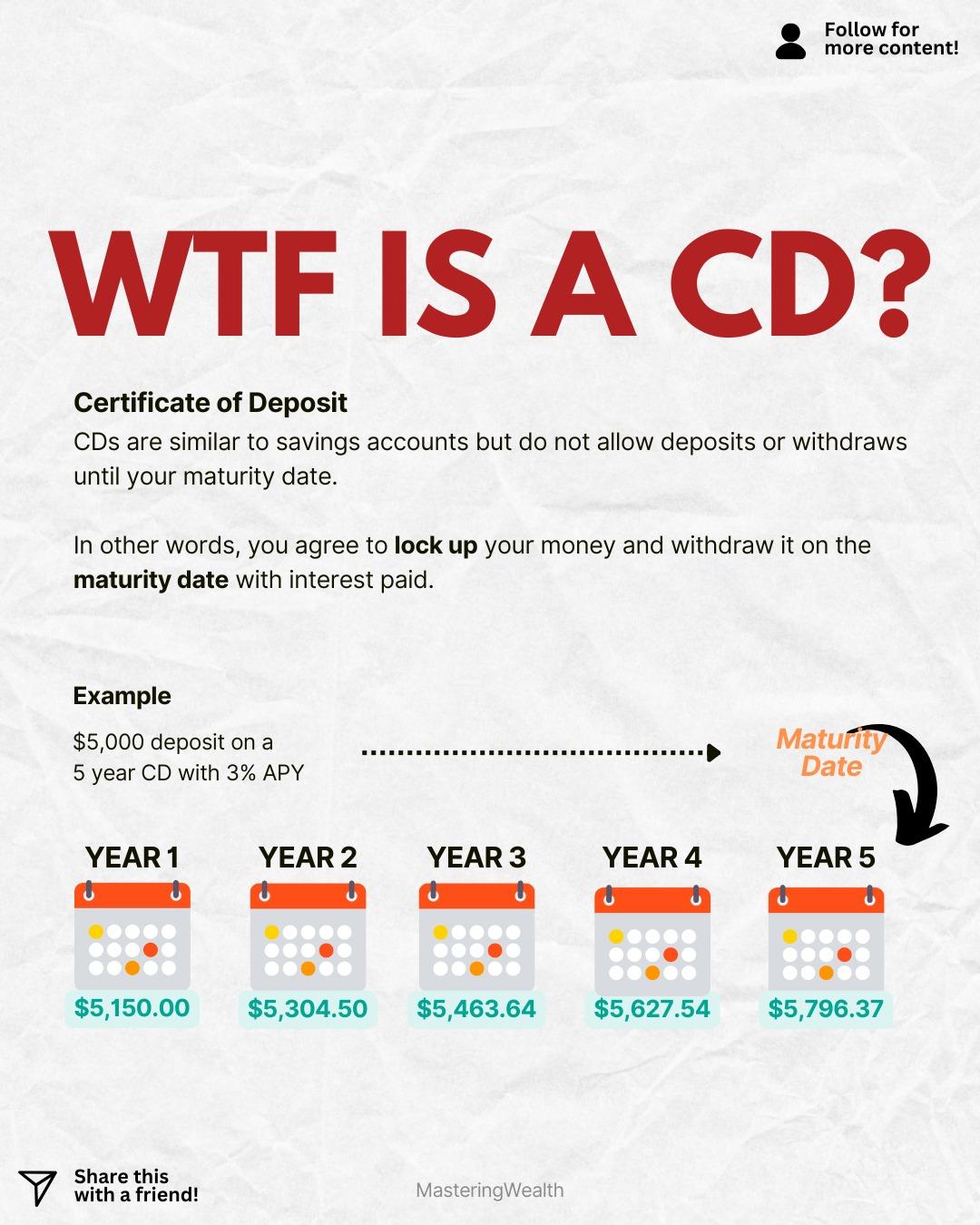
  • A Certificate of Deposit is one of the simplest financial tools you can use to grow your savings with predictable returns. The graphic shows how a CD works by locking your money for a set period and earning a fixed interest rate until the maturity date. This is different from a regular savings account because you cannot add or withdraw money until the term ends without paying a penalty.

    CDs offer stability which makes them attractive for short term goals. You know exactly how much interest you will earn and when you will be able to access your money. This gives you a safe place to store cash while avoiding the risk of market fluctuations.

    In the example shown you deposit five thousand dollars into a five year CD with a three percent APY. Each year your balance grows because interest is added and compounds on the new amount. By the end of year five your money grows to five thousand seven hundred ninety six dollars without needing to do anything extra.

    CDs are great for people who want a guaranteed return. They are often used for emergency fund surplus, saving for a planned purchase, or holding money during uncertain market conditions. They typically offer higher interest rates than regular savings accounts which makes them a better option for money you do not need immediately.

    When comparing CDs always check the APY, term length, and whether the CD is locked or flexible. Online banks sometimes offer higher CD rates than traditional banks which can give you better returns. CDs are also insured which adds another layer of safety for your savings.

    If you want to see the dividend portfolio I use for long term investing and compounding, comment “Stocks” and I will send you the link.

    Would you ever consider using a CD for part of your savings or do you prefer keeping everything in a regular savings account?

    For more simple guides that help you understand interest rates, savings tools, and smart money decisions, follow @MasteringWealth for daily financial breakdowns.

    This content is for educational purposes only and is not financial advice. Always do your own research or consult a licensed professional before making financial decisions.
    A Certificate of Deposit is one of the simplest financial tools you can use to grow your savings with predictable returns. The graphic shows how a CD works by locking your money for a set period and earning a fixed interest rate until the maturity date. This is different from a regular savings account because you cannot add or withdraw money until the term ends without paying a penalty. CDs offer stability which makes them attractive for short term goals. You know exactly how much interest you will earn and when you will be able to access your money. This gives you a safe place to store cash while avoiding the risk of market fluctuations. In the example shown you deposit five thousand dollars into a five year CD with a three percent APY. Each year your balance grows because interest is added and compounds on the new amount. By the end of year five your money grows to five thousand seven hundred ninety six dollars without needing to do anything extra. CDs are great for people who want a guaranteed return. They are often used for emergency fund surplus, saving for a planned purchase, or holding money during uncertain market conditions. They typically offer higher interest rates than regular savings accounts which makes them a better option for money you do not need immediately. When comparing CDs always check the APY, term length, and whether the CD is locked or flexible. Online banks sometimes offer higher CD rates than traditional banks which can give you better returns. CDs are also insured which adds another layer of safety for your savings. If you want to see the dividend portfolio I use for long term investing and compounding, comment “Stocks” and I will send you the link. Would you ever consider using a CD for part of your savings or do you prefer keeping everything in a regular savings account? For more simple guides that help you understand interest rates, savings tools, and smart money decisions, follow @MasteringWealth for daily financial breakdowns. ⚠️ This content is for educational purposes only and is not financial advice. Always do your own research or consult a licensed professional before making financial decisions.
    ·66 Views ·0 Reviews
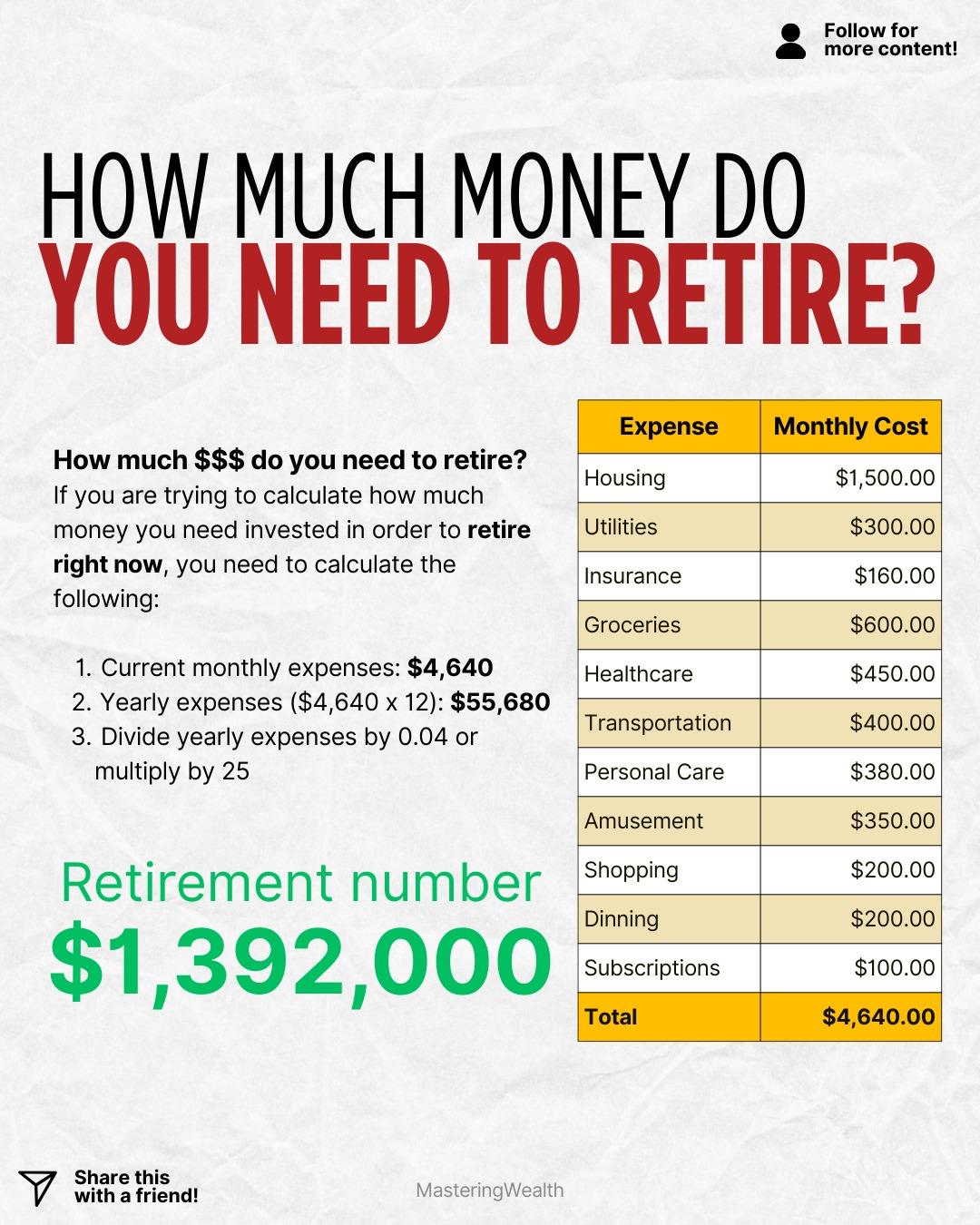
  • Figuring out how much money you need to retire can feel overwhelming, but this graphic breaks it down into a simple formula that anyone can understand. The key is knowing your monthly expenses and then calculating your yearly spending. From there you can use the four percent rule to estimate the total amount you need invested to retire comfortably.

    In this example the monthly expenses are four thousand six hundred forty dollars which adds up to fifty five thousand six hundred eighty dollars per year. When you multiply that number by twenty five you get a retirement number of one million three hundred ninety two thousand dollars. This number represents how much money you would need invested so that a four percent withdrawal rate could support your lifestyle.

    The four percent rule is based on historical market performance and is used as a guideline for safe withdrawals in retirement. It provides a way to estimate how much money your investments can generate each year without running out too quickly. While the exact amount will vary from person to person the formula gives you a starting point for retirement planning.

    Knowing your retirement number helps you map out your journey toward financial independence. It makes your goal feel more realistic because you have a target instead of guessing. Once you know how much you need you can reverse engineer a plan and adjust your savings rate and investment strategy.

    The expenses shown in the chart also remind you that your retirement plan must reflect your real lifestyle. Housing, groceries, transportation, healthcare, subscriptions, entertainment, and personal care all play a role in your overall number. The more accurately you track your expenses the more accurate your retirement calculation will be.

    If you want to see my dividend portfolio which helps me build long term wealth and move closer to financial independence, comment “Stocks” and I will send you the link.

    This content is for educational purposes only and is not financial advice. Always do your own research or consult a licensed professional before making financial decisions.
    Figuring out how much money you need to retire can feel overwhelming, but this graphic breaks it down into a simple formula that anyone can understand. The key is knowing your monthly expenses and then calculating your yearly spending. From there you can use the four percent rule to estimate the total amount you need invested to retire comfortably. In this example the monthly expenses are four thousand six hundred forty dollars which adds up to fifty five thousand six hundred eighty dollars per year. When you multiply that number by twenty five you get a retirement number of one million three hundred ninety two thousand dollars. This number represents how much money you would need invested so that a four percent withdrawal rate could support your lifestyle. The four percent rule is based on historical market performance and is used as a guideline for safe withdrawals in retirement. It provides a way to estimate how much money your investments can generate each year without running out too quickly. While the exact amount will vary from person to person the formula gives you a starting point for retirement planning. Knowing your retirement number helps you map out your journey toward financial independence. It makes your goal feel more realistic because you have a target instead of guessing. Once you know how much you need you can reverse engineer a plan and adjust your savings rate and investment strategy. The expenses shown in the chart also remind you that your retirement plan must reflect your real lifestyle. Housing, groceries, transportation, healthcare, subscriptions, entertainment, and personal care all play a role in your overall number. The more accurately you track your expenses the more accurate your retirement calculation will be. If you want to see my dividend portfolio which helps me build long term wealth and move closer to financial independence, comment “Stocks” and I will send you the link. ⚠️ This content is for educational purposes only and is not financial advice. Always do your own research or consult a licensed professional before making financial decisions.
    ·85 Views ·0 Reviews
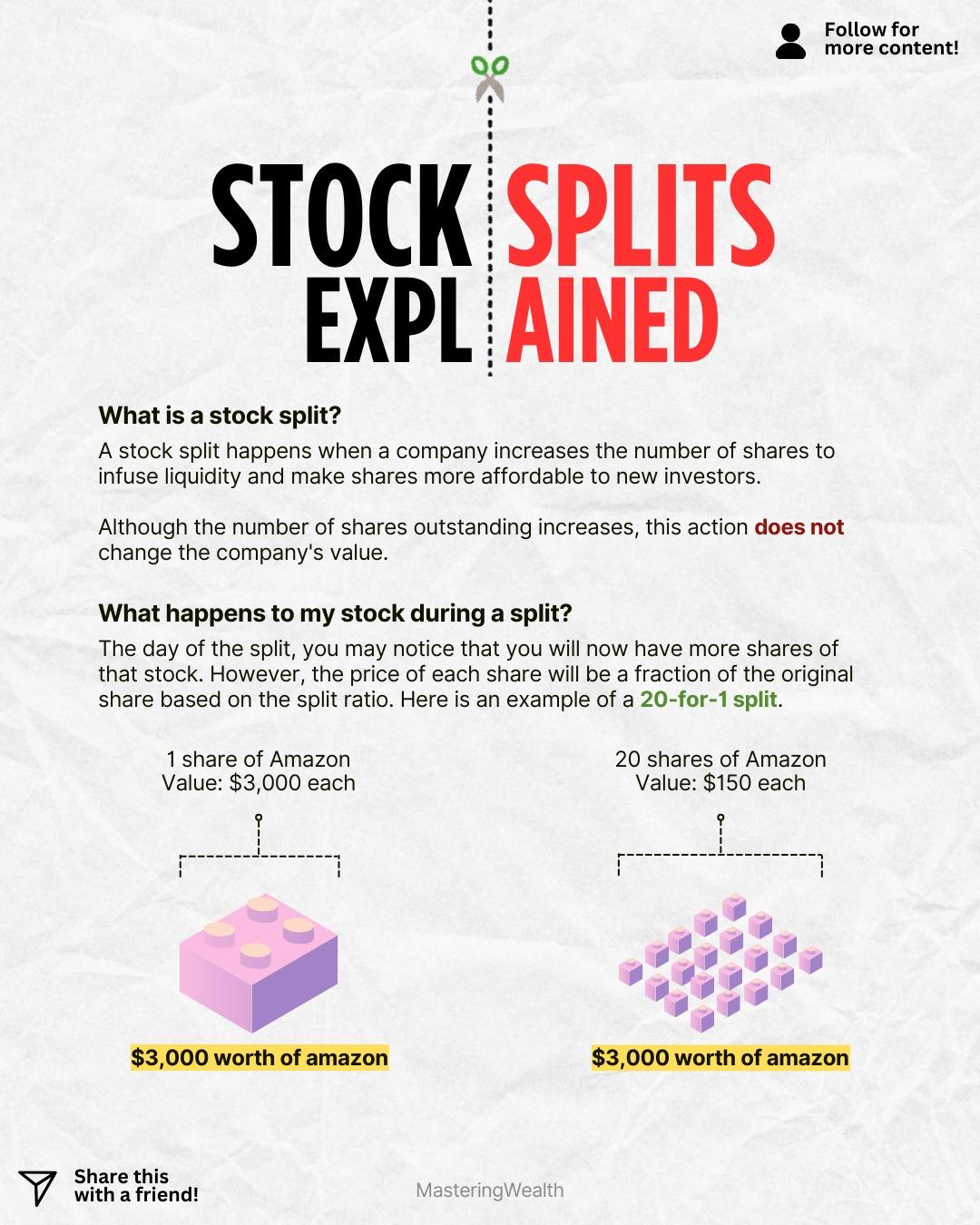
  • A stock split is one of those investing concepts that sounds confusing until you actually see it visually. The graphic shows exactly what happens during a stock split and why it does not change the total value of your investment. Companies use stock splits to make each share more affordable and to increase liquidity which allows more investors to participate.

    When a company performs a stock split it increases the number of shares available but the total value of the company stays the same. This means your overall investment does not change even though the number of shares you hold increases. The price of each share is adjusted based on the split ratio which keeps the total value equal.

    For example if you own one share of Amazon worth three thousand dollars and the company does a twenty for one split you end up with twenty shares worth one hundred fifty dollars each. Nothing about your total value changes because twenty shares at one hundred fifty dollars equals the same three thousand dollars. The split simply breaks the value into smaller parts.

    Many companies like Apple, Tesla, Amazon and Nvidia have used stock splits in the past. They often choose to split their stock once the price becomes too high for new investors who may feel priced out. A split also sends a signal of confidence because companies usually perform them when their share prices have grown significantly.

    Understanding stock splits helps you make smarter investing decisions. When you know that your value stays the same you avoid the confusion that comes from seeing your share count suddenly increase. You also recognize that a lower share price after a split does not mean the company is dropping in value.

    If you want to see the dividend portfolio I use to build long term wealth, comment “Stocks” and I will send you the link.

    For more easy to understand investing breakdowns and financial education visuals, follow @MasteringWealth for daily content that grows your money knowledge.

    This content is for educational purposes only and is not financial advice. Always research carefully or consult with a licensed professional before making financial decisions.
    A stock split is one of those investing concepts that sounds confusing until you actually see it visually. The graphic shows exactly what happens during a stock split and why it does not change the total value of your investment. Companies use stock splits to make each share more affordable and to increase liquidity which allows more investors to participate. When a company performs a stock split it increases the number of shares available but the total value of the company stays the same. This means your overall investment does not change even though the number of shares you hold increases. The price of each share is adjusted based on the split ratio which keeps the total value equal. For example if you own one share of Amazon worth three thousand dollars and the company does a twenty for one split you end up with twenty shares worth one hundred fifty dollars each. Nothing about your total value changes because twenty shares at one hundred fifty dollars equals the same three thousand dollars. The split simply breaks the value into smaller parts. Many companies like Apple, Tesla, Amazon and Nvidia have used stock splits in the past. They often choose to split their stock once the price becomes too high for new investors who may feel priced out. A split also sends a signal of confidence because companies usually perform them when their share prices have grown significantly. Understanding stock splits helps you make smarter investing decisions. When you know that your value stays the same you avoid the confusion that comes from seeing your share count suddenly increase. You also recognize that a lower share price after a split does not mean the company is dropping in value. If you want to see the dividend portfolio I use to build long term wealth, comment “Stocks” and I will send you the link. For more easy to understand investing breakdowns and financial education visuals, follow @MasteringWealth for daily content that grows your money knowledge. ⚠️ This content is for educational purposes only and is not financial advice. Always research carefully or consult with a licensed professional before making financial decisions.
    ·122 Views ·0 Reviews
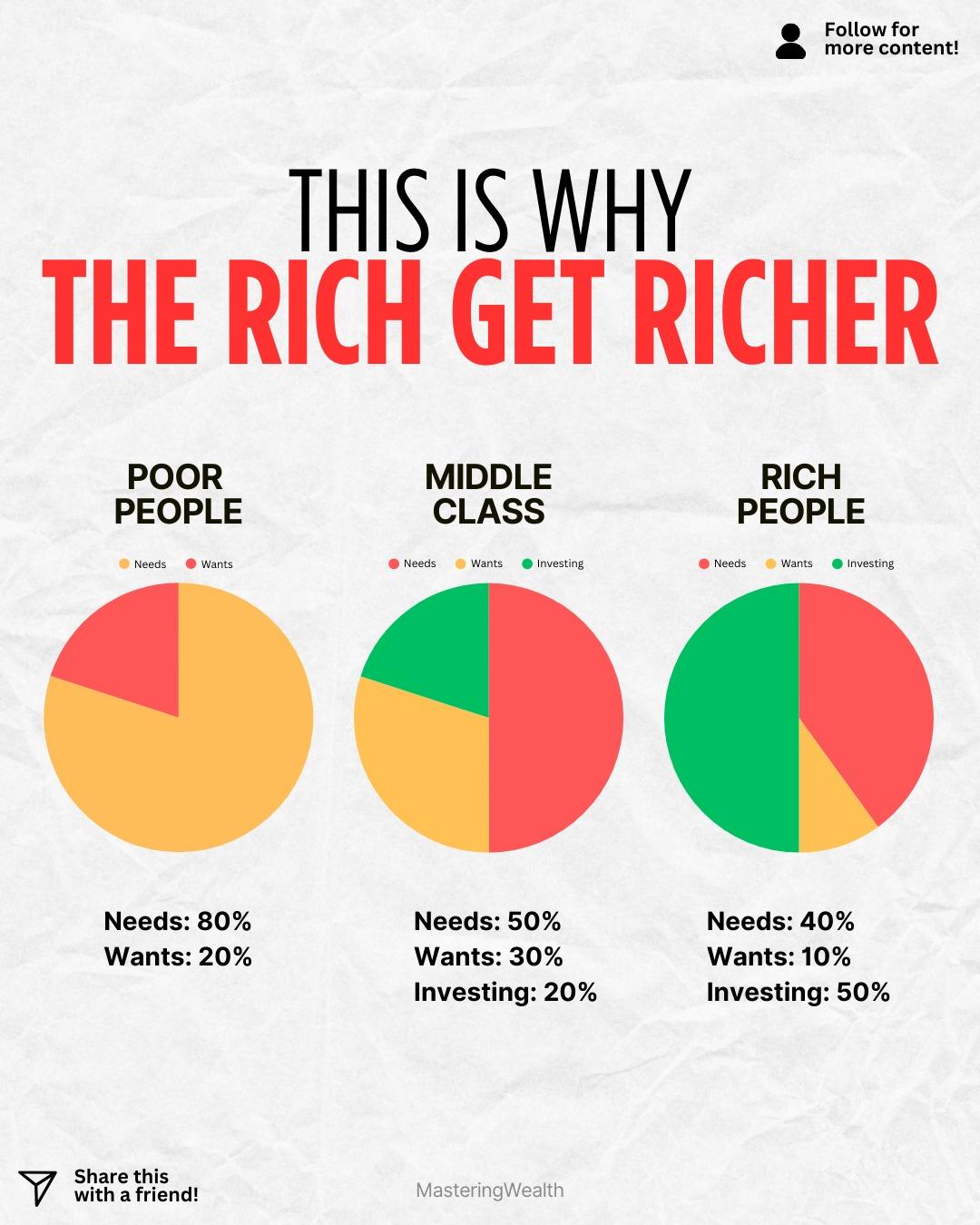
  • Most people never realize that the biggest difference between poor people middle class people and rich people is not just income. The difference is how each group allocates their money and how much of their cash flow goes toward building future wealth. The chart shows three spending patterns that create completely different financial outcomes over time.

    Poor people spend the majority of their money on needs and the rest usually goes toward wants which leaves nothing left to invest. With no money invested there is no growth and no long term wealth building taking place. This creates a cycle where every dollar is already spent before it even arrives.

    Middle class people split their budget between needs wants and a small amount for investing. This is better than not investing at all but usually not enough to create true financial freedom. Without increasing the investing percentage it becomes difficult to break out of the paycheck to paycheck rhythm.

    Rich people prioritize investing first which is why they continue to grow wealth over time. Half of their money goes toward investments which then generate more money through compound growth. That reinvested growth is what keeps expanding their net worth year after year.

    When you study the habits of wealthy people you realize it is not just about earning more money but about keeping more of it. The more you invest the more your money begins working for you instead of you constantly working for money. Even small changes in your percentages can change your long term financial trajectory.

    If you want the link to see my dividend portfolio and learn how I personally invest for long term income comment Stocks and I will send it to you.

    Which of the three spending patterns do you feel you are closest to right now and what percentage do you want to work toward next?

    For more content that breaks down money in a simple and visual way make sure to follow @MasteringWealth for daily financial education.

    This content is for educational purposes only and should not be taken as financial advice. Always do your own research or speak with a licensed professional before making financial decisions.
    Most people never realize that the biggest difference between poor people middle class people and rich people is not just income. The difference is how each group allocates their money and how much of their cash flow goes toward building future wealth. The chart shows three spending patterns that create completely different financial outcomes over time. Poor people spend the majority of their money on needs and the rest usually goes toward wants which leaves nothing left to invest. With no money invested there is no growth and no long term wealth building taking place. This creates a cycle where every dollar is already spent before it even arrives. Middle class people split their budget between needs wants and a small amount for investing. This is better than not investing at all but usually not enough to create true financial freedom. Without increasing the investing percentage it becomes difficult to break out of the paycheck to paycheck rhythm. Rich people prioritize investing first which is why they continue to grow wealth over time. Half of their money goes toward investments which then generate more money through compound growth. That reinvested growth is what keeps expanding their net worth year after year. When you study the habits of wealthy people you realize it is not just about earning more money but about keeping more of it. The more you invest the more your money begins working for you instead of you constantly working for money. Even small changes in your percentages can change your long term financial trajectory. If you want the link to see my dividend portfolio and learn how I personally invest for long term income comment Stocks and I will send it to you. Which of the three spending patterns do you feel you are closest to right now and what percentage do you want to work toward next? For more content that breaks down money in a simple and visual way make sure to follow @MasteringWealth for daily financial education. ⚠️ This content is for educational purposes only and should not be taken as financial advice. Always do your own research or speak with a licensed professional before making financial decisions.
    ·161 Views ·0 Reviews
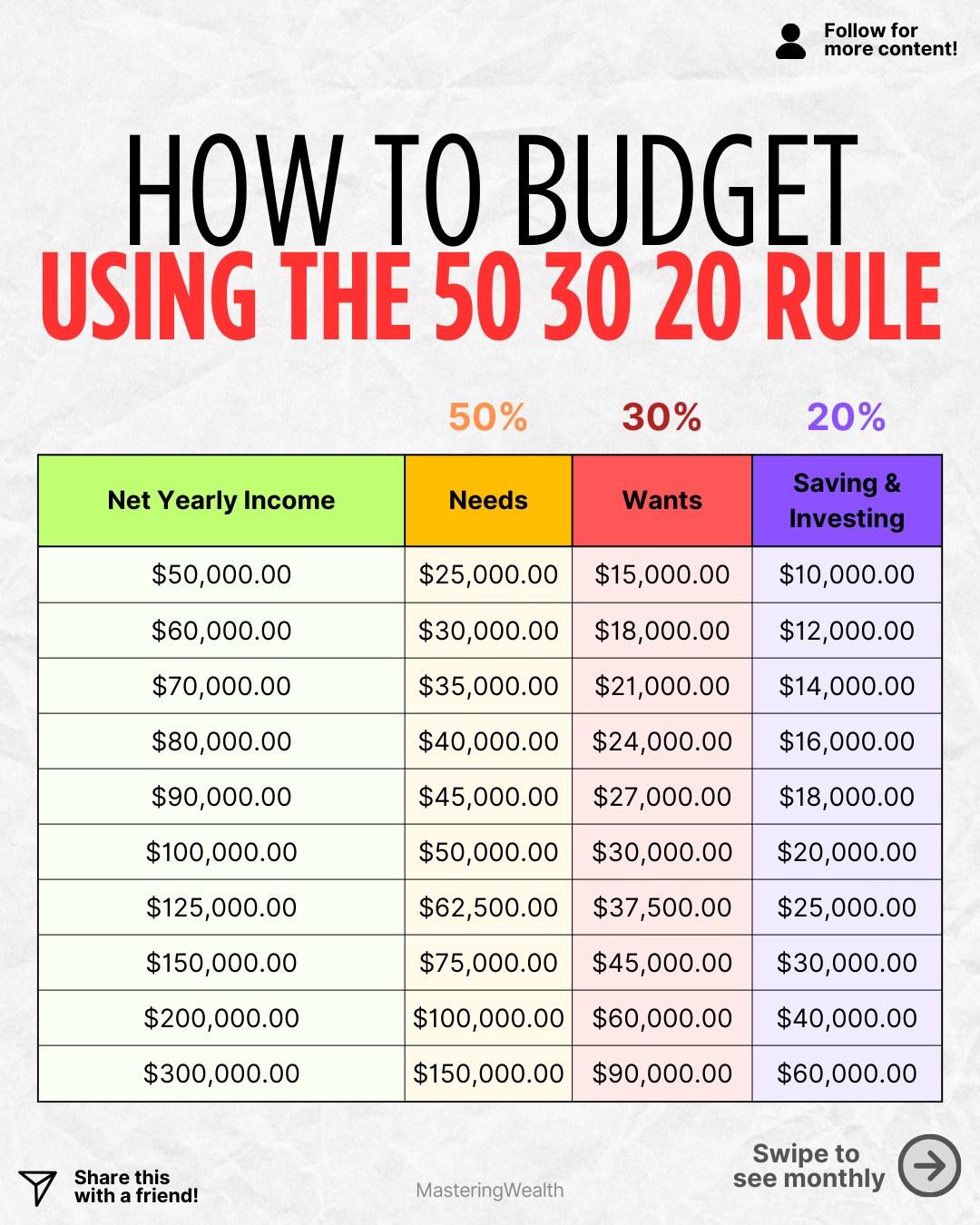
  • Mastering a budget can feel overwhelming but the fifty thirty twenty rule gives you a simple and realistic framework to follow that can transform your financial life This picture breaks down how to use the fifty thirty twenty method with both monthly income amounts and yearly income amounts so you can see how your money can be organized with clarity. When you understand how to divide your income into needs wants and saving categories your financial decisions become easier and more intentional.

    The fifty thirty twenty rule helps you take control of overspending and gives you a clear guideline for how much of your income should be going toward necessities and how much should be saved or invested. Needs are the required expenses that keep your life stable such as housing transportation groceries and insurance while wants are the flexible lifestyle choices that often drain your budget without you noticing. The remaining portion of your income goes toward savings and investing which is the category that actually builds long term wealth and moves you closer to financial independence.

    This budgeting method is powerful because it adapts to your income level and helps you stay consistent in your monthly financial habits Whether you make four thousand per month or twenty five thousand per month the percentages stay the same which keeps your financial structure predictable. It also helps reduce stress by making your money feel more organized which is one of the biggest benefits of the fifty thirty twenty budgeting system.

    If you are working toward investing more in your future this system can make your saving and investing goals easier to automate and track It is a great starting point for anyone who wants more stability or wants to understand how their spending compares to healthy financial benchmarks. Consistency with this rule often leads to better cash flow habits and more confidence with investing.

    If you want to see the dividend portfolio that helps me grow my long term wealth comment Stocks and I will send you the link

    This content is for educational purposes only and is not financial advice.
    Mastering a budget can feel overwhelming but the fifty thirty twenty rule gives you a simple and realistic framework to follow that can transform your financial life 💰📊 This picture breaks down how to use the fifty thirty twenty method with both monthly income amounts and yearly income amounts so you can see how your money can be organized with clarity. When you understand how to divide your income into needs wants and saving categories your financial decisions become easier and more intentional. The fifty thirty twenty rule helps you take control of overspending and gives you a clear guideline for how much of your income should be going toward necessities and how much should be saved or invested. Needs are the required expenses that keep your life stable such as housing transportation groceries and insurance while wants are the flexible lifestyle choices that often drain your budget without you noticing. The remaining portion of your income goes toward savings and investing which is the category that actually builds long term wealth and moves you closer to financial independence. This budgeting method is powerful because it adapts to your income level and helps you stay consistent in your monthly financial habits 💡✨ Whether you make four thousand per month or twenty five thousand per month the percentages stay the same which keeps your financial structure predictable. It also helps reduce stress by making your money feel more organized which is one of the biggest benefits of the fifty thirty twenty budgeting system. If you are working toward investing more in your future this system can make your saving and investing goals easier to automate and track 📈🔥 It is a great starting point for anyone who wants more stability or wants to understand how their spending compares to healthy financial benchmarks. Consistency with this rule often leads to better cash flow habits and more confidence with investing. If you want to see the dividend portfolio that helps me grow my long term wealth comment Stocks and I will send you the link 📩 This content is for educational purposes only and is not financial advice.
    ·185 Views ·0 Reviews
More Results
Techawks - Powered By Pantrade Blockchain https://techawks.com