



Techawks UAE is the official Techawks community connecting developers, AI engineers, startup founders, students, researchers, designers, and technology professionals across the United Arab Emirates. Explore the latest in artificial intelligence, software engineering, cloud computing, cybersecurity, data science, fintech, smart cities, and emerging technologies.
Discover practical tutorials, industry insights, startup discussions, open-source projects, networking opportunities, tech events, job updates, product launches, and expert knowledge sharing. Learn new skills, collaborate on innovative ideas, showcase your work, and grow with a community focused on technology, innovation, and professional development.
Discover practical tutorials, industry insights, startup discussions, open-source projects, networking opportunities, tech events, job updates, product launches, and expert knowledge sharing. Learn new skills, collaborate on innovative ideas, showcase your work, and grow with a community focused on technology, innovation, and professional development.
-
Public Group
-
62 Posts
-
62 Photos
-
0 Videos
-
Reviews
-
People and Nations
Search

 Arabic
 French
 Spanish
 Portuguese
 Deutsch
 Turkish
 Dutch
Dutch
 Italiano
 Russian
 Romaian
 Portuguese (Brazil)
 Greek
Greek
Recent Updates
-
Beyond "In-Country" Storage: Why UAE Sovereign AI Requires Confidential Compute Enclaves
Across the UAE tech ecosystem—accelerated by regulatory frameworks from the Central Bank (CBUAE), the Health Data Law, and initiatives highlighted at GISEC—enterprise tech leads are confronting a major architectural reality: storing data within national borders means nothing if unencrypted model inferences can be inspected at runtime.
True digital sovereignty requires legal, operational, and cryptographic control across the entire compute lifecycle. When banks, government entities, and healthcare platforms deploy LLMs, traditional TLS-in-transit and AES-at-rest encryption leave a massive exposure surface: data in use.
Here is how systems architects and MLOps engineers in the Emirates must architect Sovereign AI workloads:
1. The "Data-in-Use" Vulnerability in Shared Clusters
When sensitive records (e.g., identity attributes or financial transaction histories) are sent to high-density GPU clusters for embedding or inference, the data is decrypted in host memory. In shared cloud environments or multi-tenant infrastructure, privileged hypervisor admins or compromised node-level orchestrators can dump GPU memory and inspect raw prompts and model weights.
2. Implementing Hardware-Enforced Confidential Computing
To achieve sovereign compliance without building air-gapped private data centers from scratch, engineering teams are transitioning to Confidential AI architectures:
Hardware-Based Trusted Execution Environments (TEEs): Utilizing hardware enclaves (such as NVIDIA Confidential Computing with H100/B200 architecture paired with AMD SEV-SNP or Intel TDX). This cryptographically isolates entire VMs and GPU memory pools.
Remote Attestation: Before the client application releases sensitive payloads or model weights to the inference server, an automated attestation service cryptographically verifies that the environment’s firmware, hypervisor, and software stack are unmodified and explicitly authorized.
3. Sovereign Key Management & Local Isolation
Sovereignty collapses if cryptographic root keys reside with offshore orchestration control planes. System architects must decouple the Key Management Service (KMS) from third-party cloud vendors by integrating local Hardware Security Modules (HSMs) governed exclusively under UAE jurisdiction. If key custody remains local, host infrastructure providers cannot access unencrypted data even under foreign extraterritorial subpoena.
Discussion Question
For engineering leads and architects building across Dubai, Abu Dhabi, and the wider GCC: Are your teams already transitioning sensitive enterprise inference into Confidential TEE enclaves, or is your infrastructure strategy currently focused only on physical sovereign cloud hosting?
CTA (Join Techawks UAE)
Join Techawks UAE for technical architectural breakdowns, sovereign cloud workshops, and engineering discussions driving the region's digital frontier.Beyond "In-Country" Storage: Why UAE Sovereign AI Requires Confidential Compute Enclaves Across the UAE tech ecosystem—accelerated by regulatory frameworks from the Central Bank (CBUAE), the Health Data Law, and initiatives highlighted at GISEC—enterprise tech leads are confronting a major architectural reality: storing data within national borders means nothing if unencrypted model inferences can be inspected at runtime. True digital sovereignty requires legal, operational, and cryptographic control across the entire compute lifecycle. When banks, government entities, and healthcare platforms deploy LLMs, traditional TLS-in-transit and AES-at-rest encryption leave a massive exposure surface: data in use. Here is how systems architects and MLOps engineers in the Emirates must architect Sovereign AI workloads: 1. The "Data-in-Use" Vulnerability in Shared Clusters When sensitive records (e.g., identity attributes or financial transaction histories) are sent to high-density GPU clusters for embedding or inference, the data is decrypted in host memory. In shared cloud environments or multi-tenant infrastructure, privileged hypervisor admins or compromised node-level orchestrators can dump GPU memory and inspect raw prompts and model weights. 2. Implementing Hardware-Enforced Confidential Computing To achieve sovereign compliance without building air-gapped private data centers from scratch, engineering teams are transitioning to Confidential AI architectures: Hardware-Based Trusted Execution Environments (TEEs): Utilizing hardware enclaves (such as NVIDIA Confidential Computing with H100/B200 architecture paired with AMD SEV-SNP or Intel TDX). This cryptographically isolates entire VMs and GPU memory pools. Remote Attestation: Before the client application releases sensitive payloads or model weights to the inference server, an automated attestation service cryptographically verifies that the environment’s firmware, hypervisor, and software stack are unmodified and explicitly authorized. 3. Sovereign Key Management & Local Isolation Sovereignty collapses if cryptographic root keys reside with offshore orchestration control planes. System architects must decouple the Key Management Service (KMS) from third-party cloud vendors by integrating local Hardware Security Modules (HSMs) governed exclusively under UAE jurisdiction. If key custody remains local, host infrastructure providers cannot access unencrypted data even under foreign extraterritorial subpoena. Discussion Question For engineering leads and architects building across Dubai, Abu Dhabi, and the wider GCC: Are your teams already transitioning sensitive enterprise inference into Confidential TEE enclaves, or is your infrastructure strategy currently focused only on physical sovereign cloud hosting? CTA (Join Techawks UAE) Join Techawks UAE for technical architectural breakdowns, sovereign cloud workshops, and engineering discussions driving the region's digital frontier. 0 Comments 0 Shares 0 Views 0 Reviews
 -
Architecting for Data Residency & Low Latency: A Production Blueprint for Middle East Multi-Region Deployments
Under UAE Federal Decree-Law on Personal Data Protection (PDPL) and sector-specific financial/telecom regulations (CBUAE and TDRA frameworks), storing and processing citizen personal data requires airtight data sovereignty. At the same time, regional consumer products demand sub-30ms round-trip times across Dubai, Abu Dhabi, and the wider GCC.
Relying on a single cloud region (such as me-central-1 in UAE) without decoupled regional failover and deterministic data zoning creates both compliance risks and availability bottlenecks.
Here is how to design a production-grade, low-latency, residency-compliant architecture across regional cloud zones.
1. In-Country Data Fencing via Tenant-Level Isolation
To satisfy strict local storage mandates while maintaining shared business logic:
Regional In-Country Store (me-central-1 / UAE Central): Deploy your primary operational transactional database (e.g., Amazon Aurora PostgreSQL or Azure SQL) strictly within UAE data center zones.
Tag-Based Storage Routing: In your API layer, apply policy-driven tagging (data_residency: uae_strict) to ensure user identity tables, financial ledgers, and transaction records never replicate outside designated sovereign VPCs.
Cross-Border Telemetry Stripping: When pushing application logs and traces to central observability stacks outside the country, route payloads through a localized log-sanitizing gateway that strips PII and IP addresses at the edge.
2. Edge Acceleration with Regional Anycast Routing
Network hops between local ISPs (e.g., e&, du) and international backbones can introduce erratic latency spikes during peak evening hours.
Deploy an edge-acceleration proxy (AWS Global Accelerator or Cloudflare Edge with regional points of presence in Dubai and Abu Dhabi).
Terminate TLS handshakes at the local edge point of presence (PoP) inside the UAE rather than letting unoptimized TCP connections travel all the way to backend services.
This drops initial connection establishment latency from ~80ms down to sub-10ms for users across the Emirates.
3. Read-Replica Topology Across the GCC
If your application serves users across both the UAE and neighboring GCC hubs (e.g., Saudi Arabia me-south-1 or me-central-2):
Keep write operations and authoritative data master records strictly pinned within the UAE primary region.
Provision localized read replicas in adjacent GCC zones for non-sensitive, high-frequency read entities (such as product catalogs, pricing tiers, and public metadata).
Use asynchronous replication channels with SSL enforcement, ensuring that cross-border data transfer remains limited strictly to non-regulated, anonymized domains.
4. Deterministic Failover Without Sovereignty Breach
A common trap during disaster recovery (DR) is auto-failing over to a secondary region located in Europe (eu-west-1 or eu-central-1), instantly violating local data sovereignty rules.
Configure your automated DR orchestration (via Terraform/OpenTofu) to maintain active-passive or active-active topology only between localized sovereign zones or paired in-country sovereign clouds.
Enforce IAM and organizational SCPs (Service Control Policies) that hard-block any database backup snapshot export, cross-region replication, or route failover targeting zones outside compliant Middle East boundaries.
Key Takeaways
Fence Sovereign Data: Keep sensitive PII and financial transaction stores strictly confined to UAE cloud regions (me-central-1) using tag-based routing and localized VPCs.
Sanitize Edge Telemetry: Run outbound logs and distributed traces through an in-country redaction worker before shipping metrics to global observability hubs.
Terminate TLS Locally: Use UAE-based Anycast edge endpoints to terminate connections inside the country, slashing connection setup overhead across local networks.
Constrain DR Automation: Ensure automated disaster recovery policies strictly prohibit failover to non-GCC regions to prevent inadvertent compliance violations during an outage.
CTA
Building high-performance, compliant distributed systems across the UAE and Gulf tech landscape?
Join Techawks UAE to connect with Dubai and Abu Dhabi engineering leads, cloud architects, and backend innovators building regional-scale infrastructure. Link in the comments.Architecting for Data Residency & Low Latency: A Production Blueprint for Middle East Multi-Region Deployments Under UAE Federal Decree-Law on Personal Data Protection (PDPL) and sector-specific financial/telecom regulations (CBUAE and TDRA frameworks), storing and processing citizen personal data requires airtight data sovereignty. At the same time, regional consumer products demand sub-30ms round-trip times across Dubai, Abu Dhabi, and the wider GCC. Relying on a single cloud region (such as me-central-1 in UAE) without decoupled regional failover and deterministic data zoning creates both compliance risks and availability bottlenecks. Here is how to design a production-grade, low-latency, residency-compliant architecture across regional cloud zones. 1. In-Country Data Fencing via Tenant-Level Isolation To satisfy strict local storage mandates while maintaining shared business logic: Regional In-Country Store (me-central-1 / UAE Central): Deploy your primary operational transactional database (e.g., Amazon Aurora PostgreSQL or Azure SQL) strictly within UAE data center zones. Tag-Based Storage Routing: In your API layer, apply policy-driven tagging (data_residency: uae_strict) to ensure user identity tables, financial ledgers, and transaction records never replicate outside designated sovereign VPCs. Cross-Border Telemetry Stripping: When pushing application logs and traces to central observability stacks outside the country, route payloads through a localized log-sanitizing gateway that strips PII and IP addresses at the edge. 2. Edge Acceleration with Regional Anycast Routing Network hops between local ISPs (e.g., e&, du) and international backbones can introduce erratic latency spikes during peak evening hours. Deploy an edge-acceleration proxy (AWS Global Accelerator or Cloudflare Edge with regional points of presence in Dubai and Abu Dhabi). Terminate TLS handshakes at the local edge point of presence (PoP) inside the UAE rather than letting unoptimized TCP connections travel all the way to backend services. This drops initial connection establishment latency from ~80ms down to sub-10ms for users across the Emirates. 3. Read-Replica Topology Across the GCC If your application serves users across both the UAE and neighboring GCC hubs (e.g., Saudi Arabia me-south-1 or me-central-2): Keep write operations and authoritative data master records strictly pinned within the UAE primary region. Provision localized read replicas in adjacent GCC zones for non-sensitive, high-frequency read entities (such as product catalogs, pricing tiers, and public metadata). Use asynchronous replication channels with SSL enforcement, ensuring that cross-border data transfer remains limited strictly to non-regulated, anonymized domains. 4. Deterministic Failover Without Sovereignty Breach A common trap during disaster recovery (DR) is auto-failing over to a secondary region located in Europe (eu-west-1 or eu-central-1), instantly violating local data sovereignty rules. Configure your automated DR orchestration (via Terraform/OpenTofu) to maintain active-passive or active-active topology only between localized sovereign zones or paired in-country sovereign clouds. Enforce IAM and organizational SCPs (Service Control Policies) that hard-block any database backup snapshot export, cross-region replication, or route failover targeting zones outside compliant Middle East boundaries. Key Takeaways Fence Sovereign Data: Keep sensitive PII and financial transaction stores strictly confined to UAE cloud regions (me-central-1) using tag-based routing and localized VPCs. Sanitize Edge Telemetry: Run outbound logs and distributed traces through an in-country redaction worker before shipping metrics to global observability hubs. Terminate TLS Locally: Use UAE-based Anycast edge endpoints to terminate connections inside the country, slashing connection setup overhead across local networks. Constrain DR Automation: Ensure automated disaster recovery policies strictly prohibit failover to non-GCC regions to prevent inadvertent compliance violations during an outage. CTA Building high-performance, compliant distributed systems across the UAE and Gulf tech landscape? Join Techawks UAE to connect with Dubai and Abu Dhabi engineering leads, cloud architects, and backend innovators building regional-scale infrastructure. Link in the comments. 0 Comments 0 Shares 58 Views 0 Reviews
 -
UAE Sovereign Cloud & AI Mandates: The 5-Point Engineering Checklist for In-Country Data Residency
As the UAE doubles down on sovereign AI initiatives—spanning localized LLMs like Jais and Falcon to DESC-certified cloud environments—engineering teams face strict enforcement around cross-border data sovereignty.
In production, digital sovereignty is not just where your primary database sits; it governs where your prompt vectors are embedded, where automated error logs route, and who controls cryptographic keys. Relying on generic public cloud configurations frequently leaks data offshore during automated backups, support ticket dumps, or third-party inference calls.
Here is the 5-point production checklist UAE engineering leads and platform architects must implement:
1. In-Country Inference Routing for Sensitive Datasets
If your application handles Level 3/Level 4 enterprise or regulated consumer data, queries must not egress to offshore inference endpoints.
Deploy local model runtimes or integrate with verified in-country sovereign AI platforms (such as Core42 or UAE-domiciled sovereign enclaves) to guarantee data never crosses geographic boundaries for model evaluation or batch processing.
2. BYOK with In-Country Hardware Security Modules (HSM)
Retain explicit key custody within UAE borders.
Enforce "Bring Your Own Key" (BYOK) architecture where root encryption keys are managed in dedicated, local FIPS 140-2 Level 3 HSMs. Foreign-managed root keys or cloud providers subject to extraterritorial discovery laws (like the US CLOUD Act) fail sovereign data ring-fencing audits.
3. Egress Sanitization & Real-Time PII Masking Proxies
Deploy an inline proxy layer upstream of any external tool invocation or third-party microservice.
Automatically detect and strip Emirates ID numbers, phone numbers, and sensitive personal identifiers using local NLP tokenizers before payloads hit asynchronous queues or external SaaS processors.
4. Audit Pipeline Telemetry, Backups & Subprocessors
Hyperscaler disaster recovery and logging defaults often replicate snapshots to secondary regions outside the Middle East.
Explicitly configure regional lock policies: ensure secondary backup targets, CloudWatch/Datadog log streams, and container registry mirrors remain restricted strictly to UAE physical availability zones.
5. Automated 72-Hour Breach Notification & Lineage Telemetry
Under UAE PDPL, personal data incidents require statutory notification within 72 hours to the UAE Data Office.
Implement immutable data lineage tracing at the storage layer so you can pinpoint the exact scope of affected records within minutes of an anomalous query event, rather than relying on manual log reconstruction.
Discussion Question
When deploying generative AI models and RAG pipelines in the UAE, how is your team handling prompt telemetry—are you hosting models fully in-country, using client-side masking proxies, or running hybrid sovereign enclaves?
CTA (Join Techawks UAE)
Building high-scale, resilient architectures and AI systems in the Emirates? Join Techawks UAE to exchange blueprints, sovereign cloud best practices, and engineering insights with the region’s top tech leaders.UAE Sovereign Cloud & AI Mandates: The 5-Point Engineering Checklist for In-Country Data Residency As the UAE doubles down on sovereign AI initiatives—spanning localized LLMs like Jais and Falcon to DESC-certified cloud environments—engineering teams face strict enforcement around cross-border data sovereignty. In production, digital sovereignty is not just where your primary database sits; it governs where your prompt vectors are embedded, where automated error logs route, and who controls cryptographic keys. Relying on generic public cloud configurations frequently leaks data offshore during automated backups, support ticket dumps, or third-party inference calls. Here is the 5-point production checklist UAE engineering leads and platform architects must implement: 1. In-Country Inference Routing for Sensitive Datasets If your application handles Level 3/Level 4 enterprise or regulated consumer data, queries must not egress to offshore inference endpoints. Deploy local model runtimes or integrate with verified in-country sovereign AI platforms (such as Core42 or UAE-domiciled sovereign enclaves) to guarantee data never crosses geographic boundaries for model evaluation or batch processing. 2. BYOK with In-Country Hardware Security Modules (HSM) Retain explicit key custody within UAE borders. Enforce "Bring Your Own Key" (BYOK) architecture where root encryption keys are managed in dedicated, local FIPS 140-2 Level 3 HSMs. Foreign-managed root keys or cloud providers subject to extraterritorial discovery laws (like the US CLOUD Act) fail sovereign data ring-fencing audits. 3. Egress Sanitization & Real-Time PII Masking Proxies Deploy an inline proxy layer upstream of any external tool invocation or third-party microservice. Automatically detect and strip Emirates ID numbers, phone numbers, and sensitive personal identifiers using local NLP tokenizers before payloads hit asynchronous queues or external SaaS processors. 4. Audit Pipeline Telemetry, Backups & Subprocessors Hyperscaler disaster recovery and logging defaults often replicate snapshots to secondary regions outside the Middle East. Explicitly configure regional lock policies: ensure secondary backup targets, CloudWatch/Datadog log streams, and container registry mirrors remain restricted strictly to UAE physical availability zones. 5. Automated 72-Hour Breach Notification & Lineage Telemetry Under UAE PDPL, personal data incidents require statutory notification within 72 hours to the UAE Data Office. Implement immutable data lineage tracing at the storage layer so you can pinpoint the exact scope of affected records within minutes of an anomalous query event, rather than relying on manual log reconstruction. Discussion Question When deploying generative AI models and RAG pipelines in the UAE, how is your team handling prompt telemetry—are you hosting models fully in-country, using client-side masking proxies, or running hybrid sovereign enclaves? CTA (Join Techawks UAE) Building high-scale, resilient architectures and AI systems in the Emirates? Join Techawks UAE to exchange blueprints, sovereign cloud best practices, and engineering insights with the region’s top tech leaders.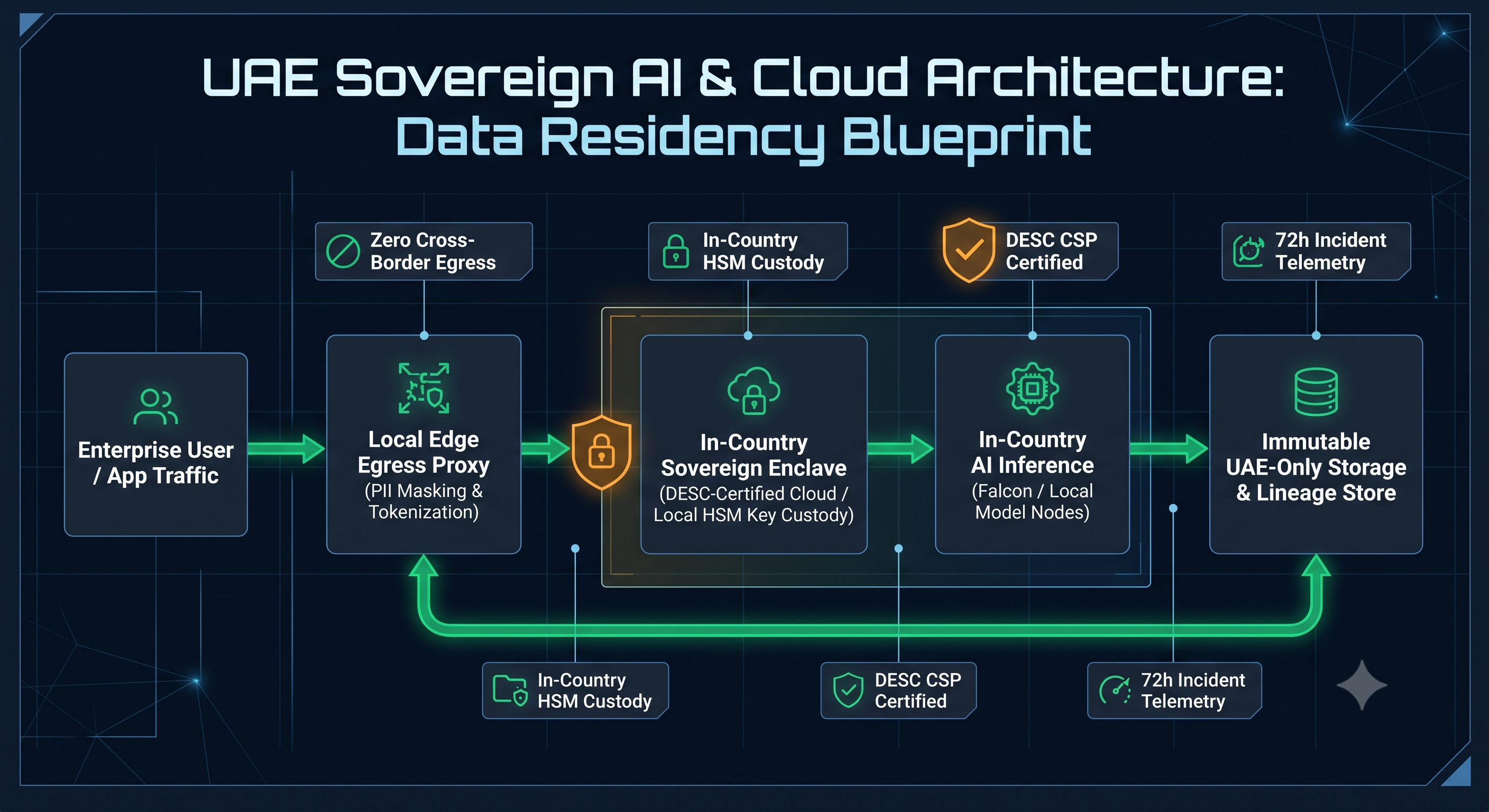 0 Comments 0 Shares 4 Views 0 Reviews
 -
Can Your Distributed Stack Survive a Middle East Subsea Cable Outage? The 48-Hour In-Country Resilience Challenge.
Building production-grade architecture in me-central-1 (UAE) requires engineering for self-contained survivability. When cross-border transit degrades, your domestic user experience should not collapse with it.
Take the Techawks 48-Hour In-Country Resilience Challenge to verify whether your UAE workloads can operate autonomously when international WAN connectivity chokes:
Decouple Regional Third-Party Auth & CDN Dependencies
The Problem: Relying on global identity providers (IdPs), authorization webhooks, or CDN edge workers terminating outside the GCC causes local sessions to fail if cross-region round-trip time spikes.
The Fix: Terminate and cache session tokens locally within UAE VPCs. Implement local fallbacks for token verification using cached public keys (JWKS) rather than forcing synchronous, out-of-region validation on every API handshake.
Stress-Test Cross-Border Asynchronous Data Sync
The Problem: Distributed event brokers (Kafka, RabbitMQ) streaming data between the UAE and overseas secondary regions choke under severe packet loss, buffering messages locally until broker memory limits trigger out-of-memory (OOM) crashes.
The Fix: Configure isolated, circuit-breaker-backed replication queues. When egress latency exceeds your 80 ms threshold, automatically trip the circuit: spool events to local persistent disk volumes and preserve 100% of in-country transactional operations without backpressure.
Verify Sovereign Data Residency Containment
The Problem: Fallback routes configured during failover simulations can inadvertently reroute protected local user records or payment telemetry to foreign data centers, violating local UAE data protection and sector-specific residency mandates.
The Fix: Define explicit egress security groups and VPC route tables that restrict sensitive transactional tables to local UAE subnets, ensuring failover paths never route regulated data out-of-territory under any failure scenario.
Key Takeaways
Prioritize Domestic Autonomy: Treat external international regions as untrusted, volatile links rather than reliable synchronous dependencies.
Isolate Egress Buffering: Protect local application pods from crashing by utilizing backpressure-safe local storage queues when international pipelines stall.
Keep Boundaries Immutable: Resilience mechanisms must enforce sovereign data boundaries by default, even during catastrophic network partitioning.
CTA
Architecting high-availability, low-latency, and compliant systems across the UAE and GCC? Connect with the systems engineers, cloud leads, and solutions architects shaping local tech infrastructure.
👉 Join the Techawks UAE community today: [link]Can Your Distributed Stack Survive a Middle East Subsea Cable Outage? The 48-Hour In-Country Resilience Challenge. Building production-grade architecture in me-central-1 (UAE) requires engineering for self-contained survivability. When cross-border transit degrades, your domestic user experience should not collapse with it. Take the Techawks 48-Hour In-Country Resilience Challenge to verify whether your UAE workloads can operate autonomously when international WAN connectivity chokes: Decouple Regional Third-Party Auth & CDN Dependencies The Problem: Relying on global identity providers (IdPs), authorization webhooks, or CDN edge workers terminating outside the GCC causes local sessions to fail if cross-region round-trip time spikes. The Fix: Terminate and cache session tokens locally within UAE VPCs. Implement local fallbacks for token verification using cached public keys (JWKS) rather than forcing synchronous, out-of-region validation on every API handshake. Stress-Test Cross-Border Asynchronous Data Sync The Problem: Distributed event brokers (Kafka, RabbitMQ) streaming data between the UAE and overseas secondary regions choke under severe packet loss, buffering messages locally until broker memory limits trigger out-of-memory (OOM) crashes. The Fix: Configure isolated, circuit-breaker-backed replication queues. When egress latency exceeds your 80 ms threshold, automatically trip the circuit: spool events to local persistent disk volumes and preserve 100% of in-country transactional operations without backpressure. Verify Sovereign Data Residency Containment The Problem: Fallback routes configured during failover simulations can inadvertently reroute protected local user records or payment telemetry to foreign data centers, violating local UAE data protection and sector-specific residency mandates. The Fix: Define explicit egress security groups and VPC route tables that restrict sensitive transactional tables to local UAE subnets, ensuring failover paths never route regulated data out-of-territory under any failure scenario. Key Takeaways Prioritize Domestic Autonomy: Treat external international regions as untrusted, volatile links rather than reliable synchronous dependencies. Isolate Egress Buffering: Protect local application pods from crashing by utilizing backpressure-safe local storage queues when international pipelines stall. Keep Boundaries Immutable: Resilience mechanisms must enforce sovereign data boundaries by default, even during catastrophic network partitioning. CTA Architecting high-availability, low-latency, and compliant systems across the UAE and GCC? Connect with the systems engineers, cloud leads, and solutions architects shaping local tech infrastructure. 👉 Join the Techawks UAE community today: [link]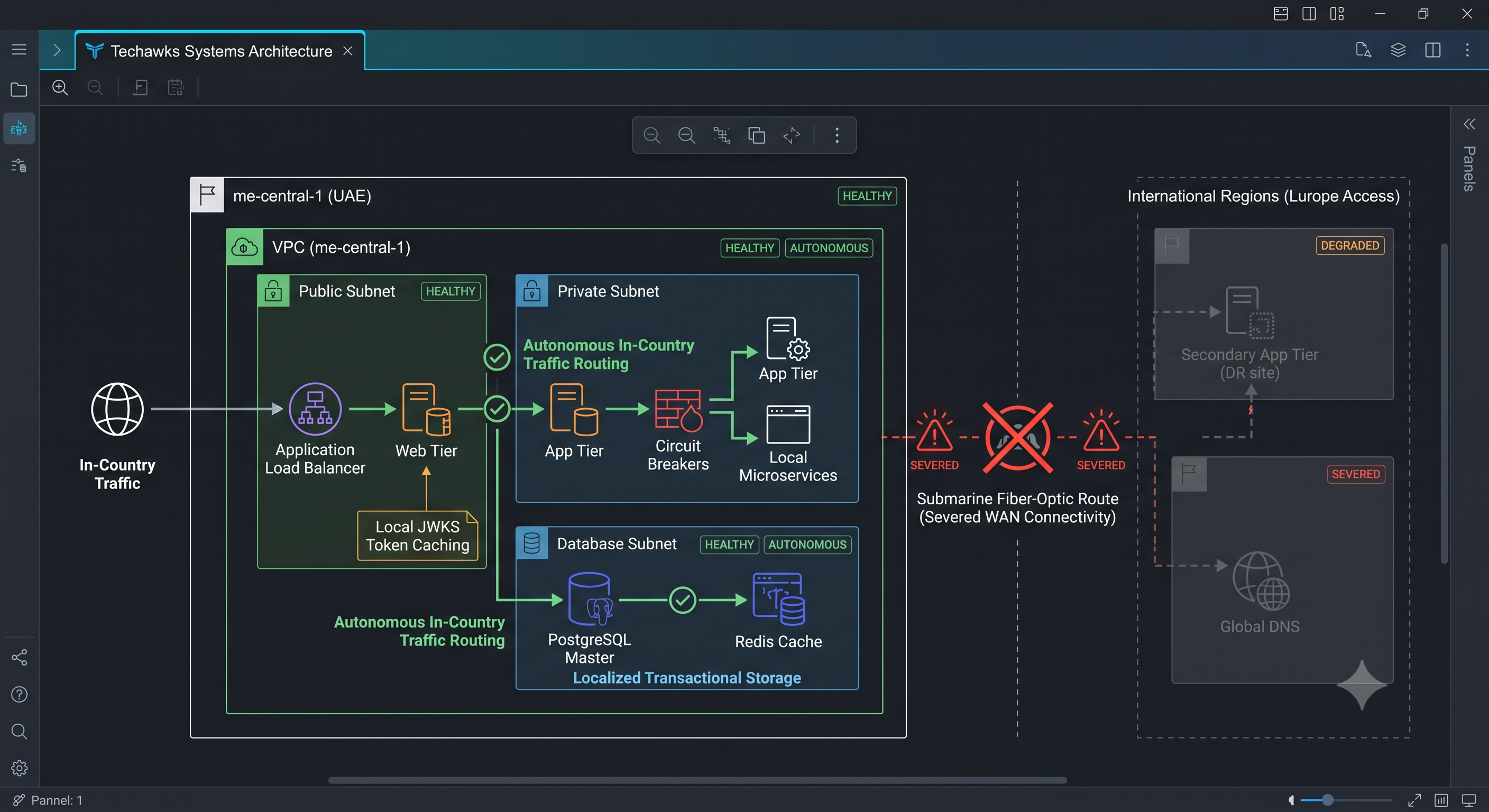 0 Comments 0 Shares 104 Views 0 Reviews
 -
Myth vs Fact: Is the UAE Just a Buyer of Global AI, or Building a Full-Stack Sovereign Moat?
❌ Myth 1: "Sovereign AI in the UAE just means fine-tuning open-source models with Arabic prompts."
The Reality: Sovereign AI is not a localization wrapper. The UAE’s Technology Innovation Institute (TII) proved this early with the Falcon model family, training open-weights foundation models from scratch on tens of trillions of tokens. Furthermore, sovereign compute infrastructure—such as the multi-exaflop Condor Galaxy supercomputing clusters built in partnership with Cerebras, and Core42’s TOP500-ranked Maximus-01—ensures model pre-training, parameter updates, and fine-tuning execute on domestic silicon infrastructure rather than routed through foreign hyperscalers.
❌ Myth 2: "AI implementation here is just smart-city PR and customer service chatbots."
The Reality: The UAE’s AI roadmap has shifted decisively into heavy industrial and physical operations:
Industrial Transformation: Initiatives like Factory Forward UAE target 700+ factories, integrating AI-driven computer vision, automated supply chains, and predictive robotics under the Industrial Technology Transformation Index (ITTI).
Autonomous Mobility: Dubai’s commercial autonomous vehicle and robotaxi pilot corridors are testing edge-compute robotics in extreme thermal environments that break standard sensor suites.
Critical Infrastructure: State-backed platforms like AIQ deploy computer vision and machine learning directly into energy grid optimization, drilling telemetry, and water desalination monitoring.
❌ Myth 3: "Local engineering talent only handles deployment and vendor integration."
The Reality: Operating in the UAE requires solving unique, high-value systems engineering problems:
Data Sovereignty Compliance: Federal data laws mandate local residency for sensitive banking, government, and healthcare telemetry, requiring engineers to design air-gapped or hybrid-cloud inference pipelines.
Thermal & Edge Constraints: Deploying robotics, sensors, and edge AI in desert climates requires specialized hardware enclosure design, thermal throttling logic, and compute optimization that off-the-shelf kits cannot survive.
Bilingual Tokenization: Building high-efficiency Arabic LLMs requires custom tokenizers and alignment techniques that handle morphological richness without tripling inference latency.
Why It Matters for UAE Engineers & Founders
The region is moving past the "tech consumer" era. The highest enterprise valuations and engineering budgets in Abu Dhabi and Dubai are going to builders who can operationalize AI within sovereign infrastructure, industrial factories, and regulated local cloud fabrics.
Discussion Question
For engineers, data scientists, and CTOs building in the UAE: Is your stack running on locally hosted sovereign clusters (like Core42/Khazna), or are you still relying on external US/EU cloud regions for production inference? Share your architecture decisions below! 👇
CTA
Join Techawks UAE — The premier ecosystem for engineers, founders, and systems architects driving sovereign deep tech, cloud infrastructure, and industrial innovation across the Emirates. 🦅🇦🇪Myth vs Fact: Is the UAE Just a Buyer of Global AI, or Building a Full-Stack Sovereign Moat? ❌ Myth 1: "Sovereign AI in the UAE just means fine-tuning open-source models with Arabic prompts." The Reality: Sovereign AI is not a localization wrapper. The UAE’s Technology Innovation Institute (TII) proved this early with the Falcon model family, training open-weights foundation models from scratch on tens of trillions of tokens. Furthermore, sovereign compute infrastructure—such as the multi-exaflop Condor Galaxy supercomputing clusters built in partnership with Cerebras, and Core42’s TOP500-ranked Maximus-01—ensures model pre-training, parameter updates, and fine-tuning execute on domestic silicon infrastructure rather than routed through foreign hyperscalers. ❌ Myth 2: "AI implementation here is just smart-city PR and customer service chatbots." The Reality: The UAE’s AI roadmap has shifted decisively into heavy industrial and physical operations: Industrial Transformation: Initiatives like Factory Forward UAE target 700+ factories, integrating AI-driven computer vision, automated supply chains, and predictive robotics under the Industrial Technology Transformation Index (ITTI). Autonomous Mobility: Dubai’s commercial autonomous vehicle and robotaxi pilot corridors are testing edge-compute robotics in extreme thermal environments that break standard sensor suites. Critical Infrastructure: State-backed platforms like AIQ deploy computer vision and machine learning directly into energy grid optimization, drilling telemetry, and water desalination monitoring. ❌ Myth 3: "Local engineering talent only handles deployment and vendor integration." The Reality: Operating in the UAE requires solving unique, high-value systems engineering problems: Data Sovereignty Compliance: Federal data laws mandate local residency for sensitive banking, government, and healthcare telemetry, requiring engineers to design air-gapped or hybrid-cloud inference pipelines. Thermal & Edge Constraints: Deploying robotics, sensors, and edge AI in desert climates requires specialized hardware enclosure design, thermal throttling logic, and compute optimization that off-the-shelf kits cannot survive. Bilingual Tokenization: Building high-efficiency Arabic LLMs requires custom tokenizers and alignment techniques that handle morphological richness without tripling inference latency. Why It Matters for UAE Engineers & Founders The region is moving past the "tech consumer" era. The highest enterprise valuations and engineering budgets in Abu Dhabi and Dubai are going to builders who can operationalize AI within sovereign infrastructure, industrial factories, and regulated local cloud fabrics. Discussion Question For engineers, data scientists, and CTOs building in the UAE: Is your stack running on locally hosted sovereign clusters (like Core42/Khazna), or are you still relying on external US/EU cloud regions for production inference? Share your architecture decisions below! 👇 CTA Join Techawks UAE — The premier ecosystem for engineers, founders, and systems architects driving sovereign deep tech, cloud infrastructure, and industrial innovation across the Emirates. 🦅🇦🇪 0 Comments 0 Shares 23 Views 0 Reviews
 -
Trivy vs. Checkov: Enforcing UAE Data Residency and Cloud Security in CI/CD
Engineering teams across Dubai Internet City and Abu Dhabi's Hub71 are building on hyper-local cloud infrastructure, deploying workloads into regional hubs like AWS UAE (me-central-1) and Microsoft Azure UAE North. However, keeping multi-cloud configurations aligned with national data sovereignty standards and zero-trust policies requires shifting security directly into developers' everyday Git workflows.
Trivy (by Aqua Security) has evolved from a container vulnerability scanner into a unified, all-in-one security scanner for cloud-native projects. When evaluated alongside dedicated Infrastructure-as-Code (IaC) linters like Checkov, Trivy stands out for teams seeking lean, comprehensive pipeline guardrails:
Unified Scanning Engine: Trivy scans container images, OS packages, application dependencies (SCA), Kubernetes manifests, and IaC files (Terraform, CloudFormation, Dockerfile) in a single run. Instead of maintaining three distinct security CLI steps in your pipeline, you run one binary.
Custom Rego Policies for Regional Isolation: Using Open Policy Agent (OPA) Rego rules, you can configure Trivy to fail any build where database storage, backup replication, or S3/Blob buckets target regions outside me-central-1 or uaenorth.
Zero SaaS Requirement: Trivy runs completely self-contained. It pulls its vulnerability database directly from open registries and evaluates code locally within your runner, ensuring your proprietary application code and internal configurations never leave your VPC.
Blazing Fast Pipeline Execution: Written in Go with minimal memory overhead, Trivy completes image and configuration scans in seconds, avoiding the build-queue bottlenecks common in heavier Python-based alternatives.
When to choose Checkov instead: If your platform team requires out-of-the-box support for complex multi-tier graph frameworks (such as tracing relationships between an IAM role, a security group, and an unencrypted volume across multiple submodules), Checkov’s deep graph-based analysis remains more comprehensive. But for fast, consolidated container and IaC policy gating, Trivy delivers the smoother developer experience.
Key Takeaways
Single-binary coverage: Scans IaC templates, Docker images, and application dependencies in one unified pipeline pass.
Sovereignty policy enforcement: Custom OPA/Rego policies allow teams to mandate UAE-only deployment regions (me-central-1, Azure UAE North).
Air-gapped operation: Operates without mandatory SaaS telemetry or external server synchronization, safeguarding proprietary architecture.
Lightweight performance: Minimal execution latency keeps CI/CD feedback cycles fast for dev teams.
CTA (Join Techawks UAE)
Scaling cloud platforms, fintech engines, or enterprise systems across the Emirates? Join the Techawks UAE community to connect with DevOps leads, cloud architects, and security practitioners building compliant, modern tech. Drop your thoughts below: How does your team enforce regional data residency policies in your CI/CD pipelines today?Trivy vs. Checkov: Enforcing UAE Data Residency and Cloud Security in CI/CD Engineering teams across Dubai Internet City and Abu Dhabi's Hub71 are building on hyper-local cloud infrastructure, deploying workloads into regional hubs like AWS UAE (me-central-1) and Microsoft Azure UAE North. However, keeping multi-cloud configurations aligned with national data sovereignty standards and zero-trust policies requires shifting security directly into developers' everyday Git workflows. Trivy (by Aqua Security) has evolved from a container vulnerability scanner into a unified, all-in-one security scanner for cloud-native projects. When evaluated alongside dedicated Infrastructure-as-Code (IaC) linters like Checkov, Trivy stands out for teams seeking lean, comprehensive pipeline guardrails: Unified Scanning Engine: Trivy scans container images, OS packages, application dependencies (SCA), Kubernetes manifests, and IaC files (Terraform, CloudFormation, Dockerfile) in a single run. Instead of maintaining three distinct security CLI steps in your pipeline, you run one binary. Custom Rego Policies for Regional Isolation: Using Open Policy Agent (OPA) Rego rules, you can configure Trivy to fail any build where database storage, backup replication, or S3/Blob buckets target regions outside me-central-1 or uaenorth. Zero SaaS Requirement: Trivy runs completely self-contained. It pulls its vulnerability database directly from open registries and evaluates code locally within your runner, ensuring your proprietary application code and internal configurations never leave your VPC. Blazing Fast Pipeline Execution: Written in Go with minimal memory overhead, Trivy completes image and configuration scans in seconds, avoiding the build-queue bottlenecks common in heavier Python-based alternatives. When to choose Checkov instead: If your platform team requires out-of-the-box support for complex multi-tier graph frameworks (such as tracing relationships between an IAM role, a security group, and an unencrypted volume across multiple submodules), Checkov’s deep graph-based analysis remains more comprehensive. But for fast, consolidated container and IaC policy gating, Trivy delivers the smoother developer experience. Key Takeaways Single-binary coverage: Scans IaC templates, Docker images, and application dependencies in one unified pipeline pass. Sovereignty policy enforcement: Custom OPA/Rego policies allow teams to mandate UAE-only deployment regions (me-central-1, Azure UAE North). Air-gapped operation: Operates without mandatory SaaS telemetry or external server synchronization, safeguarding proprietary architecture. Lightweight performance: Minimal execution latency keeps CI/CD feedback cycles fast for dev teams. CTA (Join Techawks UAE) Scaling cloud platforms, fintech engines, or enterprise systems across the Emirates? Join the Techawks UAE community to connect with DevOps leads, cloud architects, and security practitioners building compliant, modern tech. Drop your thoughts below: How does your team enforce regional data residency policies in your CI/CD pipelines today? 0 Comments 0 Shares 99 Views 0 Reviews
 -
The UAE’s Sovereign AI Mandate: Why "Wrapper Devs" Are Getting Replaced by Agentic Infrastructure Engineers
Across the UAE, tech hiring has severed ties with superficial generative wrappers. With the federal government mandating that 50% of government operations transition to agentic AI systems and DIFC aggressively expanding as an AI-native financial hub, the regional talent deficit is acute: AI and ML engineering demand has jumped 45% year-over-year, yet local qualified talent grew by barely 12%.
Engineering leads at sovereign entities, fintech scaleups, and regional enterprises are not hiring for prompt craft—they are paying top-of-market premiums (often 15–25% above traditional software roles) for engineers who can build autonomous, sovereign, and compliant systems.
To stand out in UAE technical rounds right now, master these three enterprise architectural imperatives:
In-Country Data Sovereignty & Localized Deployment
Under UAE data residency regulations and NESA/DESC compliance, sensitive enterprise and public-sector data cannot leave national borders. Candidates must know how to deploy, quantize, and serve sovereign open-weights (such as the UAE’s Falcon series or Jais) on local sovereign cloud stacks (e.g., Core42/G42 infrastructure) rather than blindly delegating inference to overseas third-party APIs.
Agentic State Machines Over Simple Chaining
Enterprise AI in the Emirates is transitioning from informational chatbots to autonomous transaction execution. Interviewers want to see multi-agent orchestration architectures with deterministic guardrails: handling state persistence, asynchronous tool-calling, and explicit human-in-the-loop approval gates that prevent cascading errors in mission-critical workflows.
Bilingual & Multi-Dialect Retrieval Benchmarking
Arabic-first or bilingual retrieval-augmented generation (RAG) is a core requirement across regional enterprise systems. Learn how to address morphological complexity in Arabic tokenization, construct hybrid dense-sparse vector indexes, and run automated evaluations against semantic drift across both Arabic and English query spaces.
Stop showcasing generic SaaS clones. Build systems that address in-country infrastructure, auditability, and autonomous task execution.
Discussion Question
For engineers building or interviewing in the UAE: What has been your biggest technical hurdle when adapting open-weight LLMs to local data sovereignty and Arabic tokenization requirements?
CTA (Join Techawks UAE)
Ready to navigate the Gulf’s fastest-growing tech corridor? Follow Techawks UAE for deep technical architecture teardowns, local hiring insights, and masterclasses designed for senior software and AI engineers.The UAE’s Sovereign AI Mandate: Why "Wrapper Devs" Are Getting Replaced by Agentic Infrastructure Engineers Across the UAE, tech hiring has severed ties with superficial generative wrappers. With the federal government mandating that 50% of government operations transition to agentic AI systems and DIFC aggressively expanding as an AI-native financial hub, the regional talent deficit is acute: AI and ML engineering demand has jumped 45% year-over-year, yet local qualified talent grew by barely 12%. Engineering leads at sovereign entities, fintech scaleups, and regional enterprises are not hiring for prompt craft—they are paying top-of-market premiums (often 15–25% above traditional software roles) for engineers who can build autonomous, sovereign, and compliant systems. To stand out in UAE technical rounds right now, master these three enterprise architectural imperatives: In-Country Data Sovereignty & Localized Deployment Under UAE data residency regulations and NESA/DESC compliance, sensitive enterprise and public-sector data cannot leave national borders. Candidates must know how to deploy, quantize, and serve sovereign open-weights (such as the UAE’s Falcon series or Jais) on local sovereign cloud stacks (e.g., Core42/G42 infrastructure) rather than blindly delegating inference to overseas third-party APIs. Agentic State Machines Over Simple Chaining Enterprise AI in the Emirates is transitioning from informational chatbots to autonomous transaction execution. Interviewers want to see multi-agent orchestration architectures with deterministic guardrails: handling state persistence, asynchronous tool-calling, and explicit human-in-the-loop approval gates that prevent cascading errors in mission-critical workflows. Bilingual & Multi-Dialect Retrieval Benchmarking Arabic-first or bilingual retrieval-augmented generation (RAG) is a core requirement across regional enterprise systems. Learn how to address morphological complexity in Arabic tokenization, construct hybrid dense-sparse vector indexes, and run automated evaluations against semantic drift across both Arabic and English query spaces. Stop showcasing generic SaaS clones. Build systems that address in-country infrastructure, auditability, and autonomous task execution. Discussion Question For engineers building or interviewing in the UAE: What has been your biggest technical hurdle when adapting open-weight LLMs to local data sovereignty and Arabic tokenization requirements? CTA (Join Techawks UAE) Ready to navigate the Gulf’s fastest-growing tech corridor? Follow Techawks UAE for deep technical architecture teardowns, local hiring insights, and masterclasses designed for senior software and AI engineers.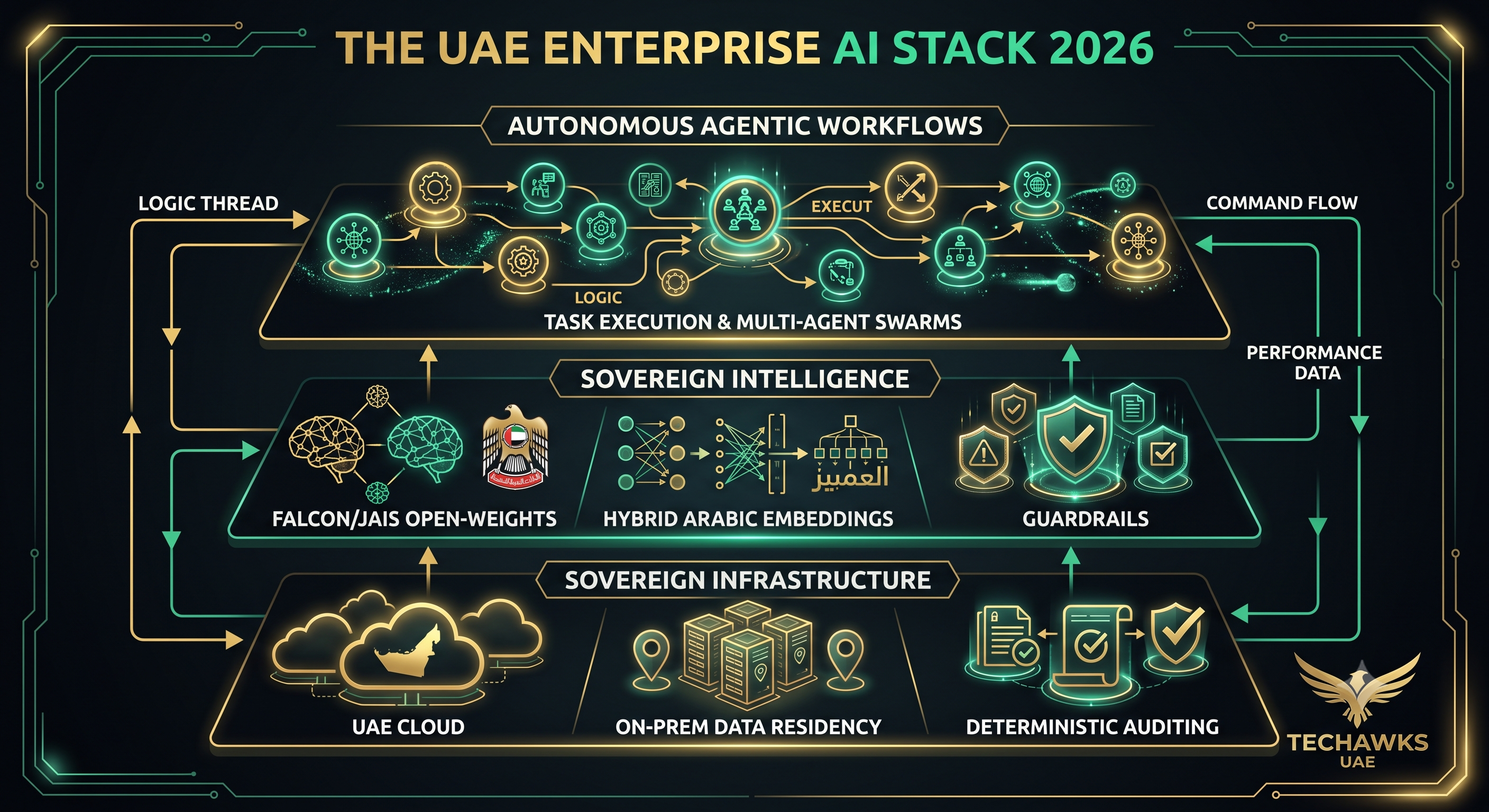 0 Comments 0 Shares 40 Views 0 Reviews
 -
The GCC Tech Shift: What skill unlocks true leverage in the UAE market?
The UAE tech ecosystem has evolved beyond importing off-the-shelf software. With sovereign cloud mandates, regional fintech expansion, and enterprise digital transformation across government, logistics, and retail, tech hiring priorities have shifted dramatically.
Engineers and engineering leaders who command top-tier compensation are no longer just building features—they are solving complex regional infrastructure and regulatory challenges.
If you are looking to build a high-impact, long-term engineering career in the UAE, where does your highest return on effort come from?
Poll Question:
Which capability provides the strongest career advantage in the UAE tech ecosystem today?
[ ] Data Sovereignty & Regional Cloud Architecture
[ ] Arabic NLP & Localised AI Applications
[ ] Fintech Integration (CBUAE Open Finance, Cross-Border Rails)
[ ] Distributed Engineering Team Leadership (Across MENA/South Asia)
Key Takeaways
Regulatory compliance creates enterprise moats: Understanding local hosting standards, data residency laws, and regional compliance frameworks makes systems architects indispensable to enterprise buyers and government bodies.
Localization goes deeper than translation: Building high-performance systems for the region requires native Arabic tokenization, right-to-left UI optimizations, and cultural nuances embedded directly into product design.
Hub-and-spoke management is standard: Most UAE engineering hubs coordinate distributed squads across India, Egypt, and Eastern Europe; engineers who master cross-timezone async workflows scale faster into executive roles.
CTA (Join Techawks UAE)
Vote in the poll above, drop your perspectives in the comments, and follow Techawks UAE for actionable roadmaps built for the GCC tech landscape.The GCC Tech Shift: What skill unlocks true leverage in the UAE market? The UAE tech ecosystem has evolved beyond importing off-the-shelf software. With sovereign cloud mandates, regional fintech expansion, and enterprise digital transformation across government, logistics, and retail, tech hiring priorities have shifted dramatically. Engineers and engineering leaders who command top-tier compensation are no longer just building features—they are solving complex regional infrastructure and regulatory challenges. If you are looking to build a high-impact, long-term engineering career in the UAE, where does your highest return on effort come from? Poll Question: Which capability provides the strongest career advantage in the UAE tech ecosystem today? [ ] Data Sovereignty & Regional Cloud Architecture [ ] Arabic NLP & Localised AI Applications [ ] Fintech Integration (CBUAE Open Finance, Cross-Border Rails) [ ] Distributed Engineering Team Leadership (Across MENA/South Asia) Key Takeaways Regulatory compliance creates enterprise moats: Understanding local hosting standards, data residency laws, and regional compliance frameworks makes systems architects indispensable to enterprise buyers and government bodies. Localization goes deeper than translation: Building high-performance systems for the region requires native Arabic tokenization, right-to-left UI optimizations, and cultural nuances embedded directly into product design. Hub-and-spoke management is standard: Most UAE engineering hubs coordinate distributed squads across India, Egypt, and Eastern Europe; engineers who master cross-timezone async workflows scale faster into executive roles. CTA (Join Techawks UAE) Vote in the poll above, drop your perspectives in the comments, and follow Techawks UAE for actionable roadmaps built for the GCC tech landscape. 0 Comments 0 Shares 109 Views 0 Reviews
 -
Sovereign AI Beyond Storage: Why Your UAE Inference Engine Needs In-Jurisdiction Key Management
With the UAE cementing its status as an AI powerhouse—from foundational models like Falcon to sovereign financial clouds—engineering requirements have pivoted from data residency (where bits rest) to cryptographic sovereignty (who controls compute keys and runtime memory).
If your application proxies sensitive customer prompts, KYC records, or telemetry out to external third-party LLM endpoints, you have executed an unauthorized cross-border data transfer under Federal Decree-Law No. 45 (PDPL) and financial sector guidelines.
To build defensible, sovereign AI architectures in the UAE, systems architects are adopting three core infrastructure patterns:
Air-Gapped In-Country LLM Deployments
Rather than routing API calls to foreign multi-tenant model endpoints, enterprises are deploying open-weights foundational models (such as Falcon or localized enterprise LLMs) on sovereign GPU instances inside UAE borders:
Ingest model weights into an isolated VPC or private cluster.
Sever external egress pipelines at inference time. All prompt embeddings, vector search indexes, and inference context remain within local network perimeters.
Bring Your Own Key (BYOK) with Local HSM Boundaries
Storing encrypted data in a local UAE availability zone is ineffective if the master decryption keys reside in an orchestration control plane overseas:
Anchor key management inside UAE-domiciled Hardware Security Modules (HSMs) certified to FIPS 140-3 standards.
Implement envelope encryption where data-at-rest and ephemeral inference caches cannot be decrypted without an on-soil HSM authorization handshake.
Multi-Regime Jurisdiction Routing (Mainland vs. DIFC / ADGM)
Enterprises operating across UAE mainland and financial free zones must decouple compliance routing:
Free zones like the DIFC (Data Protection Law No. 5) and ADGM operate distinct statutory regimes modeled on international adequacy standards.
Implement a gateway middleware layer that classifies payload origin and routes processing jobs strictly according to sectoral mandates (e.g., keeping health ICT and CBUAE financial data strictly mainland-isolated, while dynamically applying appropriate standard contractual clauses for free-zone entities).
Sovereignty is no longer a marketing claim—it is a physical and cryptographic infrastructure constraint. Engineering teams that build localized inference pipelines and in-jurisdiction key management now will establish enterprise trust as regulatory audits accelerate.
Discussion Question
Is your organization self-hosting inference models within UAE-based sovereign clusters, or is your engineering pipeline still reliant on external cloud AI APIs for processing local user data?
CTA
Looking for deep technical teardowns, sovereign architecture blueprints, and enterprise engineering resources tailored to the Emirates? Join Techawks UAE to connect with CTOs, principal architects, and infrastructure engineers scaling across the region.Sovereign AI Beyond Storage: Why Your UAE Inference Engine Needs In-Jurisdiction Key Management With the UAE cementing its status as an AI powerhouse—from foundational models like Falcon to sovereign financial clouds—engineering requirements have pivoted from data residency (where bits rest) to cryptographic sovereignty (who controls compute keys and runtime memory). If your application proxies sensitive customer prompts, KYC records, or telemetry out to external third-party LLM endpoints, you have executed an unauthorized cross-border data transfer under Federal Decree-Law No. 45 (PDPL) and financial sector guidelines. To build defensible, sovereign AI architectures in the UAE, systems architects are adopting three core infrastructure patterns: Air-Gapped In-Country LLM Deployments Rather than routing API calls to foreign multi-tenant model endpoints, enterprises are deploying open-weights foundational models (such as Falcon or localized enterprise LLMs) on sovereign GPU instances inside UAE borders: Ingest model weights into an isolated VPC or private cluster. Sever external egress pipelines at inference time. All prompt embeddings, vector search indexes, and inference context remain within local network perimeters. Bring Your Own Key (BYOK) with Local HSM Boundaries Storing encrypted data in a local UAE availability zone is ineffective if the master decryption keys reside in an orchestration control plane overseas: Anchor key management inside UAE-domiciled Hardware Security Modules (HSMs) certified to FIPS 140-3 standards. Implement envelope encryption where data-at-rest and ephemeral inference caches cannot be decrypted without an on-soil HSM authorization handshake. Multi-Regime Jurisdiction Routing (Mainland vs. DIFC / ADGM) Enterprises operating across UAE mainland and financial free zones must decouple compliance routing: Free zones like the DIFC (Data Protection Law No. 5) and ADGM operate distinct statutory regimes modeled on international adequacy standards. Implement a gateway middleware layer that classifies payload origin and routes processing jobs strictly according to sectoral mandates (e.g., keeping health ICT and CBUAE financial data strictly mainland-isolated, while dynamically applying appropriate standard contractual clauses for free-zone entities). Sovereignty is no longer a marketing claim—it is a physical and cryptographic infrastructure constraint. Engineering teams that build localized inference pipelines and in-jurisdiction key management now will establish enterprise trust as regulatory audits accelerate. Discussion Question Is your organization self-hosting inference models within UAE-based sovereign clusters, or is your engineering pipeline still reliant on external cloud AI APIs for processing local user data? CTA Looking for deep technical teardowns, sovereign architecture blueprints, and enterprise engineering resources tailored to the Emirates? Join Techawks UAE to connect with CTOs, principal architects, and infrastructure engineers scaling across the region. 0 Comments 0 Shares 55 Views 0 Reviews
 -
The Multi-Tenant Middle East Playbook: Designing for GCC Data Residency Without Quadrupling Infrastructure Costs
Building and scaling B2B or consumer platforms in the UAE means engineering for a unique intersection: world-class connectivity, high-value enterprise requirements, and stringent domestic data protection laws (such as UAE Federal Decree-Law No. 45/2021).
Many teams make the expensive mistake of spin-cloning their entire microservice stack into every local cloud region (like me-central-1 or me-south-1) for every enterprise customer. That approach obliterates operational margins and creates deployment gridlock.
Senior systems architects in the region manage data residency while maintaining high shipping velocity by implementing three core architectural strategies:
Adopt a Hybrid "Control Plane vs. Data Plane" Separation: Decouple your global operational services (authentication orchestration, billing aggregations, static asset delivery) from customer data storage. Run a centralized, global control plane while keeping the data plane (PII tables, transactional records, encrypted document stores) strictly containerized within local UAE cloud data centres or dedicated sovereign partitions.
Implement Dynamic Connection Routing at the Gateway: Avoid spinning up separate API gateways for each jurisdiction. Use tenant-aware middleware at the ingress layer. By evaluating the tenant's cryptographically verified JWT on entry, your API proxy routes the transaction request directly to the compliant regional database connection pool, keeping multi-tenant application logic shared while database storage remains strictly siloed.
Bake In Bi-Directional Arabic (RTL) Data Sanitization and Tokenization: Localization in the Gulf is not merely translating UI strings. Storing and indexing mixed RTL (Arabic) and LTR (English, phone numbers, alphanumeric IDs) text requires correct Unicode normalization (NFKC) and database collation settings (e.g., utf8mb4_unicode_ci) at the schema stage to prevent search index fragmentation, broken query matching, and corrupt data exports.
How is your engineering team solving the trade-off between strict local data isolation and manageable cloud infrastructure overhead?
Key Takeaways
Split Control vs. Data Planes: Centralize non-sensitive application orchestration; localize persistent user data inside domestic cloud zones.
Tenant-Aware Query Routing: Keep microservices unified while routing database reads/writes dynamically based on tenant residency rules.
Native RTL Schema Design: Enforce strict Unicode normalization and collation early to prevent downstream data pipeline corruption with Arabic text.
CTA (Join Techawks UAE)
Scaling resilient, compliant tech across the UAE and GCC requires battle-tested engineering playbooks. Join Techawks UAE to exchange insights with leading local CTOs, software engineers, and cloud architects building the region’s next digital powerhouses. Drop your thoughts in the comments below.The Multi-Tenant Middle East Playbook: Designing for GCC Data Residency Without Quadrupling Infrastructure Costs Building and scaling B2B or consumer platforms in the UAE means engineering for a unique intersection: world-class connectivity, high-value enterprise requirements, and stringent domestic data protection laws (such as UAE Federal Decree-Law No. 45/2021). Many teams make the expensive mistake of spin-cloning their entire microservice stack into every local cloud region (like me-central-1 or me-south-1) for every enterprise customer. That approach obliterates operational margins and creates deployment gridlock. Senior systems architects in the region manage data residency while maintaining high shipping velocity by implementing three core architectural strategies: Adopt a Hybrid "Control Plane vs. Data Plane" Separation: Decouple your global operational services (authentication orchestration, billing aggregations, static asset delivery) from customer data storage. Run a centralized, global control plane while keeping the data plane (PII tables, transactional records, encrypted document stores) strictly containerized within local UAE cloud data centres or dedicated sovereign partitions. Implement Dynamic Connection Routing at the Gateway: Avoid spinning up separate API gateways for each jurisdiction. Use tenant-aware middleware at the ingress layer. By evaluating the tenant's cryptographically verified JWT on entry, your API proxy routes the transaction request directly to the compliant regional database connection pool, keeping multi-tenant application logic shared while database storage remains strictly siloed. Bake In Bi-Directional Arabic (RTL) Data Sanitization and Tokenization: Localization in the Gulf is not merely translating UI strings. Storing and indexing mixed RTL (Arabic) and LTR (English, phone numbers, alphanumeric IDs) text requires correct Unicode normalization (NFKC) and database collation settings (e.g., utf8mb4_unicode_ci) at the schema stage to prevent search index fragmentation, broken query matching, and corrupt data exports. How is your engineering team solving the trade-off between strict local data isolation and manageable cloud infrastructure overhead? Key Takeaways Split Control vs. Data Planes: Centralize non-sensitive application orchestration; localize persistent user data inside domestic cloud zones. Tenant-Aware Query Routing: Keep microservices unified while routing database reads/writes dynamically based on tenant residency rules. Native RTL Schema Design: Enforce strict Unicode normalization and collation early to prevent downstream data pipeline corruption with Arabic text. CTA (Join Techawks UAE) Scaling resilient, compliant tech across the UAE and GCC requires battle-tested engineering playbooks. Join Techawks UAE to exchange insights with leading local CTOs, software engineers, and cloud architects building the region’s next digital powerhouses. Drop your thoughts in the comments below.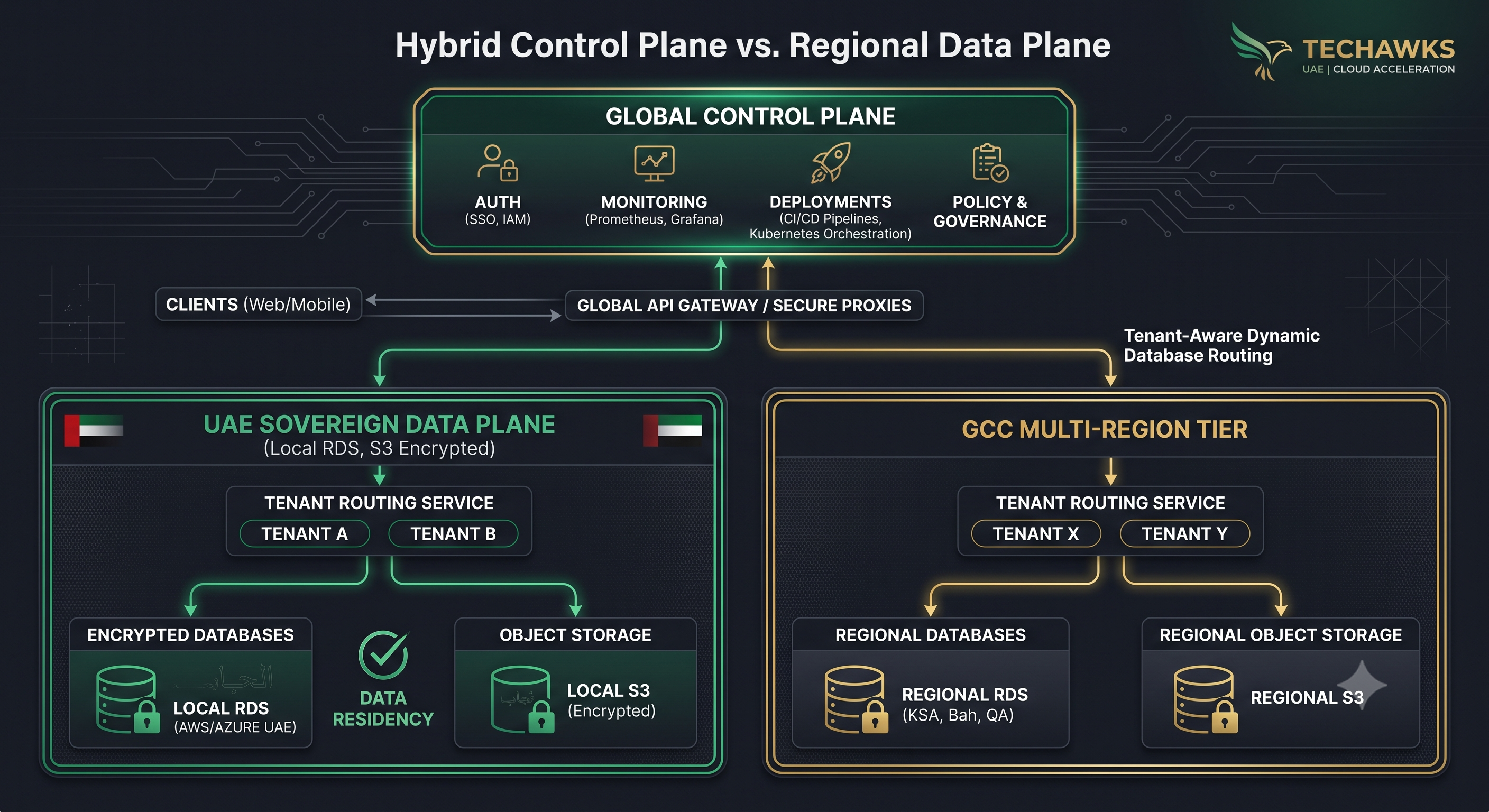 0 Comments 0 Shares 131 Views 0 Reviews
 -
Architecting for Data Residency in the UAE: Balancing In-Country Compliance with Global Cloud Scale
As the UAE consolidates its position as a global digital and financial hub, engineering teams face a specific design constraint: local data residency compliance versus the elasticity of global cloud infrastructure. Under local data protection mandates, handling regulated personal records, healthcare metrics, or financial data requires clear geographic isolation.
Simply replicating an entire global infrastructure stack into local regions (such as AWS Middle East UAE, Azure UAE North/Central, or OCI Dubai) is often cost-prohibitive and operationally redundant.
Here is how engineering teams architect hybrid data isolation pipelines for the UAE market:
Implement Strict Data Classification at Ingestion: Segregate data models into regulated PII/financial transactions versus anonymized operational metrics. Route regulated payloads exclusively to in-region databases (hosted within UAE cloud zones), while non-sensitive analytical telemetry passes to shared multi-region clusters.
Tokenization via Local Edge Vaults: Terminate API requests within UAE-based edge instances. Before payload data flows into downstream processing, replace sensitive user records with deterministic, encrypted tokens stored in a local UAE key-value store. External global microservices handle business logic solely using tokenized abstractions.
Regional KMS Boundary Isolation: Ensure cryptographic keys for sensitive workloads are generated, rotated, and retained exclusively within UAE-hosted hardware security modules (HSMs). Restrict IAM cross-region delegation policies to prevent keys from ever being exported or called from external VPCs.
Split-Horizon Read/Write Replicas: Keep primary transactional write nodes localized inside UAE availability zones. For global dashboards, aggregate read-only, differential-privacy-masked summaries asynchronously to broader reporting hubs.
Key Takeaways
Architect for compliance early using tokenization rather than duplicating entire application stacks locally.
Keep data encryption keys strictly isolated inside UAE-hosted KMS/HSM partitions.
Use deterministic surrogate tokens to allow global compute pipelines to operate without violating residency constraints.
CTA
Navigating local regulatory architecture, cloud sovereignty, and system scalability in the Emirates?
Join Techawks UAE to connect with tech leads, infrastructure architects, and engineering innovators building across Dubai, Abu Dhabi, and beyond. Link in bio.Architecting for Data Residency in the UAE: Balancing In-Country Compliance with Global Cloud Scale As the UAE consolidates its position as a global digital and financial hub, engineering teams face a specific design constraint: local data residency compliance versus the elasticity of global cloud infrastructure. Under local data protection mandates, handling regulated personal records, healthcare metrics, or financial data requires clear geographic isolation. Simply replicating an entire global infrastructure stack into local regions (such as AWS Middle East UAE, Azure UAE North/Central, or OCI Dubai) is often cost-prohibitive and operationally redundant. Here is how engineering teams architect hybrid data isolation pipelines for the UAE market: Implement Strict Data Classification at Ingestion: Segregate data models into regulated PII/financial transactions versus anonymized operational metrics. Route regulated payloads exclusively to in-region databases (hosted within UAE cloud zones), while non-sensitive analytical telemetry passes to shared multi-region clusters. Tokenization via Local Edge Vaults: Terminate API requests within UAE-based edge instances. Before payload data flows into downstream processing, replace sensitive user records with deterministic, encrypted tokens stored in a local UAE key-value store. External global microservices handle business logic solely using tokenized abstractions. Regional KMS Boundary Isolation: Ensure cryptographic keys for sensitive workloads are generated, rotated, and retained exclusively within UAE-hosted hardware security modules (HSMs). Restrict IAM cross-region delegation policies to prevent keys from ever being exported or called from external VPCs. Split-Horizon Read/Write Replicas: Keep primary transactional write nodes localized inside UAE availability zones. For global dashboards, aggregate read-only, differential-privacy-masked summaries asynchronously to broader reporting hubs. Key Takeaways Architect for compliance early using tokenization rather than duplicating entire application stacks locally. Keep data encryption keys strictly isolated inside UAE-hosted KMS/HSM partitions. Use deterministic surrogate tokens to allow global compute pipelines to operate without violating residency constraints. CTA Navigating local regulatory architecture, cloud sovereignty, and system scalability in the Emirates? Join Techawks UAE to connect with tech leads, infrastructure architects, and engineering innovators building across Dubai, Abu Dhabi, and beyond. Link in bio.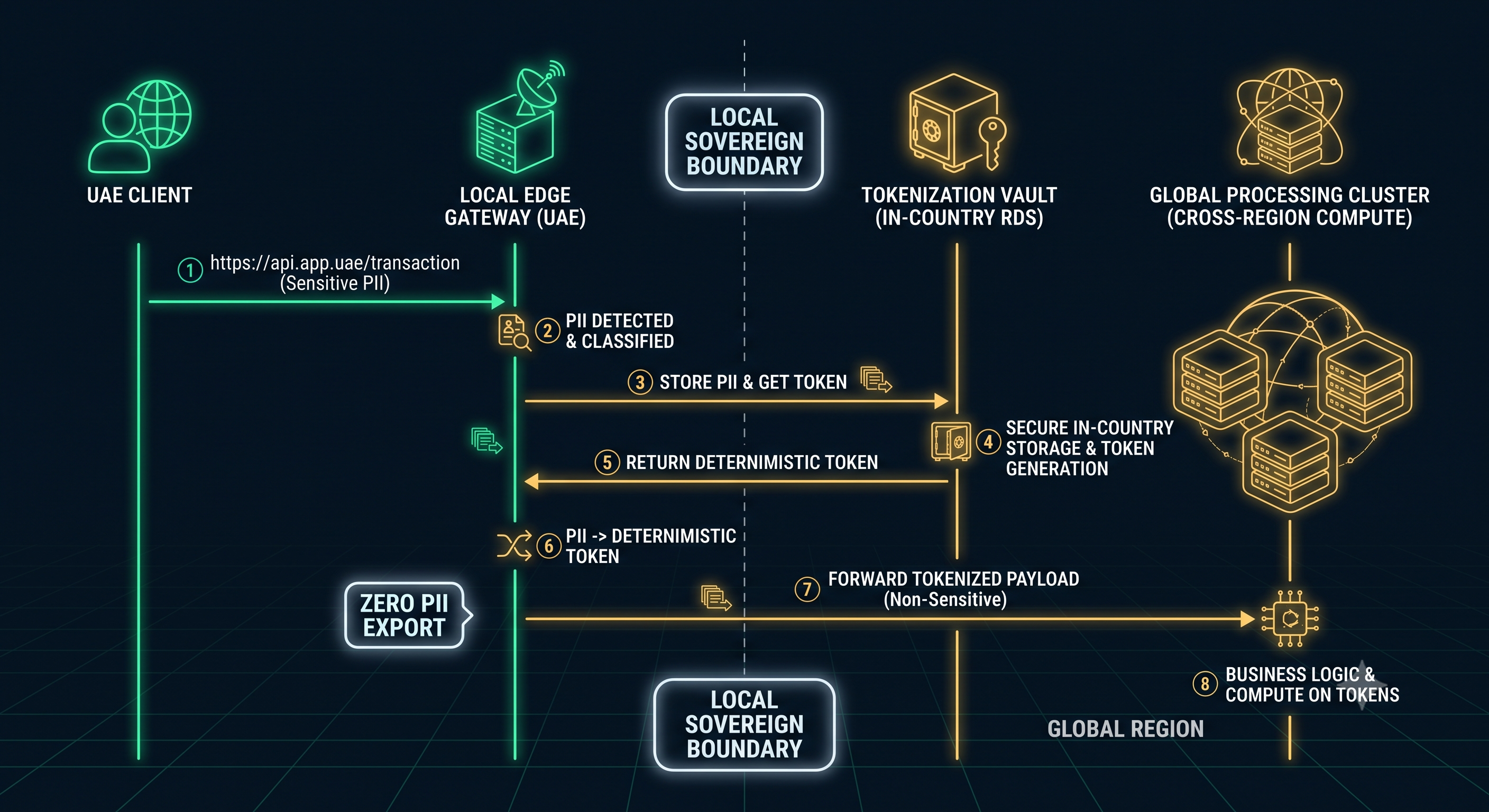 0 Comments 0 Shares 167 Views 0 Reviews
 -
Why "Data Residency" Is No Longer Enough for AI in the UAE
Across Dubai and Abu Dhabi, AI infrastructure spending has doubled over the past year. Yet, enterprise teams are hitting a quiet wall: The Residency Trap.
Many engineering and product leaders assume that selecting a UAE-based hyper scaler region (like me-central-1 or uae-central) checks every regulatory box. It doesn’t.
Why This Matters Locally The UAE's regulatory reality is a multi-layered framework: Federal Level: Federal Decree-Law No. 45 of 2021 (PDPL) on personal data protection. Financial Free Zones: DIFC’s enforceable Regulation 10 governing autonomous and semi-autonomous systems, and ADGM’s Data Protection Regulations. National Directives: The UAE Sovereign AI initiatives led by the UAE Cyber Security Council and local infrastructure providers (e.g., e& and Core42). The critical distinction is between Data Residency (physical location of servers) and Data Sovereignty (which legal jurisdiction and foreign access mandates apply to the entire pipeline). If your vector embeddings, system metadata, or fallback inference routes leak across borders during pipeline orchestration, you breach local standards. 🛠️ What to Implement: The 4-Tier Sovereign AI Audit Before pushing your next AI agent or RAG pipeline into staging, verify these four layers:
Inference Isolation: Ensure API tokens and prompt payloads execute inside local boundary clusters (e.g., localized sovereign instances or dedicated regional inference nodes) rather than defaulting to US/EU server failovers.
Embeddings & Vector Store Co-location: Keep embedding generation and vector databases in the same geographic tenant as your primary data to prevent silent cross-border telemetry.
Dual-Zone Mapping: If your organization operates in both mainland UAE and free zones (like DIFC or ADGM), confirm your model risk assessment aligns with DIFC Regulation 10 transparency criteria while maintaining federal PDPL consent logs. Metadata & Agent Action Boundaries: Autonomous agents that query internal enterprise systems must have deterministic guardrails that prevent log scraping and telemetry ingestion by third-party model providers.
Discussion Question
For tech leads and architects in the UAE: When deploying AI systems locally, what has been your biggest hurdle—managing cross-zone compliance (DIFC/ADGM vs. Mainland) or securing cost-effective in-country GPU compute?
CTA
Join Techawks UAE — Connect with local founders, CTOs, and developers shaping the Middle East’s digital frontier. Get access to exclusive playbooks, architecture tear-downs, and peer discussions. Link in bio / comments.Why "Data Residency" Is No Longer Enough for AI in the UAE Across Dubai and Abu Dhabi, AI infrastructure spending has doubled over the past year. Yet, enterprise teams are hitting a quiet wall: The Residency Trap. Many engineering and product leaders assume that selecting a UAE-based hyper scaler region (like me-central-1 or uae-central) checks every regulatory box. It doesn’t. Why This Matters Locally The UAE's regulatory reality is a multi-layered framework: Federal Level: Federal Decree-Law No. 45 of 2021 (PDPL) on personal data protection. Financial Free Zones: DIFC’s enforceable Regulation 10 governing autonomous and semi-autonomous systems, and ADGM’s Data Protection Regulations. National Directives: The UAE Sovereign AI initiatives led by the UAE Cyber Security Council and local infrastructure providers (e.g., e& and Core42). The critical distinction is between Data Residency (physical location of servers) and Data Sovereignty (which legal jurisdiction and foreign access mandates apply to the entire pipeline). If your vector embeddings, system metadata, or fallback inference routes leak across borders during pipeline orchestration, you breach local standards. 🛠️ What to Implement: The 4-Tier Sovereign AI Audit Before pushing your next AI agent or RAG pipeline into staging, verify these four layers: Inference Isolation: Ensure API tokens and prompt payloads execute inside local boundary clusters (e.g., localized sovereign instances or dedicated regional inference nodes) rather than defaulting to US/EU server failovers. Embeddings & Vector Store Co-location: Keep embedding generation and vector databases in the same geographic tenant as your primary data to prevent silent cross-border telemetry. Dual-Zone Mapping: If your organization operates in both mainland UAE and free zones (like DIFC or ADGM), confirm your model risk assessment aligns with DIFC Regulation 10 transparency criteria while maintaining federal PDPL consent logs. Metadata & Agent Action Boundaries: Autonomous agents that query internal enterprise systems must have deterministic guardrails that prevent log scraping and telemetry ingestion by third-party model providers. Discussion Question For tech leads and architects in the UAE: When deploying AI systems locally, what has been your biggest hurdle—managing cross-zone compliance (DIFC/ADGM vs. Mainland) or securing cost-effective in-country GPU compute? CTA Join Techawks UAE — Connect with local founders, CTOs, and developers shaping the Middle East’s digital frontier. Get access to exclusive playbooks, architecture tear-downs, and peer discussions. Link in bio / comments.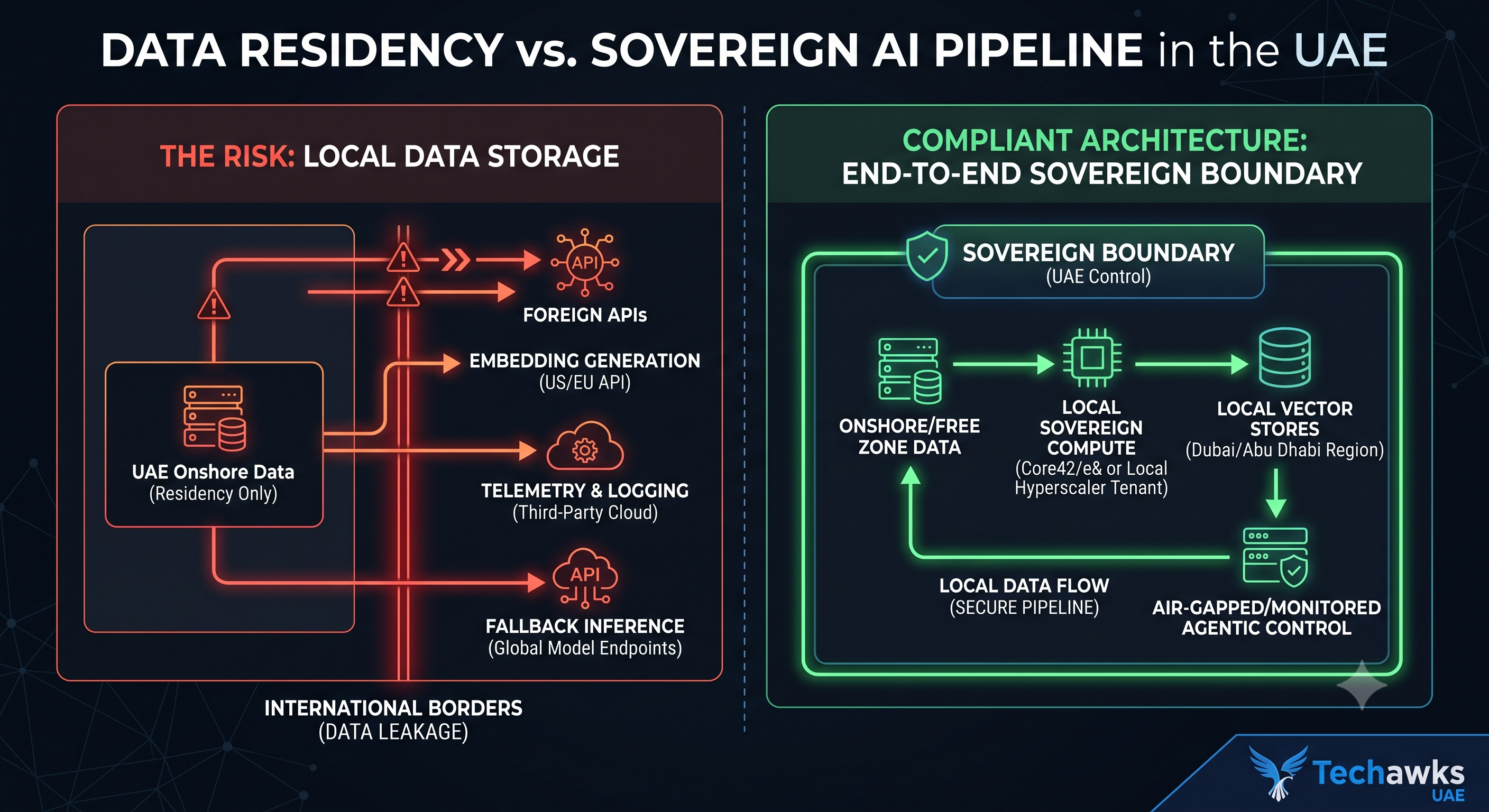 0 Comments 0 Shares 49 Views 0 Reviews
More Stories