





Techawks UK is the official Techawks community connecting developers, AI engineers, startup founders, students, researchers, designers, and technology professionals across the United Kingdom. Explore the latest in artificial intelligence, software engineering, cloud computing, cybersecurity, data science, product development, fintech, and emerging technologies.
Discover practical tutorials, industry insights, startup discussions, open-source projects, networking opportunities, tech events, job updates, product launches, and expert knowledge sharing. Learn new skills, collaborate on innovative ideas, showcase your work, and grow with a community focused on technology, innovation, and professional development.
Discover practical tutorials, industry insights, startup discussions, open-source projects, networking opportunities, tech events, job updates, product launches, and expert knowledge sharing. Learn new skills, collaborate on innovative ideas, showcase your work, and grow with a community focused on technology, innovation, and professional development.
-
Public Group
-
62 Posts
-
62 Photos
-
0 Videos
-
Reviews
-
People and Nations
Search

 Arabic
 French
 Spanish
 Portuguese
 Deutsch
 Turkish
 Dutch
Dutch
 Italiano
 Russian
 Romaian
 Portuguese (Brazil)
 Greek
Greek
Recent Updates
-
Autonomous Agents vs. UK Data Law: Why Multi-Agent Systems Break Standard Compliance Architectures
Unlike the European Union’s omnibus AI Act, the UK relies on an active sector-by-sector regulatory model led by bodies like the ICO (Information Commissioner's Office), the FCA, and the Digital Regulation Cooperation Forum (DRCF). With the rollout of the Data (Use and Access) Act framework governing Automated Decision-Making (ADM), deploying autonomous agentic workflows into production requires rethinking backend architectures from scratch.
When AI agents transition from read-only retrieval (classic RAG) to goal-directed, multi-agent systems with tool execution, standard microservice logging falls apart.
Here is what UK engineering leads and system architects must address to keep agentic pipelines compliant:
1. The "Purpose Limitation" Conflict in Autonomous Tooling
Agent frameworks thrive when given open-ended access to data stores, vector indexes, and third-party APIs to plan and execute sub-tasks. However, UK data protection strictly enforces data minimisation and specific, bounded purpose limitation. Granting an autonomous agent ambient database credentials to "solve customer queries" violates least-privilege principles by design.
The Architecture Fix: Implement ephemeral, token-scoped tool access. Agents should not inherit static API permissions; instead, an intermediary orchestration layer must validate agent intents against a strict Policy-as-Code engine (such as Open Policy Agent) before minting short-lived, task-specific tokens.
2. Tracing Inferred Special Category Data
Multi-agent systems don’t just process existing data; they infer new synthetic metadata across reasoning cycles. If Agent A extracts emotional state from a support transcript, and Agent B uses that sentiment to dynamically adjust routing or credit decisions, your system has engaged in automated profiling.
The Architecture Fix: Model inferences must be treated as first-class, tagged data types. Every intermediate synthetic attribute generated in a scratchpad or tool output requires structured metadata tracing its provenance, model version, and legal retention window.
3. Implementing Verifiable "Human-in-the-Loop" (HITL) Fallbacks
UK statutory provisions around automated decision-making require a practical right to contest and obtain meaningful human intervention for significant decisions. A generic try/catch block that dumps an error to a human operator is insufficient.
The Architecture Fix: Implement stateful pause-and-resume orchestration (using workflow engines like Temporal or durable execution patterns). When agent confidence scores drop below a predefined threshold, or when an action hits an ADM-flagged boundary, the workflow state must serialize deterministically, dispatch an event to a human review queue, and rehydrate execution only after an authenticated manual approval payload is signed.
Discussion Question
For engineering leads and architects building across London, Cambridge, Edinburgh, and Manchester: How is your team handling deterministic auditability and consent verification in multi-agent environments—are you enforcing policy-as-code at the API gateway, or relying on model-level system prompt constraints?
CTA (Join Techawks UK)
Join Techawks UK for hands-on systems architecture sessions, deep dives into production AI engineering, and technical discussions shaping the UK tech ecosystem.Autonomous Agents vs. UK Data Law: Why Multi-Agent Systems Break Standard Compliance Architectures Unlike the European Union’s omnibus AI Act, the UK relies on an active sector-by-sector regulatory model led by bodies like the ICO (Information Commissioner's Office), the FCA, and the Digital Regulation Cooperation Forum (DRCF). With the rollout of the Data (Use and Access) Act framework governing Automated Decision-Making (ADM), deploying autonomous agentic workflows into production requires rethinking backend architectures from scratch. When AI agents transition from read-only retrieval (classic RAG) to goal-directed, multi-agent systems with tool execution, standard microservice logging falls apart. Here is what UK engineering leads and system architects must address to keep agentic pipelines compliant: 1. The "Purpose Limitation" Conflict in Autonomous Tooling Agent frameworks thrive when given open-ended access to data stores, vector indexes, and third-party APIs to plan and execute sub-tasks. However, UK data protection strictly enforces data minimisation and specific, bounded purpose limitation. Granting an autonomous agent ambient database credentials to "solve customer queries" violates least-privilege principles by design. The Architecture Fix: Implement ephemeral, token-scoped tool access. Agents should not inherit static API permissions; instead, an intermediary orchestration layer must validate agent intents against a strict Policy-as-Code engine (such as Open Policy Agent) before minting short-lived, task-specific tokens. 2. Tracing Inferred Special Category Data Multi-agent systems don’t just process existing data; they infer new synthetic metadata across reasoning cycles. If Agent A extracts emotional state from a support transcript, and Agent B uses that sentiment to dynamically adjust routing or credit decisions, your system has engaged in automated profiling. The Architecture Fix: Model inferences must be treated as first-class, tagged data types. Every intermediate synthetic attribute generated in a scratchpad or tool output requires structured metadata tracing its provenance, model version, and legal retention window. 3. Implementing Verifiable "Human-in-the-Loop" (HITL) Fallbacks UK statutory provisions around automated decision-making require a practical right to contest and obtain meaningful human intervention for significant decisions. A generic try/catch block that dumps an error to a human operator is insufficient. The Architecture Fix: Implement stateful pause-and-resume orchestration (using workflow engines like Temporal or durable execution patterns). When agent confidence scores drop below a predefined threshold, or when an action hits an ADM-flagged boundary, the workflow state must serialize deterministically, dispatch an event to a human review queue, and rehydrate execution only after an authenticated manual approval payload is signed. Discussion Question For engineering leads and architects building across London, Cambridge, Edinburgh, and Manchester: How is your team handling deterministic auditability and consent verification in multi-agent environments—are you enforcing policy-as-code at the API gateway, or relying on model-level system prompt constraints? CTA (Join Techawks UK) Join Techawks UK for hands-on systems architecture sessions, deep dives into production AI engineering, and technical discussions shaping the UK tech ecosystem. 0 Comments 0 Shares 0 Views 0 Reviews
 -
Architecting for UK Data Privacy: Implementing Crypto-Shredding for Instant Right-to-be-Forgotten Compliance
Under UK GDPR statutory requirements, retaining personal data across immutable storage or deep archive tiers without the ability to guarantee deletion creates a continuous compliance liability. You cannot easily rewrite multi-terabyte Parquet partitions or rewrite Kafka commit logs without risking data integrity and incurring massive compute overhead.
The scalable engineering solution is Crypto-Shredding (Key-Based Erasure): encrypt personal identifying information (PII) at the field level using a unique key per user, and destroy the key when erasure is requested.
Here is how to design a production-grade crypto-shredding pipeline.
1. Per-Subject Key Generation & Key Hierarchy
Instead of encrypting your whole database with a single master key, introduce a user-level envelope encryption pattern:
Master Key (KEK): Stored securely in a dedicated Key Management Service (AWS KMS, Azure Key Vault, or HashiCorp Vault) configured within a UK/London region (eu-west-2).
Data Protection Key (DEK): Generated uniquely for each individual user identifier (user_id).
When writing an event payload or database row, fetch the user's specific DEK, encrypt sensitive fields (e.g., email, full_name, phone), and store the ciphertext alongside standard non-PII operational telemetry.
2. Isolate Key Stores from Data Storage
Ensure the key storage layer is entirely decoupled from primary application and analytical databases:
Store the mapping of user_id \(\rightarrow\) encrypted_DEK in a dedicated, low-latency key store (e.g., DynamoDB or PostgreSQL with strict role-based access).
Never propagate the DEK into immutable logs, analytic warehouses (Snowflake, BigQuery), or streaming layers (Kafka, Redpanda).
Downstream data pipelines consume only the encrypted ciphertext and reference the user_id.
3. Decryption-at-Read with Caching
To prevent key store lookup bottlenecks during normal user interactions:
Service layers fetch and decrypt user DEKs using the regional KMS and cache the plain DEK in-memory using an internal LRU cache with an aggressive TTL (e.g., 5 to 10 minutes).
Subsequent reads for the active session decrypt PII in memory with near-zero latency penalty.
4. The Erasure Workflow: Instant Key Revocation
When a verified deletion request hits your service:
Issue a hard delete of the user's specific encryption key from the key store and evict it from in-memory caches.
Do not run expensive cluster-wide scans to rewrite historic Parquet files or compact immutable audit streams.
The moment the key ceases to exist, all historical data across cold storage, backups, and event streams instantly renders cryptographically irrecoverable ciphertext—satisfying legal erasure standards with sub-second execution.
Key Takeaways
Decouple Identity from State: Encrypt user PII with per-user data keys (DEKs) before data enters immutable streams or cold data lakes.
Instant Erasure: Delete the user's unique key to render all distributed historic copies unreadable instantly, eliminating the need to rewrite immutable partitions.
Keep KMS Regional: Ensure all key generation, KMS operations, and storage policies strictly reside within UK boundaries (e.g., eu-west-2) to align with data sovereignty best practices.
Protect the Key Ring: Treat the key-mapping database with higher security tiering and stricter backup policies than the main application database itself.
CTA
Navigating strict compliance, distributed systems architecture, and engineering trade-offs across the UK technology landscape?
Join Techawks UK to connect with fellow London, Manchester, and remote UK software engineers, DevOps leads, and system architects. Link in the comments.Architecting for UK Data Privacy: Implementing Crypto-Shredding for Instant Right-to-be-Forgotten Compliance Under UK GDPR statutory requirements, retaining personal data across immutable storage or deep archive tiers without the ability to guarantee deletion creates a continuous compliance liability. You cannot easily rewrite multi-terabyte Parquet partitions or rewrite Kafka commit logs without risking data integrity and incurring massive compute overhead. The scalable engineering solution is Crypto-Shredding (Key-Based Erasure): encrypt personal identifying information (PII) at the field level using a unique key per user, and destroy the key when erasure is requested. Here is how to design a production-grade crypto-shredding pipeline. 1. Per-Subject Key Generation & Key Hierarchy Instead of encrypting your whole database with a single master key, introduce a user-level envelope encryption pattern: Master Key (KEK): Stored securely in a dedicated Key Management Service (AWS KMS, Azure Key Vault, or HashiCorp Vault) configured within a UK/London region (eu-west-2). Data Protection Key (DEK): Generated uniquely for each individual user identifier (user_id). When writing an event payload or database row, fetch the user's specific DEK, encrypt sensitive fields (e.g., email, full_name, phone), and store the ciphertext alongside standard non-PII operational telemetry. 2. Isolate Key Stores from Data Storage Ensure the key storage layer is entirely decoupled from primary application and analytical databases: Store the mapping of user_id \(\rightarrow\) encrypted_DEK in a dedicated, low-latency key store (e.g., DynamoDB or PostgreSQL with strict role-based access). Never propagate the DEK into immutable logs, analytic warehouses (Snowflake, BigQuery), or streaming layers (Kafka, Redpanda). Downstream data pipelines consume only the encrypted ciphertext and reference the user_id. 3. Decryption-at-Read with Caching To prevent key store lookup bottlenecks during normal user interactions: Service layers fetch and decrypt user DEKs using the regional KMS and cache the plain DEK in-memory using an internal LRU cache with an aggressive TTL (e.g., 5 to 10 minutes). Subsequent reads for the active session decrypt PII in memory with near-zero latency penalty. 4. The Erasure Workflow: Instant Key Revocation When a verified deletion request hits your service: Issue a hard delete of the user's specific encryption key from the key store and evict it from in-memory caches. Do not run expensive cluster-wide scans to rewrite historic Parquet files or compact immutable audit streams. The moment the key ceases to exist, all historical data across cold storage, backups, and event streams instantly renders cryptographically irrecoverable ciphertext—satisfying legal erasure standards with sub-second execution. Key Takeaways Decouple Identity from State: Encrypt user PII with per-user data keys (DEKs) before data enters immutable streams or cold data lakes. Instant Erasure: Delete the user's unique key to render all distributed historic copies unreadable instantly, eliminating the need to rewrite immutable partitions. Keep KMS Regional: Ensure all key generation, KMS operations, and storage policies strictly reside within UK boundaries (e.g., eu-west-2) to align with data sovereignty best practices. Protect the Key Ring: Treat the key-mapping database with higher security tiering and stricter backup policies than the main application database itself. CTA Navigating strict compliance, distributed systems architecture, and engineering trade-offs across the UK technology landscape? Join Techawks UK to connect with fellow London, Manchester, and remote UK software engineers, DevOps leads, and system architects. Link in the comments. 0 Comments 0 Shares 57 Views 0 Reviews
 -
UK Cyber Security and Resilience Bill: The 5-Point Engineering Checklist for Cloud & MSP Stacks
Following landmark supply-chain breaches across the NHS and national infrastructure, Westminster’s overhaul of the 2018 NIS Regulations transforms cyber resilience from an internal IT policy into statutory engineering accountability.
Crucially, the regulatory perimeter expands past traditional utilities: commercial data centres ($\ge$1MW IT load), MSPs managing remote systems, and high-impact software vendors designated as "critical suppliers" face strict mandatory reporting and auditable engineering controls.
Here is the 5-point production checklist UK engineering and platform teams need to implement now:
1. Architect for Two-Stage Incident Dispatch (24h / 72h Timelines)You can no longer wait for a forensic post-mortem before notifying authorities; the Bill mandates an initial notification within 24 hours of awareness, followed by a comprehensive incident breakdown within 72 hours.
Automate Security Information and Event Management (SIEM) alerting pipelines with pre-configured web hooks that trigger regulatory triage teams instantly upon detecting core availability, integrity, or confidentiality breaches.2. Enforce NCSC CAF-Aligned Microsegmentation & Access Controls Baseline your system design against the National Cyber Security Centre (NCSC) Cyber Assessment Framework (CAF).Eliminate lateral movement vectors between customer-facing SaaS planes and management planes. Isolate MSP remote monitoring agents, bastion hosts, and build runners into segregated zero-trust enclaves with just-in-time, multi-factor privilege access.3. Continuous Software Bill of Materials (SBOM) & Upstream Provenance Regulators now have explicit authority to audit designated critical suppliers across the digital supply chain.
Integrate automated, signed SBOM generation (CycloneDX or SPDX) into your CI/CD pipelines. Block unsigned upstream dependencies, pin container image digests, and automate vulnerability scanning against upstream packages before deployment to production clusters.4. Automated Out-of-Band State & Recovery Orchestration Traditional snapshots hosted inside the same virtual private cloud or identity boundary fail modern resilience audits.
Implement immutable, air-gapped backups with automated disaster recovery (DR) dry-runs. Quantify and test your Recovery Time Objective (RTO) against ransomware scenarios to ensure services can fail over cleanly without relying on primary identity providers.5. Blast-Radius Auditing for Third-Party API Integrations Inventory every active SaaS integration, web hook consumer, and external API key connected to production databases.
Apply strict principle-of-least-privilege egress filtering: third-party analytics and external support tools should never possess unmonitored write access to core transactional data stores.
Discussion Question
With the UK enforcing a strict 24-hour initial incident notification window under the CSR Bill, does your platform have automated alerting in place to distinguish operational flakiness from a statutory reportable breach?
CTA (Join Techawks UK)
Navigating UK digital compliance, cloud reliability, and high-resilience system architecture? Join Techawks UK to connect with lead architects, DevSecOps engineers, and platform builders across the British tech ecosystem.UK Cyber Security and Resilience Bill: The 5-Point Engineering Checklist for Cloud & MSP Stacks Following landmark supply-chain breaches across the NHS and national infrastructure, Westminster’s overhaul of the 2018 NIS Regulations transforms cyber resilience from an internal IT policy into statutory engineering accountability. Crucially, the regulatory perimeter expands past traditional utilities: commercial data centres ($\ge$1MW IT load), MSPs managing remote systems, and high-impact software vendors designated as "critical suppliers" face strict mandatory reporting and auditable engineering controls. Here is the 5-point production checklist UK engineering and platform teams need to implement now: 1. Architect for Two-Stage Incident Dispatch (24h / 72h Timelines)You can no longer wait for a forensic post-mortem before notifying authorities; the Bill mandates an initial notification within 24 hours of awareness, followed by a comprehensive incident breakdown within 72 hours. Automate Security Information and Event Management (SIEM) alerting pipelines with pre-configured web hooks that trigger regulatory triage teams instantly upon detecting core availability, integrity, or confidentiality breaches.2. Enforce NCSC CAF-Aligned Microsegmentation & Access Controls Baseline your system design against the National Cyber Security Centre (NCSC) Cyber Assessment Framework (CAF).Eliminate lateral movement vectors between customer-facing SaaS planes and management planes. Isolate MSP remote monitoring agents, bastion hosts, and build runners into segregated zero-trust enclaves with just-in-time, multi-factor privilege access.3. Continuous Software Bill of Materials (SBOM) & Upstream Provenance Regulators now have explicit authority to audit designated critical suppliers across the digital supply chain. Integrate automated, signed SBOM generation (CycloneDX or SPDX) into your CI/CD pipelines. Block unsigned upstream dependencies, pin container image digests, and automate vulnerability scanning against upstream packages before deployment to production clusters.4. Automated Out-of-Band State & Recovery Orchestration Traditional snapshots hosted inside the same virtual private cloud or identity boundary fail modern resilience audits. Implement immutable, air-gapped backups with automated disaster recovery (DR) dry-runs. Quantify and test your Recovery Time Objective (RTO) against ransomware scenarios to ensure services can fail over cleanly without relying on primary identity providers.5. Blast-Radius Auditing for Third-Party API Integrations Inventory every active SaaS integration, web hook consumer, and external API key connected to production databases. Apply strict principle-of-least-privilege egress filtering: third-party analytics and external support tools should never possess unmonitored write access to core transactional data stores. Discussion Question With the UK enforcing a strict 24-hour initial incident notification window under the CSR Bill, does your platform have automated alerting in place to distinguish operational flakiness from a statutory reportable breach? CTA (Join Techawks UK) Navigating UK digital compliance, cloud reliability, and high-resilience system architecture? Join Techawks UK to connect with lead architects, DevSecOps engineers, and platform builders across the British tech ecosystem. 0 Comments 0 Shares 6 Views 0 Reviews
 -
Can Your London-Frankfurt Pipelines Clear a Strict Sovereignty Audit? The 72-Hour Data Boundary Challenge.
If you manage production workloads in eu-west-2 (London) with failover or hybrid services touching the EU, uptime is only half the battle. Regulatory compliance demands that telemetry, transactional data, and identity records adhere strictly to territorial sovereignty principles.
Take the Techawks 72-Hour Data Boundary Challenge to verify whether your distributed UK stack is fully partitioned or leaking data cross-border:
Audit Inadvertent Telemetry Egress
The Problem: Centralized observability platforms often batch Application Performance Monitoring (APM) traces, crash reports, and ingress access logs to EU or US aggregation endpoints without data scrubbing.
The Fix: Deploy localized logging collectors (e.g., Fluent Bit or OpenTelemetry collectors) within eu-west-2 with strict masking filters for PII (IP addresses, user headers) before telemetry leaves the VPC boundary.
Test Asymmetric Read-Failover Under Partition
The Problem: Multi-region read topologies between London and Frankfurt often leave read queries unconstrained, accidentally routing local UK resident requests into non-UK replicas during routine traffic spikes.
The Fix: Implement strict database routing policies at the connection pool or ORM level. Route cross-border read traffic only during a declared, automated Disaster Recovery (DR) state—not during transient load-balancing spikes.
Verify Key Management and Envelope Boundaries
The Problem: Cross-region data replication using regional KMS keys often relies on asymmetric multi-region keys where decryption permissions can be inherited outside your designated security boundary.
The Fix: Enforce explicit IAM resource boundary conditions requiring aws:RequestedRegion: eu-west-2 on all primary decryption keys. Validate that standby secondary keys in other regions remain inactive until an explicit DR switchover runbook executes.
Key Takeaways
Logs Are Data: Observability pipelines leak sovereign data just as quickly as primary databases if trace payloads aren't masked at the source.
Partition Over Convenience: Disaster recovery paths must require explicit, automated threshold triggers rather than dynamic, uncontrolled spillover routing.
Keep KMS Regional: Anchor cryptographic root-of-trust policies strictly to local region boundaries to withstand strict regulatory audits.
CTA
Building resilient, compliant, and production-grade architectures across the UK tech ecosystem? Connect with senior engineers, cloud architects, and systems leads solving these engineering problems daily.Can Your London-Frankfurt Pipelines Clear a Strict Sovereignty Audit? The 72-Hour Data Boundary Challenge. If you manage production workloads in eu-west-2 (London) with failover or hybrid services touching the EU, uptime is only half the battle. Regulatory compliance demands that telemetry, transactional data, and identity records adhere strictly to territorial sovereignty principles. Take the Techawks 72-Hour Data Boundary Challenge to verify whether your distributed UK stack is fully partitioned or leaking data cross-border: Audit Inadvertent Telemetry Egress The Problem: Centralized observability platforms often batch Application Performance Monitoring (APM) traces, crash reports, and ingress access logs to EU or US aggregation endpoints without data scrubbing. The Fix: Deploy localized logging collectors (e.g., Fluent Bit or OpenTelemetry collectors) within eu-west-2 with strict masking filters for PII (IP addresses, user headers) before telemetry leaves the VPC boundary. Test Asymmetric Read-Failover Under Partition The Problem: Multi-region read topologies between London and Frankfurt often leave read queries unconstrained, accidentally routing local UK resident requests into non-UK replicas during routine traffic spikes. The Fix: Implement strict database routing policies at the connection pool or ORM level. Route cross-border read traffic only during a declared, automated Disaster Recovery (DR) state—not during transient load-balancing spikes. Verify Key Management and Envelope Boundaries The Problem: Cross-region data replication using regional KMS keys often relies on asymmetric multi-region keys where decryption permissions can be inherited outside your designated security boundary. The Fix: Enforce explicit IAM resource boundary conditions requiring aws:RequestedRegion: eu-west-2 on all primary decryption keys. Validate that standby secondary keys in other regions remain inactive until an explicit DR switchover runbook executes. Key Takeaways Logs Are Data: Observability pipelines leak sovereign data just as quickly as primary databases if trace payloads aren't masked at the source. Partition Over Convenience: Disaster recovery paths must require explicit, automated threshold triggers rather than dynamic, uncontrolled spillover routing. Keep KMS Regional: Anchor cryptographic root-of-trust policies strictly to local region boundaries to withstand strict regulatory audits. CTA Building resilient, compliant, and production-grade architectures across the UK tech ecosystem? Connect with senior engineers, cloud architects, and systems leads solving these engineering problems daily. 0 Comments 0 Shares 60 Views 0 Reviews
 -
Myth vs Fact: Is the UK Becoming the Wild West for AI, or Copying the EU?
❌ Myth 1: "The UK is preparing to replicate the horizontal EU AI Act."
The Reality: The UK has deliberately bypassed a single, rigid, horizontal AI statute. Instead, the UK enforces a decentralized, sector-led regime. Governance is applied at the point of deployment by domain-specific regulators—the FCA in financial services, the MHRA in healthtech, the CMA for market competition, and Ofcom for content platforms. Through initiatives like the DSIT AI Growth Lab and cross-economy sandboxes, the UK provides controlled exemptions and live-testing environments for high-impact sectors rather than imposing blanket compliance hurdles before a model even runs.
❌ Myth 2: "No AI Act means UK tech startups operate with zero compliance overhead."
The Reality: "Pro-innovation" does not mean deregulation. British developers face some of the strictest point-of-use enforcement in the world:
Automated Decision-Making: Under the Data (Use and Access) framework, the UK GDPR specifically governs automated decision-making and AI data training with binding ICO statutory codes.
Online Safety Act (OSA): Ofcom now actively enforces mandatory safety duties for user-to-user and search platforms, backed by penalties of up to £18 million or 10% of qualifying worldwide turnover.
Competition & Platforms (DMCCA): The Competition and Markets Authority (CMA) holds sweeping direct intervention powers over companies with Strategic Market Status.
❌ Myth 3: "The UK ecosystem cannot compete with Silicon Valley on foundation models, so our tech advantage is gone."
The Reality: The UK's true competitive moat was never about burning billions of dollars in commodity hyperscale compute clusters. The British advantage lies in high-margin vertical intelligence and system architecture—spearheaded by world-class research spinouts from the Golden Triangle (Oxford, Cambridge, London), specialized biopharma AI, quantum systems, and fintech. You do not need to train a frontier model from scratch to build an indispensable, category-defining enterprise platform.
Why It Matters for UK Developers & Architects
In the UK, your primary architectural challenge is not wrestling with broad, abstract legislative mandates. It is designing audit-ready, explainable systems that can slide directly into regulated industry sandboxes (finance, healthcare, legaltech, and public services). If your AI pipelines lack lineage tracking, data provenance, and clear human-in-the-loop fallback pathways, you cannot sell to the UK's most lucrative enterprise buyers.
Discussion Question
Is your team leaning into the UK’s sector-specific sandboxes, or are you designing your compliance baseline against EU/global standards from day one? Let’s hear your perspective in the comments below! 👇
CTA
Join Techawks UK — The premier network for British software engineers, technical founders, and tech innovators scaling world-class systems across the UK. 🦅🇬🇧Myth vs Fact: Is the UK Becoming the Wild West for AI, or Copying the EU? ❌ Myth 1: "The UK is preparing to replicate the horizontal EU AI Act." The Reality: The UK has deliberately bypassed a single, rigid, horizontal AI statute. Instead, the UK enforces a decentralized, sector-led regime. Governance is applied at the point of deployment by domain-specific regulators—the FCA in financial services, the MHRA in healthtech, the CMA for market competition, and Ofcom for content platforms. Through initiatives like the DSIT AI Growth Lab and cross-economy sandboxes, the UK provides controlled exemptions and live-testing environments for high-impact sectors rather than imposing blanket compliance hurdles before a model even runs. ❌ Myth 2: "No AI Act means UK tech startups operate with zero compliance overhead." The Reality: "Pro-innovation" does not mean deregulation. British developers face some of the strictest point-of-use enforcement in the world: Automated Decision-Making: Under the Data (Use and Access) framework, the UK GDPR specifically governs automated decision-making and AI data training with binding ICO statutory codes. Online Safety Act (OSA): Ofcom now actively enforces mandatory safety duties for user-to-user and search platforms, backed by penalties of up to £18 million or 10% of qualifying worldwide turnover. Competition & Platforms (DMCCA): The Competition and Markets Authority (CMA) holds sweeping direct intervention powers over companies with Strategic Market Status. ❌ Myth 3: "The UK ecosystem cannot compete with Silicon Valley on foundation models, so our tech advantage is gone." The Reality: The UK's true competitive moat was never about burning billions of dollars in commodity hyperscale compute clusters. The British advantage lies in high-margin vertical intelligence and system architecture—spearheaded by world-class research spinouts from the Golden Triangle (Oxford, Cambridge, London), specialized biopharma AI, quantum systems, and fintech. You do not need to train a frontier model from scratch to build an indispensable, category-defining enterprise platform. Why It Matters for UK Developers & Architects In the UK, your primary architectural challenge is not wrestling with broad, abstract legislative mandates. It is designing audit-ready, explainable systems that can slide directly into regulated industry sandboxes (finance, healthcare, legaltech, and public services). If your AI pipelines lack lineage tracking, data provenance, and clear human-in-the-loop fallback pathways, you cannot sell to the UK's most lucrative enterprise buyers. Discussion Question Is your team leaning into the UK’s sector-specific sandboxes, or are you designing your compliance baseline against EU/global standards from day one? Let’s hear your perspective in the comments below! 👇 CTA Join Techawks UK — The premier network for British software engineers, technical founders, and tech innovators scaling world-class systems across the UK. 🦅🇬🇧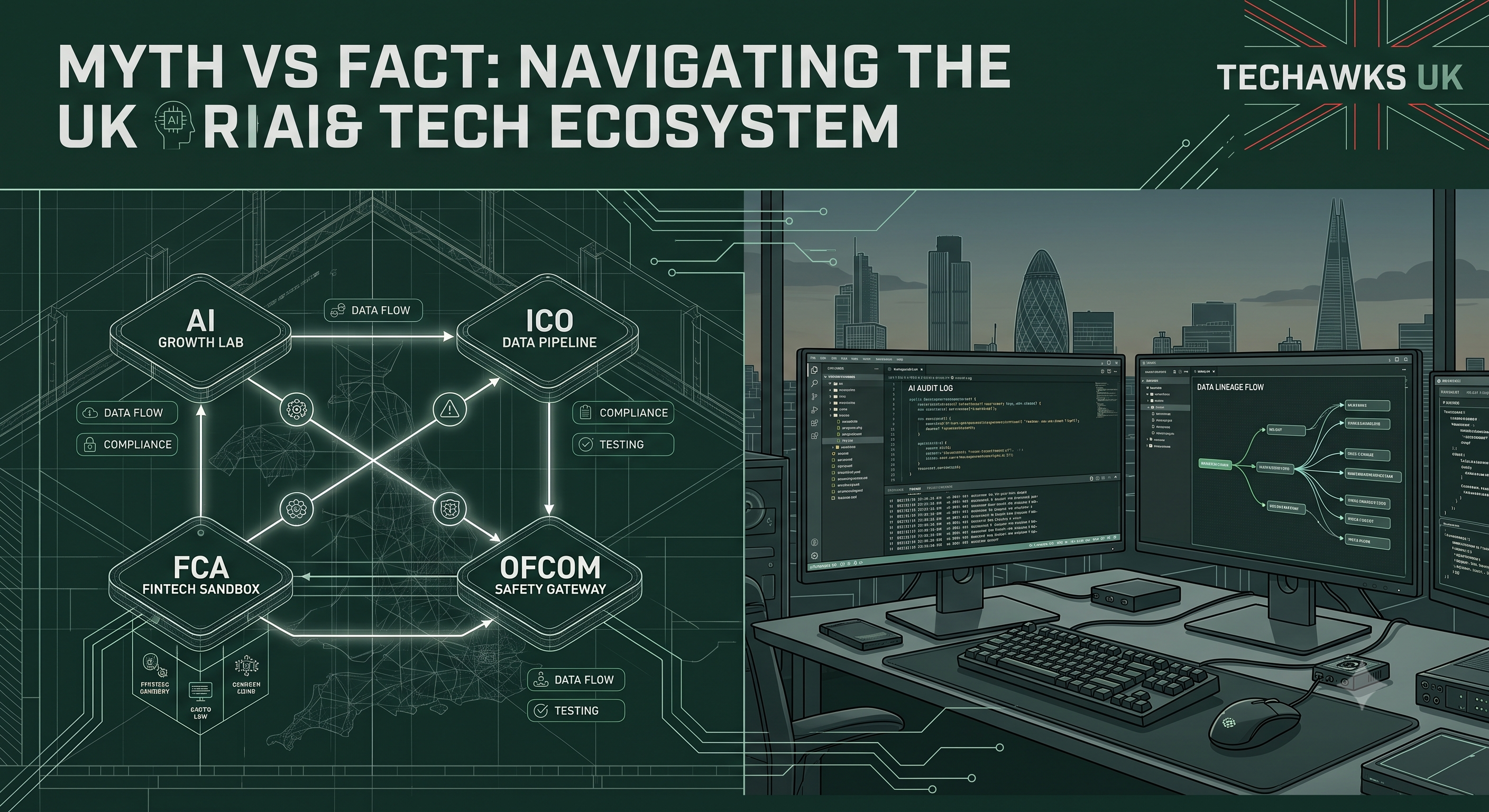 0 Comments 0 Shares 7 Views 0 Reviews
 -
Infracost Review: How UK Platform Teams Are Halting Cloud Spend Before Deployment
For engineering and platform teams across London, Cambridge, and Manchester, cloud efficiency has evolved from an annual audit headache into a daily CI/CD discipline. UK enterprise tech—particularly across heavily governed fintech, public sector, and healthtech stacks—demands tight FinOps governance without slowing down delivery pipelines.
Infracost bridges this gap by acting as a cost linter for your Infrastructure as Code (Terraform, OpenTofu, and Terragrunt). Instead of waiting for billing reports, developers get instant cloud cost feedback before resources are ever provisioned.
Pull Request Cost Diffs: Infracost integrates natively with GitHub, GitLab, and Bitbucket. Every time an engineer updates an instance size, provisions a managed database, or scales storage, Infracost posts a clean breakdown comment detailing the exact monthly delta (e.g., +$142/mo).
Guardrails and Policy Checks: You can set strict FinOps policies directly in your pipeline. If an infrastructure pull request exceeds a pre-set threshold (such as a 20% budget jump on a non-production environment), the check can fail automatically or mandate FinOps lead approval.
Accurate Regional Pricing: It dynamically queries real-time vendor pricing across eu-west-2 (London), AWS, Azure, and Google Cloud, taking into account usage-based parameters like IOPS, egress, and storage tiers.
Developer Empathy Over Blame: Instead of finance teams policing infrastructure weeks later, engineers retain full visibility into how their architecture choices directly affect operational runway in real time.
When it’s not essential: If your infrastructure runs almost exclusively on fixed-capacity bare metal or simple static VMs that rarely change, Infracost won't offer much value. But for dynamic, multi-environment cloud pipelines, it transforms FinOps from a bottleneck into automated code reviews.
Key Takeaways
Shift-left FinOps: Surface accurate cloud cost projections directly in developer pull requests before deployment.
Policy-as-Code guardrails: Automatically block or flag unbudgeted cloud cost spikes in CI/CD workflows.
Regional precision: Supports granular, regional pricing schemas (including UK and European availability zones).
Cross-framework support: Integrates cleanly with Terraform, OpenTofu, and Terragrunt repositories.
CTA (Join Techawks UK)
Optimising cloud reliability and engineering efficiency across the UK? Join the Techawks UK community to connect with DevOps leads, platform engineers, and software architects tackling real-world production stacks. Share your perspective below: Do your developers have visibility into cloud costs during code review, or does FinOps still happen after the monthly invoice arrives?Infracost Review: How UK Platform Teams Are Halting Cloud Spend Before Deployment For engineering and platform teams across London, Cambridge, and Manchester, cloud efficiency has evolved from an annual audit headache into a daily CI/CD discipline. UK enterprise tech—particularly across heavily governed fintech, public sector, and healthtech stacks—demands tight FinOps governance without slowing down delivery pipelines. Infracost bridges this gap by acting as a cost linter for your Infrastructure as Code (Terraform, OpenTofu, and Terragrunt). Instead of waiting for billing reports, developers get instant cloud cost feedback before resources are ever provisioned. Pull Request Cost Diffs: Infracost integrates natively with GitHub, GitLab, and Bitbucket. Every time an engineer updates an instance size, provisions a managed database, or scales storage, Infracost posts a clean breakdown comment detailing the exact monthly delta (e.g., +$142/mo). Guardrails and Policy Checks: You can set strict FinOps policies directly in your pipeline. If an infrastructure pull request exceeds a pre-set threshold (such as a 20% budget jump on a non-production environment), the check can fail automatically or mandate FinOps lead approval. Accurate Regional Pricing: It dynamically queries real-time vendor pricing across eu-west-2 (London), AWS, Azure, and Google Cloud, taking into account usage-based parameters like IOPS, egress, and storage tiers. Developer Empathy Over Blame: Instead of finance teams policing infrastructure weeks later, engineers retain full visibility into how their architecture choices directly affect operational runway in real time. When it’s not essential: If your infrastructure runs almost exclusively on fixed-capacity bare metal or simple static VMs that rarely change, Infracost won't offer much value. But for dynamic, multi-environment cloud pipelines, it transforms FinOps from a bottleneck into automated code reviews. Key Takeaways Shift-left FinOps: Surface accurate cloud cost projections directly in developer pull requests before deployment. Policy-as-Code guardrails: Automatically block or flag unbudgeted cloud cost spikes in CI/CD workflows. Regional precision: Supports granular, regional pricing schemas (including UK and European availability zones). Cross-framework support: Integrates cleanly with Terraform, OpenTofu, and Terragrunt repositories. CTA (Join Techawks UK) Optimising cloud reliability and engineering efficiency across the UK? Join the Techawks UK community to connect with DevOps leads, platform engineers, and software architects tackling real-world production stacks. Share your perspective below: Do your developers have visibility into cloud costs during code review, or does FinOps still happen after the monthly invoice arrives?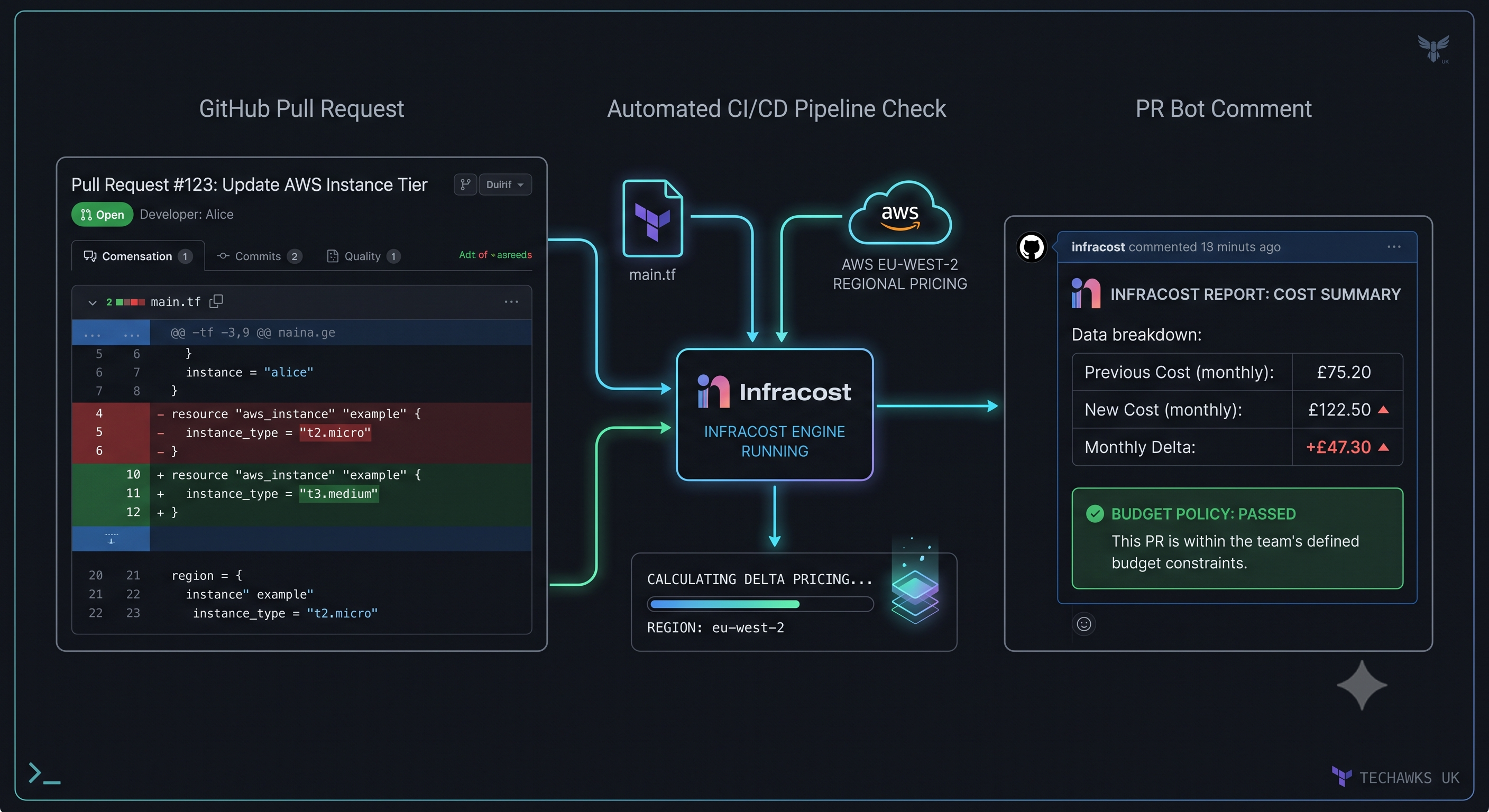 0 Comments 0 Shares 99 Views 0 Reviews
 -
Beyond the Hype: Why UK Engineering Teams Are Urgently Hiring for "AI Governance Engineering"
Across London, Manchester, and Edinburgh, enterprise tech budgets have split. Hiring for legacy full-stack web development and generic DevOps is largely flat, but there is an acute hiring surge across fintech, healthtech, and legaltech for engineers who understand AI safety, auditability, and data governance.
Operating in the UK requires building models that directly navigate GDPR, the EU AI Act’s extraterritorial reach, and the UK’s pro-innovation regulatory framework. Tech leads are no longer asking candidates just to hook up an LLM or fine-tune an open-source model; they are asking: Can you deploy an agent that doesn't leak personally identifiable information (PII) or hallucinate unauthorized financial advice in production?
To turn this into career leverage, focus on three specific technical capabilities:
Production Guardrail Architecture
Go beyond basic system prompting. Build expertise in deterministic guardrail frameworks (e.g., NeMo Guardrails, Llama Guard) to filter out toxic, out-of-scope, or PII-violating prompts and completions before they hit users or downstream APIs.
Deterministic Audit Logs & Lineage
In UK enterprise banking and healthcare, every autonomous decision needs an audit trail. Learn to implement immutable tracing (using tools like OpenTelemetry or Langfuse) that records the exact prompt version, retrieved vector chunk ID, model parameters, and latency for every inference step.
Red-Teaming and Evaluation Pipelines
Hiring panels want to see how you break your own systems. Learn automated adversarial testing: automated prompt-injection evaluations, jailbreak fuzzing, and benchmarking retrieval degradation over time.
Stop treating compliance as an afterthought delegated to the legal department. In modern enterprise engineering, governance is a core architectural pattern.
Discussion Question
For UK software engineers and tech leads: Has your engineering org begun mandating automated guardrails and compliance checks directly in your CI/CD pipelines, or is it still handled retroactively?
CTA (Join Techawks UK)
Stay ahead of hiring shifts, high-impact architecture breakdowns, and UK industry trends. Follow Techawks UK and join thousands of developers and tech leaders building high-trust software across Britain.Beyond the Hype: Why UK Engineering Teams Are Urgently Hiring for "AI Governance Engineering" Across London, Manchester, and Edinburgh, enterprise tech budgets have split. Hiring for legacy full-stack web development and generic DevOps is largely flat, but there is an acute hiring surge across fintech, healthtech, and legaltech for engineers who understand AI safety, auditability, and data governance. Operating in the UK requires building models that directly navigate GDPR, the EU AI Act’s extraterritorial reach, and the UK’s pro-innovation regulatory framework. Tech leads are no longer asking candidates just to hook up an LLM or fine-tune an open-source model; they are asking: Can you deploy an agent that doesn't leak personally identifiable information (PII) or hallucinate unauthorized financial advice in production? To turn this into career leverage, focus on three specific technical capabilities: Production Guardrail Architecture Go beyond basic system prompting. Build expertise in deterministic guardrail frameworks (e.g., NeMo Guardrails, Llama Guard) to filter out toxic, out-of-scope, or PII-violating prompts and completions before they hit users or downstream APIs. Deterministic Audit Logs & Lineage In UK enterprise banking and healthcare, every autonomous decision needs an audit trail. Learn to implement immutable tracing (using tools like OpenTelemetry or Langfuse) that records the exact prompt version, retrieved vector chunk ID, model parameters, and latency for every inference step. Red-Teaming and Evaluation Pipelines Hiring panels want to see how you break your own systems. Learn automated adversarial testing: automated prompt-injection evaluations, jailbreak fuzzing, and benchmarking retrieval degradation over time. Stop treating compliance as an afterthought delegated to the legal department. In modern enterprise engineering, governance is a core architectural pattern. Discussion Question For UK software engineers and tech leads: Has your engineering org begun mandating automated guardrails and compliance checks directly in your CI/CD pipelines, or is it still handled retroactively? CTA (Join Techawks UK) Stay ahead of hiring shifts, high-impact architecture breakdowns, and UK industry trends. Follow Techawks UK and join thousands of developers and tech leaders building high-trust software across Britain. 0 Comments 0 Shares 49 Views 0 Reviews
 -
The UK Tech Career Crossroads: Permanent role vs. Outside IR35 contracting?
For years, the standard playbook for a mid-to-senior software engineer in the UK was simple: gain three years of full-time experience, then pivot to daily-rate contracting for an immediate bump in net earnings.
Today, navigating IR35 reforms, pension matching schemes, and startup equity packages means the gap isn’t as clear-cut as comparing an £85k salary to a £600 day rate.
Whether you're based around Old Street, Cambridge, Manchester, or working fully remote across the UK, which route currently yields the best balance of leverage, compensation, and career growth?
Poll Question:
Looking at long-term total compensation and stability in the UK market, where are you placing your bet today?
[ ] Permanent (Product-led firms with equity/RSUs)
[ ] Outside IR35 Contracting (Specialised niches)
[ ] Inside IR35 Contracting (Consistent high day rates)
[ ] Building an independent consultancy/agency
Key Takeaways
Pensions and equity narrow the cash gap: A competitive salary with an 8–10% non-contributory pension match, private healthcare, and liquid RSUs often outpaces the net take-home of an inside-IR35 umbrella contract once employer NICs and apprenticeship levies are deducted.
Specialisation defends the outside-IR35 boundary: True outside-IR35 contracts still exist, but they are increasingly reserved for distinct deliverables—such as cloud security compliance, platform migrations, or data engineering overhauls—rather than generic staff augmentation.
Ownership vs. velocity: Permanent roles at scaling tech firms offer compound equity value and team leadership experience, while contracting maximizes immediate cash flow and exposure to varied enterprise tech stacks.
CTA (Join Techawks UK)
Cast your vote above, share your breakdown in the comments, and follow Techawks UK for pragmatic, actionable career insights tailored to the British engineering ecosystem.The UK Tech Career Crossroads: Permanent role vs. Outside IR35 contracting? For years, the standard playbook for a mid-to-senior software engineer in the UK was simple: gain three years of full-time experience, then pivot to daily-rate contracting for an immediate bump in net earnings. Today, navigating IR35 reforms, pension matching schemes, and startup equity packages means the gap isn’t as clear-cut as comparing an £85k salary to a £600 day rate. Whether you're based around Old Street, Cambridge, Manchester, or working fully remote across the UK, which route currently yields the best balance of leverage, compensation, and career growth? Poll Question: Looking at long-term total compensation and stability in the UK market, where are you placing your bet today? [ ] Permanent (Product-led firms with equity/RSUs) [ ] Outside IR35 Contracting (Specialised niches) [ ] Inside IR35 Contracting (Consistent high day rates) [ ] Building an independent consultancy/agency Key Takeaways Pensions and equity narrow the cash gap: A competitive salary with an 8–10% non-contributory pension match, private healthcare, and liquid RSUs often outpaces the net take-home of an inside-IR35 umbrella contract once employer NICs and apprenticeship levies are deducted. Specialisation defends the outside-IR35 boundary: True outside-IR35 contracts still exist, but they are increasingly reserved for distinct deliverables—such as cloud security compliance, platform migrations, or data engineering overhauls—rather than generic staff augmentation. Ownership vs. velocity: Permanent roles at scaling tech firms offer compound equity value and team leadership experience, while contracting maximizes immediate cash flow and exposure to varied enterprise tech stacks. CTA (Join Techawks UK) Cast your vote above, share your breakdown in the comments, and follow Techawks UK for pragmatic, actionable career insights tailored to the British engineering ecosystem.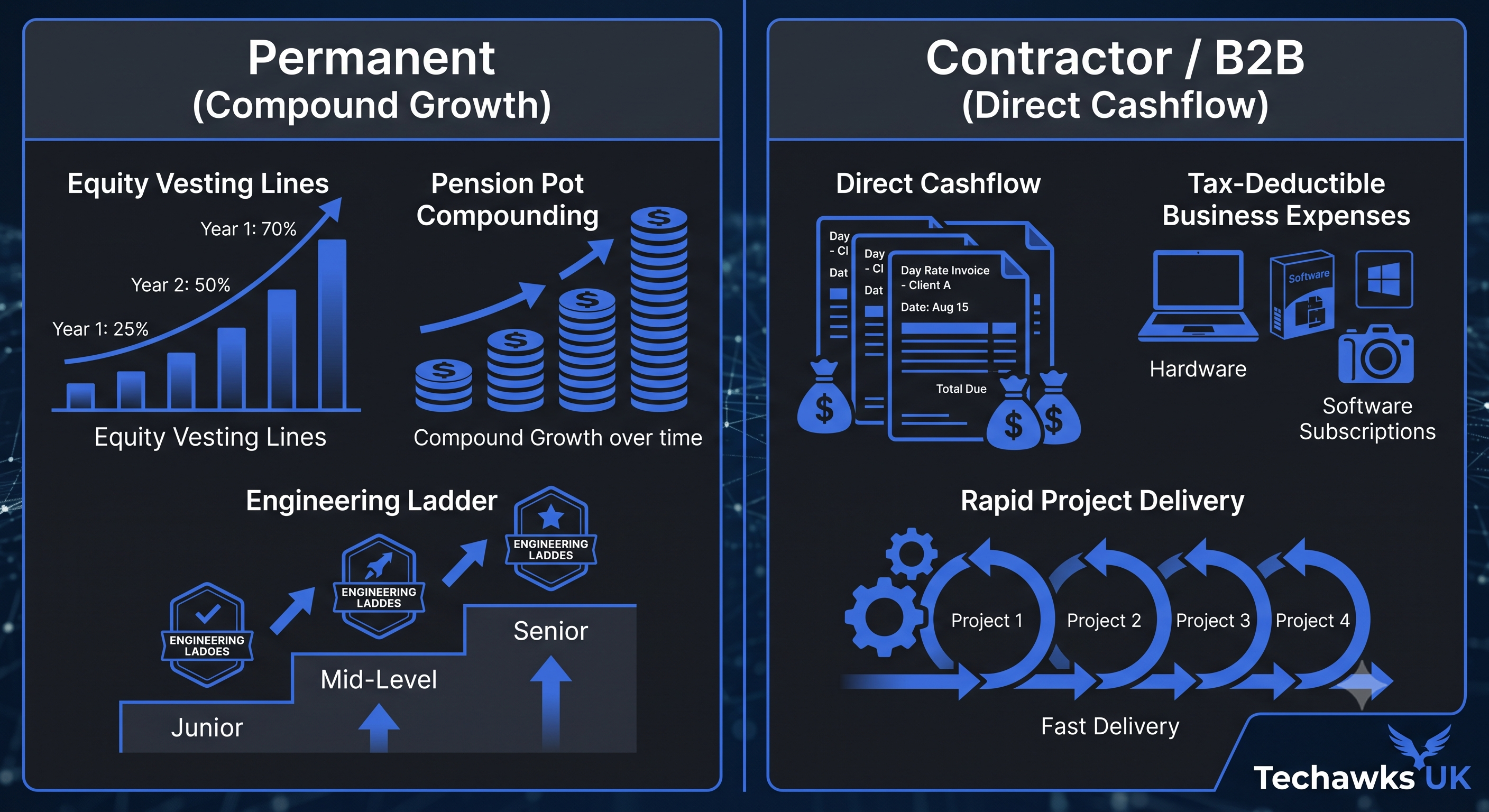 0 Comments 0 Shares 117 Views 0 Reviews
 -
Designing for the UK’s Statutory AI Code: Why Your LLM Pipelines Need Deterministic Audit Logs
While the EU relies on centralized statutory classifications, the UK’s multi-regulator model (ICO, CMA, FCA, and Ofcom via the DRCF) places accountability directly on production behavior. Regulators are zeroing in on non-deterministic AI decisions, agentic transaction execution, and unverified data feeding into model fine-tuning.
If a user or auditor asks why your agentic workflow triggered an automated financial transaction or processed a sensitive decision, relying on "the model hallucinated" is a direct regulatory liability.
Here is how UK engineering teams are adapting their production AI pipelines to build defensible auditability:
Implement Deterministic Replay Logs
Never treat LLM API calls as ephemeral HTTP requests. For every model interaction that influences user outcomes, capture an immutable evaluation snapshot:
input_prompt_hash & retrieval_chunk_ids (exact RAG vectors passed in context)
model_checkpoint_digest & hyperparameters (temperature, top_p, system instructions)
tool_call_manifest (exact payload schema passed to downstream functions before execution)
Decouple Agent Decisions from Execution Gates
To comply with emerging consumer protection directives for autonomous agents, eliminate unbounded autonomous actions:
Introduce an idempotent policy enforcement proxy between the agent's function-calling engine and write APIs.
Enforce hard thresholds (e.g., transactional caps, scope boundaries, require human-in-the-loop sign-off on anomalous state transitions).
Treat Vendor SaaS AI as Tier-1 Dependencies
UK privacy guidance scrutinizes silent data exposure in third-party integrations. If your stack integrates external reasoning APIs or managed vector stores, enforce egress filtering proxies to strip or pseudonymise PII before external ingestion, logging cryptographic verification of sanitisation at the edge.
Auditability is becoming an essential system design constraint. Structuring deterministic traces and enforcement boundaries today protects your platform from costly operational retrofits as UK sector enforcement intensifies.
Discussion Question
Are your production AI agents logged deterministically for retrospective audits, or is your agentic observability still limited to standard application latency metrics?
CTA
Looking for actionable engineering frameworks, systems architecture teardowns, and tech governance insight tailored to the UK tech landscape? Join Techawks UK to connect with technical architects, engineering leads, and systems builders.Designing for the UK’s Statutory AI Code: Why Your LLM Pipelines Need Deterministic Audit Logs While the EU relies on centralized statutory classifications, the UK’s multi-regulator model (ICO, CMA, FCA, and Ofcom via the DRCF) places accountability directly on production behavior. Regulators are zeroing in on non-deterministic AI decisions, agentic transaction execution, and unverified data feeding into model fine-tuning. If a user or auditor asks why your agentic workflow triggered an automated financial transaction or processed a sensitive decision, relying on "the model hallucinated" is a direct regulatory liability. Here is how UK engineering teams are adapting their production AI pipelines to build defensible auditability: Implement Deterministic Replay Logs Never treat LLM API calls as ephemeral HTTP requests. For every model interaction that influences user outcomes, capture an immutable evaluation snapshot: input_prompt_hash & retrieval_chunk_ids (exact RAG vectors passed in context) model_checkpoint_digest & hyperparameters (temperature, top_p, system instructions) tool_call_manifest (exact payload schema passed to downstream functions before execution) Decouple Agent Decisions from Execution Gates To comply with emerging consumer protection directives for autonomous agents, eliminate unbounded autonomous actions: Introduce an idempotent policy enforcement proxy between the agent's function-calling engine and write APIs. Enforce hard thresholds (e.g., transactional caps, scope boundaries, require human-in-the-loop sign-off on anomalous state transitions). Treat Vendor SaaS AI as Tier-1 Dependencies UK privacy guidance scrutinizes silent data exposure in third-party integrations. If your stack integrates external reasoning APIs or managed vector stores, enforce egress filtering proxies to strip or pseudonymise PII before external ingestion, logging cryptographic verification of sanitisation at the edge. Auditability is becoming an essential system design constraint. Structuring deterministic traces and enforcement boundaries today protects your platform from costly operational retrofits as UK sector enforcement intensifies. Discussion Question Are your production AI agents logged deterministically for retrospective audits, or is your agentic observability still limited to standard application latency metrics? CTA Looking for actionable engineering frameworks, systems architecture teardowns, and tech governance insight tailored to the UK tech landscape? Join Techawks UK to connect with technical architects, engineering leads, and systems builders.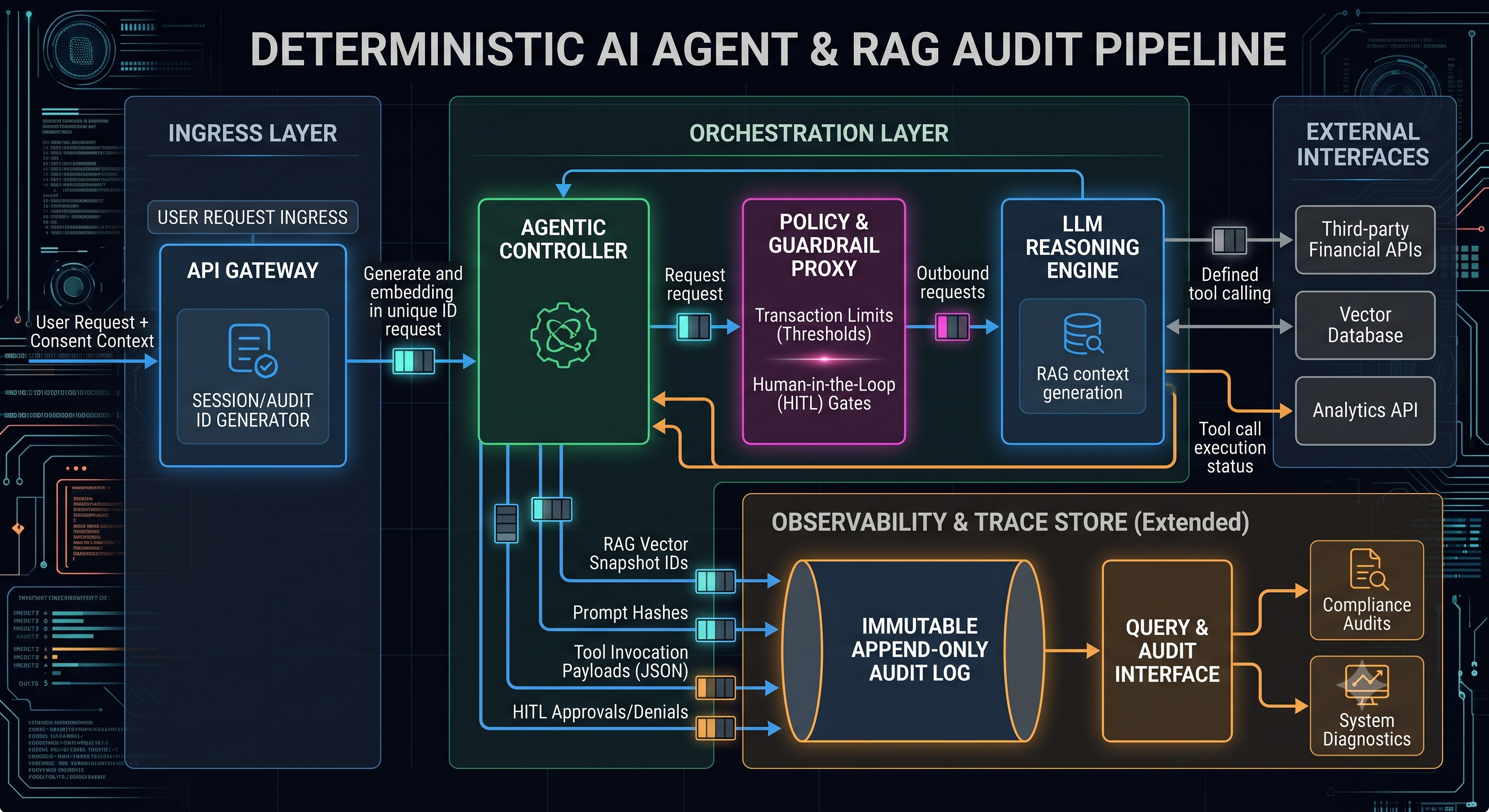 0 Comments 0 Shares 55 Views 0 Reviews
 -
The Data Sovereignty Maze: Why "UK GDPR Compliance" Requires an Architectural Overhaul, Not Just a Legal Policy
Operating tech in the UK requires navigating a distinct regulatory and infrastructural reality. Between UK GDPR, evolving data bridge frameworks, and stringent Open Banking compliance, building for the UK and European ecosystem means engineering privacy directly into your data pipelines from day one.
Treating data residency and compliance as an afterthought inevitably leads to painful re-platforming down the road. High-performing UK engineering teams design for strict data governance at the architecture level using three practical patterns:
Implement Zero-Trust Field-Level Encryption Before Ingestion: Storing databases in the eu-west-2 (London) region isn't enough if internal services have unrestricted plaintext access. Enforce field-level encryption (FLE) or envelope encryption on high-risk attributes (national identifiers, transaction records, IP addresses) at the application layer before writing to persistent stores. If an operational database is compromised, the sensitive fields remain cryptographically unreadable without localized KMS keys.
Isolate Telemetry and Observability Trails: Log drains and distributed tracing agents (Datadog, OpenTelemetry, Logstash) are the most common unmonitored compliance leaks. User IDs, emails, and transaction tokens frequently slip into error payloads and get shipped to external US-headquartered aggregation nodes. Deploy localized log masking proxies at the ingress layer to sanitize PII, drop unhashed user attributes, and retain debug logs strictly within domestic storage boundaries.
Architect for Granular "Right to Erasure" Hard Deletions: In complex event-driven setups, handling an Article 17 deletion request across Kafka logs, cold S3 archives, and distributed cache clusters is an operational nightmare. Use crypto-shredding: associate each user with a unique cryptographic key stored in a dedicated key management service. When an erasure request arrives, destroy that user's specific key, instantly rendering all their historic, distributed immutable event data permanently unrecoverable without needing to rewrite entire append-only log streams.
How does your engineering team manage the boundary between rapid feature shipping and strict data residency guardrails?
Key Takeaways
Local Region $\neq$ Compliance: Encrypt sensitive fields at the application tier before writes occur; don't rely solely on cloud region selection.
Sanitize Telemetry at Ingress: Filter and mask debug logs and traces locally before they stream out to multi-region observability tools.
Leverage Crypto-Shredding: Solve append-only and streaming data deletion challenges by destroying user-specific encryption keys.
CTA (Join Techawks UK)
Navigating modern software architecture in the UK means balancing high-velocity product delivery with world-class engineering standards and data integrity.
Join Techawks UK to connect with local system architects, unpack production postmortems, and master practical tech leadership. Share your perspective in the comments below.The Data Sovereignty Maze: Why "UK GDPR Compliance" Requires an Architectural Overhaul, Not Just a Legal Policy Operating tech in the UK requires navigating a distinct regulatory and infrastructural reality. Between UK GDPR, evolving data bridge frameworks, and stringent Open Banking compliance, building for the UK and European ecosystem means engineering privacy directly into your data pipelines from day one. Treating data residency and compliance as an afterthought inevitably leads to painful re-platforming down the road. High-performing UK engineering teams design for strict data governance at the architecture level using three practical patterns: Implement Zero-Trust Field-Level Encryption Before Ingestion: Storing databases in the eu-west-2 (London) region isn't enough if internal services have unrestricted plaintext access. Enforce field-level encryption (FLE) or envelope encryption on high-risk attributes (national identifiers, transaction records, IP addresses) at the application layer before writing to persistent stores. If an operational database is compromised, the sensitive fields remain cryptographically unreadable without localized KMS keys. Isolate Telemetry and Observability Trails: Log drains and distributed tracing agents (Datadog, OpenTelemetry, Logstash) are the most common unmonitored compliance leaks. User IDs, emails, and transaction tokens frequently slip into error payloads and get shipped to external US-headquartered aggregation nodes. Deploy localized log masking proxies at the ingress layer to sanitize PII, drop unhashed user attributes, and retain debug logs strictly within domestic storage boundaries. Architect for Granular "Right to Erasure" Hard Deletions: In complex event-driven setups, handling an Article 17 deletion request across Kafka logs, cold S3 archives, and distributed cache clusters is an operational nightmare. Use crypto-shredding: associate each user with a unique cryptographic key stored in a dedicated key management service. When an erasure request arrives, destroy that user's specific key, instantly rendering all their historic, distributed immutable event data permanently unrecoverable without needing to rewrite entire append-only log streams. How does your engineering team manage the boundary between rapid feature shipping and strict data residency guardrails? Key Takeaways Local Region $\neq$ Compliance: Encrypt sensitive fields at the application tier before writes occur; don't rely solely on cloud region selection. Sanitize Telemetry at Ingress: Filter and mask debug logs and traces locally before they stream out to multi-region observability tools. Leverage Crypto-Shredding: Solve append-only and streaming data deletion challenges by destroying user-specific encryption keys. CTA (Join Techawks UK) Navigating modern software architecture in the UK means balancing high-velocity product delivery with world-class engineering standards and data integrity. Join Techawks UK to connect with local system architects, unpack production postmortems, and master practical tech leadership. Share your perspective in the comments below.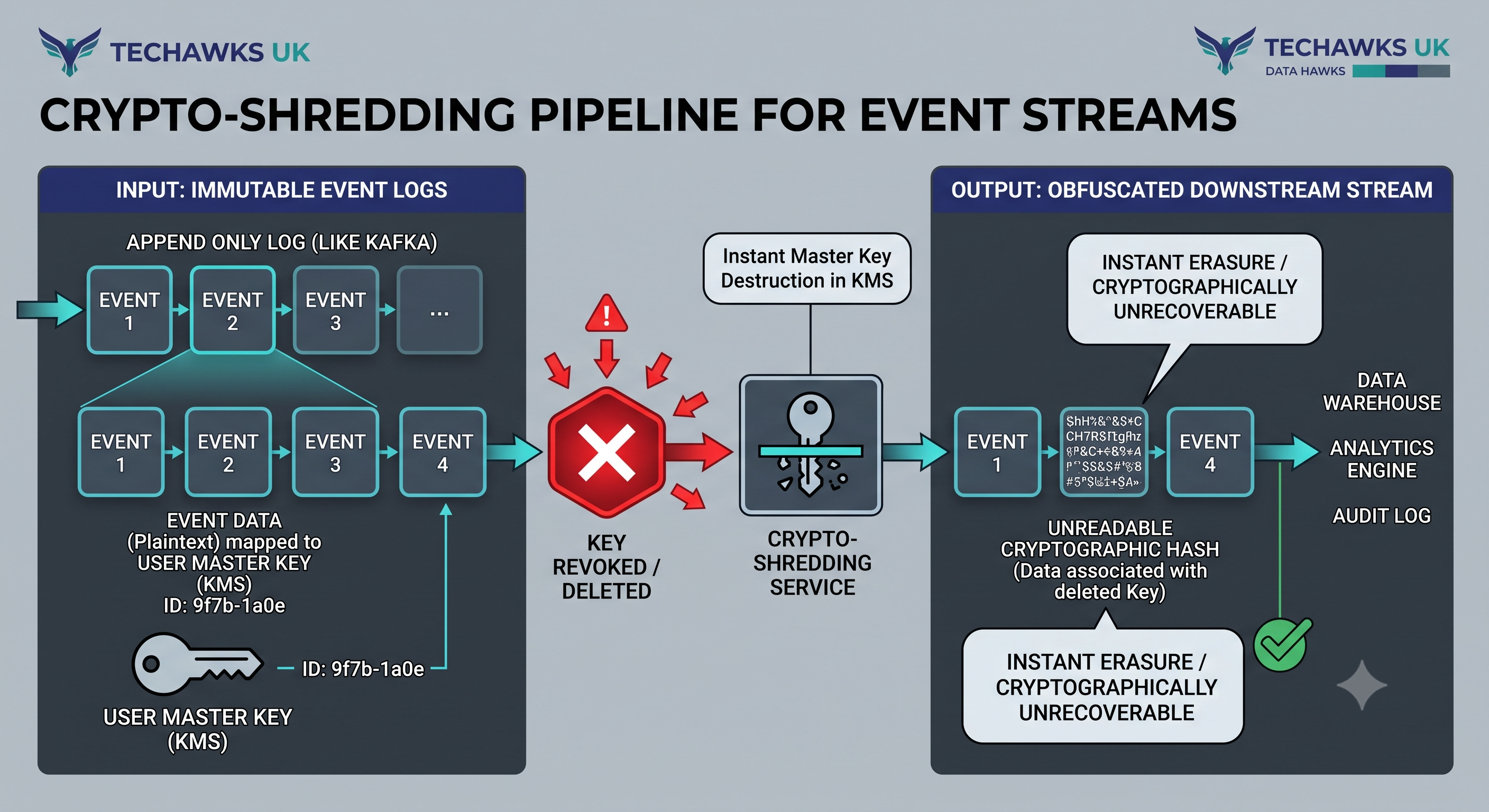 0 Comments 0 Shares 101 Views 0 Reviews
 -
Designing for GDPR ‘Right to Erasure’ in Event-Driven Architectures (Without Breaking the Log)
Building modern platforms in the UK means navigating the friction between distributed systems design and regulatory mandates like UK GDPR and the Data Protection Act. In event-driven systems using Kafka, Redpanda, or Kinesis, the core principle is permanence: once committed, events cannot be modified or deleted without rewriting the entire partition history.
Attempting to rewrite immutable log segments causes data corruption, consumer offset desynchronization, and massive operational overhead.
Here is how engineering teams architect for absolute erasure while preserving ledger immutability:
Implement Crypto-Shredding by Default: Never store raw Personal Identifiable Information (PII) directly in the event payload. Instead, encrypt sensitive fields (e.g., email, home address, full name) using a per-user encryption key stored in a dedicated Key Management Service (KMS). When an erasure request is confirmed, simply destroy the user's key. The event remains on the log, but the payload is rendered permanently unrecoverable mathematical garbage.
Decouple Identifiers with Pseudonymisation Tokens: Use transient surrogate UUIDs within domain event streams. Map those IDs to real user identities inside an isolated relational datastore designed for atomic DELETE operations. Downstream analytical consumers process events using only the surrogate key.
Partition Stateful and Non-PII Streams: Structure topics to separate operational events from personal data. Route high-frequency telemetry, clickstreams, and system metrics to long-retention topics, while isolating identifying user interactions into short-retention, compacted topics configured with strict tombstone message policies.
Enforce Schema Contracts with Automated PII Linting: Prevent developers from accidentally leaking PII into event headers or unencrypted fields. Integrate schema-registry linters (e.g., Protobuf/Avro schema validation) into CI/CD pipelines to block builds containing unclassified user attributes.
Key Takeaways
Do not rewrite append-only logs; use crypto-shredding to make immutable PII permanently irrecoverable.
Store per-user encryption keys separately from message queues in a hardened KMS.
Enforce schema-level controls in CI/CD to prevent unencrypted personal data from entering operational event pipelines.
CTA
Navigating system architecture, regulatory compliance, and distributed engineering in the UK tech scene?
Join Techawks UK to connect with software architects, lead developers, and platform engineers tackling high-scale engineering challenges. Link in bio.Designing for GDPR ‘Right to Erasure’ in Event-Driven Architectures (Without Breaking the Log) Building modern platforms in the UK means navigating the friction between distributed systems design and regulatory mandates like UK GDPR and the Data Protection Act. In event-driven systems using Kafka, Redpanda, or Kinesis, the core principle is permanence: once committed, events cannot be modified or deleted without rewriting the entire partition history. Attempting to rewrite immutable log segments causes data corruption, consumer offset desynchronization, and massive operational overhead. Here is how engineering teams architect for absolute erasure while preserving ledger immutability: Implement Crypto-Shredding by Default: Never store raw Personal Identifiable Information (PII) directly in the event payload. Instead, encrypt sensitive fields (e.g., email, home address, full name) using a per-user encryption key stored in a dedicated Key Management Service (KMS). When an erasure request is confirmed, simply destroy the user's key. The event remains on the log, but the payload is rendered permanently unrecoverable mathematical garbage. Decouple Identifiers with Pseudonymisation Tokens: Use transient surrogate UUIDs within domain event streams. Map those IDs to real user identities inside an isolated relational datastore designed for atomic DELETE operations. Downstream analytical consumers process events using only the surrogate key. Partition Stateful and Non-PII Streams: Structure topics to separate operational events from personal data. Route high-frequency telemetry, clickstreams, and system metrics to long-retention topics, while isolating identifying user interactions into short-retention, compacted topics configured with strict tombstone message policies. Enforce Schema Contracts with Automated PII Linting: Prevent developers from accidentally leaking PII into event headers or unencrypted fields. Integrate schema-registry linters (e.g., Protobuf/Avro schema validation) into CI/CD pipelines to block builds containing unclassified user attributes. Key Takeaways Do not rewrite append-only logs; use crypto-shredding to make immutable PII permanently irrecoverable. Store per-user encryption keys separately from message queues in a hardened KMS. Enforce schema-level controls in CI/CD to prevent unencrypted personal data from entering operational event pipelines. CTA Navigating system architecture, regulatory compliance, and distributed engineering in the UK tech scene? Join Techawks UK to connect with software architects, lead developers, and platform engineers tackling high-scale engineering challenges. Link in bio. 0 Comments 0 Shares 186 Views 0 Reviews
 -
Navigating the UK’s Sector-Led AI Landscape: Why Enterprise Architecture Must Replace Horizontal Checklists
Unlike Brussels’ horizontal statutory model, the UK continues to govern artificial intelligence through a decentralized, sector-led regime. For tech leads and systems architects in London, Cambridge, Edinburgh, and across the UK tech cluster, compliance is not a generic sign-off—it is an active engineering problem distributed across multiple regulatory bodies.
Between the Information Commissioner's Office (ICO) statutory codes on automated decision-making, the FCA’s strict Senior Managers and Certification Regime (SM&CR) rules applied to AI decisions, and cross-border EU AI Act exposure, UK engineering stacks must be built for continuous auditability.
Why This Matters to You
In a sector-regulated market, you cannot offload compliance to legal counsel after deployment. System accountability lands on the system architecture itself. If an automated pipeline makes or informs consequential decisions, your engineering stack must be able to explain, trace, and reproduce that state deterministically on demand.
What You Need to Implement (The Engineering Blueprint):
Implement Immutable AI Lineage Logs: Regulators like the ICO and FCA require strict contestability and explainability. Design your data pipelines so every model output links to a version-controlled prompt, system state, training snapshot or vector retrieval chunk, and model weight checkpoint.
Decouple Policy Enforcement via Middleware: Because UK regulators (Ofcom, CMA, FCA, MHRA) update vertical guidance independently, avoid hardcoding compliance checks into business logic. Build a dedicated proxy or policy middleware layer (e.g., using Open Policy Agent or schema validators) that filters prompts, inspects tool calls, and flags automated decision thresholds before writes hit persistence layers.
Leverage Sandboxes Before Deployment: Take full advantage of domestic testing infrastructure like DSIT's AI Growth Labs and the Digital Regulation Cooperation Forum (DRCF). Piloting high-impact systems inside supervised regulatory sandboxes allows teams to test edge cases under conditional leeway rather than risking retrospective enforcement action.
Architect for Dual-Border Interoperability: If your UK-based service touches users across the Channel, your infrastructure must isolate data paths. You need clean separation of high-risk workflows subject to extraterritorial EU AI Act requirements from domestic UK GDPR/DUAA automated decision workflows.
The competitive advantage for UK engineering teams in 2026 isn't moving fast and breaking things—it's building resilient, inspectable architectures that scale cleanly across fragmented regulatory borders.
Discussion Question
How is your engineering team structuring automated decision logs: are you capturing full inference states and prompt vectors in a dedicated observability stack, or are you still relying on standard application-level APM tracing?
CTA (Join Techawks UK)
Join Techawks UK—the community for UK software engineers, systems architects, and deep-tech founders building robust, production-grade systems in one of the world's most dynamic regulatory hubs.
👉 [Join Techawks UK on LinkedIn/Discord – Link in Bio]Navigating the UK’s Sector-Led AI Landscape: Why Enterprise Architecture Must Replace Horizontal Checklists Unlike Brussels’ horizontal statutory model, the UK continues to govern artificial intelligence through a decentralized, sector-led regime. For tech leads and systems architects in London, Cambridge, Edinburgh, and across the UK tech cluster, compliance is not a generic sign-off—it is an active engineering problem distributed across multiple regulatory bodies. Between the Information Commissioner's Office (ICO) statutory codes on automated decision-making, the FCA’s strict Senior Managers and Certification Regime (SM&CR) rules applied to AI decisions, and cross-border EU AI Act exposure, UK engineering stacks must be built for continuous auditability. Why This Matters to You In a sector-regulated market, you cannot offload compliance to legal counsel after deployment. System accountability lands on the system architecture itself. If an automated pipeline makes or informs consequential decisions, your engineering stack must be able to explain, trace, and reproduce that state deterministically on demand. What You Need to Implement (The Engineering Blueprint): Implement Immutable AI Lineage Logs: Regulators like the ICO and FCA require strict contestability and explainability. Design your data pipelines so every model output links to a version-controlled prompt, system state, training snapshot or vector retrieval chunk, and model weight checkpoint. Decouple Policy Enforcement via Middleware: Because UK regulators (Ofcom, CMA, FCA, MHRA) update vertical guidance independently, avoid hardcoding compliance checks into business logic. Build a dedicated proxy or policy middleware layer (e.g., using Open Policy Agent or schema validators) that filters prompts, inspects tool calls, and flags automated decision thresholds before writes hit persistence layers. Leverage Sandboxes Before Deployment: Take full advantage of domestic testing infrastructure like DSIT's AI Growth Labs and the Digital Regulation Cooperation Forum (DRCF). Piloting high-impact systems inside supervised regulatory sandboxes allows teams to test edge cases under conditional leeway rather than risking retrospective enforcement action. Architect for Dual-Border Interoperability: If your UK-based service touches users across the Channel, your infrastructure must isolate data paths. You need clean separation of high-risk workflows subject to extraterritorial EU AI Act requirements from domestic UK GDPR/DUAA automated decision workflows. The competitive advantage for UK engineering teams in 2026 isn't moving fast and breaking things—it's building resilient, inspectable architectures that scale cleanly across fragmented regulatory borders. Discussion Question How is your engineering team structuring automated decision logs: are you capturing full inference states and prompt vectors in a dedicated observability stack, or are you still relying on standard application-level APM tracing? CTA (Join Techawks UK) Join Techawks UK—the community for UK software engineers, systems architects, and deep-tech founders building robust, production-grade systems in one of the world's most dynamic regulatory hubs. 👉 [Join Techawks UK on LinkedIn/Discord – Link in Bio] 0 Comments 0 Shares 72 Views 0 Reviews
More Stories