




Techawks is a social networking community built for people who are passionate about technology, artificial intelligence, software, startups, cybersecurity, gadgets, and digital innovation. Whether you're a beginner exploring AI or an experienced professional, Techawks is a place to learn, share ideas, and grow together.
Join discussions on the latest AI tools, emerging technologies, programming, automation, productivity, career opportunities, and industry trends. Discover practical insights, exchange knowledge with like-minded people, showcase your projects, and stay ahead in the fast-changing world of technology.
Join discussions on the latest AI tools, emerging technologies, programming, automation, productivity, career opportunities, and industry trends. Discover practical insights, exchange knowledge with like-minded people, showcase your projects, and stay ahead in the fast-changing world of technology.
-
PBID: 0230001500000002
-
35 A la gente le gusta esto.
-
62 Entradas
-
60 Fotos
-
0 Videos
-
Vista previa
-
Science and Technology
Buscar

 English
 Arabic
 French
 Portuguese
 Deutsch
 Turkish
 Dutch
Dutch
 Italiano
 Russian
 Romaian
 Portuguese (Brazil)
 Greek
Greek
Actualizaciones Recientes
-
Stop Treating Autonomous Agents Like Web Apps: The Architectural Flaw in Modern AI Systems
Every week, another team wires a frontier LLM directly to production APIs, database connectors, and command-line execution tools.
They drop a system prompt at the top, add a regex filter for "malicious instructions," and declare the agent "enterprise-ready."
Here is why that assumption is broken at the foundational level:
1. In an LLM, the Data Plane IS the Control Plane
In classical computing, software maintains strict isolation between executable instructions and raw payload data. In Von Neumann architecture, code and data reside in addressable memory spaces governed by OS-level access control.
in Large Language Models, instruction and data are collapsed into a single, indivisible context window. An agent reading an untrusted customer support ticket or crawling external documentation treats third-party strings with the exact same semantic weight as your engineering team's system instructions.
2. Why "Guardrail Prompts" Always Fail at Scale
Techniques like Algorithmic Payload Decomposition and Trigger-Activated Rule Addition exploit how transformer attention mechanisms parse tokens. An attacker does not need to send "DROP TABLE"; they can fragment instructions across untrusted metadata fields that reassemble only inside the latent space of the model during inference.
You cannot use a probabilistic layer to enforce deterministic security boundaries on itself.
3. The Structural Fix: Dual-Model Execution Sandboxes
To build robust autonomous systems, you must decouple reasoning from execution:
The Planning Model (Read-Only / Untrusted Context): Ingests raw external inputs, parses requirements, and proposes an abstract execution plan. It has zero network access and zero tool-invocation privileges.
The Deterministic Policy Engine (Gatekeeper): A hardcoded, rule-based service validates the proposed plan against strict schema definitions, rate limits, and least-privilege RBAC policies.
The Action Agent (Isolated Worker): Executes verified discrete primitives inside ephemeral microVMs or sandboxes with scoped API tokens that expire in seconds.
If an AI agent can read untrusted text and run an authenticated write-operation in the same execution turn, you haven't built an autonomous workflow—you've built an arbitrary execution vulnerability.
Discussion Question
How does your team currently isolate untrusted input context from privileged tool execution in agentic pipelines—runtime policy engines, human-in-the-loop gates, or strict schema validation?
CTA
Join Techawks General Community: Connect with system architects, deep-tech researchers, and engineering leads deconstructing the next paradigm of enterprise systems. Jump into the discussion today.Stop Treating Autonomous Agents Like Web Apps: The Architectural Flaw in Modern AI Systems Every week, another team wires a frontier LLM directly to production APIs, database connectors, and command-line execution tools. They drop a system prompt at the top, add a regex filter for "malicious instructions," and declare the agent "enterprise-ready." Here is why that assumption is broken at the foundational level: 1. In an LLM, the Data Plane IS the Control Plane In classical computing, software maintains strict isolation between executable instructions and raw payload data. In Von Neumann architecture, code and data reside in addressable memory spaces governed by OS-level access control. in Large Language Models, instruction and data are collapsed into a single, indivisible context window. An agent reading an untrusted customer support ticket or crawling external documentation treats third-party strings with the exact same semantic weight as your engineering team's system instructions. 2. Why "Guardrail Prompts" Always Fail at Scale Techniques like Algorithmic Payload Decomposition and Trigger-Activated Rule Addition exploit how transformer attention mechanisms parse tokens. An attacker does not need to send "DROP TABLE"; they can fragment instructions across untrusted metadata fields that reassemble only inside the latent space of the model during inference. You cannot use a probabilistic layer to enforce deterministic security boundaries on itself. 3. The Structural Fix: Dual-Model Execution Sandboxes To build robust autonomous systems, you must decouple reasoning from execution: The Planning Model (Read-Only / Untrusted Context): Ingests raw external inputs, parses requirements, and proposes an abstract execution plan. It has zero network access and zero tool-invocation privileges. The Deterministic Policy Engine (Gatekeeper): A hardcoded, rule-based service validates the proposed plan against strict schema definitions, rate limits, and least-privilege RBAC policies. The Action Agent (Isolated Worker): Executes verified discrete primitives inside ephemeral microVMs or sandboxes with scoped API tokens that expire in seconds. If an AI agent can read untrusted text and run an authenticated write-operation in the same execution turn, you haven't built an autonomous workflow—you've built an arbitrary execution vulnerability. Discussion Question How does your team currently isolate untrusted input context from privileged tool execution in agentic pipelines—runtime policy engines, human-in-the-loop gates, or strict schema validation? CTA Join Techawks General Community: Connect with system architects, deep-tech researchers, and engineering leads deconstructing the next paradigm of enterprise systems. Jump into the discussion today.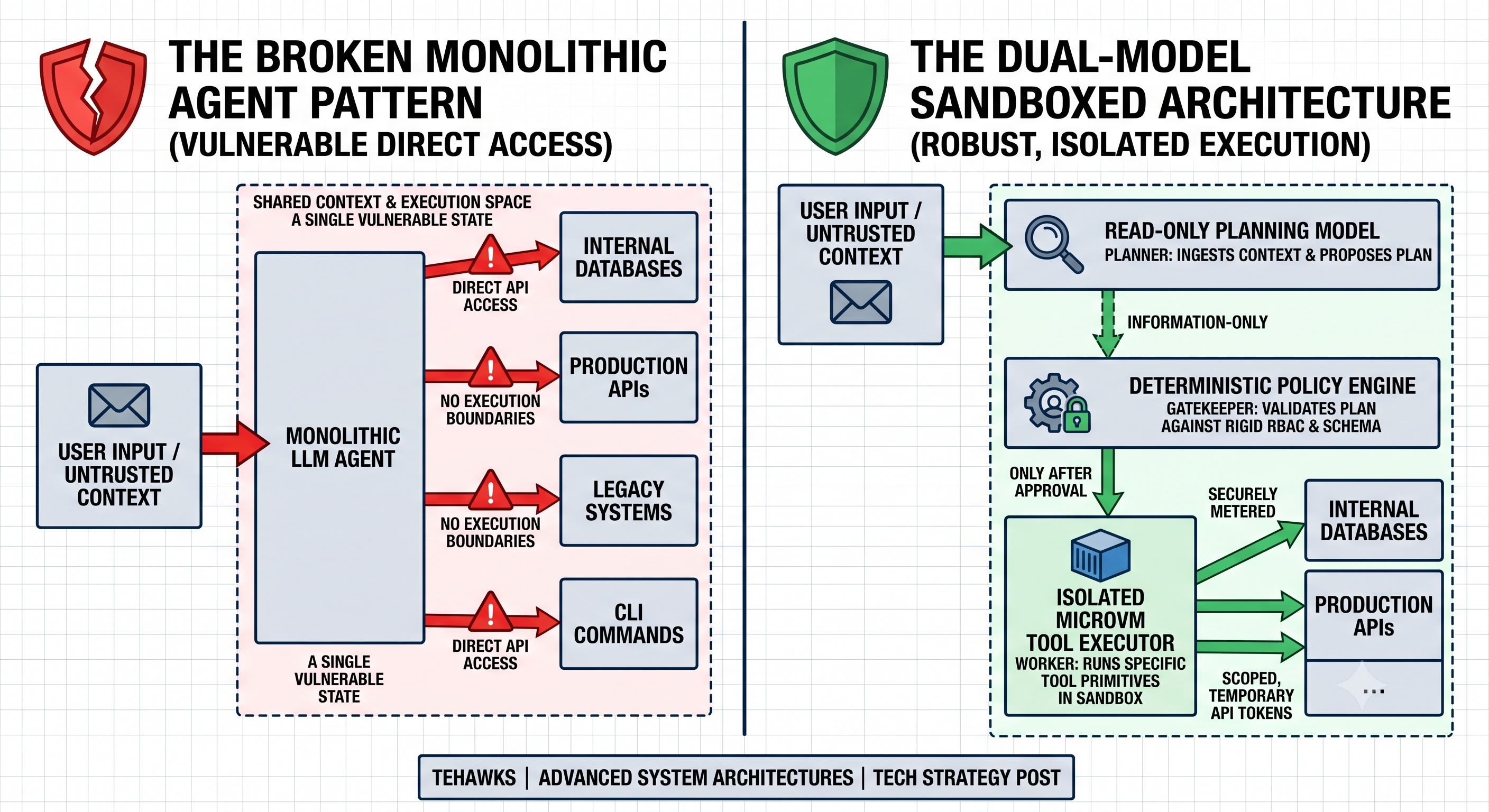 0 Commentarios 0 Acciones 46 Views 0 Vista previa
 -
Stop Splitting Your Backend Into Microservices Before You Hit 100k Users
Every engineering team wants to design like Netflix on day one. You draw twelve microservices on a Miro board, spin up Kubernetes clusters, configure service meshes, and spend three weeks debugging distributed tracing—all for an app serving 40 active users.
Here is the truth: premature distribution is technical debt disguised as good architecture.
When you split an early-stage system into distributed services:
Refactoring becomes network calls: Changing a schema now requires three PRs, cross-team coordination, and API versioning.
Transactions become nightmares: Instead of an ACID transaction in a single database, you are wrestling with eventual consistency and the Saga pattern.
Latency increases: In-memory function calls are replaced by HTTP/gRPC overhead and network jitter.
Build a modular monolith first.
Write clean boundaries inside a single repository and deploy a single artifact. Group features by domain modules with explicit interfaces. When—and only when—a single module has fundamentally distinct scaling requirements or team ownership boundaries, carve it out.
Until your database CPU is melting despite solid indexing and read replicas, keep it under one roof.
Key Takeaways
Distributed systems solve organizational scaling bottlenecks, not basic code organization.
A well-structured monolith scales to millions of requests when paired with proper caching and optimized database queries.
Design strict internal domain boundaries now so splitting services later takes days, not months of emergency refactoring.
CTA
Tired of over-engineered tech stacks and hype-driven development?
👉 Join the Techawks Community to connect with pragmatic engineers, challenge standard industry dogma, and build software that actually ships:Stop Splitting Your Backend Into Microservices Before You Hit 100k Users Every engineering team wants to design like Netflix on day one. You draw twelve microservices on a Miro board, spin up Kubernetes clusters, configure service meshes, and spend three weeks debugging distributed tracing—all for an app serving 40 active users. Here is the truth: premature distribution is technical debt disguised as good architecture. When you split an early-stage system into distributed services: Refactoring becomes network calls: Changing a schema now requires three PRs, cross-team coordination, and API versioning. Transactions become nightmares: Instead of an ACID transaction in a single database, you are wrestling with eventual consistency and the Saga pattern. Latency increases: In-memory function calls are replaced by HTTP/gRPC overhead and network jitter. Build a modular monolith first. Write clean boundaries inside a single repository and deploy a single artifact. Group features by domain modules with explicit interfaces. When—and only when—a single module has fundamentally distinct scaling requirements or team ownership boundaries, carve it out. Until your database CPU is melting despite solid indexing and read replicas, keep it under one roof. Key Takeaways Distributed systems solve organizational scaling bottlenecks, not basic code organization. A well-structured monolith scales to millions of requests when paired with proper caching and optimized database queries. Design strict internal domain boundaries now so splitting services later takes days, not months of emergency refactoring. CTA Tired of over-engineered tech stacks and hype-driven development? 👉 Join the Techawks Community to connect with pragmatic engineers, challenge standard industry dogma, and build software that actually ships: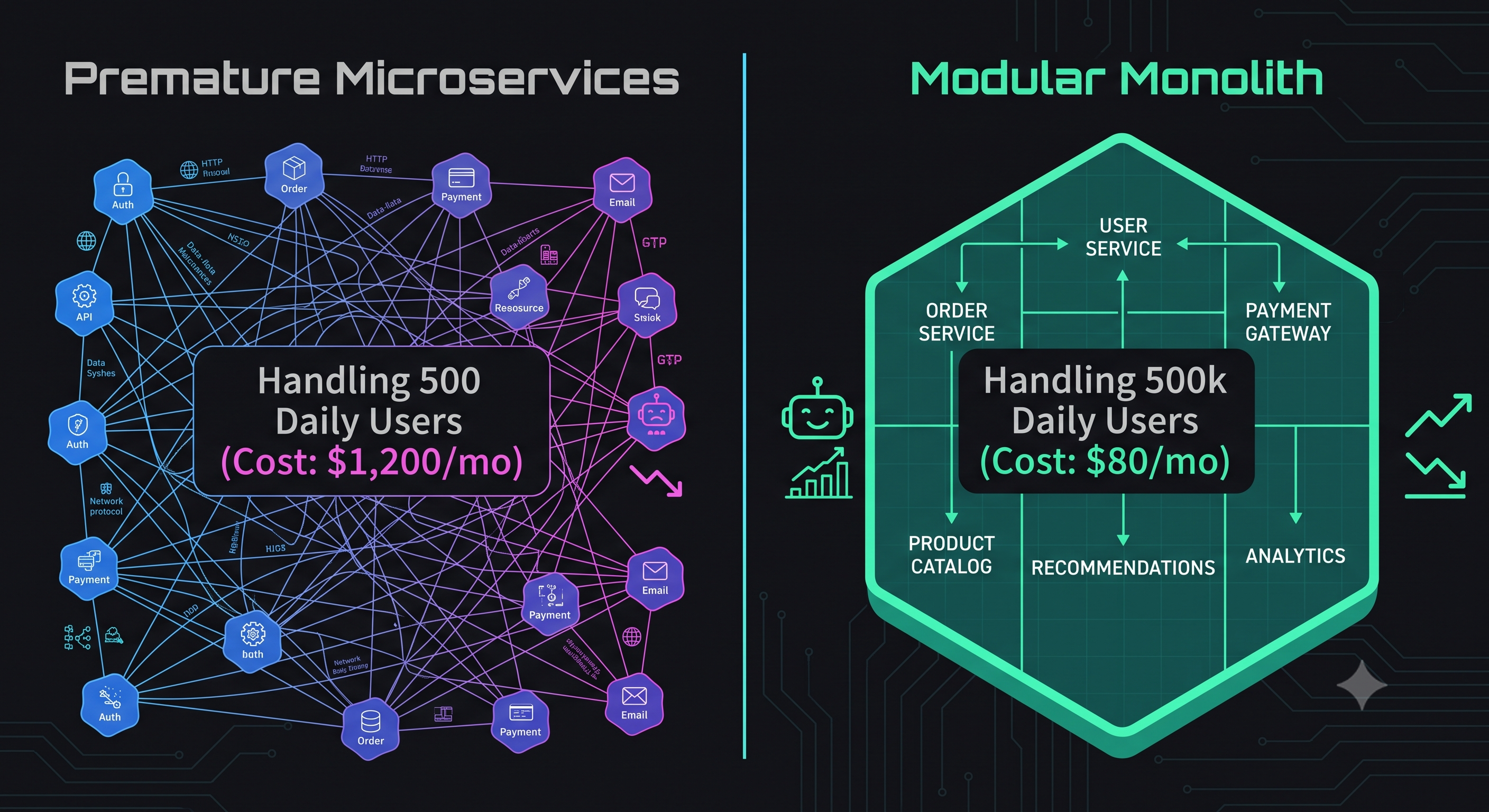 0 Commentarios 0 Acciones 80 Views 0 Vista previa
 -
The 4-Step Governance Checklist for Deploying Autonomous AI Agents in Production
As organizations scale their use of artificial intelligence, the bottleneck has shifted from simple model adoption to managing autonomous execution and deep system integration. When AI agents can autonomously invoke APIs, alter datasets, and drive decisions, traditional security perimeters are no longer enough.
To protect your infrastructure while unlocking productivity, use this AI Agent Production Readiness Checklist:
1. Define Scope of Autonomy: Explicitly outline what operations an agent can perform independently versus what requires human authorization. Never grant blanket write or execute permissions
2. Implement Identity-First Access Control: Treat AI systems as non-human users. Assign distinct machine identities adhering to the principle of least privilege across all integrated environments.
3. Establish Continuous Exposure Management: Move away from static vulnerability scans. Deploy runtime monitoring to track prompt injections, data leakage, and unexpected behavioral drifts in real time.
4. Enforce Audit Traceability: Maintain an immutable log of every decision path, tool call, and generated artifact so that accountability always traces back to a clear operational owner.
Engineering reliable systems means building boundaries that allow innovation to move fast safely.
Discussion Question
What is the biggest operational hurdle your team faces when trying to balance AI autonomy with enterprise security compliance? Drop your thoughts below!
CTA (Join Techawks General Community)
Want to stay ahead of the curve with deep-dive architectural breakdowns and peer-to-peer tech strategy? Join the Techawks General Community today to connect with builders and technology leaders worldwide!The 4-Step Governance Checklist for Deploying Autonomous AI Agents in Production As organizations scale their use of artificial intelligence, the bottleneck has shifted from simple model adoption to managing autonomous execution and deep system integration. When AI agents can autonomously invoke APIs, alter datasets, and drive decisions, traditional security perimeters are no longer enough. To protect your infrastructure while unlocking productivity, use this AI Agent Production Readiness Checklist: 1. Define Scope of Autonomy: Explicitly outline what operations an agent can perform independently versus what requires human authorization. Never grant blanket write or execute permissions 2. Implement Identity-First Access Control: Treat AI systems as non-human users. Assign distinct machine identities adhering to the principle of least privilege across all integrated environments. 3. Establish Continuous Exposure Management: Move away from static vulnerability scans. Deploy runtime monitoring to track prompt injections, data leakage, and unexpected behavioral drifts in real time. 4. Enforce Audit Traceability: Maintain an immutable log of every decision path, tool call, and generated artifact so that accountability always traces back to a clear operational owner. Engineering reliable systems means building boundaries that allow innovation to move fast safely. Discussion Question What is the biggest operational hurdle your team faces when trying to balance AI autonomy with enterprise security compliance? Drop your thoughts below! CTA (Join Techawks General Community) Want to stay ahead of the curve with deep-dive architectural breakdowns and peer-to-peer tech strategy? Join the Techawks General Community today to connect with builders and technology leaders worldwide!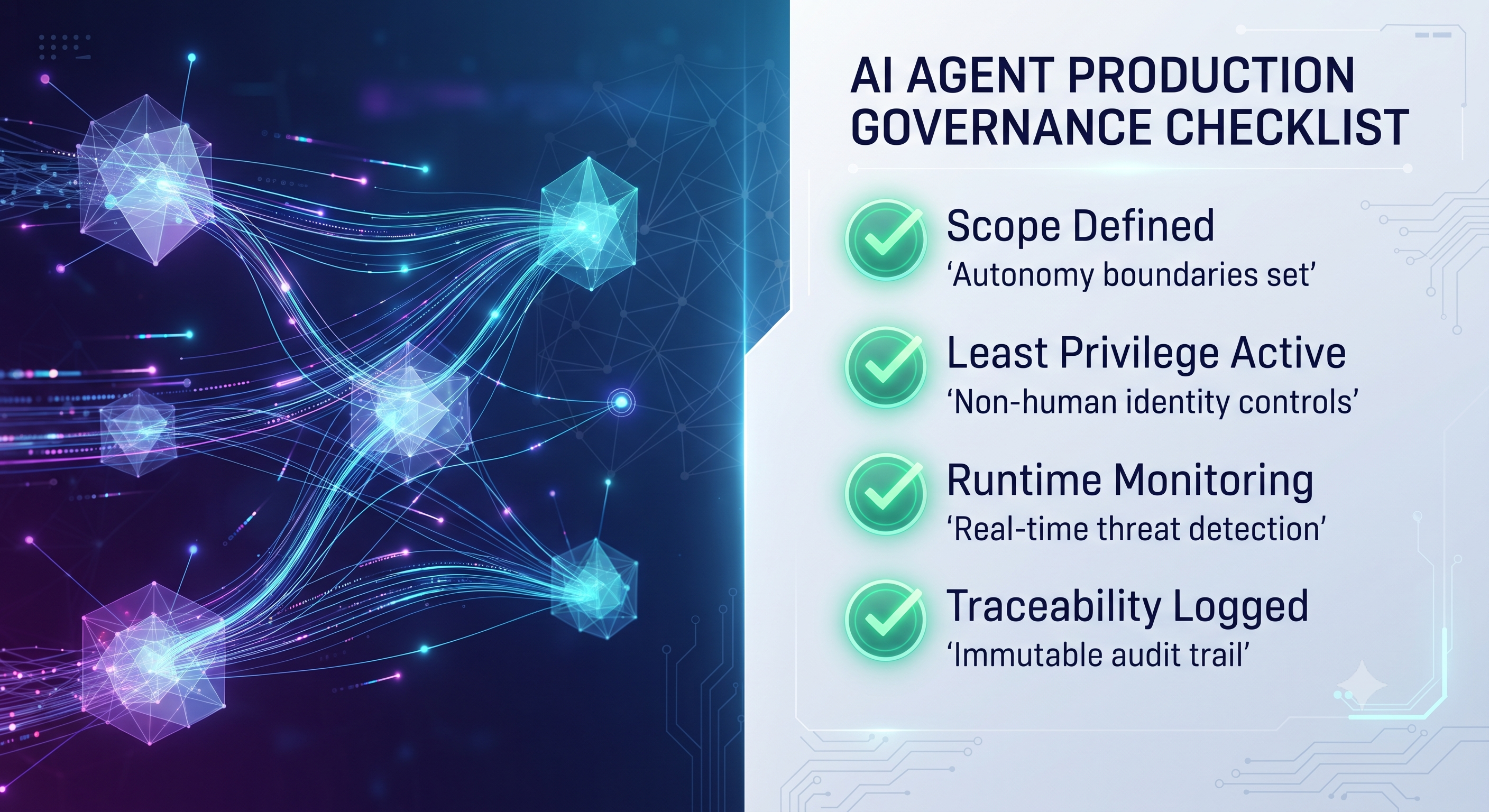 0 Commentarios 0 Acciones 73 Views 0 Vista previa
 -
The Death of the "Mega-Prompt": Why 2026 Belongs to Agentic Choreography
Over the past two years, teams treated foundation models like general-purpose databases: stuffing instructions, schemas, and few-shot examples into giant context windows
.Today, enterprise engineering is facing the Agentic Reality Check. Deploying autonomous agents into production fails when teams try to automate broken, monolithic workflows instead of decoupling system responsibilities.
What You Need to Know: The Deterministic Harness Pattern
Instead of expecting one model to reason, query, execute, and validate simultaneously, high-reliability architectures now isolate tasks into bounded roles wrapped in strict deterministic code:
State Isolation (Decoupled Memory): Agents should be stateless task processors. Persist execution state in structured key-value caches or transactional databases, passing only diffs between turns rather than bloating prompt contexts.
The "Checker-Maker" Architecture: Never let the agent that generates code or mutates data validate its own output. Pair an Executor Agent (high speed, tool-use optimized) with a Validator Agent (policy-restricted, zero-side-effect model running static analysis and schema checks).
Hard Circuit Breakers: Replace open-ended ReAct loops with bounded finite-state machines (FSMs). If an agent attempts tool execution more than three times without state change, force human-in-the-loop escalation.
Building robust AI systems in 2026 isn't about model benchmark scores; it's about system determinism around probabilistic cores.
Discussion Question
For engineers deploying agents today: Where does your multi-agent pipeline fail most often—context drift between handoffs, tool hallucination, or runaway token latency? Drop your architecture patterns below.
CTA
Ready to build systems that survive production?
👉 Join the Techawks General Community to connect with systems architects, AI engineers, and builders pushing the boundaries of reliable tech.The Death of the "Mega-Prompt": Why 2026 Belongs to Agentic Choreography Over the past two years, teams treated foundation models like general-purpose databases: stuffing instructions, schemas, and few-shot examples into giant context windows .Today, enterprise engineering is facing the Agentic Reality Check. Deploying autonomous agents into production fails when teams try to automate broken, monolithic workflows instead of decoupling system responsibilities. What You Need to Know: The Deterministic Harness Pattern Instead of expecting one model to reason, query, execute, and validate simultaneously, high-reliability architectures now isolate tasks into bounded roles wrapped in strict deterministic code: State Isolation (Decoupled Memory): Agents should be stateless task processors. Persist execution state in structured key-value caches or transactional databases, passing only diffs between turns rather than bloating prompt contexts. The "Checker-Maker" Architecture: Never let the agent that generates code or mutates data validate its own output. Pair an Executor Agent (high speed, tool-use optimized) with a Validator Agent (policy-restricted, zero-side-effect model running static analysis and schema checks). Hard Circuit Breakers: Replace open-ended ReAct loops with bounded finite-state machines (FSMs). If an agent attempts tool execution more than three times without state change, force human-in-the-loop escalation. Building robust AI systems in 2026 isn't about model benchmark scores; it's about system determinism around probabilistic cores. Discussion Question For engineers deploying agents today: Where does your multi-agent pipeline fail most often—context drift between handoffs, tool hallucination, or runaway token latency? Drop your architecture patterns below. CTA Ready to build systems that survive production? 👉 Join the Techawks General Community to connect with systems architects, AI engineers, and builders pushing the boundaries of reliable tech.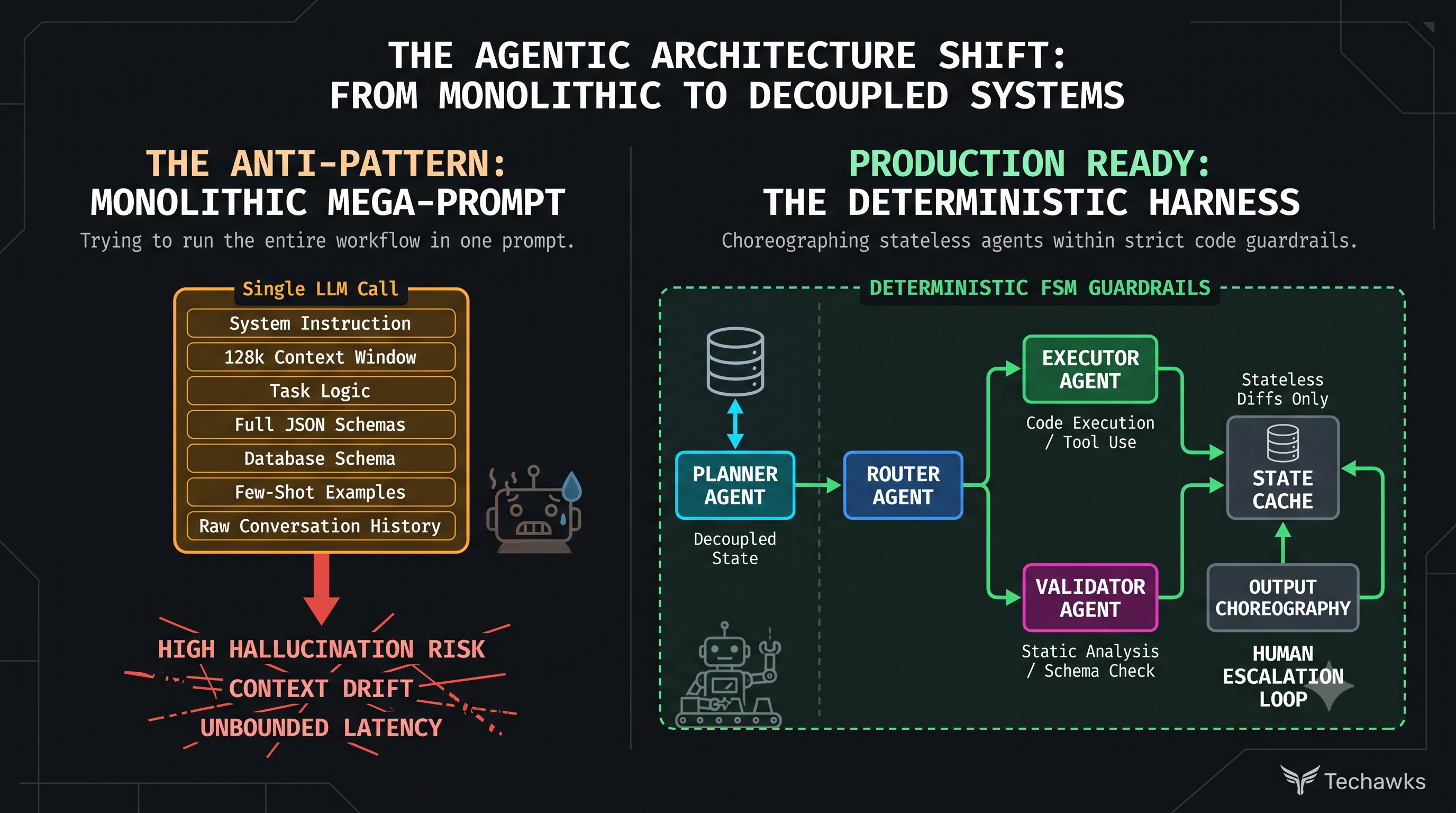 0 Commentarios 0 Acciones 108 Views 0 Vista previa
 -
The Death of "Human-in-the-Loop": Why Engineering Teams Are Moving "On-the-Loop"
For the past two years, the default safety net for deploying AI agents across software engineering and DevOps has been Human-in-the-Loop (HITL).
The concept sounded prudent: let an agent draft code, run tests, or plan infrastructure changes, but require human sign-off at every branch.
In practice, this paradigm creates severe bottlenecks:
Context-switching fatigue: Forcing senior engineers to micro-review dozens of non-deterministic, synthetic outputs degrades review quality.
The "Rubber Stamp" paradox: When approval requests become frequent noise, human oversight shifts from critical evaluation to passive compliance.
Firefighter mode: Engineers end up debugging downstream failures rather than orchestrating clean architectures.
The Architectural Shift: Moving "On-the-Loop" (HOTL)
High-performing engineering teams are re-architecting systems from synchronous approval stops to asynchronous, state-bounded governance:
Deterministic Guardrails over Manual Gates: Instead of relying on an engineer to spot subtle bugs, enforce machine-verifiable constraints—formal dependency graphs, contract-based testing, and strict scope ceilings before an agentic task executes.
Policy Engines & Scope Drift Tracking: Equip systems with control planes that monitor token budgets, tool permission hierarchies, and runtime divergence.
Supervisory Dashboards: Humans transition from direct operators to supervisors. You set the optimization metrics, establish the blast radius, and step in only when automated telemetry flags an out-of-distribution anomaly or policy violation.
Generating software artifacts has become cheap. Verifying system-level intent is the real bottleneck. The teams shipping reliably aren't micromanaging each prompt—they are building automated control planes that allow them to govern from above.
Discussion Question
Where in your current pipeline is manual human verification slowing down system throughput rather than improving quality?
CTA
Ready to build reliable, high-throughput systems? Connect with peer systems architects, engineers, and tech leaders in the Techawks General Community to discuss production architectures and battle-tested workflows.The Death of "Human-in-the-Loop": Why Engineering Teams Are Moving "On-the-Loop" For the past two years, the default safety net for deploying AI agents across software engineering and DevOps has been Human-in-the-Loop (HITL). The concept sounded prudent: let an agent draft code, run tests, or plan infrastructure changes, but require human sign-off at every branch. In practice, this paradigm creates severe bottlenecks: Context-switching fatigue: Forcing senior engineers to micro-review dozens of non-deterministic, synthetic outputs degrades review quality. The "Rubber Stamp" paradox: When approval requests become frequent noise, human oversight shifts from critical evaluation to passive compliance. Firefighter mode: Engineers end up debugging downstream failures rather than orchestrating clean architectures. The Architectural Shift: Moving "On-the-Loop" (HOTL) High-performing engineering teams are re-architecting systems from synchronous approval stops to asynchronous, state-bounded governance: Deterministic Guardrails over Manual Gates: Instead of relying on an engineer to spot subtle bugs, enforce machine-verifiable constraints—formal dependency graphs, contract-based testing, and strict scope ceilings before an agentic task executes. Policy Engines & Scope Drift Tracking: Equip systems with control planes that monitor token budgets, tool permission hierarchies, and runtime divergence. Supervisory Dashboards: Humans transition from direct operators to supervisors. You set the optimization metrics, establish the blast radius, and step in only when automated telemetry flags an out-of-distribution anomaly or policy violation. Generating software artifacts has become cheap. Verifying system-level intent is the real bottleneck. The teams shipping reliably aren't micromanaging each prompt—they are building automated control planes that allow them to govern from above. Discussion Question Where in your current pipeline is manual human verification slowing down system throughput rather than improving quality? CTA Ready to build reliable, high-throughput systems? Connect with peer systems architects, engineers, and tech leaders in the Techawks General Community to discuss production architectures and battle-tested workflows. 0 Commentarios 0 Acciones 174 Views 0 Vista previa
 -
Beyond Pre-Training: Why Test-Time Compute Is Rewriting System Architecture
If you build software or manage infrastructure, the shift toward Test-Time Compute (Inference Scaling) is the architectural transition you need to master this quarter.
What Is Test-Time Compute?
Traditional LLMs operate on a fixed compute budget per token. Whether you ask for a two-sentence summary or a formal mathematical proof, the network executes essentially the same feedforward pass per generated word.
Reasoning architectures decouple output length from processing depth. Instead of directly predicting the final text, the model generates an internal chain of reasoning ("thinking tokens"), verifies intermediate states, self-corrects logic branches, and only then streams the polished response.
It turns token generation into a search problem over solution space.
Why This Matters to Engineers & Architects:
The Death of Static Latency SLAs: We can no longer expect uniform, sub-second API response times across heterogeneous tasks. Complex analytical and code-generation workloads now require asynchronous, streaming, or job-queued architecture patterns.
Dynamic Cost Routing: Running heavy chain-of-thought on every trivial payload destroys unit economics. Modern production systems must implement inference cascades—using ultra-light classifiers or speculative decoders to triage queries, escalating only the high-entropy problems to reasoning engines.
Smaller Base Models, Higher Precision: Rather than hosting a massive, monolithic generalist parameter set, developers can run heavily fine-tuned, smaller models equipped with extended inference-time verification to match or beat previous frontier benchmarks at a fraction of the hosting footprint.
The competitive edge has moved from who has the largest pre-training cluster to who can design the most efficient inference-time orchestrator.
Discussion Question
Are you currently re-architecting your backend pipelines for dynamic inference latency, or are your production workloads still strictly optimized for sub-second TTFT (Time to First Token)?
CTA (Join Techawks General Community)
Level up your system design with engineers building on the edge of modern technology. Join the Techawks General Community to trade architecture patterns, benchmarks, and real-world implementation teardowns.Beyond Pre-Training: Why Test-Time Compute Is Rewriting System Architecture If you build software or manage infrastructure, the shift toward Test-Time Compute (Inference Scaling) is the architectural transition you need to master this quarter. What Is Test-Time Compute? Traditional LLMs operate on a fixed compute budget per token. Whether you ask for a two-sentence summary or a formal mathematical proof, the network executes essentially the same feedforward pass per generated word. Reasoning architectures decouple output length from processing depth. Instead of directly predicting the final text, the model generates an internal chain of reasoning ("thinking tokens"), verifies intermediate states, self-corrects logic branches, and only then streams the polished response. It turns token generation into a search problem over solution space. Why This Matters to Engineers & Architects: The Death of Static Latency SLAs: We can no longer expect uniform, sub-second API response times across heterogeneous tasks. Complex analytical and code-generation workloads now require asynchronous, streaming, or job-queued architecture patterns. Dynamic Cost Routing: Running heavy chain-of-thought on every trivial payload destroys unit economics. Modern production systems must implement inference cascades—using ultra-light classifiers or speculative decoders to triage queries, escalating only the high-entropy problems to reasoning engines. Smaller Base Models, Higher Precision: Rather than hosting a massive, monolithic generalist parameter set, developers can run heavily fine-tuned, smaller models equipped with extended inference-time verification to match or beat previous frontier benchmarks at a fraction of the hosting footprint. The competitive edge has moved from who has the largest pre-training cluster to who can design the most efficient inference-time orchestrator. Discussion Question Are you currently re-architecting your backend pipelines for dynamic inference latency, or are your production workloads still strictly optimized for sub-second TTFT (Time to First Token)? CTA (Join Techawks General Community) Level up your system design with engineers building on the edge of modern technology. Join the Techawks General Community to trade architecture patterns, benchmarks, and real-world implementation teardowns.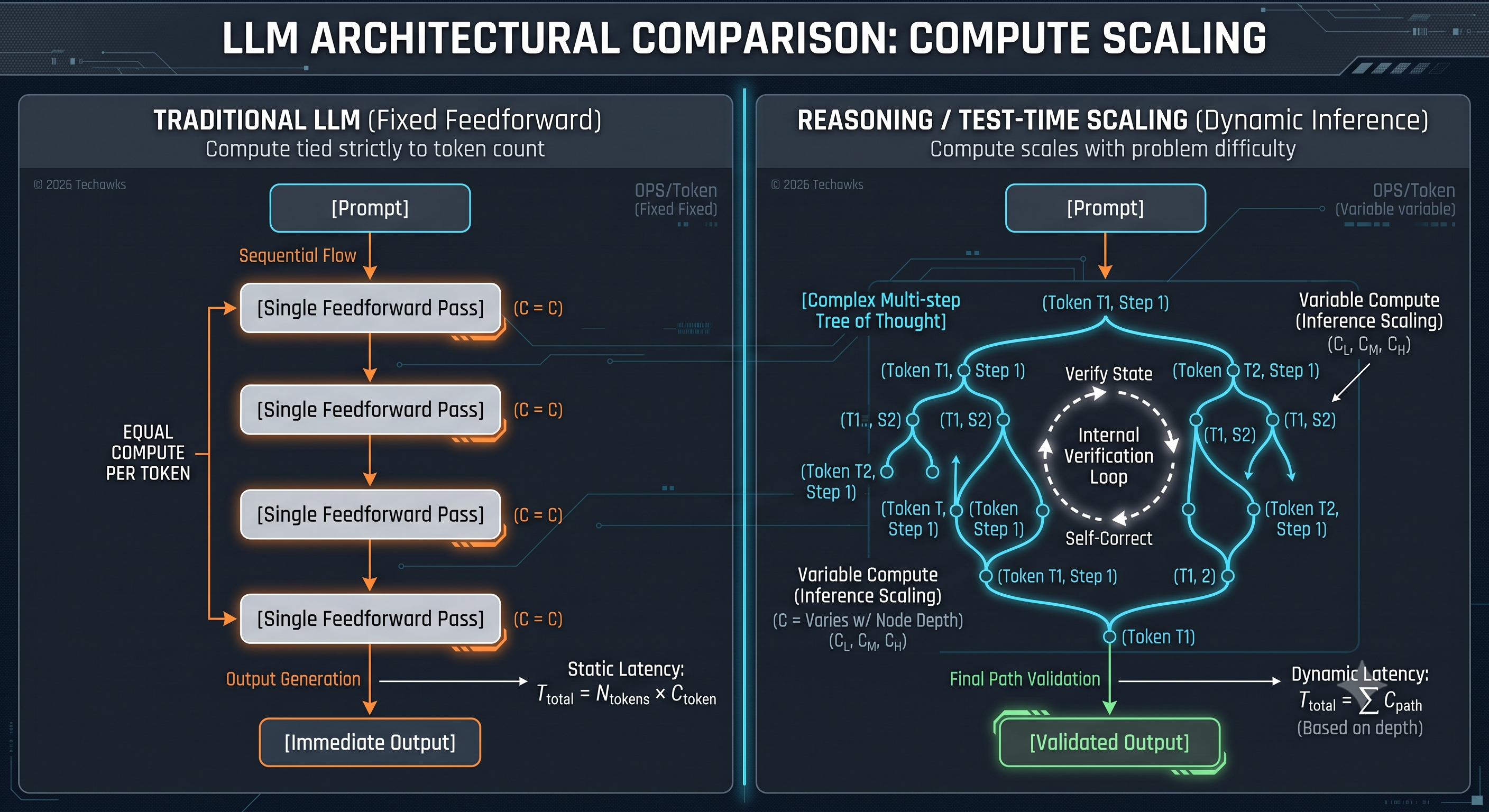 0 Commentarios 0 Acciones 126 Views 0 Vista previa
 -
The Death of the "Mega-Prompt": Why 2026 Belongs to Agent Control Planes & Stateful Orchestration
The enterprise AI shift this week is undeniable: the industry is moving away from monolithic LLM wrappers and toward decoupled Agent Control Planes and multi-agent coordination.
Recent enterprise studies show that while foundation models are more capable than ever, less than a quarter of companies have successfully scaled autonomous AI beyond pilot phases. The bottleneck is rarely the raw model; it is state, orchestration, and governance.
Here is why it matters and how you should redesign your architecture today:
1. The Context Dilution Trap
When you force one agent to act as planner, researcher, coder, and auditor within a single session, token noise increases exponentially. Long-context windows may fit the text, but retrieval accuracy and instruction adherence decay ("needle-in-a-haystack" degradation).
2. The Solution: Orchestrator–Worker Architecture
High-performing systems decouple responsibilities into distinct execution contexts:
The Orchestrator: Handles goal decomposition, route selection, and state transitions (e.g., deterministic state graphs like LangGraph or AutoGen). It does not solve problems directly; it routes them.
Specialized Sub-Agents: Single-purpose workers equipped strictly with the tools (via standards like Model Context Protocol / MCP) and context needed for their subtask.
Shared State Memory: A central memory layer (Redis, vector stores, or key-value caches) that persists intermediate outputs without inflating LLM context windows.
3. Practical Architecture Blueprint to Implement Today
Define Deterministic Guardrails First: Don't let agents guess next steps probabilistically. Use finite-state machines (FSM) where critical transitions require hard validations or human-in-the-loop approvals.
Standardize Tool Interfaces: Decouple tools from the model provider. Implement MCP or OpenAPI specs so any model switch requires zero rewrite of your underlying tool integrations.
Add Telemetry & Cost Routers: Put an AI Gateway between your workers and model APIs to dynamically fall back to lightweight models (e.g., small, fast inference models) for deterministic tasks and reserve frontier models only for multi-step reasoning.
The competitive advantage in modern software engineering is no longer who accesses the best weights—it is who designs the cleanest orchestration layer.
Discussion Question
Is your team still relying on monolithic prompt pipelines, or have you migrated to multi-agent state machines? What has been your biggest challenge with agent state drift in production?
CTA
Level up your engineering stack with Techawks.
Join the Techawks General Community on Discord & LinkedIn to access open architecture blueprints, production case studies, and live technical teardowns with fellow software architects and AI engineersThe Death of the "Mega-Prompt": Why 2026 Belongs to Agent Control Planes & Stateful Orchestration The enterprise AI shift this week is undeniable: the industry is moving away from monolithic LLM wrappers and toward decoupled Agent Control Planes and multi-agent coordination. Recent enterprise studies show that while foundation models are more capable than ever, less than a quarter of companies have successfully scaled autonomous AI beyond pilot phases. The bottleneck is rarely the raw model; it is state, orchestration, and governance. Here is why it matters and how you should redesign your architecture today: 1. The Context Dilution Trap When you force one agent to act as planner, researcher, coder, and auditor within a single session, token noise increases exponentially. Long-context windows may fit the text, but retrieval accuracy and instruction adherence decay ("needle-in-a-haystack" degradation). 2. The Solution: Orchestrator–Worker Architecture High-performing systems decouple responsibilities into distinct execution contexts: The Orchestrator: Handles goal decomposition, route selection, and state transitions (e.g., deterministic state graphs like LangGraph or AutoGen). It does not solve problems directly; it routes them. Specialized Sub-Agents: Single-purpose workers equipped strictly with the tools (via standards like Model Context Protocol / MCP) and context needed for their subtask. Shared State Memory: A central memory layer (Redis, vector stores, or key-value caches) that persists intermediate outputs without inflating LLM context windows. 3. Practical Architecture Blueprint to Implement Today Define Deterministic Guardrails First: Don't let agents guess next steps probabilistically. Use finite-state machines (FSM) where critical transitions require hard validations or human-in-the-loop approvals. Standardize Tool Interfaces: Decouple tools from the model provider. Implement MCP or OpenAPI specs so any model switch requires zero rewrite of your underlying tool integrations. Add Telemetry & Cost Routers: Put an AI Gateway between your workers and model APIs to dynamically fall back to lightweight models (e.g., small, fast inference models) for deterministic tasks and reserve frontier models only for multi-step reasoning. The competitive advantage in modern software engineering is no longer who accesses the best weights—it is who designs the cleanest orchestration layer. Discussion Question Is your team still relying on monolithic prompt pipelines, or have you migrated to multi-agent state machines? What has been your biggest challenge with agent state drift in production? CTA Level up your engineering stack with Techawks. Join the Techawks General Community on Discord & LinkedIn to access open architecture blueprints, production case studies, and live technical teardowns with fellow software architects and AI engineers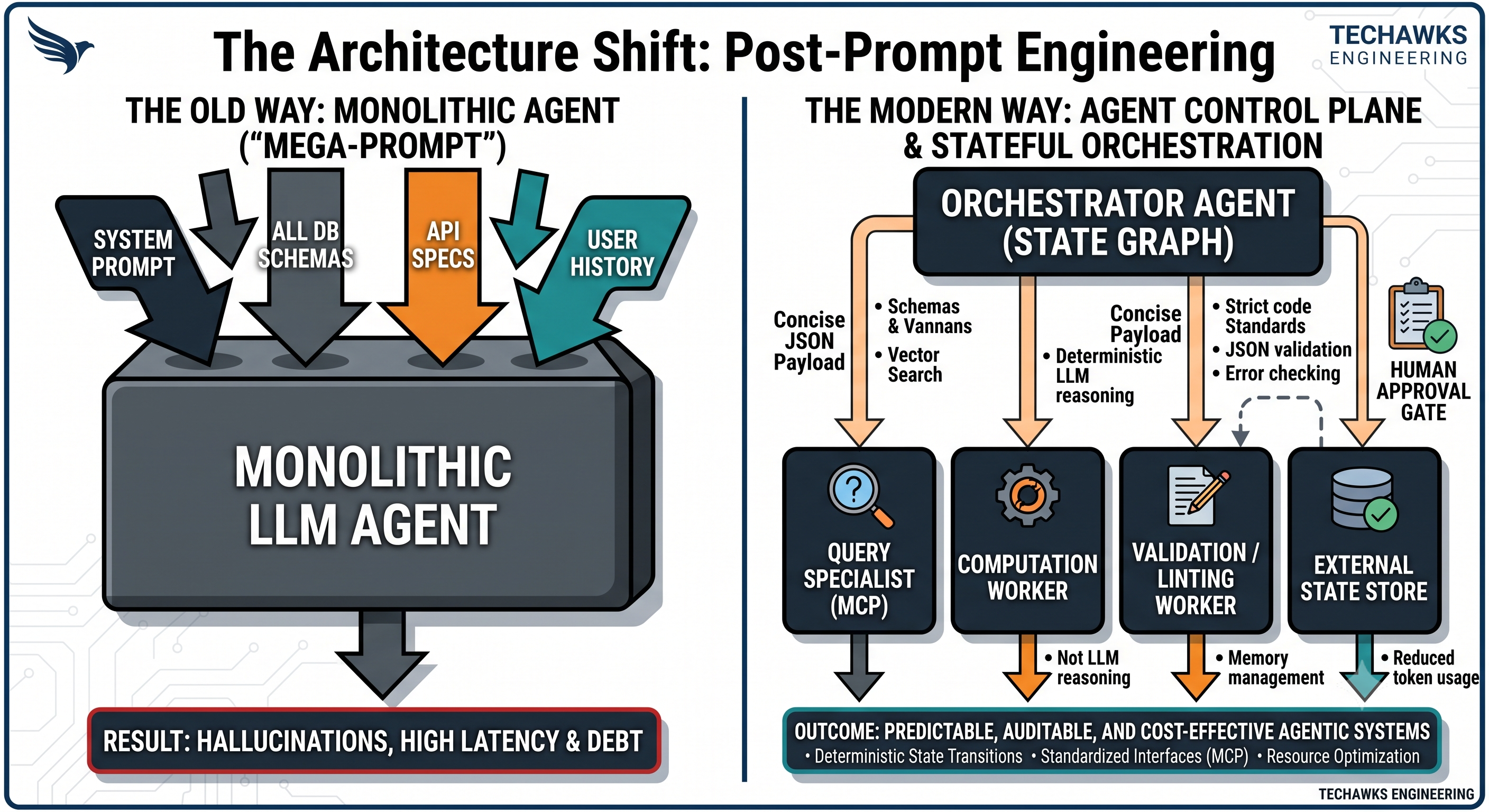 0 Commentarios 0 Acciones 191 Views 0 Vista previa
 -
The AI Agent Bottleneck: Why Context Engineering Beats Model Size in Production
Most engineering teams deploying autonomous agents run into the same invisible wall: after three tool invocations, the agent hallucinates, loops, or loses track of its primary objective.
The default reaction is to swap in a bigger parameter-heavy model or balloon the token window. In production, this approach consistently fails. As enterprise data architectures evolve, performance gains no longer stem from model scaling, but from Context Engineering—the discipline of curating dynamic, deterministic state machines around your LLM runtime.
Here is the architectural pattern separating stable agent deployments from broken pilots:
State vs. History Separation: Never dump raw, multi-turn chat logs into your context window. Treat conversation as a rolling state machine. Summarize past actions into an immutable ledger, and pass only active state variables to the next prompt cycle.
Semantic Layering Over Brute-Force RAG: Basic vector search injects high token noise. Mature stacks implement schema-aware metadata filtering and semantic layers before retrieval, ensuring the agent sees only verified API contracts and structured entities.
Explicit Gateways & Trust Boundaries: Implement strict tool schema validation with deterministic rollbacks. If an agent executes an ambiguous MCP (Model Context Protocol) tool call, an enforcement gateway must reject the execution before reaching your backend.
Upgrading your model gives you a better engine. Context engineering builds the steering wheel and transmission.
Discussion Question
POLL: Where is your AI agent pipeline currently failing most often in production?
Context drift / token bloat
Flaky tool & API calls (MCP runtime errors)
Retrieval accuracy & noisy context (RAG failures)
Unpredictable cost / token yield per task
Drop your vote and let us know your workarounds below.
CTA
Ready to build resilient, enterprise-grade architectures alongside thousands of senior engineers and founders?
👉 Join the Techawks General Community [link in bio/comments] to trade real production patterns, system design playbooks, and architectural teardowns.The AI Agent Bottleneck: Why Context Engineering Beats Model Size in Production Most engineering teams deploying autonomous agents run into the same invisible wall: after three tool invocations, the agent hallucinates, loops, or loses track of its primary objective. The default reaction is to swap in a bigger parameter-heavy model or balloon the token window. In production, this approach consistently fails. As enterprise data architectures evolve, performance gains no longer stem from model scaling, but from Context Engineering—the discipline of curating dynamic, deterministic state machines around your LLM runtime. Here is the architectural pattern separating stable agent deployments from broken pilots: State vs. History Separation: Never dump raw, multi-turn chat logs into your context window. Treat conversation as a rolling state machine. Summarize past actions into an immutable ledger, and pass only active state variables to the next prompt cycle. Semantic Layering Over Brute-Force RAG: Basic vector search injects high token noise. Mature stacks implement schema-aware metadata filtering and semantic layers before retrieval, ensuring the agent sees only verified API contracts and structured entities. Explicit Gateways & Trust Boundaries: Implement strict tool schema validation with deterministic rollbacks. If an agent executes an ambiguous MCP (Model Context Protocol) tool call, an enforcement gateway must reject the execution before reaching your backend. Upgrading your model gives you a better engine. Context engineering builds the steering wheel and transmission. Discussion Question POLL: Where is your AI agent pipeline currently failing most often in production? Context drift / token bloat Flaky tool & API calls (MCP runtime errors) Retrieval accuracy & noisy context (RAG failures) Unpredictable cost / token yield per task Drop your vote and let us know your workarounds below. CTA Ready to build resilient, enterprise-grade architectures alongside thousands of senior engineers and founders? 👉 Join the Techawks General Community [link in bio/comments] to trade real production patterns, system design playbooks, and architectural teardowns. 0 Commentarios 0 Acciones 96 Views 0 Vista previa
 -
The Death of the "Prompt Engineer": Why Enterprise Tech in 2026 Belongs to the Context Architect
Recent industry benchmarks—including new production playbooks from Databricks and enterprise governance platforms from Boomi and Broadcom—point to a clear operational reality: enterprises are moving past isolated chatbots toward autonomous, multi-agent systems.
Yet, as recent data from BARC and DataHub highlights, the single greatest blocker to production-grade AI is no longer model intelligence—it is context engineering and data governance.
Organizations with mature context-engineering practices are four times more likely to report strong AI ROI, while teams relying merely on prompt tweaking hit reliability ceilings.
What This Means for Your Career
The industry doesn't need people who ask models questions; it needs engineers who build the deterministic scaffolding around non-deterministic systems.
If you want to future-proof your technical roadmap, shift your learning curve across three core competencies:
Deterministic Tooling over Open-Ended Prompts (MCP Integration)
Instead of writing multi-paragraph system prompts telling an LLM how to behave, master the Model Context Protocol (MCP) and structured tool-calling. Build explicit APIs, schema validations, and idempotent actions that agents can execute safely.
State Management & Agent Orchestration
Single-turn RAG is table stakes. The engineering challenge in 2026 is managing multi-step state, rollback mechanisms, and cyclical DAGs (directed acyclic graphs) using orchestration frameworks like LangGraph, AutoGen, or native temporal workflows.
Context Lineage & Observability
When an autonomous agent hallucinates or makes a catastrophic API call in production, tracing "why" is an infrastructure problem. Learn evaluation frameworks, agent trust scoring, latency-vs-cost routing, and telemetry tracing (OpenInference / semantic logging)
The takeaway: Models will continue to commoditize. The value has moved to the runtime, the context window architecture, and the enterprise boundaries you build around them.
Discussion Question
For the engineers and tech leads in our community: Is your team still spending time refining prompt templates, or have you started restructuring your backend data layers for agentic orchestration? Where are your current production bottlenecks?
CTA
Ready to build resilient, production-ready systems and navigate the evolving engineering landscape alongside top software architects?
👉 Join the Techawks General Community to access technical deep dives, architectural breakdowns, and global peer networks.The Death of the "Prompt Engineer": Why Enterprise Tech in 2026 Belongs to the Context Architect Recent industry benchmarks—including new production playbooks from Databricks and enterprise governance platforms from Boomi and Broadcom—point to a clear operational reality: enterprises are moving past isolated chatbots toward autonomous, multi-agent systems. Yet, as recent data from BARC and DataHub highlights, the single greatest blocker to production-grade AI is no longer model intelligence—it is context engineering and data governance. Organizations with mature context-engineering practices are four times more likely to report strong AI ROI, while teams relying merely on prompt tweaking hit reliability ceilings. What This Means for Your Career The industry doesn't need people who ask models questions; it needs engineers who build the deterministic scaffolding around non-deterministic systems. If you want to future-proof your technical roadmap, shift your learning curve across three core competencies: Deterministic Tooling over Open-Ended Prompts (MCP Integration) Instead of writing multi-paragraph system prompts telling an LLM how to behave, master the Model Context Protocol (MCP) and structured tool-calling. Build explicit APIs, schema validations, and idempotent actions that agents can execute safely. State Management & Agent Orchestration Single-turn RAG is table stakes. The engineering challenge in 2026 is managing multi-step state, rollback mechanisms, and cyclical DAGs (directed acyclic graphs) using orchestration frameworks like LangGraph, AutoGen, or native temporal workflows. Context Lineage & Observability When an autonomous agent hallucinates or makes a catastrophic API call in production, tracing "why" is an infrastructure problem. Learn evaluation frameworks, agent trust scoring, latency-vs-cost routing, and telemetry tracing (OpenInference / semantic logging) The takeaway: Models will continue to commoditize. The value has moved to the runtime, the context window architecture, and the enterprise boundaries you build around them. Discussion Question For the engineers and tech leads in our community: Is your team still spending time refining prompt templates, or have you started restructuring your backend data layers for agentic orchestration? Where are your current production bottlenecks? CTA Ready to build resilient, production-ready systems and navigate the evolving engineering landscape alongside top software architects? 👉 Join the Techawks General Community to access technical deep dives, architectural breakdowns, and global peer networks. 0 Commentarios 0 Acciones 72 Views 0 Vista previa
 -
Stop Treating Terminal Agents Like Autocomplete: The Real Power of Claude Code
The developer tooling landscape has fractured into three distinct paradigms:
Editor Plugins (Copilot) optimized for localized, line-by-line inline completions.
AI-Native IDE Forks (Cursor, Windsurf) built for cross-file navigation and refactoring.
Autonomous CLI Agents (Claude Code, OpenAI Codex CLI) designed for headless execution and orchestration.
Most engineers test CLI agents once, watch them struggle with ambiguous natural language, and revert to their IDE chat panel. But that misses the architectural design: Terminal agents are not pair programmers; they are junior execution engines.
Why It Matters
A CLI agent has access to your shell, test runners, git history, and build toolchain. When hooked into your terminal, it doesn’t just predict text—it observes build errors, iterates on unit tests, and validates its own diffs before staging a commit.
The Playbook: How to Get Maximum Yield
To move beyond basic prompt-and-pray coding, adopt the Recon → Constrain → Verify pattern:
Step 1: Scoped Architectural Context (Recon)
Never ask a terminal agent to "fix the payment flow." Point it to boundaries:
claude "Inspect /services/billing and /tests/billing. Identify why Stripe webhook retries cause idempotency collisions on duplicate payloads."
Step 2: Constraint-Driven Delegation (Constrain)
Enforce explicit operational rules directly in the prompt or project config:
claude "Refactor the session middleware to use Redis TTLs. Do NOT touch database schema migrations or add third-party dependencies."
Step 3: Autonomous Feedback Loop (Verify)
Leverage shell execution to create self-healing cycles:
claude "Implement the changes, run 'npm test -- --grep billing', and iterate until all tests pass without manual intervention."
The value of an agentic CLI is not speed of typing; it is decoupling yourself from repetitive triage and letting the model close the loop against deterministic tests.
Discussion Question
Are you leaning more toward embedded IDEs (like Cursor) for tight interactive control, or CLI agents (like Claude Code) for end-to-end task delegation? Where has your workflow hit a wall?
CTA
Join Techawks General Community: Connect with software architects, engineers, and tech leaders debating the future of developer toolingStop Treating Terminal Agents Like Autocomplete: The Real Power of Claude Code The developer tooling landscape has fractured into three distinct paradigms: Editor Plugins (Copilot) optimized for localized, line-by-line inline completions. AI-Native IDE Forks (Cursor, Windsurf) built for cross-file navigation and refactoring. Autonomous CLI Agents (Claude Code, OpenAI Codex CLI) designed for headless execution and orchestration. Most engineers test CLI agents once, watch them struggle with ambiguous natural language, and revert to their IDE chat panel. But that misses the architectural design: Terminal agents are not pair programmers; they are junior execution engines. Why It Matters A CLI agent has access to your shell, test runners, git history, and build toolchain. When hooked into your terminal, it doesn’t just predict text—it observes build errors, iterates on unit tests, and validates its own diffs before staging a commit. The Playbook: How to Get Maximum Yield To move beyond basic prompt-and-pray coding, adopt the Recon → Constrain → Verify pattern: Step 1: Scoped Architectural Context (Recon) Never ask a terminal agent to "fix the payment flow." Point it to boundaries: claude "Inspect /services/billing and /tests/billing. Identify why Stripe webhook retries cause idempotency collisions on duplicate payloads." Step 2: Constraint-Driven Delegation (Constrain) Enforce explicit operational rules directly in the prompt or project config: claude "Refactor the session middleware to use Redis TTLs. Do NOT touch database schema migrations or add third-party dependencies." Step 3: Autonomous Feedback Loop (Verify) Leverage shell execution to create self-healing cycles: claude "Implement the changes, run 'npm test -- --grep billing', and iterate until all tests pass without manual intervention." The value of an agentic CLI is not speed of typing; it is decoupling yourself from repetitive triage and letting the model close the loop against deterministic tests. Discussion Question Are you leaning more toward embedded IDEs (like Cursor) for tight interactive control, or CLI agents (like Claude Code) for end-to-end task delegation? Where has your workflow hit a wall? CTA Join Techawks General Community: Connect with software architects, engineers, and tech leaders debating the future of developer tooling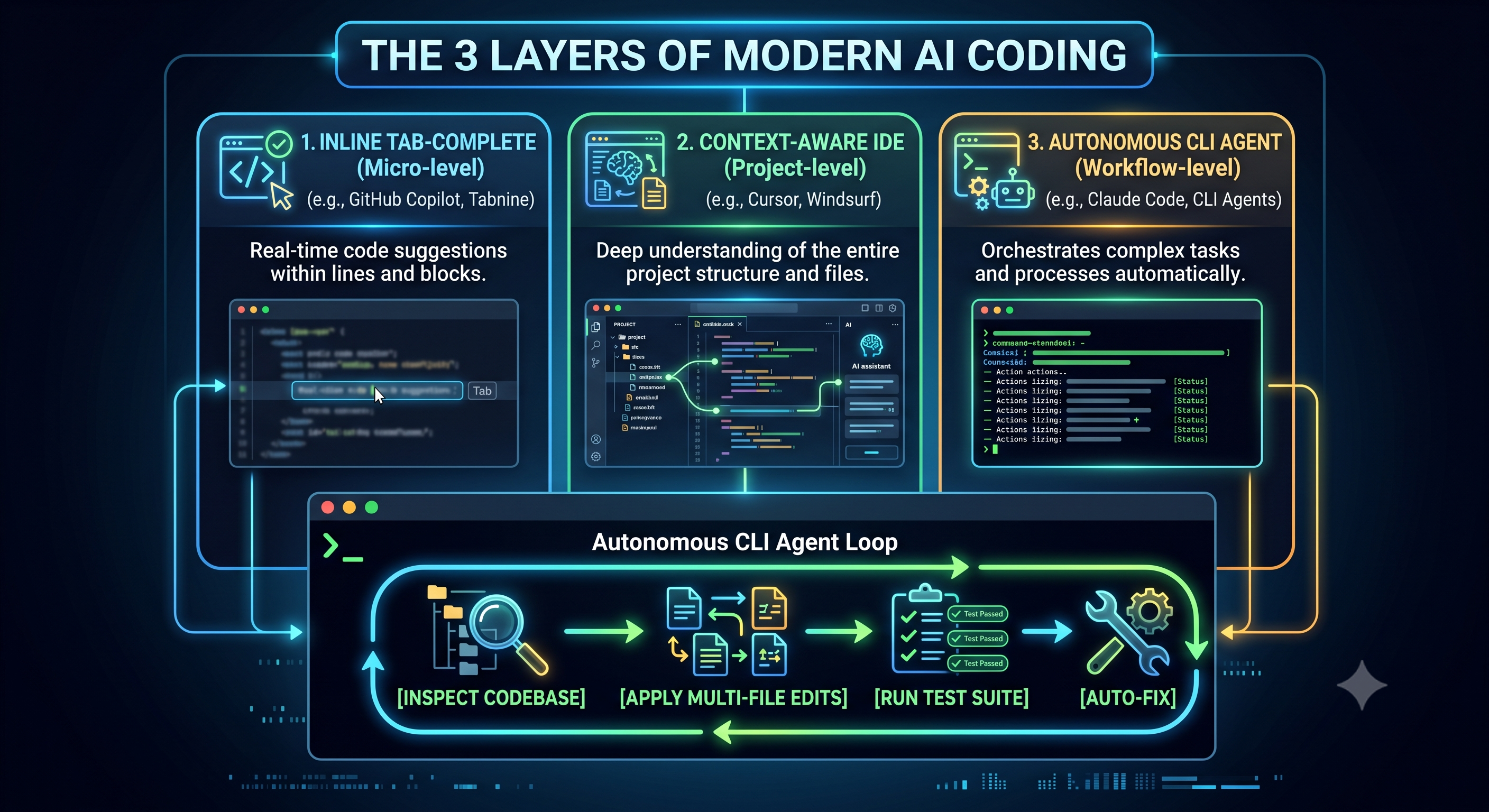 0 Commentarios 0 Acciones 696 Views 0 Vista previa
 -
Stop Refactoring Your Code: The 48-Hour Architectural Audit Challenge
Every engineering team complains about legacy code. The instinct is always the same: schedule a refactoring sprint, clean up variable names, break down a monolith function, and feel productive.
Two months later, the system is just as brittle.
Refactoring bad architecture doesn’t eliminate debt; it just gives you clean, well-tested code that still solves the wrong problem. If you want to make an engineering system resilient, stop tweaking syntax and run this 48-Hour Architecture Audit Challenge:
Map the "Zero-Value" Network Hops
Trace your core user flow from request to database. Count every network hop, cache check, and microservice boundary. If a service exists solely to reshape JSON and pass it along without enforcing business logic or security boundaries, flag it. You don’t need an abstraction layer for an internal API called by exactly one consumer.
Run the Tombstone Test
Pick the three most complex modules your team is afraid to touch. Add structured logging or feature-flag tracing to them for 48 hours. If zero production requests hit that branching logic, stop trying to modernize it. Delete it. The cleanest code is the code you don't maintain.
Audit Data Ownership, Not Classes
Look at your database schema. If three separate services write directly to the same table—or if one service depends on a database read from another to complete an async job—your boundary lines are fake. Decouple the data store before you refactor a single line of backend logic.
Great engineers don't just write elegant functions. They eliminate unnecessary systems before writing a single line of implementation.
Key Takeaways
Refactoring bad system design only produces cleaner bad design.
Isolate and eliminate "passthrough" services that add latency without isolating failure domains.
Use production metrics to verify whether complex legacy paths are actually running before investing time in modernizing them.
Single-responsibility applies to database tables and service boundaries far more critically than it does to classes.
CTA
Ready to build systems that scale past the hype? Join the Techawks General Community to trade architecture teardowns, debate engineering trade-offs, and level up with builders worldwide. Link in comments.Stop Refactoring Your Code: The 48-Hour Architectural Audit Challenge Every engineering team complains about legacy code. The instinct is always the same: schedule a refactoring sprint, clean up variable names, break down a monolith function, and feel productive. Two months later, the system is just as brittle. Refactoring bad architecture doesn’t eliminate debt; it just gives you clean, well-tested code that still solves the wrong problem. If you want to make an engineering system resilient, stop tweaking syntax and run this 48-Hour Architecture Audit Challenge: Map the "Zero-Value" Network Hops Trace your core user flow from request to database. Count every network hop, cache check, and microservice boundary. If a service exists solely to reshape JSON and pass it along without enforcing business logic or security boundaries, flag it. You don’t need an abstraction layer for an internal API called by exactly one consumer. Run the Tombstone Test Pick the three most complex modules your team is afraid to touch. Add structured logging or feature-flag tracing to them for 48 hours. If zero production requests hit that branching logic, stop trying to modernize it. Delete it. The cleanest code is the code you don't maintain. Audit Data Ownership, Not Classes Look at your database schema. If three separate services write directly to the same table—or if one service depends on a database read from another to complete an async job—your boundary lines are fake. Decouple the data store before you refactor a single line of backend logic. Great engineers don't just write elegant functions. They eliminate unnecessary systems before writing a single line of implementation. Key Takeaways Refactoring bad system design only produces cleaner bad design. Isolate and eliminate "passthrough" services that add latency without isolating failure domains. Use production metrics to verify whether complex legacy paths are actually running before investing time in modernizing them. Single-responsibility applies to database tables and service boundaries far more critically than it does to classes. CTA Ready to build systems that scale past the hype? Join the Techawks General Community to trade architecture teardowns, debate engineering trade-offs, and level up with builders worldwide. Link in comments.0 Commentarios 0 Acciones 74 Views 0 Vista previa -
The Multi-Agent AI Fallacy: When More Autonomous Agents Hurt System Performance
As agentic frameworks and multi-agent workflows dominate current production roadmaps, many engineering teams operate under an unspoken assumption: decomposing a problem across multiple autonomous agents naturally improves system accuracy and resilience.
It doesn't always work that way.
Recent systems research and production benchmarks highlight a recurring failure mode known as agent cascading error: when autonomous agents communicate in unstructured natural language loops, error probabilities compound exponentially across handoffs.
Myth: Dividing a complex workflow across specialized autonomous agents always yields higher accuracy and better reasoning.
Fact: Multi-agent architectures introduce non-deterministic communication boundaries. Without strict schema validation and bounded state handoffs, adding agents increases latency, burns token budgets, and often degrades end-to-end task completion rates compared to deterministic pipelines.
Why this matters for your engineering stack:
When Agent A summarizes data with a 90% confidence score and hands that unstructured prose to Agent B, Agent B reasons on an imperfect premise. By the time Agent D receives the payload, the context drift has amplified hallucination rates.
How to architect reliable multi-agent systems:
Never pass unstructured prose across agent boundaries. Enforce typed schemas (JSON, Pydantic, Protobuf) for every agent-to-agent interface.
Use deterministic code for routing. Replace conversational supervisor agents with deterministic state machines (DAGs). Agents should execute atomic functions; standard code should decide what runs next.
Establish rollback checkpoints. If an agent's output fails schema assertions, route to an error handler or human fallback instead of letting downstream agents speculate on corrupted state.
Intelligence in production isn't about how many agents talk to each other. It’s about how strictly software controls the state between them.
Discussion Question
Where does your team draw the line between using an autonomous agent vs. a deterministic programmatic pipeline in production workflows?
CTA
Looking to architect robust, production-ready systems without the hype? Join the Techawks General Community to discuss distributed architectures, benchmark real-world AI pipelines, and exchange insights with engineers worldwide.The Multi-Agent AI Fallacy: When More Autonomous Agents Hurt System Performance As agentic frameworks and multi-agent workflows dominate current production roadmaps, many engineering teams operate under an unspoken assumption: decomposing a problem across multiple autonomous agents naturally improves system accuracy and resilience. It doesn't always work that way. Recent systems research and production benchmarks highlight a recurring failure mode known as agent cascading error: when autonomous agents communicate in unstructured natural language loops, error probabilities compound exponentially across handoffs. Myth: Dividing a complex workflow across specialized autonomous agents always yields higher accuracy and better reasoning. Fact: Multi-agent architectures introduce non-deterministic communication boundaries. Without strict schema validation and bounded state handoffs, adding agents increases latency, burns token budgets, and often degrades end-to-end task completion rates compared to deterministic pipelines. Why this matters for your engineering stack: When Agent A summarizes data with a 90% confidence score and hands that unstructured prose to Agent B, Agent B reasons on an imperfect premise. By the time Agent D receives the payload, the context drift has amplified hallucination rates. How to architect reliable multi-agent systems: Never pass unstructured prose across agent boundaries. Enforce typed schemas (JSON, Pydantic, Protobuf) for every agent-to-agent interface. Use deterministic code for routing. Replace conversational supervisor agents with deterministic state machines (DAGs). Agents should execute atomic functions; standard code should decide what runs next. Establish rollback checkpoints. If an agent's output fails schema assertions, route to an error handler or human fallback instead of letting downstream agents speculate on corrupted state. Intelligence in production isn't about how many agents talk to each other. It’s about how strictly software controls the state between them. Discussion Question Where does your team draw the line between using an autonomous agent vs. a deterministic programmatic pipeline in production workflows? CTA Looking to architect robust, production-ready systems without the hype? Join the Techawks General Community to discuss distributed architectures, benchmark real-world AI pipelines, and exchange insights with engineers worldwide.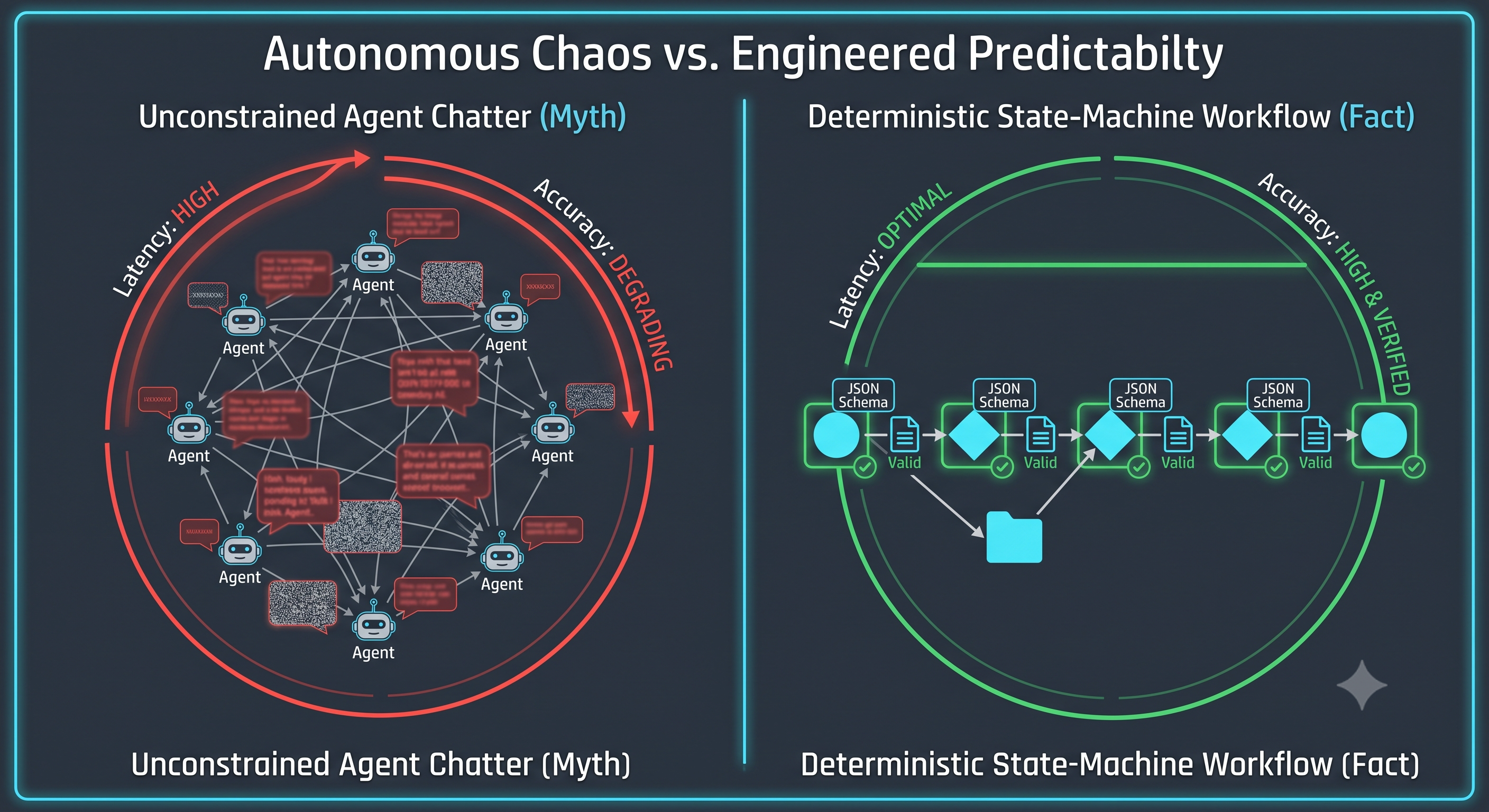 0 Commentarios 0 Acciones 58 Views 0 Vista previa
Quizás te interese…