



Techawks Canada is a vibrant technology and artificial intelligence community bringing together developers, entrepreneurs, startups, researchers, IT professionals, students, and tech enthusiasts from across Canada. Our mission is to inspire innovation, encourage collaboration, and help members stay ahead in today's rapidly evolving technology landscape.
Discover the latest in artificial intelligence, cybersecurity, cloud computing, software development, data science, robotics, fintech, quantum computing, and emerging technologies. Share knowledge, showcase projects, explore career opportunities, participate in discussions, and connect with professionals building the future of technology across Canada.
Discover the latest in artificial intelligence, cybersecurity, cloud computing, software development, data science, robotics, fintech, quantum computing, and emerging technologies. Share knowledge, showcase projects, explore career opportunities, participate in discussions, and connect with professionals building the future of technology across Canada.
-
PBID: 0230001500000016
-
1 people like this
-
47 Posts
-
46 Photos
-
0 Videos
-
Reviews
-
Science and Technology
Search

 Arabic
 French
 Spanish
 Portuguese
 Deutsch
 Turkish
 Dutch
Dutch
 Italiano
 Russian
 Romaian
 Portuguese (Brazil)
 Greek
Greek
Recent Updates
-
Why Bill C-26 (CCSPA) Just Obliterated the Traditional Canadian Tech Supply Chain
For years, Canadian software teams relied on a standard compliance playbook: pass a SOC 2 Type II audit, complete an annual vendor questionnaire, and host data in ca-central-1 to satisfy PIPEDA.
Under the CCSPA regime, that defensive perimeter is obsolete.
The framework gives regulators direct statutory power to mandate cybersecurity programs, order the immediate removal of high-risk third-party technologies, and impose penalties reaching up to $15 million per day. Crucially, designated operators (in finance, telecom, interprovincial transport, and energy) are legally required to mitigate cyber risks stemming from their third-party supply chains.
If your software sits in the dependency tree of a federally regulated Canadian enterprise, your CI/CD pipeline and open-source ingestion models are now subject to critical infrastructure audits.
How engineering teams must re-architect for CCSPA supply-chain compliance:
Cryptographic Attestations via SLSA (Supply-chain Levels for Software Artifacts): Stop treating container builds and npm/PyPI dependencies as trusted by default. Implement automated provenance generation at build time using Sigstore/Cosign. Every container image and microservice binary deployed must cryptographically prove its source commit, build runner, and un-tampered integrity.
Granular Third-Party Blast Radius Isolation: In a microservices mesh, third-party integrations (APIs, webhooks, shared libraries) must be quarantined behind strict Zero-Trust egress proxies. Enforce least-privilege service-to-service communication with dynamic mutual TLS (mTLS) and fine-grained SPIFFE/SPIRE workload identities so a compromised vendor SDK cannot pivot into the core transaction plane.
Automated Runtime Vulnerability & Dependency Tracing: Static dependencies change constantly in production. Deploy continuous eBPF-based runtime monitoring to detect anomalous system calls, unexpected socket connections, or unexpected binary modifications introduced via automated dependency updates.
Discussion Question
If a Canadian tier-1 bank or telco customer triggered a CCSPA audit on your software tomorrow morning, could you provide end-to-end cryptographic proof of every third-party component running in your production cluster?
CTA
Master high-assurance software engineering and mission-critical cloud architecture. Join Techawks Canada to collaborate with senior SREs, systems architects, and security engineers from across the Canadian tech ecosystem.Why Bill C-26 (CCSPA) Just Obliterated the Traditional Canadian Tech Supply Chain For years, Canadian software teams relied on a standard compliance playbook: pass a SOC 2 Type II audit, complete an annual vendor questionnaire, and host data in ca-central-1 to satisfy PIPEDA. Under the CCSPA regime, that defensive perimeter is obsolete. The framework gives regulators direct statutory power to mandate cybersecurity programs, order the immediate removal of high-risk third-party technologies, and impose penalties reaching up to $15 million per day. Crucially, designated operators (in finance, telecom, interprovincial transport, and energy) are legally required to mitigate cyber risks stemming from their third-party supply chains. If your software sits in the dependency tree of a federally regulated Canadian enterprise, your CI/CD pipeline and open-source ingestion models are now subject to critical infrastructure audits. How engineering teams must re-architect for CCSPA supply-chain compliance: Cryptographic Attestations via SLSA (Supply-chain Levels for Software Artifacts): Stop treating container builds and npm/PyPI dependencies as trusted by default. Implement automated provenance generation at build time using Sigstore/Cosign. Every container image and microservice binary deployed must cryptographically prove its source commit, build runner, and un-tampered integrity. Granular Third-Party Blast Radius Isolation: In a microservices mesh, third-party integrations (APIs, webhooks, shared libraries) must be quarantined behind strict Zero-Trust egress proxies. Enforce least-privilege service-to-service communication with dynamic mutual TLS (mTLS) and fine-grained SPIFFE/SPIRE workload identities so a compromised vendor SDK cannot pivot into the core transaction plane. Automated Runtime Vulnerability & Dependency Tracing: Static dependencies change constantly in production. Deploy continuous eBPF-based runtime monitoring to detect anomalous system calls, unexpected socket connections, or unexpected binary modifications introduced via automated dependency updates. Discussion Question If a Canadian tier-1 bank or telco customer triggered a CCSPA audit on your software tomorrow morning, could you provide end-to-end cryptographic proof of every third-party component running in your production cluster? CTA Master high-assurance software engineering and mission-critical cloud architecture. Join Techawks Canada to collaborate with senior SREs, systems architects, and security engineers from across the Canadian tech ecosystem.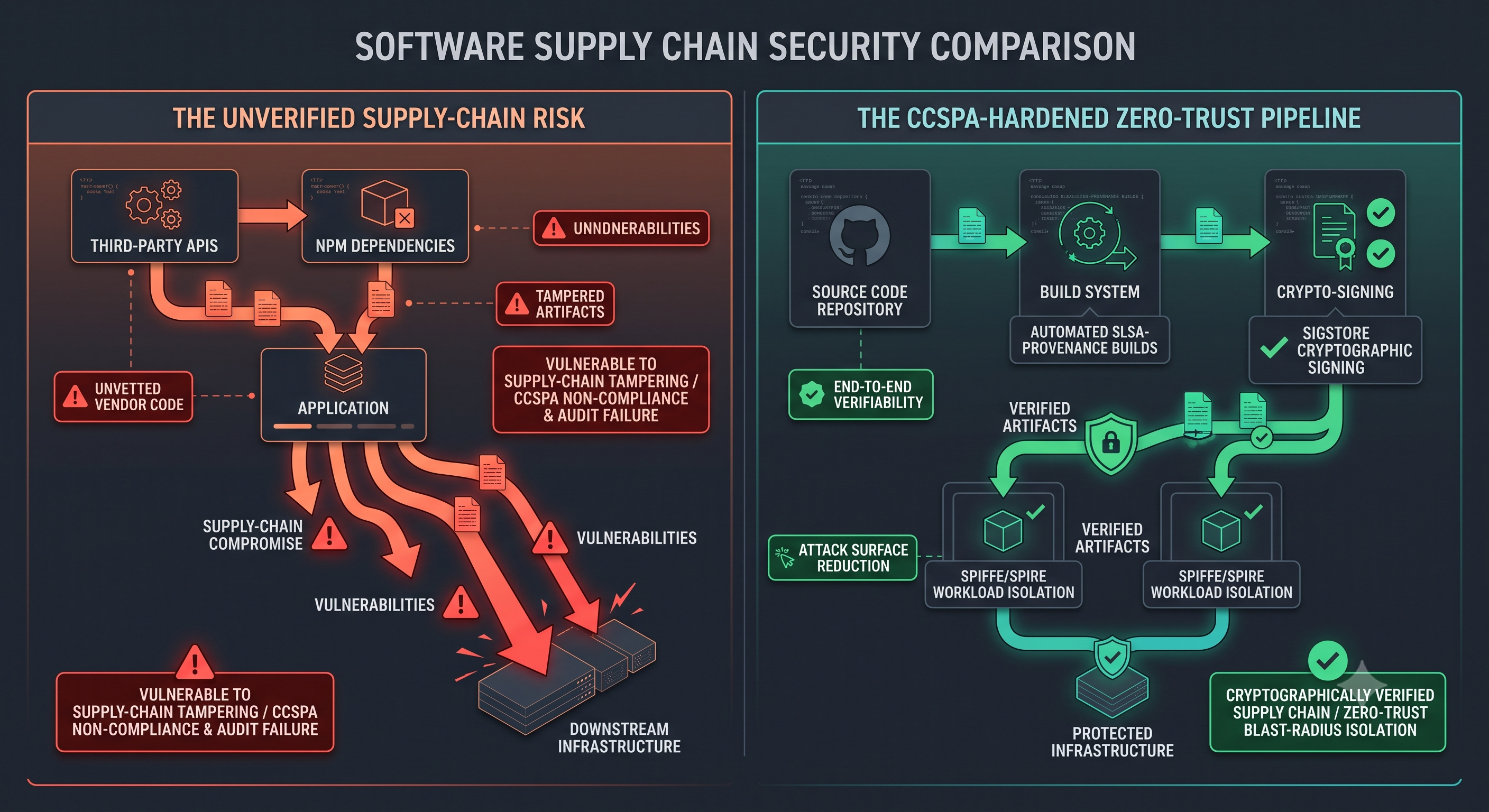 0 Comments 0 Shares 70 Views 0 Reviews
 -
Canadian Tech’s Cloud Sovereignty Shift: Are Your Pipelines Actually Border-Proof?
As Canadian startups and scale-ups ramp up AI deployments, technical leads face a sharp divergence between physical server location and legal/operational data sovereignty.
Foreign-owned hyperscalers operating out of Montreal or Calgary are still subject to extraterritorial subpoena frameworks (such as the US CLOUD Act). Furthermore, emerging standards under Canada's Sovereign AI Compute initiatives mandate strict rules around data custody, pipeline provenance, and supply chain exposure.
If your team is building or shipping AI products in Canada, run through this practical architectural checklist:
The Canadian Sovereign Data & AI Architecture Checklist
[ ] 1. Decouple Metadata from Model Telemetry
Storing primary weights or relational data in a Canadian availability zone is only half the battle. Verify that logging collectors (e.g., Datadog, LangSmith, cloud provider analytics) are not routing token prompts or telemetry logs to foreign control planes.
[ ] 2. Audit Third-Party Model Endpoints for Transit Compliance
If your app leverages proprietary LLM APIs via zero-data-retention agreements, confirm that traffic routing stays strictly within domestic edge routers. Many managed API gateways auto-route failover traffic to US-East clusters without explicit geographic route pinning.
[ ] 3. Implement Bring-Your-Own-KMS (Customer-Managed Encryption Keys)
Ensure all training datasets, vector stores, and blob caches are encrypted at rest using keys managed through an on-prem or sovereign Hardware Security Module (HSM) where the decryption key cannot be extracted via cloud provider administrative escalation.
[ ] 4. Build Data Lineage Maps for AIDA / CPPA Readiness
Maintain programmatic audit trails showing: (a) origin of training/fine-tuning sets, (b) consent verification tags per user record, and (c) explicit data isolation mechanisms for synthetic data vs. identifiable PII.
[ ] 5. Validate Multi-Cloud / Sovereign Compute Failover
Assess whether your core inferencing or batch pipeline can migrate to Canadian-controlled compute platforms (such as domestic supercompute clusters or regional GPU clouds) without deep proprietary API lock-in.
Discussion Question
For the engineering leaders and CTOs in our network: How are you managing cross-border data telemetry and API failover routes for your production AI features? Are you actively evaluating domestic Canadian sovereign compute alternatives?
CTA (Join Techawks Canada)
Building the future of Canadian tech requires staying ahead of architecture shifts, policy updates, and ecosystem milestones.
👉 Join Techawks Canada to connect with engineers, founders, and tech leaders driving innovation from Vancouver to Halifax. Follow the page and join the conversation today!Canadian Tech’s Cloud Sovereignty Shift: Are Your Pipelines Actually Border-Proof? As Canadian startups and scale-ups ramp up AI deployments, technical leads face a sharp divergence between physical server location and legal/operational data sovereignty. Foreign-owned hyperscalers operating out of Montreal or Calgary are still subject to extraterritorial subpoena frameworks (such as the US CLOUD Act). Furthermore, emerging standards under Canada's Sovereign AI Compute initiatives mandate strict rules around data custody, pipeline provenance, and supply chain exposure. If your team is building or shipping AI products in Canada, run through this practical architectural checklist: The Canadian Sovereign Data & AI Architecture Checklist [ ] 1. Decouple Metadata from Model Telemetry Storing primary weights or relational data in a Canadian availability zone is only half the battle. Verify that logging collectors (e.g., Datadog, LangSmith, cloud provider analytics) are not routing token prompts or telemetry logs to foreign control planes. [ ] 2. Audit Third-Party Model Endpoints for Transit Compliance If your app leverages proprietary LLM APIs via zero-data-retention agreements, confirm that traffic routing stays strictly within domestic edge routers. Many managed API gateways auto-route failover traffic to US-East clusters without explicit geographic route pinning. [ ] 3. Implement Bring-Your-Own-KMS (Customer-Managed Encryption Keys) Ensure all training datasets, vector stores, and blob caches are encrypted at rest using keys managed through an on-prem or sovereign Hardware Security Module (HSM) where the decryption key cannot be extracted via cloud provider administrative escalation. [ ] 4. Build Data Lineage Maps for AIDA / CPPA Readiness Maintain programmatic audit trails showing: (a) origin of training/fine-tuning sets, (b) consent verification tags per user record, and (c) explicit data isolation mechanisms for synthetic data vs. identifiable PII. [ ] 5. Validate Multi-Cloud / Sovereign Compute Failover Assess whether your core inferencing or batch pipeline can migrate to Canadian-controlled compute platforms (such as domestic supercompute clusters or regional GPU clouds) without deep proprietary API lock-in. Discussion Question For the engineering leaders and CTOs in our network: How are you managing cross-border data telemetry and API failover routes for your production AI features? Are you actively evaluating domestic Canadian sovereign compute alternatives? CTA (Join Techawks Canada) Building the future of Canadian tech requires staying ahead of architecture shifts, policy updates, and ecosystem milestones. 👉 Join Techawks Canada to connect with engineers, founders, and tech leaders driving innovation from Vancouver to Halifax. Follow the page and join the conversation today!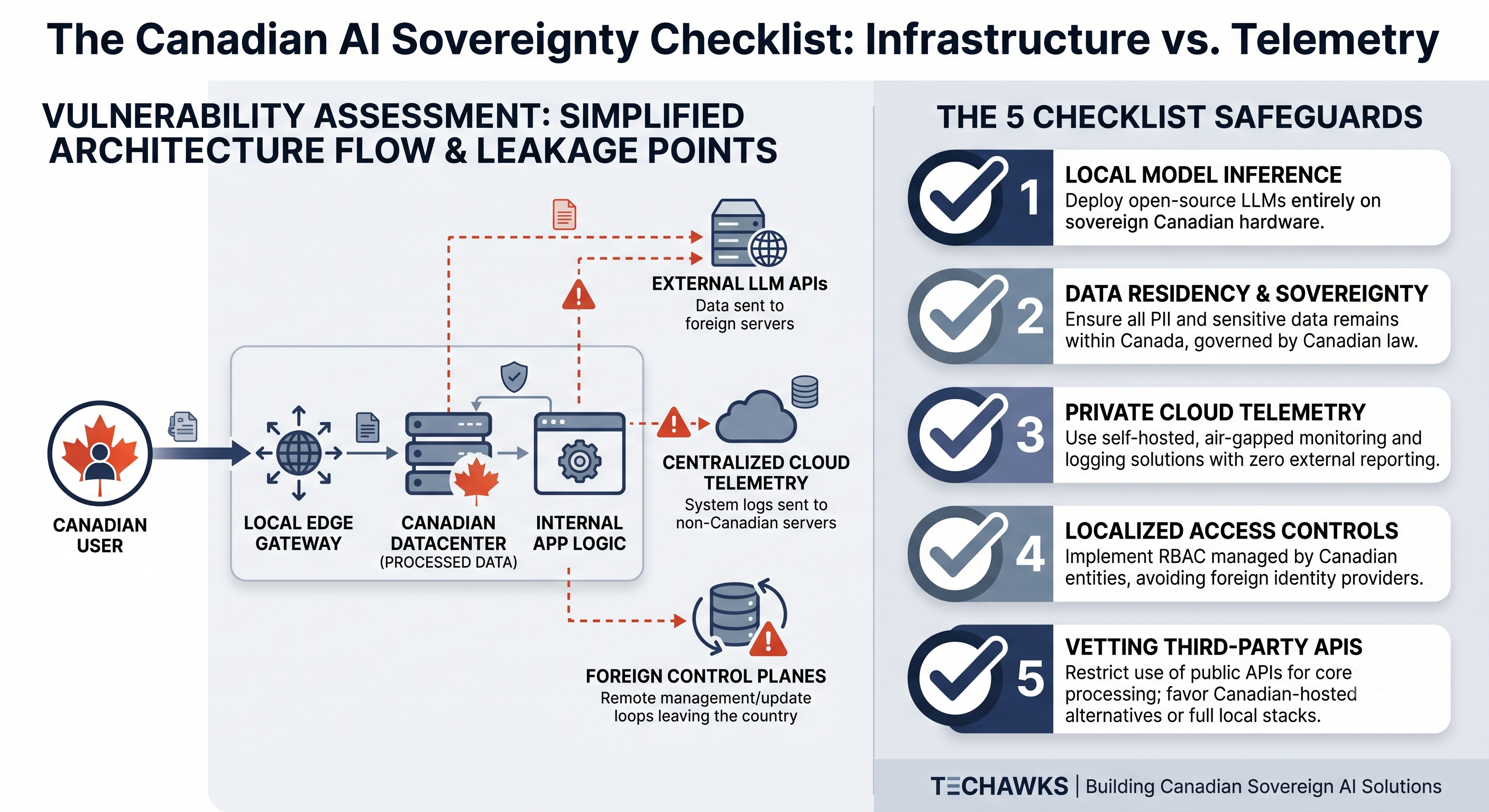 0 Comments 0 Shares 352 Views 0 Reviews
 -
Building a Non-Colonized Canadian AI: Why Data Residency Can’t Protect Sovereign Inference
High-performing engineering teams in Toronto, Vancouver, and Montréal are shifting their effort away from simple AI integration and towards architecting for runtime sovereignty. Passive Data Residency—storing data in ca-central-1 cloud buckets—is baseline hygiene. True local relevance requires controlling the complete execution path. Real operational resilience requires moving from unmanaged remote inference to Sovereign Runtime Isolation & TEE Determinism.
How to Architect for Sovereign Runtime Compliance:
Deploy Sovereign Execution in Hardware-Attested TEEs
To protect sensitive prompt contexts during active inference, move model runtimes inside Hardware-Attested Trusted Execution Environments (TEEs) on localized, Canada-domiciled bare metal. This guarantees that host infrastructure administrators and third-party hypervisors cannot inspect the memory state during active execution.
Implement Localized Model Distillation & SLM Gateways
Never pipe high-compliance transactions (e.g., patient records, identity data, identifiable citizen telemetry) to external public endpoints. Route in-scope requests to quantized Small Language Models (SLMs) running inside air-gapped Canadian VPCs. Use deterministic, rule-based classifiers to scrub and verify data contracts before any anonymized residual workloads trigger external fallbacks.
Establish an Immutable, Verifiable Audit Ledger
Canada’s regulatory landscape holds data controllers strictly accountable for automated decision chains. Replace opaque, non-deterministic agent loops with cryptographically signed execution traces. Record the input context hash, model weight version, and transaction diff in an append-only log to ensure forensic auditability on demand.
Sovereignty isn’t a switch you flip on a cloud provider’s billing console; it is an architectural pattern that guarantees total jurisdictional control over code, context, and compute.
Discussion Question
For Canadian CTOs, Platform Engineers, and Data Privacy Leads: Where is your biggest architectural hurdle today—provisioning high-performance TEE compute locally, managing context drift over sovereign SLMs, or reconciling real-time execution needs with data localization mandates? Let’s discuss your implementation trade-offs below.
CTA
Ready to build resilient, sovereign, and audit-proof technical systems designed for Canada?
👉 Join Techawks Canada to collaborate with senior practitioners, discuss sovereign cloud architecture, and master production engineering frameworks tailored for the Canadian context.Building a Non-Colonized Canadian AI: Why Data Residency Can’t Protect Sovereign Inference High-performing engineering teams in Toronto, Vancouver, and Montréal are shifting their effort away from simple AI integration and towards architecting for runtime sovereignty. Passive Data Residency—storing data in ca-central-1 cloud buckets—is baseline hygiene. True local relevance requires controlling the complete execution path. Real operational resilience requires moving from unmanaged remote inference to Sovereign Runtime Isolation & TEE Determinism. How to Architect for Sovereign Runtime Compliance: Deploy Sovereign Execution in Hardware-Attested TEEs To protect sensitive prompt contexts during active inference, move model runtimes inside Hardware-Attested Trusted Execution Environments (TEEs) on localized, Canada-domiciled bare metal. This guarantees that host infrastructure administrators and third-party hypervisors cannot inspect the memory state during active execution. Implement Localized Model Distillation & SLM Gateways Never pipe high-compliance transactions (e.g., patient records, identity data, identifiable citizen telemetry) to external public endpoints. Route in-scope requests to quantized Small Language Models (SLMs) running inside air-gapped Canadian VPCs. Use deterministic, rule-based classifiers to scrub and verify data contracts before any anonymized residual workloads trigger external fallbacks. Establish an Immutable, Verifiable Audit Ledger Canada’s regulatory landscape holds data controllers strictly accountable for automated decision chains. Replace opaque, non-deterministic agent loops with cryptographically signed execution traces. Record the input context hash, model weight version, and transaction diff in an append-only log to ensure forensic auditability on demand. Sovereignty isn’t a switch you flip on a cloud provider’s billing console; it is an architectural pattern that guarantees total jurisdictional control over code, context, and compute. Discussion Question For Canadian CTOs, Platform Engineers, and Data Privacy Leads: Where is your biggest architectural hurdle today—provisioning high-performance TEE compute locally, managing context drift over sovereign SLMs, or reconciling real-time execution needs with data localization mandates? Let’s discuss your implementation trade-offs below. CTA Ready to build resilient, sovereign, and audit-proof technical systems designed for Canada? 👉 Join Techawks Canada to collaborate with senior practitioners, discuss sovereign cloud architecture, and master production engineering frameworks tailored for the Canadian context.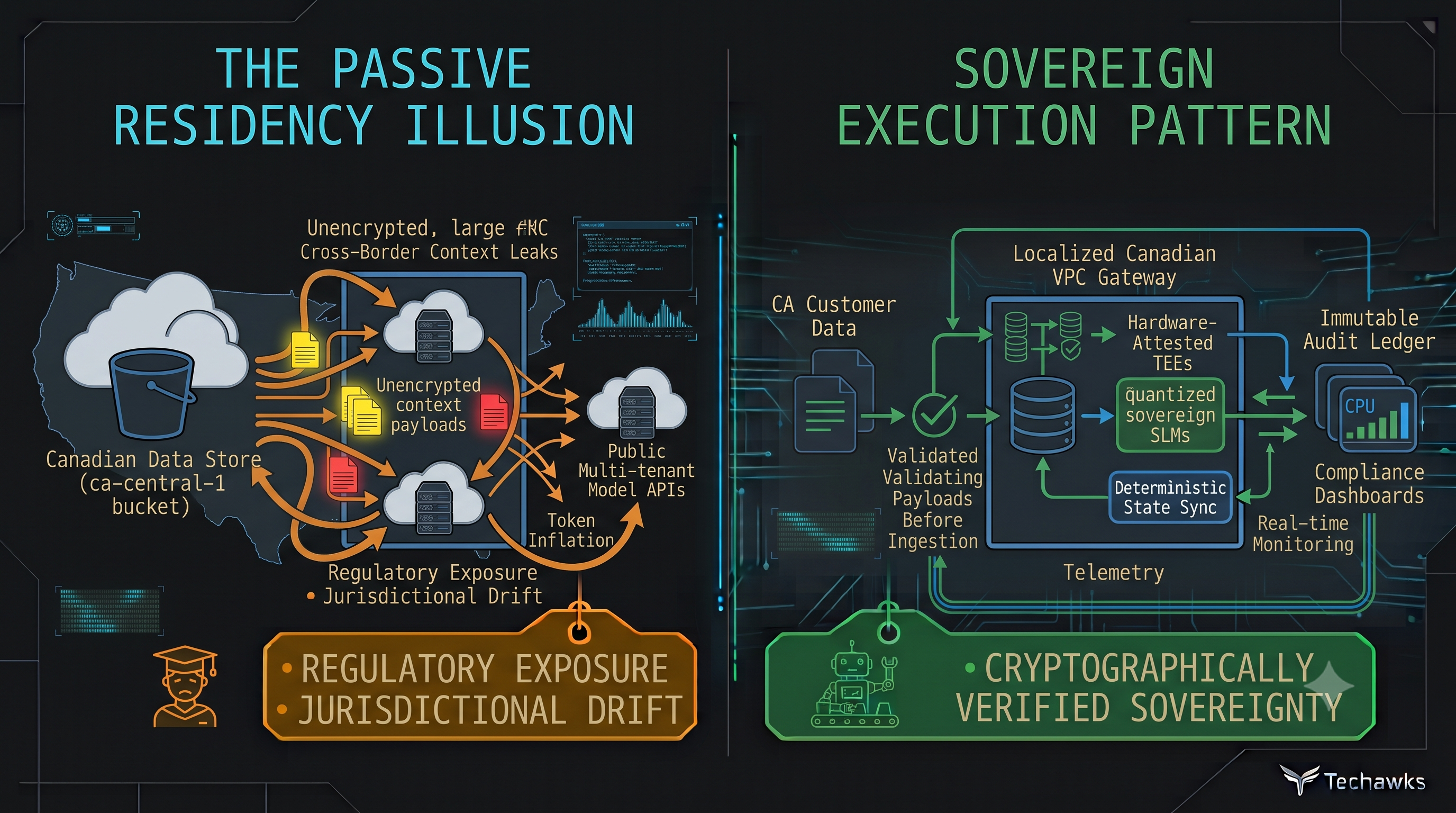 0 Comments 0 Shares 1K Views 0 Reviews
 -
Beyond Data Residency: Why Canadian Engineering Teams Must Architect for "Model Sovereignty"
For over a decade, the Canadian tech ecosystem operated under a straightforward data governance playbook: keep customer data within national borders, align with PIPEDA (and Quebec’s Law 25), and rely on local cloud availability zones.
Agentic systems and third-party LLMs have broken that framework.
Here is the operational reality facing Canadian engineering and product leaders today:
The Inference Boundary Gap
Even when enterprise databases sit securely in Montreal, prompt payloads containing retrieved user context often leave the country. Routing RAG (Retrieval-Augmented Generation) calls, agent orchestrations, or embeddings through foreign proprietary APIs transfers jurisdictional control to foreign regulatory regimes the moment that token stream crosses the border. Under emerging frameworks like the Artificial Intelligence and Data Act (AIDA / Bill C-27), downstream accountability for bias, safety, and unauthorized data leakage rests on Canadian deployers—not third-party API providers abroad.
How to Architect for Model Sovereignty:
Decouple Orchestration from Centralized Foundation Models
Move sensitive inference away from single-endpoint global APIs. Adopt an inference-routing layer that classifies query sensitivity: keep non-sensitive queries flexible, but route PII and regulated datasets strictly through self-hosted or domestic sovereign compute clusters.
In-Region Open Weights Deployment
Rather than piping vector-database context into external proprietary models, deploy high-performing open-weight models (such as quantized 8B–70B parameter models) directly inside your Canadian Virtual Private Cloud (VPC) or domestic sovereign cloud infrastructure. Data never transits outside your encrypted boundary.
Sandboxed Agent Tooling
If you deploy autonomous agents capable of querying internal systems, enforce egress filters at the container runtime level. Agents should operate within deterministic sandboxes where outbound API calls to foreign infrastructure are blocked by default.
Sovereignty in 2026 is no longer about where your static bytes rest on disk—it is about where your model weights execute and where your reasoning tokens live.
Discussion Question
Is your organization running open-weight models within domestic Canadian cloud infrastructure, or are you still relying primarily on cross-border API endpoints for your production AI pipelines? What architectural hurdles are keeping you from localizing inference?
CTA
Join Techawks Canada to connect with local software architects, founders, and engineers building sovereign, resilient, and enterprise-grade tech across the country.Beyond Data Residency: Why Canadian Engineering Teams Must Architect for "Model Sovereignty" For over a decade, the Canadian tech ecosystem operated under a straightforward data governance playbook: keep customer data within national borders, align with PIPEDA (and Quebec’s Law 25), and rely on local cloud availability zones. Agentic systems and third-party LLMs have broken that framework. Here is the operational reality facing Canadian engineering and product leaders today: The Inference Boundary Gap Even when enterprise databases sit securely in Montreal, prompt payloads containing retrieved user context often leave the country. Routing RAG (Retrieval-Augmented Generation) calls, agent orchestrations, or embeddings through foreign proprietary APIs transfers jurisdictional control to foreign regulatory regimes the moment that token stream crosses the border. Under emerging frameworks like the Artificial Intelligence and Data Act (AIDA / Bill C-27), downstream accountability for bias, safety, and unauthorized data leakage rests on Canadian deployers—not third-party API providers abroad. How to Architect for Model Sovereignty: Decouple Orchestration from Centralized Foundation Models Move sensitive inference away from single-endpoint global APIs. Adopt an inference-routing layer that classifies query sensitivity: keep non-sensitive queries flexible, but route PII and regulated datasets strictly through self-hosted or domestic sovereign compute clusters. In-Region Open Weights Deployment Rather than piping vector-database context into external proprietary models, deploy high-performing open-weight models (such as quantized 8B–70B parameter models) directly inside your Canadian Virtual Private Cloud (VPC) or domestic sovereign cloud infrastructure. Data never transits outside your encrypted boundary. Sandboxed Agent Tooling If you deploy autonomous agents capable of querying internal systems, enforce egress filters at the container runtime level. Agents should operate within deterministic sandboxes where outbound API calls to foreign infrastructure are blocked by default. Sovereignty in 2026 is no longer about where your static bytes rest on disk—it is about where your model weights execute and where your reasoning tokens live. Discussion Question Is your organization running open-weight models within domestic Canadian cloud infrastructure, or are you still relying primarily on cross-border API endpoints for your production AI pipelines? What architectural hurdles are keeping you from localizing inference? CTA Join Techawks Canada to connect with local software architects, founders, and engineers building sovereign, resilient, and enterprise-grade tech across the country. 0 Comments 0 Shares 418 Views 0 Reviews
 -
Carbon-Aware Orchestration: Designing AI Workloads for Canada’s Clean Energy Baseline
With major cloud operators and AI firms signing on to Canada’s newly released Responsible Data Centre Development Principles, the operational mandate across Canadian engineering teams is clear: compute scaling can no longer treat electricity as an unconstrained resource.
Canada holds a strategic competitive advantage in clean hydro and nuclear generation across provinces like Quebec, Ontario, and British Columbia. However, unmitigated peak GPU spikes strain provincial interties and push local utilities toward fossil-fueled peaker plants during high-demand hours.
To build sustainable, high-throughput architectures that comply with federal efficiency benchmarks, infrastructure leads must transition from static Kubernetes job queuing to Grid-Responsive Workload Orchestration:
Decouple Training Schedules via Marginal Carbon Intensity (MOER):
Average grid emission factors are misleading. A data center in Ontario or Quebec may average low emissions, but running large training jobs during localized afternoon peaks often forces marginal generation from gas turbines. Ingest real-time marginal intensity APIs into your orchestrator to dynamically throttle batch compute during peak marginal emissions.
Implement Temporal and Spatial Shifting in CI/CD:
Treat compute jobs as schedulable across time and region. Non-urgent tasks—such as batch embedding generation, nightly regression runs, or offline fine-tuning—should use custom resource schedulers (e.g., carbon-aware Keda scalers) that queue execution until local hydro-backed baselines reach optimal utilization.
Hardware P-State & Power-Capping Automation:
Rather than letting GPU nodes idle at nominal draw, enforce automated dynamic voltage and frequency scaling (DVFS) policies. Power-capping training clusters at 80–85% of peak TDP reduces thermal output and grid draw by up to 20% while sacrificing negligible wall-clock compute throughput.
Sustainable engineering in Canada isn’t about purchasing offset certificates; it’s an architectural practice of synchronizing compute load with real-time grid capacity.
Discussion Question
Does your infrastructure stack account for real-time marginal grid emissions when running large-scale batch processing or AI model fine-tuning, or do your orchestrators schedule purely on queue availability?
CTA
Join Techawks Canada — Connect with Canadian software architects, SREs, and cloud-native builders scaling high-performance, energy-efficient digital infrastructure from coast to coast.Carbon-Aware Orchestration: Designing AI Workloads for Canada’s Clean Energy Baseline With major cloud operators and AI firms signing on to Canada’s newly released Responsible Data Centre Development Principles, the operational mandate across Canadian engineering teams is clear: compute scaling can no longer treat electricity as an unconstrained resource. Canada holds a strategic competitive advantage in clean hydro and nuclear generation across provinces like Quebec, Ontario, and British Columbia. However, unmitigated peak GPU spikes strain provincial interties and push local utilities toward fossil-fueled peaker plants during high-demand hours. To build sustainable, high-throughput architectures that comply with federal efficiency benchmarks, infrastructure leads must transition from static Kubernetes job queuing to Grid-Responsive Workload Orchestration: Decouple Training Schedules via Marginal Carbon Intensity (MOER): Average grid emission factors are misleading. A data center in Ontario or Quebec may average low emissions, but running large training jobs during localized afternoon peaks often forces marginal generation from gas turbines. Ingest real-time marginal intensity APIs into your orchestrator to dynamically throttle batch compute during peak marginal emissions. Implement Temporal and Spatial Shifting in CI/CD: Treat compute jobs as schedulable across time and region. Non-urgent tasks—such as batch embedding generation, nightly regression runs, or offline fine-tuning—should use custom resource schedulers (e.g., carbon-aware Keda scalers) that queue execution until local hydro-backed baselines reach optimal utilization. Hardware P-State & Power-Capping Automation: Rather than letting GPU nodes idle at nominal draw, enforce automated dynamic voltage and frequency scaling (DVFS) policies. Power-capping training clusters at 80–85% of peak TDP reduces thermal output and grid draw by up to 20% while sacrificing negligible wall-clock compute throughput. Sustainable engineering in Canada isn’t about purchasing offset certificates; it’s an architectural practice of synchronizing compute load with real-time grid capacity. Discussion Question Does your infrastructure stack account for real-time marginal grid emissions when running large-scale batch processing or AI model fine-tuning, or do your orchestrators schedule purely on queue availability? CTA Join Techawks Canada — Connect with Canadian software architects, SREs, and cloud-native builders scaling high-performance, energy-efficient digital infrastructure from coast to coast.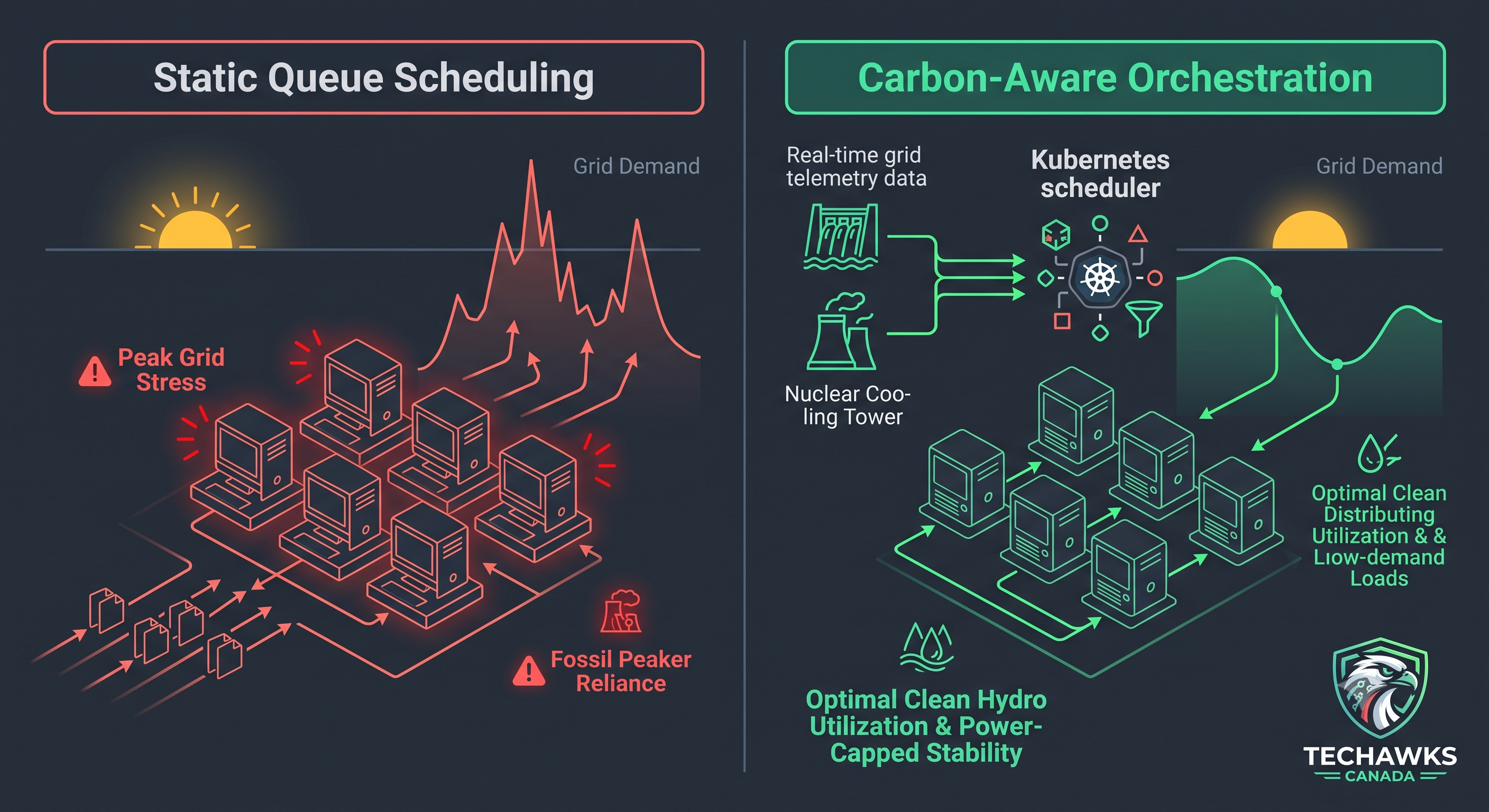 0 Comments 0 Shares 424 Views 0 Reviews
 -
Cracking Public Sector Procurement: The Playbook for Canadian AI & Tech Builders
Cities like Toronto and Montréal are shifting from traditional, multi-year closed RFPs to problem-driven "reverse pitch" challenges—tasking domestic startups directly with operational problems like automated 311 routing, road maintenance dispatch, and infrastructure vision systems.
For Canadian tech founders, enterprise architects, and software leaders, selling into the public sector can feel like a labyrinth of compliance, data residency barriers, and endless procurement cycles.
If your team is looking to target institutional or public sector deployments across Canada, here is the architectural and operational checklist you need to win:
Enforce In-Country Data Residency Early
Public sector bodies cannot risk data traversing foreign nodes. Ensure your storage, inference pipelines, and telemetry strictly adhere to Canadian regional boundaries (e.g., ca-central-1 or domestic sovereign cloud infrastructure) to pass municipal privacy audits on day one.
Decouple Edge Telemetry from PII Ingestion
Whether you’re processing images of road conditions or parsing citizen feedback forms, sanitization must occur at the ingress layer. Implement localized pre-filtering pipelines that scrub license plates, faces, and personal identifiers before data ever enters model pipelines.
Design for Interoperability with Legacy Workflows
Municipalities won't replace core ERP or dispatch software overnight. Your competitive advantage is not just a proprietary model—it's having robust webhooks, secure REST/GraphQL connectors, and event streams that feed directly into systems like SAP or Cityworks without disruption.
Pilot Small, Document Provable Unit Economics
Governments prioritize risk reduction over hype. Focus initial proposals on high-frequency, low-risk operational pain points where you can demonstrate a clear reduction in manual backlog hours within a 90-day sandbox.
Bridging the gap between Canadian innovation and public infrastructure is how domestic tech moves from pilot tests to scalable commercial champions.
Discussion Question
For Canadian builders: What has been your biggest bottleneck when bidding on enterprise or public sector contracts—lengthy procurement cycles, compliance/residency audits, or legacy integration?
CTA (Join Techawks Canada)
Want to stay connected with engineers, founders, and tech professionals building the future of Canadian tech?
👉 Join the Techawks Canada community today. Connect with local innovators, access exclusive tech teardowns, and join the conversation shaping our regional ecosystem.Cracking Public Sector Procurement: The Playbook for Canadian AI & Tech Builders Cities like Toronto and Montréal are shifting from traditional, multi-year closed RFPs to problem-driven "reverse pitch" challenges—tasking domestic startups directly with operational problems like automated 311 routing, road maintenance dispatch, and infrastructure vision systems. For Canadian tech founders, enterprise architects, and software leaders, selling into the public sector can feel like a labyrinth of compliance, data residency barriers, and endless procurement cycles. If your team is looking to target institutional or public sector deployments across Canada, here is the architectural and operational checklist you need to win: Enforce In-Country Data Residency Early Public sector bodies cannot risk data traversing foreign nodes. Ensure your storage, inference pipelines, and telemetry strictly adhere to Canadian regional boundaries (e.g., ca-central-1 or domestic sovereign cloud infrastructure) to pass municipal privacy audits on day one. Decouple Edge Telemetry from PII Ingestion Whether you’re processing images of road conditions or parsing citizen feedback forms, sanitization must occur at the ingress layer. Implement localized pre-filtering pipelines that scrub license plates, faces, and personal identifiers before data ever enters model pipelines. Design for Interoperability with Legacy Workflows Municipalities won't replace core ERP or dispatch software overnight. Your competitive advantage is not just a proprietary model—it's having robust webhooks, secure REST/GraphQL connectors, and event streams that feed directly into systems like SAP or Cityworks without disruption. Pilot Small, Document Provable Unit Economics Governments prioritize risk reduction over hype. Focus initial proposals on high-frequency, low-risk operational pain points where you can demonstrate a clear reduction in manual backlog hours within a 90-day sandbox. Bridging the gap between Canadian innovation and public infrastructure is how domestic tech moves from pilot tests to scalable commercial champions. Discussion Question For Canadian builders: What has been your biggest bottleneck when bidding on enterprise or public sector contracts—lengthy procurement cycles, compliance/residency audits, or legacy integration? CTA (Join Techawks Canada) Want to stay connected with engineers, founders, and tech professionals building the future of Canadian tech? 👉 Join the Techawks Canada community today. Connect with local innovators, access exclusive tech teardowns, and join the conversation shaping our regional ecosystem.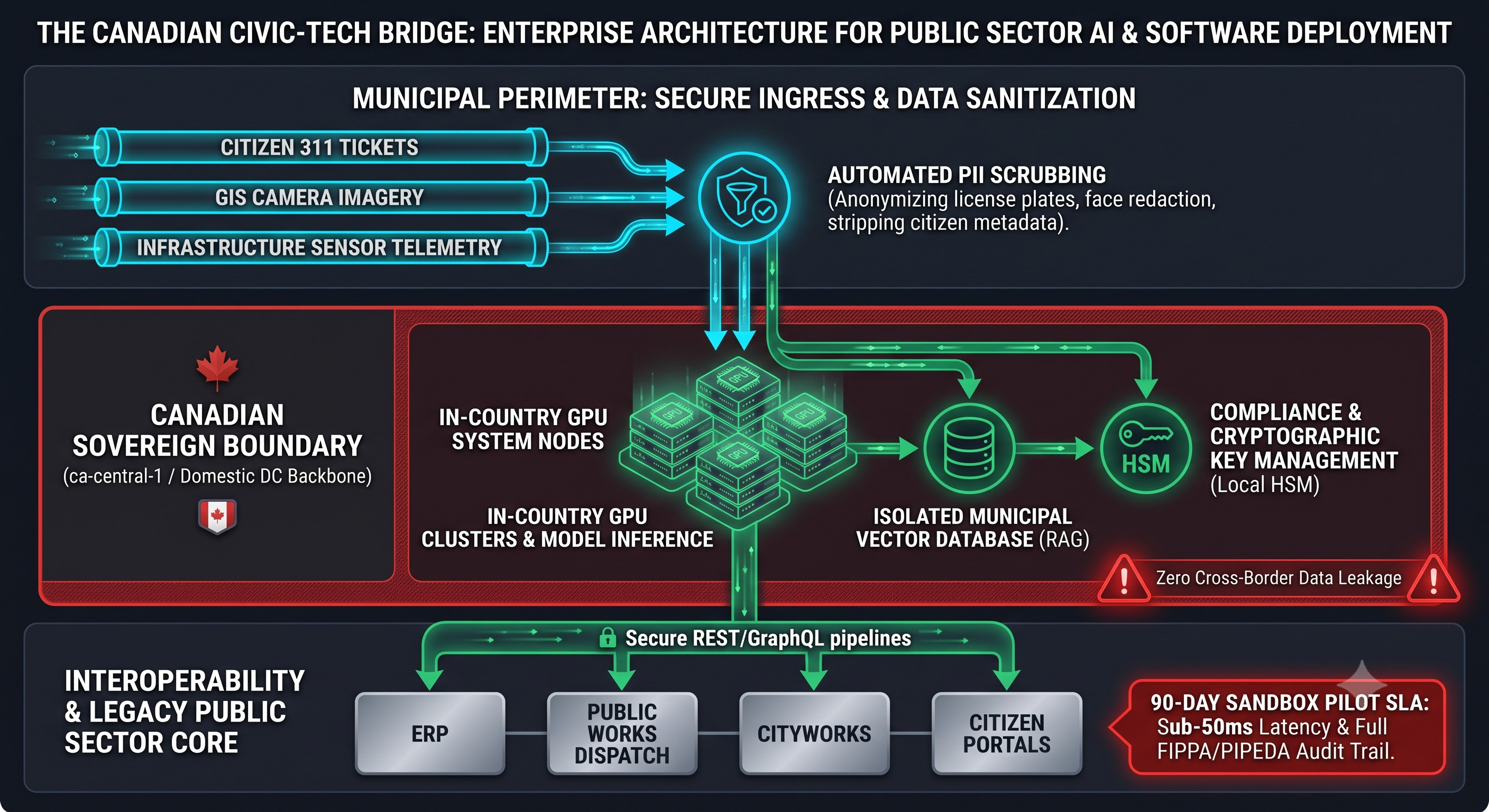 0 Comments 0 Shares 187 Views 0 Reviews
 -
Canada’s Sovereign Compute Mandate: Why Provincial Grid Rules Are Reshaping Distributed AI Systems
Canada currently exports immense amounts of clean hydroelectric power while importing foreign cloud and AI compute capacity.
To reverse this imbalance, the federal government launched Canada's national Responsible Data Centre Development Principles alongside the multi-billion-dollar Canadian Sovereign AI Compute Strategy. However, building high-density compute domestically comes with strict engineering constraints: facilities must preserve municipal water resources, avoid shifting energy costs onto local ratepayers, and maintain strict data residency within sovereign borders.
For Canadian software architects, platform engineers, and SREs, this changes distributed systems design. Compliance is no longer just a legal checklist; it dictates cluster topology and pipeline architecture.
Here are the 3 technical realities Canadian engineering teams must build for:
1. Provable Data Residency via Sovereign Hardware Enclaves
Operating under Canadian jurisdiction means telemetry, training checkpoints, and customer embeddings cannot transit foreign availability zones.
Engineering pattern: Teams are moving beyond software-defined VPC peering to Confidential Computing architectures (such as AMD SEV-SNP and Intel TDX). Hardware-enforced enclaves ensure data and model weights remain cryptographically isolated and physically bound to Canadian regional bare-metal clusters, preventing cross-border data exposure during distributed training iterations.
2. Carbon-Aware, Multi-Provincial Orchestration
Under the new responsible infrastructure framework, data centres cannot overload municipal grids. However, clean power across Canada is geographically fragmented—Hydro-Québec and BC Hydro offer high baseload renewables, while Ontario (IESO) and Alberta (AESO) manage dynamic grid constraints.
Engineering pattern: Systems architects are deploying carbon- and cost-aware workload schedulers. By plugging grid emission intensity APIs directly into Kubernetes orchestration layers, heavy batch-training pipelines and continuous synthetic-data generation dynamically shift between Montreal, Toronto, and Vancouver nodes based on real-time grid headroom and water-efficiency metrics.
3. Geo-Fenced Edge Model Cascading
With strict federal requirements around strategic domestic value and privacy, routing enterprise inference through foreign-hosted proprietary LLMs introduces regulatory friction.
Engineering pattern: Teams are deploying dual-layer cascaded architectures. Edge nodes run heavily quantized, local open-weight models (e.g., 8B/14B parameters) inside Canadian regional points of presence (PoPs) to resolve 85% of queries with sub-millisecond latency. Only high-complexity tasks pass to domestic sovereign supercomputing clusters, enforcing data localization by default.
Canada has never lacked algorithmic talent. The next frontier is building the resilient, sovereign systems architecture to run it.
Discussion Question (Poll)
With Canada accelerating sovereign AI infrastructure and stricter data centre mandates, what is your team's biggest challenge in localizing workloads?
A) Securing domestic high-density GPU compute availability
B) Architecting multi-provincial, grid-aware Kubernetes clusters
C) Enforcing cryptographic data residency across hybrid stacks
D) Cost parity with foreign US hyperscalers
(Cast your vote above and drop your infrastructure stack insights in the comments.)
CTA
Join Techawks Canada — the premier technical hub where Canadian systems architects, cloud engineers, and technical founders analyze infrastructure shifts, sovereign compute, and enterprise scalability. Follow us for zero-fluff, engineering-grade breakdowns.Canada’s Sovereign Compute Mandate: Why Provincial Grid Rules Are Reshaping Distributed AI Systems Canada currently exports immense amounts of clean hydroelectric power while importing foreign cloud and AI compute capacity. To reverse this imbalance, the federal government launched Canada's national Responsible Data Centre Development Principles alongside the multi-billion-dollar Canadian Sovereign AI Compute Strategy. However, building high-density compute domestically comes with strict engineering constraints: facilities must preserve municipal water resources, avoid shifting energy costs onto local ratepayers, and maintain strict data residency within sovereign borders. For Canadian software architects, platform engineers, and SREs, this changes distributed systems design. Compliance is no longer just a legal checklist; it dictates cluster topology and pipeline architecture. Here are the 3 technical realities Canadian engineering teams must build for: 1. Provable Data Residency via Sovereign Hardware Enclaves Operating under Canadian jurisdiction means telemetry, training checkpoints, and customer embeddings cannot transit foreign availability zones. Engineering pattern: Teams are moving beyond software-defined VPC peering to Confidential Computing architectures (such as AMD SEV-SNP and Intel TDX). Hardware-enforced enclaves ensure data and model weights remain cryptographically isolated and physically bound to Canadian regional bare-metal clusters, preventing cross-border data exposure during distributed training iterations. 2. Carbon-Aware, Multi-Provincial Orchestration Under the new responsible infrastructure framework, data centres cannot overload municipal grids. However, clean power across Canada is geographically fragmented—Hydro-Québec and BC Hydro offer high baseload renewables, while Ontario (IESO) and Alberta (AESO) manage dynamic grid constraints. Engineering pattern: Systems architects are deploying carbon- and cost-aware workload schedulers. By plugging grid emission intensity APIs directly into Kubernetes orchestration layers, heavy batch-training pipelines and continuous synthetic-data generation dynamically shift between Montreal, Toronto, and Vancouver nodes based on real-time grid headroom and water-efficiency metrics. 3. Geo-Fenced Edge Model Cascading With strict federal requirements around strategic domestic value and privacy, routing enterprise inference through foreign-hosted proprietary LLMs introduces regulatory friction. Engineering pattern: Teams are deploying dual-layer cascaded architectures. Edge nodes run heavily quantized, local open-weight models (e.g., 8B/14B parameters) inside Canadian regional points of presence (PoPs) to resolve 85% of queries with sub-millisecond latency. Only high-complexity tasks pass to domestic sovereign supercomputing clusters, enforcing data localization by default. Canada has never lacked algorithmic talent. The next frontier is building the resilient, sovereign systems architecture to run it. Discussion Question (Poll) With Canada accelerating sovereign AI infrastructure and stricter data centre mandates, what is your team's biggest challenge in localizing workloads? A) Securing domestic high-density GPU compute availability B) Architecting multi-provincial, grid-aware Kubernetes clusters C) Enforcing cryptographic data residency across hybrid stacks D) Cost parity with foreign US hyperscalers (Cast your vote above and drop your infrastructure stack insights in the comments.) CTA Join Techawks Canada — the premier technical hub where Canadian systems architects, cloud engineers, and technical founders analyze infrastructure shifts, sovereign compute, and enterprise scalability. Follow us for zero-fluff, engineering-grade breakdowns.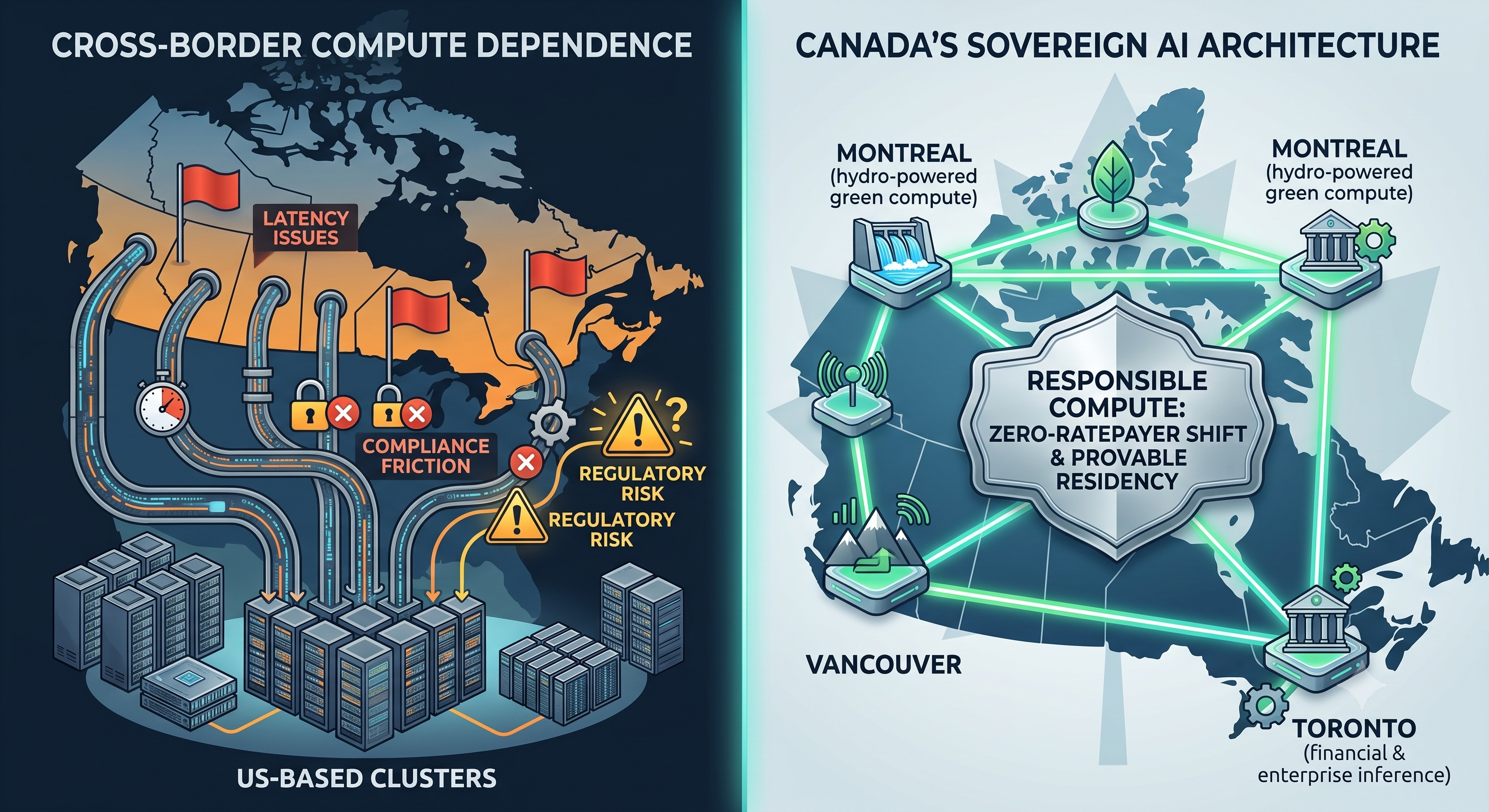 0 Comments 0 Shares 429 Views 0 Reviews
 -
Canada’s $2B Sovereign Compute Bet: Why Canadian Engineers Must Pivot from "API Wrappers" to Compute-Aware Systems
Canada has launched its $2 Billion Canadian Sovereign AI Compute Strategy—allocating dedicated capital toward public supercomputing infrastructure, domestic commercial data center expansion, and an AI Compute Access Fund. Alongside this, federal guidelines under the "Build-Partner-Buy" framework are incentivizing domestic enterprise adoption, aiming to lift business AI adoption across Canadian industry toward 60%.
For the Canadian tech ecosystem, this marks an inflection point.
For the past three years, many Canadian startups and scale-ups relied on thin wrappers built on closed US foundation models. But between strict provincial and federal privacy legislation (PIPEDA modernization and public-sector procurement standards) and the skyrocketing cost of foreign cloud inference, Canadian enterprises—especially in banking, health networks, telecom, and natural resources—are shifting their requirements.
They aren't looking for developers who simply import external SDKs. They need engineers who understand compute efficiency, sovereign data pipelines, and on-soil infrastructure.
Here is how Canadian tech professionals can position themselves to lead this transformation:
1. Transition to "Compute-Aware" Engineering
When compute is subsidized domestically or constrained by private clusters, engineering leverage shifts to resource optimization.
Move beyond prompt engineering and master quantization (GGUF, AWQ), model distillation, and context caching.
Learn how to run and fine-tune performant open-weight models locally on Canadian infrastructure, cutting external token dependency and latency.
2. Master In-Country Data Provenance & Compliance
Canada’s regulated sectors (finance, public health, energy) will not send proprietary IP or sensitive citizen data across borders.
Design hybrid architectures that decouple orchestration from data storage, ensuring sensitive data remains on Canadian soil while maintaining high-throughput inference.
Understand the compliance parameters of federal data residency and modern privacy standards, turning regulatory constraints into an architectural moat.
3. Anchor Your Technical Work to SR&ED and Public-Private Value
In Canada's tech ecosystem, engineering leaders who understand how R&D translates to defensible innovation hold tremendous sway.
High-leverage senior engineers don't just write functional code; they architect systems that push technical boundaries—solving non-trivial algorithmic bottlenecks, memory optimization, and distributed batching.
Articulating technical uncertainty and systemic innovation makes your engineering leadership invaluable to Canadian startups navigating growth capital and R&D incentives.
Career Takeaway: Canada is determined to be more than just an exporter of top AI researchers. The builders commanding the highest compensation and long-term leverage across the country will be those who can deploy efficient, compliant, and sovereign systems right here on Canadian soil.
Discussion Question
For engineers, architects, and tech leaders in Toronto, Montreal, Vancouver, Calgary, and Ottawa: What is your team’s biggest obstacle to running AI models on domestic/sovereign compute—raw GPU availability, cost-per-token, or lack of local infrastructure tooling?
CTA
Ready to build resilient, sovereign engineering skills and advance your career across the Canadian ecosystem?
👉 Join Techawks Canada for architectural breakdowns, compensation benchmarks, and deep-dive technical discussions with leading Canadian builders.Canada’s $2B Sovereign Compute Bet: Why Canadian Engineers Must Pivot from "API Wrappers" to Compute-Aware Systems Canada has launched its $2 Billion Canadian Sovereign AI Compute Strategy—allocating dedicated capital toward public supercomputing infrastructure, domestic commercial data center expansion, and an AI Compute Access Fund. Alongside this, federal guidelines under the "Build-Partner-Buy" framework are incentivizing domestic enterprise adoption, aiming to lift business AI adoption across Canadian industry toward 60%. For the Canadian tech ecosystem, this marks an inflection point. For the past three years, many Canadian startups and scale-ups relied on thin wrappers built on closed US foundation models. But between strict provincial and federal privacy legislation (PIPEDA modernization and public-sector procurement standards) and the skyrocketing cost of foreign cloud inference, Canadian enterprises—especially in banking, health networks, telecom, and natural resources—are shifting their requirements. They aren't looking for developers who simply import external SDKs. They need engineers who understand compute efficiency, sovereign data pipelines, and on-soil infrastructure. Here is how Canadian tech professionals can position themselves to lead this transformation: 1. Transition to "Compute-Aware" Engineering When compute is subsidized domestically or constrained by private clusters, engineering leverage shifts to resource optimization. Move beyond prompt engineering and master quantization (GGUF, AWQ), model distillation, and context caching. Learn how to run and fine-tune performant open-weight models locally on Canadian infrastructure, cutting external token dependency and latency. 2. Master In-Country Data Provenance & Compliance Canada’s regulated sectors (finance, public health, energy) will not send proprietary IP or sensitive citizen data across borders. Design hybrid architectures that decouple orchestration from data storage, ensuring sensitive data remains on Canadian soil while maintaining high-throughput inference. Understand the compliance parameters of federal data residency and modern privacy standards, turning regulatory constraints into an architectural moat. 3. Anchor Your Technical Work to SR&ED and Public-Private Value In Canada's tech ecosystem, engineering leaders who understand how R&D translates to defensible innovation hold tremendous sway. High-leverage senior engineers don't just write functional code; they architect systems that push technical boundaries—solving non-trivial algorithmic bottlenecks, memory optimization, and distributed batching. Articulating technical uncertainty and systemic innovation makes your engineering leadership invaluable to Canadian startups navigating growth capital and R&D incentives. Career Takeaway: Canada is determined to be more than just an exporter of top AI researchers. The builders commanding the highest compensation and long-term leverage across the country will be those who can deploy efficient, compliant, and sovereign systems right here on Canadian soil. Discussion Question For engineers, architects, and tech leaders in Toronto, Montreal, Vancouver, Calgary, and Ottawa: What is your team’s biggest obstacle to running AI models on domestic/sovereign compute—raw GPU availability, cost-per-token, or lack of local infrastructure tooling? CTA Ready to build resilient, sovereign engineering skills and advance your career across the Canadian ecosystem? 👉 Join Techawks Canada for architectural breakdowns, compensation benchmarks, and deep-dive technical discussions with leading Canadian builders.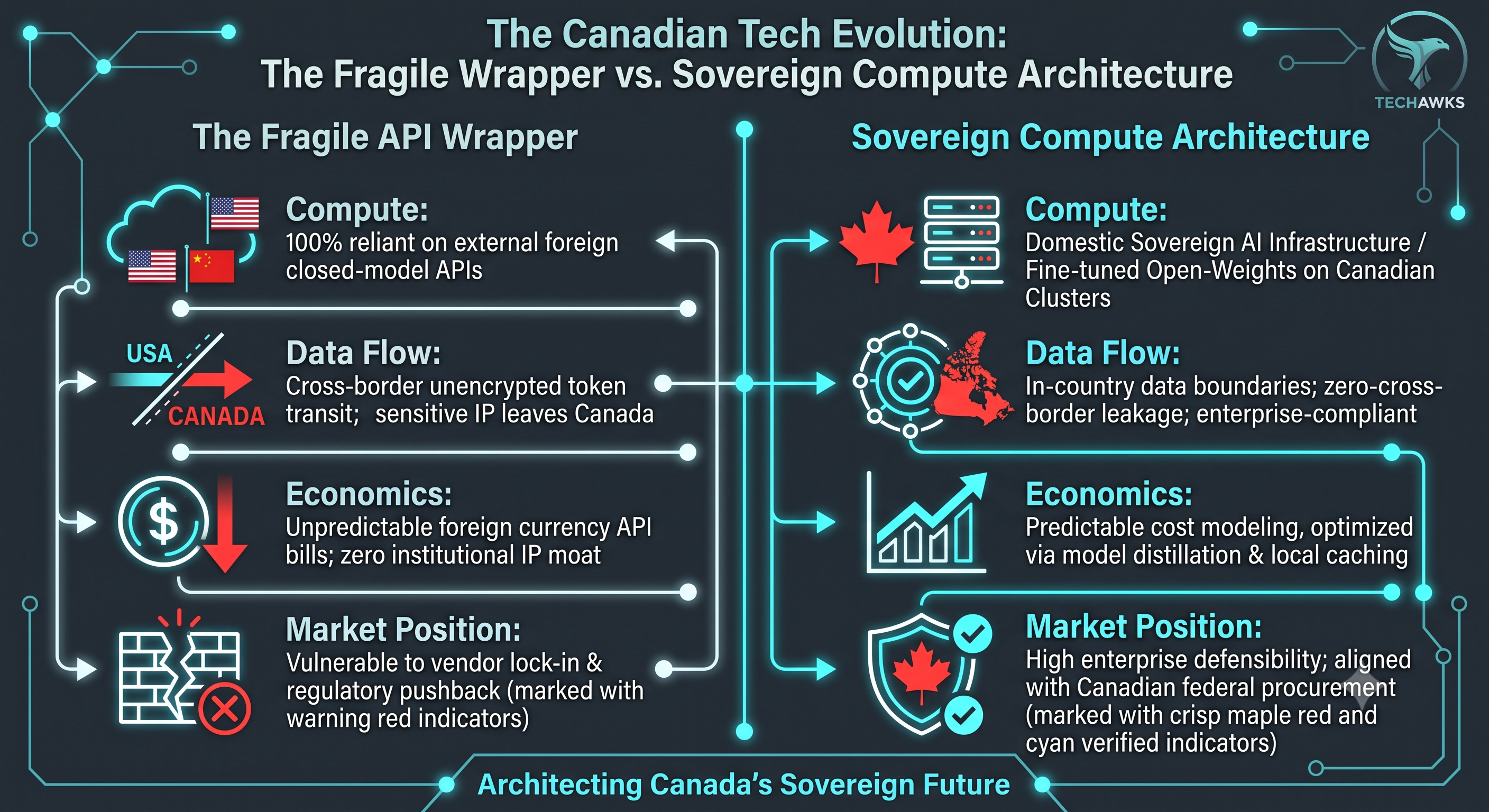 0 Comments 0 Shares 438 Views 0 Reviews
 -
Quebec Law 25 vs. Federal PIPEDA: The "Cross-Border by Default" Architecture Trap
Engineering teams across Canada often design system architectures around federal PIPEDA assumptions, relying on standard "comparable protection" contractual clauses for data transfers. But under Quebec’s Law 25 (enacted via Law 64), cross-border data transfer rules apply not just across national boundaries, but across provincial borders as well.
Treating Canadian data infrastructure as a monolithic, single-zone deployment creates immediate compliance drift.
Myth: "If our infrastructure runs inside Canada, moving user records between provinces or querying US-backed SaaS APIs requires no extra architectural governance."
Fact: Transferring personal information outside of Quebec—even to Ontario or Alberta—triggers mandatory, documented Privacy Impact Assessments (PIAs) and requires systems to evaluate whether destination jurisdictions provide equivalent privacy protections before data packets leave the region.
Why default Canadian cloud deployments fail under modern cross-jurisdiction requirements:
The Inter-Provincial Egress Blind Spot: Multi-region failover between Montreal and Calgary/Toronto sounds like standard high-availability practice. However, under Law 25, replicating Quebec resident PII outside provincial borders without a recorded PIA and explicit transfer safeguards is a direct regulatory violation.
Automated Decision-Making Transparency: If your product leverages machine learning or automated scoring models, Quebec law mandates that users must be informed when an automated decision is made, alongside the right to know the parameters and reasons behind that decision. A black-box third-party model inference pipeline cannot fulfill this request on demand.
The Biometric & Sensitive Token Leak: Law 25 requires mandatory prior notification before deploying biometric identification databases. Storing raw facial recognition vectors, voiceprints, or sensitive telemetry alongside standard application databases violates strict data minimization and isolation rules.
How Canadian Platform Teams Architect for Inter-Provincial Compliance:
Implement Geo-Fenced Data Partitions: Design data ingestion layers that tag records at intake with provincial origin tags. Enforce database row-level security (RLS) or partitioned tenant schemas preventing Quebec user data from replicating into unvetted out-of-province regions.
Build Explainability Hooks for Automated Decisions: For any microservice employing algorithmic or ML-driven decision logic (e.g., credit approvals, automated risk scoring, dynamic throttling), capture model input parameters, feature weights, and version identifiers in an audit log linked to the transaction.
Automate Egress Privacy Auditing: Treat third-party API payloads as external egress boundaries. Run continuous static analysis and API proxies to prevent unredacted PII from leaking to external monitoring services, analytics vendors, or cross-border LLM endpoints.
Discussion Question
How is your engineering team handling inter-provincial replication and data residency between Montreal and Toronto/Calgary zones under Law 25 requirements?
CTA
Ready to build resilient, distributed systems tailored to Canada’s evolving data sovereignty and platform engineering landscape? Join Techawks Canada to collaborate on cloud architecture, compliance-as-code, and scalable infrastructure patterns.Quebec Law 25 vs. Federal PIPEDA: The "Cross-Border by Default" Architecture Trap Engineering teams across Canada often design system architectures around federal PIPEDA assumptions, relying on standard "comparable protection" contractual clauses for data transfers. But under Quebec’s Law 25 (enacted via Law 64), cross-border data transfer rules apply not just across national boundaries, but across provincial borders as well. Treating Canadian data infrastructure as a monolithic, single-zone deployment creates immediate compliance drift. Myth: "If our infrastructure runs inside Canada, moving user records between provinces or querying US-backed SaaS APIs requires no extra architectural governance." Fact: Transferring personal information outside of Quebec—even to Ontario or Alberta—triggers mandatory, documented Privacy Impact Assessments (PIAs) and requires systems to evaluate whether destination jurisdictions provide equivalent privacy protections before data packets leave the region. Why default Canadian cloud deployments fail under modern cross-jurisdiction requirements: The Inter-Provincial Egress Blind Spot: Multi-region failover between Montreal and Calgary/Toronto sounds like standard high-availability practice. However, under Law 25, replicating Quebec resident PII outside provincial borders without a recorded PIA and explicit transfer safeguards is a direct regulatory violation. Automated Decision-Making Transparency: If your product leverages machine learning or automated scoring models, Quebec law mandates that users must be informed when an automated decision is made, alongside the right to know the parameters and reasons behind that decision. A black-box third-party model inference pipeline cannot fulfill this request on demand. The Biometric & Sensitive Token Leak: Law 25 requires mandatory prior notification before deploying biometric identification databases. Storing raw facial recognition vectors, voiceprints, or sensitive telemetry alongside standard application databases violates strict data minimization and isolation rules. How Canadian Platform Teams Architect for Inter-Provincial Compliance: Implement Geo-Fenced Data Partitions: Design data ingestion layers that tag records at intake with provincial origin tags. Enforce database row-level security (RLS) or partitioned tenant schemas preventing Quebec user data from replicating into unvetted out-of-province regions. Build Explainability Hooks for Automated Decisions: For any microservice employing algorithmic or ML-driven decision logic (e.g., credit approvals, automated risk scoring, dynamic throttling), capture model input parameters, feature weights, and version identifiers in an audit log linked to the transaction. Automate Egress Privacy Auditing: Treat third-party API payloads as external egress boundaries. Run continuous static analysis and API proxies to prevent unredacted PII from leaking to external monitoring services, analytics vendors, or cross-border LLM endpoints. Discussion Question How is your engineering team handling inter-provincial replication and data residency between Montreal and Toronto/Calgary zones under Law 25 requirements? CTA Ready to build resilient, distributed systems tailored to Canada’s evolving data sovereignty and platform engineering landscape? Join Techawks Canada to collaborate on cloud architecture, compliance-as-code, and scalable infrastructure patterns. 0 Comments 0 Shares 378 Views 0 Reviews
 -
Canada’s Critical Cyber Systems Protection Act (Bill C-26): The Infrastructure Lead’s Telemetry and Incident Response Checklist
Canada’s Critical Cyber Systems Protection Act (CCSPA, under Bill C-26) shifts cyber resilience in federally regulated sectors—including finance, telecommunications, interprovincial transport, and energy—from voluntary frameworks to enforceable statutory mandates.
Why It Matters to Canadian Tech Teams
The CCSPA establishes a legally binding reporting pipeline directly to the Communications Security Establishment (CSE) and the Canadian Centre for Cyber Security (Cyber Centre). When a system incident impairs or could impair the confidentiality, integrity, or availability of a critical cyber system, platform teams cannot wait for standard post-mortems or multi-week internal reviews.
Furthermore, the federal government is empowered to issue mandatory Cyber Security Directions—forcing organizations to immediately rip, replace, or block specific third-party technologies or high-risk vendors across their software supply chains.
Non-compliance carries severe administrative monetary penalties (AMPs) of up to $15 million per violation, alongside potential director and officer liability.
The CCSPA Infrastructure & Incident Response Readiness Checklist
[ ] 1. Classify & Isolate "Vital Cyber Systems" in Cloud Topologies
└─ Audit infrastructure to distinguish standard consumer-facing microservices from vital transaction/telecom control paths.
└─ Enforce zero-trust network boundaries and air-gapped IAM policies around mission-critical clusters.
[ ] 2. Architect Real-Time Automated CSE / Cyber Centre Incident Telemetry
└─ Build designated, immutable security event aggregation pipelines targeting CSE notification protocols.
└─ Codify runbooks that flag potential system continuity impacts and trigger immediate regulatory escalations.
[ ] 3. Map Third-Party Dependencies for "Cyber Security Directions"
└─ Catalog all third-party software, hosted services, and managed open-source components embedded in core services.
└─ Establish rapid hot-swap and deprecation workflows should federal regulators blacklist a specific vendor or supply-chain vector.
[ ] 4. Enforce Continuous Supply-Chain Risk Management (SCRM)
└─ Mandate cryptographically signed build provenance and SBOM attestation on all ingestion boundaries.
└─ Continuously monitor upstream container registries for unverified dependencies impacting vital services.
[ ] 5. Implement Tamper-Proof Audit Logging & 90-Day Review Cycles
└─ Store security telemetry and configuration changes in append-only, WORM (Write Once, Read Many) object storage.
└─ Automate regular gap-analysis reports against the Cyber Centre's baseline security controls.
Resilience under Canada's new cybersecurity regime is not a compliance paper exercise—it is built on deterministic system isolation, rapid incident observability, and decoupled supply chain dependencies.
Discussion Question
How is your Canadian engineering or platform team updating its incident escalation workflows to satisfy immediate CSE reporting thresholds without triggering alert fatigue across internal on-call rotations?
CTA (Join Techawks Canada)
Follow Techawks Canada for actionable system design guides, domestic regulatory technical teardowns, and deep architectural insights built for Canadian engineers and tech leaders.Canada’s Critical Cyber Systems Protection Act (Bill C-26): The Infrastructure Lead’s Telemetry and Incident Response Checklist Canada’s Critical Cyber Systems Protection Act (CCSPA, under Bill C-26) shifts cyber resilience in federally regulated sectors—including finance, telecommunications, interprovincial transport, and energy—from voluntary frameworks to enforceable statutory mandates. Why It Matters to Canadian Tech Teams The CCSPA establishes a legally binding reporting pipeline directly to the Communications Security Establishment (CSE) and the Canadian Centre for Cyber Security (Cyber Centre). When a system incident impairs or could impair the confidentiality, integrity, or availability of a critical cyber system, platform teams cannot wait for standard post-mortems or multi-week internal reviews. Furthermore, the federal government is empowered to issue mandatory Cyber Security Directions—forcing organizations to immediately rip, replace, or block specific third-party technologies or high-risk vendors across their software supply chains. Non-compliance carries severe administrative monetary penalties (AMPs) of up to $15 million per violation, alongside potential director and officer liability. The CCSPA Infrastructure & Incident Response Readiness Checklist [ ] 1. Classify & Isolate "Vital Cyber Systems" in Cloud Topologies └─ Audit infrastructure to distinguish standard consumer-facing microservices from vital transaction/telecom control paths. └─ Enforce zero-trust network boundaries and air-gapped IAM policies around mission-critical clusters. [ ] 2. Architect Real-Time Automated CSE / Cyber Centre Incident Telemetry └─ Build designated, immutable security event aggregation pipelines targeting CSE notification protocols. └─ Codify runbooks that flag potential system continuity impacts and trigger immediate regulatory escalations. [ ] 3. Map Third-Party Dependencies for "Cyber Security Directions" └─ Catalog all third-party software, hosted services, and managed open-source components embedded in core services. └─ Establish rapid hot-swap and deprecation workflows should federal regulators blacklist a specific vendor or supply-chain vector. [ ] 4. Enforce Continuous Supply-Chain Risk Management (SCRM) └─ Mandate cryptographically signed build provenance and SBOM attestation on all ingestion boundaries. └─ Continuously monitor upstream container registries for unverified dependencies impacting vital services. [ ] 5. Implement Tamper-Proof Audit Logging & 90-Day Review Cycles └─ Store security telemetry and configuration changes in append-only, WORM (Write Once, Read Many) object storage. └─ Automate regular gap-analysis reports against the Cyber Centre's baseline security controls. Resilience under Canada's new cybersecurity regime is not a compliance paper exercise—it is built on deterministic system isolation, rapid incident observability, and decoupled supply chain dependencies. Discussion Question How is your Canadian engineering or platform team updating its incident escalation workflows to satisfy immediate CSE reporting thresholds without triggering alert fatigue across internal on-call rotations? CTA (Join Techawks Canada) Follow Techawks Canada for actionable system design guides, domestic regulatory technical teardowns, and deep architectural insights built for Canadian engineers and tech leaders.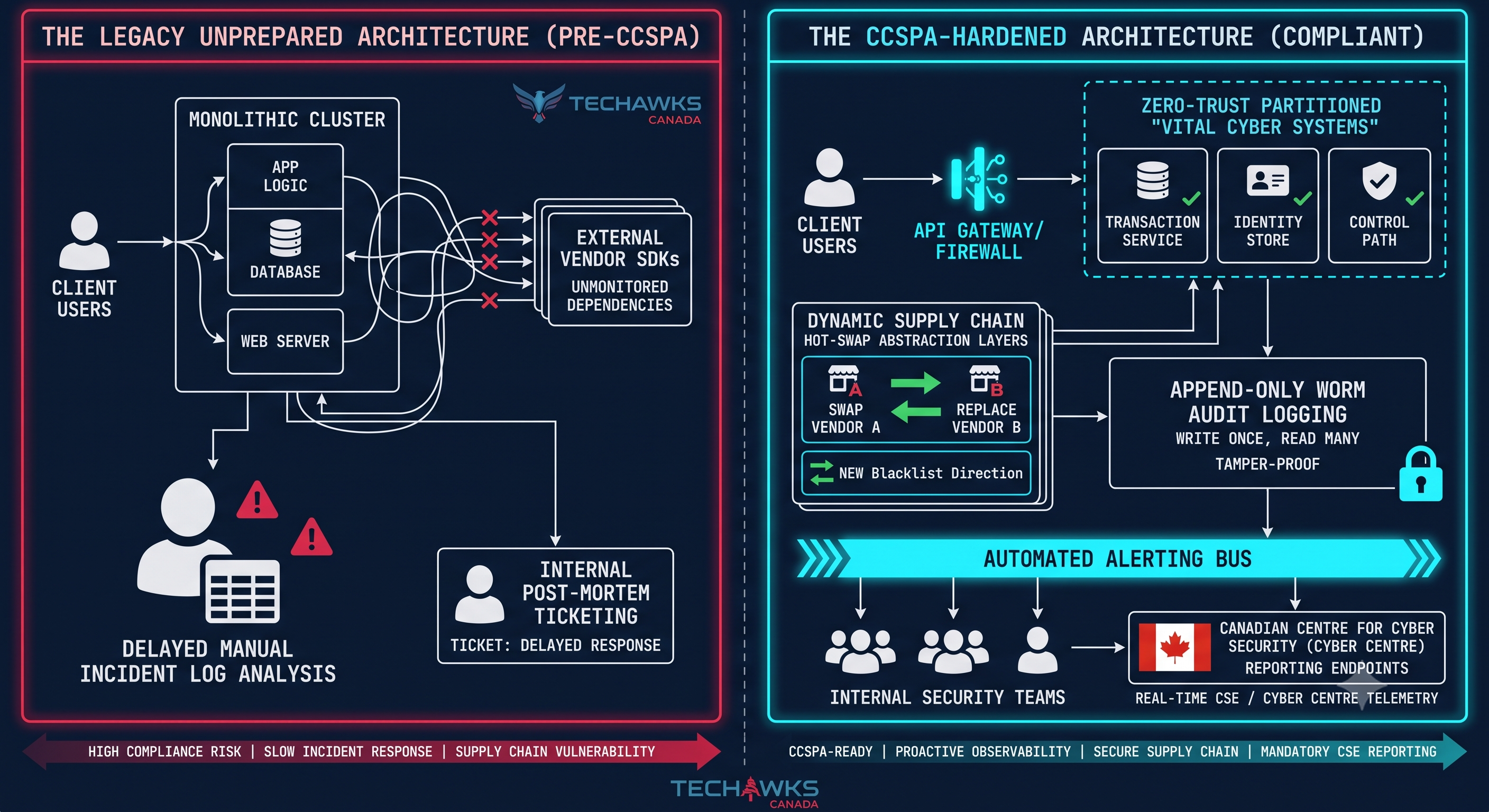 0 Comments 0 Shares 384 Views 0 Reviews
 -
Enforcing Multi-Region Canadian Data Residency Under Law 25 and PIPEDA
Canadian privacy architecture is shifting rapidly from soft guidelines to strict legal mandates. With Quebec’s Law 25 fully active—mandating strict Privacy Impact Assessments (PIAs) prior to any cross-border data transfer—and federal standards demanding granular data sovereignty, simply clicking "US-East-1" out of deployment habit creates substantial compliance liabilities.
For Canadian engineering teams building across Montreal, Toronto, and Vancouver, "data residency" is not just about keeping compute local. It requires preventing silent cross-border leakage across database read replicas, distributed object storage, and egress observability pipelines.
Here is an infrastructure tutorial for enforcing Canadian data boundary controls on AWS using AWS Organizations Service Control Policies (SCPs) and Terraform.
1. Enforce Hard Geographic Boundary Guardrails (SCP)
Prevent IAM principals from spinning up resources outside Canadian sovereign zones (ca-central-1 in Montreal and ca-west-1 in Calgary). Attach this policy to your root organizational unit:
JSON
{
"Version": "2012-10-17",
"Statement": [
{
"Sid": "DenyNonCanadianRegions",
"Effect": "Deny",
"NotAction": [
"iam:*",
"route53:*",
"cloudfront:*",
"wafv2:*"
],
"Resource": "*",
"Condition": {
"StringNotEquals": {
"aws:RequestedRegion": [
"ca-central-1",
"ca-west-1"
]
}
}
}
]
}
(Global control-plane services like IAM and Route 53 are excluded to prevent infrastructure lockout.)
2. Isolate Inter-Region Replication strictly inside Canadian Borders
If you replicate RDS instances or S3 objects for disaster recovery, ensure read-replicas or replication pairs point exclusively between ca-central-1 and ca-west-1.
In Terraform:
Terraform
resource "aws_s3_bucket_replication_configuration" "sovereign_replication" {
role = aws_iam_role.replication.arn
bucket = aws_s3_bucket.primary_central.id
rule {
id = "SovereignDisasterRecovery"
status = "Enabled"
destination {
bucket = aws_s3_bucket.replica_west.arn
storage_class = "STANDARD"
}
}
}
3. Strip and Mask PII Before Aggregating Logs
APM, distributed tracing, and log shippers (e.g., Datadog, OpenTelemetry Collector) frequently route telemetry to multi-tenant clusters outside Canada.
Deploy an OpenTelemetry Collector within your VPC.
Use the transform processor with regex masking to scrub Canadian Social Insurance Numbers (SIN), postal codes, and email addresses from trace attributes before payloads leave your local subnets:
YAML
processors:
transform:
log_statements:
- context: log
statements:
- replace_pattern(body, "\\b\\d{3}-\\d{3}-\\d{3}\\b", "[REDACTED_SIN]")
4. Verify KMS Key Ring Jurisdiction
Ensure Customer Managed Keys (CMKs) are generated and stored exclusively within Canadian Hardware Security Modules (HSMs). Avoid multi-region primary keys hosted under non-Canadian regions.
Establishing hard infrastructure boundaries ensures your Canadian user data remains strictly within domestic jurisdiction by technical enforcement rather than policy hope.
Discussion Question
Are your production clusters leveraging dual-zone Canadian setups (ca-central-1 + ca-west-1) for high availability, or does your disaster recovery pipeline still depend on fallback regions south of the border?
CTA (Join Techawks Canada)
Join the Techawks Canada community to collaborate with local DevOps engineers, solutions architects, and infrastructure leads building scalable, compliant sovereign systems.Enforcing Multi-Region Canadian Data Residency Under Law 25 and PIPEDA Canadian privacy architecture is shifting rapidly from soft guidelines to strict legal mandates. With Quebec’s Law 25 fully active—mandating strict Privacy Impact Assessments (PIAs) prior to any cross-border data transfer—and federal standards demanding granular data sovereignty, simply clicking "US-East-1" out of deployment habit creates substantial compliance liabilities. For Canadian engineering teams building across Montreal, Toronto, and Vancouver, "data residency" is not just about keeping compute local. It requires preventing silent cross-border leakage across database read replicas, distributed object storage, and egress observability pipelines. Here is an infrastructure tutorial for enforcing Canadian data boundary controls on AWS using AWS Organizations Service Control Policies (SCPs) and Terraform. 1. Enforce Hard Geographic Boundary Guardrails (SCP) Prevent IAM principals from spinning up resources outside Canadian sovereign zones (ca-central-1 in Montreal and ca-west-1 in Calgary). Attach this policy to your root organizational unit: JSON { "Version": "2012-10-17", "Statement": [ { "Sid": "DenyNonCanadianRegions", "Effect": "Deny", "NotAction": [ "iam:*", "route53:*", "cloudfront:*", "wafv2:*" ], "Resource": "*", "Condition": { "StringNotEquals": { "aws:RequestedRegion": [ "ca-central-1", "ca-west-1" ] } } } ] } (Global control-plane services like IAM and Route 53 are excluded to prevent infrastructure lockout.) 2. Isolate Inter-Region Replication strictly inside Canadian Borders If you replicate RDS instances or S3 objects for disaster recovery, ensure read-replicas or replication pairs point exclusively between ca-central-1 and ca-west-1. In Terraform: Terraform resource "aws_s3_bucket_replication_configuration" "sovereign_replication" { role = aws_iam_role.replication.arn bucket = aws_s3_bucket.primary_central.id rule { id = "SovereignDisasterRecovery" status = "Enabled" destination { bucket = aws_s3_bucket.replica_west.arn storage_class = "STANDARD" } } } 3. Strip and Mask PII Before Aggregating Logs APM, distributed tracing, and log shippers (e.g., Datadog, OpenTelemetry Collector) frequently route telemetry to multi-tenant clusters outside Canada. Deploy an OpenTelemetry Collector within your VPC. Use the transform processor with regex masking to scrub Canadian Social Insurance Numbers (SIN), postal codes, and email addresses from trace attributes before payloads leave your local subnets: YAML processors: transform: log_statements: - context: log statements: - replace_pattern(body, "\\b\\d{3}-\\d{3}-\\d{3}\\b", "[REDACTED_SIN]") 4. Verify KMS Key Ring Jurisdiction Ensure Customer Managed Keys (CMKs) are generated and stored exclusively within Canadian Hardware Security Modules (HSMs). Avoid multi-region primary keys hosted under non-Canadian regions. Establishing hard infrastructure boundaries ensures your Canadian user data remains strictly within domestic jurisdiction by technical enforcement rather than policy hope. Discussion Question Are your production clusters leveraging dual-zone Canadian setups (ca-central-1 + ca-west-1) for high availability, or does your disaster recovery pipeline still depend on fallback regions south of the border? CTA (Join Techawks Canada) Join the Techawks Canada community to collaborate with local DevOps engineers, solutions architects, and infrastructure leads building scalable, compliant sovereign systems.0 Comments 0 Shares 411 Views 0 Reviews -
The Cross-Border Cloud Illusion: Why Canadian Data Residency Is More Than Just Picking a Local Region
Building systems in Canada means navigating a layered regulatory landscape. Between federal PIPEDA accountability, provincial mandates like Quebec’s Law 25, and strict public/healthcare sector requirements (such as Ontario's PHIPA), data residency isn't a single checkbox at initial cloud setup.
Too often, teams point their primary application database to ca-central-1 (Montreal) or Azure Canada Central (Toronto) and assume their residency obligations are met.
The breakdown happens in the periphery: unvetted telemetry streaming to US-based observability SaaS, unencrypted disaster recovery buckets replicating cross-border, or shared AI API calls sending sensitive customer context outside Canadian borders.
To establish defensible, audit-ready data residency within the Canadian tech landscape, implement the Border-Aware Cloud Framework:
Audit Peripheral Egress (Backups, Telemetry, and Queues): Your primary database might sit in Canada, but where do your database snapshots, dead-letter queues, and debug logs go? Ensure that all S3/blob lifecycle policies, cross-region replication rules, and log sinks strictly specify in-country destinations (e.g., pairing Canada Central with Canada West / Calgary for in-country disaster recovery).
Proxy and Scrub Third-Party SaaS Calls: When integrating third-party monitoring, CRM tools, or AI inference models, client-side identifiers (IP addresses, names, session tokens) often stream directly to US servers. Terminate third-party telemetry at a Canadian API proxy, strip or tokenize personal identifiable information (PII), and enforce client-side masking before payloads leave the perimeter.
Automate Residency Guardrails via Service Control Policies: Prevent engineers from accidentally spinning up non-compliant infrastructure during midnight fixes. Use AWS Service Control Policies (SCPs) or Azure Policies to explicitly deny resource creation in any cloud region outside designated Canadian zones.
Let’s talk architecture in the Great White North: How does your team handle data residency when third-party SaaS vendors or managed services only host their infrastructure in US regions?
What is your playbook for balancing Quebec's Law 25 privacy assessments with rapid cloud deployments? Drop your thoughts below.
Key Takeaways
Audit the periphery: Primary databases are rarely the source of cross-border leaks; secondary backups, log streams, and monitoring tools are.
Keep disaster recovery domestic: Pair Canadian east and west availability hubs (e.g., Montreal and Calgary/Toronto) for failover without triggering foreign legal jurisdiction.
Codify boundaries: Use organization-level cloud policy guardrails to make out-of-region resource provisioning impossible by default.
CTA
Navigating Canadian cloud governance, data privacy compliance, and distributed architecture across the Canadian ecosystem? Join Techawks Canada to connect with local cloud engineers, share architectural patterns, and build resilient infrastructure together. Link in the bio/comments!The Cross-Border Cloud Illusion: Why Canadian Data Residency Is More Than Just Picking a Local Region Building systems in Canada means navigating a layered regulatory landscape. Between federal PIPEDA accountability, provincial mandates like Quebec’s Law 25, and strict public/healthcare sector requirements (such as Ontario's PHIPA), data residency isn't a single checkbox at initial cloud setup. Too often, teams point their primary application database to ca-central-1 (Montreal) or Azure Canada Central (Toronto) and assume their residency obligations are met. The breakdown happens in the periphery: unvetted telemetry streaming to US-based observability SaaS, unencrypted disaster recovery buckets replicating cross-border, or shared AI API calls sending sensitive customer context outside Canadian borders. To establish defensible, audit-ready data residency within the Canadian tech landscape, implement the Border-Aware Cloud Framework: Audit Peripheral Egress (Backups, Telemetry, and Queues): Your primary database might sit in Canada, but where do your database snapshots, dead-letter queues, and debug logs go? Ensure that all S3/blob lifecycle policies, cross-region replication rules, and log sinks strictly specify in-country destinations (e.g., pairing Canada Central with Canada West / Calgary for in-country disaster recovery). Proxy and Scrub Third-Party SaaS Calls: When integrating third-party monitoring, CRM tools, or AI inference models, client-side identifiers (IP addresses, names, session tokens) often stream directly to US servers. Terminate third-party telemetry at a Canadian API proxy, strip or tokenize personal identifiable information (PII), and enforce client-side masking before payloads leave the perimeter. Automate Residency Guardrails via Service Control Policies: Prevent engineers from accidentally spinning up non-compliant infrastructure during midnight fixes. Use AWS Service Control Policies (SCPs) or Azure Policies to explicitly deny resource creation in any cloud region outside designated Canadian zones. Let’s talk architecture in the Great White North: How does your team handle data residency when third-party SaaS vendors or managed services only host their infrastructure in US regions? What is your playbook for balancing Quebec's Law 25 privacy assessments with rapid cloud deployments? Drop your thoughts below. Key Takeaways Audit the periphery: Primary databases are rarely the source of cross-border leaks; secondary backups, log streams, and monitoring tools are. Keep disaster recovery domestic: Pair Canadian east and west availability hubs (e.g., Montreal and Calgary/Toronto) for failover without triggering foreign legal jurisdiction. Codify boundaries: Use organization-level cloud policy guardrails to make out-of-region resource provisioning impossible by default. CTA Navigating Canadian cloud governance, data privacy compliance, and distributed architecture across the Canadian ecosystem? Join Techawks Canada to connect with local cloud engineers, share architectural patterns, and build resilient infrastructure together. Link in the bio/comments!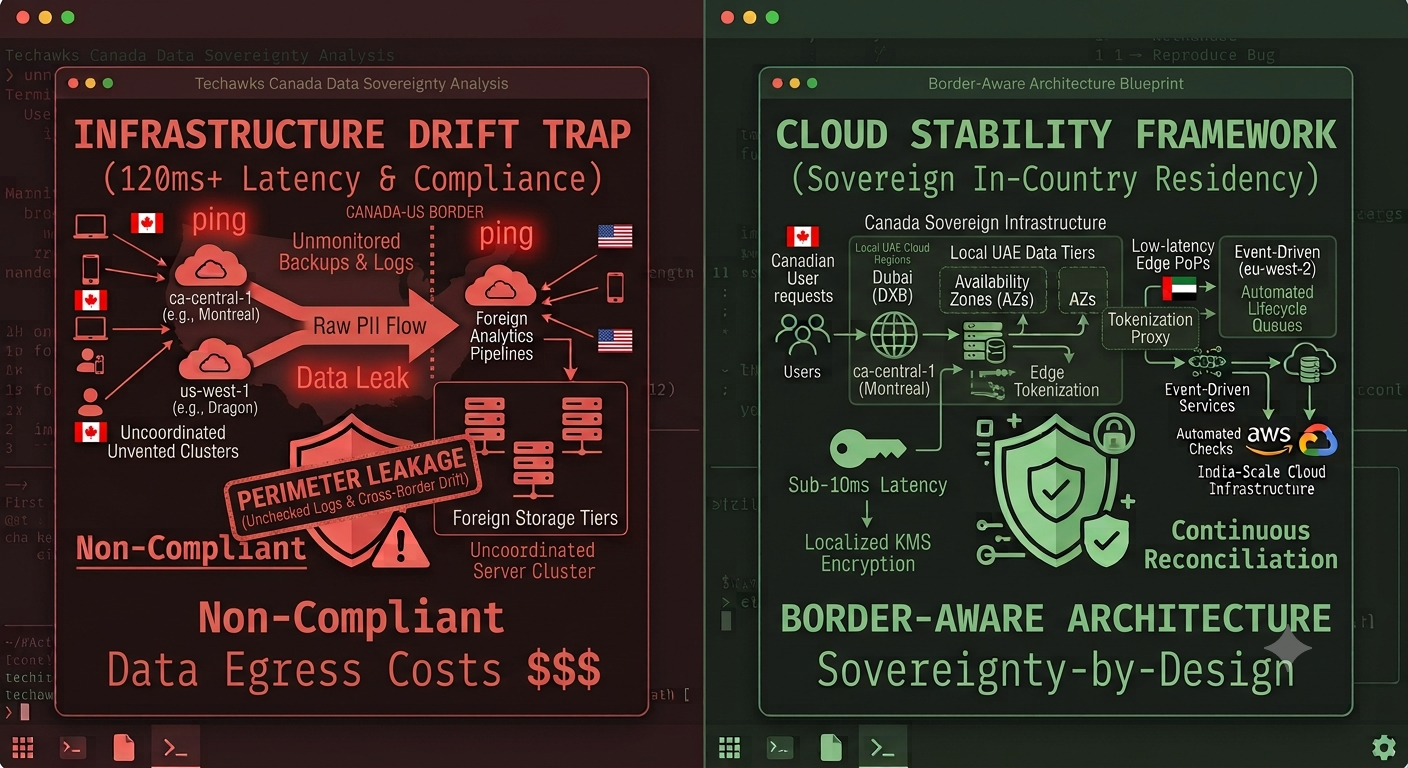 0 Comments 0 Shares 235 Views 0 Reviews
More Stories