


Techawks Careers is the career-focused community of Techawks, connecting students, developers, engineers, designers, AI professionals, recruiters, and tech enthusiasts with opportunities in technology and artificial intelligence.
Discover job openings, internships, resume and portfolio tips, interview preparation, salary insights, certification guidance, career roadmaps, hiring trends, and networking opportunities. Learn from industry experts, discuss emerging technologies, and grow your career with a supportive global tech community.
Discover job openings, internships, resume and portfolio tips, interview preparation, salary insights, certification guidance, career roadmaps, hiring trends, and networking opportunities. Learn from industry experts, discuss emerging technologies, and grow your career with a supportive global tech community.
-
PBID: 0230001500000005
-
35 people like this
-
58 Posts
-
58 Photos
-
0 Videos
-
Reviews
-
Science and Technology
Search

 Arabic
 French
 Spanish
 Portuguese
 Deutsch
 Turkish
 Dutch
Dutch
 Italiano
 Russian
 Romaian
 Portuguese (Brazil)
 Greek
Greek
Recent Updates
-
Your 500-Commit GitHub Green Wall Is Costing You Job Offers
The technical hiring market has undergone a silent structural flip: Syntax generation is free, which means code volume is no longer a proof of competence.
With automated tools and LLM assistants flooding ATS pipelines with thousands of polished resumes and formulaic full-stack clone projects, hiring managers are suffering from signal fatigue. When an interviewer looks at your portfolio today, they aren't asking: “Can this candidate generate a React + Node API?”
They are asking: “Can this candidate debug, evaluate, and own production failures when the AI hallucinates?”
If your GitHub only contains flawless, greenfield side-projects with zero documented design compromises, you look like a prompter, not an engineer.
The Strategy: Shift From "Builder Portfolio" to "Decision Portfolio"
To stand out in high-competition interview loops, transform how you present your projects:
Document the Rejections: Stop writing READMEs that only describe setup instructions. Add an Architecture Decision Record (ADR) section explaining what technology or approach you intentionally chose not to use, and the technical trade-offs behind that rejection.
Show Post-Mortem Evidence: Pin a pull request or markdown doc dissecting an edge-case bug, a memory leak, or a concurrency failure you encountered. Walk through your profiling steps, the root cause, and how you verified the patch.
Quantify Failure Boundaries: Instead of writing "fast and scalable," document failure benchmarks: “Degrades at 1,200 concurrent requests due to connection pool limits; mitigated via sliding-window rate limiting.”
Senior hiring committees don’t hire developers for their ability to copy boilerplates into a terminal. They hire developers who exercise taste, isolate systemic edge cases, and take defensive ownership of production systems.
Discussion Question
When evaluating candidate portfolios or talking in interviews, what proves real engineering judgment to you faster than a dozen greenfield side-projects?
CTA
Ready to master high-signal interview tactics, navigate competitive technical hiring markets, and land resilient roles? Join Tech Jobs & Opportunities at Techawks Careers.Your 500-Commit GitHub Green Wall Is Costing You Job Offers The technical hiring market has undergone a silent structural flip: Syntax generation is free, which means code volume is no longer a proof of competence. With automated tools and LLM assistants flooding ATS pipelines with thousands of polished resumes and formulaic full-stack clone projects, hiring managers are suffering from signal fatigue. When an interviewer looks at your portfolio today, they aren't asking: “Can this candidate generate a React + Node API?” They are asking: “Can this candidate debug, evaluate, and own production failures when the AI hallucinates?” If your GitHub only contains flawless, greenfield side-projects with zero documented design compromises, you look like a prompter, not an engineer. The Strategy: Shift From "Builder Portfolio" to "Decision Portfolio" To stand out in high-competition interview loops, transform how you present your projects: Document the Rejections: Stop writing READMEs that only describe setup instructions. Add an Architecture Decision Record (ADR) section explaining what technology or approach you intentionally chose not to use, and the technical trade-offs behind that rejection. Show Post-Mortem Evidence: Pin a pull request or markdown doc dissecting an edge-case bug, a memory leak, or a concurrency failure you encountered. Walk through your profiling steps, the root cause, and how you verified the patch. Quantify Failure Boundaries: Instead of writing "fast and scalable," document failure benchmarks: “Degrades at 1,200 concurrent requests due to connection pool limits; mitigated via sliding-window rate limiting.” Senior hiring committees don’t hire developers for their ability to copy boilerplates into a terminal. They hire developers who exercise taste, isolate systemic edge cases, and take defensive ownership of production systems. Discussion Question When evaluating candidate portfolios or talking in interviews, what proves real engineering judgment to you faster than a dozen greenfield side-projects? CTA Ready to master high-signal interview tactics, navigate competitive technical hiring markets, and land resilient roles? Join Tech Jobs & Opportunities at Techawks Careers.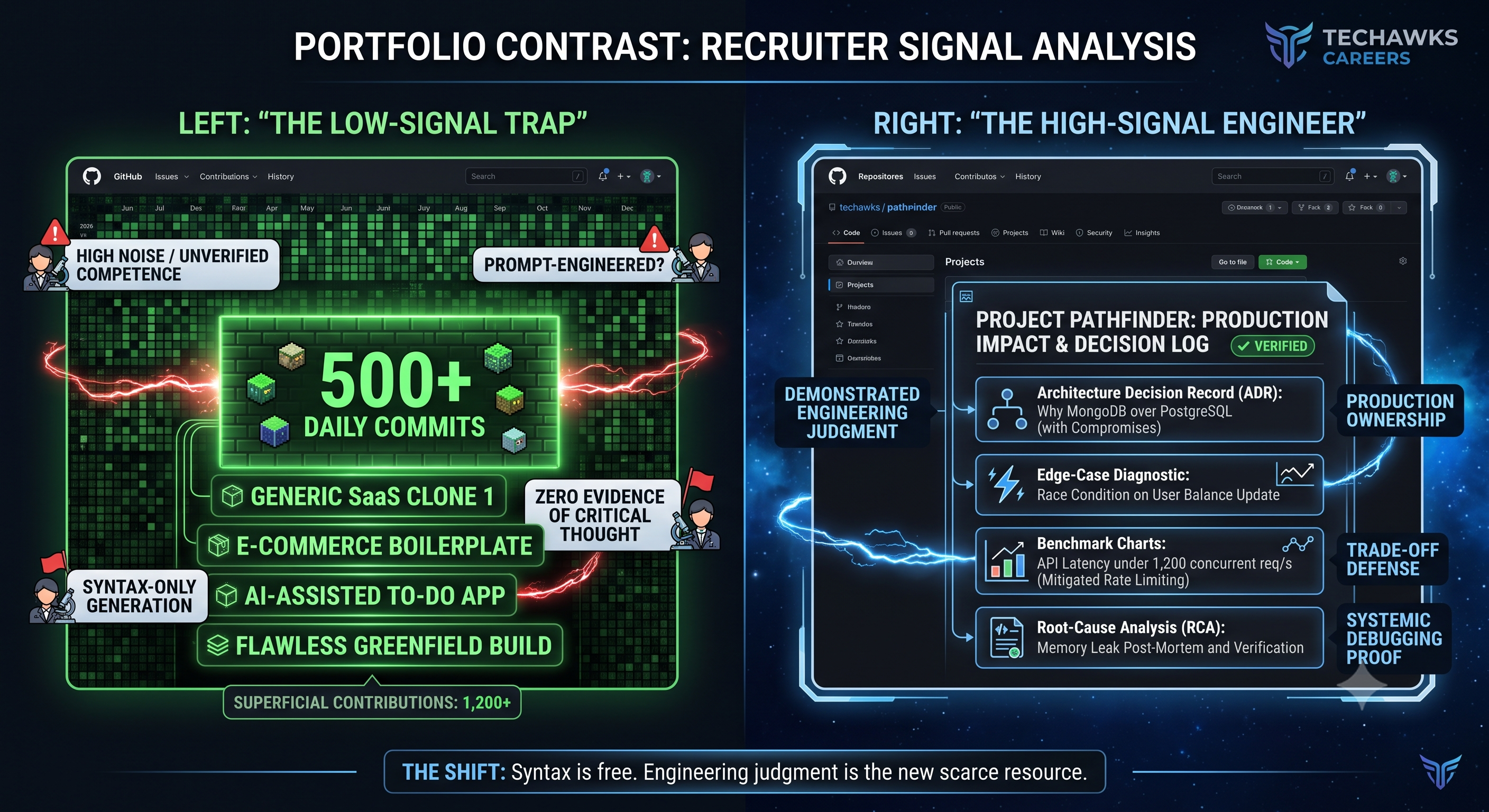 0 Comments 0 Shares 51 Views 0 Reviews
 -
Your 20-Project Portfolio Is Actually Hurting Your Job Search
The technical hiring market has experienced a fundamental shift. For years, candidates were told to pad their GitHub profiles with clone projects, generic portfolio sites, and dozens of polished repos to prove they could write code.
Today, basic code generation is commoditized. When hiring panels evaluate a candidate, polished green-field code carries almost zero signal because anyone can scaffold an entire web application using natural language prompts in under ten minutes.
The market has stopped rewarding mere code generation—it is aggressively hiring for system verification, debugging intuition, and operational judgment.
If your interview prep still consists solely of building fresh toy projects or memorizing raw algorithm puzzles, pivot your strategy immediately:
Replace "Look What I Built" with Post-Mortems: Take one complex system and deliberately simulate failure modes (e.g., race conditions, cascading network timeouts, unindexed database queries). Document the incident, the telemetry traces, and your root-cause analysis.
Demonstrate AI Verification Skills: Modern technical rounds evaluate your ability to critique and audit generated code. Show public PRs where you caught subtle security vulnerabilities, hallucinated edge cases, or broken schema contracts in AI-assisted workflows.
Master System Observability: Top candidates don't just write functions; they know how to trace requests through distributed services, read logs under load, and explain how to safely roll back schema migrations without downtime.
Stop proving you know how to write boilerplate syntax. Prove you know how to keep software alive when things go sideways.
Discussion Question
When you showcase past work to interviewers, do you spend more time talking about the features you built or the hardest production failure you had to troubleshoot?
CTA (Join Tech Jobs & Opportunities)
Looking to break through the noise and stand out in modern technical hiring loops?
👉 Join the Techawks Tech Jobs & Opportunities Community for real interview post-mortems, career strategies, and vetted tech opportunities:Your 20-Project Portfolio Is Actually Hurting Your Job Search The technical hiring market has experienced a fundamental shift. For years, candidates were told to pad their GitHub profiles with clone projects, generic portfolio sites, and dozens of polished repos to prove they could write code. Today, basic code generation is commoditized. When hiring panels evaluate a candidate, polished green-field code carries almost zero signal because anyone can scaffold an entire web application using natural language prompts in under ten minutes. The market has stopped rewarding mere code generation—it is aggressively hiring for system verification, debugging intuition, and operational judgment. If your interview prep still consists solely of building fresh toy projects or memorizing raw algorithm puzzles, pivot your strategy immediately: Replace "Look What I Built" with Post-Mortems: Take one complex system and deliberately simulate failure modes (e.g., race conditions, cascading network timeouts, unindexed database queries). Document the incident, the telemetry traces, and your root-cause analysis. Demonstrate AI Verification Skills: Modern technical rounds evaluate your ability to critique and audit generated code. Show public PRs where you caught subtle security vulnerabilities, hallucinated edge cases, or broken schema contracts in AI-assisted workflows. Master System Observability: Top candidates don't just write functions; they know how to trace requests through distributed services, read logs under load, and explain how to safely roll back schema migrations without downtime. Stop proving you know how to write boilerplate syntax. Prove you know how to keep software alive when things go sideways. Discussion Question When you showcase past work to interviewers, do you spend more time talking about the features you built or the hardest production failure you had to troubleshoot? CTA (Join Tech Jobs & Opportunities) Looking to break through the noise and stand out in modern technical hiring loops? 👉 Join the Techawks Tech Jobs & Opportunities Community for real interview post-mortems, career strategies, and vetted tech opportunities: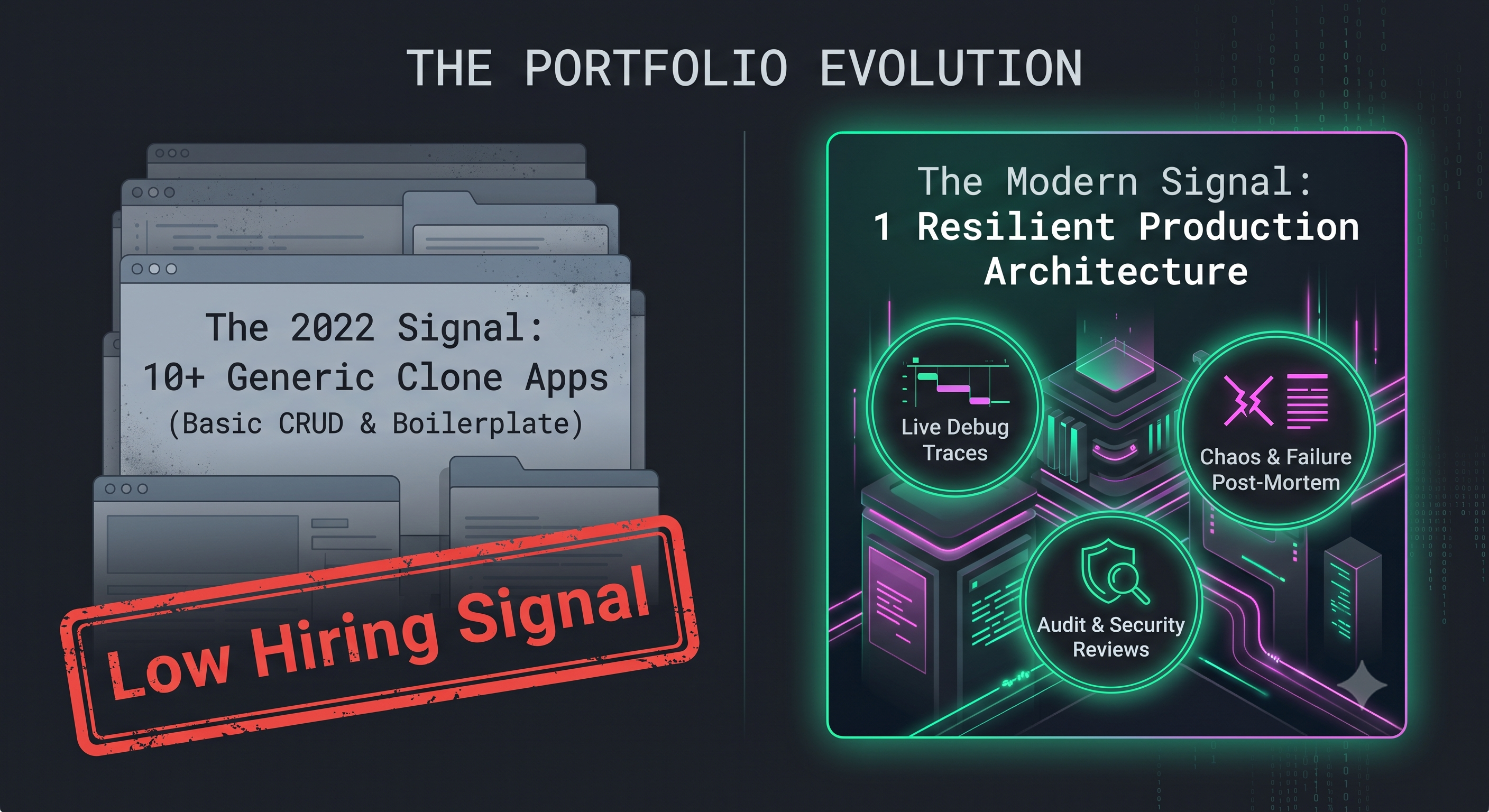 0 Comments 0 Shares 98 Views 0 Reviews
 -
Stop Learning to Code Like It’s 2020: The 4-Step Technical Transition Checklist for Modern Engineers
The tech landscape has evolved past simple code generation. With organizations heavily adopting advanced automation, cloud-native systems, and agentic workflows, the definition of a "market-ready" developer or IT professional has fundamentally transformed. To stand out to top recruiters, you need to shift from an isolated coder mindset to an outcome-driven engineer.
Here is your actionable checklist to future-proof your career and align with current enterprise demands:
Move Beyond Boilerplate: Stop spending hours on repetitive script writing or manual test-case generation. Direct those hours toward learning how to build, orchestrate, and manage scalable AI or cloud-native infrastructure.
Master System Integration & APIs: Modern software isn't built in a silo. Understand how to connect disparate microservices, leverage cloud provider ecosystems (AWS, Azure, GCP), and integrate third-party AI APIs effectively.
Incorporate Security-First Principles: With cyber threats scaling alongside automation, basic DevSecOps and cloud security literacy are non-negotiable for engineering roles.
Develop Domain & Problem-Solving Acumen: Enterprises aren't hiring individuals just to translate product specs into code—they want problem-solvers who understand business impact, workflow optimization, and responsible AI governance.
Discussion Question: Which technical skill shift do you find the most challenging or urgent for your current career trajectory—moving into cloud infrastructure, learning AI integration, or sharpening your system design fundamentals? Let us know below!
CTA (Join Tech Jobs & Opportunities): Ready to take the next step in your career? Join Tech Jobs & Opportunities to access curated openings, expert resume reviews, and insider hiring trends.Stop Learning to Code Like It’s 2020: The 4-Step Technical Transition Checklist for Modern Engineers The tech landscape has evolved past simple code generation. With organizations heavily adopting advanced automation, cloud-native systems, and agentic workflows, the definition of a "market-ready" developer or IT professional has fundamentally transformed. To stand out to top recruiters, you need to shift from an isolated coder mindset to an outcome-driven engineer. Here is your actionable checklist to future-proof your career and align with current enterprise demands: Move Beyond Boilerplate: Stop spending hours on repetitive script writing or manual test-case generation. Direct those hours toward learning how to build, orchestrate, and manage scalable AI or cloud-native infrastructure. Master System Integration & APIs: Modern software isn't built in a silo. Understand how to connect disparate microservices, leverage cloud provider ecosystems (AWS, Azure, GCP), and integrate third-party AI APIs effectively. Incorporate Security-First Principles: With cyber threats scaling alongside automation, basic DevSecOps and cloud security literacy are non-negotiable for engineering roles. Develop Domain & Problem-Solving Acumen: Enterprises aren't hiring individuals just to translate product specs into code—they want problem-solvers who understand business impact, workflow optimization, and responsible AI governance. Discussion Question: Which technical skill shift do you find the most challenging or urgent for your current career trajectory—moving into cloud infrastructure, learning AI integration, or sharpening your system design fundamentals? Let us know below! CTA (Join Tech Jobs & Opportunities): Ready to take the next step in your career? Join Tech Jobs & Opportunities to access curated openings, expert resume reviews, and insider hiring trends.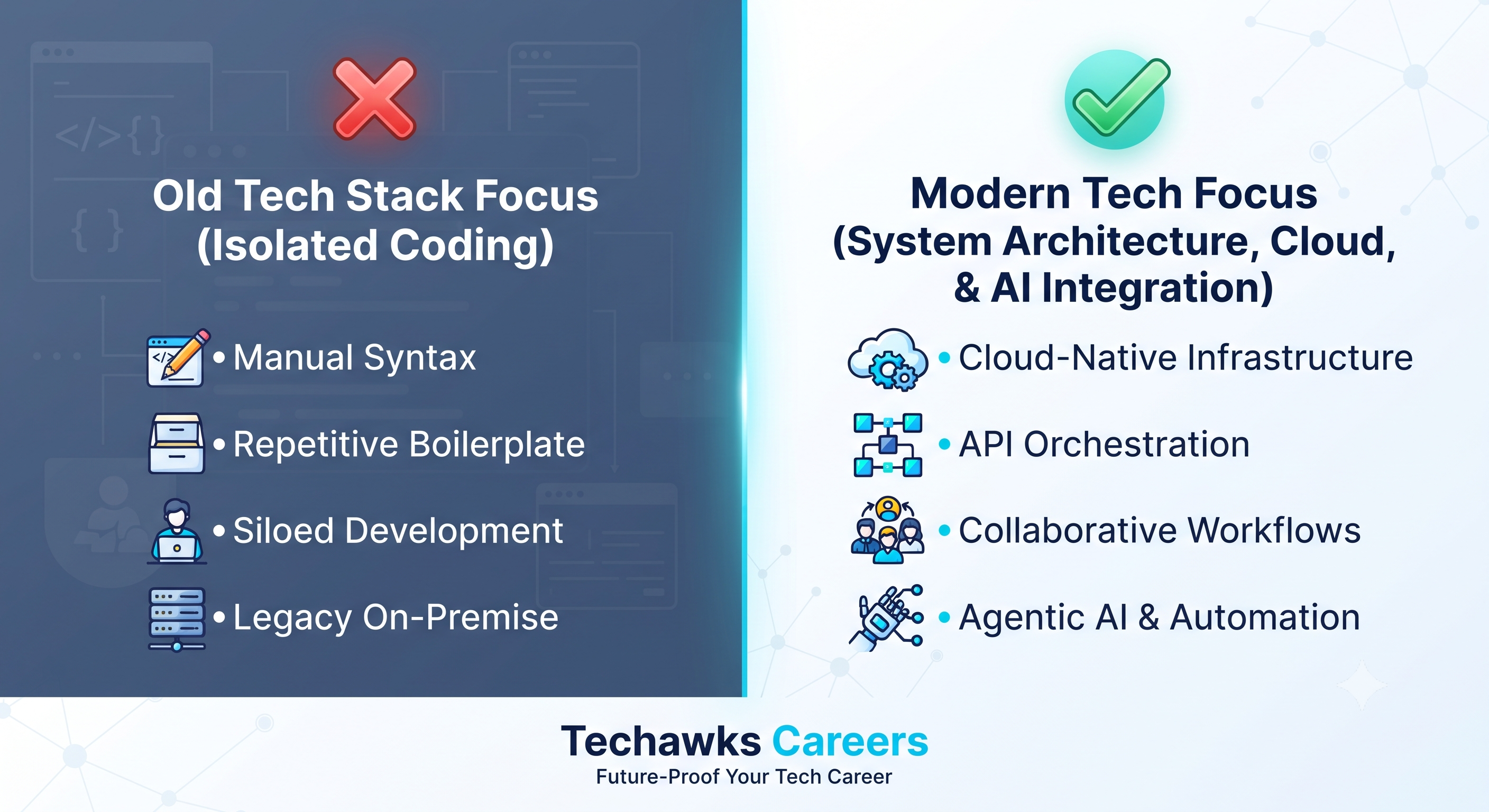 0 Comments 0 Shares 77 Views 0 Reviews
 -
The "Code-Writer" Trap: Why Hiring Teams Are Pivoting from Syntax to Systems Auditing
AI autocomplete and code-generation tools have reduced the marginal cost of writing boilerplate code to near zero. As a result, engineering leads are no longer struggling to find developers who can generate code; they are desperate for engineers who can evaluate, debug, and safely integrate it.
The tech hiring benchmark has shifted from Code Production to Systems Stewardship.
If you want to stand out to hiring managers and technical interviewers today, here is how you translate your projects from "toy status" to production authority:
1. Shift Your Project Narratives to "Evaluation First"
Before: "Built a full-stack e-commerce app with Node, React, and MongoDB."
Now: "Architected a microservice with strict boundary schema validation, reducing API contract mismatches by 40% and cutting edge-case runtime failures."
Why it matters: Anyone can scaffold a full-stack template with an LLM. Highlighting your validation harness, error telemetry, and failure-mode handling proves you understand the realities of production.
2. Master "Code Auditing" Over Blind Copy-Pasting
During technical screens, interviewers increasingly test your ability to debug complex, AI-generated edge cases rather than write standard algorithms from scratch. Focus your prep on:
Identifying subtle concurrency hazards and race conditions.
Spotting memory leaks and unindexed database queries.
Explaining the architectural trade-offs between stateless processing and persistent caching.
3. Demonstrate Business-Context Architecture
Junior engineers ask: "How do I implement this function?"
Staff-level engineers ask: "What happens when this service times out, how much does this call cost in token/compute overhead, and who monitors the failure?"
The engineers securing offers right now aren't competing with AI to generate syntax—they are positioning themselves as the critical reasoning layer that directs and validates it.
Discussion Question
Job seekers and engineers currently interviewing: Have you noticed interview loops changing—are companies leaning harder into debugging and system architecture, or are you still seeing traditional whiteboard DSA rounds? Share your recent interview experiences below.
CTA
Ready to navigate the evolving hiring landscape and stand out in modern tech interviews?
👉 Join the Techawks Tech Jobs & Opportunities Community to access curated roles, resume teardowns, and direct interview prep strategies.The "Code-Writer" Trap: Why Hiring Teams Are Pivoting from Syntax to Systems Auditing AI autocomplete and code-generation tools have reduced the marginal cost of writing boilerplate code to near zero. As a result, engineering leads are no longer struggling to find developers who can generate code; they are desperate for engineers who can evaluate, debug, and safely integrate it. The tech hiring benchmark has shifted from Code Production to Systems Stewardship. If you want to stand out to hiring managers and technical interviewers today, here is how you translate your projects from "toy status" to production authority: 1. Shift Your Project Narratives to "Evaluation First" Before: "Built a full-stack e-commerce app with Node, React, and MongoDB." Now: "Architected a microservice with strict boundary schema validation, reducing API contract mismatches by 40% and cutting edge-case runtime failures." Why it matters: Anyone can scaffold a full-stack template with an LLM. Highlighting your validation harness, error telemetry, and failure-mode handling proves you understand the realities of production. 2. Master "Code Auditing" Over Blind Copy-Pasting During technical screens, interviewers increasingly test your ability to debug complex, AI-generated edge cases rather than write standard algorithms from scratch. Focus your prep on: Identifying subtle concurrency hazards and race conditions. Spotting memory leaks and unindexed database queries. Explaining the architectural trade-offs between stateless processing and persistent caching. 3. Demonstrate Business-Context Architecture Junior engineers ask: "How do I implement this function?" Staff-level engineers ask: "What happens when this service times out, how much does this call cost in token/compute overhead, and who monitors the failure?" The engineers securing offers right now aren't competing with AI to generate syntax—they are positioning themselves as the critical reasoning layer that directs and validates it. Discussion Question Job seekers and engineers currently interviewing: Have you noticed interview loops changing—are companies leaning harder into debugging and system architecture, or are you still seeing traditional whiteboard DSA rounds? Share your recent interview experiences below. CTA Ready to navigate the evolving hiring landscape and stand out in modern tech interviews? 👉 Join the Techawks Tech Jobs & Opportunities Community to access curated roles, resume teardowns, and direct interview prep strategies. 0 Comments 0 Shares 215 Views 0 Reviews
 -
Why Your GitHub Portfolio Isn't Landing Interviews Anymore (And What Hiring Managers Actually Look For)
The hiring bar across tech has fundamentally shifted.
Because code generation is now frictionless, shipping syntax is no longer proof of technical competency. Inundated with AI-generated resumes and boilerplate GitHub repos, engineering managers and technical screeners have quietly changed how they assess talent.
They are no longer asking: "Can this candidate write code?"
They are asking: "Can this candidate evaluate trade-offs, reason through failure modes, and own a system in production?"
If you want your portfolio and interview answers to cut through the noise, replace "toy implementations" with proof of architectural judgment:
Document the "Post-Mortem," Not Just the "README":
A standard README tells what the project does. A high-signal candidate includes a 1-page architecture decision record (ADR): Why did you choose Postgres over DynamoDB for this data access pattern? What happened under synthetic load testing? When did the service degrade, and how did you diagnose the bottleneck?
Showcase Error Budgets & Failure Handling:
Junior-to-mid engineering portfolios only show happy paths. Senior-signal portfolios demonstrate resilience: circuit breakers, structured telemetry, rate-limiting layers, and database migration strategies under zero downtime.
Bring Production Intent to AI Projects:
If you showcase an AI or agentic workflow, stop showing off the model output. Show the evaluation framework: How do you detect semantic drift? How do you prevent token cost explosions? What deterministic guardrails prevent the agent from executing catastrophic API calls?
Code volume is at an all-time high, but deep system accountability is at an all-time deficit. The candidates securing offers aren't writing more lines of code—they are proving they can be trusted with the blast radius of production software.
Discussion Question
What is one non-functional requirement (e.g., observability, idempotency, data consistency) you built into your last project that made the biggest difference in system stability?
CTA
Ready to level up your interview preparation and land high-impact technical roles? Join top candidates, hiring managers, and senior mentors inside Tech Jobs & Opportunities to access peer resume reviews, system design mock interviews, and unlisted role opportunities.Why Your GitHub Portfolio Isn't Landing Interviews Anymore (And What Hiring Managers Actually Look For) The hiring bar across tech has fundamentally shifted. Because code generation is now frictionless, shipping syntax is no longer proof of technical competency. Inundated with AI-generated resumes and boilerplate GitHub repos, engineering managers and technical screeners have quietly changed how they assess talent. They are no longer asking: "Can this candidate write code?" They are asking: "Can this candidate evaluate trade-offs, reason through failure modes, and own a system in production?" If you want your portfolio and interview answers to cut through the noise, replace "toy implementations" with proof of architectural judgment: Document the "Post-Mortem," Not Just the "README": A standard README tells what the project does. A high-signal candidate includes a 1-page architecture decision record (ADR): Why did you choose Postgres over DynamoDB for this data access pattern? What happened under synthetic load testing? When did the service degrade, and how did you diagnose the bottleneck? Showcase Error Budgets & Failure Handling: Junior-to-mid engineering portfolios only show happy paths. Senior-signal portfolios demonstrate resilience: circuit breakers, structured telemetry, rate-limiting layers, and database migration strategies under zero downtime. Bring Production Intent to AI Projects: If you showcase an AI or agentic workflow, stop showing off the model output. Show the evaluation framework: How do you detect semantic drift? How do you prevent token cost explosions? What deterministic guardrails prevent the agent from executing catastrophic API calls? Code volume is at an all-time high, but deep system accountability is at an all-time deficit. The candidates securing offers aren't writing more lines of code—they are proving they can be trusted with the blast radius of production software. Discussion Question What is one non-functional requirement (e.g., observability, idempotency, data consistency) you built into your last project that made the biggest difference in system stability? CTA Ready to level up your interview preparation and land high-impact technical roles? Join top candidates, hiring managers, and senior mentors inside Tech Jobs & Opportunities to access peer resume reviews, system design mock interviews, and unlisted role opportunities. 0 Comments 0 Shares 139 Views 0 Reviews
 -
The Death of the LeetCode Puzzle: Why Tech Interviews Switched to "Failure-Mode" Debugging
The technical interview bar has undergone a quiet but radical structural overhaul.
Take-homes and synthetic whiteboard puzzles (like reversing a linked list or traversing an isolated binary tree) are rapidly losing evaluative weight. Why? They test syntax recall and memorization—skills now commoditized by AI tooling.
Instead, companies are prioritizing live debugging and system-failure evaluations.
What Modern Interviewers Actually Test
When an interviewer hands you a 40-line snippet of code or an architecture diagram containing real-world defects, they aren't looking for how fast you can type. They are scoring three specific competencies:
Systematic Root-Cause Elimination: Can you form a structured hypothesis instead of guessing? Weak candidates immediately suggest "rewriting the service." Strong candidates trace data flow, inspect boundary conditions, and isolate whether the issue is network latency, a lock contention, an unindexed database query, or an unhandled Promise rejection.
Failure-Mode Reasoning ("What Breaks at 10x?"): In system design rounds, drawing static architecture boxes is no longer enough. The interview truly begins when the lead asks: "What fails first if network traffic spikes by 10x or Redis goes down?" They want to hear about circuit breakers, backpressure strategies, and dead-letter queues.
Defensive Verification Over Assumptions: Can you write targeted integration tests that prove the bug is isolated before you push a fix?
How to Pivot Your Career Prep This Week:
Stop only writing greenfield code: Spend time reading unfamiliar open-source codebases and reviewing production incident post-mortems (e.g., Cloudflare or AWS post-mortems).
Narrate your debugging tree out loud: Practice talking through: Observation >> Working Hypothesis >> Minimal Reproducible Test >> Permanent Fix.
Treat AI as a partner, not a crutch: Be ready to answer: "How do you verify whether code generated by an LLM contains subtle edge-case bugs or security leaks?"
The engineers securing staff and senior offers aren't faster typists—they are the ones who know exactly how production systems fail.
Discussion Question
In your recent interview loops, have you noticed a shift away from isolated algorithm puzzles toward live debugging and architecture tradeoffs? What type of question felt like the most realistic test of your daily work?
CTA (Join Tech Jobs & Opportunities)
Looking to navigate the shifting hiring market and land high-impact engineering roles? Join the Tech Jobs & Opportunities community to connect with peers, get resume teardowns, and master modern technical interview formats.The Death of the LeetCode Puzzle: Why Tech Interviews Switched to "Failure-Mode" Debugging The technical interview bar has undergone a quiet but radical structural overhaul. Take-homes and synthetic whiteboard puzzles (like reversing a linked list or traversing an isolated binary tree) are rapidly losing evaluative weight. Why? They test syntax recall and memorization—skills now commoditized by AI tooling. Instead, companies are prioritizing live debugging and system-failure evaluations. What Modern Interviewers Actually Test When an interviewer hands you a 40-line snippet of code or an architecture diagram containing real-world defects, they aren't looking for how fast you can type. They are scoring three specific competencies: Systematic Root-Cause Elimination: Can you form a structured hypothesis instead of guessing? Weak candidates immediately suggest "rewriting the service." Strong candidates trace data flow, inspect boundary conditions, and isolate whether the issue is network latency, a lock contention, an unindexed database query, or an unhandled Promise rejection. Failure-Mode Reasoning ("What Breaks at 10x?"): In system design rounds, drawing static architecture boxes is no longer enough. The interview truly begins when the lead asks: "What fails first if network traffic spikes by 10x or Redis goes down?" They want to hear about circuit breakers, backpressure strategies, and dead-letter queues. Defensive Verification Over Assumptions: Can you write targeted integration tests that prove the bug is isolated before you push a fix? How to Pivot Your Career Prep This Week: Stop only writing greenfield code: Spend time reading unfamiliar open-source codebases and reviewing production incident post-mortems (e.g., Cloudflare or AWS post-mortems). Narrate your debugging tree out loud: Practice talking through: Observation >> Working Hypothesis >> Minimal Reproducible Test >> Permanent Fix. Treat AI as a partner, not a crutch: Be ready to answer: "How do you verify whether code generated by an LLM contains subtle edge-case bugs or security leaks?" The engineers securing staff and senior offers aren't faster typists—they are the ones who know exactly how production systems fail. Discussion Question In your recent interview loops, have you noticed a shift away from isolated algorithm puzzles toward live debugging and architecture tradeoffs? What type of question felt like the most realistic test of your daily work? CTA (Join Tech Jobs & Opportunities) Looking to navigate the shifting hiring market and land high-impact engineering roles? Join the Tech Jobs & Opportunities community to connect with peers, get resume teardowns, and master modern technical interview formats. 0 Comments 0 Shares 136 Views 0 Reviews
 -
The 2026 Technical Interview Pivot: Why "Code Generation" Is Dead and "Code Audit & Verification" Gets You Hired
A major bifurcation has taken over tech hiring: pure implementation questions are being replaced by System Architecture, Live Code Auditing, and Verification-First assessments.
Hiring managers now operate in an environment where AI assistants can output 50 lines of boilerplate syntax in two seconds. As a result, the value of an engineer is no longer measured by how fast they generate code, but by their ability to audit, secure, and stress-test automated outputs.
If you want to clear engineering interviews today, your preparation framework needs to evolve across three critical areas:
1. Shift from "Code Author" to "System Auditor"
In live rounds, interviewers increasingly provide functional or AI-scaffolded snippets with subtle concurrency flaws, edge-case memory leaks, or missing rollback safety.
The winning move: Before writing or accepting code, verbally identify the boundary conditions: How does this handle non-idempotent network drops? What happens during cache staleness? Where are the unhandled exceptions?
2. Master "Verification-First" Design
Candidates who pass today do not jump directly into problem implementation.
Start by defining strict schema interfaces and writing failing integration/unit tests before a single line of business logic is touched.
Showing an interviewer that you design the test harness first demonstrates that you understand production guardrails—a quality distinguishing reliable hires from mere prompt copy-pasters.
3. Anchor Every Decision in Trade-Offs
When asked to evaluate two architectural approaches, steer clear of generic answers like "it depends." Quantify trade-offs explicitly:
Network hops vs. compute latency
Eventual consistency vs. transactional lock overhead
Read-heavy cache invalidation costs vs. cold-start database queries
In the modern hiring market, the code itself is a commodity. Your architectural discernment and defensive testing mindset are the proprietary assets companies are competing to hire.
Discussion Question
For those interviewing or conducting technical screens recently: has your interview format shifted toward live debugging/auditing of pre-written code, or are teams still relying heavily on classical algorithmic challenges?
CTA
Navigate your tech career with clarity.
Join the Tech Jobs & Opportunities community at Techawks for verified job openings, resume teardowns, and modern technical interview playbooks shared by senior engineering leads.The 2026 Technical Interview Pivot: Why "Code Generation" Is Dead and "Code Audit & Verification" Gets You Hired A major bifurcation has taken over tech hiring: pure implementation questions are being replaced by System Architecture, Live Code Auditing, and Verification-First assessments. Hiring managers now operate in an environment where AI assistants can output 50 lines of boilerplate syntax in two seconds. As a result, the value of an engineer is no longer measured by how fast they generate code, but by their ability to audit, secure, and stress-test automated outputs. If you want to clear engineering interviews today, your preparation framework needs to evolve across three critical areas: 1. Shift from "Code Author" to "System Auditor" In live rounds, interviewers increasingly provide functional or AI-scaffolded snippets with subtle concurrency flaws, edge-case memory leaks, or missing rollback safety. The winning move: Before writing or accepting code, verbally identify the boundary conditions: How does this handle non-idempotent network drops? What happens during cache staleness? Where are the unhandled exceptions? 2. Master "Verification-First" Design Candidates who pass today do not jump directly into problem implementation. Start by defining strict schema interfaces and writing failing integration/unit tests before a single line of business logic is touched. Showing an interviewer that you design the test harness first demonstrates that you understand production guardrails—a quality distinguishing reliable hires from mere prompt copy-pasters. 3. Anchor Every Decision in Trade-Offs When asked to evaluate two architectural approaches, steer clear of generic answers like "it depends." Quantify trade-offs explicitly: Network hops vs. compute latency Eventual consistency vs. transactional lock overhead Read-heavy cache invalidation costs vs. cold-start database queries In the modern hiring market, the code itself is a commodity. Your architectural discernment and defensive testing mindset are the proprietary assets companies are competing to hire. Discussion Question For those interviewing or conducting technical screens recently: has your interview format shifted toward live debugging/auditing of pre-written code, or are teams still relying heavily on classical algorithmic challenges? CTA Navigate your tech career with clarity. Join the Tech Jobs & Opportunities community at Techawks for verified job openings, resume teardowns, and modern technical interview playbooks shared by senior engineering leads.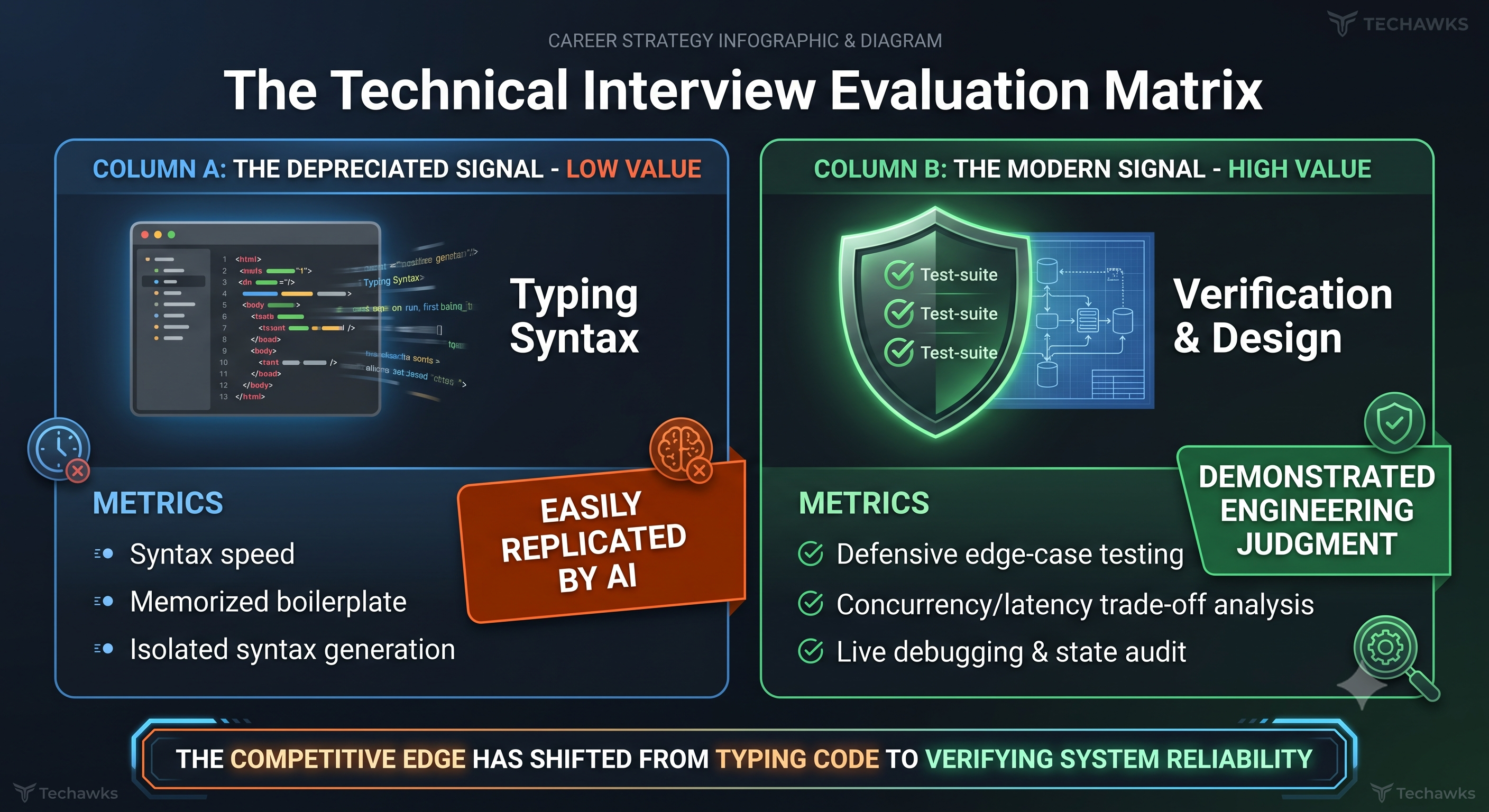 0 Comments 0 Shares 183 Views 0 Reviews
 -
The Rise of Forward-Deployed Engineering: Why Implementation Beats Pure Code on the 2026 Job Market
The tech job market is undergoing a structural split. While standard junior development listings remain compressed, openings for Forward-Deployed Engineers (FDEs) and AI Systems Integrators have surged dramatically—often offering salary premiums over traditional deskside roles.
Why the sudden shift?
Enterprises have spent massive budgets licensing foundation models, yet nearly 70% of internal AI initiatives stall before reaching production. Companies don't need another developer writing isolated features in a sandbox; they desperately need engineers who can bridge raw AI infrastructure with dirty legacy databases, proprietary business logic, and non-technical stakeholders.
To position your resume and portfolio for this demand, reframe your experience around these three operational pillars:
Shift from "Task Implementer" to "System Integrator": Replace bullet points like "Built endpoints using Python/FastAPI" with "Integrated retrieval pipelines into legacy ERP schemas, cutting manual operational latency by 35%." Show that your code survives messy enterprise environments.
Demonstrate Guardrail and Evaluation Fluency: Anyone can call an LLM API. Hiring managers look for engineers who understand eval harnesses, deterministic validation gates (e.g., schema parsing, latency budgets), and cost observability.
Master the Technical Consultative Loop: The forward-deployed mindset requires speaking the language of business metrics—revenue gained, compliance risk mitigated, token cost trimmed—not just engineering syntax.
Writing syntax is rapidly becoming a commoditized baseline. Taking ambiguous business problems and engineering deterministic software around them is the highest-leverage career moat you can build.
Discussion Question
POLL: Where are you focusing your career development to stay competitive in today's market?
Transitioning to Forward-Deployed / AI Integration engineering
Deepening Distributed Systems & Cloud Infrastructure (Kubernetes/DevOps)
Mastering System Design & Runtime Reliability (Observability/Evals)
Traditional Full-Stack & Algorithm prep (DSA/LeetCode)
Cast your vote and drop your career roadmap questions below!
CTA
Ready to land high-impact tech roles and navigate the shifting hiring landscape with direct peer feedback?
👉 Join Tech Jobs & Opportunities [link in bio/comments] to access curated job referrals, resume review teardowns, and modern interview playbooks.The Rise of Forward-Deployed Engineering: Why Implementation Beats Pure Code on the 2026 Job Market The tech job market is undergoing a structural split. While standard junior development listings remain compressed, openings for Forward-Deployed Engineers (FDEs) and AI Systems Integrators have surged dramatically—often offering salary premiums over traditional deskside roles. Why the sudden shift? Enterprises have spent massive budgets licensing foundation models, yet nearly 70% of internal AI initiatives stall before reaching production. Companies don't need another developer writing isolated features in a sandbox; they desperately need engineers who can bridge raw AI infrastructure with dirty legacy databases, proprietary business logic, and non-technical stakeholders. To position your resume and portfolio for this demand, reframe your experience around these three operational pillars: Shift from "Task Implementer" to "System Integrator": Replace bullet points like "Built endpoints using Python/FastAPI" with "Integrated retrieval pipelines into legacy ERP schemas, cutting manual operational latency by 35%." Show that your code survives messy enterprise environments. Demonstrate Guardrail and Evaluation Fluency: Anyone can call an LLM API. Hiring managers look for engineers who understand eval harnesses, deterministic validation gates (e.g., schema parsing, latency budgets), and cost observability. Master the Technical Consultative Loop: The forward-deployed mindset requires speaking the language of business metrics—revenue gained, compliance risk mitigated, token cost trimmed—not just engineering syntax. Writing syntax is rapidly becoming a commoditized baseline. Taking ambiguous business problems and engineering deterministic software around them is the highest-leverage career moat you can build. Discussion Question POLL: Where are you focusing your career development to stay competitive in today's market? Transitioning to Forward-Deployed / AI Integration engineering Deepening Distributed Systems & Cloud Infrastructure (Kubernetes/DevOps) Mastering System Design & Runtime Reliability (Observability/Evals) Traditional Full-Stack & Algorithm prep (DSA/LeetCode) Cast your vote and drop your career roadmap questions below! CTA Ready to land high-impact tech roles and navigate the shifting hiring landscape with direct peer feedback? 👉 Join Tech Jobs & Opportunities [link in bio/comments] to access curated job referrals, resume review teardowns, and modern interview playbooks. 0 Comments 0 Shares 126 Views 0 Reviews
 -
Tech Hiring Rebounds to an 18-Month High: Why "Execution-First" Talent Is Winning the 2026 Job Market
Active tech job openings have crossed an 18-month high heading into September 2026, with over 117,000 active tech roles in the ecosystem. But beneath the headline recovery lies a fundamental shift in what engineering leaders and Global Capability Centers (GCCs) are actually paying for:
Nearly 60% of current hiring demand is concentrated in mid-senior, execution-focused roles, while job listings requiring applied AI and digital architecture capabilities have surged 138%.
Companies aren't expanding headcount for theoretical developers or prompt dabblers. They are aggressively hiring candidates who can bridge the gap between legacy infrastructure and production-grade automation.
What This Means for Job Seekers
If you are currently applying for roles, standard full-stack or generalist credentials are no longer enough to get shortlisted. Hiring committees are screening for evidence of business impact, deterministic architecture, and systems fluency.
To position yourself at the top 5% of applicant pools, restructure your portfolio and interview narrative around three principles:
Reframe Tasks into Business ROI Metrics
Replace passive bullet points like "Built microservices with Node.js and AWS" with outcome-driven proof points: "Architected asynchronous worker queues that reduced compute overhead by 34% and maintained 99.98% uptime under 4x traffic bursts." Hiring managers in this cycle are mandated to hire for efficiency.
Demonstrate Applied AI Integration (Not Just API Wrappers)
Highlight where you have integrated intelligent pipelines into traditional systems. Showing experience with evaluation frameworks, data governance, Model Context Protocol (MCP), or cost-aware inference routing signals that you understand production guardrails, not just chat interfaces.
Target Emerging Regional Hubs & GCCs
Global enterprises are scaling beyond legacy megacities—hiring across Tier-2 tech clusters and distributed GCC centers has surged by over 95% year-on-year. Broaden your search to high-growth capability hubs where organizations are centralizing core engineering and R&D ownership.
The takeaway: Hiring is rebounding, but the bar has changed. Employers aren’t looking for headcount; they are looking for operators who deliver measurable business velocity from day one.
Discussion Question
For tech job seekers and professionals interviewing right now: What changes have you noticed in technical rounds lately? Are interviewers asking more about system design and ROI, or are they still leaning on traditional LeetCode problem sets?
CTA
Looking to navigate technical interviews, optimize your engineering resume, and land high-impact opportunities in today’s evolving market?
👉 Join the Tech Jobs & Opportunities Community to connect with hiring managers, get resume reviews, and access vetted engineering openings worldwide.Tech Hiring Rebounds to an 18-Month High: Why "Execution-First" Talent Is Winning the 2026 Job Market Active tech job openings have crossed an 18-month high heading into September 2026, with over 117,000 active tech roles in the ecosystem. But beneath the headline recovery lies a fundamental shift in what engineering leaders and Global Capability Centers (GCCs) are actually paying for: Nearly 60% of current hiring demand is concentrated in mid-senior, execution-focused roles, while job listings requiring applied AI and digital architecture capabilities have surged 138%. Companies aren't expanding headcount for theoretical developers or prompt dabblers. They are aggressively hiring candidates who can bridge the gap between legacy infrastructure and production-grade automation. What This Means for Job Seekers If you are currently applying for roles, standard full-stack or generalist credentials are no longer enough to get shortlisted. Hiring committees are screening for evidence of business impact, deterministic architecture, and systems fluency. To position yourself at the top 5% of applicant pools, restructure your portfolio and interview narrative around three principles: Reframe Tasks into Business ROI Metrics Replace passive bullet points like "Built microservices with Node.js and AWS" with outcome-driven proof points: "Architected asynchronous worker queues that reduced compute overhead by 34% and maintained 99.98% uptime under 4x traffic bursts." Hiring managers in this cycle are mandated to hire for efficiency. Demonstrate Applied AI Integration (Not Just API Wrappers) Highlight where you have integrated intelligent pipelines into traditional systems. Showing experience with evaluation frameworks, data governance, Model Context Protocol (MCP), or cost-aware inference routing signals that you understand production guardrails, not just chat interfaces. Target Emerging Regional Hubs & GCCs Global enterprises are scaling beyond legacy megacities—hiring across Tier-2 tech clusters and distributed GCC centers has surged by over 95% year-on-year. Broaden your search to high-growth capability hubs where organizations are centralizing core engineering and R&D ownership. The takeaway: Hiring is rebounding, but the bar has changed. Employers aren’t looking for headcount; they are looking for operators who deliver measurable business velocity from day one. Discussion Question For tech job seekers and professionals interviewing right now: What changes have you noticed in technical rounds lately? Are interviewers asking more about system design and ROI, or are they still leaning on traditional LeetCode problem sets? CTA Looking to navigate technical interviews, optimize your engineering resume, and land high-impact opportunities in today’s evolving market? 👉 Join the Tech Jobs & Opportunities Community to connect with hiring managers, get resume reviews, and access vetted engineering openings worldwide. 0 Comments 0 Shares 135 Views 0 Reviews
 -
Stop Sending 200 Resumes: The 5-Application Portfolio Challenge
Hiring managers do not reject candidates because they lack credentials. They reject candidates because 95% of resumes read like identical lists of generic duties: "Collaborated with cross-functional teams," "Wrote clean code," or "Maintained internal tools."
None of that proves you can solve the specific problem the company is paying money to fix.
If you want interview invites that convert into offers, drop the volume game and take the 5-Application High-Signal Challenge:
Replace Task Lists with the Problem-Action-Impact Formula
Audit your existing bullet points. If a bullet describes what you did instead of what you solved, rewrite it:
❌ "Responsible for managing the CI/CD deployment pipeline."
✅ "Reduced deployment failure rate from 14% to under 2% by redesigning automated regression checks in CI/CD pipeline."
If you can't measure the dollar, latency, or time impact, measure the scope of risk you removed.
Build a 1-Page "Pre-Interview" Teardown
Pick 5 target companies. Don’t just submit a PDF. Spend two hours analyzing their public footprint: a clunky onboarding flow, an unindexed public API, slow page loads, or fragmented documentation. Build a concise, one-page teardown outlining:
The friction point identified.
How you would diagnose the root cause.
Two pragmatic fixes with trade-offs.
Attach this to your application or send it directly to the engineering lead or hiring manager. You instantly move from "applicant" to "collaborator."
Treat Your GitHub / Case Studies Like a Production Handover
Nobody clones your repo to run npm install. Reviewers look at your project's README.md. If it doesn't have an architecture diagram, a clear statement of why you picked that tech stack over alternatives, and known limitations, it’s just boilerplate. Show how you think about trade-offs, not just syntax.
High-signal applicants don't wait for permission to demonstrate value. They demonstrate it before the first screening call.
Key Takeaways
High-volume, low-effort applications yield low-converting pipeline noise.
Hiring managers hire for risk mitigation and impact, not passive lists of daily tasks.
A single targeted teardown or proof-of-work project outperforms 50 blind resume submissions.
Clear communication of trade-offs and business impact separates senior talent from commodity applicants.
CTA
Ready to stop relying on ATS algorithms and land high-leverage roles in tech? Join the Tech Jobs & Opportunities community to get candid resume teardowns, interview prep breakdowns, and direct access to hiring teams. Link below.Stop Sending 200 Resumes: The 5-Application Portfolio Challenge Hiring managers do not reject candidates because they lack credentials. They reject candidates because 95% of resumes read like identical lists of generic duties: "Collaborated with cross-functional teams," "Wrote clean code," or "Maintained internal tools." None of that proves you can solve the specific problem the company is paying money to fix. If you want interview invites that convert into offers, drop the volume game and take the 5-Application High-Signal Challenge: Replace Task Lists with the Problem-Action-Impact Formula Audit your existing bullet points. If a bullet describes what you did instead of what you solved, rewrite it: ❌ "Responsible for managing the CI/CD deployment pipeline." ✅ "Reduced deployment failure rate from 14% to under 2% by redesigning automated regression checks in CI/CD pipeline." If you can't measure the dollar, latency, or time impact, measure the scope of risk you removed. Build a 1-Page "Pre-Interview" Teardown Pick 5 target companies. Don’t just submit a PDF. Spend two hours analyzing their public footprint: a clunky onboarding flow, an unindexed public API, slow page loads, or fragmented documentation. Build a concise, one-page teardown outlining: The friction point identified. How you would diagnose the root cause. Two pragmatic fixes with trade-offs. Attach this to your application or send it directly to the engineering lead or hiring manager. You instantly move from "applicant" to "collaborator." Treat Your GitHub / Case Studies Like a Production Handover Nobody clones your repo to run npm install. Reviewers look at your project's README.md. If it doesn't have an architecture diagram, a clear statement of why you picked that tech stack over alternatives, and known limitations, it’s just boilerplate. Show how you think about trade-offs, not just syntax. High-signal applicants don't wait for permission to demonstrate value. They demonstrate it before the first screening call. Key Takeaways High-volume, low-effort applications yield low-converting pipeline noise. Hiring managers hire for risk mitigation and impact, not passive lists of daily tasks. A single targeted teardown or proof-of-work project outperforms 50 blind resume submissions. Clear communication of trade-offs and business impact separates senior talent from commodity applicants. CTA Ready to stop relying on ATS algorithms and land high-leverage roles in tech? Join the Tech Jobs & Opportunities community to get candid resume teardowns, interview prep breakdowns, and direct access to hiring teams. Link below.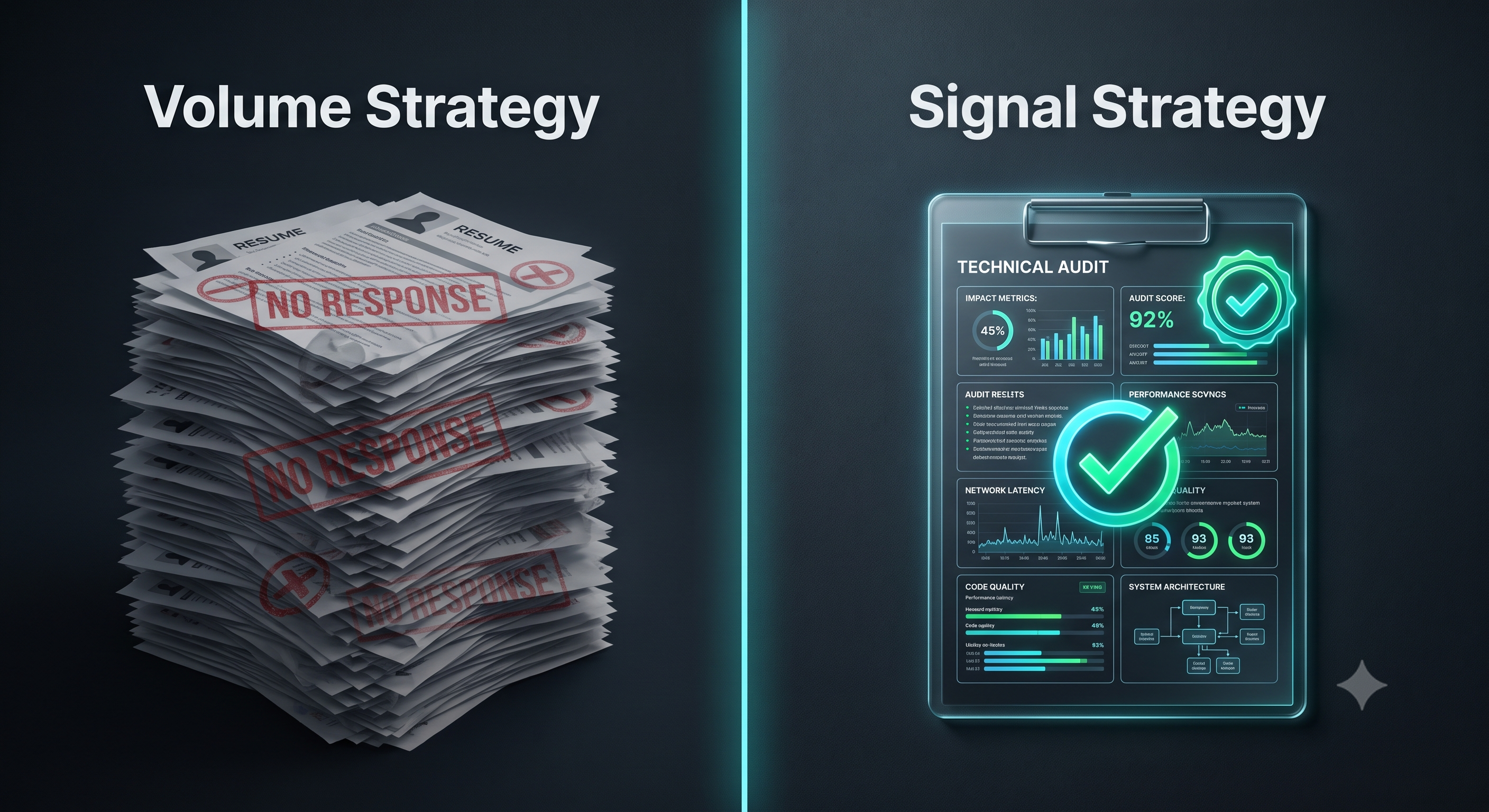 0 Comments 0 Shares 73 Views 0 Reviews
 -
The ATS "White Font" Myth: Why Algorithmic Keyword Stuffing Destroys Your Interview Rate
As Applicant Tracking Systems (ATS) and automated screening tools evolve, job seeker folklore keeps circulating dangerous shortcuts. Candidates spend hours "hacking" parsers with hidden text, matching every single keyword, and treating resume screening like an SEO trick.
In the modern hiring market, that tactic accomplishes the opposite of what you want.
Myth: Modern ATS engines are primitive keyword counters that can be tricked by pasting hidden job requirements or cramming unverified acronyms into your resume.
Fact: Contemporary recruiting systems and talent intelligence tools use contextual parsing, semantic matching, and plain-text stripping. Hidden text is flagged as an evasion anomaly, while keyword stuffing without contextual evidence triggers immediate automated deprioritization.
Why this matters for your job search:
ATS software doesn't just scan for standalone words like "Kubernetes" or "System Design". It maps semantic proximity: how the word is used, the duration of experience associated with it, and the measurable business outcome tied to that skill.
When an engineering hiring manager opens a flagged resume that scored a "99% match" but reads like an unreadable list of technologies, they reject it within five seconds.
How to optimize for automated parsers and human decision-makers:
Match Context, Not Just Raw Keywords
Never list a critical skill solely in a comma-separated "Skills" cloud at the bottom. Pair every required capability directly with a verified project impact:
❌ Skills: Python, AWS, Microservices, CI/CD.
✅ Architected Python microservices on AWS, reducing build times by 35% across four continuous deployment pipelines.
Use Single-Column, Unstyled Semantic Hierarchy
Modern parsers choke on two-column layouts, custom graphical icons, and floating text boxes. Use standard, predictable headings (Work Experience, Technical Skills, Education). Let your content, not unusual formatting, do the work.
Pass the "Human Glancability" Test
Remember that the ATS only determines whether a recruiter looks at your resume. If you pass the parser with artificial density but present a wall of unreadable jargon, the recruiter moves to the next profile. Format for a 10-second human scan: bold impact metrics, tight bullets, and zero fluff.
Getting noticed in tech hiring isn't about gaming an algorithm. It is about proving relevant competence so clearly that both the parser and the engineering lead arrive at the exact same conclusion.
Discussion Question
Have you ever audited how an ATS actually extracts and parses your plain-text resume data before submitting it?
CTA
Ready to build a high-signal application that cuts through automated noise and lands technical interviews? Join the Tech Jobs & Opportunities community to review resume audits, interview teardowns, and actionable career strategies with peers worldwide.The ATS "White Font" Myth: Why Algorithmic Keyword Stuffing Destroys Your Interview Rate As Applicant Tracking Systems (ATS) and automated screening tools evolve, job seeker folklore keeps circulating dangerous shortcuts. Candidates spend hours "hacking" parsers with hidden text, matching every single keyword, and treating resume screening like an SEO trick. In the modern hiring market, that tactic accomplishes the opposite of what you want. Myth: Modern ATS engines are primitive keyword counters that can be tricked by pasting hidden job requirements or cramming unverified acronyms into your resume. Fact: Contemporary recruiting systems and talent intelligence tools use contextual parsing, semantic matching, and plain-text stripping. Hidden text is flagged as an evasion anomaly, while keyword stuffing without contextual evidence triggers immediate automated deprioritization. Why this matters for your job search: ATS software doesn't just scan for standalone words like "Kubernetes" or "System Design". It maps semantic proximity: how the word is used, the duration of experience associated with it, and the measurable business outcome tied to that skill. When an engineering hiring manager opens a flagged resume that scored a "99% match" but reads like an unreadable list of technologies, they reject it within five seconds. How to optimize for automated parsers and human decision-makers: Match Context, Not Just Raw Keywords Never list a critical skill solely in a comma-separated "Skills" cloud at the bottom. Pair every required capability directly with a verified project impact: ❌ Skills: Python, AWS, Microservices, CI/CD. ✅ Architected Python microservices on AWS, reducing build times by 35% across four continuous deployment pipelines. Use Single-Column, Unstyled Semantic Hierarchy Modern parsers choke on two-column layouts, custom graphical icons, and floating text boxes. Use standard, predictable headings (Work Experience, Technical Skills, Education). Let your content, not unusual formatting, do the work. Pass the "Human Glancability" Test Remember that the ATS only determines whether a recruiter looks at your resume. If you pass the parser with artificial density but present a wall of unreadable jargon, the recruiter moves to the next profile. Format for a 10-second human scan: bold impact metrics, tight bullets, and zero fluff. Getting noticed in tech hiring isn't about gaming an algorithm. It is about proving relevant competence so clearly that both the parser and the engineering lead arrive at the exact same conclusion. Discussion Question Have you ever audited how an ATS actually extracts and parses your plain-text resume data before submitting it? CTA Ready to build a high-signal application that cuts through automated noise and lands technical interviews? Join the Tech Jobs & Opportunities community to review resume audits, interview teardowns, and actionable career strategies with peers worldwide.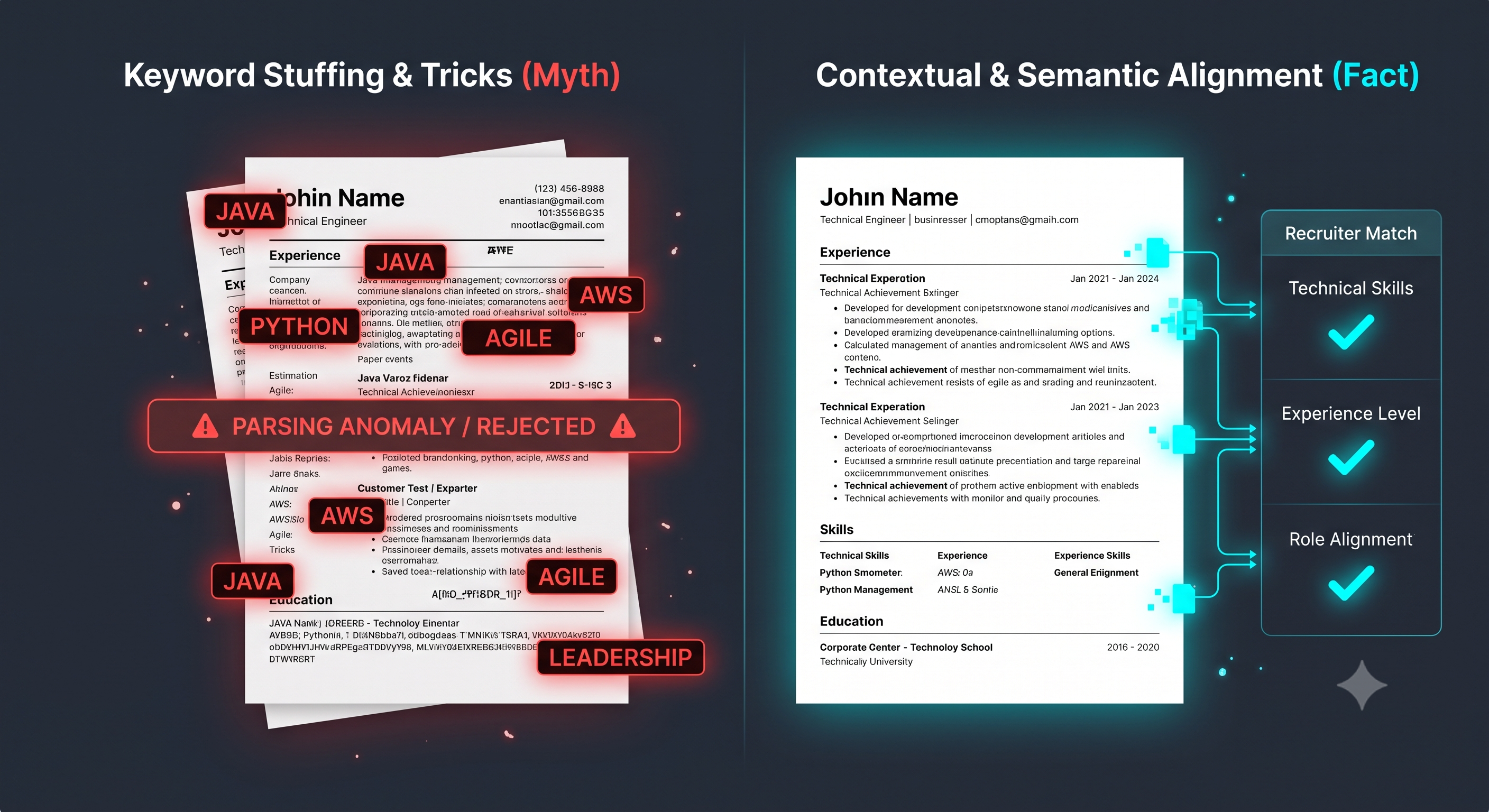 0 Comments 0 Shares 78 Views 0 Reviews
 -
The AI-Era Technical Interview Checklist: How Hiring Bars Shifted From Syntax to Verification
The technical interview loop has evolved. With AI co-pilots and code assistants ubiquitous, interviewers are rarely assessing whether you memorized syntactical edge cases or basic algorithm trivia.
Instead, engineering teams are testing for verification literacy, system constraints, and architectural trade-offs.
If you're interviewing for engineering or AI roles, running through this Technical Interview Readiness Checklist will separate you from candidates who just let tools do the thinking:
Markdown
[ ] 1. PROBLEM SCOPING & CONSTRAINT EXTRACTION
- [ ] Clarify Beyond Happy Paths: Extract explicit boundary parameters (e.g., read vs. write volume, network latency tolerances, memory footprints) before writing line one.
- [ ] State Machine Formulation: Map state mutations and error lifecycles aloud rather than jumping directly to implementation.
[ ] 2. CODE INTENT & RUNTIME REASONING
- [ ] Narrate the "Why": Explain architectural decisions aloud—why an indexed lookup table or asynchronous queue beats an in-memory array for this scale.
- [ ] Cognitive Verification: Demonstrate the ability to spot subtle logic bugs, race conditions, or off-by-one errors without relying on auto-formatters or AI autocompletes.
[ ] 3. SYSTEM RESILIENCY & TRADE-OFF DEFENSE
- [ ] Fallback Planning: Proactively answer: "How does this function fail if a downstream microservice or API times out?"
- [ ] Concurrency & Data Isolation: Address atomicity, idempotent mutations, and database transaction locks without being prompted.
- [ ] Complexity Auditing: State strict Big-O time and space bounds alongside memory allocations under maximum throughput.
[ ] 4. APPLIED AI & MODERN TOOL LITERACY
- [ ] Telemetry & Observability: Show you know how to monitor and log modern pipelines (metrics, traces, latency budgets) instead of treating applications as black boxes.
- [ ] Model Constraint Awareness: For applied AI/ML roles, articulate when deterministic heuristic systems are superior to expensive, non-deterministic model calls.
[ ] 5. STRUCTURED BEHAVIORAL OWNERSHIP
- [ ] Measurable Impact (STAR Format): Prepare scenarios detailing a major production outage, rollback, or architectural compromise with quantifiable business impact.
- [ ] Cross-Functional Pragmatism: Show how you balance developer velocity against technical debt and operational risk.
Key Takeaway: Technical interviewers don’t hire code generators; they hire engineers who know how to validate, debug, and safely deploy systems to production.
Discussion Question
What has been the biggest change you've noticed in recent tech interviews—deeper system design deep-dives, live code review/debugging rounds, or tougher behavioral loops?
CTA (Join Tech Jobs & Opportunities)
Looking to break into top-tier tech teams or land your next engineering role? Join Tech Jobs & Opportunities by Techawks for exclusive job openings, interview post-mortems, and career playbooks with seasoned hiring managers.The AI-Era Technical Interview Checklist: How Hiring Bars Shifted From Syntax to Verification The technical interview loop has evolved. With AI co-pilots and code assistants ubiquitous, interviewers are rarely assessing whether you memorized syntactical edge cases or basic algorithm trivia. Instead, engineering teams are testing for verification literacy, system constraints, and architectural trade-offs. If you're interviewing for engineering or AI roles, running through this Technical Interview Readiness Checklist will separate you from candidates who just let tools do the thinking: Markdown [ ] 1. PROBLEM SCOPING & CONSTRAINT EXTRACTION - [ ] Clarify Beyond Happy Paths: Extract explicit boundary parameters (e.g., read vs. write volume, network latency tolerances, memory footprints) before writing line one. - [ ] State Machine Formulation: Map state mutations and error lifecycles aloud rather than jumping directly to implementation. [ ] 2. CODE INTENT & RUNTIME REASONING - [ ] Narrate the "Why": Explain architectural decisions aloud—why an indexed lookup table or asynchronous queue beats an in-memory array for this scale. - [ ] Cognitive Verification: Demonstrate the ability to spot subtle logic bugs, race conditions, or off-by-one errors without relying on auto-formatters or AI autocompletes. [ ] 3. SYSTEM RESILIENCY & TRADE-OFF DEFENSE - [ ] Fallback Planning: Proactively answer: "How does this function fail if a downstream microservice or API times out?" - [ ] Concurrency & Data Isolation: Address atomicity, idempotent mutations, and database transaction locks without being prompted. - [ ] Complexity Auditing: State strict Big-O time and space bounds alongside memory allocations under maximum throughput. [ ] 4. APPLIED AI & MODERN TOOL LITERACY - [ ] Telemetry & Observability: Show you know how to monitor and log modern pipelines (metrics, traces, latency budgets) instead of treating applications as black boxes. - [ ] Model Constraint Awareness: For applied AI/ML roles, articulate when deterministic heuristic systems are superior to expensive, non-deterministic model calls. [ ] 5. STRUCTURED BEHAVIORAL OWNERSHIP - [ ] Measurable Impact (STAR Format): Prepare scenarios detailing a major production outage, rollback, or architectural compromise with quantifiable business impact. - [ ] Cross-Functional Pragmatism: Show how you balance developer velocity against technical debt and operational risk. Key Takeaway: Technical interviewers don’t hire code generators; they hire engineers who know how to validate, debug, and safely deploy systems to production. Discussion Question What has been the biggest change you've noticed in recent tech interviews—deeper system design deep-dives, live code review/debugging rounds, or tougher behavioral loops? CTA (Join Tech Jobs & Opportunities) Looking to break into top-tier tech teams or land your next engineering role? Join Tech Jobs & Opportunities by Techawks for exclusive job openings, interview post-mortems, and career playbooks with seasoned hiring managers.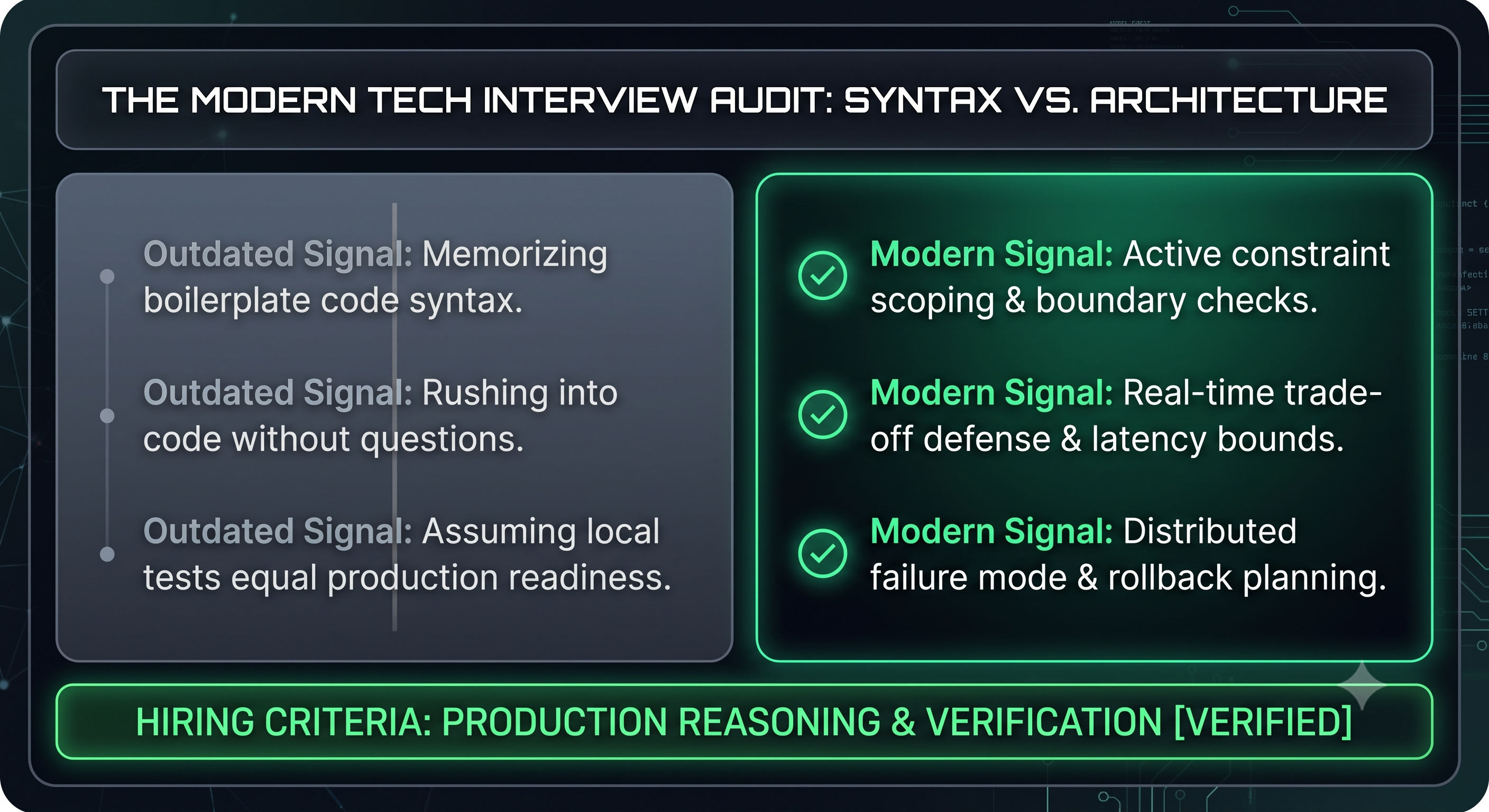 0 Comments 0 Shares 192 Views 0 Reviews
More Stories