





Techawks India is the Indian chapter of the Techawks technology and AI community, bringing together developers, entrepreneurs, students, engineers, researchers, creators, and technology enthusiasts from across the country. Whether you're building software, exploring AI, launching a startup, or growing your career, this is your place to connect and collaborate.
Discover the latest technology trends, AI breakthroughs, coding resources, cybersecurity insights, cloud computing, data science, startup opportunities, hackathons, tech events, career guidance, certifications, and industry discussions. Learn from experts, showcase your projects, find collaborators, and become part of India's rapidly growing innovation ecosystem.
Discover the latest technology trends, AI breakthroughs, coding resources, cybersecurity insights, cloud computing, data science, startup opportunities, hackathons, tech events, career guidance, certifications, and industry discussions. Learn from experts, showcase your projects, find collaborators, and become part of India's rapidly growing innovation ecosystem.
-
PBID: 0230001500000012
-
2 Bu gibi insanlar
-
5 Yazı
-
5 Fotoğraflar
-
0 Videolar
-
önizleme
-
Science and Technology
Site içinde arama yapın

 English
 Arabic
 French
 Spanish
 Portuguese
 Deutsch
 Dutch
Dutch
 Italiano
 Russian
 Romaian
 Portuguese (Brazil)
 Greek
Greek
Son Güncellemeler
-
How to Build a Production-Ready API Architecture: 5 Non-Negotiable Rules.
Building scalable backend systems isn't about using the trendiest framework—it’s about implementing sound design principles that stand up to real-world traffic. Whether you are building with Node.js, Go, or Python, here are five architectural rules every engineer should follow before deploying to production:
Implement Rate Limiting Early
Protect your infrastructure from both accidental loops and malicious denial-of-service attacks. Use token bucket or leaky bucket algorithms (via Redis) to enforce request limits per user or IP address.
Standardize Error Handling and Status Codes
Never return generic 500 Internal Server Error responses with unhelpful payloads. Use predictable HTTP status codes (e.g., 400 for client errors, 401 for unauthenticated requests, 429 for rate limits) paired with a standard JSON error schema:
JSON
"error":
"code": "INVALID_PAYLOAD",
"message": "Field 'email' must be a valid email address.",
"timestamp": "2026-08-03T12:00:00Z"
Decouple Heavy Workflows with Queues
If an endpoint takes more than 200ms to process, it shouldn't be synchronous. Offload background tasks like sending emails, processing images, or generating PDFs to a message broker like RabbitMQ or BullMQ.
Design for Idempotency
Network drops happen. Ensure that mutating requests (like payment processing or creation endpoints) use idempotency keys. If a client retries a request due to a timeout, your system should yield the original response without duplicating the action.
Log for Observability, Not Just Debugging
Avoid console.log() statements. Use structured logging (JSON format) with trace IDs so you can track a single request’s lifecycle across multiple microservices.
Key Takeaways
Rate limiting prevents resource exhaustion before it starts.
Predictable error structures simplify frontend integration and debugging.
Asynchronous message queues keep response times low under heavy load.
Idempotent endpoints guarantee data integrity during network failures.
CTA (Join Techawks India)
Level up your backend engineering skills with developers across the country. Join Techawks India today to access exclusive architecture breakdowns, code reviews, and tech discussions.How to Build a Production-Ready API Architecture: 5 Non-Negotiable Rules. Building scalable backend systems isn't about using the trendiest framework—it’s about implementing sound design principles that stand up to real-world traffic. Whether you are building with Node.js, Go, or Python, here are five architectural rules every engineer should follow before deploying to production: Implement Rate Limiting Early Protect your infrastructure from both accidental loops and malicious denial-of-service attacks. Use token bucket or leaky bucket algorithms (via Redis) to enforce request limits per user or IP address. Standardize Error Handling and Status Codes Never return generic 500 Internal Server Error responses with unhelpful payloads. Use predictable HTTP status codes (e.g., 400 for client errors, 401 for unauthenticated requests, 429 for rate limits) paired with a standard JSON error schema: JSON "error": "code": "INVALID_PAYLOAD", "message": "Field 'email' must be a valid email address.", "timestamp": "2026-08-03T12:00:00Z" Decouple Heavy Workflows with Queues If an endpoint takes more than 200ms to process, it shouldn't be synchronous. Offload background tasks like sending emails, processing images, or generating PDFs to a message broker like RabbitMQ or BullMQ. Design for Idempotency Network drops happen. Ensure that mutating requests (like payment processing or creation endpoints) use idempotency keys. If a client retries a request due to a timeout, your system should yield the original response without duplicating the action. Log for Observability, Not Just Debugging Avoid console.log() statements. Use structured logging (JSON format) with trace IDs so you can track a single request’s lifecycle across multiple microservices. Key Takeaways Rate limiting prevents resource exhaustion before it starts. Predictable error structures simplify frontend integration and debugging. Asynchronous message queues keep response times low under heavy load. Idempotent endpoints guarantee data integrity during network failures. CTA (Join Techawks India) Level up your backend engineering skills with developers across the country. Join Techawks India today to access exclusive architecture breakdowns, code reviews, and tech discussions.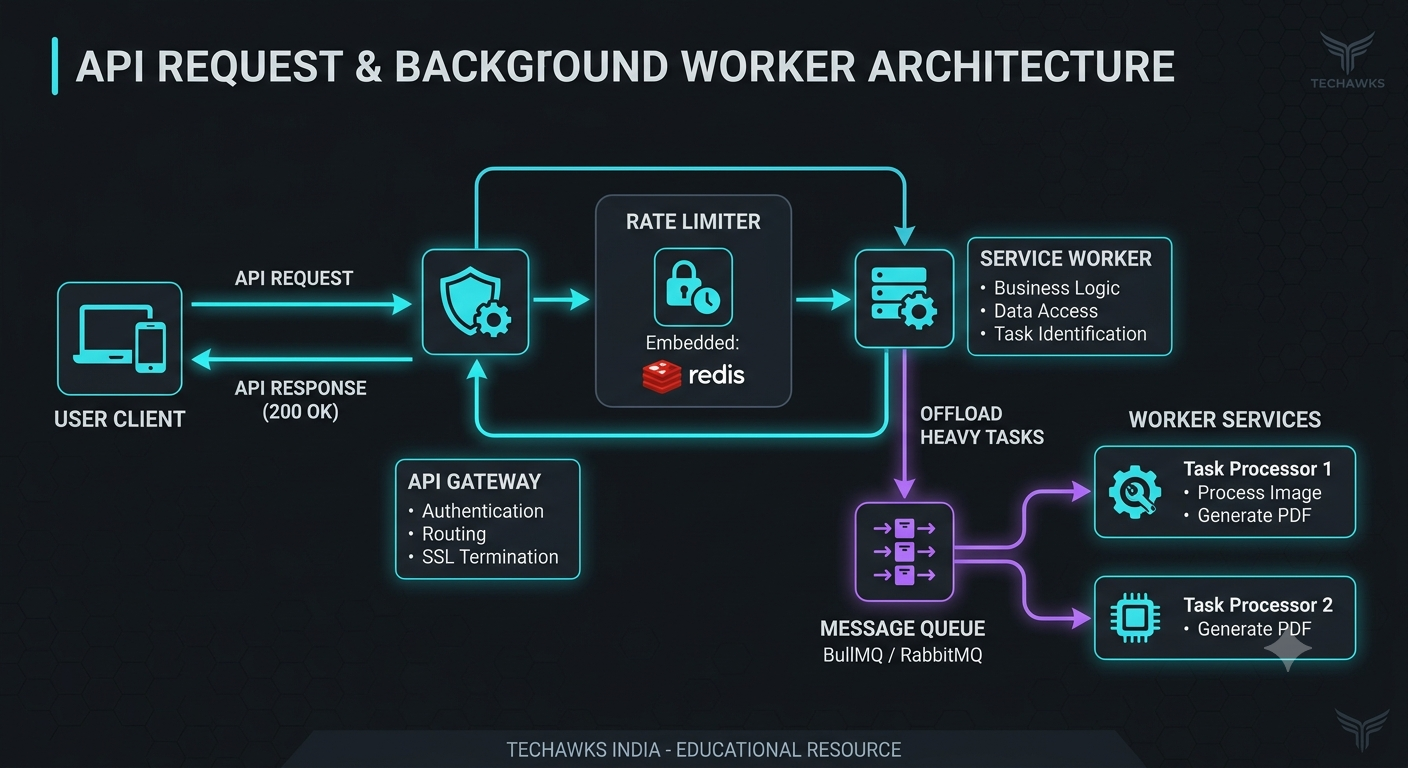 0 Yorumlar 0 hisse senetleri 18 Views 0 önizleme

Daha Hikayeler