





Techawks UAE is a thriving technology and artificial intelligence community connecting developers, entrepreneurs, startups, researchers, IT professionals, students, and technology enthusiasts across the United Arab Emirates. Our mission is to foster innovation, collaboration, networking, and continuous learning in one of the world's fastest-growing digital economies.
Explore the latest advancements in artificial intelligence, cybersecurity, cloud computing, software development, smart cities, fintech, robotics, blockchain, and emerging technologies. Share ideas, showcase projects, discover career opportunities, discuss industry trends, and connect with professionals shaping the future of technology in the UAE.
Explore the latest advancements in artificial intelligence, cybersecurity, cloud computing, software development, smart cities, fintech, robotics, blockchain, and emerging technologies. Share ideas, showcase projects, discover career opportunities, discuss industry trends, and connect with professionals shaping the future of technology in the UAE.
-
PBID: 0230001500000015
-
5 people like this
-
48 Posts
-
46 Photos
-
0 Videos
-
Reviews
-
Science and Technology
Search

 Arabic
 French
 Spanish
 Portuguese
 Deutsch
 Turkish
 Dutch
Dutch
 Italiano
 Russian
 Romaian
 Portuguese (Brazil)
 Greek
Greek
Recent Updates
-
The Sovereign Cloud Illusion: Why "Hosting in Dubai" Fails UAE AI & PDPL Audits
With the establishment of the UAE Federal Artificial Intelligence and Data Authority (FAIDA) and active sovereign cloud rollouts across GISEC this week, UAE engineering teams face an architectural reckoning: Data Residency is not Data Sovereignty.
Too many engineering teams believe choosing me-central-1 (UAE) on global hyperscalers ticks the box for UAE Federal Decree-Law No. 45/2021 (PDPL) and NESA compliance.
Under the hood, typical cloud deployments trigger subtle cross-border breaches:
The Global Control Plane Leak: Even if persistent storage resides in Abu Dhabi or Dubai, IAM authentication handshakes, telemetry, cloud provider support tickets, and global billing pipelines routinely route through servers in the EU or US. Under true sovereign scrutiny, extraterritorial control plane access is a regulatory violation.
RAG & Inference Pipeline Bleed: Sending enterprise context into external foundation model endpoints—even ephemeral inference calls—violates sovereign guarantees if prompt embeddings or token caches hit multi-tenant clusters outside UAE jurisdiction.
Shared Key Custody: Storing KMS keys inside standard multi-tenant cloud HSMs leaves cryptographic control subject to foreign extraterritorial warrants (such as the US CLOUD Act).
The Sovereign AI Architecture Pattern:
Air-Gapped / Isolated Control Planes: Decouple system telemetry and identity management from global control planes. Rely on sovereign clusters where the orchestrator, IAM, and control API terminate inside UAE jurisdiction.
Hold Your Own Key (HYOK) & Enclave KMS: Keep root key encryption material inside locally managed, physically resident Hardware Security Modules (HSMs), preventing hyperscaler operators from decrypting data at rest or in transit.
In-Region Inference Isolation: Deploy open-weight foundation models (such as Falcon or localized LLMs) on isolated, hardware-dedicated nodes with strictly bound local vector databases, ensuring zero cross-border prompt leakage.
Discussion Question
When your cloud provider’s automated telemetry, prompt caches, or IAM tokens sync, can you prove zero bytes leave the Emirates? How is your team tackling true sovereign isolation?
CTA
Architect next-generation, high-performance systems built for the Gulf’s regulatory frontier. Join Techawks UAE to exchange insights with leading architects, CTOs, and AI engineers across the Emirates.The Sovereign Cloud Illusion: Why "Hosting in Dubai" Fails UAE AI & PDPL Audits With the establishment of the UAE Federal Artificial Intelligence and Data Authority (FAIDA) and active sovereign cloud rollouts across GISEC this week, UAE engineering teams face an architectural reckoning: Data Residency is not Data Sovereignty. Too many engineering teams believe choosing me-central-1 (UAE) on global hyperscalers ticks the box for UAE Federal Decree-Law No. 45/2021 (PDPL) and NESA compliance. Under the hood, typical cloud deployments trigger subtle cross-border breaches: The Global Control Plane Leak: Even if persistent storage resides in Abu Dhabi or Dubai, IAM authentication handshakes, telemetry, cloud provider support tickets, and global billing pipelines routinely route through servers in the EU or US. Under true sovereign scrutiny, extraterritorial control plane access is a regulatory violation. RAG & Inference Pipeline Bleed: Sending enterprise context into external foundation model endpoints—even ephemeral inference calls—violates sovereign guarantees if prompt embeddings or token caches hit multi-tenant clusters outside UAE jurisdiction. Shared Key Custody: Storing KMS keys inside standard multi-tenant cloud HSMs leaves cryptographic control subject to foreign extraterritorial warrants (such as the US CLOUD Act). The Sovereign AI Architecture Pattern: Air-Gapped / Isolated Control Planes: Decouple system telemetry and identity management from global control planes. Rely on sovereign clusters where the orchestrator, IAM, and control API terminate inside UAE jurisdiction. Hold Your Own Key (HYOK) & Enclave KMS: Keep root key encryption material inside locally managed, physically resident Hardware Security Modules (HSMs), preventing hyperscaler operators from decrypting data at rest or in transit. In-Region Inference Isolation: Deploy open-weight foundation models (such as Falcon or localized LLMs) on isolated, hardware-dedicated nodes with strictly bound local vector databases, ensuring zero cross-border prompt leakage. Discussion Question When your cloud provider’s automated telemetry, prompt caches, or IAM tokens sync, can you prove zero bytes leave the Emirates? How is your team tackling true sovereign isolation? CTA Architect next-generation, high-performance systems built for the Gulf’s regulatory frontier. Join Techawks UAE to exchange insights with leading architects, CTOs, and AI engineers across the Emirates.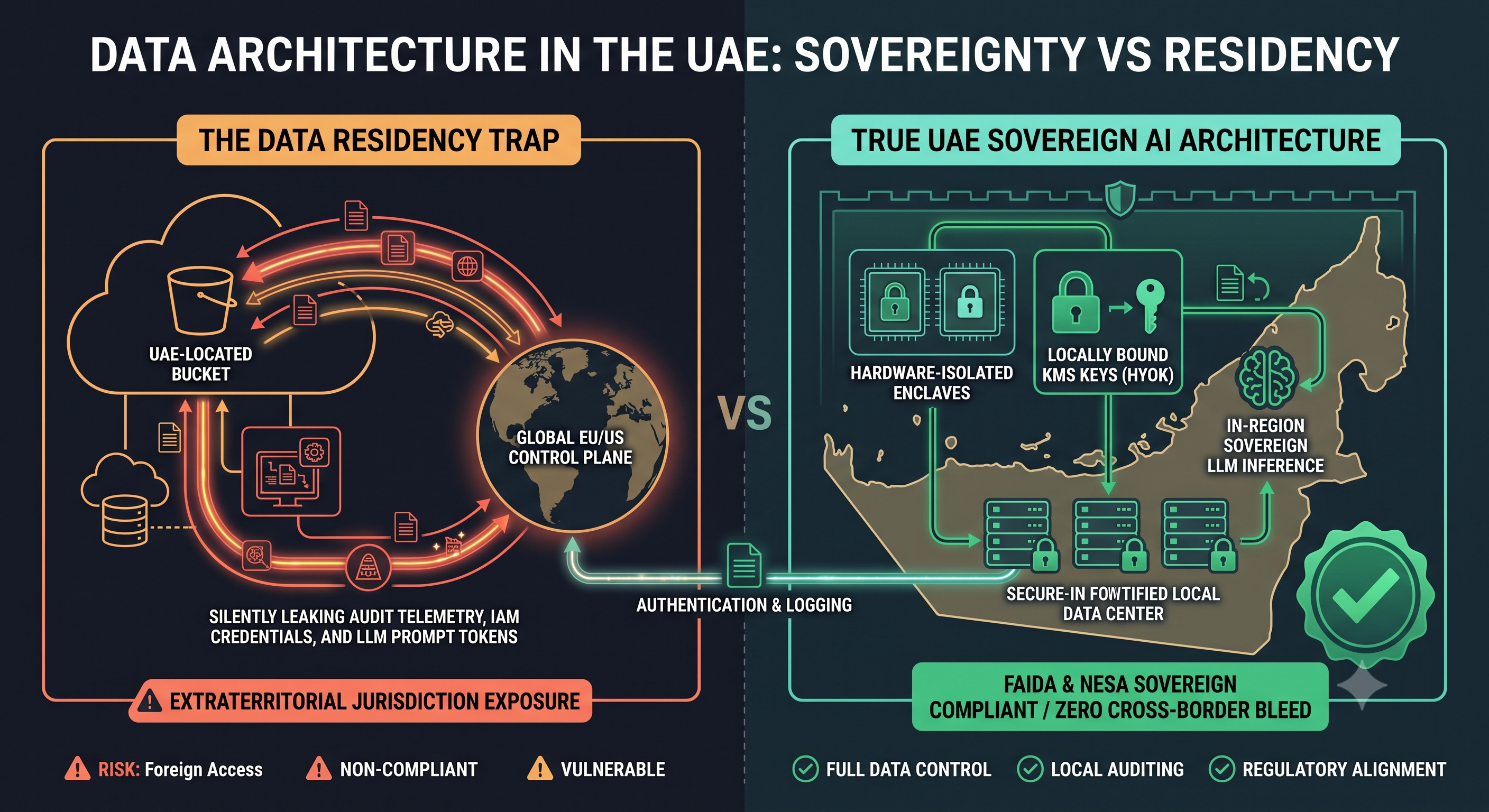 0 Comments 0 Shares 70 Views 0 Reviews
 -
UAE Sovereign Cloud & AI Governance: Is Your Tech Stack Audit-Ready?
With the consolidation of national oversight under the UAE Federal Authority for Artificial Intelligence and Data, the Emirates has transitioned from establishing high-level frameworks to active regulatory supervision.
For CTOs, solutions architects, and engineering leaders operating across onshore UAE, DIFC, and ADGM, deploying AI workloads on offshore clouds without verifiable data residency is now an immediate governance liability.
Whether building agentic workflows, LLM pipelines, or multi-tenant SaaS, enterprise engineering teams must evaluate their systems against this UAE Sovereign Data & AI Architecture Checklist:
[ ] Data Residency & Boundary Enforcement: Are all customer personal identifiable information (PII) and training datasets ingested, processed, and retained within UAE borders (e.g., local sovereign cloud regions) to satisfy onshore Federal Decree-Law No. 45/2021 (PDPL) requirements?
[ ] Free Zone Regime Interoperability: If operating across DIFC or ADGM, does your AI deployment satisfy jurisdiction-specific requirements—such as DIFC Regulation 10 covering semi-autonomous and autonomous systems processing personal data?
[ ] Cross-Border Transfer Impact Assessments (TIAs): For systems leveraging offshore foundation models or APIs, do you have documented standard contractual clauses (SCCs) and transfer assessments justifying cross-border telemetry and payload routing?
[ ] Algorithmic Accountability & Explainability: Can your system output deterministic audit logs explaining model inference, guardrails, and decision pathways to satisfy sectoral requirements (such as CBUAE AI/ML guidance for financial workloads)?
[ ] Model Kill-Switch & Human-in-the-Loop Controls: Are operational overrides, circuit breakers, and human-in-the-loop validation active for automated workflows that execute critical actions or interface with public-facing digital services?
[ ] Sovereign Model Weight Isolation: If deploying fine-tuned or open-source weights (e.g., Falcon series), are model checkpoints and vector stores isolated from unauthorized third-party telemetry scraping?
Building in the UAE means moving at the frontier of innovation, but the regional winners will be those who design compliant, sovereign architectures from day one.
Discussion Question
As UAE data oversight unifies, what is your team's biggest hurdle: localising vector database residency, managing multi-jurisdiction compliance (Onshore vs. DIFC/ADGM), or setting up explainability audit trails?
CTA
Join Techawks UAE to connect with regional engineering leaders, enterprise cloud architects, and tech innovators architecting the future of sovereign Middle Eastern tech.UAE Sovereign Cloud & AI Governance: Is Your Tech Stack Audit-Ready? With the consolidation of national oversight under the UAE Federal Authority for Artificial Intelligence and Data, the Emirates has transitioned from establishing high-level frameworks to active regulatory supervision. For CTOs, solutions architects, and engineering leaders operating across onshore UAE, DIFC, and ADGM, deploying AI workloads on offshore clouds without verifiable data residency is now an immediate governance liability. Whether building agentic workflows, LLM pipelines, or multi-tenant SaaS, enterprise engineering teams must evaluate their systems against this UAE Sovereign Data & AI Architecture Checklist: [ ] Data Residency & Boundary Enforcement: Are all customer personal identifiable information (PII) and training datasets ingested, processed, and retained within UAE borders (e.g., local sovereign cloud regions) to satisfy onshore Federal Decree-Law No. 45/2021 (PDPL) requirements? [ ] Free Zone Regime Interoperability: If operating across DIFC or ADGM, does your AI deployment satisfy jurisdiction-specific requirements—such as DIFC Regulation 10 covering semi-autonomous and autonomous systems processing personal data? [ ] Cross-Border Transfer Impact Assessments (TIAs): For systems leveraging offshore foundation models or APIs, do you have documented standard contractual clauses (SCCs) and transfer assessments justifying cross-border telemetry and payload routing? [ ] Algorithmic Accountability & Explainability: Can your system output deterministic audit logs explaining model inference, guardrails, and decision pathways to satisfy sectoral requirements (such as CBUAE AI/ML guidance for financial workloads)? [ ] Model Kill-Switch & Human-in-the-Loop Controls: Are operational overrides, circuit breakers, and human-in-the-loop validation active for automated workflows that execute critical actions or interface with public-facing digital services? [ ] Sovereign Model Weight Isolation: If deploying fine-tuned or open-source weights (e.g., Falcon series), are model checkpoints and vector stores isolated from unauthorized third-party telemetry scraping? Building in the UAE means moving at the frontier of innovation, but the regional winners will be those who design compliant, sovereign architectures from day one. Discussion Question As UAE data oversight unifies, what is your team's biggest hurdle: localising vector database residency, managing multi-jurisdiction compliance (Onshore vs. DIFC/ADGM), or setting up explainability audit trails? CTA Join Techawks UAE to connect with regional engineering leaders, enterprise cloud architects, and tech innovators architecting the future of sovereign Middle Eastern tech.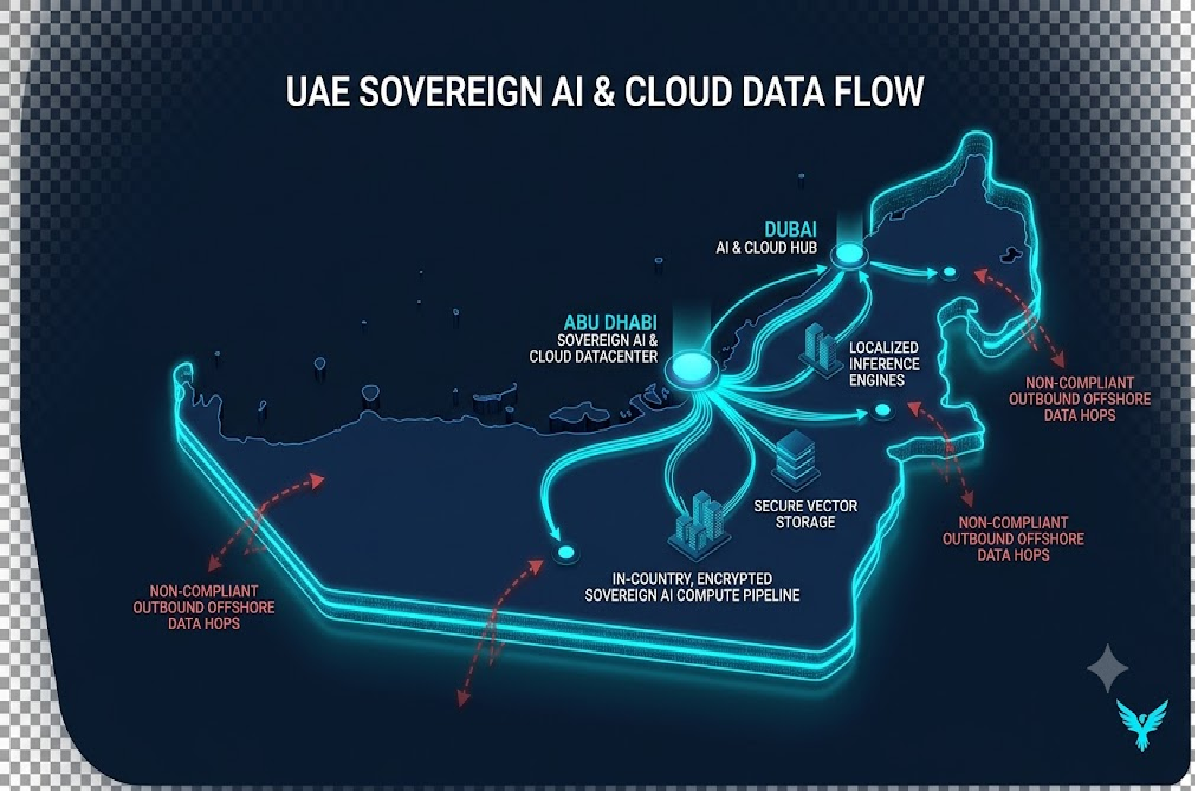 0 Comments 0 Shares 353 Views 0 Reviews
 -
Building the Sovereign Edge: Decoupling UAE AI Workflows from Global API Dependency
The UAE is leading the world in establishing a complete, sovereign AI ecosystem. High-performing engineering teams in Dubai and Abu Dhabi are no longer just "integrating AI"; they are architecting for runtime sovereignty.
Passive Data Residency—storing data in UAE cloud regions—is only baseline hygiene. True local relevance requires controlling the complete execution path. Real operational resilience requires transitioning from unmanaged remote inference to Sovereign Runtime Isolation & TEE Determinism.
How to Architect for Sovereign Runtime Compliance:
Mandate Sovereign Execution in Hardware-Attested TEEs
Baselines like encryption at rest and in transit are necessary. To protect sensitive telemetry and prompt contexts during active inference, move model runtimes inside Hardware-Attested Trusted Execution Environments (TEEs) on local, UAE-domiciled bare metal. This guarantees that host infrastructure administrators and third-party hypervisors cannot inspect the memory state during execution.
Deploy Localized Model Distillation & SLM Gateways
Never pipe high-compliance transactions (e.g., identity data, identifiable citizen telemetry) to external public endpoints. Route in-scope requests to quantized Small Language Models (SLMs) running inside air-gapped UAE VPCs. Use deterministic, rule-based classifiers to scrub and verify data contracts before any anonymized residual workloads are permitted to trigger external fallbacks.
Establish an Immutable, Verifiable Audit Ledger
The UAE’s regulatory framework holds data controllers strictly accountable for automated decision chains. Replace opaque, non-deterministic agent loops with cryptographically signed execution traces. Record the input context hash, model weight version, and transaction diff in an append-only log to ensure forensic auditability on demand.
Sovereignty isn’t a switch you flip on a cloud provider’s billing console; it is an architectural pattern that guarantees total jurisdictional control over code, context, and compute.
Discussion Question
For UAE CTOs, Platform Engineers, and Data Privacy Leads: Where is your biggest architectural hurdle today—provisioning high-performance TEE compute locally, managing context drift over sovereign SLMs, or reconciling real-time execution needs with data localization mandates? Let’s benchmark implementation strategies below.
CTA
Ready to build resilient, sovereign, and audit-proof AI architectures?
👉 Join Techawks UAE to collaborate with local practitioners, discuss sovereign cloud architecture, and master production engineering frameworks tailored for the region.Building the Sovereign Edge: Decoupling UAE AI Workflows from Global API Dependency The UAE is leading the world in establishing a complete, sovereign AI ecosystem. High-performing engineering teams in Dubai and Abu Dhabi are no longer just "integrating AI"; they are architecting for runtime sovereignty. Passive Data Residency—storing data in UAE cloud regions—is only baseline hygiene. True local relevance requires controlling the complete execution path. Real operational resilience requires transitioning from unmanaged remote inference to Sovereign Runtime Isolation & TEE Determinism. How to Architect for Sovereign Runtime Compliance: Mandate Sovereign Execution in Hardware-Attested TEEs Baselines like encryption at rest and in transit are necessary. To protect sensitive telemetry and prompt contexts during active inference, move model runtimes inside Hardware-Attested Trusted Execution Environments (TEEs) on local, UAE-domiciled bare metal. This guarantees that host infrastructure administrators and third-party hypervisors cannot inspect the memory state during execution. Deploy Localized Model Distillation & SLM Gateways Never pipe high-compliance transactions (e.g., identity data, identifiable citizen telemetry) to external public endpoints. Route in-scope requests to quantized Small Language Models (SLMs) running inside air-gapped UAE VPCs. Use deterministic, rule-based classifiers to scrub and verify data contracts before any anonymized residual workloads are permitted to trigger external fallbacks. Establish an Immutable, Verifiable Audit Ledger The UAE’s regulatory framework holds data controllers strictly accountable for automated decision chains. Replace opaque, non-deterministic agent loops with cryptographically signed execution traces. Record the input context hash, model weight version, and transaction diff in an append-only log to ensure forensic auditability on demand. Sovereignty isn’t a switch you flip on a cloud provider’s billing console; it is an architectural pattern that guarantees total jurisdictional control over code, context, and compute. Discussion Question For UAE CTOs, Platform Engineers, and Data Privacy Leads: Where is your biggest architectural hurdle today—provisioning high-performance TEE compute locally, managing context drift over sovereign SLMs, or reconciling real-time execution needs with data localization mandates? Let’s benchmark implementation strategies below. CTA Ready to build resilient, sovereign, and audit-proof AI architectures? 👉 Join Techawks UAE to collaborate with local practitioners, discuss sovereign cloud architecture, and master production engineering frameworks tailored for the region.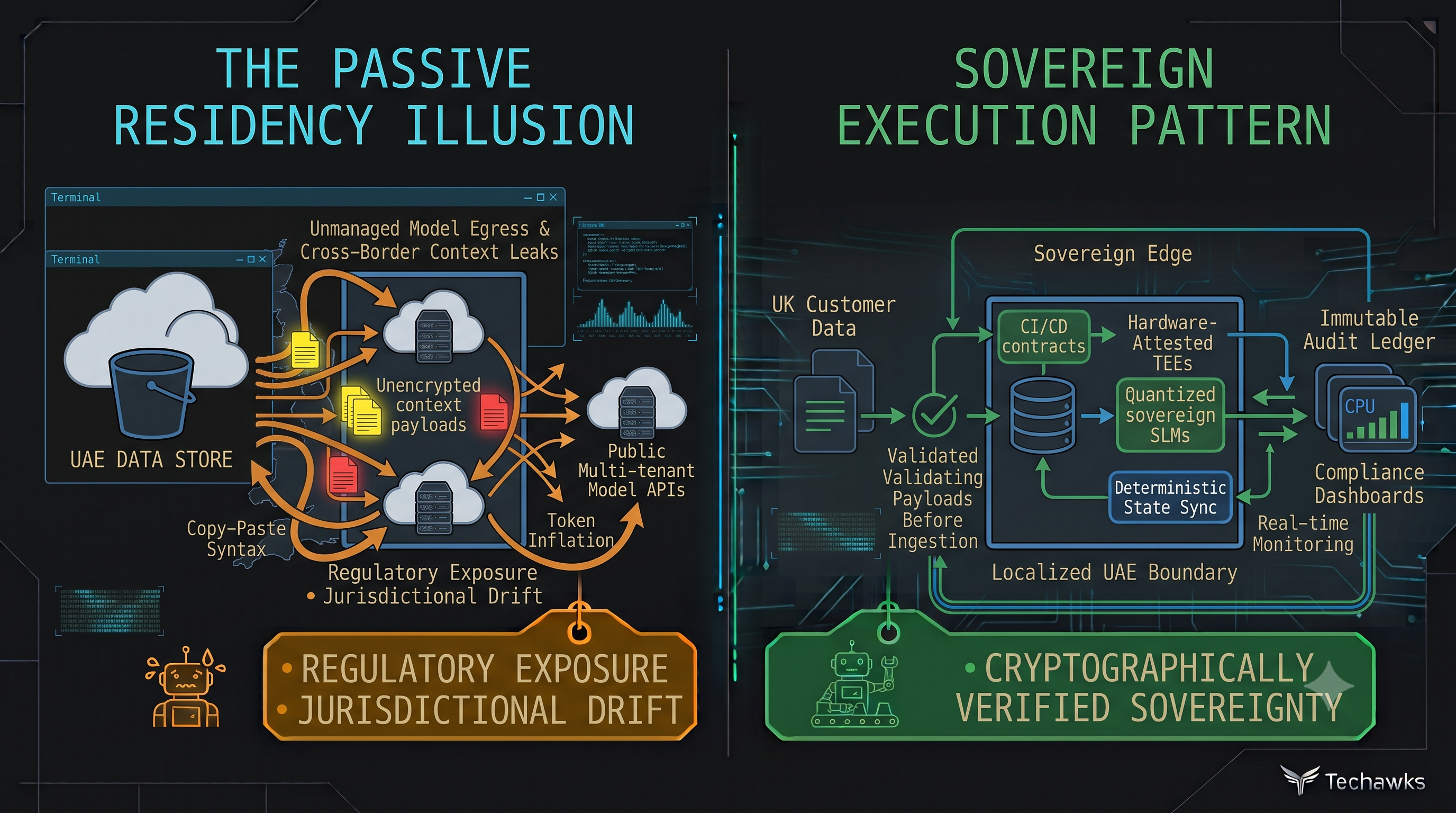 0 Comments 0 Shares 1K Views 0 Reviews
 -
From Data Residency to Model Sovereignty: The Engineering Reality of the UAE’s "In-Country" Agentic Shift
Across the UAE, enterprise infrastructure architecture is encountering a major paradigm shift. For years, compliance teams focused exclusively on data residency—guaranteeing that SQL tables, object storage, and customer PII physically stayed within borders to meet TDRA, CBUAE, and federal data protection mandates.
However, as UAE entities race to become fully AI-native and deploy autonomous agents across public and private sectors, data residency alone is no longer enough.
The UAE tech ecosystem is moving rapidly toward Model & Execution Sovereignty. When autonomous agent frameworks interact with local APIs, process operational telemetry, and trigger transactions, using a model served from an overseas API endpoint breaks the security and regulatory perimeter.
What This Teaches Us (Architectural Takeaway):
Engineering leads designing for the UAE market must adapt their AI stacks across three non-negotiables:
In-Perimeter Inference: Storing data locally while sending prompt payloads and context windows to external offshore endpoints invalidates strict compliance boundaries. Teams must prioritize localized foundation models, dedicated sovereign cloud endpoints, or on-prem/hybrid private GPU clusters.
Deterministic Agent Guardrails & Audit Trails: As the UAE pushes for agentic automation across operational workflows, black-box reasoning is a regulatory liability. Autonomous systems need localized execution sandboxes and auditable reasoning logs stored under in-country retention rules.
Decoupled Orchestration Layers: Rather than hardcoding reliance on a single foreign model provider, architect agent orchestration frameworks (using tools like LangGraph or Semantic Kernel) to dynamically route sensitive data workloads strictly through certified sovereign compute clusters.
In the UAE’s digital economy, compliance is no longer a checklist for the legal team—it is an explicit distributed systems design challenge.
Discussion Question
To UAE Engineering Leads and Architects: When building out generative or agentic features today, are you running self-hosted/in-country inference endpoints, or are you still relying on hybrid masking techniques with external APIs? Where is your biggest architectural bottleneck?
CTA
Join Techawks UAE — Connect with the technologists, engineering leaders, and cloud architects building the next generation of sovereign infrastructure across the Emirates. Follow the page and join the discussion in the comments.From Data Residency to Model Sovereignty: The Engineering Reality of the UAE’s "In-Country" Agentic Shift Across the UAE, enterprise infrastructure architecture is encountering a major paradigm shift. For years, compliance teams focused exclusively on data residency—guaranteeing that SQL tables, object storage, and customer PII physically stayed within borders to meet TDRA, CBUAE, and federal data protection mandates. However, as UAE entities race to become fully AI-native and deploy autonomous agents across public and private sectors, data residency alone is no longer enough. The UAE tech ecosystem is moving rapidly toward Model & Execution Sovereignty. When autonomous agent frameworks interact with local APIs, process operational telemetry, and trigger transactions, using a model served from an overseas API endpoint breaks the security and regulatory perimeter. What This Teaches Us (Architectural Takeaway): Engineering leads designing for the UAE market must adapt their AI stacks across three non-negotiables: In-Perimeter Inference: Storing data locally while sending prompt payloads and context windows to external offshore endpoints invalidates strict compliance boundaries. Teams must prioritize localized foundation models, dedicated sovereign cloud endpoints, or on-prem/hybrid private GPU clusters. Deterministic Agent Guardrails & Audit Trails: As the UAE pushes for agentic automation across operational workflows, black-box reasoning is a regulatory liability. Autonomous systems need localized execution sandboxes and auditable reasoning logs stored under in-country retention rules. Decoupled Orchestration Layers: Rather than hardcoding reliance on a single foreign model provider, architect agent orchestration frameworks (using tools like LangGraph or Semantic Kernel) to dynamically route sensitive data workloads strictly through certified sovereign compute clusters. In the UAE’s digital economy, compliance is no longer a checklist for the legal team—it is an explicit distributed systems design challenge. Discussion Question To UAE Engineering Leads and Architects: When building out generative or agentic features today, are you running self-hosted/in-country inference endpoints, or are you still relying on hybrid masking techniques with external APIs? Where is your biggest architectural bottleneck? CTA Join Techawks UAE — Connect with the technologists, engineering leaders, and cloud architects building the next generation of sovereign infrastructure across the Emirates. Follow the page and join the discussion in the comments. 0 Comments 0 Shares 417 Views 0 Reviews
 -
Data Residency vs. Data Sovereignty: The Architectural Shift UAE Cloud Teams Must Make in 2026
Across Dubai and Abu Dhabi, enterprises have raced to migrate workloads into local hyperscaler zones and sovereign compute backbones like G42 Cloud and Khazna. However, many systems teams still conflate data residency with data sovereignty.
Data Residency is geographic: It simply means your data at rest resides within UAE borders.
Data Sovereignty is jurisdictional and operational: It ensures that no external entity—via vendor telemetry, remote cross-border control planes, or third-party proprietary AI APIs—can access, decrypt, or process that data without UAE regulatory purview.
If an autonomous AI agent running on local infrastructure sends prompts or metadata to an external orchestration endpoint overseas, data residency is technically preserved in storage, but sovereignty is violated during execution.
To build an architecture that survives modern UAE governance audits (such as UAE PDPL and Central Bank regulatory frameworks), engineering teams must adopt a Sovereign-First Stack:
Customer-Managed Key (CMK) Enclaves:
Do not rely on cloud-provider-managed encryption keys. Enforce hardware security modules (HSMs) anchored locally where the master key never touches a non-sovereign control plane.
Deterministic Prompt Redaction & Tokenization:
Before transactional data or sensitive PII passes into an LLM context window—even regional bilingual models like Jais or Falcon—route the payload through an in-memory tokenization gateway. Replace actual identifiers with deterministic tokens that remain resolvable only inside local VPC boundaries.
Control-Plane Air-Locking:
Audit your infrastructure-as-code pipelines. Ensure logging, telemetry, observability sinks, and model fine-tuning checkpoints are strictly pinned to domestic nodes rather than syncing with global telemetry hubs by default.
Sovereignty isn't a checkbox provided by your hosting provider—it’s an architectural decision built into your pipeline.
Discussion Question
When deploying generative AI models and data pipelines across UAE regions, how does your engineering team ensure that operational metadata and fine-tuning weights remain within domestic jurisdictional boundaries?
CTA
Join Techawks UAE — Connect with Middle East-based systems architects, DevOps specialists, and engineering leaders building the next generation of resilient, sovereign cloud infrastructure.Data Residency vs. Data Sovereignty: The Architectural Shift UAE Cloud Teams Must Make in 2026 Across Dubai and Abu Dhabi, enterprises have raced to migrate workloads into local hyperscaler zones and sovereign compute backbones like G42 Cloud and Khazna. However, many systems teams still conflate data residency with data sovereignty. Data Residency is geographic: It simply means your data at rest resides within UAE borders. Data Sovereignty is jurisdictional and operational: It ensures that no external entity—via vendor telemetry, remote cross-border control planes, or third-party proprietary AI APIs—can access, decrypt, or process that data without UAE regulatory purview. If an autonomous AI agent running on local infrastructure sends prompts or metadata to an external orchestration endpoint overseas, data residency is technically preserved in storage, but sovereignty is violated during execution. To build an architecture that survives modern UAE governance audits (such as UAE PDPL and Central Bank regulatory frameworks), engineering teams must adopt a Sovereign-First Stack: Customer-Managed Key (CMK) Enclaves: Do not rely on cloud-provider-managed encryption keys. Enforce hardware security modules (HSMs) anchored locally where the master key never touches a non-sovereign control plane. Deterministic Prompt Redaction & Tokenization: Before transactional data or sensitive PII passes into an LLM context window—even regional bilingual models like Jais or Falcon—route the payload through an in-memory tokenization gateway. Replace actual identifiers with deterministic tokens that remain resolvable only inside local VPC boundaries. Control-Plane Air-Locking: Audit your infrastructure-as-code pipelines. Ensure logging, telemetry, observability sinks, and model fine-tuning checkpoints are strictly pinned to domestic nodes rather than syncing with global telemetry hubs by default. Sovereignty isn't a checkbox provided by your hosting provider—it’s an architectural decision built into your pipeline. Discussion Question When deploying generative AI models and data pipelines across UAE regions, how does your engineering team ensure that operational metadata and fine-tuning weights remain within domestic jurisdictional boundaries? CTA Join Techawks UAE — Connect with Middle East-based systems architects, DevOps specialists, and engineering leaders building the next generation of resilient, sovereign cloud infrastructure.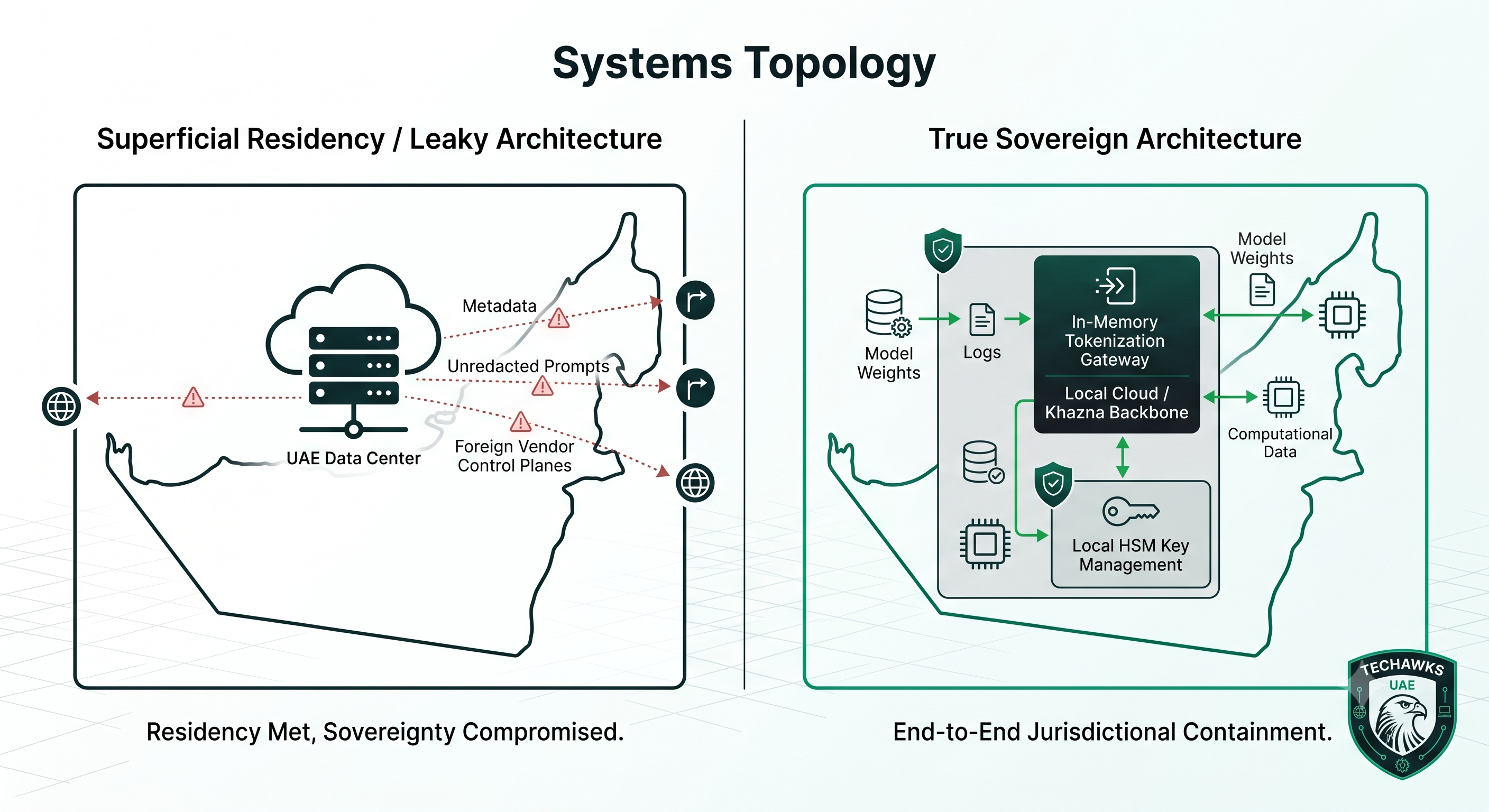 0 Comments 0 Shares 166 Views 0 Reviews
 -
The 5-Gigawatt Shift: Why Sovereign Cloud & In-Country AI Architecture Define the UAE's Next Decade
The UAE is executing one of the most aggressive digital infrastructure scale-ups on the planet. Between Abu Dhabi’s massive multi-gigawatt AI infrastructure campus (with Khazna and G42 delivering 200MW increments) and the Central Bank of the UAE’s sovereign financial cloud standards, the message to builders is unmistakable:
The UAE is transitioning from a consumer of global cloud services into the primary sovereign AI hub for the Middle East, Africa, and South Asia.
For CTOs, software architects, and platform leads across Dubai Internet City, ADGM, and DIFC, this means standard engineering playbooks must change. You can no longer configure default routing that blindly sends customer telemetry, embeddings, or inference prompts through Western or overseas availability zones.
Regulated verticals—especially BFSI under the Central Bank standards, healthcare under the Health ICT Law, and government entities under UAE PDPL—demand strict in-country custody, local key management, and air-gapped fallback options.
3 Architecture Rules for Building Enterprise-Ready Tech in the UAE
1. Implement Strict Data-Classification Routing at Ingress
Don't rely on developers remembering where to store database records. Build automated classification proxies at your API gateway:
Sovereign Tier (Confidential / PII / Financial): Routed exclusively to domestic cloud regions (Khazna, G42/Core42 sovereign clusters, or in-country hyperscaler local zones). Zero egress to external model endpoints permitted.
General Tier (Public / Sanitized): Routed to regional edge clusters with token masking before touching third-party APIs.
2. Deploy Localized LLM Weights & RAG Engines
Relying on US-hosted LLM endpoints introduces high cross-border network latencies (120ms+) and exposes enterprise clients to data-residency violations under UAE Federal Decree-Law No. 45.
Containerize open-weight models (e.g., Falcon, Llama, Qwen) on local domestic GPU infrastructure.
Build Retrieval-Augmented Generation (RAG) vector stores inside local VPCs using localized vector indexes (e.g., Qdrant, Milvus), ensuring sensitive corporate embeddings never cross border boundaries.
3. Enforce "Bring Your Own Key" (BYOK) with Domestic HSMs
Enterprise buyers in the UAE increasingly require hardware-level proof of encryption control:
Store master encryption keys in UAE-based Dedicated Hardware Security Modules (HSMs) managed under local governance.
Ensure key rotation, identity federation, and session access logs remain fully auditable within the UAE jurisdiction, neutralizing sovereign cloud compliance bottlenecks during procurement.
The UAE Tech Takeaway: Building in the Gulf today is an architectural privilege. With gigawatt-scale domestic compute coming online, the engineering teams that win five- and six-figure government and enterprise contracts will be those who design for native data sovereignty, localized inference, and bulletproof compliance from day one.
Discussion Question
For UAE-based engineering and platform teams: How are you managing data residency requirements—are you running fully localized models on domestic clusters, or using token-scrubbing gateways before calling external APIs?
CTA
Join Techawks UAE
Connect with senior software engineers, platform architects, founders, and tech innovators across Dubai, Abu Dhabi, and the wider Emirates. Access deep architectural frameworks, sovereign tech playbooks, and local meetups. Join Techawks UAE today:The 5-Gigawatt Shift: Why Sovereign Cloud & In-Country AI Architecture Define the UAE's Next Decade The UAE is executing one of the most aggressive digital infrastructure scale-ups on the planet. Between Abu Dhabi’s massive multi-gigawatt AI infrastructure campus (with Khazna and G42 delivering 200MW increments) and the Central Bank of the UAE’s sovereign financial cloud standards, the message to builders is unmistakable: The UAE is transitioning from a consumer of global cloud services into the primary sovereign AI hub for the Middle East, Africa, and South Asia. For CTOs, software architects, and platform leads across Dubai Internet City, ADGM, and DIFC, this means standard engineering playbooks must change. You can no longer configure default routing that blindly sends customer telemetry, embeddings, or inference prompts through Western or overseas availability zones. Regulated verticals—especially BFSI under the Central Bank standards, healthcare under the Health ICT Law, and government entities under UAE PDPL—demand strict in-country custody, local key management, and air-gapped fallback options. 3 Architecture Rules for Building Enterprise-Ready Tech in the UAE 1. Implement Strict Data-Classification Routing at Ingress Don't rely on developers remembering where to store database records. Build automated classification proxies at your API gateway: Sovereign Tier (Confidential / PII / Financial): Routed exclusively to domestic cloud regions (Khazna, G42/Core42 sovereign clusters, or in-country hyperscaler local zones). Zero egress to external model endpoints permitted. General Tier (Public / Sanitized): Routed to regional edge clusters with token masking before touching third-party APIs. 2. Deploy Localized LLM Weights & RAG Engines Relying on US-hosted LLM endpoints introduces high cross-border network latencies (120ms+) and exposes enterprise clients to data-residency violations under UAE Federal Decree-Law No. 45. Containerize open-weight models (e.g., Falcon, Llama, Qwen) on local domestic GPU infrastructure. Build Retrieval-Augmented Generation (RAG) vector stores inside local VPCs using localized vector indexes (e.g., Qdrant, Milvus), ensuring sensitive corporate embeddings never cross border boundaries. 3. Enforce "Bring Your Own Key" (BYOK) with Domestic HSMs Enterprise buyers in the UAE increasingly require hardware-level proof of encryption control: Store master encryption keys in UAE-based Dedicated Hardware Security Modules (HSMs) managed under local governance. Ensure key rotation, identity federation, and session access logs remain fully auditable within the UAE jurisdiction, neutralizing sovereign cloud compliance bottlenecks during procurement. The UAE Tech Takeaway: Building in the Gulf today is an architectural privilege. With gigawatt-scale domestic compute coming online, the engineering teams that win five- and six-figure government and enterprise contracts will be those who design for native data sovereignty, localized inference, and bulletproof compliance from day one. Discussion Question For UAE-based engineering and platform teams: How are you managing data residency requirements—are you running fully localized models on domestic clusters, or using token-scrubbing gateways before calling external APIs? CTA Join Techawks UAE Connect with senior software engineers, platform architects, founders, and tech innovators across Dubai, Abu Dhabi, and the wider Emirates. Access deep architectural frameworks, sovereign tech playbooks, and local meetups. Join Techawks UAE today: 0 Comments 0 Shares 199 Views 0 Reviews
 -
Beyond 45°C: Why the UAE’s AI Ambition Is Rewriting the Thermal Engineering of Data Centers
With mega-initiatives like the 1-gigawatt Stargate UAE cluster, Khazna’s national capacity expansions, and Microsoft's multi-billion-dollar infrastructure footprint, the UAE is centralizing regional compute at an unprecedented scale.
However, enterprise AI workloads running on high-density accelerator architectures (such as Nvidia Blackwell clusters) draw between 40kW and 120kW per rack—compared to 5kW to 10kW for legacy enterprise servers. In the Gulf climate, pushing that volume of heat into standard air-cooled CRAC (Computer Room Air Conditioning) units causes thermal throttling, spikes Power Usage Effectiveness (PUE) to unsustainable levels, and drains municipal power grids.
Under the Dubai Universal Blueprint for Artificial Intelligence and national efficiency mandates pushing PUE targets below 1.2, UAE systems architects and data center engineers are transitioning from air to Fluid-Dynamic Thermal Topologies.
Here are the 3 engineering transitions defining high-density compute across the Emirates:
1. Direct-to-Chip (DLC) Liquid Cooling Loops
Air cannot match the volumetric heat capacity of fluids.
Engineering shift: Chilled dielectric fluid or treated water-glycol mixtures are pumped directly through micro-channel cold plates mounted directly on GPU/CPU dies. DLC captures 70% to 80% of server heat directly at the silicon interface, allowing intake temperatures up to 32°C without requiring energy-intensive refrigeration chillers to over-cool ambient room air.
2. District Cooling Utility Integration (Empower / Tabreed Interconnects)
Instead of each facility building its own massive, standalone mechanical chiller yard—which strains local sub-stations—UAE hyperscalers are tying heat exchangers directly into municipal district cooling grids.
Engineering shift: Data center primary loops reject heat into massive centralized chilled-water networks (such as Empower's multi-million refrigeration ton infrastructure). This cuts facility-level cooling electrical loads by up to 50% and provides built-in thermal storage redundancy during grid peak hours.
3. Two-Phase Immersion Cooling for Extreme Compute Density
For specialized clusters where rack density exceeds 100kW, standard closed-loop cold plates hit plumbing and leak-risk constraints.
Engineering shift: Complete compute blades are submerged in non-conductive dielectric fluid. The fluid boils at a low temperature (around 50°C), vaporizes to remove heat from hot spots, condenses on overhead condenser coils, and returns to the bath. This completely removes server fans, reduces parasitic energy draw by 10% to 15%, and isolates sensitive silicon from airborne dust and coastal humidity.
In the UAE, software performance is directly constrained by thermodynamic efficiency. The teams building competitive regional AI platforms are optimizing the thermal envelope alongside their model weights.
Discussion Question (Poll)
As rack densities surpass 40kW–100kW across UAE facilities, which cooling and mechanical architecture will dominate local deployments by 2028?
A) Direct-to-Chip (DLC) with localized Coolant Distribution Units (CDUs)
B) Municipal District Cooling integration (bulk chilled-water off-take)
C) Full Two-Phase Immersion Cooling tanks
D) Hybrid Air/Liquid retrofits in existing Tier 3 facilities
(Cast your vote above and share your thermal optimization strategy in the comments.)
CTA
Join Techawks UAE — the technical network for systems architects, cloud engineers, and infrastructure builders shaping the Middle East’s digital backbone. Follow us for zero-fluff, deep-dive architectural insights.Beyond 45°C: Why the UAE’s AI Ambition Is Rewriting the Thermal Engineering of Data Centers With mega-initiatives like the 1-gigawatt Stargate UAE cluster, Khazna’s national capacity expansions, and Microsoft's multi-billion-dollar infrastructure footprint, the UAE is centralizing regional compute at an unprecedented scale. However, enterprise AI workloads running on high-density accelerator architectures (such as Nvidia Blackwell clusters) draw between 40kW and 120kW per rack—compared to 5kW to 10kW for legacy enterprise servers. In the Gulf climate, pushing that volume of heat into standard air-cooled CRAC (Computer Room Air Conditioning) units causes thermal throttling, spikes Power Usage Effectiveness (PUE) to unsustainable levels, and drains municipal power grids. Under the Dubai Universal Blueprint for Artificial Intelligence and national efficiency mandates pushing PUE targets below 1.2, UAE systems architects and data center engineers are transitioning from air to Fluid-Dynamic Thermal Topologies. Here are the 3 engineering transitions defining high-density compute across the Emirates: 1. Direct-to-Chip (DLC) Liquid Cooling Loops Air cannot match the volumetric heat capacity of fluids. Engineering shift: Chilled dielectric fluid or treated water-glycol mixtures are pumped directly through micro-channel cold plates mounted directly on GPU/CPU dies. DLC captures 70% to 80% of server heat directly at the silicon interface, allowing intake temperatures up to 32°C without requiring energy-intensive refrigeration chillers to over-cool ambient room air. 2. District Cooling Utility Integration (Empower / Tabreed Interconnects) Instead of each facility building its own massive, standalone mechanical chiller yard—which strains local sub-stations—UAE hyperscalers are tying heat exchangers directly into municipal district cooling grids. Engineering shift: Data center primary loops reject heat into massive centralized chilled-water networks (such as Empower's multi-million refrigeration ton infrastructure). This cuts facility-level cooling electrical loads by up to 50% and provides built-in thermal storage redundancy during grid peak hours. 3. Two-Phase Immersion Cooling for Extreme Compute Density For specialized clusters where rack density exceeds 100kW, standard closed-loop cold plates hit plumbing and leak-risk constraints. Engineering shift: Complete compute blades are submerged in non-conductive dielectric fluid. The fluid boils at a low temperature (around 50°C), vaporizes to remove heat from hot spots, condenses on overhead condenser coils, and returns to the bath. This completely removes server fans, reduces parasitic energy draw by 10% to 15%, and isolates sensitive silicon from airborne dust and coastal humidity. In the UAE, software performance is directly constrained by thermodynamic efficiency. The teams building competitive regional AI platforms are optimizing the thermal envelope alongside their model weights. Discussion Question (Poll) As rack densities surpass 40kW–100kW across UAE facilities, which cooling and mechanical architecture will dominate local deployments by 2028? A) Direct-to-Chip (DLC) with localized Coolant Distribution Units (CDUs) B) Municipal District Cooling integration (bulk chilled-water off-take) C) Full Two-Phase Immersion Cooling tanks D) Hybrid Air/Liquid retrofits in existing Tier 3 facilities (Cast your vote above and share your thermal optimization strategy in the comments.) CTA Join Techawks UAE — the technical network for systems architects, cloud engineers, and infrastructure builders shaping the Middle East’s digital backbone. Follow us for zero-fluff, deep-dive architectural insights.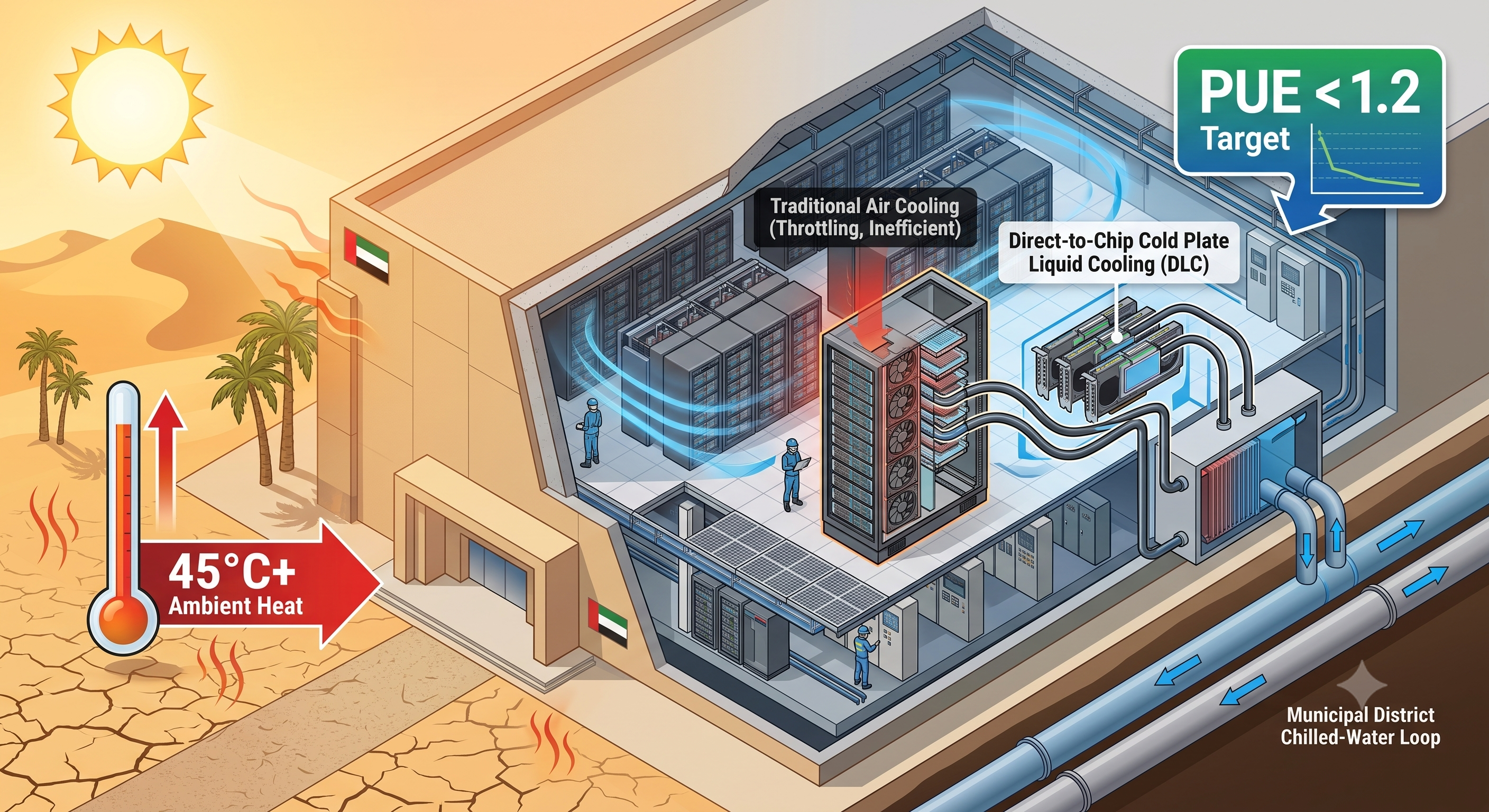 0 Comments 0 Shares 400 Views 0 Reviews
 -
Beyond the LLM Wrapper: Why Sovereign AI & Data Residency Are the New UAE Career Goldmine
With the UAE leading global hiring intent in tech and open AI/ML positions growing by 45% year-over-year, the regional talent gap has widened to over 10,500 unfilled roles.
Meanwhile, initiatives across DIFC’s AI Campus, Abu Dhabi’s AI Strategy 2026–2027, and the federal push toward agentic government workflows have triggered an aggressive operational shift:
The era of relying on generic US-hosted hyperscalers and third-party APIs is hitting a hard wall in the Gulf.
The real bottleneck across UAE enterprise, banking, and government tech isn’t model access—it is Sovereign Infrastructure and In-Country Data Residency. Under stringent national data localization laws and cybersecurity frameworks, moving sensitive financial, healthcare, and public-sector data outside the UAE is a non-starter.
This has created a massive premium for engineers and architects who know how to build autonomous, compliant, on-soil systems.
Here is the three-part framework to position yourself for the top-tier compensation brackets in the UAE:
1. Master In-Country Model Deployment & Sovereign Stacks
Enterprise clients in the Emirates can’t just send raw customer tokens to external endpoints.
Learn to deploy, fine-tune, and run regional LLMs (such as open-weights models and national foundation models like Falcon) on local infrastructure (G42, localized Azure UAE, AWS UAE clusters).
Focus on quantization, model distillation, and low-latency inference on sovereign bare-metal/GPU clusters.
2. Specialize in "Agentic Workflow Governance"
With the UAE federal framework aiming to transition 50% of government and institutional operations toward agentic-AI architectures, the highest-leverage roles aren't writing prompt strings.
They are building Identity, Permissions & Auditability layers for autonomous agents.
You must design deterministic rollback mechanisms, cryptographic audit trails, and strict role-based access control (RBAC) so autonomous agents can interact with legacy ERPs without violating UAE compliance.
3. Bridge Multi-Cloud & Local Data Residency
DevOps and Cloud Engineers who simply know one public cloud are seeing their leverage level off.
Certified multi-cloud architects with hands-on experience in data classification and residency pipelines command 15–25% salary premiums.
Master localized object storage, confidential computing enclaves, and localized hybrid-mesh setups connecting private data centers in Abu Dhabi or Dubai to compliant local zones.
Career Takeaway: In the UAE, the tech builders who command long-term career resilience and high equity/compensation aren't those building thin wrapper startups. They are the architects who know how to engineer autonomous systems inside sovereign compliance boundaries.
Discussion Question
For engineers and architects in Dubai and Abu Dhabi: As local data residency mandates tighten, what has been your biggest architectural roadblock when deploying agentic AI or high-throughput LLM pipelines locally?
CTA
Looking to master sovereign architectures and build high-leverage tech leadership across the Emirates?
👉 Join Techawks UAE for local salary benchmarks, architecture blueprints, and exclusive insights from leading engineering minds across the Gulf.Beyond the LLM Wrapper: Why Sovereign AI & Data Residency Are the New UAE Career Goldmine With the UAE leading global hiring intent in tech and open AI/ML positions growing by 45% year-over-year, the regional talent gap has widened to over 10,500 unfilled roles. Meanwhile, initiatives across DIFC’s AI Campus, Abu Dhabi’s AI Strategy 2026–2027, and the federal push toward agentic government workflows have triggered an aggressive operational shift: The era of relying on generic US-hosted hyperscalers and third-party APIs is hitting a hard wall in the Gulf. The real bottleneck across UAE enterprise, banking, and government tech isn’t model access—it is Sovereign Infrastructure and In-Country Data Residency. Under stringent national data localization laws and cybersecurity frameworks, moving sensitive financial, healthcare, and public-sector data outside the UAE is a non-starter. This has created a massive premium for engineers and architects who know how to build autonomous, compliant, on-soil systems. Here is the three-part framework to position yourself for the top-tier compensation brackets in the UAE: 1. Master In-Country Model Deployment & Sovereign Stacks Enterprise clients in the Emirates can’t just send raw customer tokens to external endpoints. Learn to deploy, fine-tune, and run regional LLMs (such as open-weights models and national foundation models like Falcon) on local infrastructure (G42, localized Azure UAE, AWS UAE clusters). Focus on quantization, model distillation, and low-latency inference on sovereign bare-metal/GPU clusters. 2. Specialize in "Agentic Workflow Governance" With the UAE federal framework aiming to transition 50% of government and institutional operations toward agentic-AI architectures, the highest-leverage roles aren't writing prompt strings. They are building Identity, Permissions & Auditability layers for autonomous agents. You must design deterministic rollback mechanisms, cryptographic audit trails, and strict role-based access control (RBAC) so autonomous agents can interact with legacy ERPs without violating UAE compliance. 3. Bridge Multi-Cloud & Local Data Residency DevOps and Cloud Engineers who simply know one public cloud are seeing their leverage level off. Certified multi-cloud architects with hands-on experience in data classification and residency pipelines command 15–25% salary premiums. Master localized object storage, confidential computing enclaves, and localized hybrid-mesh setups connecting private data centers in Abu Dhabi or Dubai to compliant local zones. Career Takeaway: In the UAE, the tech builders who command long-term career resilience and high equity/compensation aren't those building thin wrapper startups. They are the architects who know how to engineer autonomous systems inside sovereign compliance boundaries. Discussion Question For engineers and architects in Dubai and Abu Dhabi: As local data residency mandates tighten, what has been your biggest architectural roadblock when deploying agentic AI or high-throughput LLM pipelines locally? CTA Looking to master sovereign architectures and build high-leverage tech leadership across the Emirates? 👉 Join Techawks UAE for local salary benchmarks, architecture blueprints, and exclusive insights from leading engineering minds across the Gulf.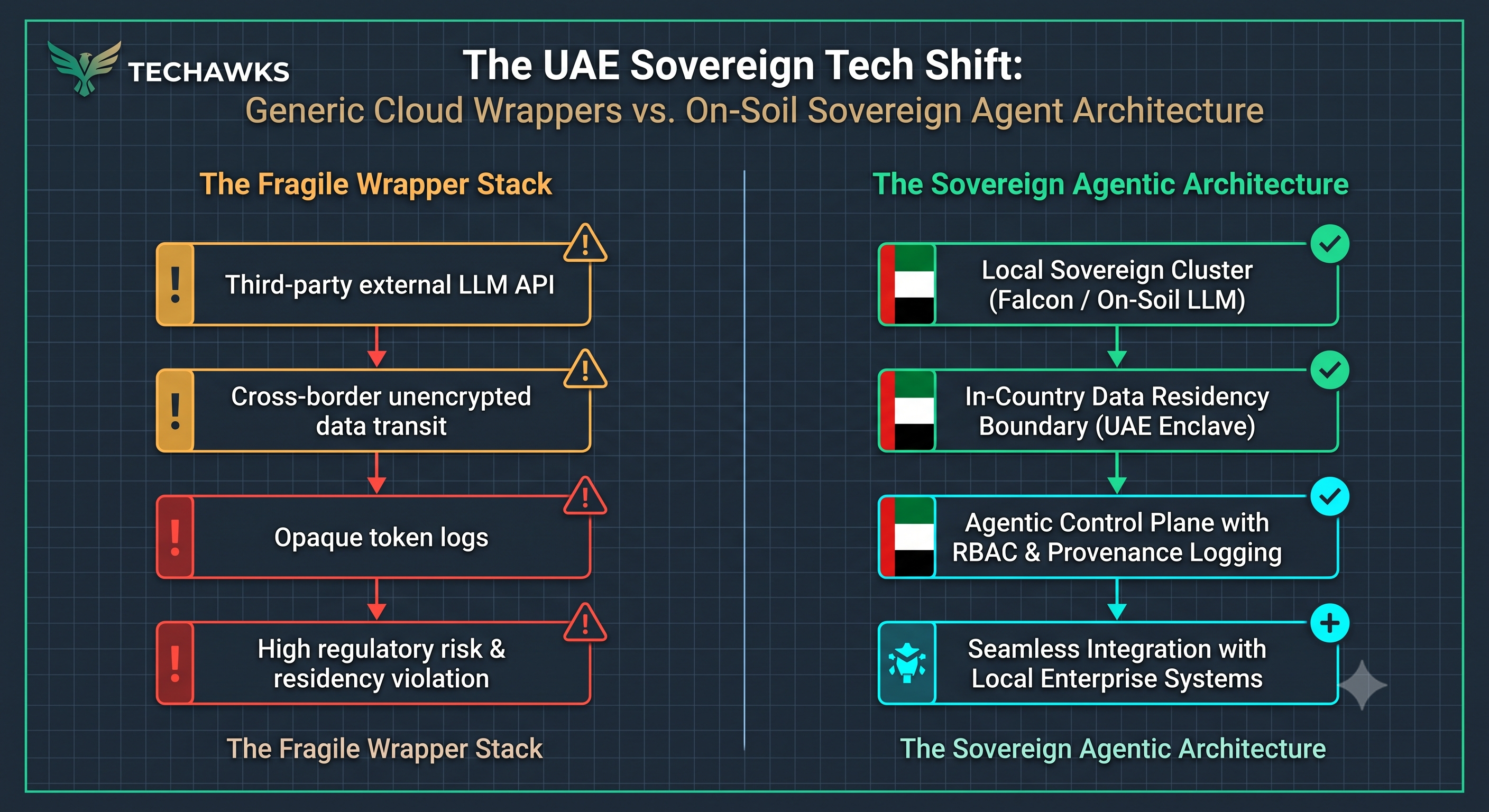 0 Comments 0 Shares 427 Views 0 Reviews
 -
Data Residency vs. Data Sovereignty: The Multi-Jurisdiction Cloud Trap in the UAE
As the UAE rapidly expands its sovereign AI infrastructure and high-density data centres across Abu Dhabi and Dubai, enterprise tech teams are building multi-region and AI-enabled workloads at unprecedented scale.
However, teams frequently conflate physical server proximity with legal sovereignty.
Myth: "Selecting a local UAE cloud region guarantees full data sovereignty and regulatory compliance."
Fact: Data residency only dictates where physical bits sit on disk; data sovereignty dictates which legal regimes, sub-processors, and foreign jurisdictions retain legal access or discovery rights over that data.
Why picking a local cloud zone is only half the architectural battle in the UAE:
The Sub-Processor and Telemetry Leak: A database instance may reside physically in Dubai, but automated error logging, IAM directory syncs, billing telemetry, or LLM inference routing often pass through global US or EU control planes. Under UAE PDPL and sector rules, this represents an unmonitored cross-border data transfer.
The Multi-Jurisdiction Overlap: A mainland entity, a DIFC (Dubai International Financial Centre) company, and an ADGM (Abu Dhabi Global Market) entity operate under three distinct data protection regimes within the UAE. Storing records uniformly in a standard public cloud bucket without domain-level segregation violates jurisdictional access controls.
Foreign Extraterritorial Claws: If a global hyperscaler operates your local UAE data centre, foreign discovery acts (like the US CLOUD Act) can legally compel upstream parent companies to provide access to hosted data—unless cryptographic keys are isolated outside foreign control.
How UAE Platform Teams Architect for True Sovereignty:
Implement External Key Management (HYOK): Never use cloud-provider-managed encryption keys for regulated or sensitive personal data. Deploy "Hold Your Own Key" (HYOK) architectures using local, dedicated Hardware Security Modules (HSMs) situated within sovereign UAE boundaries.
Air-Gap Telemetry and Model Pipelines: Ensure observability logs, model embeddings, and metadata payloads do not egress to global SaaS endpoints (e.g., global logging monitors or foreign LLM APIs). Utilize in-region private endpoints and local AI model hosting.
Segregate Tenant Storage by Regulatory Zone: Build partitioned data planes separating Mainland, DIFC, and ADGM workloads. Implement automated data tagging and policy-as-code guardrails preventing cross-zone record replication without verified transfer mechanisms.
Discussion Question
How is your team handling key management and telemetry egress for workloads hosted in UAE cloud regions—are you using cloud-default KMS or sovereign external HSMs?
CTA
Ready to build resilient, sovereign cloud architectures tailored to the UAE’s cutting-edge tech and regulatory standards? Join Techawks UAE to exchange insights on cloud infrastructure, sovereign AI pipelines, and platform engineering.Data Residency vs. Data Sovereignty: The Multi-Jurisdiction Cloud Trap in the UAE As the UAE rapidly expands its sovereign AI infrastructure and high-density data centres across Abu Dhabi and Dubai, enterprise tech teams are building multi-region and AI-enabled workloads at unprecedented scale. However, teams frequently conflate physical server proximity with legal sovereignty. Myth: "Selecting a local UAE cloud region guarantees full data sovereignty and regulatory compliance." Fact: Data residency only dictates where physical bits sit on disk; data sovereignty dictates which legal regimes, sub-processors, and foreign jurisdictions retain legal access or discovery rights over that data. Why picking a local cloud zone is only half the architectural battle in the UAE: The Sub-Processor and Telemetry Leak: A database instance may reside physically in Dubai, but automated error logging, IAM directory syncs, billing telemetry, or LLM inference routing often pass through global US or EU control planes. Under UAE PDPL and sector rules, this represents an unmonitored cross-border data transfer. The Multi-Jurisdiction Overlap: A mainland entity, a DIFC (Dubai International Financial Centre) company, and an ADGM (Abu Dhabi Global Market) entity operate under three distinct data protection regimes within the UAE. Storing records uniformly in a standard public cloud bucket without domain-level segregation violates jurisdictional access controls. Foreign Extraterritorial Claws: If a global hyperscaler operates your local UAE data centre, foreign discovery acts (like the US CLOUD Act) can legally compel upstream parent companies to provide access to hosted data—unless cryptographic keys are isolated outside foreign control. How UAE Platform Teams Architect for True Sovereignty: Implement External Key Management (HYOK): Never use cloud-provider-managed encryption keys for regulated or sensitive personal data. Deploy "Hold Your Own Key" (HYOK) architectures using local, dedicated Hardware Security Modules (HSMs) situated within sovereign UAE boundaries. Air-Gap Telemetry and Model Pipelines: Ensure observability logs, model embeddings, and metadata payloads do not egress to global SaaS endpoints (e.g., global logging monitors or foreign LLM APIs). Utilize in-region private endpoints and local AI model hosting. Segregate Tenant Storage by Regulatory Zone: Build partitioned data planes separating Mainland, DIFC, and ADGM workloads. Implement automated data tagging and policy-as-code guardrails preventing cross-zone record replication without verified transfer mechanisms. Discussion Question How is your team handling key management and telemetry egress for workloads hosted in UAE cloud regions—are you using cloud-default KMS or sovereign external HSMs? CTA Ready to build resilient, sovereign cloud architectures tailored to the UAE’s cutting-edge tech and regulatory standards? Join Techawks UAE to exchange insights on cloud infrastructure, sovereign AI pipelines, and platform engineering. 0 Comments 0 Shares 378 Views 0 Reviews
 -
Beyond the LLM Wrapper: The UAE Tech Lead’s Production AI Governance & Data Sovereignty Checklist
Across the Emirates, AI development is moving rapidly past the experimentation phase. Between Federal Decree-Law No. 45 (PDPL), the Central Bank of the UAE’s (CBUAE) AI/ML governance directives, and specialized free-zone frameworks in DIFC and ADGM, compliance in the UAE is fundamentally an architectural challenge.
Why It Matters to UAE Tech Teams
Unlike European or US models that rely heavily on catch-all legal bases like "legitimate interest," the UAE mainland framework is built on consent-first processing with explicit human-review gates for automated profiling. Meanwhile, local enterprise buyers and financial institutions face binding mandates around explainability, model drift auditing, and in-country data residency.
If your production models cannot provide auditable inference logs, isolate tenant data locally, or allow instantaneous human review for consequential automated actions, your product will fail enterprise procurement audits.
The Production AI Governance & Sovereignty Checklist
[ ] 1. Enforce In-Country Data Residency & Sovereign Inference
└─ Isolate UAE resident PII within local cloud availability zones (e.g., UAE Azure/AWS/Core42 clusters).
└─ Prevent upstream third-party model APIs from using enterprise client prompts for foundational training.
[ ] 2. Architect a Deterministic "Human-in-the-Loop" (HITL) Fallback
└─ Implement confidence scoring thresholds at the inference layer.
└─ Automatically route low-confidence or high-impact automated outputs (credit, KYC, hiring) to a human review queue.
[ ] 3. Decouple Training Data Provenance & Cryptographic Consent Logs
└─ Map every fine-tuning dataset to explicit, auditable user consent records.
└─ Maintain deterministic rollback mechanisms to unlearn or purge vectors derived from revoked personal data.
[ ] 4. Instrument Continuous Model Drift & Bias Telemetry
└─ Run automated weekly bias and distribution skew tests against local demographic parameters.
└─ Establish latency-aware circuit breakers that automatically roll back to baseline checkpoints if hallucinations spike.
[ ] 5. Implement Explainability & Attribution Layers (SHAP / Integrated Gradients)
└─ Store input attribution vectors alongside automated model decisions in cold storage for 5+ years.
└─ Expose human-readable decision factors via consumer-facing APIs when an automated decision affects user status.
Enterprise-grade AI in the Gulf is not determined by prompt engineering—it is determined by deterministic data sovereignty, auditable inference, and verifiable safety gates.
Discussion Question
How is your engineering team currently architecting cross-border data isolation and vector unlearning when fine-tuning models on UAE customer records?
CTA (Join Techawks UAE)
Follow Techawks UAE for production-grade architectural blueprints, regional regulatory breakdowns, and deep technical frameworks built for the UAE builder ecosystem.Beyond the LLM Wrapper: The UAE Tech Lead’s Production AI Governance & Data Sovereignty Checklist Across the Emirates, AI development is moving rapidly past the experimentation phase. Between Federal Decree-Law No. 45 (PDPL), the Central Bank of the UAE’s (CBUAE) AI/ML governance directives, and specialized free-zone frameworks in DIFC and ADGM, compliance in the UAE is fundamentally an architectural challenge. Why It Matters to UAE Tech Teams Unlike European or US models that rely heavily on catch-all legal bases like "legitimate interest," the UAE mainland framework is built on consent-first processing with explicit human-review gates for automated profiling. Meanwhile, local enterprise buyers and financial institutions face binding mandates around explainability, model drift auditing, and in-country data residency. If your production models cannot provide auditable inference logs, isolate tenant data locally, or allow instantaneous human review for consequential automated actions, your product will fail enterprise procurement audits. The Production AI Governance & Sovereignty Checklist [ ] 1. Enforce In-Country Data Residency & Sovereign Inference └─ Isolate UAE resident PII within local cloud availability zones (e.g., UAE Azure/AWS/Core42 clusters). └─ Prevent upstream third-party model APIs from using enterprise client prompts for foundational training. [ ] 2. Architect a Deterministic "Human-in-the-Loop" (HITL) Fallback └─ Implement confidence scoring thresholds at the inference layer. └─ Automatically route low-confidence or high-impact automated outputs (credit, KYC, hiring) to a human review queue. [ ] 3. Decouple Training Data Provenance & Cryptographic Consent Logs └─ Map every fine-tuning dataset to explicit, auditable user consent records. └─ Maintain deterministic rollback mechanisms to unlearn or purge vectors derived from revoked personal data. [ ] 4. Instrument Continuous Model Drift & Bias Telemetry └─ Run automated weekly bias and distribution skew tests against local demographic parameters. └─ Establish latency-aware circuit breakers that automatically roll back to baseline checkpoints if hallucinations spike. [ ] 5. Implement Explainability & Attribution Layers (SHAP / Integrated Gradients) └─ Store input attribution vectors alongside automated model decisions in cold storage for 5+ years. └─ Expose human-readable decision factors via consumer-facing APIs when an automated decision affects user status. Enterprise-grade AI in the Gulf is not determined by prompt engineering—it is determined by deterministic data sovereignty, auditable inference, and verifiable safety gates. Discussion Question How is your engineering team currently architecting cross-border data isolation and vector unlearning when fine-tuning models on UAE customer records? CTA (Join Techawks UAE) Follow Techawks UAE for production-grade architectural blueprints, regional regulatory breakdowns, and deep technical frameworks built for the UAE builder ecosystem.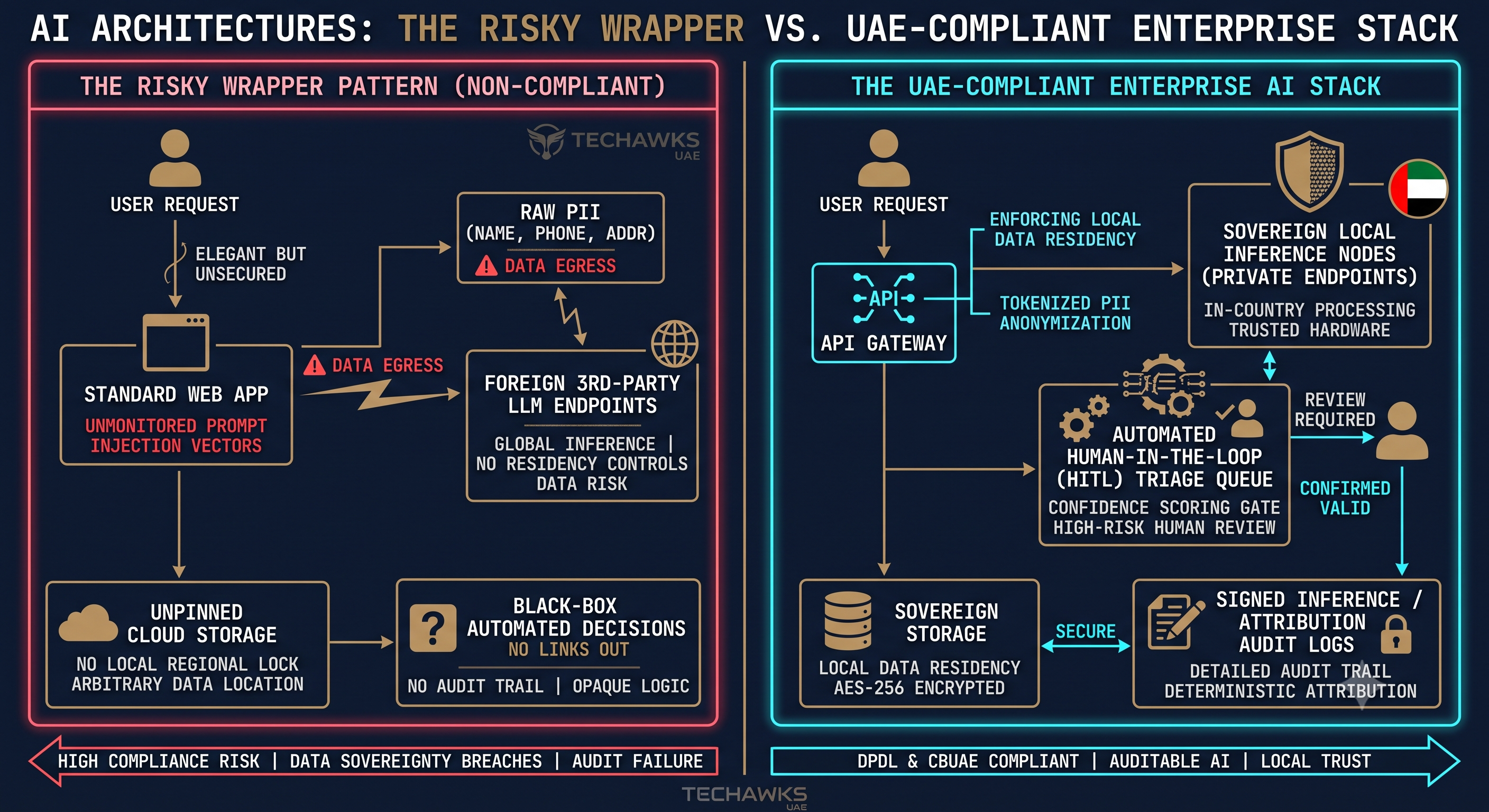 0 Comments 0 Shares 377 Views 0 Reviews
 -
Architecting Zero-Egress RAG for UAE Sovereign AI Compliance
With UAE regulatory enforcement intensifying around cross-border telemetry and data residency, enterprise engineering teams in Dubai and Abu Dhabi face a hard constraint: critical citizen data, corporate IP, and regulated customer records cannot leave national borders.
Sending vector embeddings, raw prompt contexts, or fine-tuning datasets to public SaaS inference endpoints outside the country breaks compliance by design. Sovereign AI is not just about choosing an open-weight base model—it is about enforcing strict, zero-egress data planes.
Here is an architectural blueprint to build an in-country, zero-egress RAG pipeline using open-weight models (such as Falcon or Jais) running entirely on sovereign UAE compute.
1. Isolate the Compute and Model Tier
Deploy your foundational model within local boundaries (e.g., Azure UAE Central/North regions, sovereign GPU providers like Core42, or air-gapped on-premise infrastructure).
Pull open-weight checkpoints (e.g., Falcon-2 or Jais-13b-chat) and run inference through high-throughput engines like vLLM or TGI (Text Generation Inference) isolated inside your private VPC.
Disable all outbound public internet routing on your model worker nodes:
Bash
# Verify no default outbound route exists on the inference subnet
ip route show | grep default
# Ensure traffic to external endpoints drops immediately
curl --connect-timeout 3 https://api.openai.com || echo "Egress blocked: Verified."
2. Deploy Local Vector Stores with Hardware-Isolated Tenants
Avoid managed multi-tenant vector clouds hosted outside the GCC. Host an internal instance of Qdrant, pgvector, or Milvus within your secure cluster:
Enforce TLS 1.3 encryption for in-flight embedding ingestion.
Generate embeddings in-VPC using open embedding models (such as bge-m3 or local multilingual BERT variants) so that raw documents are tokenized and vectorized without exposing plaintext payloads to external networks.
3. Implement Ingress Sanitization and Redaction
Before enterprise context enters your retrieval pipeline:
Run a local Named Entity Recognition (NER) model at your ingress gateway to detect Emirates IDs, payment data, and sensitive PII.
Enforce prompt scrubbing and strict Data Loss Prevention (DLP) rules prior to context injection.
4. Audit VPC Telemetry and DNS Leaks
Even if inference is local, client SDKs often default to sending background usage analytics or crash metrics to overseas SaaS telemetry endpoints.
Route cluster DNS queries through an internal, logging DNS resolver (e.g., CoreDNS).
Configure network security groups to explicitly drop UDP/TCP port 53 traffic aimed at public resolvers (8.8.8.8, 1.1.1.1), terminating all internal name resolution within your UAE private network.
Building sovereign AI infrastructure shifts data protection from an operational policy document into an immutable infrastructure constraint.
Discussion Question
When deploying local generative models across UAE enterprise workloads, are you containerizing self-hosted open-weight models in private VPCs, or relying on dedicated, UAE-domiciled sovereign cloud managed endpoints?
CTA (Join Techawks UAE)
Join the Techawks UAE community to exchange architectural patterns, deployment playbooks, and systems engineering benchmarks with developers and cloud architects across the Emirates.Architecting Zero-Egress RAG for UAE Sovereign AI Compliance With UAE regulatory enforcement intensifying around cross-border telemetry and data residency, enterprise engineering teams in Dubai and Abu Dhabi face a hard constraint: critical citizen data, corporate IP, and regulated customer records cannot leave national borders. Sending vector embeddings, raw prompt contexts, or fine-tuning datasets to public SaaS inference endpoints outside the country breaks compliance by design. Sovereign AI is not just about choosing an open-weight base model—it is about enforcing strict, zero-egress data planes. Here is an architectural blueprint to build an in-country, zero-egress RAG pipeline using open-weight models (such as Falcon or Jais) running entirely on sovereign UAE compute. 1. Isolate the Compute and Model Tier Deploy your foundational model within local boundaries (e.g., Azure UAE Central/North regions, sovereign GPU providers like Core42, or air-gapped on-premise infrastructure). Pull open-weight checkpoints (e.g., Falcon-2 or Jais-13b-chat) and run inference through high-throughput engines like vLLM or TGI (Text Generation Inference) isolated inside your private VPC. Disable all outbound public internet routing on your model worker nodes: Bash # Verify no default outbound route exists on the inference subnet ip route show | grep default # Ensure traffic to external endpoints drops immediately curl --connect-timeout 3 https://api.openai.com || echo "Egress blocked: Verified." 2. Deploy Local Vector Stores with Hardware-Isolated Tenants Avoid managed multi-tenant vector clouds hosted outside the GCC. Host an internal instance of Qdrant, pgvector, or Milvus within your secure cluster: Enforce TLS 1.3 encryption for in-flight embedding ingestion. Generate embeddings in-VPC using open embedding models (such as bge-m3 or local multilingual BERT variants) so that raw documents are tokenized and vectorized without exposing plaintext payloads to external networks. 3. Implement Ingress Sanitization and Redaction Before enterprise context enters your retrieval pipeline: Run a local Named Entity Recognition (NER) model at your ingress gateway to detect Emirates IDs, payment data, and sensitive PII. Enforce prompt scrubbing and strict Data Loss Prevention (DLP) rules prior to context injection. 4. Audit VPC Telemetry and DNS Leaks Even if inference is local, client SDKs often default to sending background usage analytics or crash metrics to overseas SaaS telemetry endpoints. Route cluster DNS queries through an internal, logging DNS resolver (e.g., CoreDNS). Configure network security groups to explicitly drop UDP/TCP port 53 traffic aimed at public resolvers (8.8.8.8, 1.1.1.1), terminating all internal name resolution within your UAE private network. Building sovereign AI infrastructure shifts data protection from an operational policy document into an immutable infrastructure constraint. Discussion Question When deploying local generative models across UAE enterprise workloads, are you containerizing self-hosted open-weight models in private VPCs, or relying on dedicated, UAE-domiciled sovereign cloud managed endpoints? CTA (Join Techawks UAE) Join the Techawks UAE community to exchange architectural patterns, deployment playbooks, and systems engineering benchmarks with developers and cloud architects across the Emirates.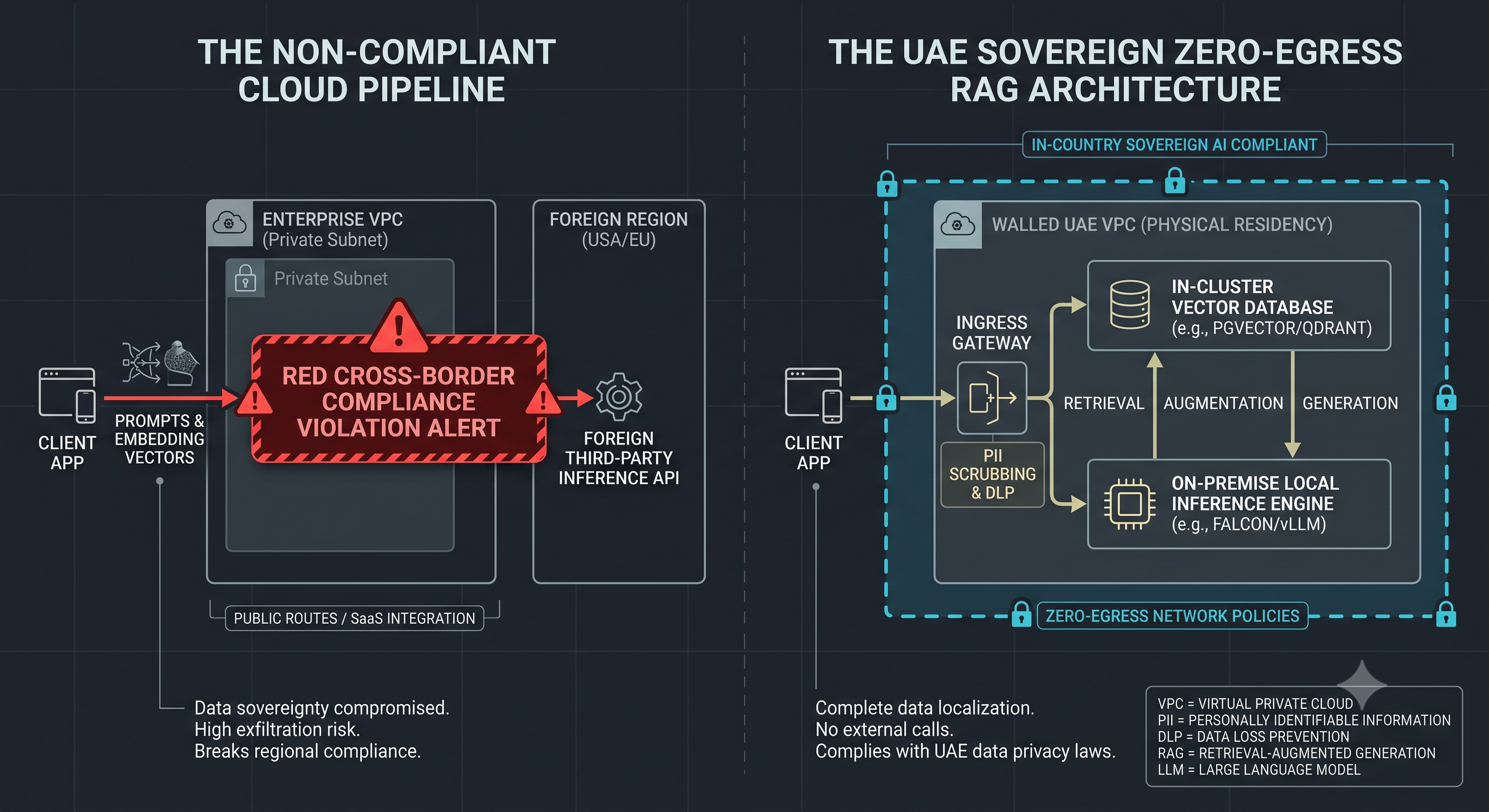 0 Comments 0 Shares 408 Views 0 Reviews
 -
Architecting for the Gulf: Why Local Data In-Country Isn't Just Good Practice—It's Architectural Law
Engineering systems in the UAE and wider GCC market comes with distinct operational requirements. With comprehensive personal data protection laws (Federal Decree-Law No. 45) and strict industry regulations across fintech and healthcare, hosting sensitive customer records offshore creates significant legal exposure.
Beyond compliance, backhauling database queries to Europe degrades the real-time user experiences that local mobile-first consumers expect.
To build an architecture that stays fast, resilient, and compliant within the UAE ecosystem, implement the Gulf In-Country Blueprint:
Leverage Local Cloud Regions as Primary Tiers: Both AWS (Middle East / UAE) and Microsoft Azure (UAE North / Central) provide mature regional zones in Abu Dhabi and Dubai. Keep transactional databases, customer profiles, and session data anchored within these local zones to guarantee single-digit millisecond latency and clear data residency boundaries.
Implement Dual-Tier Encryption & Key Sovereignty: Never rely solely on generic vendor-managed keys for sensitive workloads. Use localized Hardware Security Modules (HSMs) or Customer Managed Keys (CMK) configured to restrict key derivation and access exclusively to local identity principals.
Decouple Edge Ingress from Core Compliance Storage: Route public media assets, static frontends, and non-PII caches through local Middle Eastern edge points of presence (PoPs) to optimize delivery speeds across the GCC, while locking database write queries down to strict in-country VPC endpoints.
Let’s talk architecture in the region: What has been your biggest design challenge when ensuring local UAE data residency alongside global microservice dependencies?
How does your team handle hybrid on-prem and local cloud infrastructure across Dubai and Abu Dhabi? Share your technical setup below.
Key Takeaways
Residency by default: Anchor databases and user tables in local UAE cloud regions to meet compliance without performance trade-offs.
Retain encryption custody: Use Customer Managed Keys and localized access policies to enforce strict cryptographic boundaries.
Optimize via local edge nodes: Use GCC-based PoPs to accelerate delivery while isolating sensitive transactional pipelines within sovereign VPCs.
CTA
Navigating local cloud architecture, enterprise scalability, and tech infrastructure across the Emirates? Join Techawks UAE to connect with local systems architects, debate operational playbooks, and build high-performance systems for the region. Link in the bio/comments!Architecting for the Gulf: Why Local Data In-Country Isn't Just Good Practice—It's Architectural Law Engineering systems in the UAE and wider GCC market comes with distinct operational requirements. With comprehensive personal data protection laws (Federal Decree-Law No. 45) and strict industry regulations across fintech and healthcare, hosting sensitive customer records offshore creates significant legal exposure. Beyond compliance, backhauling database queries to Europe degrades the real-time user experiences that local mobile-first consumers expect. To build an architecture that stays fast, resilient, and compliant within the UAE ecosystem, implement the Gulf In-Country Blueprint: Leverage Local Cloud Regions as Primary Tiers: Both AWS (Middle East / UAE) and Microsoft Azure (UAE North / Central) provide mature regional zones in Abu Dhabi and Dubai. Keep transactional databases, customer profiles, and session data anchored within these local zones to guarantee single-digit millisecond latency and clear data residency boundaries. Implement Dual-Tier Encryption & Key Sovereignty: Never rely solely on generic vendor-managed keys for sensitive workloads. Use localized Hardware Security Modules (HSMs) or Customer Managed Keys (CMK) configured to restrict key derivation and access exclusively to local identity principals. Decouple Edge Ingress from Core Compliance Storage: Route public media assets, static frontends, and non-PII caches through local Middle Eastern edge points of presence (PoPs) to optimize delivery speeds across the GCC, while locking database write queries down to strict in-country VPC endpoints. Let’s talk architecture in the region: What has been your biggest design challenge when ensuring local UAE data residency alongside global microservice dependencies? How does your team handle hybrid on-prem and local cloud infrastructure across Dubai and Abu Dhabi? Share your technical setup below. Key Takeaways Residency by default: Anchor databases and user tables in local UAE cloud regions to meet compliance without performance trade-offs. Retain encryption custody: Use Customer Managed Keys and localized access policies to enforce strict cryptographic boundaries. Optimize via local edge nodes: Use GCC-based PoPs to accelerate delivery while isolating sensitive transactional pipelines within sovereign VPCs. CTA Navigating local cloud architecture, enterprise scalability, and tech infrastructure across the Emirates? Join Techawks UAE to connect with local systems architects, debate operational playbooks, and build high-performance systems for the region. Link in the bio/comments!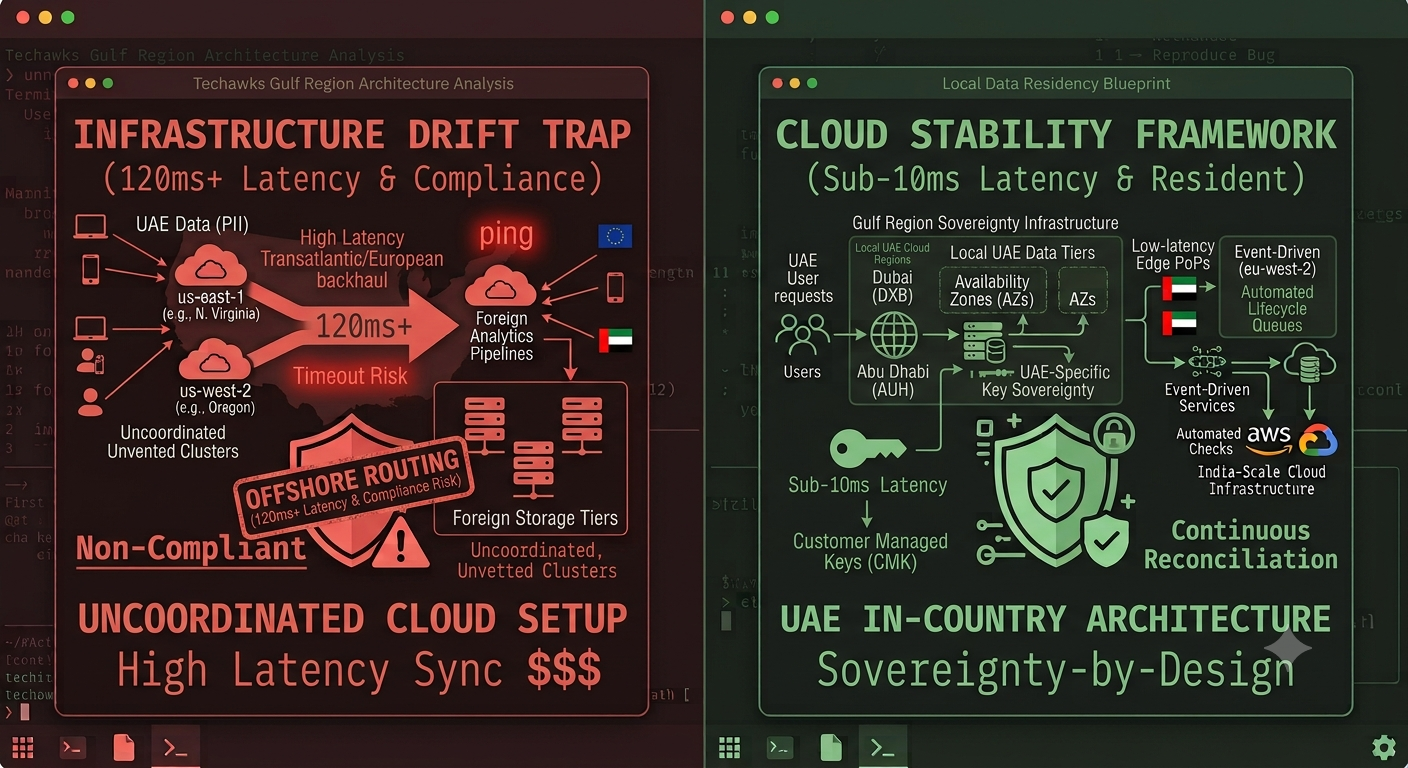 0 Comments 0 Shares 172 Views 0 Reviews
More Stories