




Techawks USA is the American chapter of the Techawks technology and AI community, bringing together software developers, AI engineers, entrepreneurs, researchers, students, IT professionals, and technology enthusiasts from across the United States. Whether you're building cutting-edge applications, launching a startup, or advancing your tech career, this community is designed to inspire collaboration and innovation.
Stay updated with the latest developments in artificial intelligence, software engineering, cloud computing, cybersecurity, data science, robotics, startups, and emerging technologies. Discover career opportunities, industry insights, hackathons, conferences, certifications, and expert-led discussions while connecting with one of the world's most dynamic technology ecosystems.
Stay updated with the latest developments in artificial intelligence, software engineering, cloud computing, cybersecurity, data science, robotics, startups, and emerging technologies. Discover career opportunities, industry insights, hackathons, conferences, certifications, and expert-led discussions while connecting with one of the world's most dynamic technology ecosystems.
-
PBID: 0230001500000013
-
5 people like this
-
54 Posts
-
54 Photos
-
0 Videos
-
Reviews
-
Science and Technology
Search

 Arabic
 French
 Spanish
 Portuguese
 Deutsch
 Turkish
 Dutch
Dutch
 Italiano
 Russian
 Romaian
 Portuguese (Brazil)
 Greek
Greek
Recent Updates
-
Why Bearer Tokens Are Dead: NIST IR 8587 Just Broke Every "Quick" Microservices Architecture
NIST and CISA just published their final technical guidance under NIST IR 8587, targeting token theft, forging, and replay attacks across identity federation, single sign-on (SSO), and machine-to-machine (M2M) APIs.
For years, software teams treated bearer tokens as an architectural shortcut. A client authenticates, gets a cryptographically signed JWT, and attaches it to every outbound HTTP header:
The fundamental flaw? Bearer tokens act like cash—whoever holds them owns them. If an orchestration worker leaks credentials via memory dumps, debug logs, or an indirect prompt injection in an AI workflow, possession equals full access.
NIST IR 8587 is a death knell for static bearer authentication in distributed US cloud environments. Here is the architectural shift your team needs to implement:
Cryptographic Sender-Constrained Tokens: Move away from pure bearer validation. Under standard specifications like RFC 8705 (mTLS OAuth) and RFC 9449 (DPoP — Demonstrating Proof-of-Possession), tokens are mathematically bound to the sender’s asymmetric private key. Even if an attacker intercepts the token in flight, it is cryptographically useless without the client’s ephemeral private key.
Continuous Access Evaluation Protocol (CAEP / RFC 9493): Stop relying exclusively on short-lived JWT expiry intervals (e.g., 5–15 minutes). Implement webhook/event-driven signal protocols between your Identity Provider (IdP) and downstream resource servers. When device posture, session risk, or non-human identity policies trigger, token revocation must happen in sub-second event streams, not after TTL expiration.
Granular Audience & Scope Scaffolding: Eliminate monolithic wildcard audience tags (aud: "*") across microservice clusters. Strict audience-binding limits the blast radius so a credential scoped for an internal analytics service cannot execute administrative queries on a transactional database.
Discussion Question
Are you enforcing DPoP or mTLS client bindings on your external and service-to-service endpoints yet, or is your infrastructure still vulnerable to raw token replay?
CTA
Level up your systems design and cloud security engineering. Join Techawks USA to discuss modern architecture, resilience patterns, and distributed systems best practices.Why Bearer Tokens Are Dead: NIST IR 8587 Just Broke Every "Quick" Microservices Architecture NIST and CISA just published their final technical guidance under NIST IR 8587, targeting token theft, forging, and replay attacks across identity federation, single sign-on (SSO), and machine-to-machine (M2M) APIs. For years, software teams treated bearer tokens as an architectural shortcut. A client authenticates, gets a cryptographically signed JWT, and attaches it to every outbound HTTP header: The fundamental flaw? Bearer tokens act like cash—whoever holds them owns them. If an orchestration worker leaks credentials via memory dumps, debug logs, or an indirect prompt injection in an AI workflow, possession equals full access. NIST IR 8587 is a death knell for static bearer authentication in distributed US cloud environments. Here is the architectural shift your team needs to implement: Cryptographic Sender-Constrained Tokens: Move away from pure bearer validation. Under standard specifications like RFC 8705 (mTLS OAuth) and RFC 9449 (DPoP — Demonstrating Proof-of-Possession), tokens are mathematically bound to the sender’s asymmetric private key. Even if an attacker intercepts the token in flight, it is cryptographically useless without the client’s ephemeral private key. Continuous Access Evaluation Protocol (CAEP / RFC 9493): Stop relying exclusively on short-lived JWT expiry intervals (e.g., 5–15 minutes). Implement webhook/event-driven signal protocols between your Identity Provider (IdP) and downstream resource servers. When device posture, session risk, or non-human identity policies trigger, token revocation must happen in sub-second event streams, not after TTL expiration. Granular Audience & Scope Scaffolding: Eliminate monolithic wildcard audience tags (aud: "*") across microservice clusters. Strict audience-binding limits the blast radius so a credential scoped for an internal analytics service cannot execute administrative queries on a transactional database. Discussion Question Are you enforcing DPoP or mTLS client bindings on your external and service-to-service endpoints yet, or is your infrastructure still vulnerable to raw token replay? CTA Level up your systems design and cloud security engineering. Join Techawks USA to discuss modern architecture, resilience patterns, and distributed systems best practices.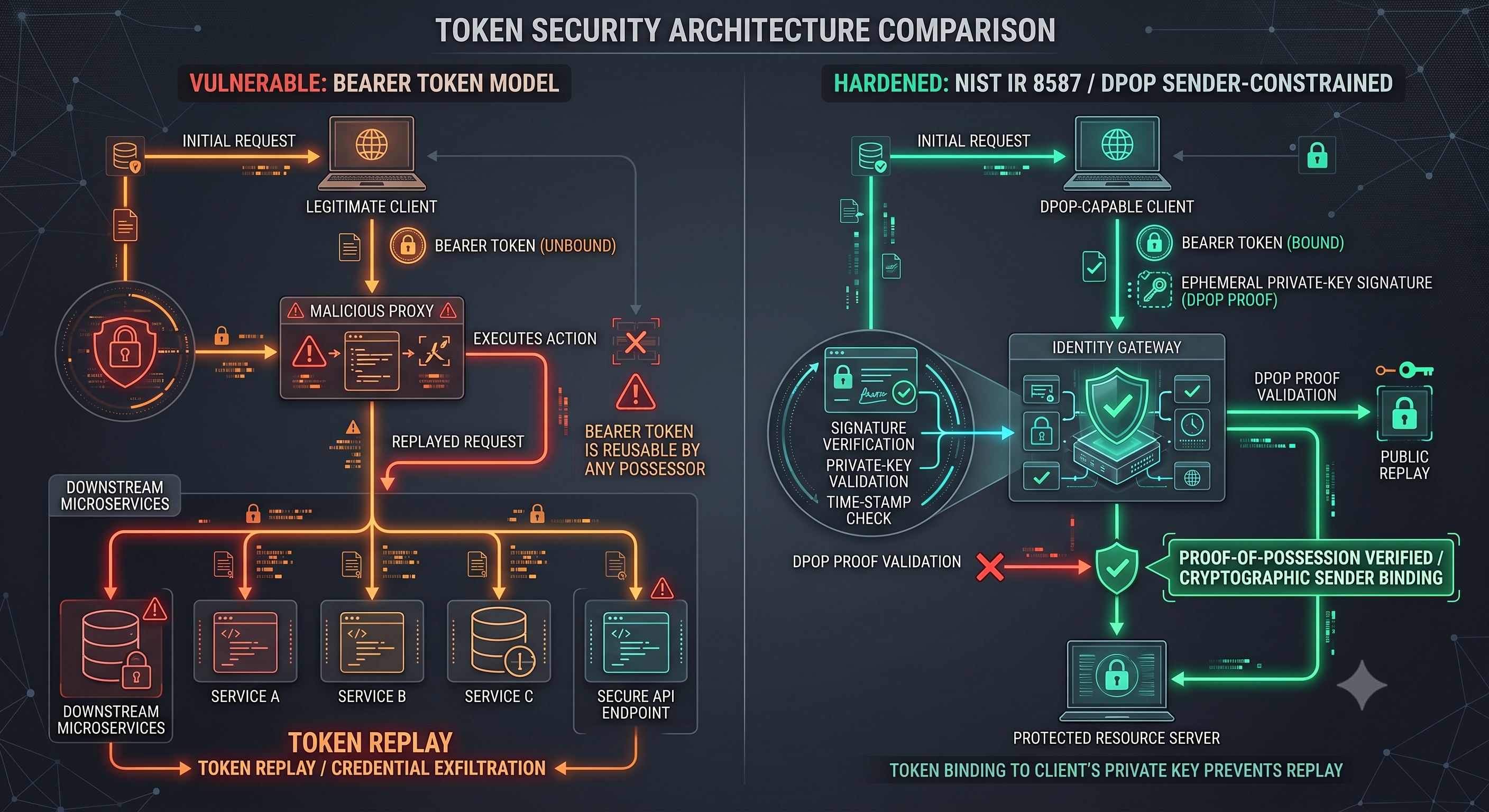 0 Comments 0 Shares 76 Views 0 Reviews
 -
Is Your AI Agent Production-Ready or an IAM Liability?
As US enterprises shift from simple LLM wrappers to multi-step autonomous AI agents, enterprise security architecture is hitting a wall.
When an agent plans dynamically, executes tool calls, and accesses downstream databases, standard perimeter defenses and static service accounts fail. If an agent’s identity inherits broad user permissions or runs unchecked API tokens, a single prompt injection can trigger unintended writes, data leakage, or runaway tool execution.
Before you push that autonomous workflow to production, run your architecture against this Production AI Agent Readiness Checklist:
[ ] Ephemeral, Task-Scoped Identity: Does the agent hold long-lived credentials, or does it request short-lived, brokered tokens strictly bound to its current runtime task?
[ ] Tool-Level Blast Radius Bounds: Are MCP (Model Context Protocol) and API permissions constrained to least-privilege, blocking administrative escalation or unauthorized schema modifications?
[ ] Deterministic Step & Loop Caps: Have you established hard limits on execution retries, tool iteration cycles, and autonomous timeouts to prevent runaway API spend and deadlocks?
[ ] Indirect Prompt Injection Filters: Is incoming content from web pages, emails, or retrieval stores sanitized and isolated before parsing into the agent’s execution context?
[ ] Non-Repudiation Audit Trails: Can your security team reconstruct an immutable, end-to-end log of the agent’s reasoning steps, data retrieved, tool invocations, and user confirmations?
[ ] Context-Aware Human-in-the-Loop (HITL): Are irreversible actions (e.g., financial disbursements, record deletion) protected by intentional review gates rather than passive, click-through confirmations?
Autonomous systems need rigorous, zero-trust infrastructure. If you can’t isolate the agent's identity, you haven't built an automated workflow—you've built an ungoverned backdoor.
Discussion Question
What is your team’s biggest architectural bottleneck when moving autonomous agents from sandbox to production—identity management, prompt injection defense, or execution limits?
CTA
Join Techawks USA to connect with enterprise engineers, cloud architects, and security leaders building the next generation of resilient AI infrastructure.Is Your AI Agent Production-Ready or an IAM Liability? As US enterprises shift from simple LLM wrappers to multi-step autonomous AI agents, enterprise security architecture is hitting a wall. When an agent plans dynamically, executes tool calls, and accesses downstream databases, standard perimeter defenses and static service accounts fail. If an agent’s identity inherits broad user permissions or runs unchecked API tokens, a single prompt injection can trigger unintended writes, data leakage, or runaway tool execution. Before you push that autonomous workflow to production, run your architecture against this Production AI Agent Readiness Checklist: [ ] Ephemeral, Task-Scoped Identity: Does the agent hold long-lived credentials, or does it request short-lived, brokered tokens strictly bound to its current runtime task? [ ] Tool-Level Blast Radius Bounds: Are MCP (Model Context Protocol) and API permissions constrained to least-privilege, blocking administrative escalation or unauthorized schema modifications? [ ] Deterministic Step & Loop Caps: Have you established hard limits on execution retries, tool iteration cycles, and autonomous timeouts to prevent runaway API spend and deadlocks? [ ] Indirect Prompt Injection Filters: Is incoming content from web pages, emails, or retrieval stores sanitized and isolated before parsing into the agent’s execution context? [ ] Non-Repudiation Audit Trails: Can your security team reconstruct an immutable, end-to-end log of the agent’s reasoning steps, data retrieved, tool invocations, and user confirmations? [ ] Context-Aware Human-in-the-Loop (HITL): Are irreversible actions (e.g., financial disbursements, record deletion) protected by intentional review gates rather than passive, click-through confirmations? Autonomous systems need rigorous, zero-trust infrastructure. If you can’t isolate the agent's identity, you haven't built an automated workflow—you've built an ungoverned backdoor. Discussion Question What is your team’s biggest architectural bottleneck when moving autonomous agents from sandbox to production—identity management, prompt injection defense, or execution limits? CTA Join Techawks USA to connect with enterprise engineers, cloud architects, and security leaders building the next generation of resilient AI infrastructure.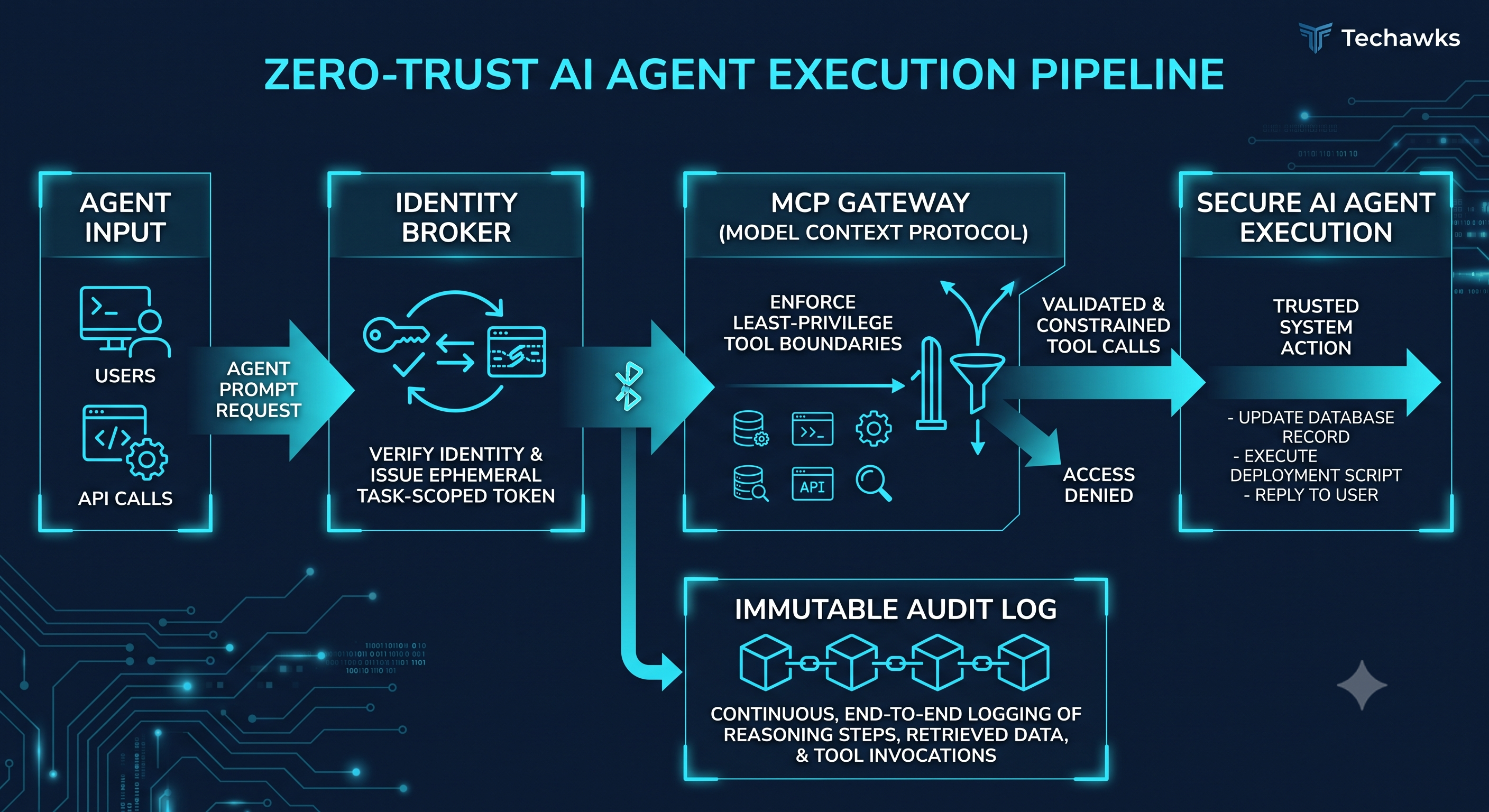 0 Comments 0 Shares 330 Views 0 Reviews
 -
Beyond the Region Lock: Why US Platform Teams Are Migrating to Local-First AI Architectures in 2026
The legacy promise of US cloud data centers was unlimited scale via geographic abstraction: spin up instances anywhere, pay-for-use, and let the network handle replication. However, the AI-native shift has corrupted this model.
For critical US workloads, geographic latency and data egress costs are the new performance bottlenecks. High-performing engineering teams are moving beyond region-locking toward Deterministic Compute Fabrics that are local-first.
In 2026, optimization is defined by removing infrastructure, not adding it. US platform stewards must master three architectural shifts:
Your 3-Step Local-First Migration Strategy:
Shift Right, then Shift Left (Boundary Inference)
Treat developer workstations (especially M-series and high-end RTX rigs) as an extended compute plane. Use containerized local inference gateways. Enforce strict boundary rules: if a query requires fewer than 14B parameters or can be handled by an SLM, drop it from the cloud egress pipeline entirely.
Move from VMs to Native WASM & MicroVMs
If an agent workflow must burst to the cloud for validation or state consistency, use highly ephemeral execution environments. Do not spin up a VM or a K8s pod. Use WebAssembly (WASM) runtimes (e.g., Wasmtime) or MicroVMs (e.g., Firecracker) for transactional, low-millisecond agent calls.
Master Local/Cloud Deterministic Sync
The bottleneck isn’t compute; it’s state. Implement local-first Conflict-free Replicated Data Types (CRDTs) or robust transactional databases that guarantee state determinism between the localized user session and the cloud control plane.
Your US cloud strategy is no longer about managing sprawl across 'us-east-1' and 'us-west-2'. It’s about building minimal, deterministic gateways that coordinate execution across decentralized, high-utilization local hardware.
Discussion Question
For US-based cloud engineers and platform architects: How are you handling the hybrid AI split—are you using service mesh to route inference locally, containerizing SLMs, or purely optimizing on-demand cloud costs in congested regions? Share your optimization playbook.
CTA
Ready to build minimal, scalable, and cost-efficient cloud systems optimized for local-first execution?
👉 Join Techawks USA to master distributed systems, WASM orchestration, and production engineering alongside US practitioners.Beyond the Region Lock: Why US Platform Teams Are Migrating to Local-First AI Architectures in 2026 The legacy promise of US cloud data centers was unlimited scale via geographic abstraction: spin up instances anywhere, pay-for-use, and let the network handle replication. However, the AI-native shift has corrupted this model. For critical US workloads, geographic latency and data egress costs are the new performance bottlenecks. High-performing engineering teams are moving beyond region-locking toward Deterministic Compute Fabrics that are local-first. In 2026, optimization is defined by removing infrastructure, not adding it. US platform stewards must master three architectural shifts: Your 3-Step Local-First Migration Strategy: Shift Right, then Shift Left (Boundary Inference) Treat developer workstations (especially M-series and high-end RTX rigs) as an extended compute plane. Use containerized local inference gateways. Enforce strict boundary rules: if a query requires fewer than 14B parameters or can be handled by an SLM, drop it from the cloud egress pipeline entirely. Move from VMs to Native WASM & MicroVMs If an agent workflow must burst to the cloud for validation or state consistency, use highly ephemeral execution environments. Do not spin up a VM or a K8s pod. Use WebAssembly (WASM) runtimes (e.g., Wasmtime) or MicroVMs (e.g., Firecracker) for transactional, low-millisecond agent calls. Master Local/Cloud Deterministic Sync The bottleneck isn’t compute; it’s state. Implement local-first Conflict-free Replicated Data Types (CRDTs) or robust transactional databases that guarantee state determinism between the localized user session and the cloud control plane. Your US cloud strategy is no longer about managing sprawl across 'us-east-1' and 'us-west-2'. It’s about building minimal, deterministic gateways that coordinate execution across decentralized, high-utilization local hardware. Discussion Question For US-based cloud engineers and platform architects: How are you handling the hybrid AI split—are you using service mesh to route inference locally, containerizing SLMs, or purely optimizing on-demand cloud costs in congested regions? Share your optimization playbook. CTA Ready to build minimal, scalable, and cost-efficient cloud systems optimized for local-first execution? 👉 Join Techawks USA to master distributed systems, WASM orchestration, and production engineering alongside US practitioners.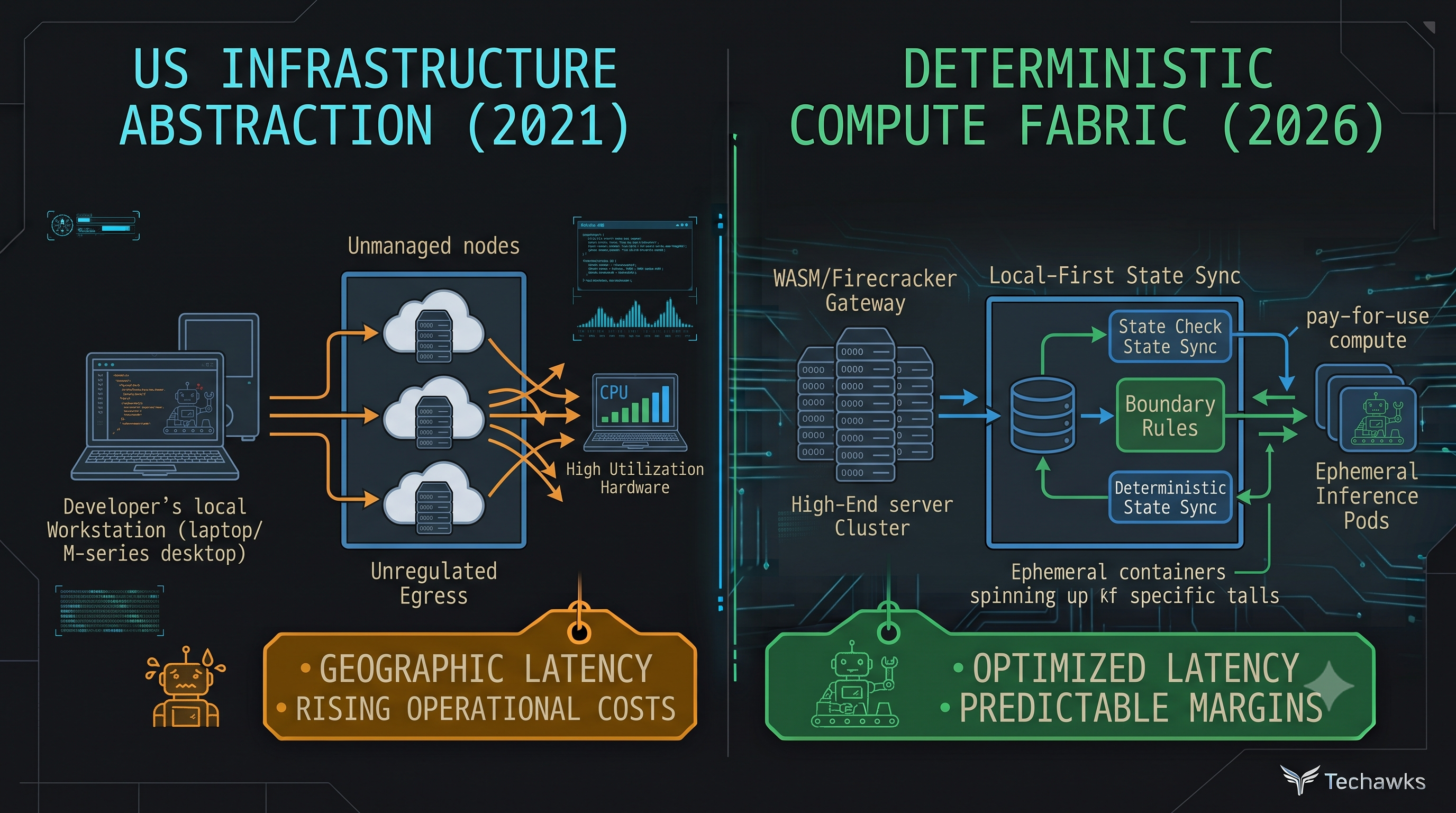 0 Comments 0 Shares 1K Views 0 Reviews
 -
Why the Model Context Protocol (MCP) Is Breaking Enterprise API Gateway Architectures
In traditional API architecture, clients are deterministic. A frontend or microservice calls /v1/users, consumes a known schema, and fails gracefully on standard HTTP status codes.
Autonomous agentic workflows turn this assumption upside down. As engineering teams wire LLMs into internal databases, version control, and microservices via MCP servers, they encounter an architectural impedance mismatch:
Stateful Context vs. Stateless Edge Routing:
Standard API gateways thrive on statelessness. MCP implementations using streamable transports and bi-directional patterns (such as server sampling or user elicitation loops) require durable session affinity. When an agent enters a multi-step reasoning chain across multiple sub-tools, traditional load balancers that cycle connections break the execution context.
The "Unbounded Blast Radius" of Tool Selection:
A human developer calls an endpoint when logic demands it. An LLM agent explores endpoints dynamically. Exposing 15 fine-grained MCP tools without adaptive rate limiting or token-budget governance can cause an agent to trigger cascading N+1 query storms against downstream databases during open-ended inference loops.
Identity Delegation and the Confused Deputy Problem:
Traditional gateways terminate auth at the ingress edge using an enterprise OAuth token. With MCP, the agent operates on behalf of the user, but the execution path is mediated through intermediate servers. Without signed context propagation and downscoped ephemeral credentials, backend systems cannot differentiate between an intentional user action and an agent hallucination or prompt injection.
Modern AI infrastructure requires an Agentic Gateway layer: a reverse proxy pattern that understands MCP framing, handles contextual session resumption, enforces token/cost bounds per tool invocation, and maps enterprise RBAC down to atomic agent tool calls.
Discussion Question
Is your team deploying MCP servers directly against internal services, or are you enforcing an intermediate proxy layer to sanitize, rate-limit, and audit agent tool execution?
CTA (Join Techawks USA)
Join Techawks USA to break down cloud-native patterns, battle-tested AI infrastructure, and systems engineering practices with technical leaders across North America.Why the Model Context Protocol (MCP) Is Breaking Enterprise API Gateway Architectures In traditional API architecture, clients are deterministic. A frontend or microservice calls /v1/users, consumes a known schema, and fails gracefully on standard HTTP status codes. Autonomous agentic workflows turn this assumption upside down. As engineering teams wire LLMs into internal databases, version control, and microservices via MCP servers, they encounter an architectural impedance mismatch: Stateful Context vs. Stateless Edge Routing: Standard API gateways thrive on statelessness. MCP implementations using streamable transports and bi-directional patterns (such as server sampling or user elicitation loops) require durable session affinity. When an agent enters a multi-step reasoning chain across multiple sub-tools, traditional load balancers that cycle connections break the execution context. The "Unbounded Blast Radius" of Tool Selection: A human developer calls an endpoint when logic demands it. An LLM agent explores endpoints dynamically. Exposing 15 fine-grained MCP tools without adaptive rate limiting or token-budget governance can cause an agent to trigger cascading N+1 query storms against downstream databases during open-ended inference loops. Identity Delegation and the Confused Deputy Problem: Traditional gateways terminate auth at the ingress edge using an enterprise OAuth token. With MCP, the agent operates on behalf of the user, but the execution path is mediated through intermediate servers. Without signed context propagation and downscoped ephemeral credentials, backend systems cannot differentiate between an intentional user action and an agent hallucination or prompt injection. Modern AI infrastructure requires an Agentic Gateway layer: a reverse proxy pattern that understands MCP framing, handles contextual session resumption, enforces token/cost bounds per tool invocation, and maps enterprise RBAC down to atomic agent tool calls. Discussion Question Is your team deploying MCP servers directly against internal services, or are you enforcing an intermediate proxy layer to sanitize, rate-limit, and audit agent tool execution? CTA (Join Techawks USA) Join Techawks USA to break down cloud-native patterns, battle-tested AI infrastructure, and systems engineering practices with technical leaders across North America. 0 Comments 0 Shares 417 Views 0 Reviews
 -
The 900+ Patch Dilemma: Why Vulnerability Volume Is Breaking Traditional SRE & Security Workflows
Earlier this week, Microsoft issued its September 2026 update addressing roughly 972 direct software vulnerabilities, with more than 110 classified as critical. This is not an isolated event—it is the direct outcome of automated, AI-assisted static analysis and fuzzing scaling up faster than human review cycles can handle
For US enterprise engineering leaders, the challenge is no longer visibility; it is signal-to-noise ratio.
When software flaws surface by the hundreds each month, classic manual patching triggers operational fatigue, delayed sprint delivery, and regression risks in production systems. To stay resilient without grinding roadmap velocity to a halt, modern infrastructure teams run a Context-Driven Remediation Framework:
Decouple CVSS from Business Priority: A CVSS 9.8 vulnerability on an isolated subnet or an offline worker node does not take precedence over an actively targeted CVSS 7.2 bug on an internet-facing ingress gateway. Context must dictate priority.
Automate EPSS (Exploit Prediction Scoring System) Correlation: Do not just filter by severity scores. Correlate CVE disclosures with EPSS and CISA’s Known Exploited Vulnerabilities (KEV) catalog to gauge actual in-the-wild exploitation probability within the next 30 days.
Canary Your Dependency Upgrades: Treat OS and runtime patches like application code. Push infrastructure updates through automated staging pipelines with health verification gates before broad fleet-wide rollout.
Patching everything instantly is an operational anti-pattern; ruthlessly filtering by reachability and exploit probability is sound engineering.
Discussion Question
How does your team distinguish between theoretical vulnerability severity and actual production exploitability when planning infrastructure maintenance windows?
CTA
Join Techawks USA — Connect with US-based systems architects, DevOps specialists, and security leaders building scalable, secure cloud-native infrastructure.The 900+ Patch Dilemma: Why Vulnerability Volume Is Breaking Traditional SRE & Security Workflows Earlier this week, Microsoft issued its September 2026 update addressing roughly 972 direct software vulnerabilities, with more than 110 classified as critical. This is not an isolated event—it is the direct outcome of automated, AI-assisted static analysis and fuzzing scaling up faster than human review cycles can handle For US enterprise engineering leaders, the challenge is no longer visibility; it is signal-to-noise ratio. When software flaws surface by the hundreds each month, classic manual patching triggers operational fatigue, delayed sprint delivery, and regression risks in production systems. To stay resilient without grinding roadmap velocity to a halt, modern infrastructure teams run a Context-Driven Remediation Framework: Decouple CVSS from Business Priority: A CVSS 9.8 vulnerability on an isolated subnet or an offline worker node does not take precedence over an actively targeted CVSS 7.2 bug on an internet-facing ingress gateway. Context must dictate priority. Automate EPSS (Exploit Prediction Scoring System) Correlation: Do not just filter by severity scores. Correlate CVE disclosures with EPSS and CISA’s Known Exploited Vulnerabilities (KEV) catalog to gauge actual in-the-wild exploitation probability within the next 30 days. Canary Your Dependency Upgrades: Treat OS and runtime patches like application code. Push infrastructure updates through automated staging pipelines with health verification gates before broad fleet-wide rollout. Patching everything instantly is an operational anti-pattern; ruthlessly filtering by reachability and exploit probability is sound engineering. Discussion Question How does your team distinguish between theoretical vulnerability severity and actual production exploitability when planning infrastructure maintenance windows? CTA Join Techawks USA — Connect with US-based systems architects, DevOps specialists, and security leaders building scalable, secure cloud-native infrastructure. 0 Comments 0 Shares 122 Views 0 Reviews
 -
The US Power Bottleneck: Why AI Engineering Is Shifting from Model Size to "Megawatt Architecture"
A fundamental reality is reshaping the US tech landscape: the decoupling of compute demand from grid capacity.
According to Department of Energy projections, data centers are on track to consume up to 12% of total US electricity within the next few years. Across Northern Virginia (Data Center Alley), Texas (ERCOT), and the Pacific Northwest, major hyperscalers are facing 3- to 7-year waits simply to secure dedicated multi-hundred-megawatt substation interconnects.
This power squeeze is no longer just a facility or real estate problem—it is dictating how software architects, platform engineers, and engineering leaders build and deploy production systems.
When megawatts are rationed, "brute-force compute" becomes an architectural liability.
3 Architectural Pivots US Engineering Teams Must Make
1. Shift from Massive Generalist Models to Speculative & Small Reasoning Models (SLMs)
The days of blindly firing every basic business query at a trillion-parameter frontier model are ending.
Speculative Decoding: Use compact, energy-efficient models (1B–7B parameters) to draft token streams, calling larger frontier models only to verify and correct. This slashes GPU power draw per request by up to 60–70%.
Domain SLMs: Fine-tune specialized, quantized models (running on 4-bit/8-bit precision) hosted within local regional clusters to handle routine routing, classification, and extraction workloads.
2. Design for "Geographic Compute Arbitrage"
In the US, power availability and clean generation fluctuate dramatically between regional ISOs (PJM, ERCOT, CAISO, MISO).
Modern platform teams are building grid-aware workload dispatchers.
Heavy, non-time-sensitive batch training, vector indexing, and synthetic data generation jobs are scheduled dynamically to run in zones with surplus clean energy or off-peak thermal headroom, dampening both carbon impact and variable spot-compute pricing.
3. Move from Cloud-Centric to Hybrid "Local-First" Edge Inference
With centralized US data center clusters under intense regulatory and grid scrutiny, sending every interaction back to centralized hyperscaler clusters adds cost, latency, and grid load.
Offload conversational context, input preprocessing, and basic embeddings directly to end-user client hardware (Apple Silicon Neural Engines, Snapdragon X, Intel Core Ultra NPU endpoints).
Reserve cloud API calls solely for multi-agent reasoning steps that strictly demand scaled multi-GPU clusters.
The Strategic Takeaway: The defining engineering advantage of the next decade won’t belong to whoever burns the most power. It will belong to the teams that maximize intelligence delivered per kilowatt-hour.
Discussion Question
Is your organization feeling the squeeze of cloud compute pricing driven by regional data center power limits, and have you started adopting small language models (SLMs) or edge inference to curb footprint?
CTA
Join Techawks USA
Connect with US-based software engineers, platform architects, founders, and tech operators. Get deep architectural insights, infrastructure breakdowns, and engineering frameworks. Join Techawks USA today:The US Power Bottleneck: Why AI Engineering Is Shifting from Model Size to "Megawatt Architecture" A fundamental reality is reshaping the US tech landscape: the decoupling of compute demand from grid capacity. According to Department of Energy projections, data centers are on track to consume up to 12% of total US electricity within the next few years. Across Northern Virginia (Data Center Alley), Texas (ERCOT), and the Pacific Northwest, major hyperscalers are facing 3- to 7-year waits simply to secure dedicated multi-hundred-megawatt substation interconnects. This power squeeze is no longer just a facility or real estate problem—it is dictating how software architects, platform engineers, and engineering leaders build and deploy production systems. When megawatts are rationed, "brute-force compute" becomes an architectural liability. 3 Architectural Pivots US Engineering Teams Must Make 1. Shift from Massive Generalist Models to Speculative & Small Reasoning Models (SLMs) The days of blindly firing every basic business query at a trillion-parameter frontier model are ending. Speculative Decoding: Use compact, energy-efficient models (1B–7B parameters) to draft token streams, calling larger frontier models only to verify and correct. This slashes GPU power draw per request by up to 60–70%. Domain SLMs: Fine-tune specialized, quantized models (running on 4-bit/8-bit precision) hosted within local regional clusters to handle routine routing, classification, and extraction workloads. 2. Design for "Geographic Compute Arbitrage" In the US, power availability and clean generation fluctuate dramatically between regional ISOs (PJM, ERCOT, CAISO, MISO). Modern platform teams are building grid-aware workload dispatchers. Heavy, non-time-sensitive batch training, vector indexing, and synthetic data generation jobs are scheduled dynamically to run in zones with surplus clean energy or off-peak thermal headroom, dampening both carbon impact and variable spot-compute pricing. 3. Move from Cloud-Centric to Hybrid "Local-First" Edge Inference With centralized US data center clusters under intense regulatory and grid scrutiny, sending every interaction back to centralized hyperscaler clusters adds cost, latency, and grid load. Offload conversational context, input preprocessing, and basic embeddings directly to end-user client hardware (Apple Silicon Neural Engines, Snapdragon X, Intel Core Ultra NPU endpoints). Reserve cloud API calls solely for multi-agent reasoning steps that strictly demand scaled multi-GPU clusters. The Strategic Takeaway: The defining engineering advantage of the next decade won’t belong to whoever burns the most power. It will belong to the teams that maximize intelligence delivered per kilowatt-hour. Discussion Question Is your organization feeling the squeeze of cloud compute pricing driven by regional data center power limits, and have you started adopting small language models (SLMs) or edge inference to curb footprint? CTA Join Techawks USA Connect with US-based software engineers, platform architects, founders, and tech operators. Get deep architectural insights, infrastructure breakdowns, and engineering frameworks. Join Techawks USA today: 0 Comments 0 Shares 163 Views 0 Reviews
 -
The 7-Year Grid Queue: Why US Cloud Architects Are Designing for Power, Not Just Latency
Across the primary US hyperscale corridors—from Northern Virginia’s PJM territory to Texas (ERCOT) and the Midwest—wait times to hook new high-density data centers into regional power grids have stretched up to 7 years.
US power demand from AI and high-density compute is projected to surge over 160% by 2030. Because regional utilities cannot construct high-voltage transmission lines as fast as clusters scale, hyperscalers are racing to sign behind-the-meter nuclear and microreactor power agreements.
For US software architects and platform engineers, this bottleneck changes distributed systems design. When megawatts are capped at the rack and campus level, optimization shifts from purely runtime efficiency to Power-Aware Workload Orchestration.
Here is what modern systems engineering looks like under physical energy constraints:
1. Dynamic TDP Throttling Over Naive Overprovisioning
Running high-end accelerator nodes at maximum thermal design power (TDP) yields diminishing throughput per watt.
Engineering pattern: Modern orchestrators programmatically adjust GPU power caps (e.g., dropping from 700W to 450–500W during peak tariff hours or thermal spikes). You sacrifice 5% to 8% in peak batch throughput while recovering up to 30% in power headroom, allowing higher cluster density within fixed breaker limits.
2. Follow-the-Power Geo-Distributed Scheduling
Instead of centralizing model fine-tuning and batch inference in a single region, Kubernetes schedulers are adopting time-of-day and grid-stress telemetry.
Engineering pattern: Asynchronous training checkpoints and heavy vector embedding jobs dynamically migrate to nodes in regions experiencing surplus generation or high renewable curtailment, decoupling infrastructure scaling from local utility bottlenecks.
3. Algorithmic Density (Speculative Decoding & Layer Pruning)
Every unnecessary floating-point operation is wasted energy.Engineering pattern:
Replacing brute-force dense inference with speculative decoding architectures and dynamic quantization (FP8/INT4) slashes memory bus activations—the primary driver of watt-per-token consumption.
Physical infrastructure constraints are forcing software to carry the burden of efficiency. The architects winning in this cycle aren't just measuring $P99$ latency; they are measuring tokens per kilowatt-hour.
Discussion Question (Poll)
As power availability dictates US cloud deployment strategies, what is your team's top priority for optimizing heavy compute workloads?
A) Dynamic GPU power capping & cluster TDP tuning
B) Geo-distributed batch migration (routing to green/available grid capacity)
C) Model-level optimizations (Quantization, Speculative Decoding)
D) Cloud repatriation / On-premise colocation with dedicated power
(Cast your vote above and drop your infrastructure strategies in the comments.)
CTA
Join Techawks USA — the technical forum where systems architects, platform leads, and cloud engineers dissect the infrastructure realities shaping modern enterprise architecture. Follow for zero-fluff, engineering-grade breakdowns.The 7-Year Grid Queue: Why US Cloud Architects Are Designing for Power, Not Just Latency Across the primary US hyperscale corridors—from Northern Virginia’s PJM territory to Texas (ERCOT) and the Midwest—wait times to hook new high-density data centers into regional power grids have stretched up to 7 years. US power demand from AI and high-density compute is projected to surge over 160% by 2030. Because regional utilities cannot construct high-voltage transmission lines as fast as clusters scale, hyperscalers are racing to sign behind-the-meter nuclear and microreactor power agreements. For US software architects and platform engineers, this bottleneck changes distributed systems design. When megawatts are capped at the rack and campus level, optimization shifts from purely runtime efficiency to Power-Aware Workload Orchestration. Here is what modern systems engineering looks like under physical energy constraints: 1. Dynamic TDP Throttling Over Naive Overprovisioning Running high-end accelerator nodes at maximum thermal design power (TDP) yields diminishing throughput per watt. Engineering pattern: Modern orchestrators programmatically adjust GPU power caps (e.g., dropping from 700W to 450–500W during peak tariff hours or thermal spikes). You sacrifice 5% to 8% in peak batch throughput while recovering up to 30% in power headroom, allowing higher cluster density within fixed breaker limits. 2. Follow-the-Power Geo-Distributed Scheduling Instead of centralizing model fine-tuning and batch inference in a single region, Kubernetes schedulers are adopting time-of-day and grid-stress telemetry. Engineering pattern: Asynchronous training checkpoints and heavy vector embedding jobs dynamically migrate to nodes in regions experiencing surplus generation or high renewable curtailment, decoupling infrastructure scaling from local utility bottlenecks. 3. Algorithmic Density (Speculative Decoding & Layer Pruning) Every unnecessary floating-point operation is wasted energy.Engineering pattern: Replacing brute-force dense inference with speculative decoding architectures and dynamic quantization (FP8/INT4) slashes memory bus activations—the primary driver of watt-per-token consumption. Physical infrastructure constraints are forcing software to carry the burden of efficiency. The architects winning in this cycle aren't just measuring $P99$ latency; they are measuring tokens per kilowatt-hour. Discussion Question (Poll) As power availability dictates US cloud deployment strategies, what is your team's top priority for optimizing heavy compute workloads? A) Dynamic GPU power capping & cluster TDP tuning B) Geo-distributed batch migration (routing to green/available grid capacity) C) Model-level optimizations (Quantization, Speculative Decoding) D) Cloud repatriation / On-premise colocation with dedicated power (Cast your vote above and drop your infrastructure strategies in the comments.) CTA Join Techawks USA — the technical forum where systems architects, platform leads, and cloud engineers dissect the infrastructure realities shaping modern enterprise architecture. Follow for zero-fluff, engineering-grade breakdowns.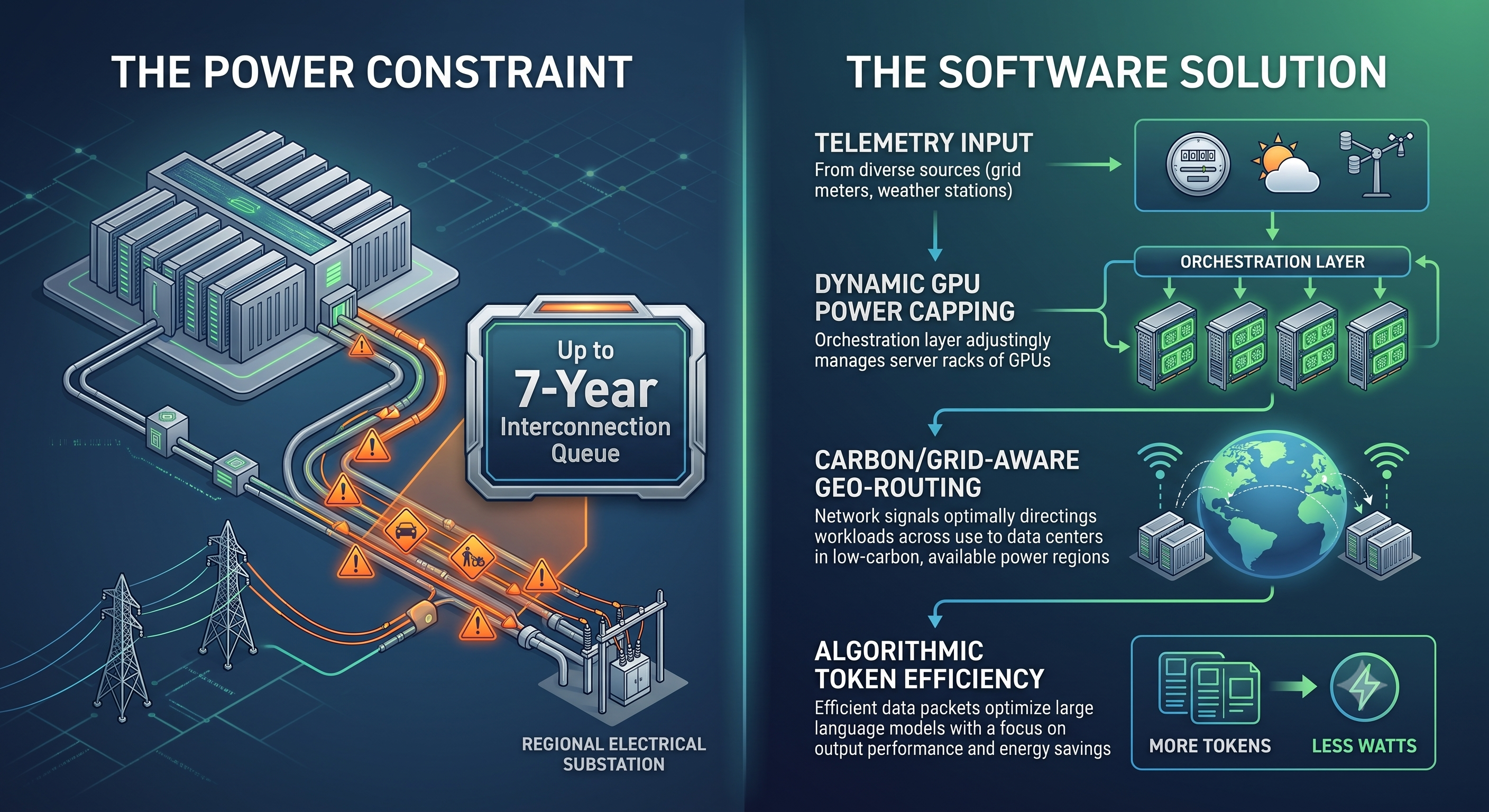 0 Comments 0 Shares 179 Views 0 Reviews
 -
The 1,000% Surge of the "Forward-Deployed Engineer": What Silicon Valley’s Hiring Shift Means for You
Labor market data shows a sharp divergence in US tech hiring: while traditional software engineering job postings remain subdued compared to pre-pandemic highs, job openings for Forward-Deployed Engineers (FDEs) have surged over 1,000% year-over-year, with median base salaries passing $188,000 and total compensation at top AI firms reaching up to $400,000.
What was once Palantir’s proprietary talent playbook has now been adopted by OpenAI, Anthropic, Google, Microsoft, and Meta.
Why? Because enterprise AI has hit the "Production Chasm."
US enterprises don’t need more foundational LLMs; they need engineers who can bridge the messy reality between advanced models and brittle, proprietary enterprise infrastructure—data silos, legacy ERPs, and compliance boundaries.
The engineers winning the highest compensation bands in the US aren't just writing algorithms; they are acting as technical operators at the customer perimeter.
Here is how to adapt your skill profile for the forward-deployed era:
1. Transition from "Lab Code" to "Production Data Plumbing"
Enterprises rarely fail with AI because the model was inadequate; they fail because data ingestion pipelines broke, latency spiked, or auth contexts leaked.
Modern leverage belongs to engineers who master high-throughput data ingestion, vector index synchronization, and reliable API middleware.
Shift your portfolio from toy demo apps to solving dirty enterprise data problems: schema drift, caching architectures, and rate-limiting fallbacks.
2. Pair Systems Engineering with "Executive Translation"
The traditional wall separating "engineers who code" from "solutions architects who talk to customers" is collapsing.
An FDE operates essentially like an embedded startup CTO: diagnosing a customer’s domain friction on Monday and deploying an end-to-end integration by Thursday.
Build the muscle to pitch architectural trade-offs directly to non-technical executive stakeholders without hand-waving or jargon.
3. Anchor Value to Business Unit P&L, Not Just Velocity
In a competitive US tech job market, story points shipped are no longer defensible career currency. High-leverage engineers frame their output in P&L terms:
Legacy Framing: "Refactored the authentication service to Go."
FDE Framing: "Embedded with enterprise onboarding, cut partner data ingestion time by 65%, and unlocked $2.4M in stalled enterprise contracts."
Career Takeaway: The highest-paid engineers in the US over the next 3–5 years will not be isolated code producers. They will be the hybrid builders who can step out of the terminal, sit across from the customer, and make complex AI systems actually work in messy production environments.
Discussion Question
Have you noticed your engineering role shifting closer to direct client problems and enterprise integrations? What’s the hardest part of moving from pure product development to customer-facing systems engineering?
CTA
Looking to navigate the evolving US tech market and build high-leverage engineering skills?
👉 Join Techawks USA for compensation benchmarks, architectural breakdowns, and strategic career playbooks from top builders across the country.The 1,000% Surge of the "Forward-Deployed Engineer": What Silicon Valley’s Hiring Shift Means for You Labor market data shows a sharp divergence in US tech hiring: while traditional software engineering job postings remain subdued compared to pre-pandemic highs, job openings for Forward-Deployed Engineers (FDEs) have surged over 1,000% year-over-year, with median base salaries passing $188,000 and total compensation at top AI firms reaching up to $400,000. What was once Palantir’s proprietary talent playbook has now been adopted by OpenAI, Anthropic, Google, Microsoft, and Meta. Why? Because enterprise AI has hit the "Production Chasm." US enterprises don’t need more foundational LLMs; they need engineers who can bridge the messy reality between advanced models and brittle, proprietary enterprise infrastructure—data silos, legacy ERPs, and compliance boundaries. The engineers winning the highest compensation bands in the US aren't just writing algorithms; they are acting as technical operators at the customer perimeter. Here is how to adapt your skill profile for the forward-deployed era: 1. Transition from "Lab Code" to "Production Data Plumbing" Enterprises rarely fail with AI because the model was inadequate; they fail because data ingestion pipelines broke, latency spiked, or auth contexts leaked. Modern leverage belongs to engineers who master high-throughput data ingestion, vector index synchronization, and reliable API middleware. Shift your portfolio from toy demo apps to solving dirty enterprise data problems: schema drift, caching architectures, and rate-limiting fallbacks. 2. Pair Systems Engineering with "Executive Translation" The traditional wall separating "engineers who code" from "solutions architects who talk to customers" is collapsing. An FDE operates essentially like an embedded startup CTO: diagnosing a customer’s domain friction on Monday and deploying an end-to-end integration by Thursday. Build the muscle to pitch architectural trade-offs directly to non-technical executive stakeholders without hand-waving or jargon. 3. Anchor Value to Business Unit P&L, Not Just Velocity In a competitive US tech job market, story points shipped are no longer defensible career currency. High-leverage engineers frame their output in P&L terms: Legacy Framing: "Refactored the authentication service to Go." FDE Framing: "Embedded with enterprise onboarding, cut partner data ingestion time by 65%, and unlocked $2.4M in stalled enterprise contracts." Career Takeaway: The highest-paid engineers in the US over the next 3–5 years will not be isolated code producers. They will be the hybrid builders who can step out of the terminal, sit across from the customer, and make complex AI systems actually work in messy production environments. Discussion Question Have you noticed your engineering role shifting closer to direct client problems and enterprise integrations? What’s the hardest part of moving from pure product development to customer-facing systems engineering? CTA Looking to navigate the evolving US tech market and build high-leverage engineering skills? 👉 Join Techawks USA for compensation benchmarks, architectural breakdowns, and strategic career playbooks from top builders across the country.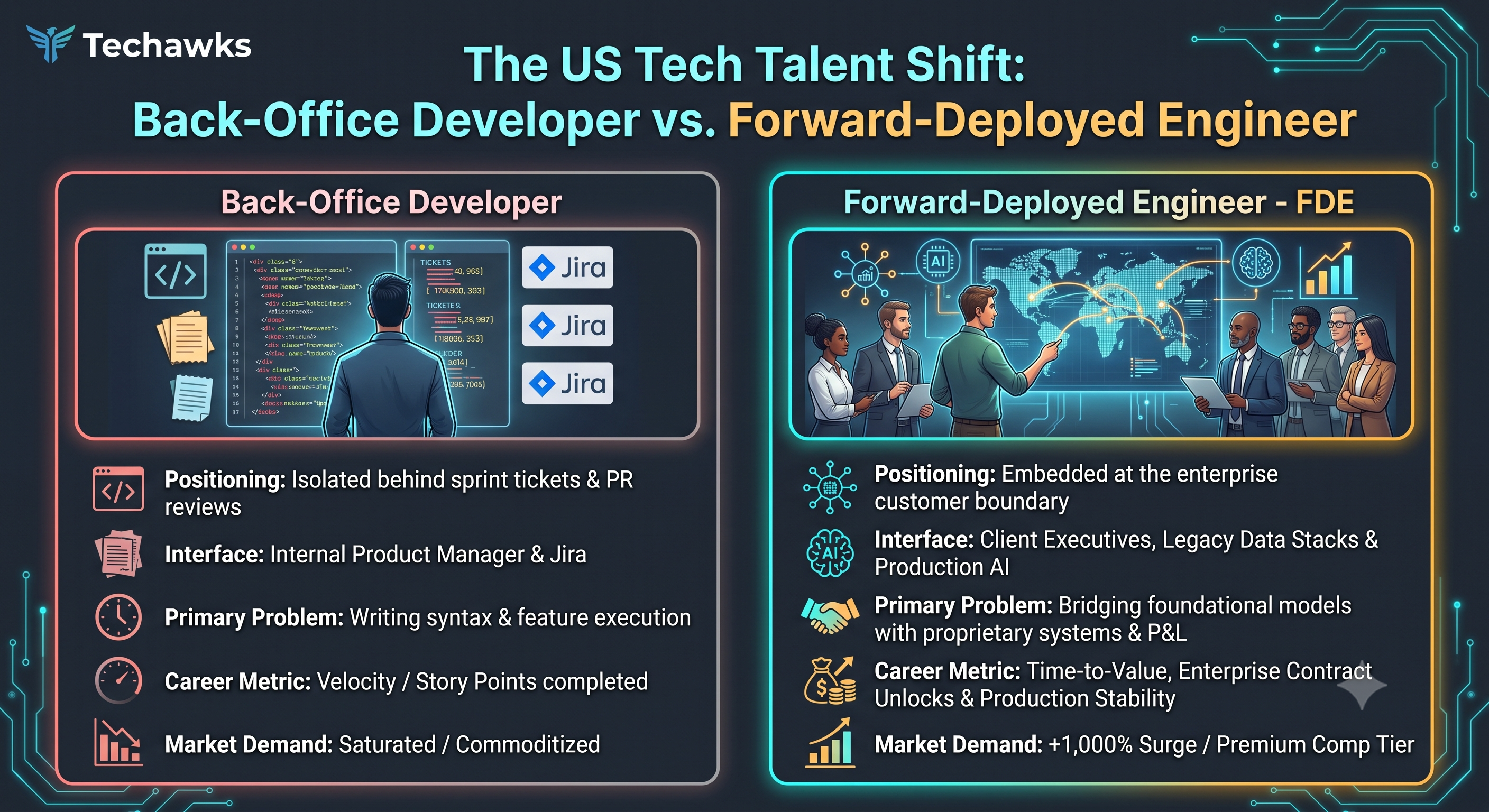 0 Comments 0 Shares 434 Views 0 Reviews
 -
The SOC 2 "Screenshot Trap": Why US Tech Needs Continuous Evidence Pipelines
Across the US tech landscape—from Silicon Valley startups to enterprise platforms—teams treat compliance frameworks (SOC 2 Type II, NIST 800-53, FedRAMP) like an open-book final exam. Engineers scramble at the end of every audit window to gather static PDFs, ticket exports, and dashboard grabs to satisfy external auditors.
This manual approach introduces dangerous operational blind spots into production systems.
Myth: "Passing an annual SOC 2 or NIST audit proves our cloud infrastructure is secure."
Fact: An annual audit proves point-in-time compliance on the day a screenshot was captured; it does not protect against configuration drift, leaked credentials, or shadow infrastructure introduced ten minutes later.
Why the traditional screenshot-and-spreadsheet compliance model fails modern US software stacks:
The Drift Window: If an engineer temporarily disables MFA or opens a staging security group to 0.0.0.0/0 to troubleshoot a bug and leaves it open for three weeks, a static annual audit will never register it—yet the attack vector is live.
High Engineering Toll: Senior engineers lose an estimated 100+ sprint hours per quarter gathering point-in-time artifacts, pulling attention directly away from core product roadmaps and architectural resilience.
Audit Fatigue and Stale Controls: When compliance is disconnected from daily developer tooling, policy enforcement becomes purely reactive rather than baked into pull requests.
How US Platform Teams Shift to Continuous Automated Compliance:
Transition to Compliance-as-Code: Treat security controls identically to unit tests. Use Open Policy Agent (OPA) or Kyverno to define your compliance baselines (e.g., encryption-at-rest, mandatory branch approvals, key rotation) directly in Git.
Stream Evidence Automatically via API: Replace manual screenshot gathering by leveraging continuous compliance platforms and read-only cloud auditing APIs to collect cryptographically verifiable logs every 24 hours.
Block Non-Compliant Commits at the Gate: Enforce pre-merge checks in your CI/CD pipeline. If an infrastructure pull request provisions an unencrypted S3 bucket or an overly permissive IAM role, break the build before deployment rather than waiting for an auditor to flag it months later.
Discussion Question
Is your team still stuck in the annual "screenshot sprint" for compliance audits, or have you hooked your IaC pipelines directly into continuous automated evidence collection?
CTA
Ready to trade manual audit scrambles for automated, continuous cloud governance tailored to modern enterprise standards? Join Techawks USA to debate platform engineering best practices, compliance architectures, and scalable cloud systems.The SOC 2 "Screenshot Trap": Why US Tech Needs Continuous Evidence Pipelines Across the US tech landscape—from Silicon Valley startups to enterprise platforms—teams treat compliance frameworks (SOC 2 Type II, NIST 800-53, FedRAMP) like an open-book final exam. Engineers scramble at the end of every audit window to gather static PDFs, ticket exports, and dashboard grabs to satisfy external auditors. This manual approach introduces dangerous operational blind spots into production systems. Myth: "Passing an annual SOC 2 or NIST audit proves our cloud infrastructure is secure." Fact: An annual audit proves point-in-time compliance on the day a screenshot was captured; it does not protect against configuration drift, leaked credentials, or shadow infrastructure introduced ten minutes later. Why the traditional screenshot-and-spreadsheet compliance model fails modern US software stacks: The Drift Window: If an engineer temporarily disables MFA or opens a staging security group to 0.0.0.0/0 to troubleshoot a bug and leaves it open for three weeks, a static annual audit will never register it—yet the attack vector is live. High Engineering Toll: Senior engineers lose an estimated 100+ sprint hours per quarter gathering point-in-time artifacts, pulling attention directly away from core product roadmaps and architectural resilience. Audit Fatigue and Stale Controls: When compliance is disconnected from daily developer tooling, policy enforcement becomes purely reactive rather than baked into pull requests. How US Platform Teams Shift to Continuous Automated Compliance: Transition to Compliance-as-Code: Treat security controls identically to unit tests. Use Open Policy Agent (OPA) or Kyverno to define your compliance baselines (e.g., encryption-at-rest, mandatory branch approvals, key rotation) directly in Git. Stream Evidence Automatically via API: Replace manual screenshot gathering by leveraging continuous compliance platforms and read-only cloud auditing APIs to collect cryptographically verifiable logs every 24 hours. Block Non-Compliant Commits at the Gate: Enforce pre-merge checks in your CI/CD pipeline. If an infrastructure pull request provisions an unencrypted S3 bucket or an overly permissive IAM role, break the build before deployment rather than waiting for an auditor to flag it months later. Discussion Question Is your team still stuck in the annual "screenshot sprint" for compliance audits, or have you hooked your IaC pipelines directly into continuous automated evidence collection? CTA Ready to trade manual audit scrambles for automated, continuous cloud governance tailored to modern enterprise standards? Join Techawks USA to debate platform engineering best practices, compliance architectures, and scalable cloud systems.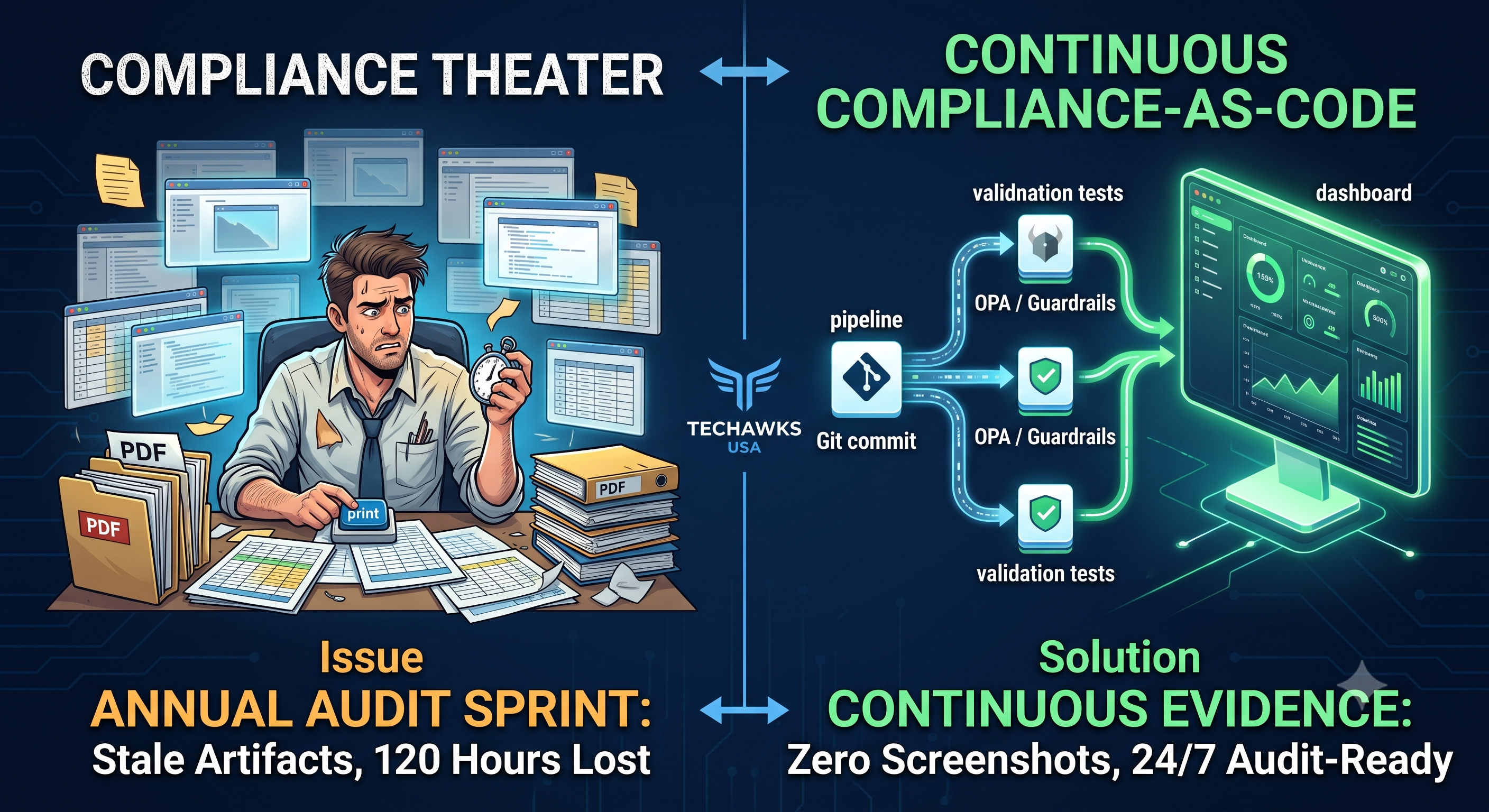 0 Comments 0 Shares 179 Views 0 Reviews
 -
CISA’s Updated SBOM Mandate: A US Engineering Lead’s CI/CD Pipeline Audit Checklist
Most US engineering organizations treated earlier SBOM guidance as an afterthought: generate a CycloneDX or SPDX manifest during the build phase and store it in an S3 bucket.
Under CISA's updated Minimum Elements baseline and tightening federal procurement standards, an SBOM is no longer a passive snapshot. It is an active provenance assertion that demands deep cryptographic signing, transitive dependency tracking, and automated vulnerability correlation across every stage of the software delivery lifecycle.
Why It Matters to US Tech Teams
Enterprise buyers across defense, finance, and critical infrastructure now enforce automated gatekeeping against vendors who cannot provide dynamic provenance. If your build runners ingest untrusted base images, unpinned dependencies, or non-reproducible build artifacts, your software faces delivery blockers, contractual default, or severe enterprise audit penalties.
The CI/CD Software Supply Chain Readiness Checklist
[ ] 1. Enforce Cryptographic Build Provenance (SLSA Level 3+)
└─ Isolate build runners from external network egress during compilation.
└─ Sign container images and binaries with ephemeral, keyless signatures (e.g., Sigstore/Cosign via OIDC).
[ ] 2. Mandate Machine-Readable Transitive Dependency Resolution
└─ Enforce pinned, immutable package hashes in lockfiles across all build targets.
└─ Configure generators to resolve multi-tier sub-dependencies, not just top-level packages.
[ ] 3. Implement Continuous Vulnerability Exploitability Exchange (VEX)
└─ Stop failing PR builds solely on noisy, non-exploitable upstream CVE flags.
└─ Pair your SBOM with an automated VEX generator to publish signed machine attestations on actual exploitability.
[ ] 4. Validate Base Image Lineage & Hermetic Builds
└─ Migrate production runtimes to distroless, minimal images with minimal attack surfaces.
└─ Verify that rebuilds using identical source commits yield bit-for-bit identical hashes.
[ ] 5. Gate Downstream Registries on Policy-as-Code
└─ Deploy admission controllers (e.g., Kyverno, OPA Gatekeeper) in staging/prod Kubernetes clusters.
└─ Reject any artifact deployment missing a verifiable, freshly signed SBOM attestation.
Supply chain security is not solved by scanning code after deployment—it is solved by enforcing cryptographic provenance before bits ever leave the build runner.
Discussion Question
Is your platform team automating VEX statements to reduce false-positive CVE noise in your production pipelines, or are you still handling upstream package alerts manually?
CTA (Join Techawks USA)
Follow Techawks USA for real-world enterprise architectures, secure software supply chain breakdowns, and engineering frameworks built for the US developer ecosystem.CISA’s Updated SBOM Mandate: A US Engineering Lead’s CI/CD Pipeline Audit Checklist Most US engineering organizations treated earlier SBOM guidance as an afterthought: generate a CycloneDX or SPDX manifest during the build phase and store it in an S3 bucket. Under CISA's updated Minimum Elements baseline and tightening federal procurement standards, an SBOM is no longer a passive snapshot. It is an active provenance assertion that demands deep cryptographic signing, transitive dependency tracking, and automated vulnerability correlation across every stage of the software delivery lifecycle. Why It Matters to US Tech Teams Enterprise buyers across defense, finance, and critical infrastructure now enforce automated gatekeeping against vendors who cannot provide dynamic provenance. If your build runners ingest untrusted base images, unpinned dependencies, or non-reproducible build artifacts, your software faces delivery blockers, contractual default, or severe enterprise audit penalties. The CI/CD Software Supply Chain Readiness Checklist [ ] 1. Enforce Cryptographic Build Provenance (SLSA Level 3+) └─ Isolate build runners from external network egress during compilation. └─ Sign container images and binaries with ephemeral, keyless signatures (e.g., Sigstore/Cosign via OIDC). [ ] 2. Mandate Machine-Readable Transitive Dependency Resolution └─ Enforce pinned, immutable package hashes in lockfiles across all build targets. └─ Configure generators to resolve multi-tier sub-dependencies, not just top-level packages. [ ] 3. Implement Continuous Vulnerability Exploitability Exchange (VEX) └─ Stop failing PR builds solely on noisy, non-exploitable upstream CVE flags. └─ Pair your SBOM with an automated VEX generator to publish signed machine attestations on actual exploitability. [ ] 4. Validate Base Image Lineage & Hermetic Builds └─ Migrate production runtimes to distroless, minimal images with minimal attack surfaces. └─ Verify that rebuilds using identical source commits yield bit-for-bit identical hashes. [ ] 5. Gate Downstream Registries on Policy-as-Code └─ Deploy admission controllers (e.g., Kyverno, OPA Gatekeeper) in staging/prod Kubernetes clusters. └─ Reject any artifact deployment missing a verifiable, freshly signed SBOM attestation. Supply chain security is not solved by scanning code after deployment—it is solved by enforcing cryptographic provenance before bits ever leave the build runner. Discussion Question Is your platform team automating VEX statements to reduce false-positive CVE noise in your production pipelines, or are you still handling upstream package alerts manually? CTA (Join Techawks USA) Follow Techawks USA for real-world enterprise architectures, secure software supply chain breakdowns, and engineering frameworks built for the US developer ecosystem.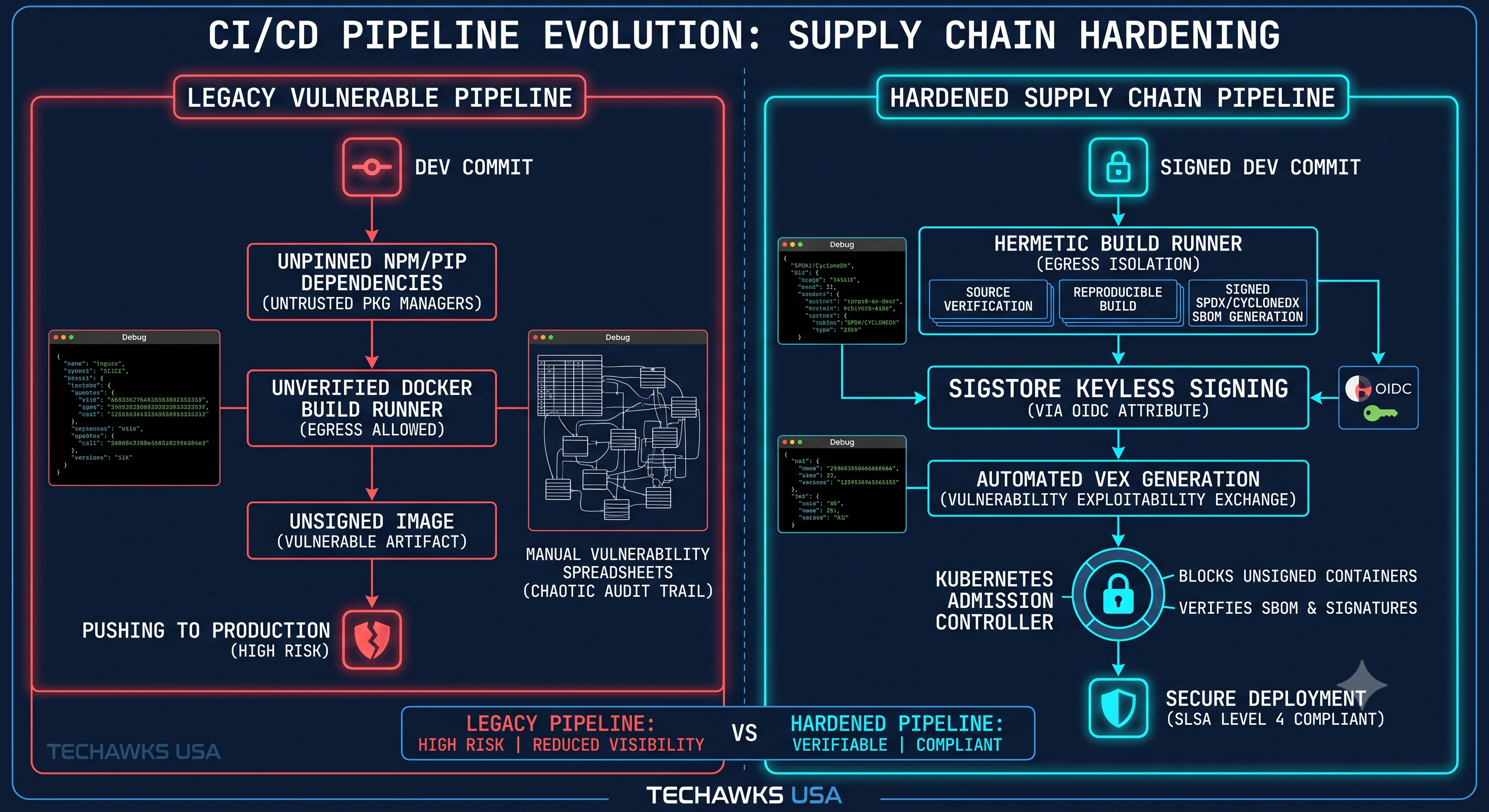 0 Comments 0 Shares 375 Views 0 Reviews
 -
Beyond the White House Post-Quantum Cryptography Mandates: How to Implement Hybrid TLS in Your Stack
Adversaries do not need a functional cryptographically relevant quantum computer today to compromise your enterprise data; they only need to intercept and archive encrypted traffic now and crack it once hardware catches up.
With the Office of Management and Budget (OMB) and CISA enforcing aggressive migration milestones—and major cloud edge networks already serving post-quantum traffic by default—US platform and security engineering teams must shift to crypto-agility.
The standard operational approach isn't an overnight rip-and-replace of RSA or ECC. It is deploying hybrid post-quantum key exchange (X25519 + ML-KEM).
Here is the three-step pattern to introduce post-quantum resilience to your ingress and microservice boundaries today:
1. Enable Hybrid Key Encapsulation (ML-KEM) at the Ingress Edge
Modern TLS 1.3 supports hybrid key establishment. A hybrid handshake binds a classical algorithm (like X25519) with a post-quantum algorithm (like ML-KEM-768):
The connection remains fully secure even if the post-quantum primitive has unexpected implementation vulnerabilities.
The session key is protected against future quantum decryption even if the classical key exchange is eventually broken.
Configure your reverse proxy, CDN, or gateway (e.g., Envoy, Cloudflare, AWS CloudFront) to prioritize post-quantum hybrid cipher groups (X25519MLKEM768) in the ClientHello negotiation.
2. Audit MTU Sizes and Packet Fragmentation Limits
Post-quantum cryptographic artifacts (keys, ciphertexts, and signatures) are significantly larger than traditional elliptic-curve parameters:
ML-KEM keys and ciphertexts expand the initial TLS handshake size, which can push TCP payloads past standard 1500-byte MTUs.
Benchmark internal service-to-service gRPC or mTLS meshes under post-quantum cipher suites. If middleboxes, legacy firewalls, or load balancers drop fragmented initial packets, your connections will experience silent handshake timeouts.
3. Build a Software Inventory of Cryptographic Primitives (CBOM)
You cannot migrate what you cannot see. Replace hardcoded cryptographic libraries across your codebase:
Generate a Cryptography Bill of Materials (CBOM) using automated code scanners to identify every instance of hardcoded RSA-2048, ECDH, or legacy TLS configurations.
Wrap cryptographic operations behind policy-driven service abstractions so algorithm upgrades require configuration changes rather than code rewrites.
Discussion Question
Has your engineering team begun testing hybrid post-quantum cipher suites on your edge reverse proxies, or is cryptographic migration still isolated to security compliance reviews?
CTA
Ready to build resilient, future-proof cloud infrastructure and navigate US security compliance standards?
👉 Join the Techawks USA Community to collaborate with senior infrastructure architects, access security migration playbooks, and participate in peer-led engineering teardowns.Beyond the White House Post-Quantum Cryptography Mandates: How to Implement Hybrid TLS in Your Stack Adversaries do not need a functional cryptographically relevant quantum computer today to compromise your enterprise data; they only need to intercept and archive encrypted traffic now and crack it once hardware catches up. With the Office of Management and Budget (OMB) and CISA enforcing aggressive migration milestones—and major cloud edge networks already serving post-quantum traffic by default—US platform and security engineering teams must shift to crypto-agility. The standard operational approach isn't an overnight rip-and-replace of RSA or ECC. It is deploying hybrid post-quantum key exchange (X25519 + ML-KEM). Here is the three-step pattern to introduce post-quantum resilience to your ingress and microservice boundaries today: 1. Enable Hybrid Key Encapsulation (ML-KEM) at the Ingress Edge Modern TLS 1.3 supports hybrid key establishment. A hybrid handshake binds a classical algorithm (like X25519) with a post-quantum algorithm (like ML-KEM-768): The connection remains fully secure even if the post-quantum primitive has unexpected implementation vulnerabilities. The session key is protected against future quantum decryption even if the classical key exchange is eventually broken. Configure your reverse proxy, CDN, or gateway (e.g., Envoy, Cloudflare, AWS CloudFront) to prioritize post-quantum hybrid cipher groups (X25519MLKEM768) in the ClientHello negotiation. 2. Audit MTU Sizes and Packet Fragmentation Limits Post-quantum cryptographic artifacts (keys, ciphertexts, and signatures) are significantly larger than traditional elliptic-curve parameters: ML-KEM keys and ciphertexts expand the initial TLS handshake size, which can push TCP payloads past standard 1500-byte MTUs. Benchmark internal service-to-service gRPC or mTLS meshes under post-quantum cipher suites. If middleboxes, legacy firewalls, or load balancers drop fragmented initial packets, your connections will experience silent handshake timeouts. 3. Build a Software Inventory of Cryptographic Primitives (CBOM) You cannot migrate what you cannot see. Replace hardcoded cryptographic libraries across your codebase: Generate a Cryptography Bill of Materials (CBOM) using automated code scanners to identify every instance of hardcoded RSA-2048, ECDH, or legacy TLS configurations. Wrap cryptographic operations behind policy-driven service abstractions so algorithm upgrades require configuration changes rather than code rewrites. Discussion Question Has your engineering team begun testing hybrid post-quantum cipher suites on your edge reverse proxies, or is cryptographic migration still isolated to security compliance reviews? CTA Ready to build resilient, future-proof cloud infrastructure and navigate US security compliance standards? 👉 Join the Techawks USA Community to collaborate with senior infrastructure architects, access security migration playbooks, and participate in peer-led engineering teardowns.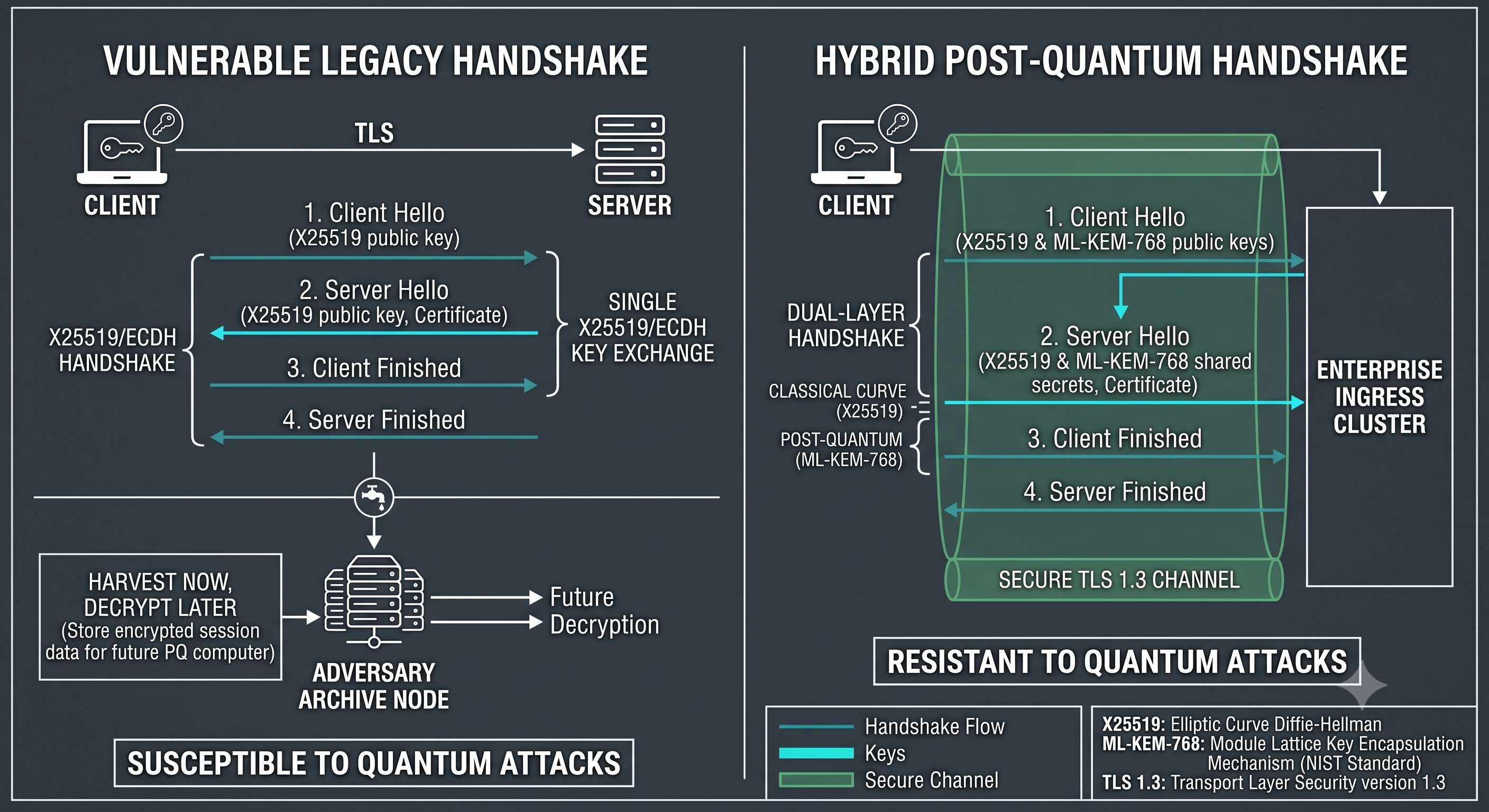 0 Comments 0 Shares 394 Views 0 Reviews
 -
The Multi-Region Trap: Why Over-Engineering Your US Cloud Footprint Is Costing You Millions
In the US enterprise and startup landscape, high availability is often treated as synonymous with active-active multi-region infrastructure. Teams duplicate clusters, replicate databases across coasts, and build distributed synchronization logic long before their product market fit or traffic patterns demand it.
The result isn't bulletproof uptime; it is distributed state drift, cross-region network latency, and compounding data egress expenses.
To build cost-conscious, high-availability architecture tailored to the US cloud landscape, follow the Zone-First Resilience Blueprint:
Maximize Multi-AZ Before Expanding Multi-Region: Major US cloud regions consist of physically separated data centers with single-digit millisecond latency between availability zones. Exhaust multi-AZ redundancy, regional auto-scaling, and managed failover pools first. For 95% of applications, three independent availability zones within a single region provide the required SLA without cross-region egress penalties.
Treat Secondary Regions as Asynchronous Disaster Recovery (Pilot Light): If compliance or catastrophic risk requires a secondary region, avoid active-active synchronous data replication. Instead, implement a "pilot light" or warm standby model using asynchronous backups and Infrastructure-as-Code definitions that can spin up capacity in minutes during a total regional outage.
Audit Cross-Region Data Egress Paths: Keep high-throughput microservices, caching tiers, and database primary replicas co-located within the same region. Route cross-country read traffic through edge points of presence (PoPs) using local caching to terminate user requests close to home without backhauling raw data across coasts.
Let’s talk system design and cloud economics: How does your engineering team decide between single-region multi-AZ and true active-active multi-region deployments?
What is the biggest hidden cost or networking headache you’ve encountered running systems across US regions? Drop your experiences below.
Key Takeaways
Availability zones solve most downtime: Multi-AZ configurations provide resilient fault tolerance without the complexity of cross-country replication.
Egress is an architectural metric: Design data flows to minimize unmetered cross-region chatter and expensive synchronous links.
Standby beats over-engineering: Use automated IaC to spin up standby disaster recovery regions on demand rather than paying 2x operational overhead 24/7.
CTA
Navigating cloud architecture, enterprise scaling, or engineering trade-offs across the US tech landscape? Join Techawks USA to connect with local architects, exchange production playbooks, and build scalable, cost-efficient infrastructure together. Link in the bio/comments!The Multi-Region Trap: Why Over-Engineering Your US Cloud Footprint Is Costing You Millions In the US enterprise and startup landscape, high availability is often treated as synonymous with active-active multi-region infrastructure. Teams duplicate clusters, replicate databases across coasts, and build distributed synchronization logic long before their product market fit or traffic patterns demand it. The result isn't bulletproof uptime; it is distributed state drift, cross-region network latency, and compounding data egress expenses. To build cost-conscious, high-availability architecture tailored to the US cloud landscape, follow the Zone-First Resilience Blueprint: Maximize Multi-AZ Before Expanding Multi-Region: Major US cloud regions consist of physically separated data centers with single-digit millisecond latency between availability zones. Exhaust multi-AZ redundancy, regional auto-scaling, and managed failover pools first. For 95% of applications, three independent availability zones within a single region provide the required SLA without cross-region egress penalties. Treat Secondary Regions as Asynchronous Disaster Recovery (Pilot Light): If compliance or catastrophic risk requires a secondary region, avoid active-active synchronous data replication. Instead, implement a "pilot light" or warm standby model using asynchronous backups and Infrastructure-as-Code definitions that can spin up capacity in minutes during a total regional outage. Audit Cross-Region Data Egress Paths: Keep high-throughput microservices, caching tiers, and database primary replicas co-located within the same region. Route cross-country read traffic through edge points of presence (PoPs) using local caching to terminate user requests close to home without backhauling raw data across coasts. Let’s talk system design and cloud economics: How does your engineering team decide between single-region multi-AZ and true active-active multi-region deployments? What is the biggest hidden cost or networking headache you’ve encountered running systems across US regions? Drop your experiences below. Key Takeaways Availability zones solve most downtime: Multi-AZ configurations provide resilient fault tolerance without the complexity of cross-country replication. Egress is an architectural metric: Design data flows to minimize unmetered cross-region chatter and expensive synchronous links. Standby beats over-engineering: Use automated IaC to spin up standby disaster recovery regions on demand rather than paying 2x operational overhead 24/7. CTA Navigating cloud architecture, enterprise scaling, or engineering trade-offs across the US tech landscape? Join Techawks USA to connect with local architects, exchange production playbooks, and build scalable, cost-efficient infrastructure together. Link in the bio/comments!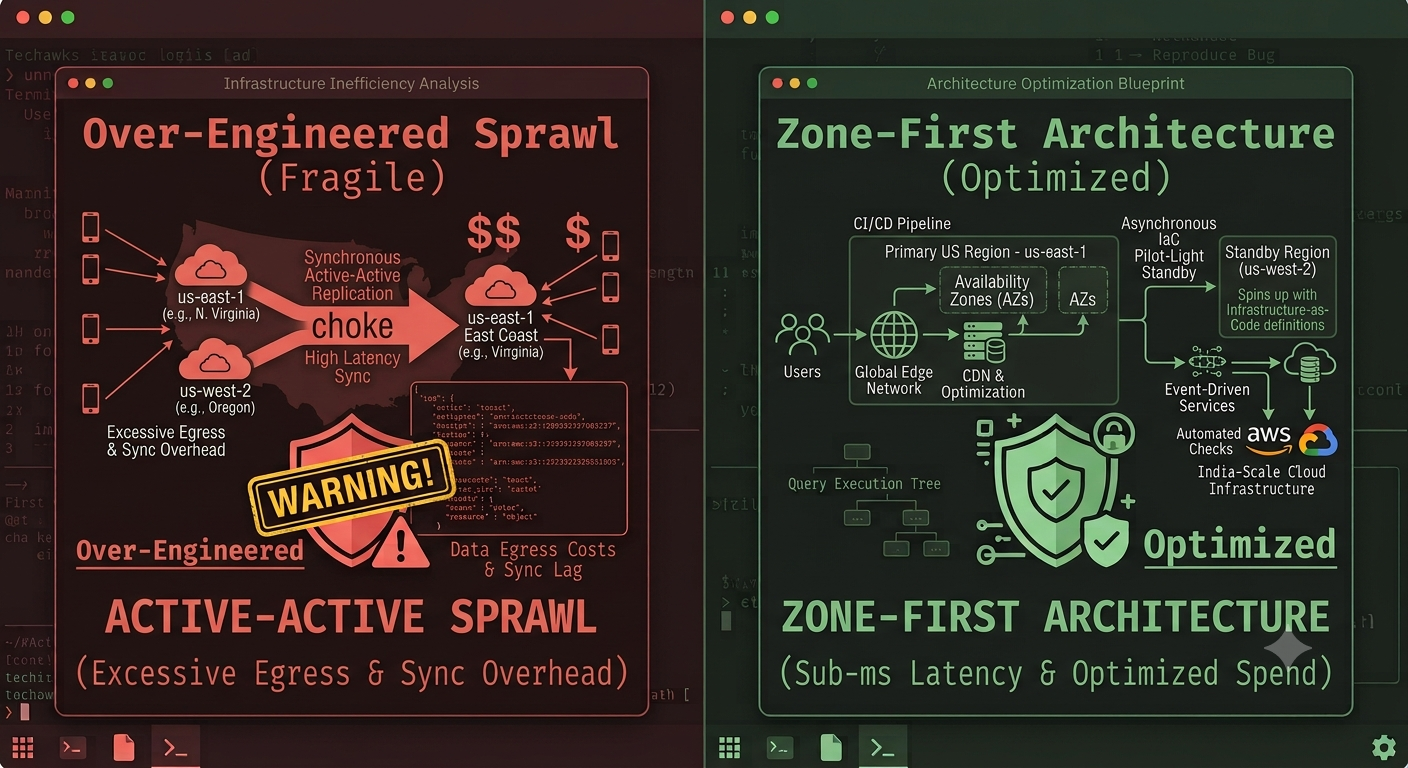 0 Comments 0 Shares 145 Views 0 Reviews
More Stories