 English
 Arabic
 French
 Spanish
 Portuguese
 Deutsch
 Turkish
 Dutch
Dutch
 Italiano
 Russian
 Romaian
 Portuguese (Brazil)
 Greek
Greek
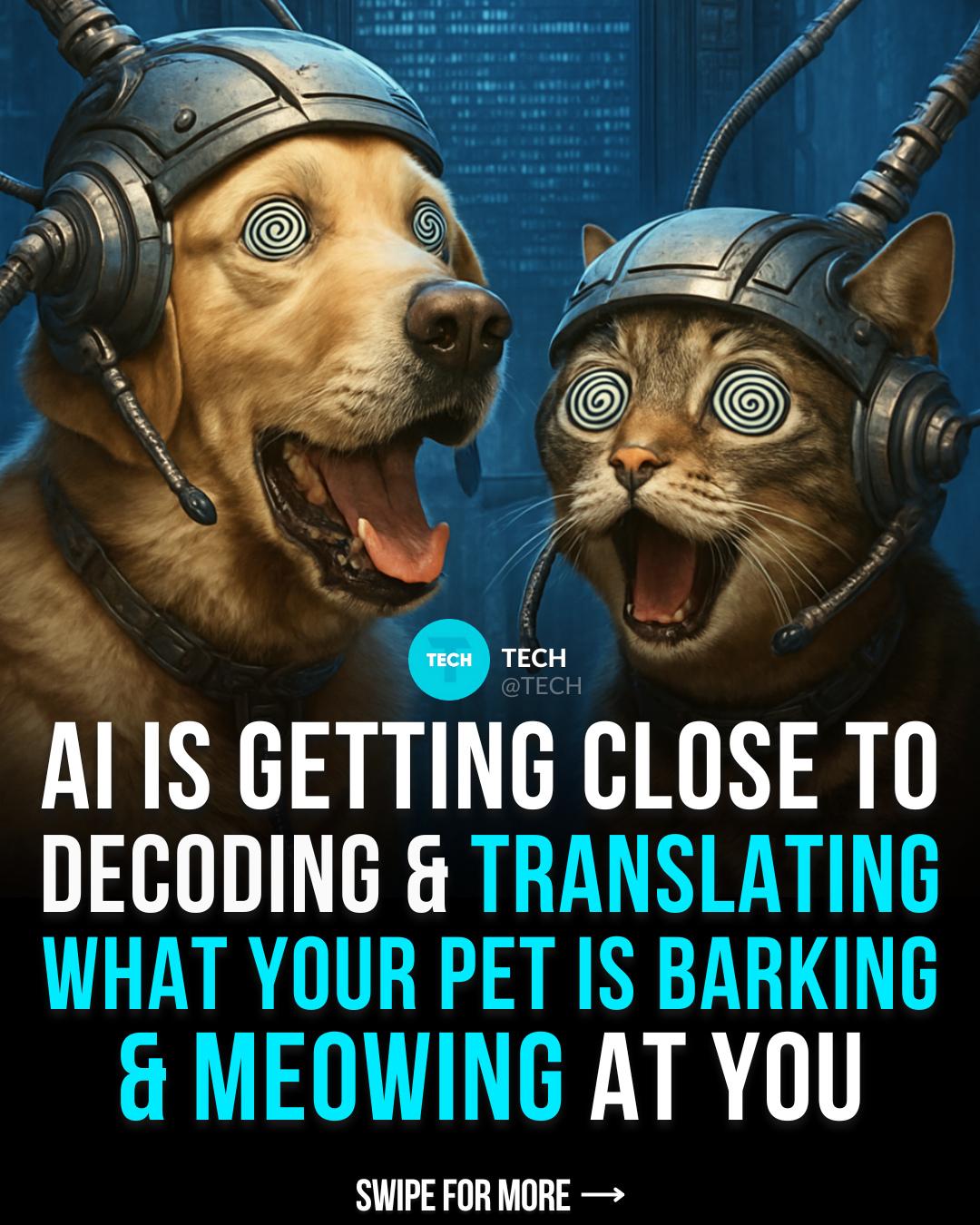
For centuries, humans have dreamed of breaking the silence between species, and now, AI is bringing that dream within reach. Powerful machine learning systems are beginning to decode the hidden languages of animals, turning barks, clicks, and squeaks into meaningful patterns we can finally understand.
One major leap comes from studying sperm whales, which use rapid clicking sounds called codas. By analyzing nearly 9,000 codas, scientists identified subtle features like “rubato” and “ornamentation” that change meaning depending on context. Combined with rhythm and tempo, these features form a flexible system researchers have dubbed a “Sperm Whale Phonetic Alphabet,” a framework as systematic as the International Phonetic Alphabet used for human speech.
Rodents have also entered the spotlight. Mice and rats use ultrasonic vocalizations far beyond human hearing, with distinct sounds linked to play, stress, or pain. A tool called DeepSqueak, launched in 2018, uses deep learning to detect, sort, and interpret these calls, giving scientists a clearer view into the emotional and social lives of these animals. While not a perfect translator, it has made rodent communication research faster, cheaper, and more precise.
Commercial players are joining too. Baidu has filed a patent for a system that would analyze animal voices, body language, and biological signals to detect emotions and translate them into human language. Earlier attempts like “No More Woof” fizzled out, but growing AI power makes new efforts more feasible.
For now, pet owners must still guess whether a bark means hunger or frustration. But as AI evolves, the prospect of truly understanding animals, whether in the ocean, the lab, or at home, feels closer than ever.
One major leap comes from studying sperm whales, which use rapid clicking sounds called codas. By analyzing nearly 9,000 codas, scientists identified subtle features like “rubato” and “ornamentation” that change meaning depending on context. Combined with rhythm and tempo, these features form a flexible system researchers have dubbed a “Sperm Whale Phonetic Alphabet,” a framework as systematic as the International Phonetic Alphabet used for human speech.
Rodents have also entered the spotlight. Mice and rats use ultrasonic vocalizations far beyond human hearing, with distinct sounds linked to play, stress, or pain. A tool called DeepSqueak, launched in 2018, uses deep learning to detect, sort, and interpret these calls, giving scientists a clearer view into the emotional and social lives of these animals. While not a perfect translator, it has made rodent communication research faster, cheaper, and more precise.
Commercial players are joining too. Baidu has filed a patent for a system that would analyze animal voices, body language, and biological signals to detect emotions and translate them into human language. Earlier attempts like “No More Woof” fizzled out, but growing AI power makes new efforts more feasible.
For now, pet owners must still guess whether a bark means hunger or frustration. But as AI evolves, the prospect of truly understanding animals, whether in the ocean, the lab, or at home, feels closer than ever.
For centuries, humans have dreamed of breaking the silence between species, and now, AI is bringing that dream within reach. Powerful machine learning systems are beginning to decode the hidden languages of animals, turning barks, clicks, and squeaks into meaningful patterns we can finally understand.
One major leap comes from studying sperm whales, which use rapid clicking sounds called codas. By analyzing nearly 9,000 codas, scientists identified subtle features like “rubato” and “ornamentation” that change meaning depending on context. Combined with rhythm and tempo, these features form a flexible system researchers have dubbed a “Sperm Whale Phonetic Alphabet,” a framework as systematic as the International Phonetic Alphabet used for human speech.
Rodents have also entered the spotlight. Mice and rats use ultrasonic vocalizations far beyond human hearing, with distinct sounds linked to play, stress, or pain. A tool called DeepSqueak, launched in 2018, uses deep learning to detect, sort, and interpret these calls, giving scientists a clearer view into the emotional and social lives of these animals. While not a perfect translator, it has made rodent communication research faster, cheaper, and more precise.
Commercial players are joining too. Baidu has filed a patent for a system that would analyze animal voices, body language, and biological signals to detect emotions and translate them into human language. Earlier attempts like “No More Woof” fizzled out, but growing AI power makes new efforts more feasible.
For now, pet owners must still guess whether a bark means hunger or frustration. But as AI evolves, the prospect of truly understanding animals, whether in the ocean, the lab, or at home, feels closer than ever.
·185 Views
·0 Reviews
