 English
 Arabic
 French
 Spanish
 Portuguese
 Deutsch
 Turkish
 Dutch
Dutch
 Italiano
 Russian
 Romaian
 Portuguese (Brazil)
 Greek
Greek
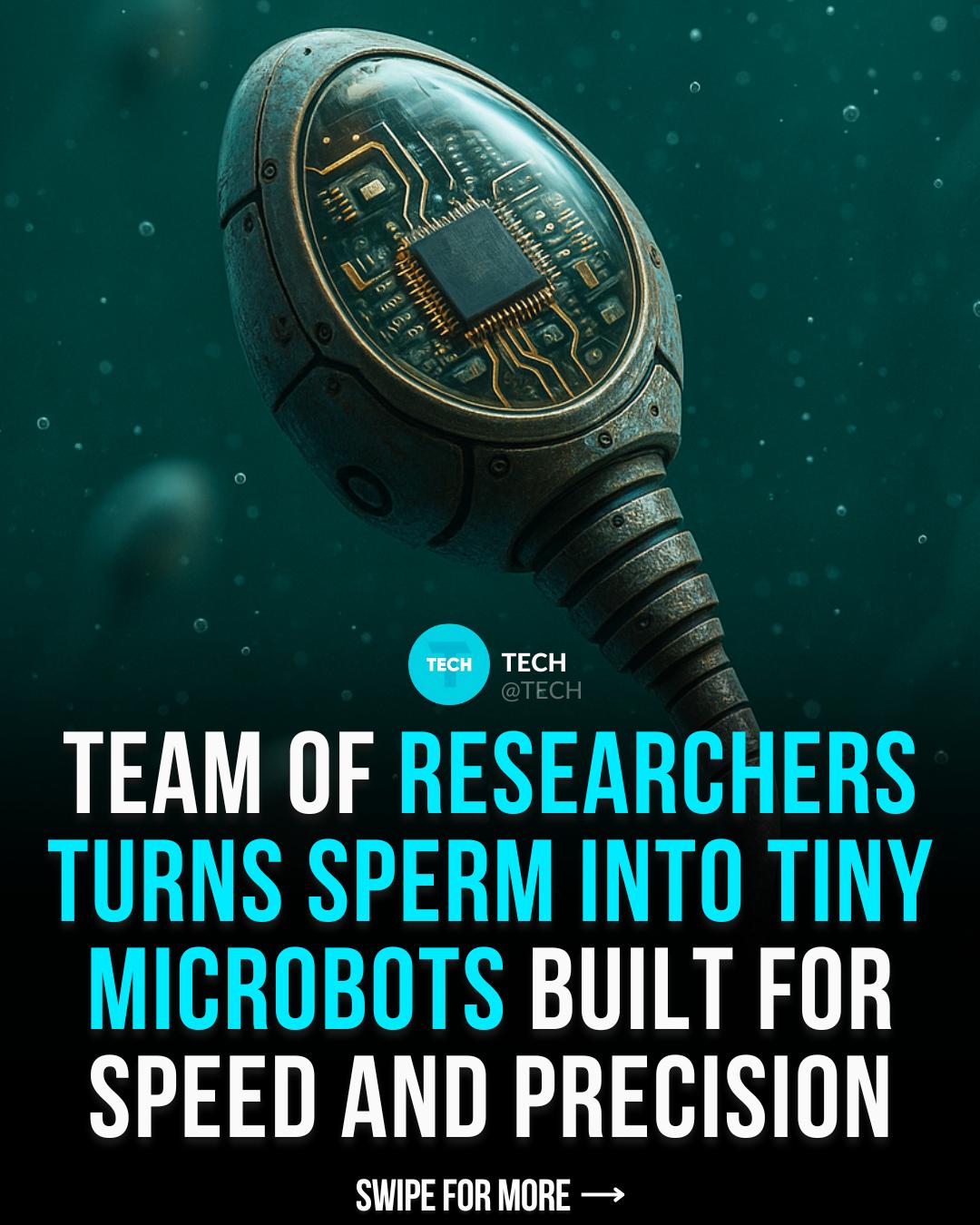
Meet the microrobot that already knows how to swim: a living sperm cell, upgraded with magnetic steering and X-ray visibility. Researchers have transformed these cells into sperm bots by coating them with iron-oxide nanoparticles, creating programmable machines that can be guided with external magnetic fields and tracked in real time through a life-size model of the female reproductive tract.
Sperm cells are naturally fast, flexible, biodegradable, and well tolerated by the body. With magnetic control, they can be piloted from the cervix through the uterus to the fallopian tubes, places that are often difficult to reach with conventional methods. When loaded with medicine, they become highly targeted delivery vehicles for treating uterine cancer, fibroids, or endometriosis while minimizing damage to healthy tissue.
This breakthrough also provides a new way to study fertility. Tracking sperm inside the body has long been nearly impossible, limiting efforts to understand infertility and improve IVF outcomes. X-ray visible sperm bots open the door to noninvasive observation of sperm transport, fertilization dynamics, and blockages within reproductive pathways.
Initial safety results are promising. Tests showed no significant toxicity to human uterine cells after 72 hours of exposure, and nanoparticle coatings improved steering and visibility without compromising biocompatibility. Further testing in animal models and eventually humans will be necessary, but the early foundation is strong.
The creation of sperm bots marks a significant step in biohybrid microrobotics, merging biological design with advanced engineering. What was once a single reproductive cell is now being reimagined as a precision tool for diagnostics, drug delivery, and medical exploration.
Soure: s44182-025-00044-1
Sperm cells are naturally fast, flexible, biodegradable, and well tolerated by the body. With magnetic control, they can be piloted from the cervix through the uterus to the fallopian tubes, places that are often difficult to reach with conventional methods. When loaded with medicine, they become highly targeted delivery vehicles for treating uterine cancer, fibroids, or endometriosis while minimizing damage to healthy tissue.
This breakthrough also provides a new way to study fertility. Tracking sperm inside the body has long been nearly impossible, limiting efforts to understand infertility and improve IVF outcomes. X-ray visible sperm bots open the door to noninvasive observation of sperm transport, fertilization dynamics, and blockages within reproductive pathways.
Initial safety results are promising. Tests showed no significant toxicity to human uterine cells after 72 hours of exposure, and nanoparticle coatings improved steering and visibility without compromising biocompatibility. Further testing in animal models and eventually humans will be necessary, but the early foundation is strong.
The creation of sperm bots marks a significant step in biohybrid microrobotics, merging biological design with advanced engineering. What was once a single reproductive cell is now being reimagined as a precision tool for diagnostics, drug delivery, and medical exploration.
Soure: s44182-025-00044-1
Meet the microrobot that already knows how to swim: a living sperm cell, upgraded with magnetic steering and X-ray visibility. Researchers have transformed these cells into sperm bots by coating them with iron-oxide nanoparticles, creating programmable machines that can be guided with external magnetic fields and tracked in real time through a life-size model of the female reproductive tract.
Sperm cells are naturally fast, flexible, biodegradable, and well tolerated by the body. With magnetic control, they can be piloted from the cervix through the uterus to the fallopian tubes, places that are often difficult to reach with conventional methods. When loaded with medicine, they become highly targeted delivery vehicles for treating uterine cancer, fibroids, or endometriosis while minimizing damage to healthy tissue.
This breakthrough also provides a new way to study fertility. Tracking sperm inside the body has long been nearly impossible, limiting efforts to understand infertility and improve IVF outcomes. X-ray visible sperm bots open the door to noninvasive observation of sperm transport, fertilization dynamics, and blockages within reproductive pathways.
Initial safety results are promising. Tests showed no significant toxicity to human uterine cells after 72 hours of exposure, and nanoparticle coatings improved steering and visibility without compromising biocompatibility. Further testing in animal models and eventually humans will be necessary, but the early foundation is strong.
The creation of sperm bots marks a significant step in biohybrid microrobotics, merging biological design with advanced engineering. What was once a single reproductive cell is now being reimagined as a precision tool for diagnostics, drug delivery, and medical exploration.
Soure: s44182-025-00044-1
·200 Views
·0 Reviews
