


The Data Sovereignty Dilemma: How UK Engineering Teams Can Comply Without Crippling Performance
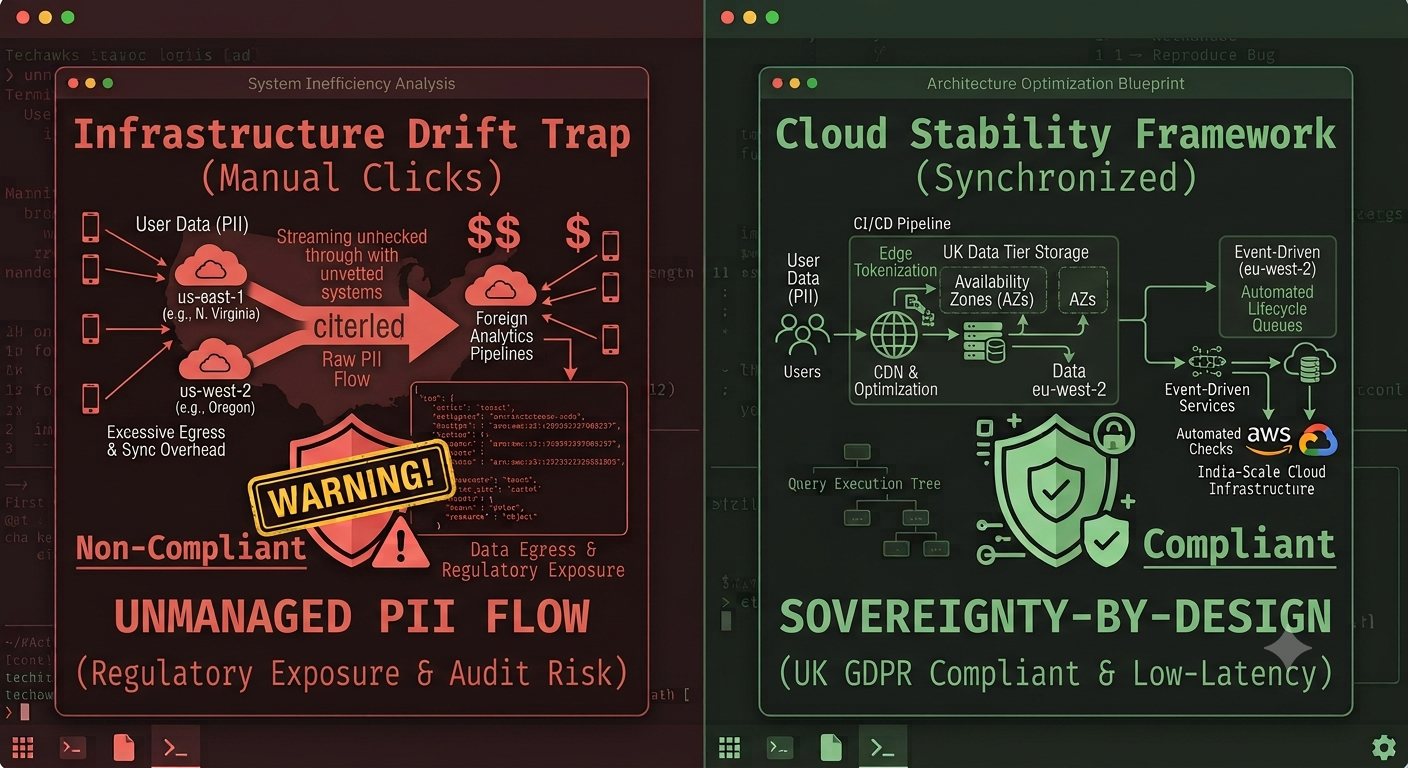
Engineering within the UK ecosystem requires balancing rapid product iteration with strict data privacy and residency mandates. Under UK GDPR and the Data Protection Act 2018, user personal identifiable information (PII) cannot simply drift across unrestricted third-party analytics vendors or unvetted foreign storage regions.
Too often, teams either ignore geographic boundaries until legal raises a red flag, or they lock down their stack so aggressively that query latency spikes and developer velocity tanks.
To balance regulatory rigor with engineering performance, follow the Sovereignty-by-Design Blueprint:
Tag and Isolate PII at Ingestion: Never let unmasked user identifiers flow directly into general analytical data lakes. Tokenize or hash identifiers at the API boundary, store the lookup table in a tightly restricted UK data region (e.g., eu-west-2 London), and pass only pseudonymized records to downstream global processing tiers.
Audit Third-Party Telemetry and SDKs: Your backend code might be compliant, but front-end tracking scripts and error-reporting libraries often stream IP addresses, device identifiers, and query parameters to overseas endpoints by default. Strip user context from client-side trackers and proxy telemetry through your own edge layer.
Automate Data Lifecycle and Erasure Pipelines: Complying with the "Right to Erasure" shouldn't require running manual SQL delete queries across production tables. Design event-driven deletion queues that automatically cascade removal across primary databases, cold storage backups, and cache layers whenever an account removal is triggered.
Let’s talk compliance engineering: How does your team manage data locality when building on multi-region cloud services or using global SaaS tooling?
What has been your biggest headache when implementing UK GDPR requirements into your technical architecture? Join the conversation below.
Key Takeaways
Tokenize early: Isolate sensitive PII in local regions while allowing pseudonymized data to move efficiently.
Inspect edge telemetry: Vet third-party trackers and client libraries to prevent accidental overseas data leakage.
Automate erasure workflows: Build scalable deletion queues into your schema architecture from day one rather than executing manual fixes.
CTA
Navigating system architecture, cloud governance, and technical challenges across the UK tech ecosystem? Join Techawks UK to connect with local software architects, discuss compliance playbooks, and build resilient products together. Link in the bio/comments!
Engineering within the UK ecosystem requires balancing rapid product iteration with strict data privacy and residency mandates. Under UK GDPR and the Data Protection Act 2018, user personal identifiable information (PII) cannot simply drift across unrestricted third-party analytics vendors or unvetted foreign storage regions.
Too often, teams either ignore geographic boundaries until legal raises a red flag, or they lock down their stack so aggressively that query latency spikes and developer velocity tanks.
To balance regulatory rigor with engineering performance, follow the Sovereignty-by-Design Blueprint:
Tag and Isolate PII at Ingestion: Never let unmasked user identifiers flow directly into general analytical data lakes. Tokenize or hash identifiers at the API boundary, store the lookup table in a tightly restricted UK data region (e.g., eu-west-2 London), and pass only pseudonymized records to downstream global processing tiers.
Audit Third-Party Telemetry and SDKs: Your backend code might be compliant, but front-end tracking scripts and error-reporting libraries often stream IP addresses, device identifiers, and query parameters to overseas endpoints by default. Strip user context from client-side trackers and proxy telemetry through your own edge layer.
Automate Data Lifecycle and Erasure Pipelines: Complying with the "Right to Erasure" shouldn't require running manual SQL delete queries across production tables. Design event-driven deletion queues that automatically cascade removal across primary databases, cold storage backups, and cache layers whenever an account removal is triggered.
Let’s talk compliance engineering: How does your team manage data locality when building on multi-region cloud services or using global SaaS tooling?
What has been your biggest headache when implementing UK GDPR requirements into your technical architecture? Join the conversation below.
Key Takeaways
Tokenize early: Isolate sensitive PII in local regions while allowing pseudonymized data to move efficiently.
Inspect edge telemetry: Vet third-party trackers and client libraries to prevent accidental overseas data leakage.
Automate erasure workflows: Build scalable deletion queues into your schema architecture from day one rather than executing manual fixes.
CTA
Navigating system architecture, cloud governance, and technical challenges across the UK tech ecosystem? Join Techawks UK to connect with local software architects, discuss compliance playbooks, and build resilient products together. Link in the bio/comments!
The Data Sovereignty Dilemma: How UK Engineering Teams Can Comply Without Crippling Performance
Engineering within the UK ecosystem requires balancing rapid product iteration with strict data privacy and residency mandates. Under UK GDPR and the Data Protection Act 2018, user personal identifiable information (PII) cannot simply drift across unrestricted third-party analytics vendors or unvetted foreign storage regions.
Too often, teams either ignore geographic boundaries until legal raises a red flag, or they lock down their stack so aggressively that query latency spikes and developer velocity tanks.
To balance regulatory rigor with engineering performance, follow the Sovereignty-by-Design Blueprint:
Tag and Isolate PII at Ingestion: Never let unmasked user identifiers flow directly into general analytical data lakes. Tokenize or hash identifiers at the API boundary, store the lookup table in a tightly restricted UK data region (e.g., eu-west-2 London), and pass only pseudonymized records to downstream global processing tiers.
Audit Third-Party Telemetry and SDKs: Your backend code might be compliant, but front-end tracking scripts and error-reporting libraries often stream IP addresses, device identifiers, and query parameters to overseas endpoints by default. Strip user context from client-side trackers and proxy telemetry through your own edge layer.
Automate Data Lifecycle and Erasure Pipelines: Complying with the "Right to Erasure" shouldn't require running manual SQL delete queries across production tables. Design event-driven deletion queues that automatically cascade removal across primary databases, cold storage backups, and cache layers whenever an account removal is triggered.
Let’s talk compliance engineering: How does your team manage data locality when building on multi-region cloud services or using global SaaS tooling?
What has been your biggest headache when implementing UK GDPR requirements into your technical architecture? Join the conversation below.
Key Takeaways
Tokenize early: Isolate sensitive PII in local regions while allowing pseudonymized data to move efficiently.
Inspect edge telemetry: Vet third-party trackers and client libraries to prevent accidental overseas data leakage.
Automate erasure workflows: Build scalable deletion queues into your schema architecture from day one rather than executing manual fixes.
CTA
Navigating system architecture, cloud governance, and technical challenges across the UK tech ecosystem? Join Techawks UK to connect with local software architects, discuss compliance playbooks, and build resilient products together. Link in the bio/comments!

 English
 Arabic
 French
 Spanish
 Portuguese
 Deutsch
 Turkish
 Dutch
Dutch
 Italiano
 Russian
 Romaian
 Portuguese (Brazil)