


Beyond Data Hosting: The 4-Step Sovereign Cloud & Compute Checklist for India’s Tech Ecosystem
As India scales its digital public infrastructure and enterprise AI adoption at a rapid pace, the conversation among tech leaders has shifted from basic capacity to sovereign compute and resilient architecture. Relying entirely on foreign cloud ecosystems introduces hidden regulatory, data compliance, and jurisdictional vulnerabilities (such as cross-border data access laws).
For Indian engineering teams, startups, and tech enterprises building the next wave of localized applications, moving toward a sovereign and resilient cloud strategy requires a disciplined approach. Use this actionable checklist to evaluate and strengthen your cloud architecture:
Audit Data Residency and Jurisdictional Control: Ensure your data pipelines, backups, and third-party storage comply strictly with local data protection regulations, keeping sensitive assets under national legal jurisdiction.
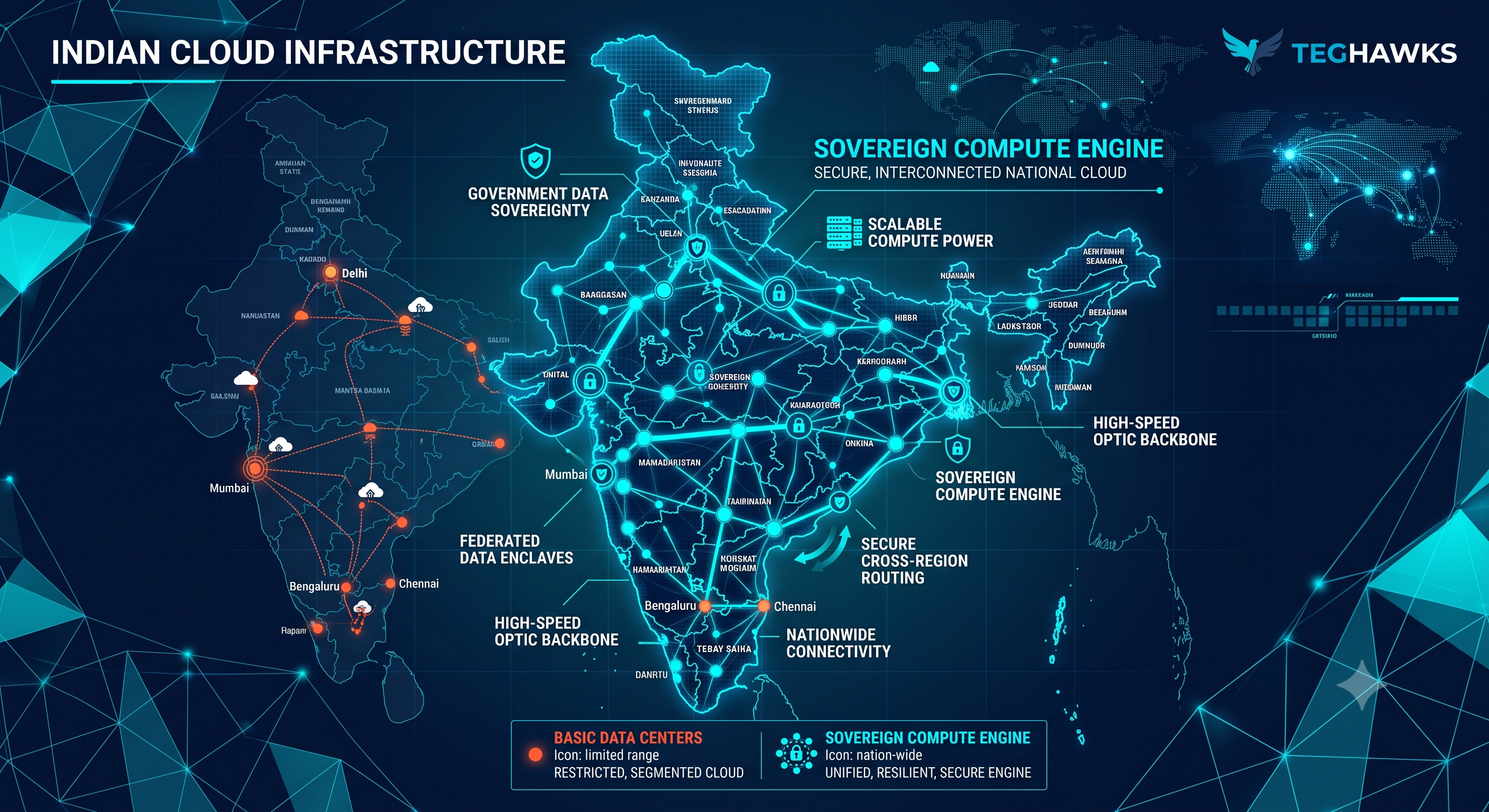
Move Beyond Basic Hosting to Resilient Abstraction: Understand that a data center is merely a physical facility; your architecture must build the actual "engine"—redundancy, automated failovers, and low-latency nodes optimized for local traffic.
Optimize for Localized AI and Inference Workloads: With high demand for specialized applications in sectors like banking and healthcare, design lighter, domain-specific AI models that run efficiently on domestic infrastructure.
Implement Multi-Layer Cloud Security & Governance: Decouple dependency on any single vendor by adopting open standards, containerized microservices, and multi-cloud portability to prevent lock-in.
Discussion Question: What is the biggest barrier for Indian tech companies moving toward sovereign infrastructure—cost constraints, lack of specialized local hardware, or compatibility with global tools? Drop your perspective below!
CTA (Join Techawks India): Ready to build the future of India's tech ecosystem? Join Techawks India to connect with local innovators, access exclusive engineering roundtables, and drive the next wave of digital leadership.
As India scales its digital public infrastructure and enterprise AI adoption at a rapid pace, the conversation among tech leaders has shifted from basic capacity to sovereign compute and resilient architecture. Relying entirely on foreign cloud ecosystems introduces hidden regulatory, data compliance, and jurisdictional vulnerabilities (such as cross-border data access laws).
For Indian engineering teams, startups, and tech enterprises building the next wave of localized applications, moving toward a sovereign and resilient cloud strategy requires a disciplined approach. Use this actionable checklist to evaluate and strengthen your cloud architecture:
Audit Data Residency and Jurisdictional Control: Ensure your data pipelines, backups, and third-party storage comply strictly with local data protection regulations, keeping sensitive assets under national legal jurisdiction.
Move Beyond Basic Hosting to Resilient Abstraction: Understand that a data center is merely a physical facility; your architecture must build the actual "engine"—redundancy, automated failovers, and low-latency nodes optimized for local traffic.
Optimize for Localized AI and Inference Workloads: With high demand for specialized applications in sectors like banking and healthcare, design lighter, domain-specific AI models that run efficiently on domestic infrastructure.
Implement Multi-Layer Cloud Security & Governance: Decouple dependency on any single vendor by adopting open standards, containerized microservices, and multi-cloud portability to prevent lock-in.
Discussion Question: What is the biggest barrier for Indian tech companies moving toward sovereign infrastructure—cost constraints, lack of specialized local hardware, or compatibility with global tools? Drop your perspective below!
CTA (Join Techawks India): Ready to build the future of India's tech ecosystem? Join Techawks India to connect with local innovators, access exclusive engineering roundtables, and drive the next wave of digital leadership.
Beyond Data Hosting: The 4-Step Sovereign Cloud & Compute Checklist for India’s Tech Ecosystem
As India scales its digital public infrastructure and enterprise AI adoption at a rapid pace, the conversation among tech leaders has shifted from basic capacity to sovereign compute and resilient architecture. Relying entirely on foreign cloud ecosystems introduces hidden regulatory, data compliance, and jurisdictional vulnerabilities (such as cross-border data access laws).
For Indian engineering teams, startups, and tech enterprises building the next wave of localized applications, moving toward a sovereign and resilient cloud strategy requires a disciplined approach. Use this actionable checklist to evaluate and strengthen your cloud architecture:
Audit Data Residency and Jurisdictional Control: Ensure your data pipelines, backups, and third-party storage comply strictly with local data protection regulations, keeping sensitive assets under national legal jurisdiction.
Move Beyond Basic Hosting to Resilient Abstraction: Understand that a data center is merely a physical facility; your architecture must build the actual "engine"—redundancy, automated failovers, and low-latency nodes optimized for local traffic.
Optimize for Localized AI and Inference Workloads: With high demand for specialized applications in sectors like banking and healthcare, design lighter, domain-specific AI models that run efficiently on domestic infrastructure.
Implement Multi-Layer Cloud Security & Governance: Decouple dependency on any single vendor by adopting open standards, containerized microservices, and multi-cloud portability to prevent lock-in.
Discussion Question: What is the biggest barrier for Indian tech companies moving toward sovereign infrastructure—cost constraints, lack of specialized local hardware, or compatibility with global tools? Drop your perspective below!
CTA (Join Techawks India): Ready to build the future of India's tech ecosystem? Join Techawks India to connect with local innovators, access exclusive engineering roundtables, and drive the next wave of digital leadership.

 Arabic
 French
 Spanish
 Portuguese
 Deutsch
 Turkish
 Dutch
Dutch
 Italiano
 Russian
 Romaian
 Portuguese (Brazil)
 Greek
Greek